
The US Iran War and US Missile Crisis
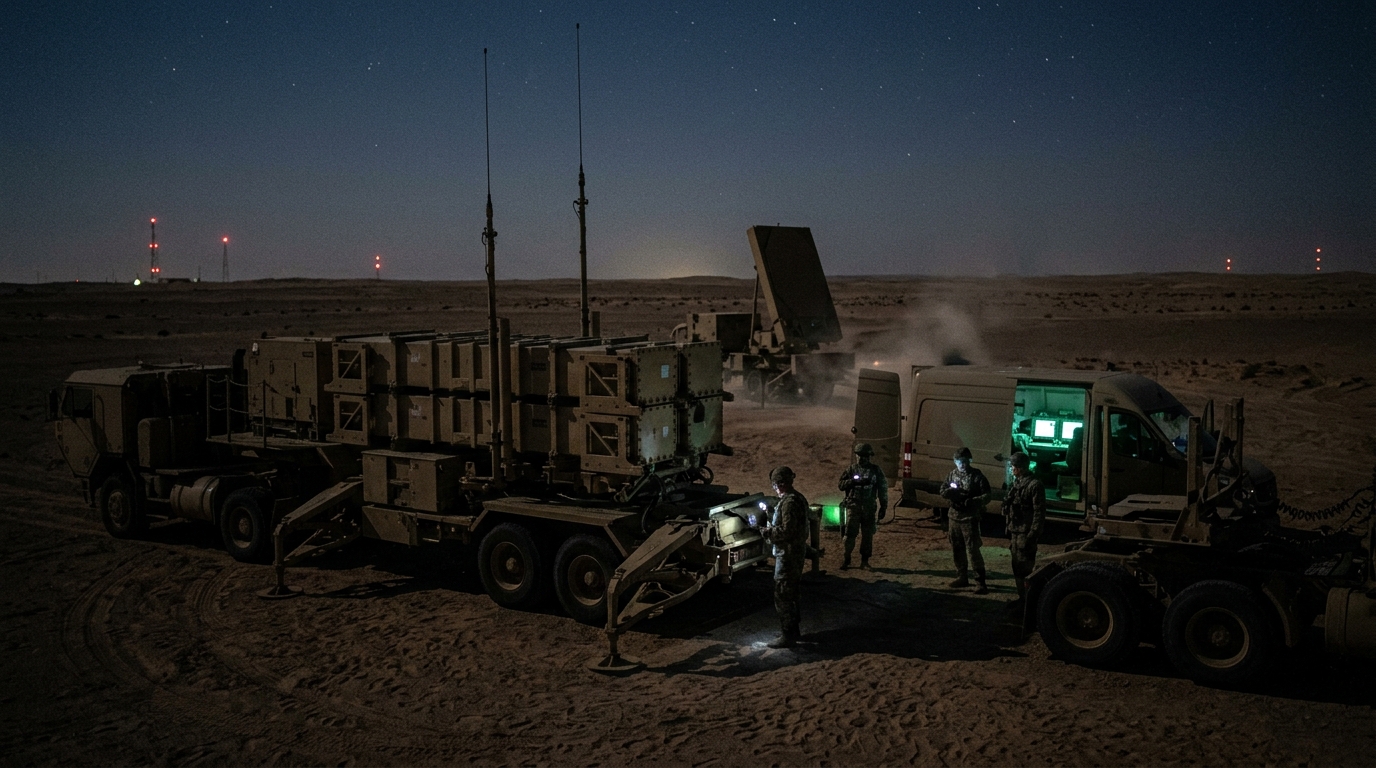
The US Iran War and US Missile Crisis. The most dangerous lesson of the latest U.S. Iran conflict may not be found in the missiles that hit their targets. It may be found in the missiles that were fired to stop them. Modern war is changing. A military can possess the world’s most advanced aircraft, satellites, ships and missile defenses and still face a difficult question:
Can it produce enough weapons to keep fighting when the war lasts longer than expected?
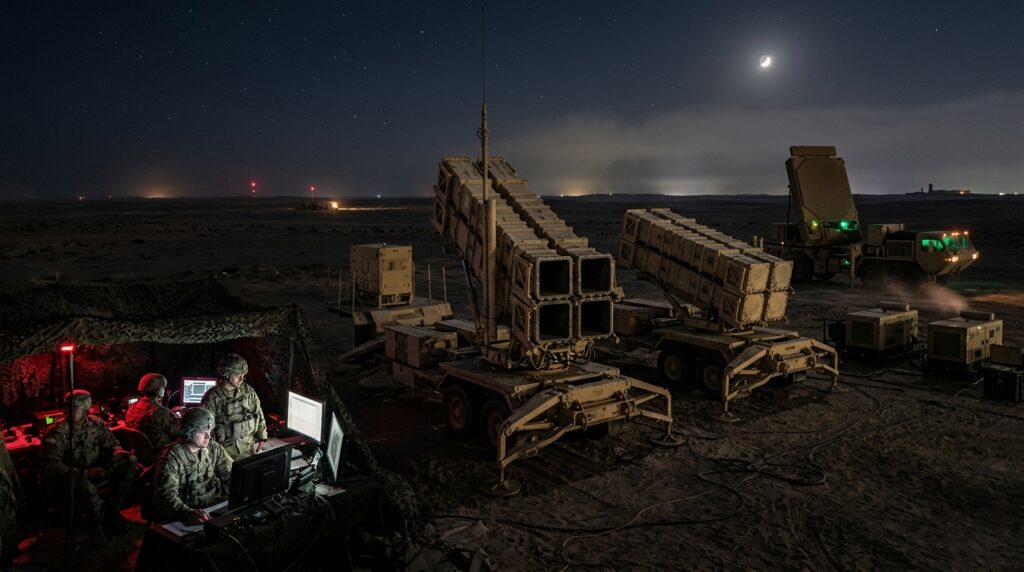
That question now matters to the United States, Iran and the Gulf states. The recent fighting has placed enormous pressure on U.S. missile inventories. Patriot and THAAD interceptors have been used heavily, while American factories are being asked to increase production. At the same time, Gulf countries are looking for additional air defense systems from South Korea, Europe, Ukraine and other suppliers. The deeper story is therefore much bigger than the battlefield.
It is about military endurance, industrial capacity, political will and the future of American power in the Gulf.
https://mrpo.pk/why-iran-refuses-to-break/
The Missile Defense Problem
The United States has one of the world’s most advanced air and missile defense networks. It includes systems such as Patriot, THAAD, Aegis, SM 3 and SM 6. These systems are designed to provide different layers of protection against ballistic missiles, cruise missiles, aircraft and drones. But there is a basic weakness.
Every interceptor that is fired is one less interceptor in the magazine.
A modern interceptor is not an ordinary piece of ammunition. It contains sophisticated sensors, guidance electronics, propulsion systems and other highly specialized components. A missile can be fired in seconds. Replacing it can take months or even years.
That creates a dangerous gap between war consumption and industrial replacement.
Why Patriot Matters So Much
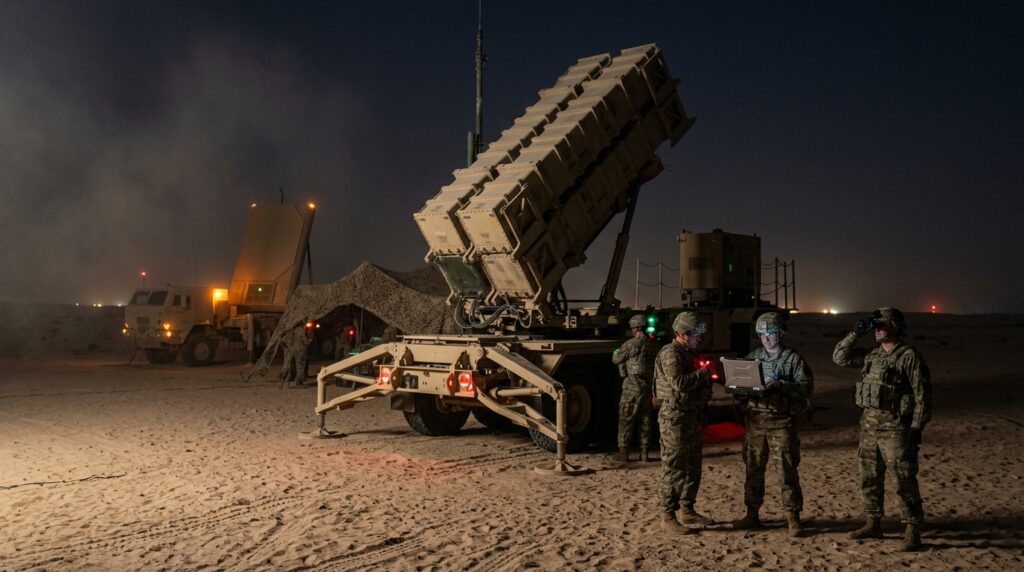
The Patriot system has become one of the most important air defense systems in the world. Its PAC 3 interceptor is designed to destroy incoming threats through direct impact. It is especially valuable against difficult ballistic missile threats. That makes Patriot extremely useful to both the United States and its allies. But it also makes the interceptor extremely valuable and difficult to replace. The current conflict has shown the problem clearly.
The United States and its allies can shoot down incoming missiles, but doing so repeatedly consumes a limited supply of expensive interceptors. The question is therefore not simply whether Patriot works.It does.
The question is:
Can enough Patriot interceptors be produced to support a long war?
THAAD Adds Another Layer
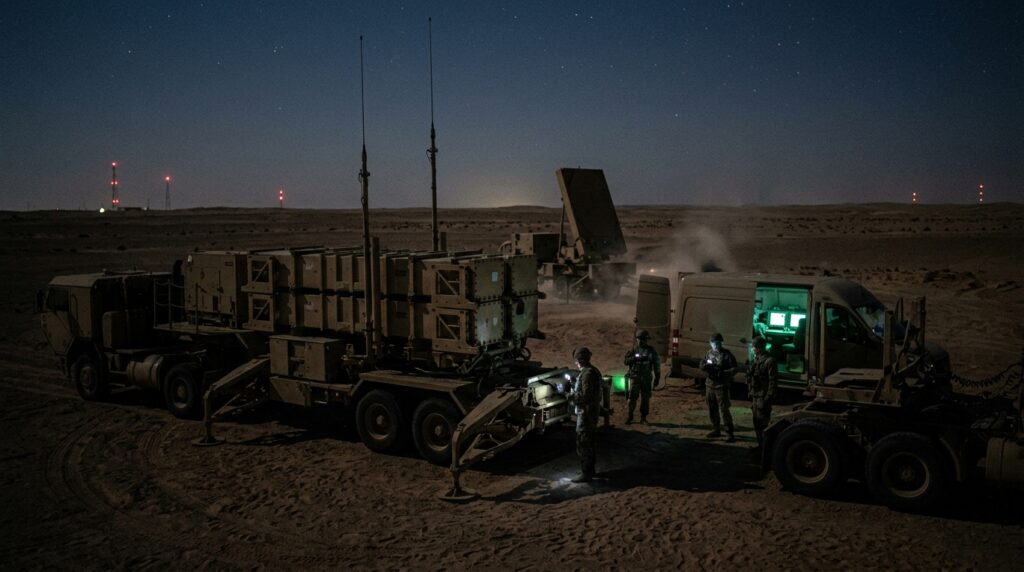
THAAD provides another layer of protection. Its purpose is to intercept ballistic missiles at higher altitudes during the terminal phase of flight. The idea behind modern missile defense is not to rely on one system. Instead, several layers work together. If one layer fails, another may have another opportunity to intercept the threat. That creates a powerful defensive network.
But it also creates a supply problem.Every layer needs enough ammunition. If the United States has thousands of missiles but not enough of the particular interceptor required for a specific threat, the total number can be misleading.
Missile inventories are not interchangeable.
The Real Problem Is Replenishment
This is the heart of the issue. The United States is not simply “running out of missiles.” That description is too simple. The real problem is that some important missile categories are being consumed much faster than peacetime production can replace them.
Recent analysis by the Center for Strategic and International Studies has warned that rebuilding several U.S. missile inventories after the Iran campaign could take years. (IISS) That creates a strategic problem. A country may have enough missiles for today’s operation while having insufficient reserves for another major war tomorrow. This is particularly important because the United States must prepare for more than one possible theater.
It has commitments in Europe.
It has commitments in the Middle East.
It has major strategic concerns in the Indo Pacific.
A missile used in one theater cannot simultaneously protect forces in another.
Why America Cannot Simply Build More
The obvious question is:
Why not just build more missiles?
Because advanced missile production is an industrial ecosystem.
A single interceptor can depend on:
Rocket motors
Specialized rocket motors require complex production facilities, controlled materials and skilled workers.
Seekers
A missile seeker helps identify and track its target.
These are among the most advanced parts of a modern interceptor.
Guidance electronics
The missile needs computers, sensors and control systems capable of guiding it toward a rapidly moving target.
Specialized materials
Modern missiles require advanced materials and carefully controlled manufacturing processes.
Testing facilities
Every new missile must be tested and accepted before it becomes part of an operational inventory.
A problem in any one of these areas can slow the entire production chain.
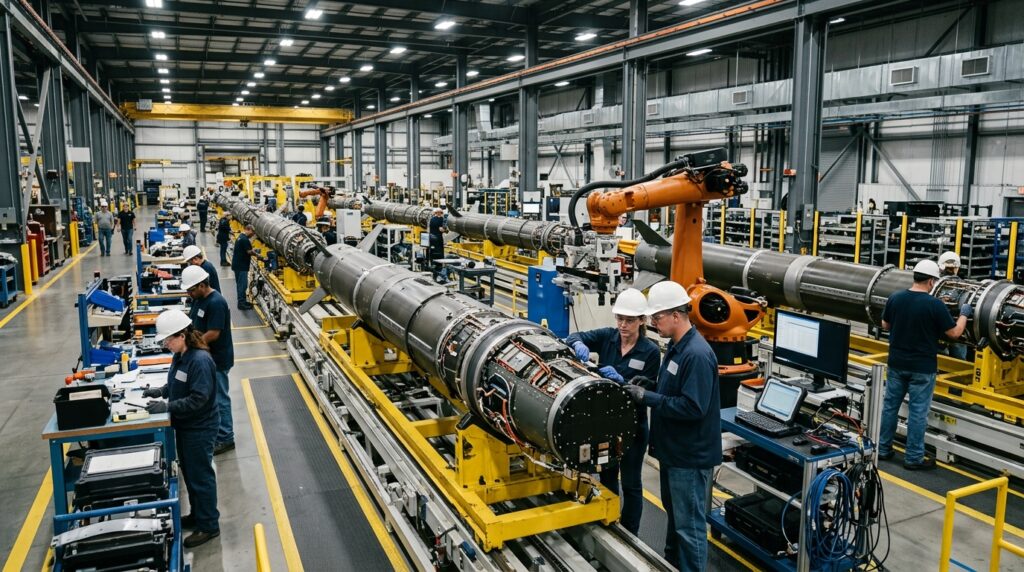
The Factory Is Only One Part of the Factory
This sounds strange, but it is one of the most important lessons. Suppose a company builds a new missile assembly line capable of producing 2,000 missiles a year. That does not mean 2,000 missiles will actually appear. If the supplier producing the seeker can provide only 1,000 units, production may stop at 1,000. If rocket motor production is limited to 800, the effective production rate can fall even further.
This is why expanding missile production requires expanding the entire supply chain.
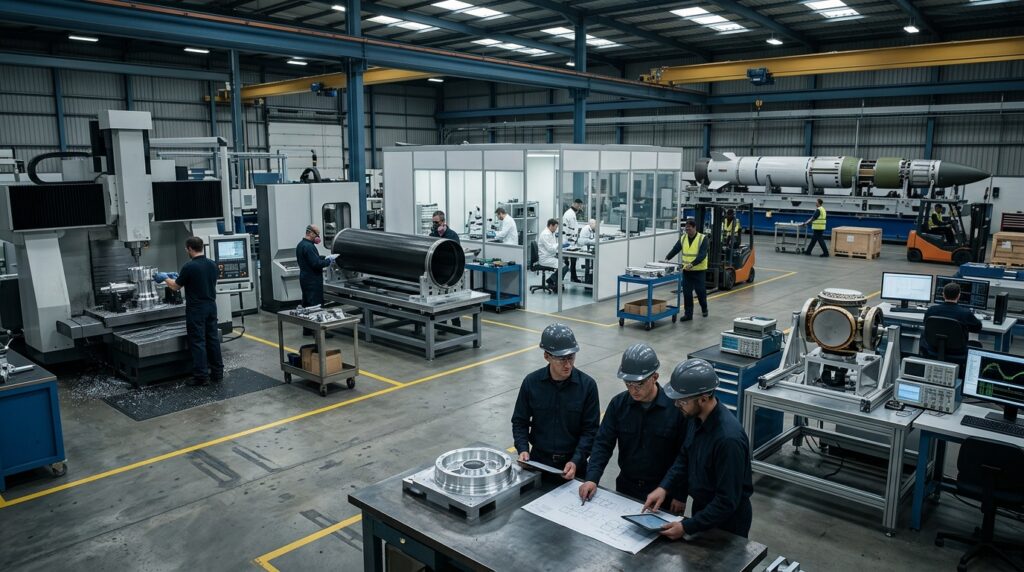
Washington Is Trying to Increase Production
The U.S. government has responded with major procurement and industrial expansion programs. The PAC 3 MSE program is a major example. American officials and industry are working toward a substantial increase in annual PAC 3 production, while additional investment is being directed toward critical components such as missile seekers.
Boeing has also announced a seven year framework intended to increase PAC 3 seeker production substantially. (IISS) The objective is not simply to fill today’s empty spaces. It is to change America’s ability to produce missiles during a prolonged conflict. That is a much bigger project.
Why Multi Year Contracts Matter
Defense companies will not normally build expensive factories simply because Washington says it may need more missiles. They need confidence that demand will continue. Multi year contracts can provide that confidence. They allow companies to:
- Build new production lines
- Buy specialized machinery
- Hire workers
- Train workers
- Expand suppliers
- Purchase long lead components
- Improve manufacturing efficiency
This is why procurement contracts are themselves part of national security.
A contract today can become a factory tomorrow.
The Workforce Problem
Machines alone cannot solve the problem. Advanced defense manufacturing requires engineers, technicians, machinists, software specialists and quality control workers. These people cannot always be trained in a few weeks. Experience matters. Security requirements can also make recruitment more difficult. The United States therefore faces a workforce challenge as well as a factory challenge.
The Economic Problem of Missile Defense
There is another uncomfortable reality. Some defensive missiles are enormously expensive. Iran can use relatively inexpensive drones and missiles to create pressure on a defender. The defender may respond with a much more expensive interceptor. That may be the correct decision when human lives or strategic assets are at risk. But if the pattern continues for months, the economic problem becomes serious.
The defender can win every individual engagement and still suffer a long term disadvantage in ammunition consumption. This is why future air defense will need a mixture of:
High end interceptors
For ballistic missiles and other difficult threats.
Medium cost interceptors
For threats that do not require the most expensive weapon.
Interceptor drones
For suitable targets where a missile would be unnecessarily expensive.
Electronic warfare
For disrupting some drones and other systems without firing an interceptor.
Guns and short range defenses
For suitable low altitude threats.
Directed energy
Potentially providing another lower cost option as the technology matures. The future of air defense will therefore not be about one perfect weapon. It will be about using the cheapest effective weapon against each threat.
The Gulf States Are Watching Closely
This is where the story becomes even more important. The Gulf states have invested enormous sums in modern air and missile defense. Saudi Arabia, the United Arab Emirates, Qatar, Kuwait and Bahrain all depend heavily on advanced foreign systems. But the recent attacks have exposed an uncomfortable reality.
Even a sophisticated air defense system can become strained when attacks continue for weeks or months.
The International Institute for Strategic Studies reported that Gulf states have been seeking additional air defense capabilities after Iranian missile and drone attacks depleted magazines and exposed capability gaps. Countries including South Korea, Ukraine, the United Kingdom and the United States have been approached for various systems and technologies. (IISS)
This does not mean the Gulf states have lost confidence in America. It means they are learning the value of redundancy.
The Gulf Is Looking for Alternatives
The emerging Gulf strategy can be described in one word:
Diversification.
The Gulf states increasingly want several suppliers rather than depending too heavily on one country.
That could include:
American systems
European systems
South Korean systems
Israeli technology
Ukrainian experience
Indigenous Gulf capabilities
Regional cooperation
The objective is simple.
If one supplier cannot deliver enough missiles, another supplier may fill part of the gap.
South Korea Is Becoming Important
South Korea’s Cheongung II system is an important example. The United Arab Emirates became its first foreign customer.
According to the International Institute for Strategic Studies, the UAE had two operational Cheongung II batteries by March 2026 and used them against Iranian missiles and one way attack drones during the conflict. (IISS)
That is significant. The UAE now has operational experience with a modern air defense system that does not depend entirely on the American production pipeline. This could encourage other Gulf states to consider South Korean systems.
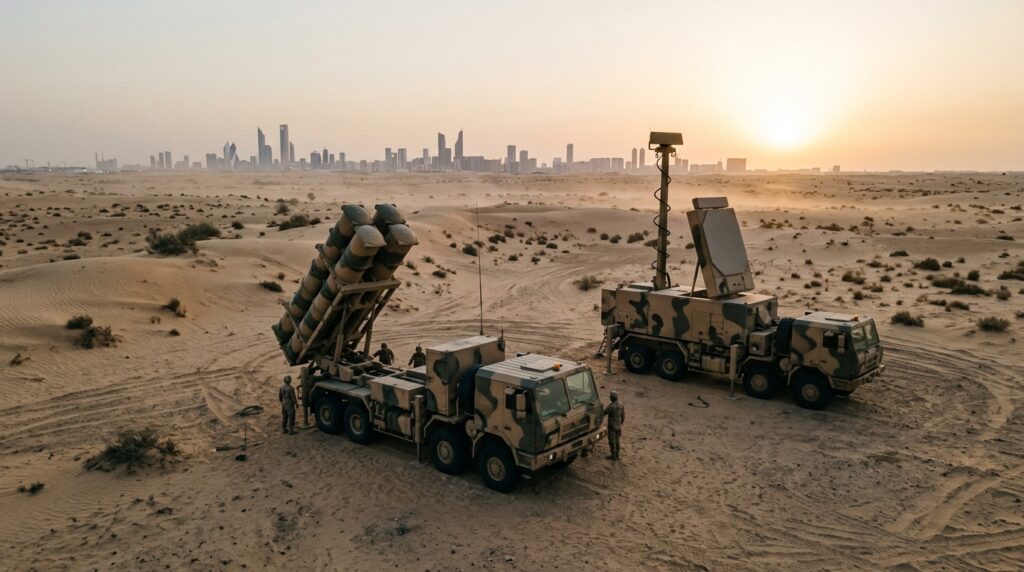
Ukraine Offers Another Lesson
Ukraine has spent years defending itself against large numbers of missiles and drones. That experience has created valuable knowledge about layered defense, electronic warfare, radar and cheaper ways to deal with mass drone attacks. The Gulf states have reportedly shown interest in Ukrainian technology and experience.The lesson is straightforward:
A country cannot afford to fire its most expensive missile at every inexpensive drone.
The UAE Model
The UAE may provide an example of what the future Gulf defense architecture could look like. It operates several different systems, including American Patriot and THAAD and other foreign systems. Its acquisition of Cheongung II adds another layer.This creates redundancy. If one system faces a shortage, another can still contribute.The long term Gulf strategy may therefore become:
American protection plus regional capability plus multiple foreign suppliers.
That is very different from abandoning America. It is insurance.
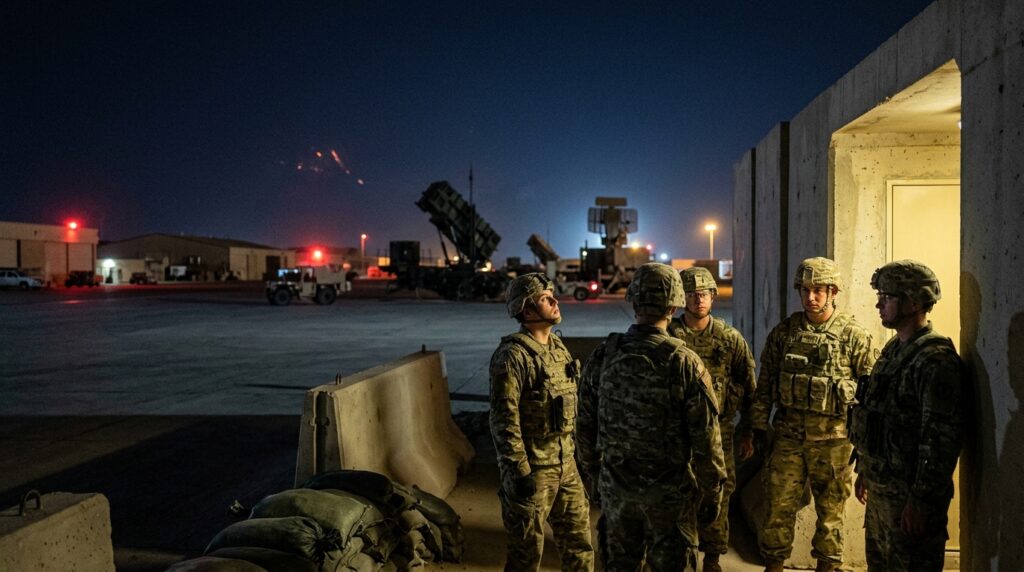
The Morale Problem for U.S. Forces
There is another dimension that receives less attention. What happens to the morale of American troops stationed in Gulf countries when they hear that missile inventories are being depleted? It is important not to claim that U.S. troops are experiencing low morale without reliable evidence. But the psychological risk is real.
A soldier who believes that the base has strong protection is likely to feel more confident.
A soldier who believes that defensive missiles are running low may feel more exposed. This can increase:
Anxiety
Repeated missile alerts are stressful even when defenses work.
Perceived vulnerability
Troops may wonder whether the same level of protection will be available during the next attack.
Uncertainty
Confusing public reports can create rumors.
Distrust
If public statements appear to conflict with battlefield experience, confidence in official communication can suffer.
Family pressure
Families watching the news may worry about their relatives, adding another psychological burden. But there is an important counterpoint.Military personnel may know much more about actual defensive readiness than the public does.The public sees headlines. Commanders see classified assessments.
Therefore, public reports of “missile shortages” do not automatically mean that troops believe they are undefended.
The Deeper Question: Why Does Trump Still Want Iranian Surrender?
This may be the most puzzling part of the entire story. In March 2026, President Donald Trump publicly said there would be no deal with Iran except “unconditional surrender.” He later explained that surrender could mean Iran reaching a point where it could no longer continue fighting, rather than simply signing a document called surrender. (Axios)
The administration’s stated goals included destroying Iran’s missile capabilities, preventing the rebuilding of its nuclear program and weakening its ability to threaten the United States and its allies. (CBS News) But Iran did not simply collapse.It continued fighting.That creates a major strategic puzzle.
Military Power Is Not the Same as Political Control
The United States has overwhelming conventional military power compared with Iran.But military superiority does not automatically produce political surrender.America can destroy military facilities.
It can destroy missile launchers.
It can damage naval forces.
It can strike infrastructure.
But forcing a government to accept political demands is a different task.
History has repeatedly demonstrated this difference.
The United States learned it in Vietnam.
The Soviet Union learned it in Afghanistan.
Russia has faced it in Ukraine.
Military destruction and political submission are not the same thing.
As Carl von Clausewitz famously observed:
“War is merely the continuation of policy by other means.”
The important word is policy.The military campaign is supposed to produce a political result. If the political result remains out of reach, battlefield success alone is not enough.
Iran’s Calculation May Be Different
Iran does not necessarily need to believe it can defeat the United States.
It only needs to believe it can survive.
That is a much lower target.
Iran can say:
“We cannot match American aircraft.”
“We cannot match American naval power.”
“We cannot match American satellites.”
But it may still believe:
“America cannot force us to accept every American demand.”
That is a very different calculation.
The Politics of Resistance
For Iran’s leadership, surrender could also carry enormous political costs. A government that openly accepts foreign demands after a devastating war may appear weak at home.Even a severely damaged government may prefer to continue fighting rather than accept terms that could threaten its survival. This creates a dangerous cycle.
Washington increases pressure because Iran has not surrendered.
Iran increases resistance because Washington is demanding surrender. The result is escalation.
Why Would Trump Continue?
There are several possible explanations.
Protecting American credibility
Washington may believe that allowing Iran to resist successfully would weaken American deterrence throughout the Middle East. Other governments and armed groups are watching.
Preventing Iran from rebuilding
The United States may want to prevent Iran from rebuilding its missile and nuclear capabilities after the war.
Protecting Israel and Gulf allies
American policymakers may believe that Iran’s strategic capabilities remain a direct threat to Israel and Gulf partners.
Domestic politics
A president who promises decisive victory faces political problems if the war ends without a clear result.
Negotiating from strength
Trump’s approach has often emphasized maximum pressure before negotiations. The theory is simple.Apply enough pressure and the opponent eventually accepts better terms. The problem is that Iran may have a much higher tolerance for punishment than Washington expected.
The Strategic Paradox
This produces a remarkable paradox. The more punishment Iran absorbs without surrendering, the harder it becomes for Washington to demonstrate that additional punishment will produce the desired result. But stopping without achieving the original objectives can also look like failure. That leaves three broad choices.
Escalate
Increase military pressure and accept greater risks.
Negotiate
Accept a compromise and claim that the main security objectives have been achieved.
Continue indefinitely
Maintain pressure without achieving a decisive settlement. The third option may be the most dangerous because it combines the costs of war with the absence of a clear ending.
The Missile Stockpile Makes the Problem Worse
This is where the industrial story connects directly with the political story.Suppose Iran continues firing missiles and drones.
The United States continues intercepting them.
Every successful interception protects lives and infrastructure.
But every interceptor fired also reduces the stockpile.
The United States can produce replacements.
But production takes time.
This creates a simple equation:
Iranian consumption can happen in minutes.
American replenishment happens over months and years.
That does not mean Iran is winning the military war.It means Iran can create time pressure. And time pressure can become political pressure.
The Gulf States Face Their Own Calculation
Gulf leaders are also watching the American missile problem. They may be asking a difficult question:
What happens if another major attack begins before American interceptor stocks are fully rebuilt?
That question is one reason diversification is becoming more attractive.The Gulf states may continue buying American weapons.But they may also increase purchases from South Korea, Europe and other suppliers.They may invest more heavily in domestic defense production.They may build larger stockpiles.They may develop cheaper systems for drones.And they may strengthen regional security arrangements.
A Major New Regional Signal
The trend toward greater regional cooperation became particularly visible on August 7, 2026, when Saudi Arabia, Turkey and Pakistan signed the Mecca Joint Defence Agreement.
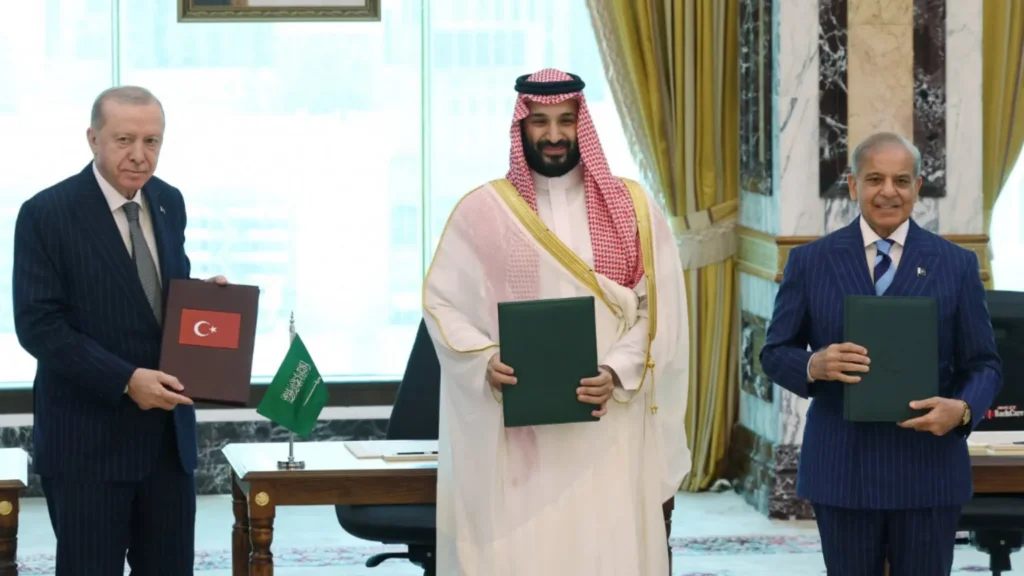
The agreement states that an attack on one is to be treated as an attack on all three. Reuters reported that the agreement was signed amid escalating regional tensions and Iranian attacks. (Reuters)
This does not mean the Gulf states are abandoning the United States. But it shows that regional governments are thinking about security in broader terms. They want more than one safety net.
The Strait of Hormuz Changes Everything
The Strait of Hormuz adds another layer to the crisis. Around one fifth of global oil flows through this narrow waterway under normal conditions. The conflict has therefore created consequences far beyond the battlefield.
Recent reporting indicates that Washington and Tehran have been discussing arrangements concerning the Strait, while Iran has sought a role in controlling traffic through the waterway. (Reuters)
This creates enormous economic pressure.
If shipping is disrupted:
Oil prices rise.
Insurance costs rise.
Transport becomes more difficult.
Gulf economies suffer.
Global consumers feel the impact.
The United States therefore has to consider not only military objectives but also the global economic consequences of continuing the conflict.
The China Question
There is another reason Washington cannot ignore the missile stockpile problem.
China.
A future conflict in the Indo Pacific could involve enormous quantities of missiles, drones and other precision weapons.
American forces might need to defend:
Aircraft bases
Naval forces
Aircraft carriers
Logistics centers
Communications facilities
Allied territory
Supply routes
That would require enormous quantities of defensive weapons. A prolonged Middle East war therefore creates a strategic opportunity cost. Every interceptor used in one theater may reduce the reserve available for another. This is why America’s defense industrial base has become a strategic issue.
Production Capacity Is Military Power
For much of the modern era, military strength was measured by weapons already sitting in warehouses. That is no longer enough.
Imagine Country A has 10,000 missiles but can produce only 100 every month.
Country B has 7,000 missiles but can produce 1,000 every month.
Country A starts the war stronger.
But after months of heavy fighting, Country B may become stronger.
That is why industrial capacity matters.
Factories are part of military power.
Workers are part of military power.
Supply chains are part of military power.
Raw materials are part of military power.
Energy is part of military power.
And time is part of military power.
The New Arms Race Is an Industrial Race
The next generation of military competition will not be decided only by who has the best missile.
It will also depend on who can:
Detect faster.
Intercept efficiently.
Produce faster.
Repair faster.
Replenish faster.
Adapt faster.
This changes the meaning of deterrence.
A country may have a very powerful military on day one.
But if it cannot replace its most important weapons, its strength may decline on day one hundred.
That is strategic endurance.
The Lesson of the Recent Wars
The latest conflicts have demonstrated several uncomfortable truths.
Advanced defenses work
Patriot, THAAD and other systems can save lives and protect valuable infrastructure.
Advanced defenses are not perfect
No missile defense system can guarantee that every incoming weapon will be destroyed.
Missile defense can become expensive
Using a very expensive interceptor against a cheap drone is difficult to sustain indefinitely.
Stockpiles matter
A system is only useful if enough interceptors are available.
Production matters
Factories must replace what war consumes.
Allies matter
No single country can easily solve every defense problem alone.
Political will matters
Military power cannot automatically force an opponent to accept political demands.
Sun Tzu’s Warning
More than two thousand years ago, Sun Tzu wrote:
“The supreme art of war is to subdue the enemy without fighting.”
The modern version of this lesson is simple. The strongest military is not necessarily the one that destroys the most targets. It is the one that can achieve its political objectives at an acceptable cost. If a war destroys thousands of targets but leaves the central political dispute unresolved, the war may have achieved only part of its purpose.
What Happens Next?
Several developments deserve close attention.
U.S. missile production
Can America dramatically increase PAC 3 and other interceptor production?
Gulf rearmament
Will Gulf countries continue diversifying away from dependence on a single supplier?
South Korean exports
Will Cheongung II and other Korean systems become more common in the Middle East?
Cheaper air defense
Can interceptor drones, electronic warfare and directed energy reduce dependence on expensive missiles?
Iran’s rebuilding
How quickly can Iran restore damaged missile and military capabilities?
U.S. political pressure
How will the American public respond if the war continues without a clearly defined end?
Regional security
Will Gulf countries build stronger collective defense arrangements?
Hormuz
Can the Strait return to stable commercial traffic without creating new political concessions?
These questions may determine whether the current conflict becomes a short military episode or the beginning of a much larger transformation in Middle Eastern security.
The Bottom Line
The United States still possesses extraordinary military power. Iran has not demonstrated that it can defeat the United States in a conventional military contest. But that is not the only measure of success.
The more difficult question is whether Washington can force Iran to accept American political objectives without paying a price that becomes too high for the United States and its allies.
Iran’s resilience has complicated that calculation. The heavy use of missile defenses has created a second problem.
Weapons can be replaced, but not instantly.
The Gulf states are learning a third lesson.
A powerful ally is valuable, but dependence on one supplier creates risk.
And the United States is confronting a fourth lesson.
Military superiority does not automatically equal political victory.
This is the real strategic puzzle of the current crisis.
The United States can destroy enormous quantities of Iranian military equipment.
Iran can continue resisting.
The United States can intercept Iranian missiles.
Iran can continue launching them.
America can expand production.
But factories need time.
The Gulf states can buy more defenses.
But global production is limited.
Washington can demand surrender.
But Iran can refuse.
That leaves the region facing a contest not simply of missiles and aircraft, but of endurance, economics, political will and time.
As General George S. Patton famously put it:
“Wars may be fought with weapons, but they are won by men.”
Today, that idea needs one more sentence: And prolonged wars are sustained by factories. The country that can protect its people, maintain its political will and replenish its weapons faster than the enemy can destroy them will possess a major advantage. That may ultimately prove more important than who wins the next missile exchange.
Frequently Asked Questions
1. Is the United States running out of Patriot missiles?
Not in the sense that the United States has no Patriot missiles left. The more serious issue is that heavy wartime use can reduce certain inventories faster than factories can replace them. Rebuilding those stocks can take years. (IISS)
2. Can Patriot and THAAD protect the Gulf from Iranian missiles?
They can provide important protection, but no missile defense system can guarantee that every missile or drone will be intercepted. Effective protection depends on several layers working together, including sensors, different interceptors, electronic warfare and passive defenses.
3. Are Gulf countries abandoning the United States?
There is no clear evidence that they are abandoning Washington. Instead, they are increasingly diversifying their defense suppliers. South Korea, Europe and Ukraine have become part of this search for additional capabilities. (IISS)
4. Why is South Korea becoming an important defense supplier to the Gulf?
South Korea has developed modern and relatively competitive air defense systems. The UAE’s operational use of Cheongung II against Iranian threats has given the system valuable combat credibility. (IISS)
5. Why has Iran not simply surrendered after suffering major military losses?
Military damage does not automatically produce political surrender. Iran’s leadership may believe that continuing to resist is preferable to accepting terms that threaten its sovereignty, military capabilities or political survival. Trump’s March demand for “unconditional surrender” demonstrated the gap between Washington’s initial demands and Tehran’s willingness to compromise. (Yonhap News Agency)
6. What is the biggest long term lesson from the conflict?
The biggest lesson may be that modern military power depends on more than advanced weapons. Countries also need large stockpiles, resilient supply chains, affordable defensive options, skilled workers and the industrial capacity to replace weapons quickly.
Final Thought
The world has entered an era in which missiles can travel thousands of kilometers in minutes, but the factories that replace them still operate on a much slower clock.
That difference matters.
The United States may possess the world’s most powerful military.
Iran may possess far fewer resources.
The Gulf states may possess enormous financial strength.
But all three face the same fundamental reality:
No country can fight an endless war without replenishing what the war consumes.
The future of Middle Eastern security may therefore depend not only on who has the strongest weapons, but on who can sustain them for the longest time.
The International Institute for Strategic Studies (IISS), an independent London based research institute specializing in defense, military capabilities and international security.
IISS was founded in 1958 and has nearly seven decades of experience studying military affairs, geopolitics and international security. It describes itself as an independent research institute focused on security, geopolitics and geo economics
References
- International Institute for Strategic Studies, Challenge for the Gulf States: Rearming After the War. IISS analysis
- International Institute for Strategic Studies, Mind the Air Defence Gap: South Korea’s Burgeoning Role in Air and Missile Defence. IISS analysis
- Reuters, reporting on the U.S. Iran conflict, missile defense pressures and Gulf security developments. Reuters Middle East coverage
- Associated Press, reporting on the Iran conflict, Strait of Hormuz and U.S. military readiness. Associated Press Iran coverage
- CBS News, analysis of President Trump’s Iran war aims and their evolution. CBS News analysis
- Yonhap News Agency, reporting on Trump’s March 2026 demand for Iranian “unconditional surrender.” Yonhap News Agency
SEO setup for WordPress
Focus keyphrase: U.S. Iran missile defense crisis
SEO title: U.S. Iran War and Missile Defense Crisis
Slug: us-iran-war-missile-defense-crisis
Meta description: Explore the U.S. Iran missile defense crisis, Gulf security concerns, weapons stockpiles, production limits, Iranian resilience and the future of Middle East defense.
Secondary keyphrases: U.S. missile stockpiles, Patriot missile defense, THAAD missile defense, Gulf air defense, Iran missile attacks, U.S. Iran war, Gulf states defense, Iran war strategy
Suggested categories: World Affairs, Defense and Security, Middle East, Geopolitics
Suggested tags: U.S. Iran conflict, missile defense, Patriot, THAAD, Gulf security, Iran, United States, Saudi Arabia, UAE, South Korea, military strategy, defense industry, Strait of Hormuz
Editorial note: I would keep the article’s central argument as an analysis rather than presenting the depletion figures as uncontested fact. Current reporting and expert assessments differ over the precise level of U.S. readiness. That distinction makes the article more credible and stronger from an E E A T perspective. (AP News)