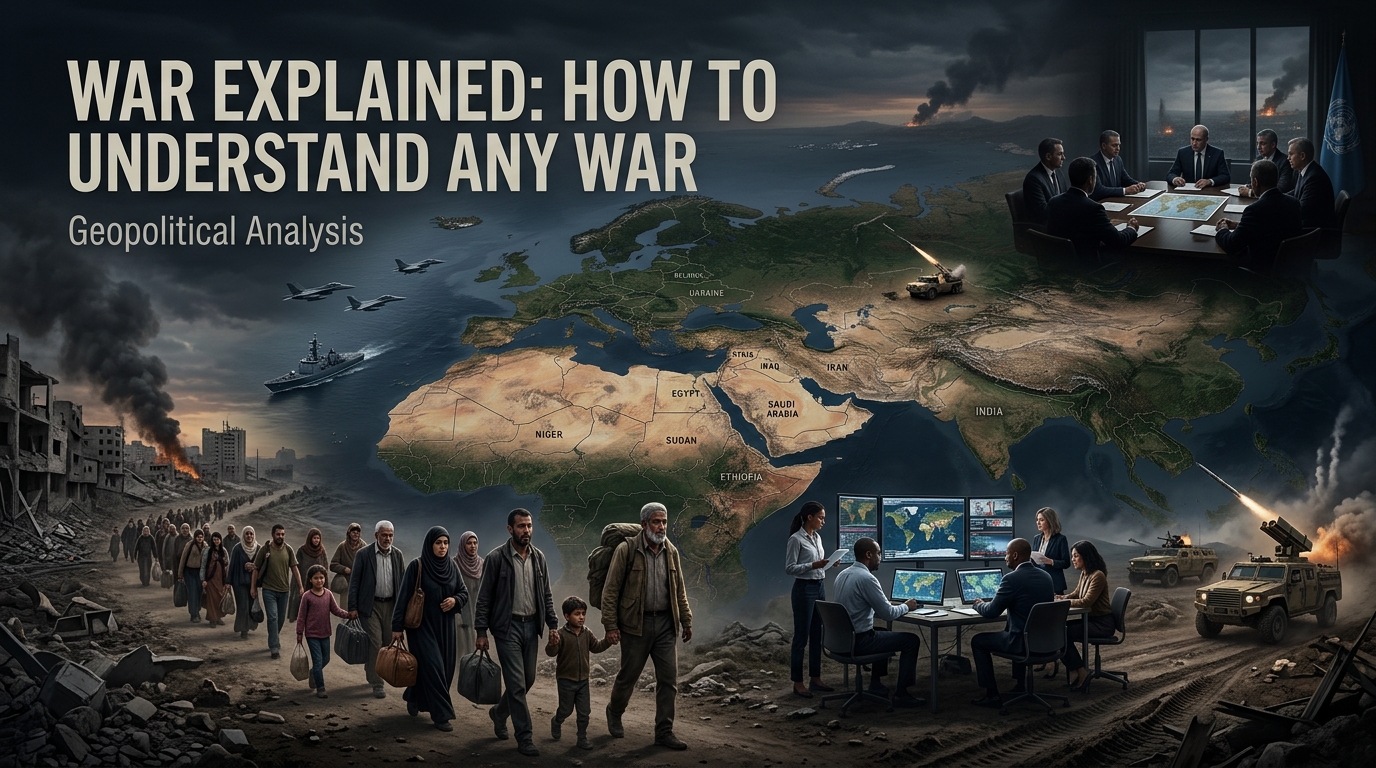
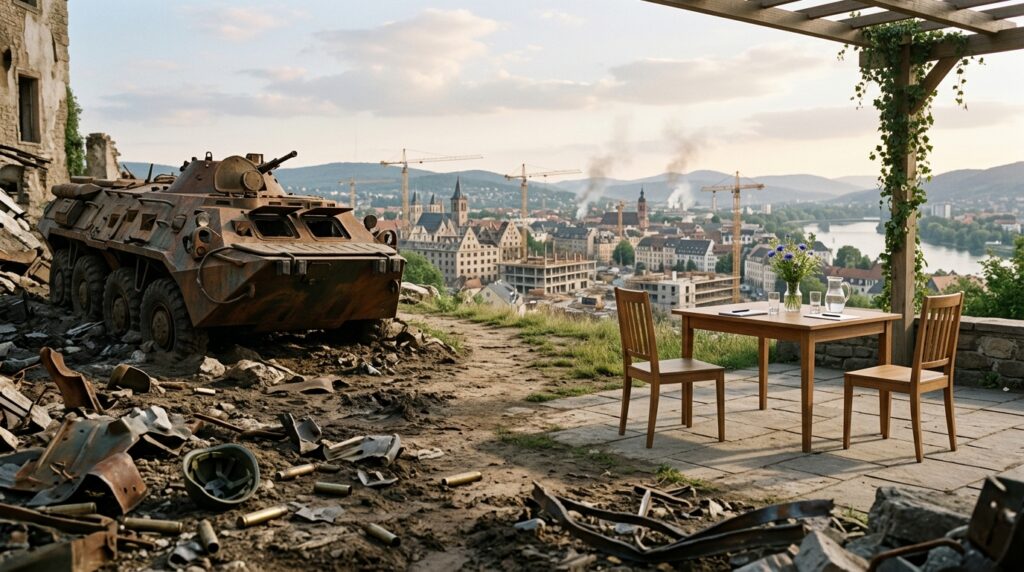
How to Understand Any War: War Explained in simple language, why wars begin, who is fighting, what they want, how battles change, and how wars affect civilians and the world.
War rarely begins with the first shot. By the time missiles fly, aircraft cross borders, soldiers move, or cities appear on television screens, years of political decisions, grievances, fears, ambitions, and failed negotiations may already have shaped the battlefield.
To break it down, two of the ways that we can begin to think about war are:
Historically – When thinking about war historically, we can look at wars that have actually happened, identifying the causes, consequences and relationships central to the conflicts. We can then form our own opinions about individual conflict, for example: you could comment on who you think the real winners and losers of specific wars are, the hidden long-term effects, or your own personal experiences with issues related to the wars you’ve studied.Philosophically – When thinking philosophically, we can learn about war in a broader way, identifying the themes and feelings surrounding the concept. This offers a more general way of thinking about conflict, meaning our analysis can apply to multiple wars in the past, present, or future. Two examples of the kind of theoretical questions you might ask yourself are: is war ever justified or are wars ever simply fought between good and evil?
That is why following a war only through daily headlines can leave us strangely informed but poorly educated.
We know who attacked.
We know which city was hit.
We hear what one government claims.
We hear what another government denies.
Yet we may still not understand the most important question:
Why is this war happening?
And perhaps the harder question:
Why does it keep going?
This article offers a simple framework for understanding almost any modern war. It also applies that framework to one of the most consequential recent examples: the confrontation involving Iran, Israel, and the United States, from the June 2025 war through the renewed conflict that began in February 2026.
A battlefield shows where people are fighting. It does not always explain why they are fighting.
What Does “War Explained” Actually Mean?
Explaining a war is not the same as describing it. A description tells us what happened.
An explanation tries to tell us why it happened, why it continued, what each side wanted, what changed during the conflict, and what consequences followed. A serious explanation should answer several basic questions:
Who is fighting?
Why did the conflict begin?
What does each side want?
What happened before the first major fighting?
What are the military objectives?
What is happening to civilians?
Who is supporting each side?
How is the war being financed?
Why does the geography matter?
What role does diplomacy play?
What information can be trusted?
How could the war end?
Once these questions are answered, the confusing pieces begin to fit together.
The First Rule: Separate the Cause From the Trigger
This is one of the most important ideas in understanding war. A war may have a trigger, but the trigger is not necessarily its deepest cause. Imagine a room filled with dry grass. One spark starts the fire. The spark matters. But the spark alone does not explain why the fire spread so quickly. The deeper explanation is the dry grass. Wars can work the same way.
A border incident, assassination, terrorist attack, military deployment, disputed election, or political decision may trigger a conflict.
But underneath it may be:
Territorial disputes
Historical grievances
Political rivalry
Security fears
Competition for resources
Nationalism
Foreign intervention
Economic pressure
Struggles for political power
The intelligent reader therefore asks two different questions:
What triggered the war?
And:
What made the situation so vulnerable to war in the first place?
The War Explained Framework
A useful way to understand almost any conflict is to examine it through ten connected layers. Think of them as ten windows looking into the same burning building.
1. History: What Happened Before the War?
Wars have memories. Sometimes those memories are accurate. Sometimes they are exaggerated. Sometimes political leaders deliberately keep them alive because historical grievances can strengthen public support. To understand a conflict, go backwards.
Look at borders.
Look at previous wars.
Look at treaties.
Look at occupations.
Look at population movements.
Look at political agreements.
Look at broken promises.
Look at earlier attempts at peace.
History does not automatically justify present violence. But ignoring history can make present events almost impossible to understand.
History: What Happened Before the War?
2. Geography: Why Does the Location Matter?
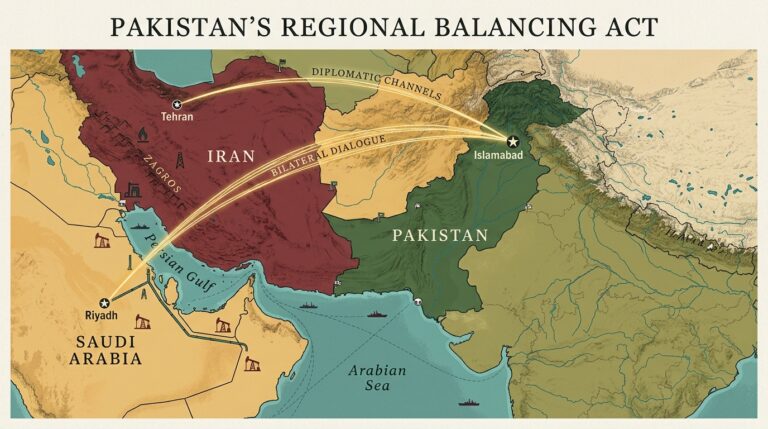
A map can sometimes explain a war better than a speech. Mountains can protect armies. Rivers can create natural barriers. Ports can determine access to trade. Straits can control shipping routes. Cities can become strategic objectives. A narrow corridor can connect two regions. A coastline can provide access to the sea. A desert can make military operations extremely difficult.
Geography asks one simple question
Why is this particular piece of land important?
Sometimes the answer is military.
Sometimes economic.
Sometimes political.
Sometimes symbolic.
And sometimes it is all four.
3. The Players: Who Is Actually Fighting?
A common mistake is to describe a war simply as:
Country A versus Country B.
Modern conflicts are often much more complicated.
There may be:
Regular armed forces
Paramilitary groups
Militias
Political movements
Local armed groups
Foreign military forces
Intelligence organizations
Private military organizations
International coalitions
Some actors may officially deny involvement while providing weapons, money, intelligence, or logistical support. This creates another important distinction:
Who is fighting directly?
And:
Who is helping them fight?
Those are not always the same people.
4. Objectives: What Does Each Side Want?
This is where many war reports become shallow. We are told what happened. We are rarely told clearly what each side is trying to achieve. A government may want territorial control. Another side may want independence. A military alliance may want deterrence. An armed movement may want political recognition. A state may want to remove what it considers a security threat. Another may want to prevent an adversary from becoming stronger. Objectives can also change.
A war may begin with one goal and continue long enough that completely different goals emerge.
Ask this question repeatedly
If this side wins, what does victory look like?
That question cuts through a remarkable amount of political noise.
5. Military Strategy: How Is the War Being Fought?
A war is not simply a collection of battles. Military strategy concerns the larger plan. An army may try to capture territory. Another may attempt to exhaust its opponent. One side may focus on air power. Another may rely heavily on drones, artillery, missiles, defensive positions, or guerrilla tactics. Naval forces may attempt to control shipping routes. Cyber operations may target communications and infrastructure. The military balance is therefore more complicated than counting soldiers and weapons.
Numbers can mislead
A country may have a larger army but face logistical problems. Another may have fewer troops but stronger defensive positions. One side may possess advanced weapons but lack sufficient ammunition. Another may have older equipment but large stocks and established supply routes. War is not a spreadsheet. It is a system.
Training, morale, leadership, intelligence, logistics, terrain, technology, and political will can all change the outcome.
6. The Civilian War: The Story Behind the Battlefield
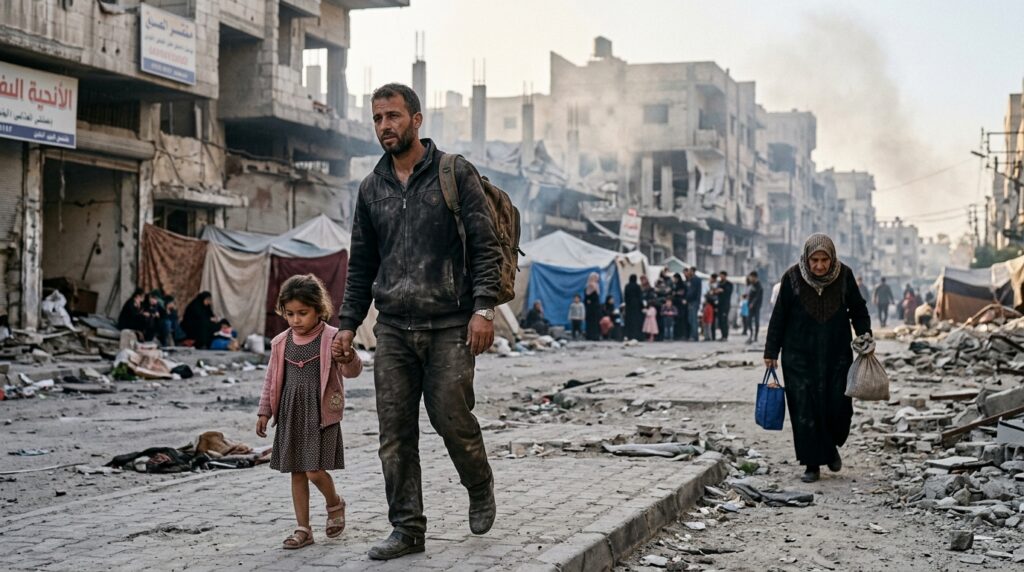
This layer is often pushed aside by military reporting. It should not be. For civilians, war is not a map. It is a closed school. A destroyed home. A missing family member. A hospital without electricity. A child who has stopped asking when the fighting will end. A farmer who cannot reach the fields. A family that leaves everything behind with two bags. A war may be measured in kilometres captured. Civilians experience it in lost years.
Look beyond casualty numbers
Civilian consequences can include:
Deaths and injuries
Displacement
Food shortages
Interrupted education
Destroyed hospitals
Loss of homes
Family separation
Economic collapse
Psychological trauma
Loss of livelihoods
Long-term refugee crises
This is why a genuinely human explanation of war must include civilians, not as a footnote but as part of the central story.
The Civilian War: The Story Behind the Battlefield
7. The Economic War: Who Pays for the Fighting?
Modern war consumes extraordinary amounts of money. Weapons must be manufactured. Fuel must be transported. Soldiers must be paid. Infrastructure must be repaired. Hospitals must operate. Food must move. Imports and exports may be disrupted. Governments may borrow heavily. Foreign governments may provide financial assistance. Sanctions may be imposed. Trade routes may change. The effects can travel far beyond the battlefield.
A war thousands of kilometres away can affect the price of fuel, food, shipping, and raw materials elsewhere.
War can create winners too
This is an uncomfortable subject, but it matters. Some industries can benefit from increased military spending. Defence manufacturers may receive large contracts. Certain exporters may find new markets. Other industries may suffer. Insurance costs can rise. Shipping can become more expensive. Tourism can collapse. Investors can move money to safer markets.
Understanding these incentives can help explain why some conflicts become extraordinarily difficult to stop.
8. The Information War: Who Controls the Story?
Every modern war is also a battle over information. Governments want their populations to believe their version of events. Military organisations want to influence the enemy. Political groups want international support. Social media can spread information within minutes. A dramatic video can become global news before anyone verifies when or where it was recorded. An old photograph can suddenly be presented as evidence of a new attack. A real image can be given a false caption. A fabricated video can look authentic. And a genuine military event can still be presented selectively.
This creates a dangerous environment
During war, information is not simply information. It can become a weapon. That does not mean every report is propaganda. It means readers must become more careful.
Ask:
Who is making this claim?
What evidence is provided?
Can independent sources verify it?
Is the material current?
What might the source gain from people believing it?
And perhaps most importantly:
What information is missing?
The Information War: Who Controls the Story?
The Iran Case Study: From the 2025 War to the 2026 Conflict
The confrontation involving Iran, Israel, and the United States provides an unusually clear demonstration of why wars must be understood as a chain of events rather than isolated headlines.
The June 2025 conflict was a critical turning point.
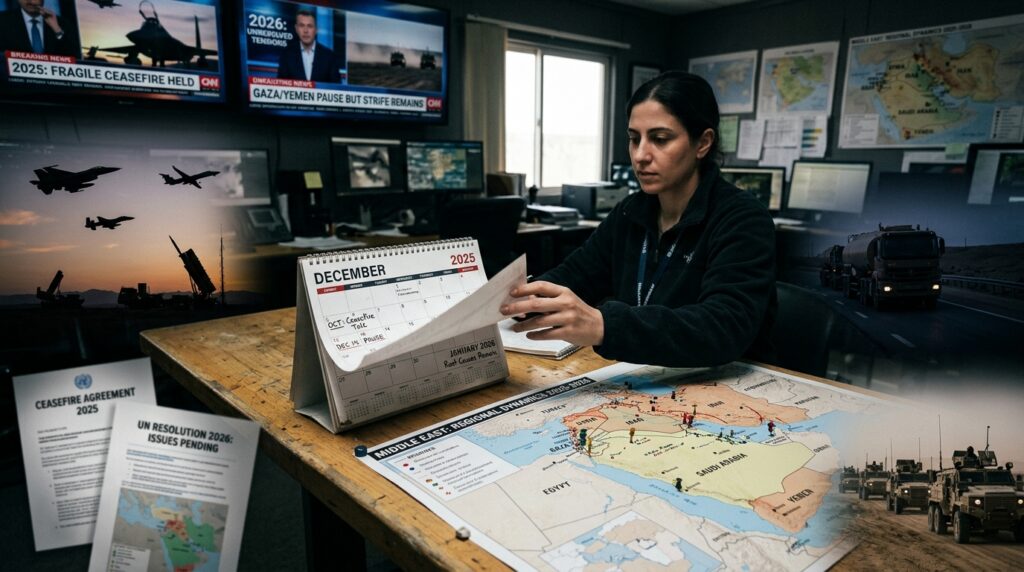
Israel launched major strikes against Iran on June 13, 2025. Iran responded with missile attacks, and the United States subsequently entered the fighting directly, striking Iranian nuclear facilities in the June 22 operation widely known as Operation Midnight Hammer. A ceasefire followed on June 24.
The fighting stopped. The underlying confrontation did not. That distinction is essential.
A ceasefire can stop the shooting without solving the argument that caused the shooting.
June 2025: The Twelve-Day War
The June conflict demonstrated that the confrontation had crossed an important threshold. Israel and Iran were no longer operating only through indirect confrontation. They were attacking each other’s territory directly. Then Washington crossed another threshold. The United States became a direct combatant.
The American operation targeted three major Iranian nuclear-related locations: Fordow, Natanz, and Isfahan. The operation involved long-range bombers, bunker-busting weapons, and cruise missiles.
For global readers, this was a critical moment.
The United States was no longer merely supporting Israel diplomatically or militarily.
American forces were directly attacking targets inside Iran.
Iran subsequently retaliated against U.S. positions in the region. The regional conflict had become something much larger.
What Did Trump and Netanyahu Say?
This is where the information-war dimension becomes particularly important. Benjamin Netanyahu presented the June 2025 outcome as a major Israeli achievement against Iran’s nuclear and missile capabilities.
Donald Trump similarly celebrated the American strikes and presented them as a major military success.
These statements matter.
But they must be treated as claims made by political leaders, not automatically as independent assessments of strategic success. That distinction is crucial.
A leader saying “we won” tells us what that leader wants the public to understand. It does not by itself answer whether the original strategic objectives were permanently achieved.
The Victory Question
Suppose the objective was to damage nuclear facilities. Then assess the damage. Suppose the objective was to eliminate a nuclear capability. Then ask whether that capability was actually eliminated. Suppose the objective was to change Iranian behaviour. Then examine Iranian behaviour afterwards.
Suppose the objective was regime change. Then ask whether the government actually changed. Suppose the objective was to prevent future attacks. Then ask whether the threat actually disappeared. This is how serious analysis separates political rhetoric from strategic results.
2025 Was Not the End of the Story
The June 2025 ceasefire did not erase the deeper disputes.
The nuclear question remained.
Security fears remained.
U.S.-Iran hostility remained.
Sanctions remained.
Regional rivalries remained.
Israel’s concerns remained.
Iran’s military capabilities remained.
The result was an unstable pause rather than a comprehensive settlement.
That unresolved environment became the bridge to the next major confrontation.
February 2026: The Next Chapter
On February 28, 2026, the United States and Israel launched another major military campaign against Iran. Readers should not view the event as though the story had begun that morning. It was the continuation of a confrontation whose previous chapter had ended in a ceasefire rather than a durable political settlement. The conflict developed into a prolonged confrontation involving military operations, missile attacks, economic pressure, sanctions, maritime disruption, and repeated diplomatic efforts. That sequence is important because it demonstrates a central principle of war:
Wars often have chapters, not clean beginnings and endings.
Trump’s Pre-War and Wartime Claims
Trump’s public statements are particularly useful for understanding the information war surrounding the conflict. Before and during the campaign, he repeatedly emphasised the threat posed by Iran’s nuclear capabilities and presented military pressure as a means of forcing Tehran toward a different strategic position. After military operations began, his language frequently emphasised overwhelming success and rapid results. But a crucial question remained:
Did battlefield success produce the political outcome that Washington wanted?
That is the difference between destroying targets and solving a strategic problem.
Netanyahu’s Position
Netanyahu likewise framed Iran’s nuclear and military capabilities as an existential security threat to Israel. His public statements before and after military action emphasised Israel’s right and responsibility to remove what it considered a serious threat. Again, the analytical task is not to mock or endorse those statements. It is to compare them with evidence. If a leader says a threat has been eliminated, the reader should ask:
What evidence demonstrates that it has been eliminated?
If a leader says the enemy has been defeated, ask:
What does defeat actually mean?
If a leader says the war is producing historic results, ask:
Which measurable strategic objective has been achieved?
That standard should apply equally to Washington, Jerusalem, and Tehran.
The Claims War: What Leaders Say Versus What Can Be Established
Modern war has created a new problem. The political leader who announces a battlefield success may reach millions of people before independent journalists have even arrived at the scene. Social media makes the gap between claim and verification enormous.
This is why the following method is useful:
Claim
What did the leader, military, or government say?
Evidence
What evidence supports the statement?
Counterclaim
What does the opposing side say?
Independent Assessment
What do credible independent sources report?
Uncertainty
What remains unknown?
This method prevents the reader from confusing confidence with evidence.
The Claims Versus Reality Test
When examining major statements by Trump, Netanyahu, Iranian officials, or military organisations, readers should ask five questions:
What was the stated objective?
What evidence supports the claimed result?
What does the opposing side say?
What do independent assessments indicate?
What remains uncertain?
This approach is stronger than simply deciding which politician sounds more convincing. The same standard must be applied to every side.
The 2026 Endgame Problem
The Iran conflict also illustrates one of the hardest questions in warfare:
What exactly counts as victory?
Military damage can be measured. Political success is harder. A country can lose aircraft, missiles, bases, and infrastructure while its government survives. An attacking coalition can destroy military targets while failing to achieve political capitulation.
A defender can suffer enormous losses while claiming strategic survival. This is why the conflict has become such a useful case study.
The lesson is universal:
A country can lose battles without losing a war, and a country can win battles without achieving its political objective.
9. The Diplomatic War: What Happens Away From the Battlefield?
Some of the most important battles in a war may never involve soldiers. Diplomats negotiate. Governments impose sanctions. Alliances change. International organisations issue resolutions. Countries send weapons. Others send humanitarian aid.
Some governments attempt mediation. Others quietly pressure one side. A ceasefire proposal may fail because neither side trusts the other. A peace agreement may collapse because the political conditions behind it remain unresolved. The Iran conflict demonstrates this tension between military pressure and diplomacy. Diplomacy should therefore not be treated as something that begins only after the fighting stops.
Diplomacy is part of warfare from the beginning.
10. The Endgame: How Could the War Actually End?
This is perhaps the question readers care about most. Unfortunately, it is also the question most vulnerable to speculation.
A war can end through:
A Negotiated Peace Agreement
A Ceasefire
Military Defeat
Withdrawal
Political Change
International Pressure
Economic Exhaustion
A Frozen Conflict
A Gradual Reduction in Fighting
But ending the shooting does not necessarily mean solving the conflict. A ceasefire may stop large-scale fighting while leaving the central dispute unresolved. A peace agreement may end a war but create political arguments that last for decades. The end of one war can also plant the seeds of another.
The Strait of Hormuz: When Geography Becomes Global
The Iran conflict provides perhaps the clearest modern example of geography becoming global economics. The Strait of Hormuz is a narrow maritime passage connecting the Persian Gulf with the Gulf of Oman. Its importance extends far beyond Iran and its neighbours. When shipping through the strait becomes dangerous or restricted, oil markets react.
Insurance costs can rise.
Shipping can slow.
Energy prices can increase.
Supply chains can become nervous.
Consumers thousands of kilometres away can eventually feel the consequences.
This is the economic geography of modern war.
A missile fired in one region can influence fuel prices in another.
A disrupted shipping route can affect factories on another continent.
A geopolitical crisis can eventually appear in a household budget.
The battlefield may be local. The consequences may be global.
The Information-War Lesson
The Iran conflict also demonstrates why artificial intelligence is creating a new challenge for wartime reporting. AI-generated images and videos can now look remarkably convincing. A fabricated battlefield scene can be shared thousands of times before verification catches up. That means visual evidence must also be examined critically.
Ask:
Where did the image originate?
When was it created?
Can the location be independently verified?
Does the weather, geography, architecture, or military equipment match the claimed location?
Have reputable independent organisations verified it?
The lesson is not that every dramatic image is fake. The lesson is that dramatic evidence deserves verification precisely because it is dramatic.
Why Wars Become Longer Than Expected
Many wars begin with leaders believing victory will come quickly.
Reality has a habit of ignoring predictions.
The attacker may underestimate resistance.
The defender may receive outside assistance.
Terrain may slow operations.
Logistics may become difficult.
Political pressure may limit military choices.
Both sides may fear that stopping now will make their sacrifices meaningless. This creates a dangerous psychological trap.
The longer a war continues, the harder it can become for leaders to admit that the original assumptions were wrong.
Sunk costs begin to matter.
Thousands of lives may already have been lost.
Billions may already have been spent.
Leaders may fear political humiliation.
The result can be a war that continues partly because ending it has become politically painful.
Why Both Sides Can Believe They Are Winning
This sounds strange. But it happens.
One side may measure success by territory captured.
Another may measure success by territory denied to the enemy.
One side may celebrate destroying weapons.
The other may celebrate surviving another offensive.
One government may claim strategic victory.
Its opponent may claim the same thing.
This is why military announcements should not automatically be treated as objective measurements.
The question is:
What independent evidence supports the claim?
The Difference Between Tactical and Strategic Victory
A battlefield victory can be real without changing the war.
An army captures a town.
That is a tactical success.
But if holding the town costs enormous resources and does not change the opponent’s ability to continue fighting, the strategic effect may be limited. Conversely, losing a position may be a tactical defeat while serving a larger defensive strategy. The same principle applies to air campaigns. Destroying a facility is a measurable military achievement. Whether the destruction changes the opponent’s long-term behaviour is a strategic question. That distinction is essential when assessing claims of victory in the Iran conflicts.
The Civilian Story Behind the Statistics
Numbers are necessary. They help researchers measure the scale of destruction. But numbers can also make suffering feel strangely distant.
“Thousands displaced.”
It is an enormous figure.
But imagine thousands of individual stories.
A father carrying his child.
An elderly woman leaving her home for the last time.
A student abandoning school.
A shopkeeper locking his business without knowing whether he will ever return.
A family crossing a border with documents stuffed into a plastic bag.
War statistics are people before they become statistics. That is why responsible war reporting should combine data with human reality.
How to Read War News Without Becoming Part of the Propaganda
You do not need to become a professional intelligence analyst. A few habits can dramatically improve your understanding.
Read Beyond One Side
If you only consume information from one political camp, you may eventually mistake repetition for evidence.
Read competing accounts.
Then compare them.
Separate Facts From Claims
“Missiles struck a city” is a claim that can potentially be independently verified.
“Everything is going according to plan” is an interpretation.
The two should not be treated equally.
Watch the Language
Words matter.
“Freedom fighters.”
“Terrorists.”
“Liberators.”
“Invaders.”
“Defenders.”
“Occupation.”
“Special operation.”
Different sides may use completely different words for the same event. Sometimes the language itself reveals the political position of the speaker.
Look for Evidence
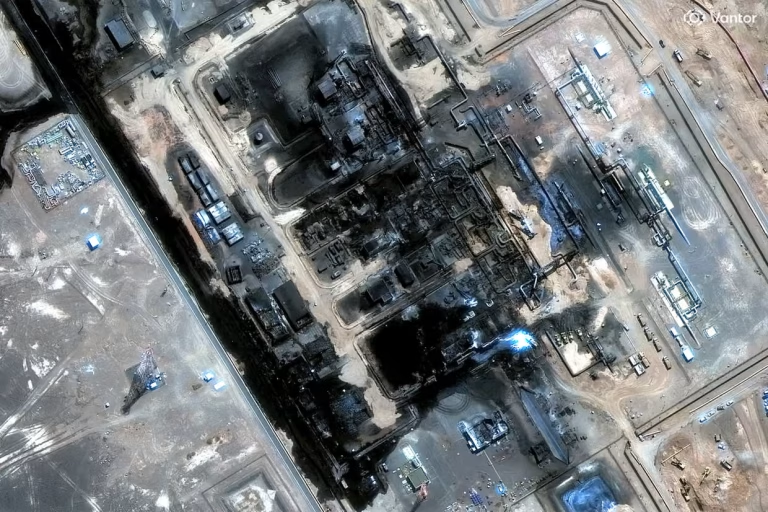
Photographs, satellite imagery, official documents, casualty records, independent reporting, and verified video can help. But none should automatically be treated as perfect. Evidence must still be evaluated.
Be Comfortable Saying “Unknown”
This is an underrated skill. During an active war, some things genuinely cannot be known immediately. Anyone claiming to know everything in real time deserves scrutiny.
How to Explain War to a Young Person
Children often ask the most difficult questions.
“Why don’t they just stop?”
“Who started it?”
“Why can’t other countries make them stop?”
There is no need to bury them under geopolitical terminology.
Start with the human reality.
Two groups disagree about something important.
They fail to resolve it peacefully.
Fear grows.
Leaders make decisions.
Weapons enter the picture.
People begin fighting.
Then explain that real wars are much more complicated because many groups, governments, historical grievances, and interests become involved. Most importantly, avoid teaching children that entire populations are enemies.
Governments make decisions.
Armies fight.
Political organisations act.
Ordinary people often suffer.
That distinction matters.
How to Explain War to a Global Audience
A global reader may not share the political assumptions of the country where a conflict is taking place. That is why good international analysis should avoid unnecessary political shorthand. Instead of assuming readers already know the history, explain it. Instead of declaring one side entirely good and the other entirely evil, examine actions and evidence. Instead of repeating political slogans, identify who made the claim. Instead of focusing only on military power, explain the consequences for ordinary people. And instead of predicting the future with confidence, present realistic possibilities.
Good international analysis does not tell readers what to think. It gives them enough information to think better.
The Five Questions That Can Expose Weak War Analysis
When reading an article about any conflict, ask five questions.
What evidence supports the main claim?
What important context has been left out?
Does the article distinguish facts from interpretation?
Does it acknowledge uncertainty?
Does it explain what each side wants?
If an article cannot answer these questions, it may be commentary rather than serious analysis. Commentary has its place. But readers should know when they are reading opinion rather than evidence-based explanation.
What This Framework Cannot Do
No framework can predict war perfectly.
Human beings are unpredictable.
Leaders make mistakes.
Unexpected alliances emerge.
A military breakthrough can change calculations overnight.
A political crisis can suddenly produce negotiations.
A single event can alter the entire strategic picture.
Therefore, a good framework is not a crystal ball.
It is a map. A map does not tell you exactly where you will end up. It helps you understand where you are.
What the Iran Wars Teach Us About Every Other War
The 2025 and 2026 Iran conflicts demonstrate almost every major component of modern warfare.
They show how:
History Creates the Conditions for Confrontation.
A Military Strike Can Become a Regional Conflict.
A Ceasefire Can Pause Fighting Without Resolving the Dispute.
Military Superiority Does Not Automatically Produce Political Surrender.
Political Leaders Use Language as a Weapon.
Information Can Travel Faster Than Verification.
A Narrow Waterway Can Influence Global Energy Markets.
Sanctions Can Become Part of the Battlefield.
Civilian Suffering Can Extend Far Beyond the Front Lines.
Diplomacy Continues Even During Military Operations.
A Tactical Victory May Not Equal Strategic Victory.
That is why the Iran conflict is such a useful case study for understanding war generally.
The Most Important Lesson
War is never just about weapons.
It is about power, fear, territory, identity, security, politics, economics, history, and human decisions.
Weapons determine what can happen on the battlefield.
Politics determines what leaders are willing to risk.
Economics determines what countries can sustain.
Diplomacy determines what alternatives remain.
Information shapes what populations believe.
And ordinary people pay the price when those systems fail.
That is why every war deserves to be examined from more than one angle.
The battlefield matters.
But so does the negotiating table.
The map matters.
But so does the refugee camp.
The military announcement matters.
But so does the evidence.
The political speech matters.
But so does what happens after the cameras leave.
Final Perspective
The easiest way to misunderstand a war is to watch it one headline at a time.
Today there is an offensive.
Tomorrow there is a counterattack.
Next week there is a new weapons shipment.
Then a ceasefire proposal.
Then another attack.
The reader is left running behind the news.
A framework changes that.
It allows us to step back and ask:
How did we get here?
What does each side want?
What is actually changing?
Who is paying the price?
Who benefits?
What evidence can we trust?
And what would a realistic end look like?
These questions do not make war simple. They make it understandable. And understanding matters. Because when citizens understand wars better, they become harder to manipulate with slogans, selective facts, and emotional headlines.
The story of the Iran conflicts reinforces the lesson.
The June 2025 war did not resolve the confrontation.
The ceasefire did not erase the underlying dispute.
The February 2026 war did not produce an immediate political settlement.
And the continuing confrontation shows why declaring victory is much easier than creating lasting peace.
The purpose of understanding war is not to make war seem inevitable. It is to understand the decisions that make war possible, and the choices that might make peace possible.
Military_vehicle_transitions_to_…
Frequently Asked Questions
What does “War Explained” mean?
“War Explained” is a structured approach to understanding armed conflicts. It examines their history, causes, major actors, objectives, military strategy, civilian consequences, economic effects, information warfare, diplomacy, and possible endgames.
What is the difference between the cause and trigger of a war?
The trigger is the event that immediately turns an existing crisis into open conflict. The causes are the deeper political, historical, territorial, economic, or security problems that created the conditions for the conflict.
Why is the 2025 Iran war important for understanding the 2026 war?
The June 2025 conflict marked a major escalation in direct fighting between Israel and Iran and included direct U.S. strikes on Iranian nuclear-related facilities. The ceasefire stopped the immediate fighting but did not resolve the underlying disputes. The February 2026 conflict therefore needs to be understood as part of a continuing confrontation rather than as an isolated event.
How can readers evaluate claims made by Trump, Netanyahu, or other wartime leaders?
Treat every statement as a claim that requires evidence. Ask what was actually promised, what objective was identified, what evidence supports the claimed result, what independent sources report, and what remains uncertain. The same standard should be applied to every side.
Why are civilian experiences important when explaining war?
Civilian suffering is one of the central consequences of armed conflict. Displacement, deaths, injuries, destroyed homes, disrupted education, economic collapse, and loss of livelihoods can continue long after major fighting ends.
Can this framework predict how a war will end?
No. It can identify the forces shaping a conflict and the possible pathways toward an ending, but wars are influenced by unpredictable political, military, and human decisions. A framework is a tool for understanding, not a crystal ball.
About the Author
Maj Hamid Mahmood (Retired) holds an MA in Political Science, LLB, and PGD (HRM). His military background, academic training in political science, and legal education provide a multidisciplinary perspective for examining international conflicts, security affairs, political developments, and the human consequences of war.
Editorial Note
This article is a framework for understanding war, not an endorsement of any government, military organisation, or political position. Because the Iran conflict remains active and information continues to change, claims about current military operations, casualties, territorial control, and strategic outcomes should be checked against multiple credible and independent sources.
References
Reuters — Iran, Israel and U.S. conflict coverage Reuters provides independent reporting on the June 2025 conflict, the February 2026 escalation, military developments, diplomatic efforts, economic consequences, and competing claims by the parties. Particularly useful for the article’s discussion of the continuing 2026 conflict and the distinction between political claims and independently reported developments. Reuters — World News
U.S. Department of Defense — Operation Midnight Hammer The Pentagon’s June 22, 2025 briefing documents the U.S. strikes against Fordow, Natanz, and Isfahan and provides the American government’s account of the operation. It is particularly useful for comparing official military claims with subsequent independent assessments. U.S. Department of Defense
Reuters — U.S. assessment of the 2025 nuclear strikes Reuters reported the competing assessments surrounding the effectiveness of the June 2025 strikes, illustrating why readers should distinguish between an official declaration of success and independent assessment of strategic results. Reuters — Iran coverage
Reuters — June 2025 ceasefire and civilian consequences Reuters’ reporting on the June 24, 2025 ceasefire provides useful context on the immediate human consequences of the twelve-day conflict and the uncertainty surrounding the truce.
U.S. Energy Information Administration — Strait of Hormuz The EIA explains why the Strait of Hormuz matters to the world economy. It reports that approximately 20.9 million barrels per day of oil moved through the strait during the first half of 2025, equivalent to about one-fifth of global petroleum liquids consumption. U.S. Energy Information Administration — World Oil Transit Chokepoints
International Committee of the Red Cross — Protection of Civilians The ICRC provides the legal and humanitarian framework underlying the article’s discussion of civilian protection, displacement, medical facilities, and the human cost of armed conflict. International Committee of the Red Cross — Civilians
International Committee of the Red Cross — International Humanitarian Law This source explains the distinction between the rules governing whether force may lawfully be used and the rules governing conduct once an armed conflict exists. It supports the article’s broader discussion of the laws of war. ICRC — What Is International Humanitarian Law?
Reuters — Information warfare and AI-generated wartime material Reuters’ August 31, 2026 reporting on Trump’s claim concerning Kharg Island is a particularly relevant example for the article’s section on verification. Reuters reported that the accompanying video was AI-generated and that no supporting evidence for the claimed destruction was available.
Reuters — Economic consequences of the 2026 conflict Reuters’ recent analysis examines the prolonged conflict, restrictions around the Strait of Hormuz, energy markets, sanctions, and the emergence of a costly stalemate rather than the rapid resolution initially anticipated.
Reuters — Public opinion and political consequences in the United States Reuters/Ipsos reporting provides useful evidence for understanding how a prolonged war can eventually influence domestic politics, public support, fuel prices, and the political environment surrounding the 2026 U.S. midterm elections.