The Empty UN Hall: Why Can’t the World Stop Israel?
The Empty UN Hall: Why Can’t the World Stop Israel? As September 2026 begins, the world may once again watch the UN General Assembly for a familiar scene: Benjamin Netanyahu at the podium, diplomats weighing whether to stay or walk out, and another wave of global reactions unfolding in real time. But if last year’s empty seats were a symbol of growing diplomatic frustration, the question this year is more consequential: Will the world merely protest again, or will it finally turn international condemnation into meaningful political action?
Imagine standing inside the United Nations General Assembly, the institution created after two world wars to help nations resolve conflicts and preserve international peace.
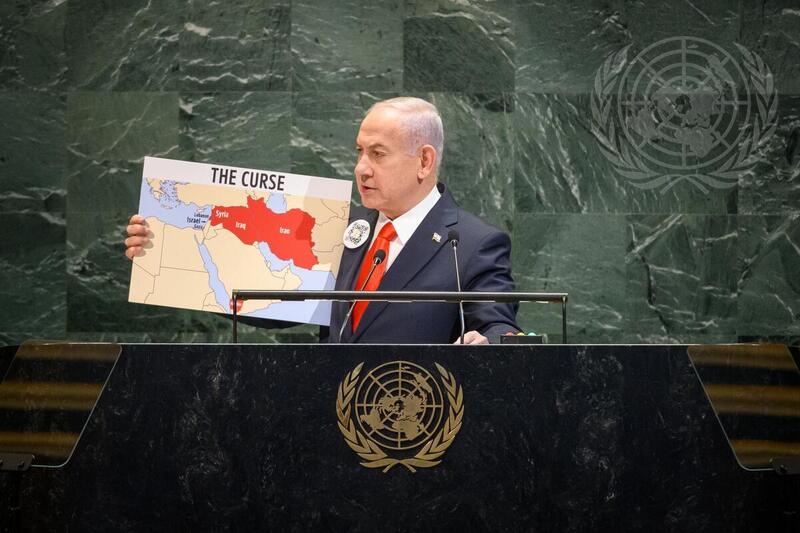
Now imagine watching diplomats leave the chamber as a national leader begins speaking. That was the striking scene when Israeli Prime Minister Benjamin Netanyahu addressed the UN General Assembly on September 26, 2025.
https://mrpo.pk/trumps-war-for-netanyahu/
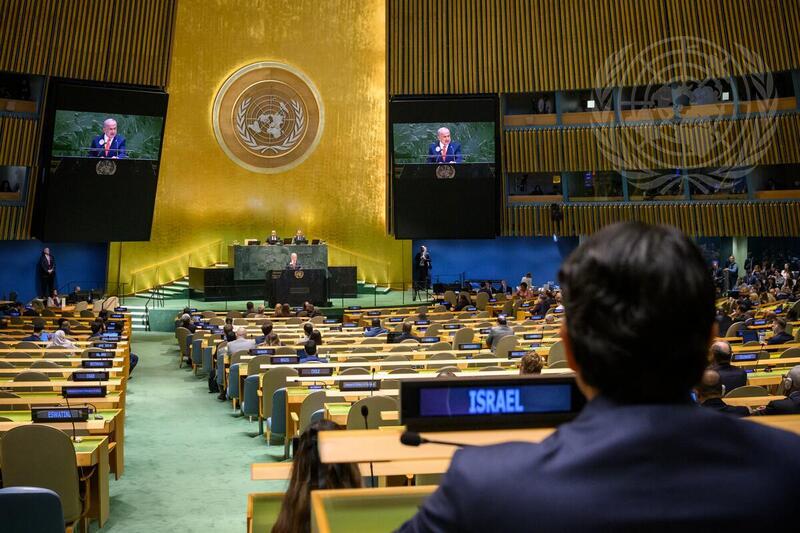
The walkout quickly became a global image of diplomatic frustration over Israel’s war in Gaza and its policies toward the Palestinians. But the empty seats tell only part of the story. The more important question is this:
If such a large part of the international community opposes Israel’s policies, why has it been so difficult to translate that opposition into meaningful political consequences?
To answer that question, we have to look beyond one speech.
The real story involves the history of the Israeli-Palestinian conflict, the limits of the United Nations, the structure of the Security Council, American military and diplomatic support for Israel, the growing recognition of Palestine and the political influence of a younger generation connected through social media. At the heart of the debate is a much larger question:
Can international consensus overcome geopolitical power?
What Happened at Netanyahu’s UN Speech?
On September 26, 2025, Netanyahu addressed the UN General Assembly amid intense international criticism of Israel’s conduct in Gaza and growing diplomatic support for Palestinian statehood. As he began speaking, numerous delegates left the chamber.
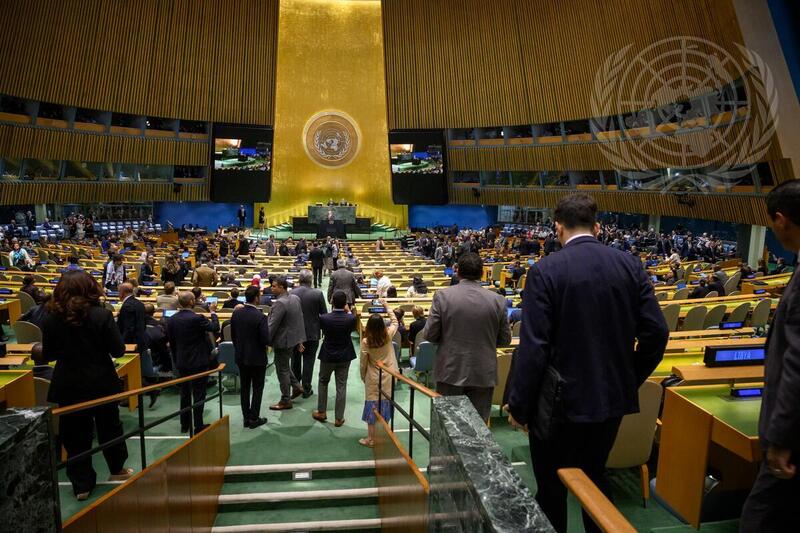
Reports differed over the exact number. Israel later counted 77 countries as either absent or having walked out, while other reports described dozens of delegations participating in the protest.
That distinction is important. A country’s absence is not the same as its delegation physically walking out. The walkout should therefore be understood as a significant diplomatic protest, but its precise scale must be determined by official records rather than by viral footage or political claims. The symbolism, however, was unmistakable. Diplomats were leaving while Netanyahu continued speaking. Yet symbolism alone cannot change a war. That is where the deeper investigation begins.
The Empty Chairs Came at a Historic Moment
Netanyahu’s speech took place during one of the most significant diplomatic shifts in the history of Palestinian statehood.
Before the 2025 recognition wave, Palestine was already recognised by 148 of the 193 UN member states, according to the UN Regional Information Centre. Then came a series of new recognitions. Countries including the United Kingdom, Canada, Australia and France recognised Palestine in September 2025.
By September 23, Palestine had been recognised by 157 of the 193 UN member states, representing roughly 81 per cent of UN membership.
This timing is crucial. The major recognition wave did not occur because of Netanyahu’s speech. It occurred immediately before it. He therefore entered the UN at a moment when the diplomatic landscape was already changing.
What Can the UN General Assembly Do to End Israel’s Occupation?
With illegal settlements rising and settler violence surging in the West Bank, and with famine and relentless bombing killing more than 64,000 Palestinians in Gaza so far, most of them women and children, the world is looking to see what, if anything, the General Assembly can do to ensure that there are meaningful consequences for Israel’s blatant violations of the Geneva Conventions and the Genocide Convention.
Just days before the Sept. 18 deadline established by the United Nations General Assembly for Israel to comply with the advisory opinion issued by the International Court of Justice, in which it confirmed the unlawful nature of the Israeli occupation, annexation and settlement of the Occupied Palestinian Territory (OPT), Israel has failed to comply. It has neither ended its illegal occupation, dismantled its illegal settlements nor evacuated its illegal settlers.
To the contrary, Prime Minister Benjamin Netanyahu and his coalition of far-right extremists have declared their intention to exponentially expand settlement activity and possibly annex the West Bank, including East Jerusalem. They have also publicly published plans to resettle Gaza and, to that end, they have accelerated the annihilation of the Gaza Strip and pursued a genocidal campaign of relentless bombing, forced displacement and widespread starvation of the entire Palestinian population.
https://passblue.com/2025/09/14/what-can-the-un-general-assembly-do-to-end-israels-occupation/
How Did the Conflict Reach This Point?
The present crisis cannot be understood only through the events of October 7, 2023. Its roots go back more than a century.
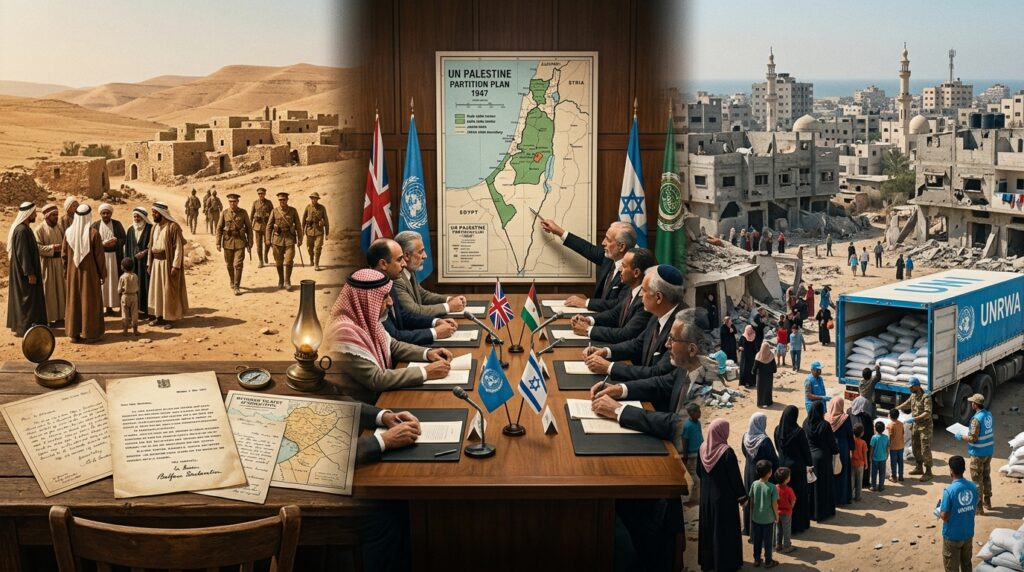
In 1917, Britain issued the Balfour Declaration supporting the establishment of a national home for the Jewish people in Palestine while also stating that the rights of the existing non-Jewish population should not be prejudiced. Competing national aspirations continued to grow during the British Mandate.
In 1947, the UN proposed partitioning Mandatory Palestine into separate Jewish and Arab states, with Jerusalem under a special international regime. Israel declared independence in 1948. War followed, accompanied by the displacement of hundreds of thousands of Palestinians, an event Palestinians remember as the Nakba.
Another decisive turning point came in 1967 when Israel captured the West Bank, East Jerusalem and Gaza, together with other territories. Israel withdrew its settlements and permanent ground forces from Gaza in 2005. Hamas subsequently won Palestinian legislative elections in 2006 and took control of Gaza in 2007 following armed conflict with Fatah.
Years of blockade, political division, rocket attacks, Israeli military operations and failed negotiations followed. The two-state solution remained the dominant international framework, but the political space for achieving it steadily narrowed.
October 7 Changed Everything Again
On October 7, 2023, Hamas-led militants attacked Israel, killing about 1,200 people and taking hostages. Israel responded with a large-scale military campaign in Gaza. Israel framed the war around national security, dismantling Hamas and bringing hostages home. International attention increasingly focused on the scale of Palestinian civilian suffering, displacement, destruction and humanitarian conditions.
These competing realities became central to the global debate. The longer the war continued, the more pressure grew on governments to take a position. And increasingly, that pressure was directed not only at Israel but also at its most powerful ally.
The United States.
The UN Can Pass Resolutions. But Who Enforces Them?
This is the central institutional problem.
The United Nations is not a world government.
It does not possess an independent military capable of enforcing every decision it adopts.
More importantly, different UN instruments have different legal and political status.
A General Assembly resolution is not the same as a Security Council resolution.
A Security Council resolution is not the same as a judgment of the International Court of Justice.
An International Court of Justice judgment is not the same mechanism as an International Criminal Court proceeding.
Treating all of them simply as “UN resolutions” creates confusion.
A serious investigation must ask:
- Which UN body adopted the measure?
- Was it legally binding?
- What exactly did it require?
- Did Israel accept or reject it?
- What evidence exists of compliance or non-compliance?
- What enforcement mechanism existed?
- Did another state prevent enforcement?
These questions matter because international condemnation and enforceable international action are not the same thing.
The Security Council and the Power of the Veto
The UN Security Council contains 15 members.
Five are permanent:
- China
- France
- Russia
- United Kingdom
- United States
Each permanent member has veto power.
That means a resolution can receive overwhelming support and still fail if a permanent member votes against it.
The Gaza conflict has repeatedly demonstrated the significance of this mechanism.
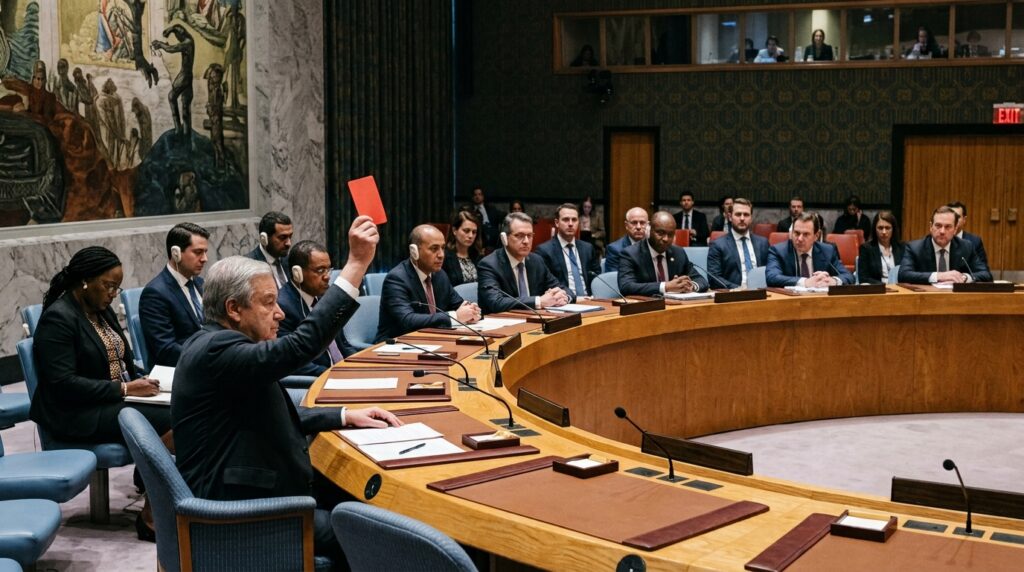
On September 18, 2025, the United States vetoed a Security Council resolution demanding a ceasefire in Gaza.
The other 14 members voted in favour.
One country voted against.
The resolution therefore failed.
This is not evidence that the United States controls the UN.
It is evidence of something more specific:
The Security Council’s structure allows one permanent member to block collective action.
And in the Israeli-Palestinian conflict, that fact has enormous consequences.
Why Is American Support So Important?
The United States-Israel relationship is much deeper than a temporary political alliance. It includes military cooperation, intelligence sharing, weapons transfers, diplomatic coordination and a long-standing strategic partnership. Israel is regarded by Washington as an important security partner in the Middle East.
American domestic politics also matters. Support for Israel has historically enjoyed strong bipartisan backing in Congress, although political divisions have become more visible. Religious constituencies, advocacy organisations, strategic interests and changing public opinion all influence the debate. No single factor explains American policy.
Together, however, they help explain why Washington has maintained such a close relationship with Israel despite increasing international criticism.
Is U.S. Support Really Unconditional?
This question requires careful treatment. It would be inaccurate to portray every American administration as agreeing with every Israeli policy. Washington has disagreed with Israeli governments over settlements, humanitarian access, civilian protection and other issues. American politicians are also increasingly divided over Israel.
So “unconditional support” is better understood as a political criticism than as a literal description of every aspect of the relationship. Yet a larger reality remains. The United States has continued providing substantial military and diplomatic support to Israel even as criticism of the Gaza campaign has intensified.
That creates a fundamental policy contradiction.
If Washington wants Israel to change its conduct, it possesses significant leverage. But how effective can that leverage be if Washington continues providing extensive military support while shielding Israel from certain forms of Security Council pressure? That is one of the most important questions in the entire debate.
The Military Dimension
Diplomatic support is only part of the relationship. Military assistance is another.
The Brown University Costs of War project, working with the Quincy Institute, estimated that U.S. military assistance to Israel reached at least $21.7 billion between October 2023 and September 2025, excluding additional future arms-sale commitments. The significance of this figure is not simply financial. It raises a question about leverage.
If military assistance gives Washington influence, should that assistance be tied more explicitly to humanitarian obligations, civilian protection and compliance with international law?
Supporters of the existing policy argue that Israel faces serious security threats and that weakening its military could strengthen hostile actors such as Hamas or Iran.
Critics argue that continuing assistance without stronger conditions reduces American leverage and undermines Washington’s credibility when it advocates international law elsewhere.
Both positions deserve examination.
The Problem With Saying “Israel Ignores the UN”
The phrase is politically powerful but analytically too broad. Israel has complied with some international demands and rejected others.
Some UN resolutions are recommendations rather than binding legal orders.
Some Security Council measures are binding.
International courts operate through different legal mechanisms.
Therefore, every claim of “non-compliance” should be tested against the actual document involved. The larger issue is not whether Israel has literally ignored every UN resolution. It has not.
The deeper issue is whether the international community has an effective mechanism for compelling compliance when a powerful state rejects or resists international pressure. That is a much harder question.
Recognition of Palestine: A Diplomatic Revolution?
The recognition of Palestine by 157 UN member states by September 23, 2025 represented an extraordinary diplomatic majority. But recognition does not automatically create a functioning state.
It does not establish:
- Secure borders
- Full territorial sovereignty
- Effective control over Gaza
- Effective control over the West Bank
- A unified Palestinian government
- An independent economy
- A final peace agreement
- Full UN membership
Palestine remains a UN non-member observer state. Recognition is therefore politically important but not sufficient by itself. It can strengthen diplomatic legitimacy and support the two-state framework, but it cannot substitute for political settlement or sovereign control on the ground.
Why Did Western Countries Change Course?
For decades, many Western governments maintained that Palestinian statehood should emerge through negotiations between Israel and the Palestinians. But negotiations repeatedly failed. Meanwhile, Israeli settlement expansion continued, Palestinian political divisions persisted, and the viability of a two-state solution became increasingly contested. The Gaza war added enormous humanitarian and political pressure. Governments began considering another argument:
If negotiations have failed to deliver two states, could recognition help preserve the possibility of two states rather than wait for a peace agreement that never arrives?
That thinking helps explain the significance of the 2025 recognition wave. It was not simply about symbolism. It reflected growing frustration with the existing diplomatic process.
The Role of Gen Z
Another important change has taken place outside government buildings.
It is happening on smartphones.
Gen Z grew up in an environment where political information can travel across borders almost instantly.
A young person in London can watch footage from Gaza within seconds.
A student in New York can hear directly from Israeli hostage families.
A Palestinian journalist can reach a global audience without a major television network.
A protest can be organised through social media in hours.
This has transformed the politics surrounding the conflict.
But Gen Z did not create the Palestinian movement.
The Palestinian national struggle predates social media by generations.
Nor is there sufficient evidence to claim that Gen Z directly caused governments to recognise Palestine.
Its influence is more indirect and arguably more important.
Young people have helped change the political environment in which governments make decisions.
They have organised protests, challenged established narratives, pressured universities, promoted boycotts and turned foreign policy into a domestic political issue.

From Sheikh Jarrah to Gaza
This transformation was visible before October 7. In 2021, the #SaveSheikhJarrah campaign helped turn a local dispute in East Jerusalem into an international social-media issue. The episode demonstrated how Palestinian voices could bypass traditional media structures and reach global audiences directly.
The same digital infrastructure became even more powerful during the Gaza war. But there is a warning here. Social media can expose suffering. It can also spread misinformation. Old photographs can be presented as new. AI-generated images can appear authentic. Edited videos can remove essential context. False statistics can travel faster than corrections. The challenge for Gen Z is therefore not simply political participation.
It is information literacy.
The question is no longer only who has the loudest voice. It is who can substantiate what they are saying.
Four Forms of Power
The conflict now illustrates four very different forms of power.
Diplomatic Power: More than four-fifths of UN member states recognised Palestine by September 2025.
Institutional Power: Permanent members of the Security Council can block collective action through the veto.
Military Power: Israel possesses substantial military capabilities and receives major American support.
Public Power: Millions of people, particularly younger generations, can mobilise rapidly through digital networks.
These forms of power do not necessarily move together. That explains much of the gap between international opinion and political outcomes.
Can the World Pressure Israel Without America?
This may be the most difficult question. European governments can recognise Palestine. Arab governments can exert diplomatic pressure. The General Assembly can pass resolutions. International courts can issue judgments or pursue legal proceedings within their respective mandates. Civil society can protest. Young people can mobilise.
But Washington remains uniquely influential because of its military relationship with Israel, diplomatic weight and Security Council veto. If American policy remains broadly supportive, other countries may find it difficult to convert diplomatic consensus into decisive pressure. That does not mean Washington controls Israel. Israel has its own government, electorate, security establishment and strategic interests.
But American support changes the balance of incentives. It gives Israel access to military resources. It provides diplomatic backing. And it can reduce the consequences of international isolation.
What Would Real Pressure Look Like?
If governments want international criticism to produce policy change, they have several tools available.
These include:
- Diplomatic pressure
- Arms restrictions
- Conditions on military assistance
- Targeted sanctions
- Restrictions related to settlement activity
- International legal cooperation
- Humanitarian assistance
- Recognition of Palestine
- Economic measures
- Coordinated diplomatic initiatives
- Support for a credible political settlement
The question is not whether these tools exist. The question is whether governments are prepared to use them when doing so carries political and strategic costs. That is where rhetoric meets power.
What About Hamas?
A serious article cannot examine Israeli policy while ignoring Hamas. The October 7 attack was a major trigger of the current war. The killing of Israeli civilians and taking of hostages cannot be justified by Palestinian grievances.
At the same time, condemning Hamas does not eliminate Israel’s obligations toward civilians or resolve questions surrounding the conduct of military operations. These realities must be examined together. A credible position can therefore hold two principles simultaneously:
Hamas’s crimes do not erase Palestinian rights.
And:
Palestinian suffering does not erase Israeli civilian rights or the responsibility of armed groups to protect civilians and release hostages.
This distinction is essential in an increasingly polarised debate.
The Walkout: Symbol or Turning Point?
The diplomats who left Netanyahu’s speech made a powerful political statement. But what happens after the cameras disappear?
Did governments change their military policies?
Did they impose meaningful sanctions?
Did they restrict arms transfers?
Did they strengthen Palestinian institutions?
Did they increase humanitarian assistance?
Did they pressure Israel?
Did they pressure Hamas?
Did they establish a credible political roadmap?
These questions matter more than the walkout itself.
A diplomatic protest can empty a room. It cannot, by itself, change the political reality outside it.
The Bigger Question: Who Has the Power?
The international community has enormous diplomatic influence.
Israel has enormous military and strategic capabilities.
The Palestinians have achieved remarkable diplomatic recognition but remain without full sovereign control over the territory they claim for a state.
The United States possesses extraordinary diplomatic, military and institutional influence.
And Gen Z is becoming an increasingly important force in shaping public opinion.
The question is whether these different forms of power will eventually converge. If diplomatic recognition continues growing while military and political realities remain unchanged, the contradiction will become harder to sustain.
The World Has Changed. Has the UN?
The most important lesson from the empty UN hall may not concern Netanyahu at all. It may concern the international system. The UN was created in 1945. Its Security Council still reflects the geopolitical structure established after World War II. But the world has changed.
Global public opinion now moves at smartphone speed.
Political movements can cross borders instantly.
A majority of UN member states recognises Palestine.
Yet one permanent Security Council member can still block collective action.
That is the paradox. The world has become more interconnected while the architecture of international power remains deeply hierarchical.
The Question We Cannot Escape
The image of diplomats leaving Netanyahu’s speech will remain powerful. But history is unlikely to judge the event simply by counting how many people walked out. The real test will be what governments do afterwards. If 157 countries recognise Palestine, if international institutions repeatedly express concern over the conflict, if millions protest worldwide and if younger generations increasingly challenge their governments’ policies, yet the underlying political reality remains largely unchanged, then the international system faces a serious credibility problem.
The question is no longer simply:
Does the world support Palestinian statehood?
The harder question is:
Does the world possess enough political power to turn that support into reality?
And behind that question stands Washington. The United States is not solely responsible for the conflict.
Israel makes its own decisions.
Palestinian leaders make their own decisions.
Hamas bears responsibility for its own actions.
Other governments have their own interests.
But America’s unique combination of military assistance, diplomatic influence and Security Council power makes its role impossible to ignore. That is why the empty UN chamber is such a powerful image.
The diplomats could leave.
The speeches could continue.
The resolutions could pass.
The protests could grow.
But unless diplomatic pressure is connected to meaningful political consequences, the fundamental reality may remain unchanged.
The world can leave the room. The harder question is whether it can change what happens outside it.
Conclusion: From Symbolic Protest to Accountability
The UN walkout was dramatic. The recognition of Palestine was historically significant. Gen Z activism has changed the way the conflict is discussed around the world. But none of these developments alone can produce peace.
A lasting settlement will require political negotiations, Israeli security, Palestinian self-determination, humanitarian protection, accountability for violations, an end to attacks on civilians and a credible path toward a political future acceptable to both peoples. The danger is that the world becomes accustomed to symbolic victories.
Another resolution.
Another recognition.
Another protest.
Another speech.
Another humanitarian appeal.
Another veto.
And another generation watching the same conflict continue. The real measure of international diplomacy is therefore not how strongly governments speak. It is whether their words can produce consequences. The empty UN hall leaves us with a question that reaches far beyond Netanyahu:
Can international law and diplomatic consensus ultimately prevail over geopolitical power, or will the interests of powerful states continue to determine which international rules are actually enforced?
That is not merely a question about Israel and Palestine. It is a question about the future credibility of the international system itself.
Purpose of the Article
The purpose of this article is to examine the widening gap between international diplomatic consensus and the ability to enforce that consensus in the Israeli-Palestinian conflict.
It explores the limitations of the United Nations, the structure and use of the Security Council veto, American military and diplomatic support for Israel, the growing recognition of Palestine and the emerging influence of Gen Z and digital activism.
The article does not attempt to justify attacks on civilians or reduce a complex conflict to a simple good-versus-evil narrative. Its purpose is to distinguish facts from political claims, place current events in historical context and examine whether international institutions can turn diplomatic consensus into meaningful action.
About the Author
Hamid Mahmood is a veteran, former principal, author, blogger and content creator with professional experience in security consulting and training. He holds a Master’s degree in Political Science, an LLB and a postgraduate diploma in Human Resource Management.
His writing focuses on geopolitics, international affairs, governance, security, social issues, human development and the changing relationship between society, technology and global power.
His approach combines historical context, critical questioning and accessible language to encourage readers to look beyond headlines and examine the deeper forces shaping international affairs.
Frequently Asked Questions
1. How Many Countries Recognised Palestine by September 2025?
By September 23, 2025, Palestine was recognised by 157 of the 193 UN member states, approximately 81 per cent of UN membership. Several major Western countries joined the recognition movement immediately before Netanyahu’s September 26 UN speech.
2. Did 77 Countries Actually Walk Out of Netanyahu’s UN Speech?
The exact number of countries that physically walked out is disputed. Israel later counted 77 countries as absent or having walked out, but absence from the chamber should not automatically be treated as participation in the walkout. The safest description is that dozens of delegations participated in a highly visible protest.
3. Why Is the United States So Important to Israel?
The United States has a long-standing strategic relationship with Israel involving military cooperation, intelligence, weapons transfers and diplomatic support. Washington also holds a permanent seat and veto on the UN Security Council, making its position particularly important whenever the Council considers action involving Israel.
4. How Does the U.S. Veto Affect UN Action on Gaza?
A negative vote by any permanent Security Council member can prevent adoption of a substantive resolution. On September 18, 2025, the United States vetoed a Gaza ceasefire resolution even though the other 14 Council members voted in favour.
5. How Much U.S. Military Assistance Has Israel Received Since October 7, 2023?
The Brown University Costs of War project and the Quincy Institute estimated at least $21.7 billion in U.S. military assistance to Israel between October 2023 and September 2025, excluding additional future arms-sale commitments.
6. Has Gen Z Caused the Recognition of Palestine?
There is no reliable basis for claiming that Gen Z directly caused governments to recognise Palestine. However, Gen Z activism, social media and youth-led political movements have changed public debate and increased political pressure surrounding the conflict. Its influence is best understood as part of a broader change in the political environment rather than as the sole cause of diplomatic decisions.
Meta Tags
SEO Title: The Empty UN Hall: Why Can’t the World Stop Israel?
Meta Description: Why has Israel resisted international pressure despite UN resolutions and growing recognition of Palestine? Explore U.S. support, the UN veto and Gen Z activism.
Focus Keyphrase: U.S. Support for Israel and UN Resolutions
Secondary Keyphrases: Israel and United Nations, U.S. veto Israel, Palestine recognition 2025, Netanyahu UN speech, Gaza war, UN resolutions on Israel, Gen Z Palestine activism, Israel U.S. relations, Palestinian statehood, UN Security Council
Slug: empty-un-hall-us-support-israel-un-resolutions
Tags: Israel, Palestine, Gaza, United Nations, UN Security Council, Netanyahu, United States, U.S. Foreign Policy, U.S. Military Aid to Israel, UN Resolutions, Palestinian Statehood, Gen Z, Gaza War, International Law, Middle East, Geopolitics, International Relations, Diplomacy, Human Rights
References
- United Nations Regional Information Centre: Recognition of Palestine: A Long History.
- Al Jazeera: Which Are the 150+ Countries That Have Recognised Palestine as of 2025?
- Reuters: U.S. Vetoes Gaza Ceasefire Resolution at the United Nations, September 18, 2025.
- Reuters: What Would Wider Recognition of Palestine Mean for Palestinians and Israel?
- Associated Press: U.S. Has Given at Least $21.7 Billion in Military Aid to Israel Since War in Gaza Began.
- Brown University Costs of War Project: U.S. Military Aid and Arms Transfers to Israel, October 2023–September 2025.
- The Guardian: Netanyahu’s UN Speech and the Walkout by Delegations.
- Council on Foreign Relations: The Quest for Palestinian Statehood: What to Know.
- United Nations: Security Council and General Assembly documentation concerning the Israeli-Palestinian conflict.
- International Court of Justice: Proceedings and decisions concerning the Occupied Palestinian Territory.