France Protests The Real Story
France protests the real story. Exploring the student revolt, education crisis, police clashes, immigration debate and Trump’s controversial Islam claim.

France is witnessing its biggest student unrest in years, with schools blockaded, hundreds of thousands taking to the streets and clashes erupting between protesters and police. But the most provocative claim came from Washington:
Donald Trump blamed the turmoil on mass migration and Islam.
So what is really happening in France?
Is this an education revolt that has been hijacked by political forces? Is immigration part of the story? Or is Trump turning a French school crisis into a warning about what he believes could happen to America? The evidence tells a more complicated story.
https://mrpo.pk/afd-germanys-political-earthquake/
France’s school protests: what lies behind the anger
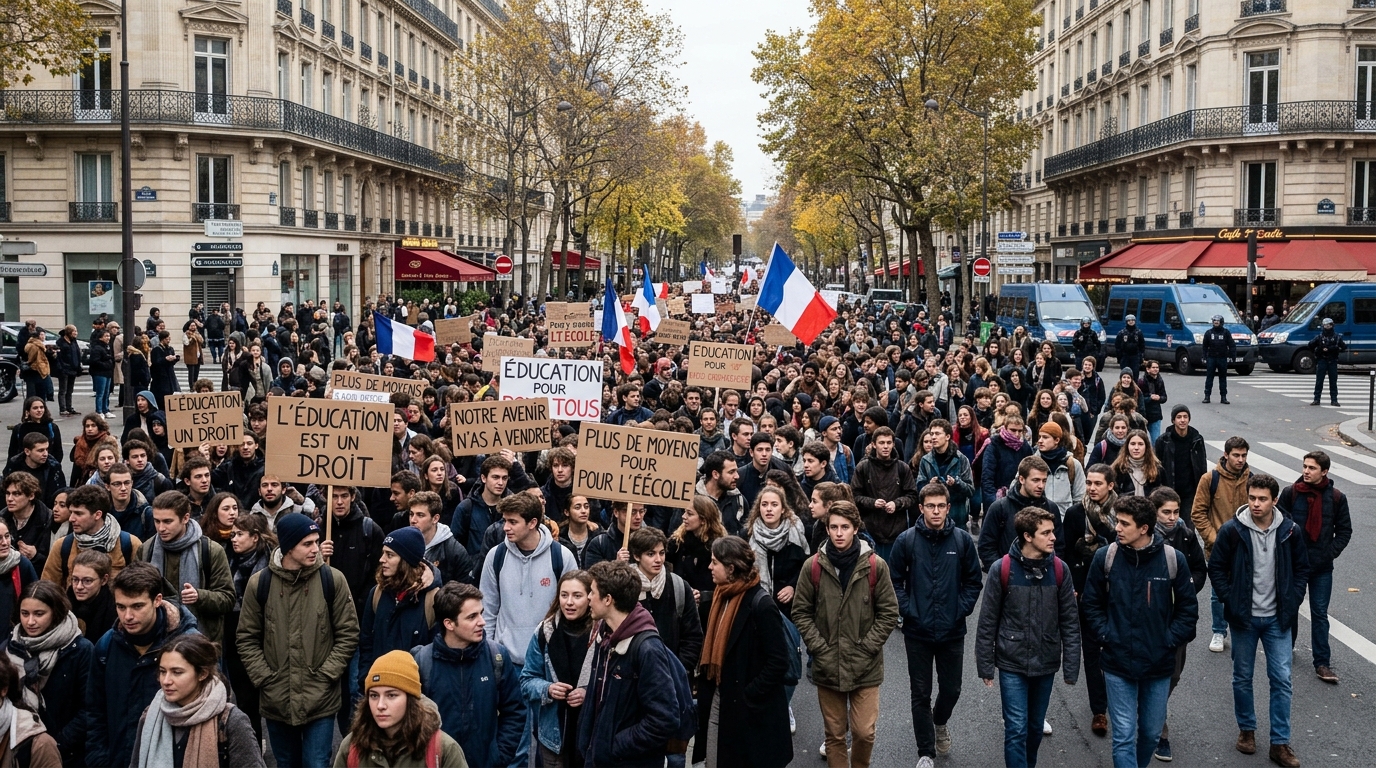
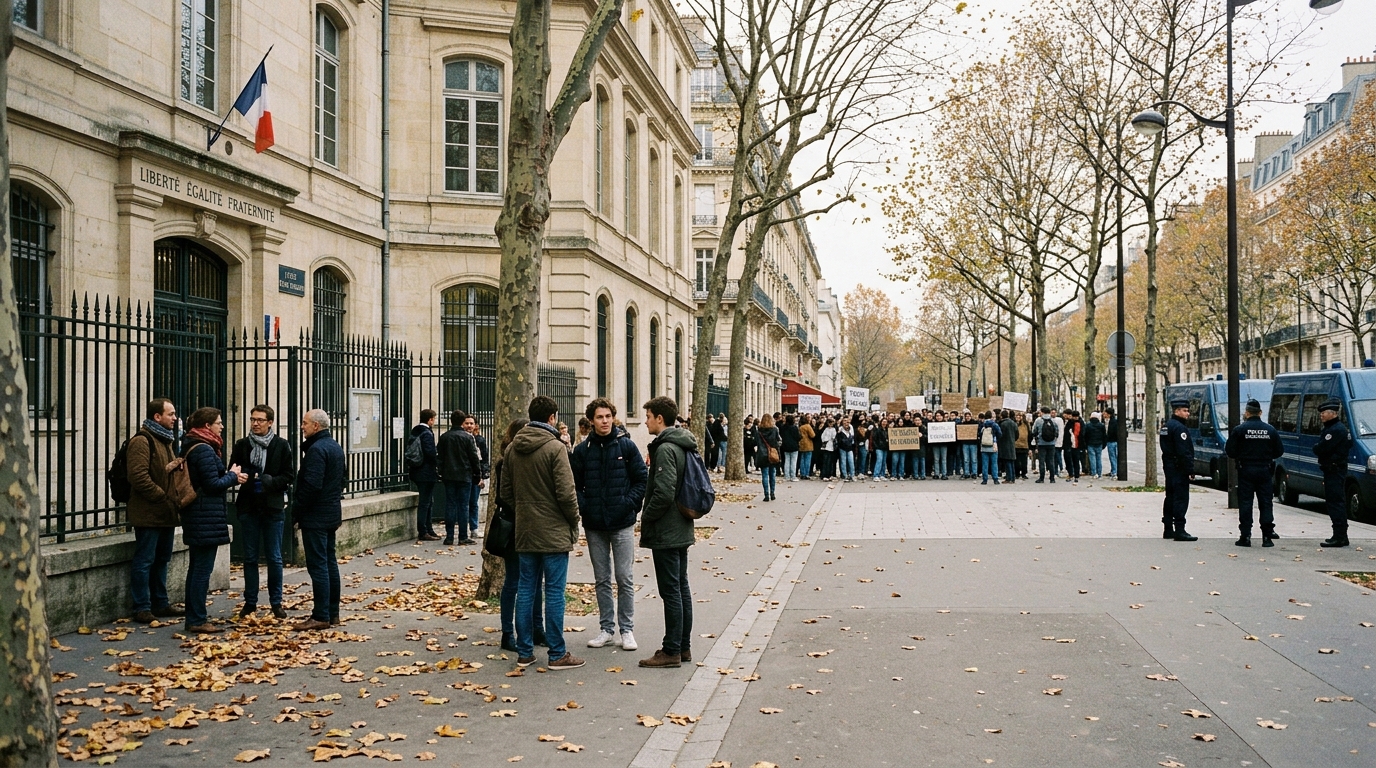
Since late September students across France have been holding protests against underfunding in education, and have been blocking access to many high schools.
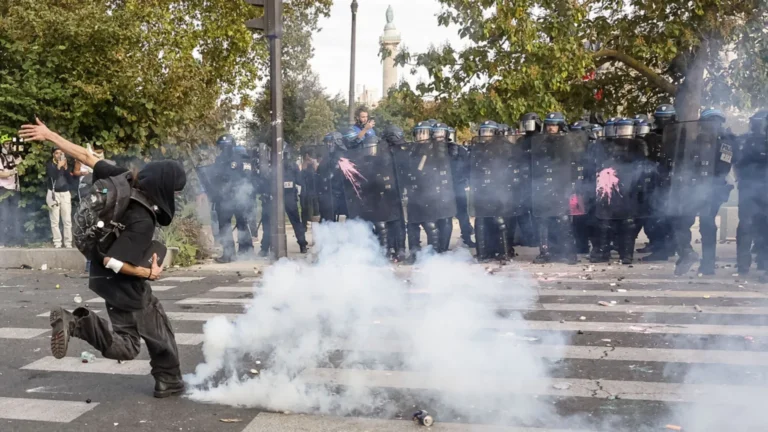
The movement has turned violent in places – hundreds of students, teachers and police officers have been injured. Thousands of people – including an unknown number of outside troublemakers – have been arrested.
The protesters are complaining about staff shortages and dilapidated facilities in the country’s lycées, schools which are attended by 15-18-year-olds.
“Sometimes our teachers are absent for several weeks without being replaced,” Madalena, a Paris student, told the BBC on Tuesday as demonstrations brought out hundreds of thousands across France . Her school buildings, she added, were “boiling hot” during the recent heat waves.
There is a variety of other complaints. Some resent the banning of mobile phones or school days that last until 18:00. “You get home at 7 pm, and have no time to sleep or do your homework,” one lycéen told France 2.
France’s online platform that allocates places in higher education, Parcoursup, is another sore point.
The frustration has deep roots. About 80% of each cohort now passes the baccalauréat, which entitles students to a university place – though not necessarily their preferred choice. This leads to a scramble for desirable courses, and an anxiety focused on Parcoursup, which many regard as opaque.
https://www.bbc.com/news/articles/c6n9rgg80z94o
What Triggered the French Protests?
The current movement began in September 2026 around high school conditions. Students complained about teacher shortages, overcrowded classrooms, deteriorating school buildings, unequal educational resources and declining educational standards. What began as localized school blockades spread into a nationwide movement involving students, teachers, unions and other groups.
By October 6, more than 266,000 people had demonstrated across France, according to government figures, including about 56,000 in Paris. Hundreds of schools were affected or closed.
The protests have not remained entirely peaceful. Some demonstrations have involved fires, vandalism, projectiles and clashes with police. More than 500 schools were reported closed after the latest wave of unrest. But that does not change the original question:
Why did French students take to the streets in the first place?
The answer begins inside the classroom.
France Has a Real Education Problem
The students’ complaints are not simply slogans invented for the street.
The OECD’s latest PISA results show that French 15-year-olds performed significantly worse in 2025 than a decade earlier. France’s 2025 results were among its lowest ever recorded in mathematics, reading and science.
Compared with 2015, the proportion of French students performing below the basic proficiency level increased by 12 percentage points in mathematics and 11 percentage points in reading.
Only 64% of French students reached the minimum proficiency level in mathematics, compared with 65% across the OECD. In reading, 67% reached the minimum level compared with 69% across the OECD.
These figures do not prove that every French school is failing. Nor do they prove that every student grievance is justified. But they establish something important:
France has a measurable education problem.
The crisis, therefore, cannot simply be explained away as political agitation.
(OECD)
Then Came the Violence
The legitimacy of a grievance does not automatically legitimize every method used to express it. As the protests expanded, some school blockades became confrontational. Police used tear gas and other crowd-control measures. Officers were also attacked in several incidents. The government has described some of the violence as the work of radical or ultra-left groups attempting to exploit a genuine student movement.
That claim also requires nuance.
There is evidence of violent groups becoming involved. But that does not mean the entire student movement is violent, nor does it mean the original educational grievances are manufactured. France is dealing with two problems at the same time:
a legitimate social grievance and an increasingly violent street movement.
Confusing those two things is dangerous.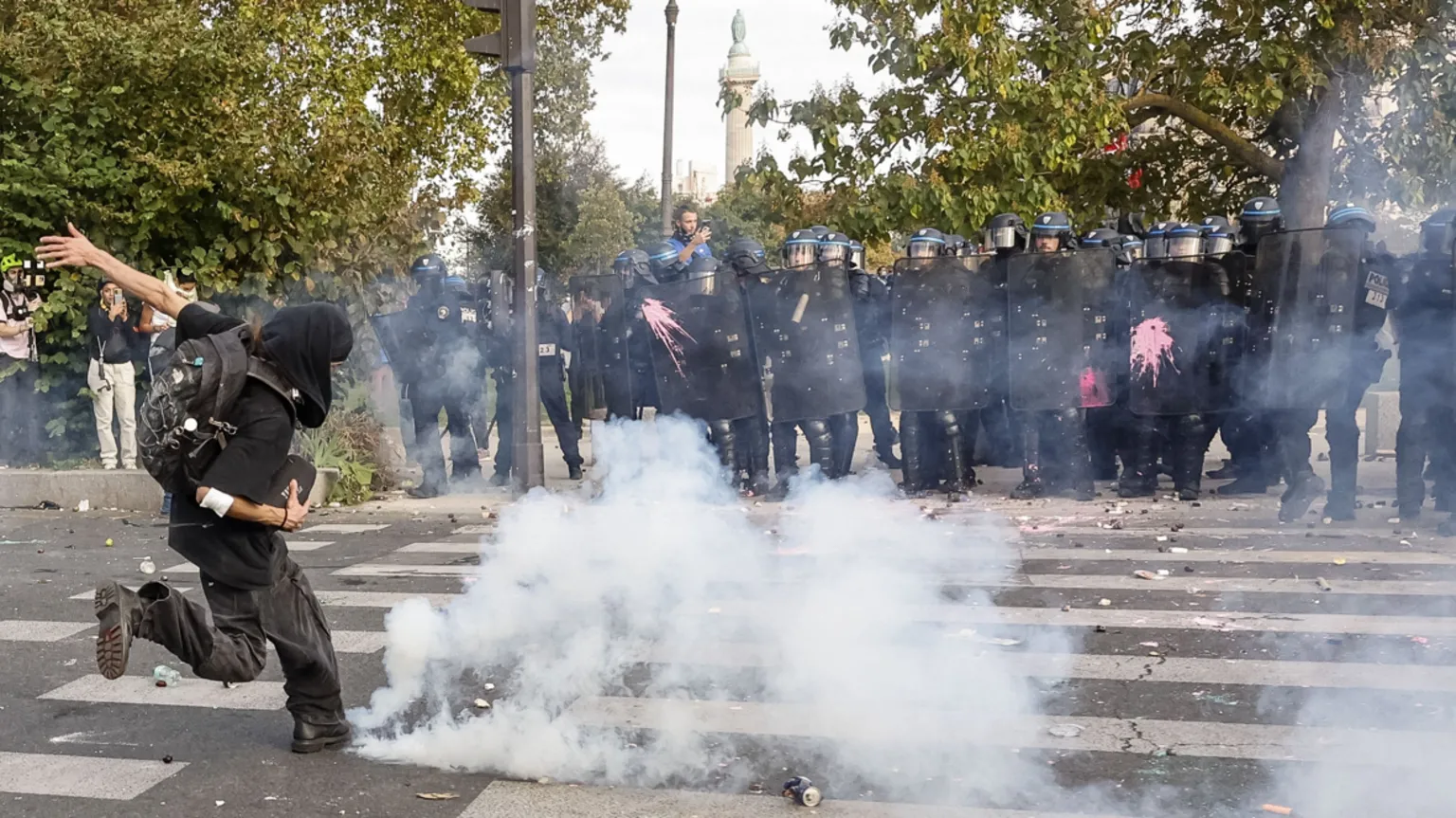
The 15-Year-Old Who Lost His Hand
The most disturbing incident occurred in Lens.
A 15-year-old student lost his hand during a confrontation involving riot police on October 5. The precise circumstances remain under investigation, but French authorities acknowledged a strong possibility that a stun grenade caused the injury.
The Interior Ministry subsequently suspended the use of stun grenades in policing the high-school movement while the circumstances are investigated. Authorities have also referred multiple incidents involving police conduct to the police inspectorate.
Other students have suffered serious injuries, while police officers have also been injured in confrontations.
This is where responsible journalism matters.
A photograph or video showing an injured student can demonstrate that the student was seriously injured. It does not, by itself, establish who was responsible or what happened immediately before the camera started recording. Every side deserves the same standard:
Evidence first. Emotion second.
(Reuters)
Then Trump Entered the Story
On October 6, U.S. President Donald Trump offered a radically different explanation for the French unrest.
He described France’s migration as “out of control” and argued that the protests were not really about schools but about Islam allegedly seeking to take over France.
That statement immediately transformed a French domestic crisis into an international political controversy.
The French government’s response was effectively that France should tell its own story. And that response raises an important question:
Does the evidence support Trump’s explanation?
At present, it does not.
The documented demands of the student movement concern education, school conditions, staffing, inequality and public funding. Migration and Islam have not been central demands of the protesters or the French government’s response to the education crisis. That does not mean immigration has no connection to France’s wider social problems. It means something more basic:
A possible background factor is not the same thing as the demonstrated cause of a protest.
Does Immigration Have Nothing to Do With France’s Problems?
That would also be too simplistic. France has spent decades struggling with immigration, integration, social inequality, discrimination, segregation and tensions involving some immigrant-origin communities. Some of France’s most disadvantaged neighborhoods also face weaker public services, poverty, unemployment and educational difficulties.
Those issues deserve serious investigation.
But correlation is not causation.
A school located in a disadvantaged neighborhood may face both socioeconomic and demographic challenges. That does not automatically mean that immigration caused its deteriorating infrastructure or teacher shortage. Nor does the presence of Muslims or immigrants among protesters establish that Islam caused the protests.
To prove such a claim, we would need evidence showing that immigration or Islamist organizations actually drove the movement. So far, the evidence available does not establish that.
What About Islam?
France has a large Muslim population and a long-running debate over secularism, integration and the role of religion in public life.
There are genuine controversies surrounding Islamist extremism in France. The country has suffered terrorist attacks, and French authorities have pursued organizations and individuals considered security threats. Those facts should not be hidden. But they should also not be casually transferred onto millions of ordinary French Muslims.
Islamism, Islam and Muslims are not interchangeable terms.
Islamism refers to political movements seeking to organize society or government around particular interpretations of Islam. Islam is a religion. Muslims are individuals who hold diverse political, cultural and religious views. Treating all three as the same category produces bad analysis.
And blaming a nationwide education protest on Islam requires evidence that has not yet been demonstrated.
Who Benefits From the Confusion?
This is where the story becomes politically fascinating.
The French government has accused radical-left groups of exploiting the student movement.
The French right has used violence to attack the left and demand stronger public order.
The far left has presented the protests as evidence that the government is failing young people.
The far right has an opportunity to portray France as a country losing control.
And Trump has used the unrest to reinforce his long-standing argument about immigration.
Everyone has a political story to tell.
The students’ actual story can easily disappear beneath it. That is one of the oldest tricks in politics:
Take a genuine grievance, attach it to a larger ideological battle, and suddenly the original problem becomes almost invisible.
Could the French Left Be Hijacking the Movement?
Possibly, in part.
French officials and some political figures have accused the radical left, particularly La France Insoumise, of attempting to exploit the unrest. There is evidence that political activists have participated in the demonstrations, while prominent politicians have openly supported the movement.
But political support is not proof of political creation.
A politician joining a protest does not establish that the politician caused it.
The same standard should apply to everyone.
If the radical left is exploiting the movement, evidence should be presented.
If the radical right is exploiting the movement, evidence should also be presented.
If Trump is using the French crisis for American political purposes, that should be examined too.
This is not a competition to find one villain.
It is an investigation into how genuine public anger becomes political ammunition.
The Numbers Tell an Interesting Story
French public opinion appears to understand the distinction better than political rhetoric does.
A recent Elabe poll reported by Reuters found that 72% of French people considered the students’ demands legitimate, while 55% believed the protests should end.
That is not contradictory. People can support the cause while opposing the method.
A French citizen can believe that schools need more teachers and better buildings while also believing that burning property, attacking police or blocking schools is unacceptable. This distinction is essential for any healthy democracy.
A legitimate grievance does not create a license for violence.
And police authority does not create a license for disproportionate force. Both principles can be true at the same time.
(Reuters)
France’s Financial Problem
There is another uncomfortable piece of the puzzle.
Fixing schools costs money.
France is already struggling with high public debt, weak economic growth and pressure to control government spending. The government therefore faces an awkward equation:
Students want better schools.
Teachers want better working conditions.
The public wants better services.
Taxpayers resist endless tax increases.
The government wants to reduce deficits.
There is no magic button. Promises without funding eventually become another source of public anger.
Prime Minister Sébastien Lecornu has promised to present proposals by the end of October covering issues such as school renovations and teacher availability, while emphasizing that solutions must be concrete and fully funded. That may be the beginning of a solution.
Or it may become another chapter in France’s long history of promises followed by disappointment.
(Reuters)
This Is Bigger Than France
One of the most revealing aspects of the current crisis is that similar education disputes are appearing elsewhere in Europe.
Teachers and students in Belgium, Portugal and Spain have also been protesting working conditions, class sizes, salaries and education resources.
That suggests something larger may be happening.
Western societies are asking increasingly difficult questions about what governments can realistically provide after years of economic pressure, demographic change, rising costs and political polarization.
Schools are often where those pressures become visible first.
A classroom does not care about political slogans.
A teacher either exists or does not.
A leaking roof either gets repaired or it does not.
A class either has 20 students or 40.
A teenager either receives proper instruction or loses another year.
That is why education can become politically explosive.
The Social-Media Trap
The French protests also provide a warning about how quickly modern information systems can distort reality.
A dramatic video of a burning building can be genuine but unrelated to the event being discussed.
A photograph of a Muslim protester can be authentic but irrelevant to the cause of the demonstration.
A violent confrontation can be real while the caption explaining it is false.
A genuine school protest can be joined by extremists without being an extremist movement.
And a politician can make a legitimate observation while drawing an unsupported conclusion from it.
This is why viral footage must be treated as evidence requiring context, not as context itself.
Before sharing a dramatic protest video, ask:
- When was it recorded?
- Where was it recorded?
- Who originally published it?
- Does the location match the claim?
- What happened immediately before and after the footage?
- Is the video from the current protests?
- Has independent reporting confirmed it?
- Is the caption describing what the footage actually shows?
These simple questions can prevent misinformation from becoming political fuel.
What Trump Got Right and Wrong
Trump’s intervention should not simply be dismissed because it is controversial. His broader warning about immigration and integration deserves examination because France genuinely has unresolved questions in these areas. But his specific explanation of the current student protests goes beyond the evidence presently available.
The documented trigger is an education crisis.
The protests have been fueled by school conditions, staffing shortages, inequality and dissatisfaction with government response.
Political groups have attempted to influence the movement.
Violence has complicated it.
Police conduct is under investigation.
Immigration remains a separate and important French political issue.
But none of those facts automatically proves that Islam or mass migration caused the student protests.
That distinction is the difference between investigation and propaganda.
What France Should Learn
France does not need to choose between two false extremes.
It does not have to pretend that immigration and integration are irrelevant.
Nor does it have to pretend that every social problem is caused by immigrants or Muslims.
It can investigate both.
The country can simultaneously demand:
better schools,
stronger integration,
effective action against extremism,
fair treatment for minorities,
safe streets,
accountable policing,
responsible public spending,
and
Zero tolerance for political violence.
A mature democracy should be capable of holding all those positions at once.
Lessons for the World
The French experience offers several lessons far beyond France.
1. Fix problems before streets become classrooms
When legitimate problems remain unresolved for years, young people eventually stop writing petitions and start occupying streets.
2. Do not confuse symptoms with causes
Violence surrounding a protest does not automatically explain why the protest began.
3. Do not blame entire populations
Muslims are not Islamists. Immigrants are not criminals. Protesters are not necessarily extremists.
Broad labels may generate political applause, but they rarely produce good policy.
4. Legitimate grievances do not justify violence
A good cause can be destroyed by bad methods.
Burning schools harms the very students demanding better education.
5. Police power must remain accountable
Police need the authority to protect public order. But when crowd-control weapons cause serious injuries, independent investigation is essential.
6. Politicians should resist exploiting social anger
The temptation is enormous.
A crisis can become campaign material overnight.
But every political actor who adds fuel to social division eventually risks living with the fire.
7. Social media requires skepticism
A compelling video is not necessarily a complete story.
Context is often the first casualty of virality.
8. Education is national security
A country that allows its education system to deteriorate eventually pays elsewhere through unemployment, inequality, polarization, crime and declining social trust.
Schools are not merely buildings where children spend their mornings.
They are where a country’s future is manufactured.
The Bigger Question
France’s current crisis is not simply about students.
It is about whether a modern democracy can still solve ordinary problems before they become extraordinary political crises.
The students say their schools are failing.
The government says it needs money and order.
The police say they must control increasingly violent demonstrations.
The left sees an opportunity to challenge the government.
The right sees an opportunity to challenge the left.
Trump sees an opportunity to make the French crisis a warning about immigration and Islam.
And millions of ordinary French citizens are caught somewhere in the middle.
Perhaps that is the most important lesson.
When institutions fail to solve real problems, politicians eventually arrive with competing explanations.
The explanation that gets the most attention is not necessarily the explanation that is most true.
France now has a choice.
It can spend its energy arguing over who is to blame.
Or it can repair the schools, restore public confidence, investigate abuses, control violence, confront genuine integration problems and give its young people a reason to believe that their future is worth staying in the classroom for.
The world should be watching.
Not because France is collapsing.
But because France is showing how quickly education, economics, immigration, identity, policing and electoral politics can collide in one combustible moment.
And perhaps the most important question is not:
“Who is to blame?”
It is:
“Why did the system allow the anger to become this powerful before anyone listened?”
Frequently Asked Questions
1. Why are French students protesting?
The protests began primarily over education conditions, including teacher shortages, deteriorating school infrastructure, overcrowding, inequality and concerns about declining educational standards.
2. Did immigration cause the French student protests?
There is currently no credible evidence establishing mass migration as the cause of the student movement. Immigration and integration are major French political issues, but the documented demands of the protests center on education.
3. Why did Donald Trump blame Islam and migration?
Trump used the French unrest to argue that uncontrolled migration and Islam are threatening France. His intervention also fits his broader political focus on immigration and Western cultural identity. His specific causal claim about the student protests, however, has not been established by the available evidence.
4. Was a French student seriously injured by the police?
Yes. A 15-year-old student in Lens lost his hand during a confrontation involving police. French authorities suspended the use of stun grenades in the high school movement while the incident is being investigated.
5. Are French protesters violent?
Some protesters have been involved in violence, vandalism and clashes with police. However, many demonstrations and school blockades have remained peaceful. It is therefore inaccurate to describe the entire movement as violent.
6. What can other countries learn from France?
Countries should address education and social grievances before they become street crises, distinguish legitimate protest from violence, hold police accountable, avoid blaming entire demographic or religious groups, and treat viral social-media claims with skepticism.
Final Perspective
France’s protests are a warning, but perhaps not the warning social media wants us to hear.
The warning is not simply about Islam.
It is not simply about immigration.
It is not simply about the radical left.
It is not simply about police brutality.
It is about what happens when real social problems accumulate faster than political institutions can solve them.
When that happens, everyone arrives with an explanation.
The wise response is not to choose the loudest explanation.
It is to examine the evidence.
That is where the truth usually begins.
Author
Maj Hamed Mahmood (Retired)
MA Political Science, LLB, PGD (HRM)
Veteran | Ex-Principal | Author | Research & Policy Writer
Editorial Note
This article distinguishes verified facts from political claims and interpretations. Allegations involving protesters, political organizations, police conduct, immigration or religious groups should not be treated as established facts unless supported by credible evidence.
Sources and Further Reading
- OECD, PISA 2025 Results: France. (OECD)
- Reuters, France suspends use of stun grenades in police response to student protests. (Reuters)
- Reuters, public-opinion and protest reporting on France’s student movement. (Reuters)
- Le Monde, reporting on injuries among students and police during the protests. (Le Monde.fr)
- Le Monde, analysis of the political struggle surrounding the high-school protests. (Le Monde.fr)
- Associated Press, reporting on the nationwide scale of the demonstrations. (AP News)
- Reporting on Trump’s comments linking the protests to migration and Islam. (Le Monde.fr)