جین زی کی جدوجہد اور طاقت: غلط سمجھی جانے والی نسل


For decades, Asian nations defined world hockey through skill, intelligence, and artistry. This article argues that their decline was not accidental—but engineered through systematic rule changes that reshaped the sport itself.
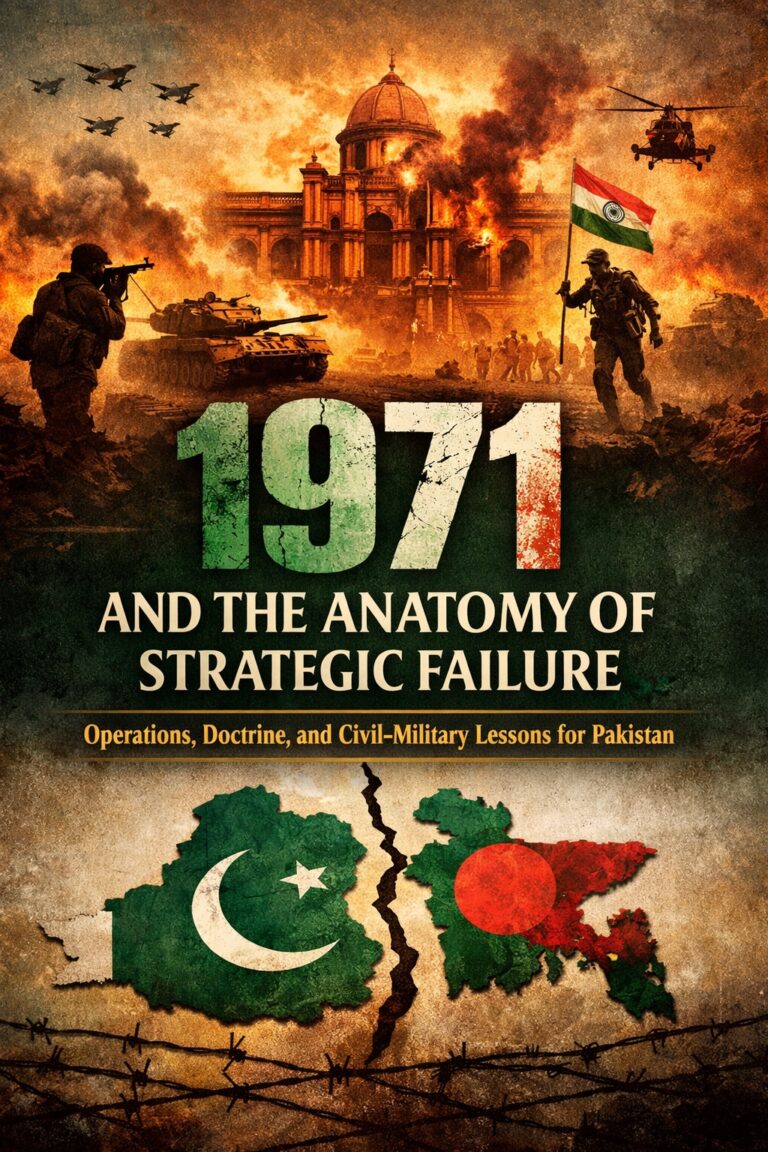
The 1971 Indo–Pakistan War was not merely a military defeat but a comprehensive strategic failure involving political legitimacy, flawed operational doctrine, alliance miscalculations, and civil–military dissonance. This paper offers a rigorous, analytical examination of the Eastern Theatre, the fall of Dhaka, and the decisions that narrowed Pakistan’s strategic options. By integrating operational analysis, doctrinal lessons, and civil–military dialogue, it presents 1971 as a strategic mirror—urging Pakistan to examine whether unresolved institutional patterns continue to shape national security thinking today.

A recent fatal accident involving the son of a judge has reignited a long-standing debate in Pakistan: is the law applied equally to all, or selectively enforced against the weak? This analytical article examines the roots of selective morality through Islamic concepts of justice and comparative post-colonial experience.