Britain’s Infrastructure Security Warning: Russia, European Threats, and Lessons for Pakistan
Britain’s Infrastructure Security Warning. This investigation examines the reported incidents, intelligence warnings, potential timeframes, and lessons for Pakistan, separating established developments from allegations and speculation.
https://mrpo.pk/why-is-britain-preparing-for-emergencies/

Introduction: Why Is Britain Preparing for Emergencies?
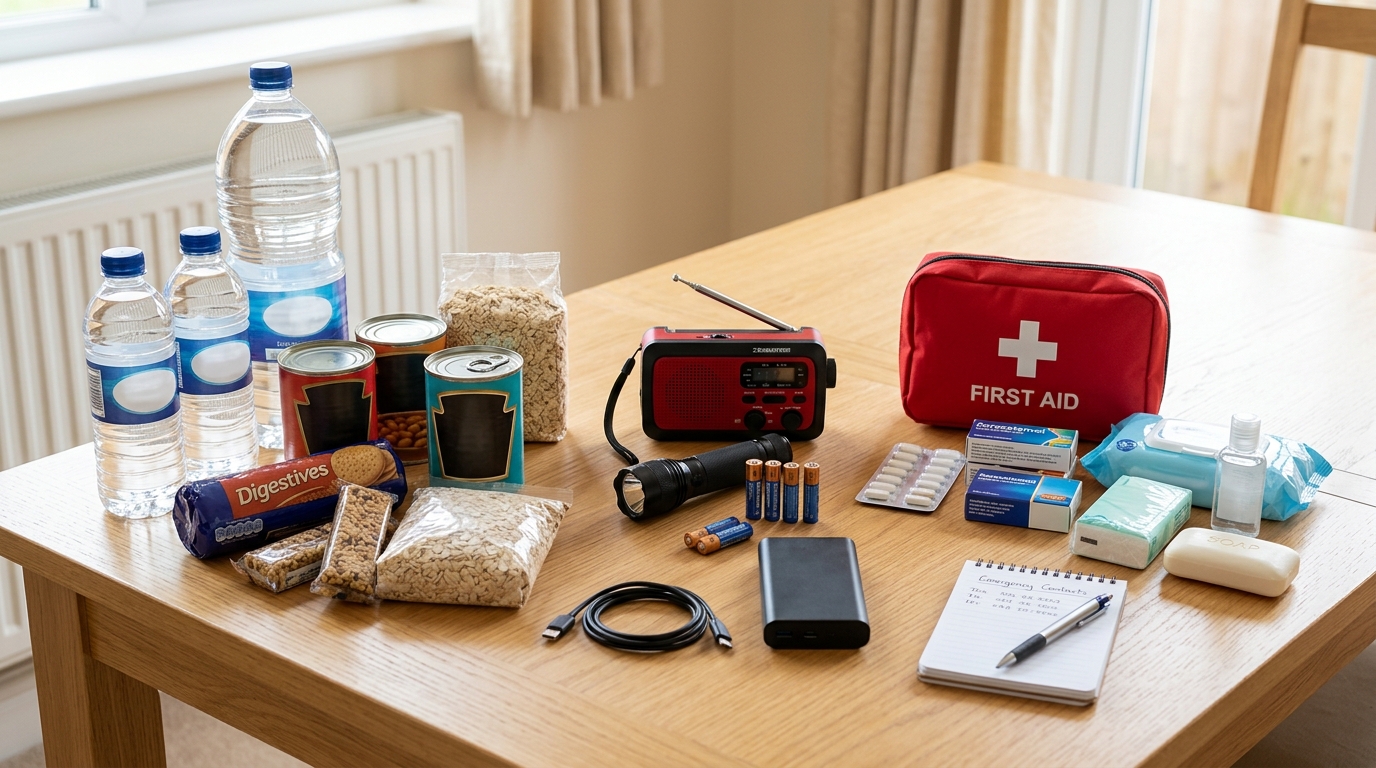
On 22 October 2026, the British government launched its Be Ready campaign, encouraging households to prepare for up to 72 hours of disruption to essential services. Recommended supplies include drinking water, non-perishable food, a torch, batteries, a first-aid kit, blankets, cash, and a battery-powered or wind-up radio.
The campaign comes amid growing European concern about hostile-state activity, cyber threats, suspected sabotage, and the vulnerability of critical infrastructure. Recent reports involving German military facilities, alleged Russian-directed operations, and undersea cables have added to those concerns.
However, the British initiative also addresses severe weather and other emergencies. Its launch does not, by itself, indicate that an attack is imminent.
As of 25 October 2026, the reports examined for this article do not establish a confirmed date for a Russian attack on Britain or the beginning of a wider European war.
Intelligence warnings point to possible escalation, but a risk assessment is not a prediction that an event will occur on a particular date.

How one man became the unsung hero of the internet during a cyber-security scramble
For more than 20 years, Ondřej Surý has been quietly helping to keep websites around the world running securely, largely in his spare time.
He voluntarily maintains software for two of the most popular versions of Linux, a free operating system similar to Windows, which are often used on web servers.
Typically, this involves keeping them up to date with the latest version of PHP, a programming language that underpins a significant number of the world’s websites.
This week, he became very busy indeed.
With the help of AI, two major cyber-security flaws were identified in the programming language, leading the PHP Foundation to release fixes.
But average folk may struggle to understand how to install these onto their systems – so Surý, for free, dropped everything to convert the fixes into packages, which can be easily installed without expertise.
“The feeling is like I am responsible for all these people and I can’t fail them,” he told BBC News.
https://www.bbc.com/news/articles/cw30ejqljl43o?accountMarketingPreferences=off
1. The Timeline: Key Reports and Security Developments
The chronology helps distinguish when incidents occurred from when they were reported or assessed by authorities.
| Date | Development | Significance |
|---|---|---|
| February 2022 | Russia launches its full-scale invasion of Ukraine. | European governments intensify defence planning and protection of critical infrastructure. |
| May–September 2024 | Period covered by alleged sabotage activities examined in a European cross-border investigation published in 2026. | Investigators examine suspected recruitment, surveillance, and sabotage across several countries. |
| 14 September 2026 | The European Broadcasting Union’s Investigative Journalism Network publishes its investigation into an alleged Russian-directed network. | Highlights concerns about covert operations and the recruitment of people to carry out tasks. |
| 20 September 2026 | The Guardian reports warnings from European intelligence officials about possible Russian escalation. | One official describes a potential risk horizon of “months, not years,” without identifying an attack date. |
| September 2026 | A crashed drone carrying a container of high explosives is discovered near Germany’s Wunstorf air base. | Contributes to German concerns about possible sabotage against military facilities. |
| 21 October 2026 | Reuters reports Germany’s military assessment that the Russian sabotage threat is “significant.” | Shows growing concern about potential hostile activity against military personnel and facilities. |
| 21–22 October 2026 | UK authorities address critical PHP software vulnerabilities and related security precautions. | Illustrates the importance of digital resilience but does not itself prove a successful hostile-state attack. |
| 22 October 2026 | Britain launches its Be Ready campaign and announces proposals to strengthen protection of undersea infrastructure. | Combines public preparedness with longer-term infrastructure security measures. |
The chronology indicates a heightened security focus, but these developments are not proof of a single coordinated plan to begin a European war.
2. Is an Attack Expected on a Specific Date?
This is the most consequential question, and the available evidence requires a measured answer.
Immediate risk: days or weeks
Cyberattacks, sabotage attempts, severe weather, and technical failures can occur with little warning. However, the reports examined do not establish a specific date for a major attack on Britain.
Near-term risk: the coming months
In its report of 20 September 2026, The Guardian quoted European intelligence officials who warned that Russia could intensify hostile activity. One official described a potential escalation scenario as possible within “months, not years.”
That statement deserves attention, but it is not a confirmed forecast. Intelligence assessments are based on judgements about capabilities, intentions, and opportunities, all of which can change.
A warning about a possible limited incursion or other hostile activity also does not automatically mean that Britain itself is the intended target.
Longer-term risk: the coming years
Britain’s preparedness campaign is part of a three-year public-awareness programme. It reflects a continuing policy of improving resilience rather than a countdown to a known emergency.
Claims that a Russian attack or wider European war is scheduled for a particular date should therefore be treated as unverified unless supported by a reliable, identifiable source.
The evidence supports vigilance and preparation, not a claim that a major attack is scheduled for autumn 2026 or any other specific period.
3. Undersea Cables: A Critical Vulnerability
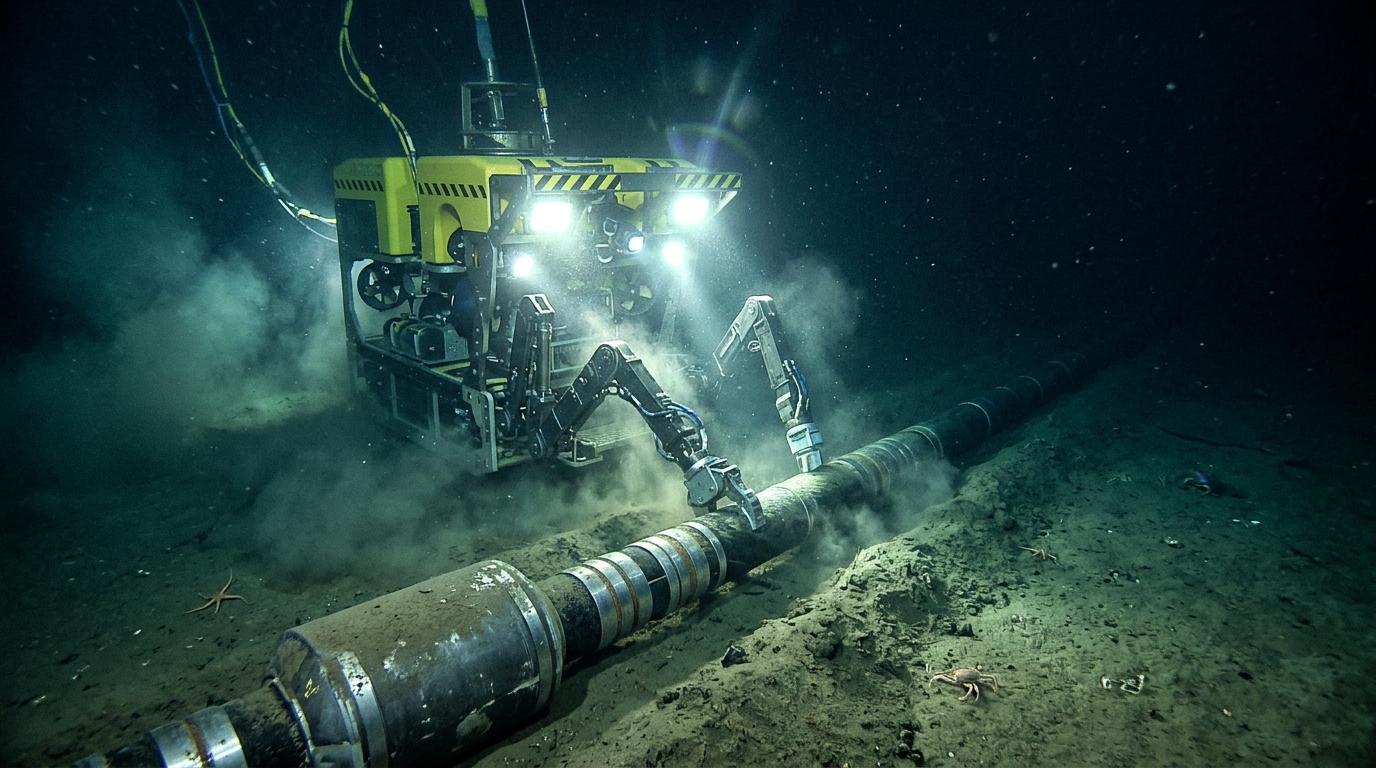
One of Britain’s most significant infrastructure concerns involves the telecommunications cables, pipelines, and energy interconnectors running beneath the sea.
According to the UK government’s white paper published on 22 October 2026, undersea telecommunications cables carry approximately 99% of the United Kingdom’s international data traffic. These connections support communications, financial transactions, cloud computing, businesses, and government services.
Undersea energy infrastructure also contributes to the supply and distribution of gas and electricity.
What has Britain reported?
The government’s white paper states that Defence Secretary John Healey revealed in April 2026 that British and allied forces had tracked Russian submarines on a mission to survey cables.
Such surveillance raises legitimate concerns because information about the location and characteristics of infrastructure could be valuable to an adversary. However, surveillance does not prove that sabotage has occurred or that an attack has been ordered.
What measures are proposed?
The British government has proposed stronger legal and regulatory protection for critical undersea infrastructure. Measures under consideration include:
- Stronger security and resilience obligations for infrastructure providers.
- Modernised criminal offences and penalties for damaging critical infrastructure.
- Additional government powers to address national-security risks.
- A regulatory framework for certain fibre-optic sensing technologies.
- Improved monitoring and protection of sensitive infrastructure.
The proposals include potentially severe penalties for certain offences, but they should not be described as fully enacted law unless and until the legislative process confirms that status.
Why attribution matters
Undersea cables can be damaged by fishing equipment, ship anchors, natural hazards, and technical failures, and deliberate interference.
A damaged cable is not automatically evidence of Russian sabotage. Reliable attribution may require underwater inspections, vessel tracking, forensic analysis, intelligence, and a formal investigation.
The policy challenge is to protect infrastructure against both accidental damage and deliberate attacks without presenting suspicion as proof.
4. Germany and the Risk of Hybrid Operations
Reuters reported on 21 October 2026 that Germany’s armed forces had assessed the Russian sabotage threat against military personnel and facilities as “significant.”
The assessment followed the September discovery of a crashed drone carrying a container of high explosives near Wunstorf Air Base. Reuters also reported that German authorities attributed a separate attempted explosive-drone attack at Leipzig/Halle airport to Russia; Moscow denied involvement.
These are separate incidents and should not be conflated. Nor should they be treated as proof that every suspicious drone or act of vandalism in Europe is directed by a foreign government.
What is hybrid warfare?
Hybrid warfare describes the use of combinations of military and non-military methods to weaken an adversary, disrupt institutions, or influence political decisions. Such activities may include:
- Cyber operations and digital espionage.
- Surveillance and suspected infrastructure sabotage.
- Disinformation and influence campaigns.
- Covert recruitment of people to perform specific tasks.
- Economic pressure and exploitation of social divisions.
Not every cyberattack or criminal act qualifies as state-directed hybrid warfare. Attribution depends on the evidence.
The alleged cross-border network
An investigation published by the European Broadcasting Union’s Investigative Journalism Network on 14 September 2026 examined alleged sabotage activities involving Czechia, Poland, Romania, and Lithuania during 2024.
The investigation reported that people recruited through online channels were allegedly tasked with surveillance and sabotage. Targets included a Prague bus depot and Lithuanian companies supplying equipment to Ukraine. Authorities linked the network to Russian military intelligence, commonly known as the GRU.
If established, such cases illustrate how hostile operations may use recruited individuals rather than visibly deploying uniformed personnel. Nevertheless, allegations and intelligence assessments must be distinguished from findings established through legal proceedings.
5. Cybersecurity: Serious Vulnerabilities Are Not Proof of an Attack
Cybersecurity provides another example of why careful interpretation matters.
In October 2026, critical vulnerabilities affecting PHP, a programming language widely used in web applications, prompted security guidance and precautionary measures by UK authorities. Reporting indicated that 32 government websites were temporarily offline and four were partially affected.
The National Cyber Security Centre said there was no indication that the vulnerability had been successfully exploited to hack those government systems.
The distinction is important: taking a website offline to apply security measures does not prove that attackers have compromised it.
A serious software vulnerability can expose organisations to unauthorised access, data theft, service disruption, and further attacks. Organisations have to maintain inventories of their systems, apply security updates promptly, monitor suspicious activity, restrict unnecessary access, and test their backups and recovery plans.
A separate concern: alleged China-linked hacking
The material reviewed for this article also describes a British investigation into a hacking campaign attributed by Microsoft to a China-aligned group called Storm-0940. The reported targets included organisations in defence, energy, finance, government, and technology.
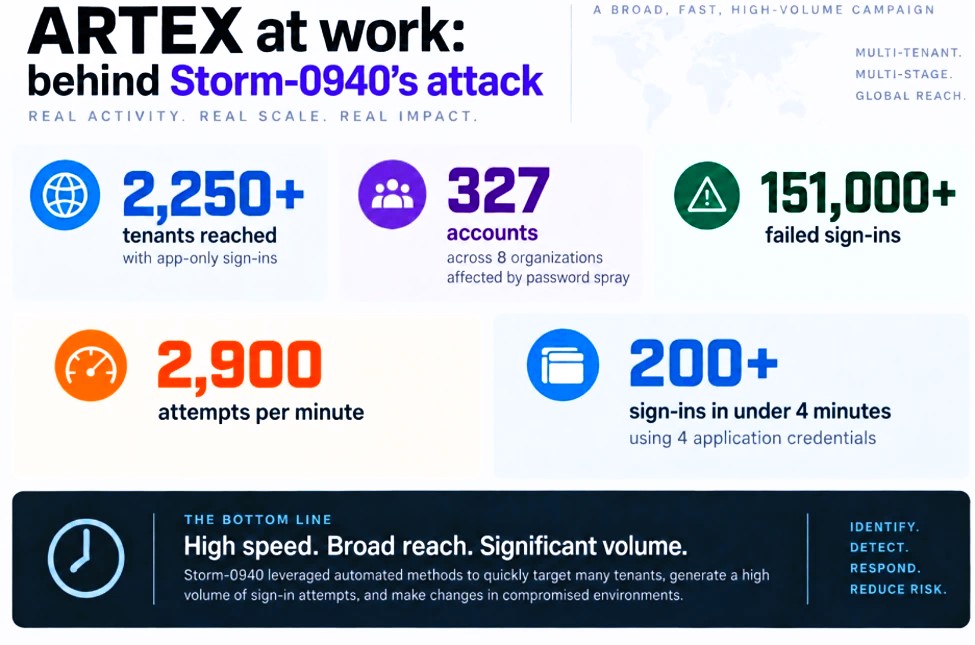
The UK National Cyber Security Centre was reportedly working with Microsoft and others to determine whether British organisations had been compromised.
This is a distinct cybersecurity concern, not evidence that Russia was responsible for the PHP vulnerability or every reported cyber incident. Different threat actors and technical weaknesses require separate investigations and attribution.
The broader lesson is that digital security risks can arise from multiple sources and need sustained attention, regardless of whether a particular incident is connected to global rivalries.
6. What Infrastructure Disruption Can Mean for Ordinary People
Electricity, water, telecommunications, banking, transport, and healthcare are interconnected. A disruption to one service can affect several others.
For example, a power failure may interrupt water pumping, refrigeration, communications, and electronic payments. A telecommunications outage can prevent people from contacting emergency services. A cyber incident affecting a supplier may disrupt services used by many organisations.
The consequences can include lost business, delayed deliveries, interrupted medical care, additional household expenses, and public anxiety.
One important safeguard is redundancy: having alternative systems available when a primary system fails. Examples include backup power, multiple communications routes, alternative supply arrangements, and tested recovery facilities.
Although redundancy requires investment, it can reduce the economic and social cost of a prolonged outage.
7. What Britain’s Campaign Means for Households
The Be Ready campaign encourages households to prepare for up to three days of disruption. It is a practical emergency-planning measure, not evidence of an imminent attack.
The British guidance recommends approximately nine litres of water per person for three days, suitable non-perishable food, a torch and spare batteries, a first-aid kit, blankets, some cash, and a battery-powered or wind-up radio.
Households should adapt these recommendations to their circumstances, including family size, climate, medical needs, and available storage.
A basic emergency plan should also include:
- Essential medicines and important contact details.
- Secure copies of important documents.
- A way to receive official information if internet access fails.
- Arrangements to check on older relatives, people with disabilities, and others who may need assistance.
- Knowledge of local emergency procedures and evacuation routes where relevant.
Preparedness should not become an excuse for panic buying, unnecessary expenditure, or spreading unverified warnings.
8. Lessons for Pakistan
Pakistan does not need to face the same threat environment as Britain to benefit from stronger emergency preparedness. The country has its own vulnerabilities, including floods, heatwaves, earthquakes, electricity interruptions, cyber threats, and disruptions to essential services.
The priority should be a practical and affordable approach aimed at resilience.
Protect essential infrastructure
Electricity distribution, water treatment and pumping, telecommunications, hospitals, transport, and banking need workable continuity plans. Critical facilities should have appropriate backup arrangements, regular maintenance, and tested recovery procedures.
Strengthen cybersecurity
Public institutions, banks, businesses, and service providers should apply security updates, protect sensitive information, maintain secure backups, and prepare for incidents that make digital systems temporarily unavailable.
Improve water and food resilience
Local authorities and service providers should identify vulnerable supply routes and critical facilities. Households should follow public-health advice on safe water storage, especially during floods or suspected contamination.
Make emergency advice affordable
Preparedness guidance should not place unnecessary financial pressure on low-income families. Keeping emergency contacts accessible, understanding local hazards, and knowing where to obtain verified information are useful measures that cost little or nothing.
Communicate clearly during a crisis
False claims about attacks, shortages, contaminated water, or banking failures can create additional harm. Authorities should provide timely, consistent updates, while journalists and social-media users should distinguish confirmed facts from speculation.
Public trust is an essential part of national resilience.

9. Accountability: Questions Governments Must Address
Preparedness campaigns are useful, but their effectiveness depends on implementation.
Governments should be able to explain how they identify vulnerable infrastructure, test emergency plans, coordinate with private service providers, respond to cyber incidents, and protect people who may struggle to manage an emergency independently.
New legislation must also be adequately resourced and fairly enforced. Announcing tougher penalties is not enough if infrastructure operators lack clear responsibilities or the resources to improve security.
For Pakistan, the central policy question is whether essential services can continue or recover quickly when a major disruption occurs.
Conclusion: Preparation Is Sensible; Predicting a War Date Is Not
Britain’s October 2026 preparedness campaign, Germany’s concerns about possible sabotage, the investigation into an alleged Russian-directed network, and the protection of undersea infrastructure all reflect a changing security environment.
The evidence supports three conclusions.
First, critical infrastructure and digital systems are vulnerable to a range of threats, including technical failure, severe weather, criminal activity, and deliberate interference.
Second, European intelligence officials have warned of possible escalation within the coming months, but these warnings do not establish a confirmed date for an attack on Britain or the start of a wider European war.
Third, household preparedness and infrastructure protection are sensible policies even when no specific emergency is predicted.
For Pakistan, the practical lesson is to strengthen essential services, improve cybersecurity, prepare for local emergencies, and communicate risks honestly.
The right response to uncertainty is informed vigilance, not complacency or panic. Preparedness should be guided by credible evidence, practical planning, and accountable institutions, rather than predictions that the available evidence cannot support.
By Maj Hamed Mahmood (Retired). MA Political Science, LLB, PGD (HRM), Ex-Principal, Former Security Consultant.
Britain’s October 2026 emergency preparedness campaign has raised questions about suspected Russian sabotage, cyberattacks, vulnerable infrastructure, and the possibility of a wider European conflict. But does the campaign signal an imminent attack, or is Britain preparing for a range of emergencies that could disrupt everyday life?
Editorial Disclaimer
This article is intended for public information and analysis. It distinguishes reported developments, official assessments, allegations, and potential future scenarios. Security assessments can change as new evidence emerges. Readers should consult official guidance and credible reporting for updates.
Frequently Asked Questions
1. Why has Britain asked households to prepare for 72 hours of disruption?
The UK government launched its Be Ready campaign on 22 October 2026 as part of a three-year public-awareness programme. It aims to help households cope with emergencies, including severe weather and interruptions to essential services. The campaign does not establish that an attack is imminent.
2. Is Russia expected to attack Britain on a specific date?
The reports examined for this article do not establish a confirmed date for a Russian attack on Britain. Intelligence warnings about possible escalation should not be treated as a scheduled attack.
3. What does “months, not years” mean in the intelligence reporting?
The phrase appeared in The Guardian’s report of 20 September 2026, describing one official’s assessment of a possible escalation scenario. It was not a confirmed prediction that an attack would occur within a specific number of months.
4. Why are undersea cables important to Britain?
According to the British government’s October 2026 white paper, undersea telecommunications cables carry approximately 99% of the UK’s international data traffic. They support communications, financial services, businesses, and government operations.
5. Does every damaged cable or suspicious drone indicate Russian sabotage?
No. Cables can be damaged by anchors, fishing equipment, technical faults, and natural hazards. Responsibility for suspicious incidents should be attributed only when supported by reliable evidence or clearly identified official assessments.
6. What should people in Pakistan do?
People can prepare for ordinary emergencies by keeping basic supplies, maintaining access to essential medicines, planning for short power or communications outages, protecting digital accounts, and following verified public advisories. The available evidence does not justify assuming that a major European attack or war will begin on a particular date.
References and Further Reading
- UK Government, Households Encouraged to Take Small, Simple Steps to Stay Prepared in an Emergency, 22 October 2026.
- UK Government, Critical Undersea Infrastructure Security and Resilience: Proposals for Modernising the UK’s Legislation, 22 October 2026.
- UK Government, Subsea Cable Saboteurs Face Jail and Unlimited Fines Under New Security Crackdown, 22 October 2026.
- The Guardian, reporting on Britain’s emergency preparedness campaign, 22 October 2026.
- The Guardian, reporting on European intelligence warnings about possible Russian escalation, 20 September 2026.
- Reuters, Germany’s Military Warns of “Significant” Russian Sabotage Threat, 21 October 2026.
- European Broadcasting Union Investigative Journalism Network, New Cross-Border Investigation Uncovers Russian-Directed Network of “Disposable Agents” Behind European Sabotage Attacks, 14 September 2026.
- UK National Cyber Security Centre, guidance concerning critical PHP vulnerabilities, October 2026.
- BBC News, reporting on Ondřej Surý’s work to prepare PHP security fixes, October 2026.
- Microsoft and UK cybersecurity reporting concerning the alleged Storm-0940 hacking campaign.