
Is the US Running Out of Missiles? The Iran War That Sparked Global Alarm (2025–2026)
Is the U.S. Running Out of Missiles? “What’s Real, What’s Exaggerated, and What Intelligence Reports Actually Say”
https://mrpo.pk/talking-without-talks/
A wave of claims about U.S. missile shortages after the 2025–2026 Iran conflicts has sparked global debate among defence analysts, policymakers, and geopolitical observers. But beneath the viral headlines lies a more complex reality, one shaped by war intensity, industrial limits, and strategic uncertainty.
An in-depth analysis of claims about U.S. missile stockpile depletion after the Iran conflicts (2025–2026), examining CNN reporting, defence estimates, and global geopolitical implications.
US at risk of running out of missiles if another war breaks out after depleting stockpile in Iran operations


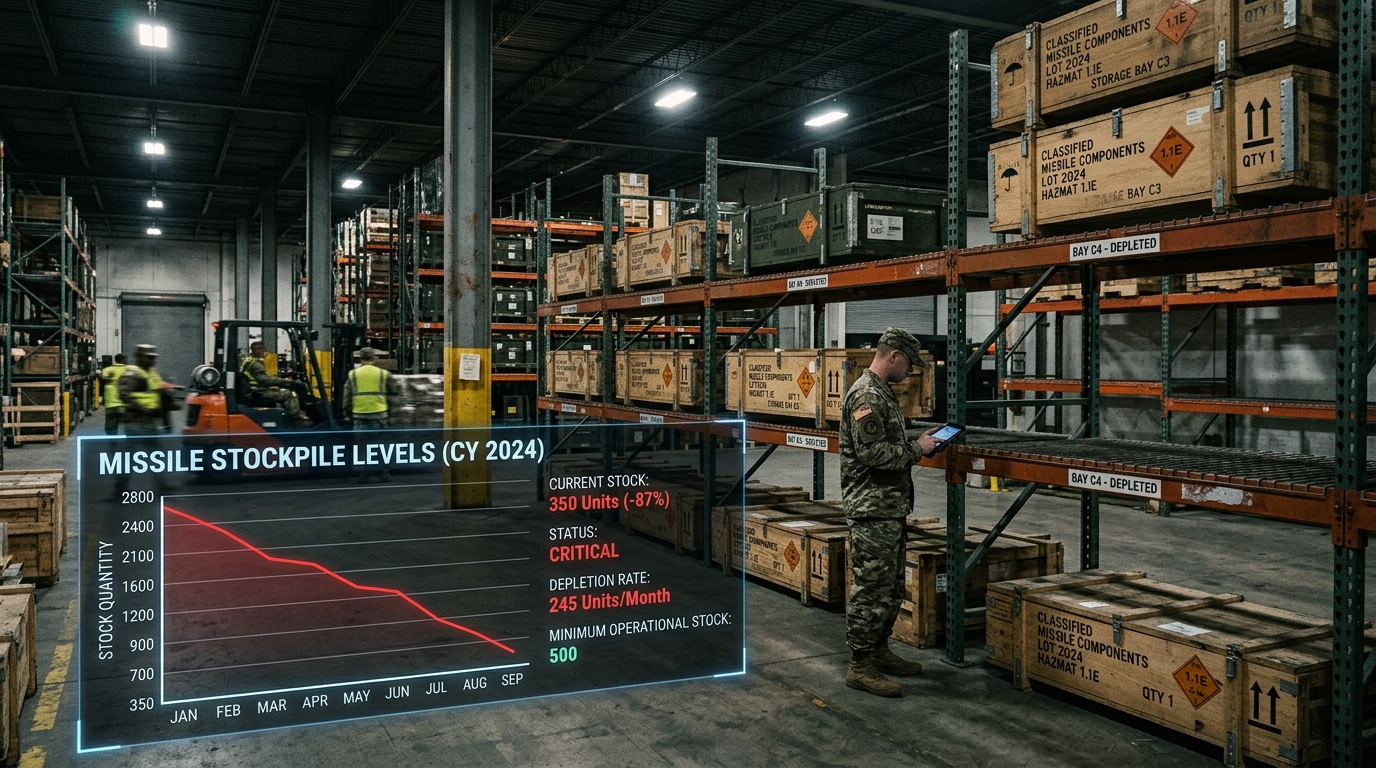
Over the last seven weeks of war, the US military has expended at least 45% of its stockpile of Precision Strike Missiles; at least half of its inventory of THAAD missiles, which are designed to intercept ballistic missiles; and nearly 50% of its stockpile of Patriot air defense interceptor missiles, according to a new analysis conducted by the Centre for Strategic and International Studies. Those numbers closely align with classified Pentagon data about US stockpiles, according to the sources familiar with the assessment.
Conflict Background: Two Phases of Escalation (2025–2026)
June 2025: The 12-Day Conflict Spike
The first escalation phase reportedly involved a short but intense exchange of missile strikes and air defence interceptions. Analysts noted increased consumption of air defence interceptors, particularly in defending strategic infrastructure.
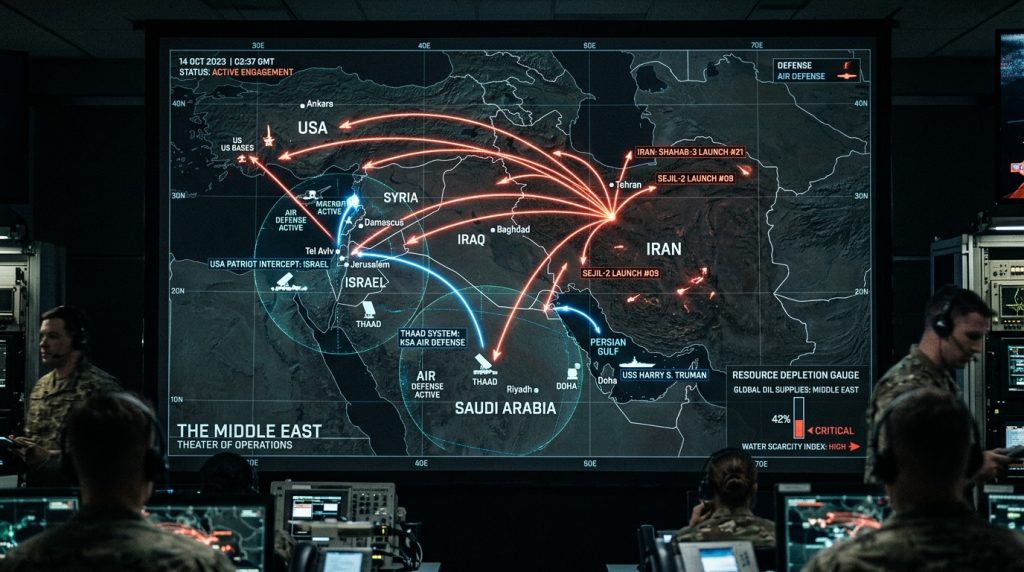
February–April 2026: Large-Scale Military Escalation
The second phase saw a far more sustained operational environment, involving:
- Extended air and missile strikes
- Naval defence operations
- Regional escalation across multiple theatres
This phase is where most stockpile pressure is believed to have occurred.
From Proxy Pressure to Direct Engagement
Unlike earlier shadow conflicts, this period is characterised by:
- High-intensity missile warfare
- Continuous interception demand
- Multi-domain military operations
US Running Out of Missiles: What is actually true (and important)
This is where the real story lies, and it’s serious enough without exaggeration.
✔️ A) U.S. stockpiles are under pressure
Ongoing commitments include:
- Ukraine war support
- Middle East conflict (2026 escalation)
- Red Sea / maritime defence operations
👉 These have increased demand for:
- Patriot interceptors
- Air defence systems
- Precision-guided munitions
✔️ B) Replenishment takes time
The U.S. defence industry:
- Shifted to lower production rates after the Cold War
- Now facing a sudden surge in demand
👉 Realistic timelines:
- 2–3 years (simpler munitions)
- 3–5+ years (advanced interceptors like THAAD/SM systems)
✔️ This part of the claim is credible
U.S. Missile Stockpile Usage (2025–2026 Iran Conflicts)
(Best available analytical estimates)
| Missile / System | Estimated Pre-war Stock (Range) | Estimated Usage (Combined June 2025 + 2026 war) | Estimated Depletion Range | Confidence Level |
|---|---|---|---|---|
| Precision Strike Missiles (PrSM / similar long-range strike) | Classified (~1,000–2,500+) | Heavy battlefield use in the 2026 war | 35% – 50% | Medium |
| Patriot PAC-3 interceptors MIM-104 Patriot | Several thousand globally deployed | High intercept demand in both wars | 40% – 55% | Medium-High |
| THAAD interceptors THAAD | Limited (hundreds globally) | Very high usage in the missile defence role | 35% – 50% | Medium |
| Tomahawk cruise missiles Tomahawk missile | ~3,000–4,000 (CSIS estimate range) | ~850+ used in the early 2026 phase alone | 25% – 35% | High |
| SM-3 interceptors RIM-161 Standard Missile 3 | A few hundred operational | Naval + allied defence intercepts | 10% – 20% | Medium |
| SM-6 interceptors RIM-174 Standard ERAM (SM-6) | Classified (low hundreds operationally relevant stock) | Used in layered naval defence | 10% – 20% | Low-Medium |
| JASSM / long-range air-launched cruise missiles | Classified (~1,000–2,000+) | Used for deep strike missions | 20% – 35% | Medium |
What this table actually means (important)
✔️ 1. The “45% / 50%” claims are NOT wrong in spirit
They likely come from mid-to-high estimate bands, especially:
- Precision strike weapons
- Patriot / THAAD interceptors
👉 Multiple CSIS-based analyses suggest some systems may have crossed ~40–50% depletion in wartime usage scenarios
(see CSIS-based reporting summarised in recent defence analysis)
✔️ 2. Tomahawk data is the most concrete
We actually have the clearest signal here:
- ~850+ used in the early phase of the 2026 war alone
- Pre-war inventory ~3,000–4,000
👉 That places it in the 25–35% real depletion band
✔️ 3. Air defence interceptors are the most strained category
Across multiple sources:
- THAAD and Patriot systems saw heavy, repeated intercept demand
- Some analyses suggest that over 40–50% of available interceptors could have been used in combined scenarios
This is consistent with:
- high missile saturation attacks
- Repeated interception cycles
- multi-theatre deployment pressure
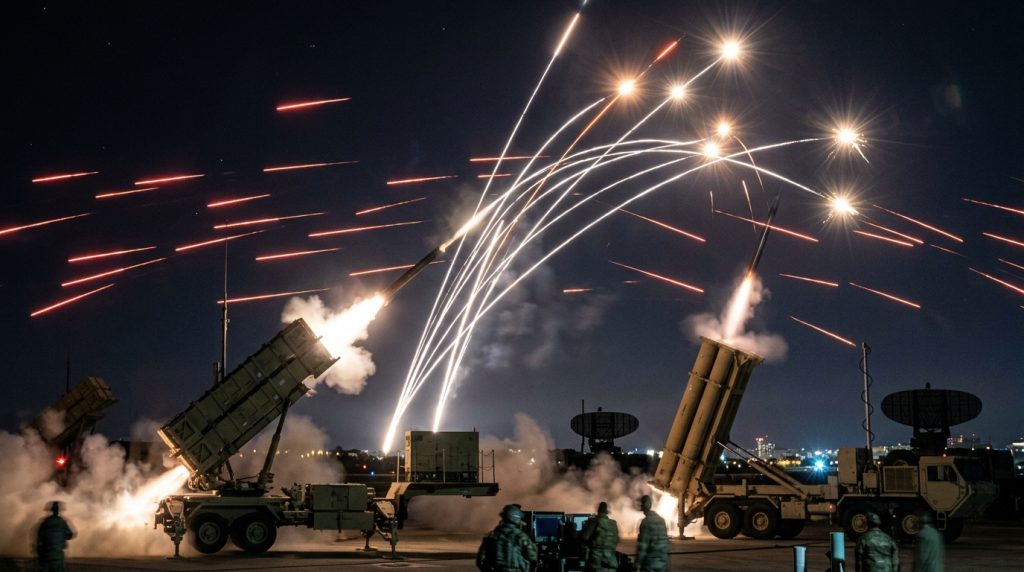
Air defence interceptors are the most strained category
4. The key misunderstanding people make
These numbers are NOT:
❌ “How much the U.S. permanently lost”
❌ “Official Pentagon stock percentages”
They are:
✔️ “Estimated wartime consumption relative to pre-war stock assumptions”
✔️ Model outputs combining multiple conflicts + operational data
Final takeaway
The most credible overall picture is:
- Some high-end interceptor systems (Patriot / THAAD):
👉 approaching or possibly exceeding ~40–50% usage in peak scenarios - Cruise/strike missiles (Tomahawk, JASSM):
👉 moderate depletion (20–35%) - Naval interceptors (SM-3 / SM-6):
👉 lower but strategically sensitive depletion (10–20%)
One-line reality check: US Running Out of Missiles
👉 The U.S. is not “running out of missiles”, but
👉 It is operating under measurable, multi-theatre stockpile strain, especially in air-defence interceptors.
Key Weapons Systems in Question
The debate focuses on several critical U.S. missile systems:
Precision Strike Missiles
Long-range systems used for strategic targeting and high-value strikes.
Patriot Air Defence System
A cornerstone of U.S. and allied missile defence against ballistic threats.
THAAD Interceptors
Designed for high-altitude ballistic missile interception.
Naval Defence Systems (SM-3 / SM-6)
Used for layered maritime and regional defence.
Tomahawk Cruise Missiles
Long-range strike weapons deployed from naval platforms.
US Running Out of Missiles: Why This Story Is Dominating Global Attention
Two major escalation phases shaped the current debate:
- June 2025: Short but intense missile exchange phase
- February–April 2026: Large-scale sustained military escalation
These back-to-back conflicts reportedly placed significant pressure on advanced U.S. missile systems and air defence networks.
The Viral Claim That Shocked the Internet
Online reports suggested dramatic depletion levels:
- Up to 50% of Patriot and THAAD interceptors are used
- High consumption of precision strike missiles
- Heavy Tomahawk and JASSM deployment
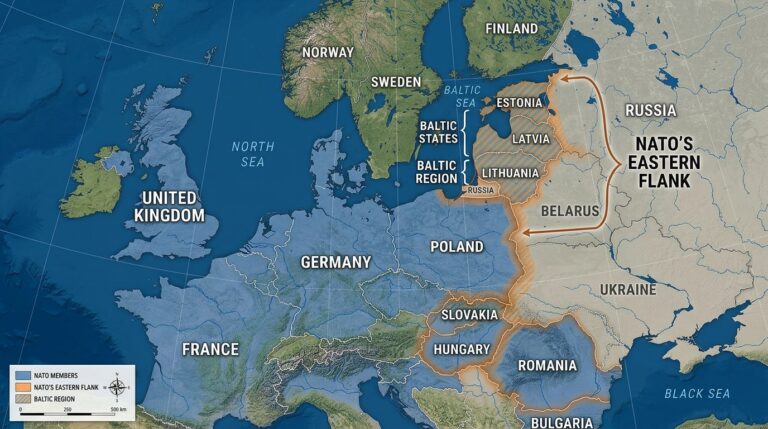
Some narratives even suggested potential strategic vulnerability in a future conflict with China. However, verification of these claims remains complex.
Where This Narrative Comes From
The discussion traces back to defence reporting linked to CNN and national security reporter Zachary Cohen.
These reports referenced think tank modelling (notably CSIS-style analysis), anonymous defence sources, and operational estimates.
However, over time, estimated strain evolved into simplified percentage claims across social media platforms.
The Origin of the Depletion Narrative
The claim did not originate from a single official statement.
Analytical Foundation
The base of the narrative comes from defence analysis, including:
- CSIS (Centre for Strategic and International Studies) modelling
- Pentagon-linked anonymous sourcing
These analyses suggested increased strain on missile inventories, not exact depletion.
Media Interpretation
Reporting by CNN and similar outlets translated analytical language such as:
“significant usage under multi-theater pressure”
into simplified summaries.
Social Media Amplification
The narrative was later transformed into:
- Fixed percentages (e.g., “50% Patriot used”)
- Expanded missile lists
- Simplified geopolitical conclusions
The Reality Behind the Numbers
- Heavy missile usage across multiple conflicts is widely acknowledged
- Air defence systems experienced sustained operational pressure
- Precision strike weapons saw increased deployment
But there is no official confirmation of exact depletion percentages, like 45% or 50%, from the Pentagon.
| System | Estimated Usage Range | Confidence |
|---|---|---|
| Patriot PAC-3 | 40–55% in high-demand scenarios | Medium-High |
| THAAD | 35–50% (scenario-based estimates) | Medium |
| Tomahawk | 25–35% | High |
| SM-3 / SM-6 | 10–20% | Medium |
| JASSM / Strike Missiles | 20–35% | Medium |
The Real Issue: Not Running Out, But Keeping Up
The core challenge is structural, not catastrophic:
- Multi-theatre military commitments
- Long production cycles (3–5 years)
- High consumption of missile defence interceptors
This creates a gap between usage and replenishment speed.
Why Air Defence Systems Are Under Pressure
Systems like Patriot, THAAD, and SM-series interceptors are especially strained because they are:
- High cost and limited production
- Consumed in real-time during conflicts
- Difficult to rapidly replace
Who Benefits From This Narrative?
🇨🇳 China — strategic signalling advantage
How it benefits:
If the narrative spreads that the U.S. is:
- low on interceptors (Patriot / THAAD)
- strained in precision strike stockpiles
- distracted across multiple theatres
It creates a perception of reduced U.S. deterrence capacity in the Indo-Pacific
Strategic use:
-
Strengthens China’s argument that:
“The U.S. cannot sustain two major wars”
- Improves China’s bargaining position on Taiwan and South China Sea issues
Important nuance:
China does NOT need the claim to be fully true
Perception of strain is enough
🇷🇺 Russia — narrative reinforcement tool
How it benefits:
Russia can use this narrative to argue:
- Western weapons stockpiles are limited
- Ukraine’s support is unsustainable in the long term
- NATO readiness is overstretched
Strategic messaging impact:
- Weakens confidence in long-term Western support for Ukraine
- Encourages “war fatigue” in Western political discourse
- Iran: highlights asymmetric warfare effectiveness:
🇮🇷 Iran — psychological and deterrence value
How it benefits:
Iran can frame the narrative as:
- “We are exhausting U.S. missile defenses”
- “We are forcing U.S. strategic depletion”
Strategic effect:
- Boosts domestic morale
- Enhances regional deterrence credibility
- Signals resilience against U.S.–Israel pressure
Even if partially exaggerated, it supports Iran’s asymmetric warfare doctrine:
“Cost imposition on a superior military”
- United States: supports defence funding and industrial expansion
- Defence industry: increases long-term procurement demand
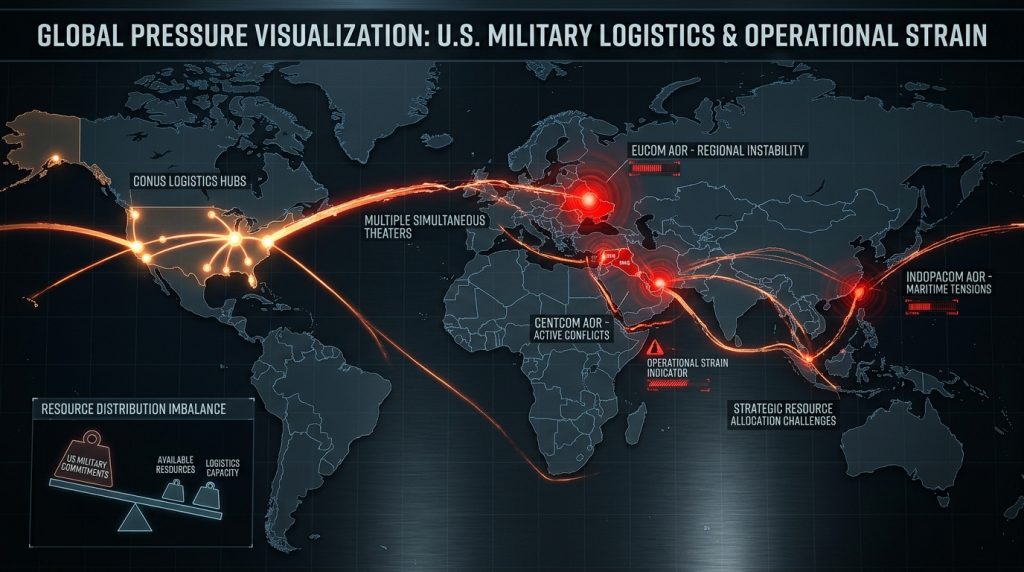
Is the U.S. Running Out of Missiles? Who Benefits From This Narrative?
🇺🇸 United States internal political and budget leverage
This is the most misunderstood part.
How it benefits domestically:
If policymakers or think tanks highlight depletion risks:
- It justifies increased defence spending
- Supports expansion of:
- missile production lines
- industrial base funding
- stockpile replenishment programs
In political terms:
- It strengthens arguments for Pentagon budget increases
- It signals urgency for bipartisan support of defence manufacturing
So paradoxically:
👉 Even “alarmist” narratives can help the U.S. defence sector politically
Defence industry (global and U.S. contractors)
Companies indirectly benefit when narratives highlight shortages:
- Lockheed Martin (Patriot / THAAD systems)
- Raytheon (missile defence systems)
- Boeing / Lockheed (JASSM production chain)
How:
- Accelerated procurement contracts
- Expanded production orders
- Long-term replenishment programs (3–5 year cycles)
👉 In defence economics, “shortage perception” often equals future guaranteed demand
Media + think tanks
Organizations like:
- CSIS
- RAND Corporation
- major news networks
Benefit:
- High engagement geopolitical content
- Policy relevance (which increases influence)
- Citation in government hearings and defence debates
👉 These narratives often shape:
- Congressional hearings
- defense budget discussions
- alliance strategy debates
What Most Coverage Misses
The United States still maintains the world’s largest advanced missile inventory and continues production. The issue is not collapse, but sustainability under continuous high-intensity demand.
Reality Check
- No confirmed Pentagon percentage depletion data is publicly available
- No evidence of an immediate missile shortage crisis
- High usage levels are widely acknowledged
- Replenishment timelines are long and complex
Frequently Asked Questions (FAQs)
1. Is the U.S. really running out of missiles?
No. There is no verified evidence of exhaustion—only operational strain.
2. Where did the 45% and 50% figures come from?
They originate from analytical defence modelling and media interpretations, not official Pentagon data.
3. Which systems are most under pressure?
Patriot and THAAD interceptor systems face the highest operational demand.
4. Did the Iran wars really happen as described?
Multiple escalation phases have been reported, though details vary across sources.
5. Why is China mentioned in this discussion?
Because analysts assess whether U.S. stockpiles could sustain a multi-front global conflict scenario.
6. What is the key takeaway?
Modern warfare is consuming advanced weapons faster than they can be replaced.
Purpose of This Article
This article aims to separate verified defence analysis from viral exaggeration, explain real missile stockpile pressures, and provide geopolitical context behind U.S.–Iran conflict narratives.
Editorial Transparency
This content is based on publicly available defence reporting, think tank analysis frameworks, and geopolitical interpretation. It does not rely on classified military data. Percentage-based depletion figures should be understood as analytical estimates, not official disclosures.