
Talking Without Talks: The Language War Behind Iran-US Diplomacy
Talking Without Talks: The Language War Behind Iran-US Diplomacy. Explore how Iran and the United States use contradictory diplomatic statements, creating a strategic reality where talks are announced, denied, and reinterpreted simultaneously.
https://mrpo.pk/words-that-define-leadership/
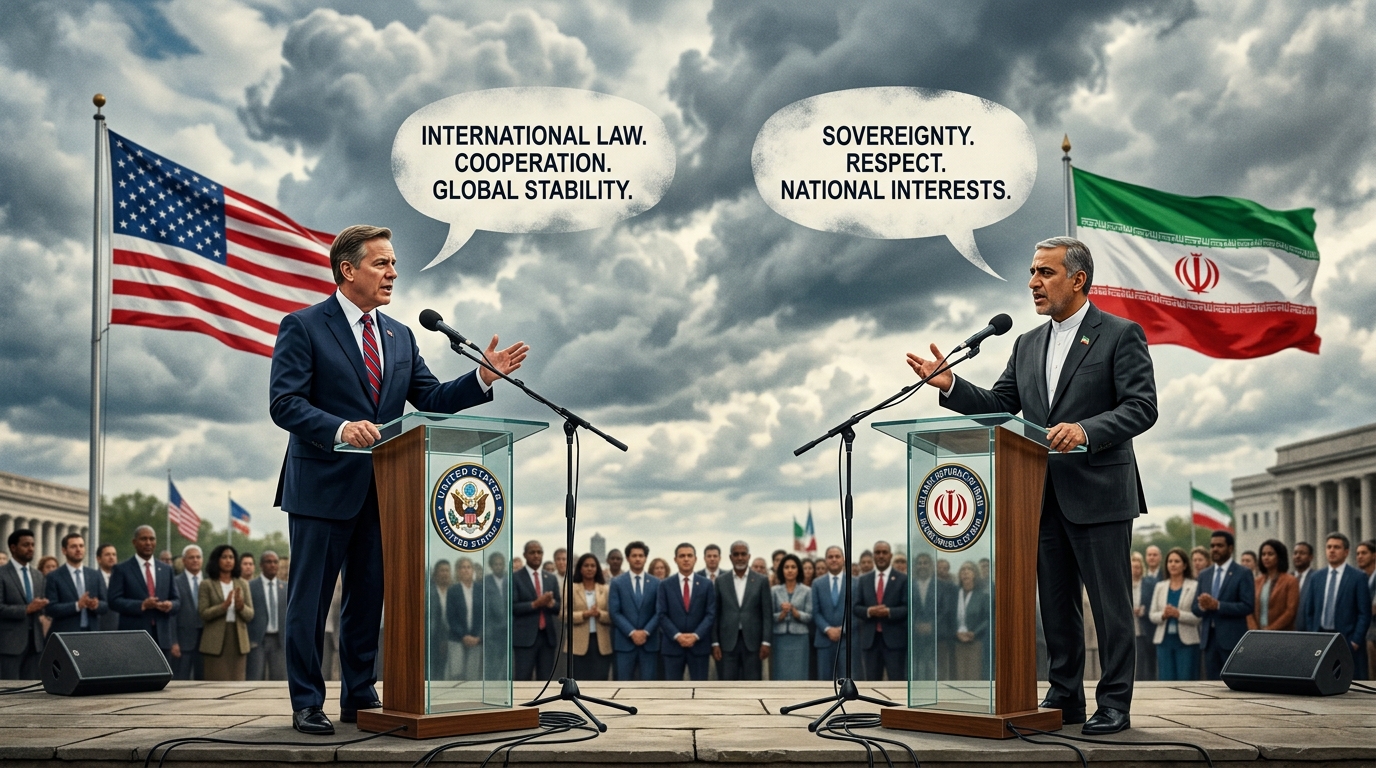
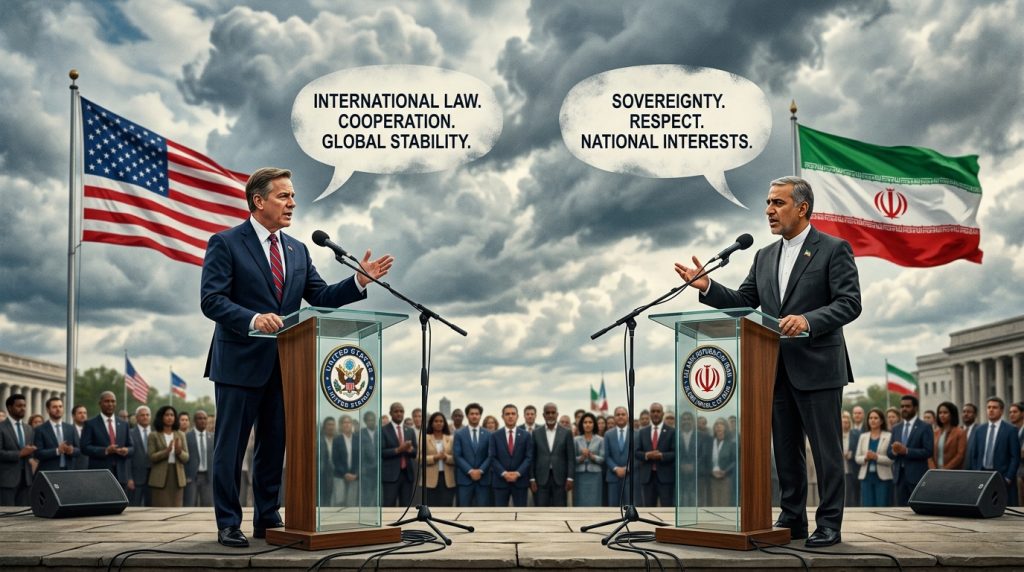
Diplomacy is traditionally imagined as quiet, structured, and hidden from public noise. But in the modern Iran–United States relationship, diplomacy behaves differently. One side announces progress. The other side denies that any conversation exists. Meanwhile, negotiations still appear to continue through indirect channels, mediators, and carefully controlled messaging. This creates a paradox: talking without talking.
This is not accidental confusion. It is a structured communication strategy where contradiction itself becomes part of the negotiation process.
Editorial Position
This article is based on publicly available statements, verified media reporting, and official government communications from the United States and Iran. It does not promote any political narrative. Its purpose is to analyse how conflicting diplomatic messaging shapes perception, negotiation leverage, and global geopolitical behaviour.
Iran Fires On Ships In Strait Of Hormuz, Trump Says ‘They Can’t Blackmail Us
Hopes that shipping would resume through the Strait of Hormuz proved short-lived on April 18, as Iranian forces attacked at least three civilian ships after Tehran announced it was reversing its decision to reopen the vital waterway.
United Kingdom Maritime Trade Operations (UKMTO), a shipping security monitor, detailed three attacks, the first such incidents since a cease-fire began on April 8.
In the first incident, two Islamic Revolutionary Guards Corps (IRGC) gunboats fired on a tanker without warning, UKMTO said.
Later, it said a container ship was “hit by a projectile,” while there was a near miss with an attack on a third vessel.
Two of the ships were Indian-flagged, prompting India to summon the Iranian ambassador in protest.
Talking Without Talks: Understanding Strategic Ambiguity
Strategic ambiguity refers to the deliberate use of unclear, shifting, or contradictory statements during sensitive negotiations. It allows governments to maintain flexibility, manage domestic political pressure, and influence international perception at the same time.
In the Iran–US context, ambiguity becomes more than a tactic. It becomes the operating system of diplomacy itself.
The Communication Pattern
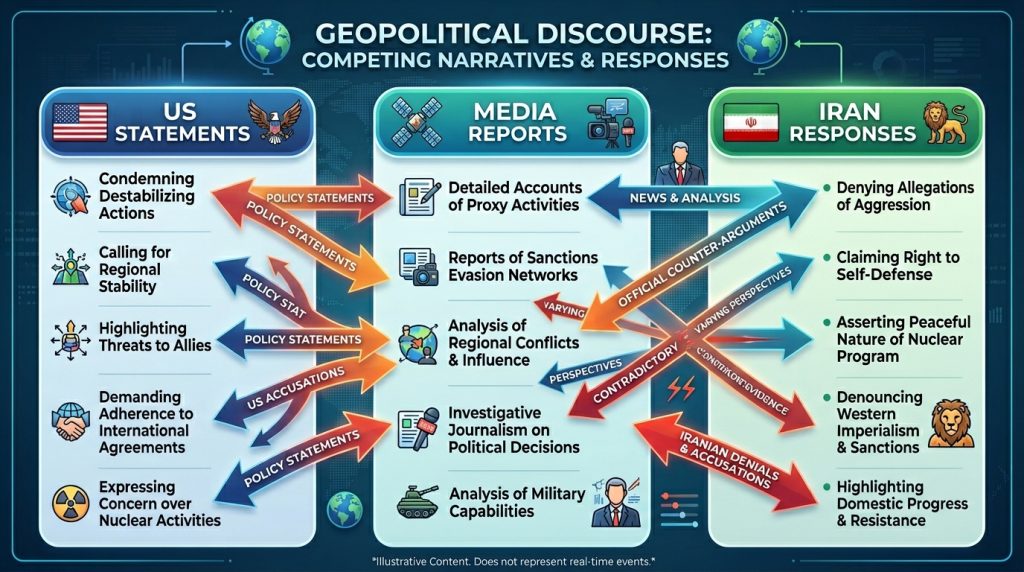
Across multiple public statements, a repeating cycle emerges. First, one side signals progress or willingness to negotiate. Then the opposing side denies or reframes the claim. Media organisations interpret and reframe both positions. Finally, negotiations continue in indirect or less visible formats.
This creates a layered reality where public statements and diplomatic actions do not always match directly.
Complete Conflict Statement Archive
Phase 1: Productive Talks vs No Talks Exist
The United States publicly claimed that discussions with Iran were productive and ongoing. Statements suggested progress and temporary pauses in escalation to support diplomacy.
However, Iranian officials denied that any direct negotiations were taking place. Some Iranian responses went further, suggesting that the United States was essentially responding to its own internal expectations rather than actual dialogue.
This phase establishes the foundational contradiction: one side confirms diplomacy, the other denies its existence entirely.
Phase 2: Iran Wants Deal vs No Direct Communication
US messaging escalated by suggesting that Iran was actively seeking agreement and showing willingness to negotiate. This was framed as evidence of diplomatic momentum.
In contrast, Iranian officials rejected the existence of any direct communication channels with Washington, emphasising that no formal negotiation structure had been established.
The contradiction here shifts from the existence of talks to the interpretation of intent.
Phase 3: Talking to the Right People vs Talking to Yourself
United States statements indicated engagement with relevant Iranian stakeholders, implying indirect or structured communication pathways.
Iranian officials responded with a sharp denial, characterising US claims as internal projection rather than actual diplomatic engagement.
This phase shows escalation from denial to rhetorical dismissal, where language itself becomes confrontational.
Phase 4: Agreement Near vs Demands Unrealistic
US narratives began suggesting that a framework agreement was close and that major elements had already been accepted.
Iranian officials countered this by describing US conditions as excessive, unrealistic, and politically unacceptable. This marked a clear divergence in the interpretation of negotiation progress.
What one side called progress, the other side defined as obstruction.
Phase 5: Uranium Transfer vs National Control
One of the most sensitive contradictions emerged around nuclear material. US statements suggested that enriched uranium could be transferred or managed outside Iran under a potential agreement.
Iranian officials firmly rejected this possibility, stating that nuclear material would remain under national sovereignty and control.
This phase reflects a deep structural disagreement over security and sovereignty.
Phase 6: Deal Soon vs No Timeline
The United States projected that a deal could be finalised within days, creating a sense of urgency and momentum.
Iranian officials responded that no timeline had been agreed upon and that negotiations remained unresolved.
This contradiction highlights differing approaches to time: urgency versus procedural caution.
Phase 7: Policy Confusion vs Strategic Consistency
US messaging occasionally shifted between nuclear containment objectives and broader political or strategic goals.
Iranian messaging remained focused on sovereignty, nuclear rights, and resistance to external pressure. This created a perception of inconsistent objectives on one side and consistent positioning on the other.
European Reaction Layer
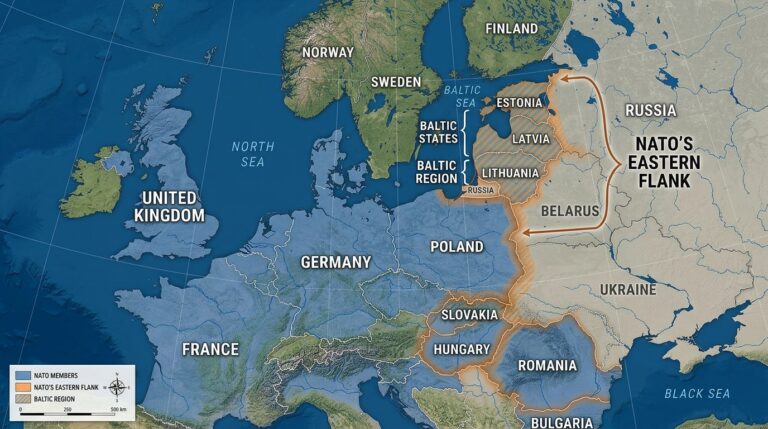
European governments closely monitored these developments due to concerns over regional stability, energy security, and global trade routes. Some European leaders publicly criticised inconsistent messaging patterns, warning that frequent contradictions reduce diplomatic credibility and increase geopolitical risk.
Europe’s position remains observational but highly sensitive, particularly due to its dependency on Middle Eastern energy flows and maritime stability through strategic shipping routes.
Why Contradictions Are Strategic, Not Random: Talking Without Talks:
Domestic Political Management
Government leaders must maintain strength and credibility in front of domestic audiences, even while engaging in complex negotiations behind the scenes. Contradictory messaging allows different narratives to coexist for different audiences.
Negotiation Leverage
Ambiguity creates uncertainty. Uncertainty creates pressure. Pressure influences negotiation dynamics. This allows both sides to preserve bargaining power without fully revealing positions.
Psychological Framing
Statements are not only informational; they are psychological instruments designed to shape perception, control narrative direction, and influence opponent behaviour.
Pattern Recognition Across the Archive
Optimism Cycle
Progress is announced prematurely, creating expectations that may later be adjusted or denied.
Pressure Cycle
Diplomatic messaging is often paired with threats or warnings, creating simultaneous tension and negotiation momentum.
Timeline Elasticity
Deadlines shift repeatedly, extending negotiation windows and maintaining strategic unpredictability.
Talking Without Talks: Information Warfare Dimension
Modern diplomacy operates alongside media ecosystems where statements are instantly amplified, interpreted, and debated. This creates an environment where narrative control becomes as important as negotiation itself.
In this environment, truth is not always hidden. It is often fragmented across competing statements.
Risks of Contradictory Messaging
Conflicting diplomatic statements increase the risk of misinterpretation between states. This can affect financial markets, military readiness, alliance stability, and regional security calculations. In high-tension environments, miscommunication itself can become a trigger for escalation.
Key Takeaways
Diplomacy is now public-facing
Negotiations unfold in parallel with public statements and media interpretation.
Contradiction can be intentional
Conflicting messaging is often used as a strategic tool rather than a communication failure.
Clarity emerges late
Final positions are typically revealed only after extended cycles of ambiguity.

Frequently Asked Questions: Talking Without Talks:
Why do Iran and the US issue contradictory statements?
Both sides communicate to different audiences and use messaging as a strategic tool during negotiations.
Are talks actually happening despite denials?
Yes, diplomatic engagement can occur through indirect channels even when publicly denied.
Why does the US announce progress early?
Early announcements help shape public expectations and apply diplomatic pressure.
Why does Iran deny negotiations publicly?
Public denial helps maintain political legitimacy and domestic narrative consistency.
What role does Europe play in this situation?
Europe monitors developments due to economic dependency, energy security concerns, and regional stability risks.
What is strategic ambiguity in diplomacy?
It is the deliberate use of unclear or shifting messaging to maintain flexibility and leverage during negotiations.
Conclusion
Talking Without Talks describes a modern diplomatic reality where communication is fragmented across competing narratives. In this system, statements are not always reflections of reality but instruments of strategy. Understanding this helps decode how global diplomacy functions in an age where words travel faster than agreements.