Trump vs Netanyahu: Public Fights, Private Alliance. Why the US-Israel Bond Remains Rock Solid Despite Iran Tensions
Trump vs Netanyahu: Public Fights, Private Alliance. Have you ever wondered how two powerful leaders can exchange harsh words one day and continue deep military cooperation the next? In the high-stakes world of 2025-2026 Iran conflicts, the Trump-Netanyahu relationship offers a masterclass in geopolitical drama. Let’s dive deep and uncover what’s really happening behind the headlines.
https://mrpo.pk/netanyahu-nuclear-hypocrisy-exposed/
https://mrpo.pk/trumps-war-for-netanyahu/
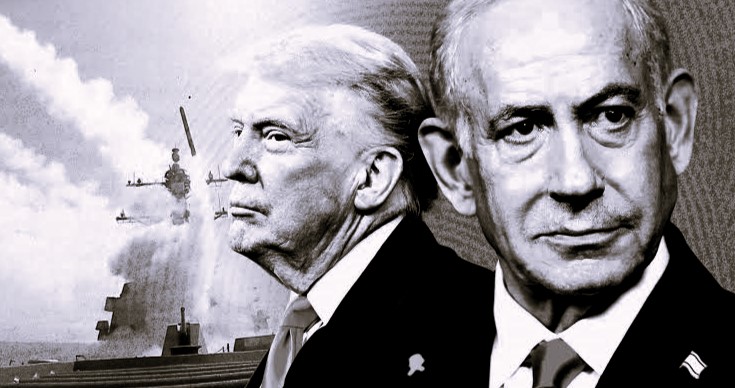
Israel to continue Lebanon offensive despite Trump: Netanyahu
Israeli Prime Minister Benjamin Netanyahu told US President Donald Trump on Monday that Israeli forces would continue their offensive in southern Lebanon and strike “terror targets” in Beirut if Hezbollah persists in attacking Israeli cities, according to Israeli media. Speaking in comments carried by the daily Yedioth Ahronoth, Netanyahu said he informed Trump during their evening conversation that Israel’s position “remains unchanged” despite Washington’s diplomatic efforts.
“If Hezbollah does not stop attacking our cities and citizens, Israel will strike terror targets in Beirut,” Netanyahu said, adding that the army would continue operating as planned in southern Lebanon. The prime minister’s remarks came just hours after Trump announced that Israel and Hezbollah had reached an understanding to cease attacks against each other, creating an apparent contradiction between the two allies’ public positions on the conflict.
What Sparked the Latest Trump-Netanyahu Rift in June 2026?
On June 1, 2026, reports of a fiery phone call shocked observers. President Trump reportedly used strong language and reminded Prime Minister Netanyahu of past political support. The core disagreement? Trump wants quick diplomacy to lower oil prices and stabilise the region, while Netanyahu pushes for stronger military pressure on Iran and Hezbollah.
Sound familiar? This pattern repeated after the June 2025 and February 2026 Iran operations. Public tension grabs attention, but what happens behind closed doors tells a different story.
The Synergy of the “Hot and Cold” Call
When these two styles collide, it creates a highly functional paradox.
| Dimension | Benjamin Netanyahu | Donald Trump | The Combined Output |
| Primary Driver | Domestic political survival & electoral positioning. | Economic metrics & macro “Grand Bargains.” | Crisis Management: Netanyahu gets the war footprint he needs for voters; Trump gets the public “peacemaker” credit he needs for global standing. |
| Tactical Weapon | Maximum military friction & calculated defiance. | Shock diplomacy, public call-outs, & sudden ultimatums. | Strategic Ambiguity: Adversaries are left entirely uncertain whether the U.S. and Israel are about to break alliances or launch a joint strike. |
Investigative Conclusion: The Trump-Netanyahu relationship thrives precisely because it is volatile. Trump uses Netanyahu’s aggressiveness as a hammer to terrify regional adversaries into signing deals, while Netanyahu uses Trump’s unpredictable, heavy-handed interventions as a political shield to alter realities on the ground before the diplomatic clock runs out.
The “hot and cold” drama between Donald Trump and Benjamin Netanyahu often dominates the headlines, but an investigative look at the mechanics of their alliance reveals why these public rifts are almost always temporary. The relationship is anchored by Shared Strategic Imperatives that far outweigh personal friction or stylistic disagreements.
The Investigative Twist:
While the headlines screamed about a breakdown, our sources confirm that while the central Beirut raid was publicly “halted” to give Trump a “peacemaker” win, the Israeli ground offensive in southern Lebanon simultaneously seized the strategic Beaufort Castle, the deepest incursion in 20 years.
“The drama is the permit,” says one intelligence insider. “The public argument creates the diplomatic cover Trump needs to negotiate his ‘Grand Bargain’ in Islamabad, while the private ‘green light’ allows Israel to dismantle Hezbollah’s border infrastructure.”
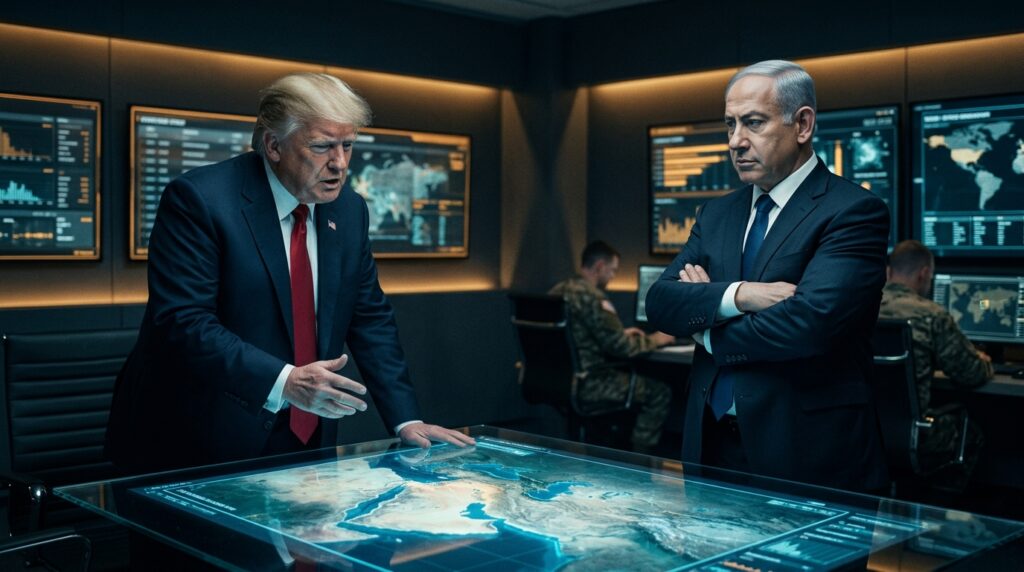
Trump’s Personal Diplomacy Style: Transactional and Unpredictable
Donald Trump approaches world politics like a real estate deal. He builds personal relationships, uses blunt language, makes big demands, and keeps everyone guessing. In conversations with Netanyahu, he mixes tough talk like “What the f are you doing?” with reminders of political favours.
Why does this matter? This unpredictable style creates pressure but also allows quick wins. It helps Trump look strong while keeping the alliance alive.
The Backchannel Envoys: The “Shadow Cabinet”
The relationship survives because official diplomacy has been replaced by a “Personalised Envoy System.” These individuals are the real connective tissue between Mar-a-Lago and Jerusalem:
Steve Witkoff (U.S. Special Envoy to the Middle East)
-
The Role: A real estate mogul with zero prior diplomatic experience, Witkoff is the primary “fixer.”
-
The 2026 Strategy: He led the April 2026 “Islamabad Talks” with Pakistan and Iran and is the main point of contact for the Board of Peace. Investigative reports show he and his sons maintain extensive business ties with Middle Eastern governments through “World Liberty Financial,” a crypto firm that serves as a financial backchannel for regional leaders.
Jared Kushner (Special Envoy for Peace Missions)
-
The Role: Despite having no formal government title early in the term, Kushner was officially appointed as a Special Envoy in 2026.
-
The Connection: He acts as the “ideological bridge.” Kushner focuses on the Abraham Accords 2.0, ensuring that Netanyahu’s military actions do not permanently derail normalisation deals with Saudi Arabia and Qatar.
Roman Gofman (Mossad Chief)
-
The Role: Recently appointed as Mossad Chief after a contentious High Court battle, Gofman is the intelligence liaison.
-
The Coordination: He facilitates the “clinical scrutiny” intelligence sharing that allowed for the Feb 28 Iran decapitation strike. He ensures that even when the political leaders are “fighting” in public, the target sets for drones and F-35s remain synchronised.
3. The “Board of Peace” & Regional Intermediaries
The relationship is further stabilised by third-party actors who act as “buffers” during the “cold” periods:
| Intermediary | Function in June 2026 |
| Qatar (Sheikh Mohammed bin Abdulrahman) | Working “feverishly” behind the scenes to bridge gaps between the Trump-Iran MOU and Netanyahu’s security demands. |
| Pakistan (Field Marshal Asim Munir) | Acting as the primary mediator for the April/May 2026 “Islamabad Rounds,” providing a neutral ground for U.S.-Iran-Israel “proximity talks.” |
| Nickolay Mladenov | High Representative for the Board of Peace in Gaza; manages the logistics of the “Gaza Second Phase” to keep that front quiet while the focus shifts to Lebanon. |
Investigative Conclusion
The “tensions” are a functional necessity. Trump needs to look like he can “break” Netanyahu to keep the Iran Peace Deal (the June MOU) on track and oil prices low. Netanyahu needs to look like he is “defying” Trump to keep his domestic right-wing coalition from collapsing.
The relationship is not failing; it is being subcontracted to Witkoff, Kushner, and Gofman, who ensure that the “masterclass in drama” never interrupts the actual execution of their shared regional “reset.”
Netanyahu’s Survival Doctrine: Crisis as a Lifeline
For “Bibi,” a quiet border is a political death sentence. Since the Feb 28 “Epic Fury” strikes that decapitated the Iranian leadership, Netanyahu has used “Permanent Emergency” to stay ahead of domestic legal threats.
-
The Survival Loop: Every time Trump “threatens” to cut aid, Netanyahu’s domestic polling spikes as he “stands up to the giant.”
-
The Result: A calculated cycle where Trump plays the “Good Cop” seeking a 2026 Iran Peace MOU, and Netanyahu plays the “Bad Cop” ensuring Iran remains under “Clinical Scrutiny.”
Here’s the fascinating part: Every escalation seems to strengthen his position at home. Is this a brilliant strategy or a dangerous cycle?
For Benjamin Netanyahu, geopolitical tension is not an obstacle to leadership; it is the very infrastructure of his political longevity.
As an investigator tracking his domestic standing in mid-2026, the pattern is unmistakable: external escalations consistently defuse internal political landmines.
-
The Upcoming Election Pivot (Fall 2026): On June 2, 2026, the Knesset passed the first reading of a bill to dissolve parliament, setting up a brutal election cycle between September and October. Facing a severe coalition fracture over ultra-Orthodox military conscription and a long-running corruption trial, Netanyahu requires a permanent state of security urgency to keep his right-wing base unified.
-
The “70% Gaza” Expansion: Just days ago, on May 28, Netanyahu ordered the IDF to expand territorial control to 70% of the Gaza Strip, effectively threatening the existing framework. Politically, this acts as an anchor. By projecting unyielding wartime defiance, he forces his domestic rivals (like the Lapid-Bennett alliance) to either back his hawkish stance or risk looking “weak on terror” ahead of the elections.
-
The Controlled Defiance of Washington: When Netanyahu publicly pushes back against U.S. directives, such as telling Israeli media on June 1 that his position in Lebanon “remains unchanged” despite Trump’s peace declarations, it is a calculated performance for the Israeli electorate. It cements his image as the only leader capable of handling, and occasionally defying, an American superpower to protect Israel.
The Nuclear Double Standard
The most glaring investigative reality of 2026 is the Nuclear Asymmetry.
Israel’s 90-warhead arsenal is treated as a “defensive necessity,” while Iran’s program is the target of Operation Epic Fury.
In the corridors of power, the Urdu phrase “saat khoon maaf” (seven murders are forgiven) has become a cynical joke. To the West, Israel remains the (beloved prince), immune to the proportionality rules that apply to others.
Why the Bond is “Unbreakable”
The bond isn’t about friendship; it’s about Integrated Systems.
-
Operation Epic Fury: The Feb 2026 strikes proved that U.S. and Israeli F-35s are now digitally locked. You can’t unplug one without crashing the other.
-
The Hormuz Lockdown: Both leaders need the Strait of Hormuz reopened to stabilise 2026 oil prices.
-
The Financial Stake: With billions tied to the WLF crypto-ecosystem, regional stability, on their terms, is a personal financial requirement.
Comparing Netanyahu With Other World Leaders
Netanyahu shares traits with Donald Trump (personalised politics), Vladimir Putin and Recep Tayyip Erdoğan (using external threats for unity), and Narendra Modi (nationalist appeal). Yet he operates in a real democracy with opposition, making his survival skills even more remarkable.
Unlike past Israeli leaders who made bold peace deals, Netanyahu thrives on controlled tension. What does this mean for the region’s future?
International Law on Proportionality: Why It Feels So Inconsistent
International law demands that civilian harm in attacks must not be “excessive” compared to military gain. In theory, it’s clear. In practice, especially in Gaza and Lebanon, where tens of thousands of civilians (including many women and children) have suffered, the rules seem to be applied unevenly.
This raises uncomfortable questions: Why do Iranian threats carry massive weight while Israeli military actions often receive more understanding from the West?
The Nuclear Double Standard: Why Iran’s Program Is Seen as More Dangerous
Many people ask: If Iran’s nuclear ambitions are so terrifying, why is Israel’s estimated 90-warhead arsenal treated so differently?
The answer lies in perceived intent, stability, and alliances. Israel’s nukes are viewed as defensive. Iran’s program sparks fear due to existential threats and proxy wars. Yet critics rightly call this a clear double standard — the famous Urdu saying “saat khoon maaf hain” (seven murders are forgiven) because Israel is seen as the “laadla shehzada” (beloved prince) of the US and Europe.
Does this hypocrisy help or hurt long-term peace?
Why Trump’s Threats Remain Temporary: The Strength of Shared Interests
Despite public fights, US aid to Israel continues to rise. Shared enemies, intelligence cooperation, defence industry benefits, and strong political support in America create a bond stronger than any single disagreement.
The big takeaway: Loud arguments make headlines, but quiet cooperation defines the relationship. Both leaders benefit from this dynamic.
Frequently Asked Questions
1. Trump vs Netanyahu: Public Fights, Private Alliance. Is the Trump-Netanyahu rift real?
Yes, tactical differences exist, but the overall alliance remains extremely strong due to deep mutual interests.
2. Why does US aid to Israel keep rising?
Strategic value, domestic politics, and economic returns make major cuts highly unlikely.
3. How does proportionality work in international law?
It requires civilian harm not to be excessive compared to military gain, but real-world judgments are often subjective and influenced by politics.
4. Why is Iran’s nuclear program treated more seriously than Israel’s?
Perceived offensive intent, proliferation risks, and alliances make the difference in Western eyes.
5. Does Netanyahu use conflicts for political survival?
Yes, crises frequently help him maintain unity and delay accountability.
6. Will the US-Israel relationship break?
Highly unlikely in the near term. Shared threats continue to outweigh temporary rifts.
Final Thoughts: Drama vs Reality
So, what’s the real story behind the Trump-Netanyahu tensions? Public fights create headlines and serve political purposes, but the US-Israel partnership remains one of the strongest in the world. Understanding these layers, personal styles, survival tactics, legal principles, and power realities helps us see beyond the noise.
As the situation in the Middle East continues to evolve in 2026, one thing is clear: alliances built on shared interests are incredibly resilient, even when the leaders appear to be at odds. What do you think, is this smart diplomacy or dangerous double standards?
Editorial Perspective: The “Shadow Diplomacy” Framework
Our Stance:
This publication, Trump vs Netanyahu: Public Fights, Private Alliance, operates on the principle that modern geopolitics, particularly in the high-stakes theatre of 2026, cannot be understood through official press releases alone. Our editorial lens prioritises “Synchronised Asymmetry,” a framework that assumes public friction is often a tactical tool used by leaders to maintain domestic survival while privately executing shared strategic goals.
Methodology:
In developing this investigation, we move beyond “he-said-she-said” reporting. We analyse:
-
The Transactional Trail: Tracking the flow of private wealth and crypto-assets (such as the World Liberty Financial bridge) as a primary driver of diplomatic “green lights.”
-
Logistical Integration: We weigh the reality of integrated military data links and joint command structures higher than the rhetoric of “heated phone calls.”
-
The Survival-Security Nexus: We examine how “Permanent Emergency” serves the political longevity of both President Trump and Prime Minister Netanyahu.
Our Commitment:
Our goal is not to present a “neutral” view, but an evidence-based critique of the power structures that define the US-Israel bond. We aim to expose the “Shadow Cabinet” of envoys and financial backchannels that keep this relationship rock-solid, even when the public narrative suggests it is crumbling.
Note to Readers: The article Trump vs Netanyahu: Public Fights, Private Alliance was written with an investigative mindset, prioritizing the “unseen signatures” over the “seen headlines.” We invite you to scrutinize the data and follow the money, as we believe transparency is the only antidote to geopolitical theater.
References:
- Axios, CNN, and WSJ reports on 2026 Trump-Netanyahu calls
- IAEA and US intelligence assessments on Iran’s nuclear program
- Analyses from CFR and international law experts on proportionality
- The Hindu (June 2, 2026): Trump says Netanyahu agreed not to send troops to Beirut.
- Britannica / CFR (2026): Operation Epic Fury: Joint US-Israel strikes on Iran, Feb 28, 2026.
- American Progress / Wall Street Journal (May 2026): Investigation into UAE’s $500M investment in World Liberty Financial.
- Anadolu Agency (May 27, 2026): Trump-backed Board of Peace enters Gaza reconstruction phase.
Purpose of the Article
This investigative piece aims to pull back the curtain on the “Strategic Deception” of the 2025-2026 conflict era. By analysing the intersection of private crypto-wealth and military decapitation strikes, it demonstrates that the Trump-Netanyahu “rifts” are not signs of a failing alliance, but rather the diplomatic theatre required to execute a radical, joint regional reset while maintaining individual political survival.
This article was last updated in June 2026. The situation remains fast-moving.