
Trump’s Visit to China: What It Means for Trade, the Iran War, and the Whole World
Trump’s Visit to China, imagine two of the world’s most powerful leaders sitting down in Beijing while a war in the Middle East disrupts oil supplies and raises prices at gas stations everywhere. That is exactly what is happening this week.
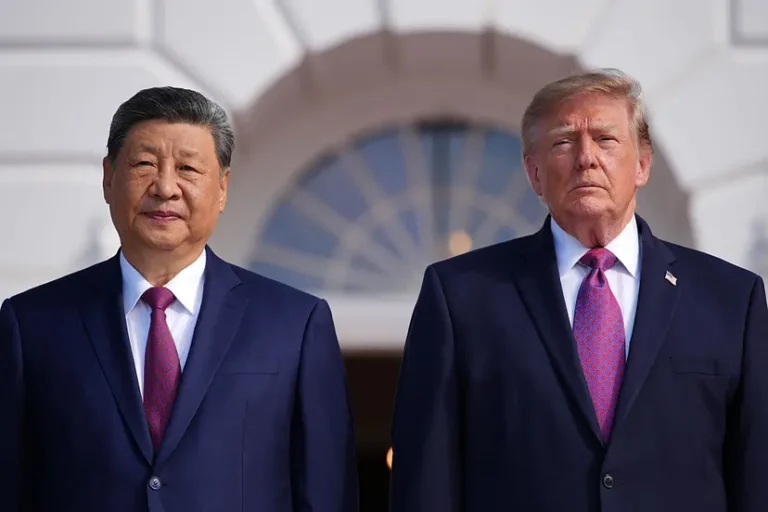
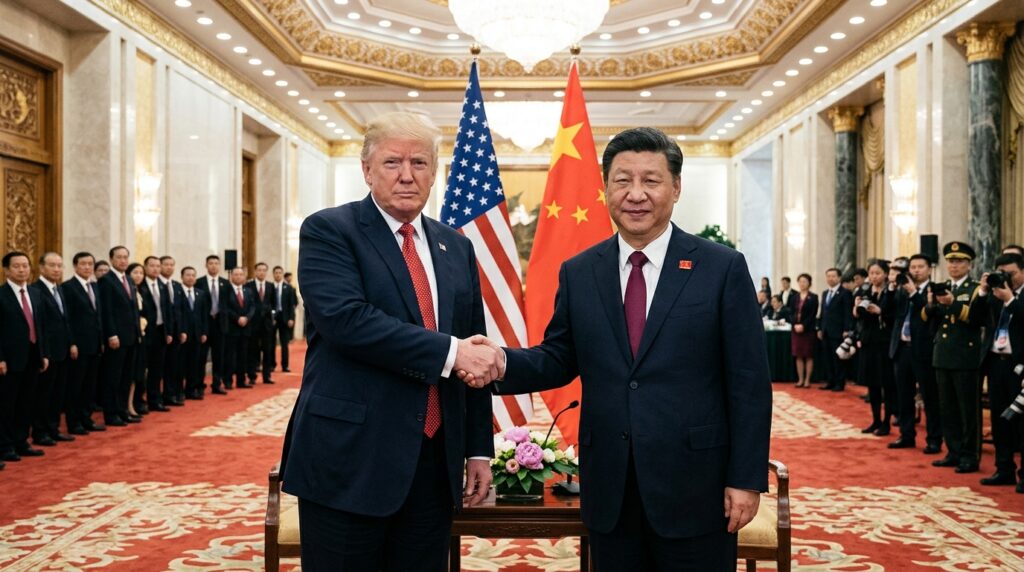
US President Donald Trump is travelling to China on May 14 and 15, 2026, to meet President Xi Jinping. This is the first US presidential visit to China in nearly ten years. Many people wonder if the two sides can solve big problems or if the meeting will just be for show.
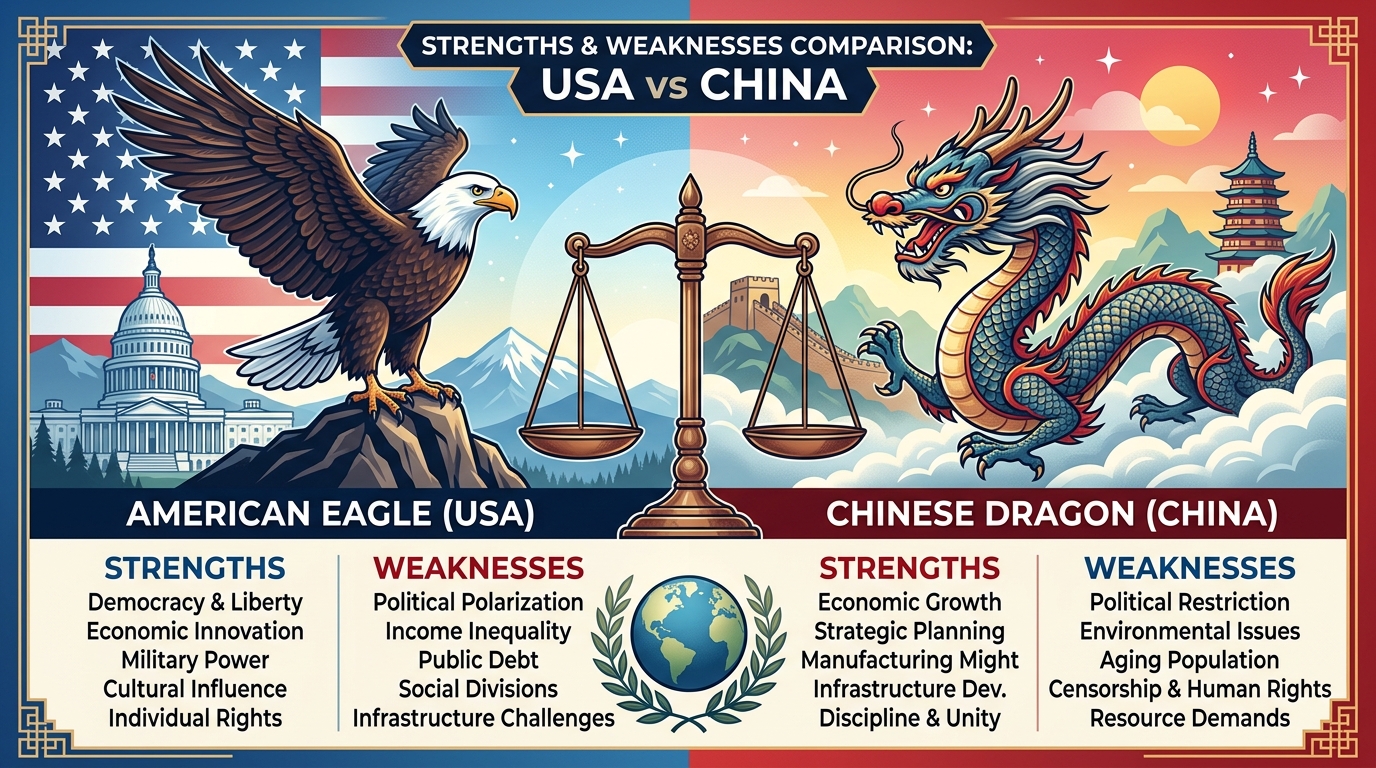
This article explains everything in simple terms: why the visit matters, what they will discuss, the ongoing war in Iran, China’s new move against US sanctions, the Fentanyl Factor, and who holds the stronger hand. We look at the good and bad points for both countries so you can understand the real story.
President Trump’s state visit to China: When elephants dance
US President Trump will visit China on May 14-15 after his scheduled visit in March was postponed because of the Iran war.
It always matters to the world when the leaders of the world’s two largest economies talk face to face. Presidents Trump and Xi Jinping have so far met 6 times – on US and Chinese soil and on the margins of G-20 and APEC summits.
Trump had envisaged to visit Beijing victorious after a decisive victory against Iran. Alas, the war has dragged on longer than the US had anticipated.
Economic ties and several geopolitical issues, ranging from the war on Iran to Taiwan, are expected to be on the agenda of the two leaders’ meeting.
Why This Summit Is Happening Now
President Trump and President Xi have met before, including in South Korea last year. But this trip to Beijing is special because it is on China’s home ground with full ceremonies and big public events.
The meeting was delayed a few times because of the war with Iran. Both leaders want something good to show their own people. Trump hopes for new trade deals that help American farmers and companies. Xi wants stability for China’s economy and respect on the world stage.
For everyday people, this matters because decisions made in Beijing can affect phone prices, car parts, gas costs, and jobs in many countries. Europe watches closely, too, because higher oil prices can cause inflation and energy worries there.
Main Topics They Will Discuss
Trade and Money Matters
The United States wants China to buy more American goods like soybeans and Boeing aeroplanes. They also want better protection for ideas and inventions. China wants lower taxes on its exports and easier rules for its companies. Both sides like to announce big purchase deals at these meetings because they look like wins back home.
The Fentanyl Factor
What It Is and Why It Matters in US-China Relations
The Fentanyl Factor is a key issue in talks between the United States and China. It refers to the deadly flow of fentanyl, a powerful synthetic opioid, into the US and the role China plays in supplying the chemicals needed to make it. President Trump has made this a top priority, using tariffs and trade pressure to push China to stop the supply.
Simple Explanation of Fentanyl
Fentanyl is a strong pain medicine doctors sometimes use in hospitals. But illegal versions are extremely dangerous. It is 50 to 100 times stronger than morphine. Even a tiny amount can kill. Drug dealers mix it into other drugs like heroin or fake pills because it is cheap and gives a strong high. This has caused hundreds of thousands of overdose deaths in the US, especially among young adults.
How China Is Connected (The Supply Chain)
- Early days: China used to send finished fentanyl directly to the US through the mail.
- Now: China mostly sends precursor chemicals (the raw ingredients). Mexican cartels buy these chemicals, turn them into fentanyl in secret labs, and smuggle the finished drug across the US southern border.
- China is the world’s biggest maker of chemicals, so many of these ingredients come from Chinese companies, some knowingly, some not.
China says it has banned many of these chemicals and is working with the US. The US says China needs to do much more to control factories and exports.
Why Trump Calls It the “Fentanyl Factor”
Trump treats the fentanyl crisis as a national emergency and even a security threat. In 2025, his administration:
- Put extra tariffs on Chinese goods to pressure Beijing.
- Called illicit fentanyl a “Weapon of Mass Destruction.”
- Linked trade deals to China’s actions on stopping precursor shipments.
In late 2025, after meetings with Xi Jinping, China agreed to stricter controls on certain chemicals heading to North America. In return, the US lowered some tariffs. This “Fentanyl Factor” became a bargaining chip in bigger trade talks.
Why This Matters for the Upcoming Trump-Xi Summit
At the May 2026 Beijing meeting, fentanyl will likely come up again. Trump wants more action from China. China wants tariff relief and better trade terms. Progress on fentanyl can lead to small wins on both sides, but it is also a source of ongoing tension.
For everyday people: Lower fentanyl supply means fewer overdose deaths in the US. Better cooperation can also help stabilise prices and trade, which affects jobs, goods costs, and economies worldwide.
The Fentanyl Factor shows how one deadly drug has become mixed with big-power politics, economics, and national security. It is not just a health problem — it is now a major piece of US-China negotiations. Progress has been made, but the problem is not fully solved, so expect it to stay on the table in Beijing.
Technology and Competition
The two countries compete hard in artificial intelligence, computer chips, and new inventions. The US worries about sharing too much technology. China focuses on making its own supplies so it does not depend on anyone.
Taiwan and Safety in Asia
China sees Taiwan as part of its territory. The US supports Taiwan’s defence. This topic is always sensitive and needs careful words to avoid mistakes.
Has the Iran War Weakened the Image of American Superpower Strength?
Many experts and world leaders now say the war with Iran has seriously damaged the old idea of America as the world’s only unbeatable superpower (called “unipolar” power). Even though the US and Israel hit Iran very hard with advanced weapons, Iran showed surprising strength and refused to collapse.
Why People See It This Way
- Iran’s Resilience: Iran lost many soldiers, leaders (including the Supreme Leader), buildings, and weapons. But the government did not fall apart. Iran kept launching missiles and drones, used cheap weapons to cause expensive problems for the US, and disrupted oil shipping in the Strait of Hormuz for weeks. This showed that a smaller country can endure heavy attacks and still make a superpower pay a high price.
- High Costs for the US: The US used up a lot of expensive missiles and bombs. Reports say the military has less than half of some key weapons left. It will take years to replace them. This makes some countries wonder if America could fight another big war at the same time, like over Taiwan.
- Distraction and Global View: The war pulled America’s attention away from China and other problems. Some allies in Europe worry about US reliability. Countries in the Global South and rivals like China and Russia say this proves the world is becoming multipolar, meaning no single country dominates everything anymore.
The Other Side of the Story: The United States and Israel destroyed much of Iran’s air defences, navy, and missile factories in a short time. They showed they can strike with great precision. The US still has the strongest military overall, the world’s most powerful navy, and strong alliances. Many analysts say the war hurt Iran far more than it hurt America in pure military terms. However, the long, costly fight and Iran’s ability to keep going changed how the world sees American power.
This shift gives China more confidence in talks with Trump. Beijing sees the US as strong but not all-powerful, a “giant with a limp” in some ways. It affects negotiations on trade, fentanyl, Taiwan, and the Iran ceasefire.
Iran War’s Shadow: A Complicating Factor in US-China Dynamics
The 2026 Iran War initiated by US and Israeli strikes on February 28 looms large over the Trump-Xi summit, delaying it once and injecting urgency, friction, and mutual leverage attempts into the bilateral agenda. What began as a high-intensity campaign to degrade Iran’s nuclear and military capabilities has evolved into a protracted stalemate centred on the Strait of Hormuz, with significant implications for energy security, sanctions enforcement, and great-power competition.
A. War Overview and Current Status
- Origins and Escalation: US-Israel Operation Epic Fury targeted Iranian leadership (including the death of Supreme Leader Ali Khamenei), missile sites, and infrastructure. Iran responded with missile/drone barrages, proxy activations, and closure/disruption of the Strait of Hormuz, through which ~20% of global oil passes.
- Ceasefire and Fragility: A Pakistan-brokered ceasefire took hold around April 7–8, but remains tenuous with sporadic exchanges (e.g., US strikes on Iranian vessels/assets and Iranian responses). Trump has pushed for a lasting deal involving Iranian concessions on nuclear activities, proxies, and full reopening of the Strait. Negotiations continue indirectly, with recent US-Iran fire exchanges testing the truce.
- Human and Economic Toll: Thousands dead, millions displaced, damaged cultural sites, and global oil price spikes (crude often >$90/barrel), contributing to higher US gas prices (~$4.58/gallon in early May) and supply chain disruptions.
B. China’s Role and Interests
China has pursued a dual-track approach: diplomatic restraint paired with commercial and limited technical support for Iran.
- Diplomatic Positioning: Beijing condemned the initial strikes as violations of international law, called for de-escalation, and leveraged ties (e.g., Iranian FM visit to Beijing) to nudge Iran toward reopening the strait and engaging in talks. China portrays itself as a responsible stabiliser, contrasting with US “adventurism.”
- Energy Lifeline: China buys 80–90%+ of Iran’s oil exports (1.3–1.4 million barrels/day pre-disruption, ~13% of China’s imports). Disruptions hurt Beijing, but discounted Iranian crude remains vital. China activated “Blocking Rules” to shield its “teapot” refineries from US secondary sanctions and ordered firms to ignore them.
- Dual-Use Support Allegations: US sanctions target Chinese firms for supplying drone components, satellite imagery, rocket fuel precursors (e.g., sodium perchlorate), and other items aiding Iran’s military. China denies direct military involvement while maintaining asymmetric ties.
- Strategic Calculus: The war distracts the US (shifting assets from Indo-Pacific), exposes potential US munitions stockpiling limits, and allows China to court Gulf states, rethinking security guarantees. However, instability raises energy costs and risks broader escalation, harmful to China’s economy.
China’s Strengths in This Context:
- Leverage Iran’s top customer and diplomatic partner.
- Ability to absorb discounted oil and use alternative financing/shipping (shadow fleet, RMB settlements).
- Narrative advantage: Positioning as a peace broker without direct entanglement.
- Economic resilience via diversified imports and stockpiles.
China’s Weaknesses:
- Heavy dependence on stable Middle East energy flows.
- Risk of secondary sanctions damaging global financial access.
- Damage to relations with Gulf Arab states and Europe if seen as propping up Iran.
- Limited power projection to protect its interests militarily.
C. US Objectives and Leverage at the Summit
Trump is expected to press Xi to use influence on Tehran for a durable Hormuz reopening, reduced Iranian proxy activity, and nuclear restraints. Additional US asks may include curbing dual-use exports and accepting/enforcing tighter sanctions.
US Strengths:
- Military dominance was demonstrated (despite costs) and the ability to impose secondary sanctions.
- Alliance with Israel and residual Gulf partnerships.
- Trump’s personal deal-making style and threats of escalation (“big glow” rhetoric).
- Domestic energy production is buffering some shocks.
US Weaknesses:
- War fatigue, high costs, munitions drain, and distraction from China competition (Taiwan concerns amplified in Beijing).
- Elevated global energy prices are hurting US consumers and midterm optics.
- Strained alliances (Europe wary of escalation and energy fallout).
- Perception of overextension is weakening deterrence elsewhere.
D. Interplay with Broader US-China Agenda
- Linkage Risks: Iran could crowd out trade/tariff progress, tech controls, or Taiwan discussions. Modest wins (e.g., Chinese purchases of US goods) may be announced, but core Iran frictions persist.
- Sanctions Clash: Recent US actions against Chinese entities heighten tensions; Beijing’s blocking statutes signal defiance.
- Potential for Limited Cooperation: Shared interest in stable energy markets and avoiding broader war could yield working-group commitments or quiet diplomacy, though deep mistrust limits this.
E. Global Specific Implications
- For Europe: Energy price volatility, inflation risks, and questions about US reliability. Encourages European de-risking/diversification and selective engagement with China.
- For Asia-Pacific/Global South: Highlights US distraction risks (Taiwan scenarios), boosts multipolarity narratives, and affects shipping/insurance costs worldwide.
- Economic Ripples: Supply chain disruptions, higher commodity prices, and incentives for de-dollarisation (China-Iran RMB trade).
- Longer-Term Geopolitics: The war may weaken the US’s relative position in some metrics (munitions, attention) while failing to deliver a decisive strategic victory, benefiting China indirectly through distraction and relative stability optics. Yet Beijing gains no outright “win” from prolonged chaos.
Scenarios for Summit Outcomes on Iran:
- Transactional Progress: China agrees to press Iran quietly; limited sanctions relief or purchase deals in exchange; joint statement on Hormuz stability.
- Stalemate with Optics: Photo-op commitments and working groups, but continued sanctions/enforcement clashes.
- Friction Escalation: Public disagreements or new sanctions announcements sour the mood.
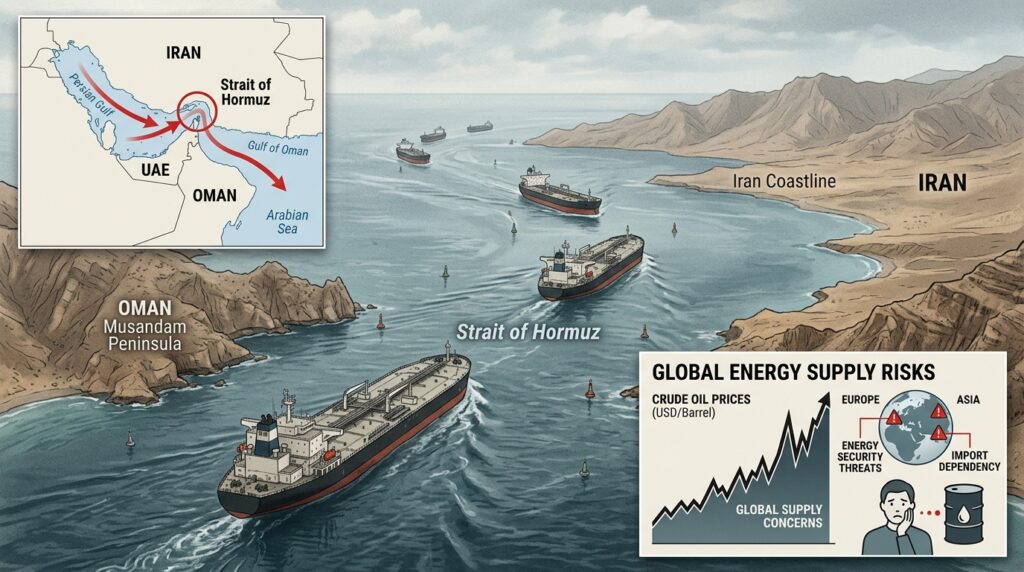
The Iran War: How It Affects the US-China Meeting
China’s “Blocking Order” (May 2, 2026): Nullifying US Sanctions on Chinese Entities
On May 2, 2026, China’s Ministry of Commerce (MOFCOM) issued its first-ever formal prohibition order (also called a “blocking ban”) under its 2021*Rules on Counteracting Unjustified Extraterritorial Application of Foreign Legislation and Other Measures (commonly known as China’s Blocking Rules or blocking statute).
This order specifically targets US sanctions imposed on five Chinese companies (mostly independent “teapot” refineries) accused of buying and processing Iranian crude oil:
– Hengli Petrochemical (Dalian) Refining Co., Ltd.
– Shandong Shouguang Luqing Petrochemical Co., Ltd.
– Shandong Jincheng Petrochemical Group Co., Ltd.
– Hebei Xinhai Chemical Group Co., Ltd.
– Shandong Shengxing Chemical Co., Ltd.
What the Order Actually Says and Does
The order declares that the US sanctions measures (SDN listings, asset freezes, transaction bans) “shall not be recognised, enforced, or complied with” within China.
In practical terms:
– Chinese companies, banks, individuals, and entities operating in China are prohibited from complying with these specific US sanctions.
– Following US sanctions (e.g., cutting off business with the listed refineries) could expose a Chinese entity to penalties under Chinese law.
– Chinese entities can continue normal commercial dealings with the sanctioned refineries inside China without fear of domestic repercussions.
– The order provides legal and political cover for the refineries to keep operating and for counterparties (including banks using RMB settlements or shadow fleet shipping) to support the trade.
This is China’s most direct legal pushback yet against US secondary sanctions (which threaten non-US persons/entities for dealing with sanctioned parties).
Legal Basis and Broader Framework
– Blocking Rules (2021): Allow MOFCOM to assess foreign measures as “unjustified extraterritorial application” and issue prohibition orders. This was the first time the mechanism was formally activated with a specific order.
– Supported by the Anti-Foreign Sanctions Law (AFSL, 2021) and related regulations, which give China tools to retaliate against perceived long-arm jurisdiction.
– China argues US sanctions violate international law and basic norms of international relations by interfering in third-country trade.
How It Works in Practice (and Its Limits)
Inside China:
– It nullifies the domestic legal effect of the US sanctions. The five refineries and their Chinese business partners are protected under Chinese law.
– It reduces “over-compliance” by global firms worried about Chinese courts or regulators.
– Chinese courts can potentially allow damaged parties to sue those who comply with US sanctions (e.g., banks or insurers that pull out).
Outside China / Global Reach:
– It does not affect US jurisdiction. US persons, dollar-based transactions, or entities with significant US exposure remain at risk of secondary sanctions, frozen assets, or exclusion from the US financial system.
– Many Chinese teapots already operate with limited US exposure (using RMB settlements, shadow fleets, etc.), so the order reinforces existing workarounds.
– It creates a compliance dilemma for multinational companies, banks, and shippers caught between the two legal systems.
Enforcement: China can impose countermeasures on entities that comply with US sanctions to the detriment of Chinese firms. However, Beijing has historically been cautious to avoid broad economic self-harm.
Context and Timing
This move came amid the ongoing Iran war (post-US/Israeli strikes), as the US intensified pressure on Chinese buyers of Iranian oil (China takes ~80-90%+ of Iran’s exports). It is widely seen as a show of defiance ahead of the Trump-Xi summit and a test of the US enforcement will.
It signals a shift: China is moving from quiet tolerance of some sanctions risks (to preserve dollar access) to more assertive legal and narrative pushback on energy security issues critical to its economy.
Implications
– For Energy/Iran: Helps sustain discounted Iranian oil flows to China, providing Tehran a financial lifeline.
–For US-China Relations: Adds friction to the summit agenda (trade, Iran, sanctions). It challenges the effectiveness of US secondary sanctions but risks escalation (e.g., US targeting Chinese banks).
– Global: Accelerates de-dollarisation trends in certain trades, fragments compliance regimes, and raises costs/risks for international businesses.
This is a targeted, symbolic, and practical legal shield rather than a blanket nullification of all US sanctions. Its real-world impact depends on how aggressively the US responds (especially regarding Chinese financial institutions) and how Chinese firms navigate the conflicting rules. The situation remains fluid ahead of the Beijing summit.
Strong Weak Points for Both Sides
America’s Strong Points
- The US dollar and the big market still have great power.
- Strong alliances with countries in Europe and Asia.
- President Trump’s style of making surprise deals.
- The US produces a lot of its own energy.
America’s Weak Points
- The Iran war uses up attention, money, and weapons.
- High oil prices hurt American families.
China’s Strong Points
- It makes many products the world needs and controls key supplies.
- It can keep its economy going even with problems.
- As the top buyer of Iranian oil, China has influence over Tehran.
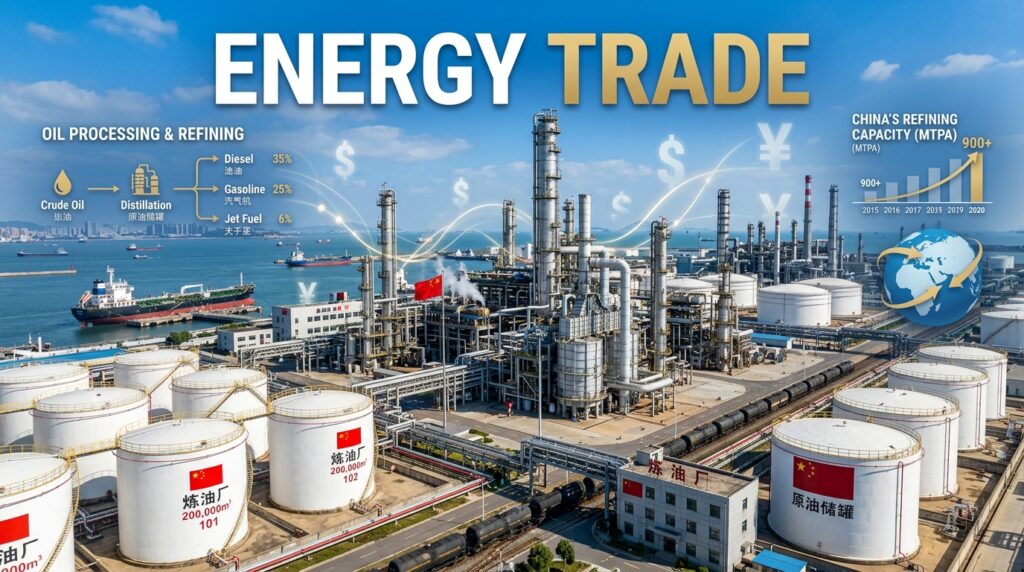
China’s Strong Points
China’s Weak Points
- Slowing economy, property troubles, and fewer young workers.
- Need for stable oil and peaceful trade.
Overall, both sides can make small deals, but big changes are hard because they compete in many areas.
What This Means for Europe, Asia, and Everyone Else
Europe hopes for lower energy prices and stable trade. Higher costs from the Iran war make life more expensive there. In Asia, countries watch Taiwan closely. People in poorer countries feel the effects through higher food and fuel prices.
The Fentanyl Factor also matters globally because drug problems affect families everywhere, and successful cooperation can reduce deaths in the United States.
What to Expect from the Meeting
Experts think the summit will produce some announcements about trade buys, fentanyl controls, and promises to talk more. There might be quiet agreements on keeping oil flowing safely. Do not expect giant breakthroughs. This is more about stopping things from getting worse.
Looking Ahead
Trump’s visit to China happens at a tense time, with the Iran war still causing trouble and the Fentanyl Factor remaining a serious concern. Both countries want to win, but they also deeply compete. The real test will be whether small steps lead to real stability or if old problems return stronger.
This meeting reminds us that in today’s world, decisions between the US and China touch every country and every family. Stay informed as the story continues after May 15.
Frequently Asked Questions
Q1: When is President Trump visiting China, and why was it delayed?
A: President Trump is scheduled to visit Beijing on May 14 and 15, 2026. The trip was postponed earlier because of the ongoing war with Iran.
Q2: What is the Fentanyl Factor?
A: It is the dangerous flow of chemicals from China used to make the deadly drug fentanyl. President Trump pushes China hard to stop these chemicals as part of trade talks.
Q3: What is China’s blocking order on US sanctions?
A: A new rule that tells Chinese companies they do not have to follow certain US sanctions on oil refineries buying Iranian oil. It protects businesses inside China.
Q4: How does the Iran war affect normal people?
A: It has raised gas prices and shipping costs around the world, making many everyday items more expensive.
Q5: Will the summit solve all problems between the US and China?
A: No. It is expected to produce small agreements and help manage tensions rather than solve everything.
Q6: How does this affect people in Europe and other countries?
A: Higher energy prices, changes in trade, and global stability all affect jobs, inflation, and costs everywhere.
Purpose of this Article: To explain, in clear, simple language, the key topics of the Trump-Xi summit so everyday readers can understand the real-world effects on their lives, families, and wallets.
EP
This analysis is based on reports from major news outlets, official government statements from the US and China, think tank research, and trade data. We aim for fairness by presenting views from both American and Chinese sides, along with global impacts. Information is current as of May 10, 2026, and readers should check trusted sources for the latest developments after the summit.
https://mrpo.pk/how-tariffs-are-changing-the-world/
https://mrpo.pk/modis-china-visit-amid-us-tariffs/
References
- CSIS. (2026, May 8). Trump-Xi Summit in Beijing: Managing the World’s Most Important Relationship. https://www.csis.org/analysis/trump-xi-summit-beijing-managing-worlds-most-important-relationship
- Wikipedia. (2026). 2026 state visit by Donald Trump to China. https://en.wikipedia.org/wiki/2026_state_visit_by_Donald_Trump_to_China
- Time Magazine. (2026, May 7). Why Trump’s China Trip Is Set Up to Fail. https://time.com/article/2026/05/07/trump-xi-china-meeting-what-to-expect/
- Reuters. (2026, May 7). What’s at stake at the Trump-Xi summit. https://www.reuters.com/world/china/whats-stake-trump-xi-summit-2026-05-07/
- Brookings Institution. (2026, May). What will happen when Trump meets Xi? https://www.brookings.edu/articles/what-will-happen-when-trump-meets-xi/
- Middle East Monitor. (2026, May 8). China’s Legal Shield Against U.S. Sanctions on Iranian Oil. https://www.middleeastmonitor.com/20260508-chinas-legal-shield-against-u-s-sanctions-on-iranian-oil/
- Reuters. (2026, May 4). China invokes anti-sanctions law to counter US blacklisting of refiners. https://www.reuters.com/business/energy/china-invokes-anti-sanctions-law-counter-us-blacklisting-refiners-2026-05-04/
- Congressional Research Service. (2026, February 17). China Primer: Illicit Fentanyl and China’s Role. https://www.congress.gov/crs-product/IF10890
- Reuters. (2025, November 12). China agreed on plan to stop fentanyl-related chemicals. https://www.reuters.com/business/healthcare-pharmaceuticals/fbi-chief-china-agreed-plan-stop-fentanyl-precursors-2025-11-12/
- The New York Times. (2025, November 10). China Tightens Controls on Fentanyl Precursors After Summit. https://www.nytimes.com/2025/11/10/world/asia/china-fentanyl-united-states-trade.html
- Wikipedia. (2026). 2026 Iran war. https://en.wikipedia.org/wiki/2026_Iran_war
- Britannica. (2026). 2026 Iran war. https://www.britannica.com/event/2026-Iran-war
- Institute for the Study of War. (2026, February 28). Iran Update: US and Israeli Strikes. https://understandingwar.org/research/middle-east/iran-update-special-report-us-and-israeli-strikes-february-28-2026/