Trump vs. the Media: Why the U.S. TV Pool Suspension Matters to the World
When the White House Becomes the Camera Crew: Trump, the Media Pool and the Battle Over Who Controls the Presidential Record
Trump vs. the Media: Major U.S. TV networks suspended the presidential pool after Trump barred CNN, MS NOW and Politico. Here is the history, legal battle and global significance.
https://mrpo.pk/trump-bans-cnn-and-politico/
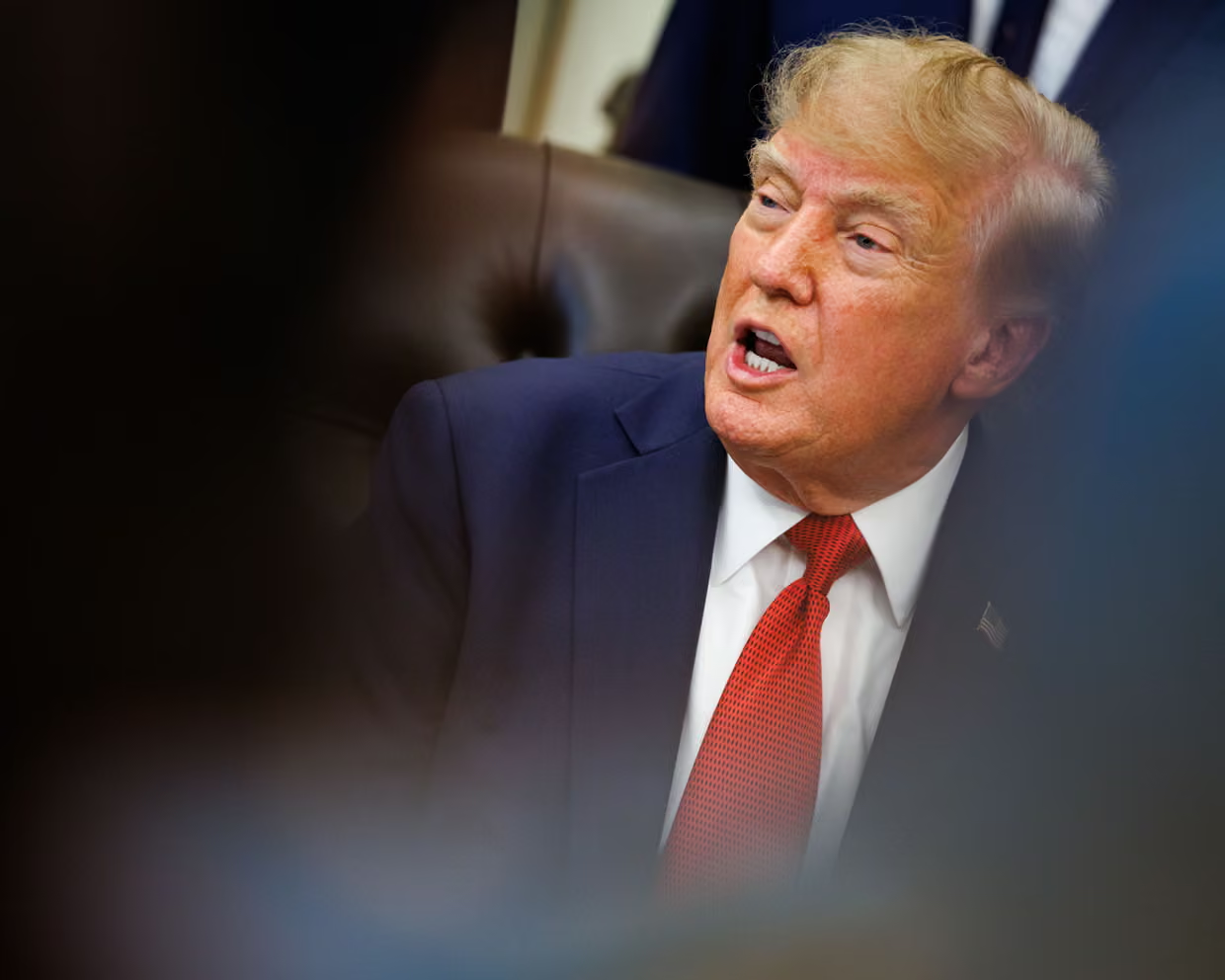
The cameras suddenly disappeared.
When President Donald Trump travelled to New York for the United Nations General Assembly this week, something unusual happened. The American president was still there. The world’s cameras were still there. Journalists were still reporting.
But the normal television camera pool that follows the U.S. president did not travel with him.
The reason was not a technical failure, a security emergency, or a lack of television networks.
It was a confrontation between the White House and the American press.
The Trump administration barred CNN, MS NOW and Politico from the White House after accusing them of false, unfair and potentially harmful reporting. CNN was scheduled to operate the rotating television pool when Trump travelled to New York. Rather than simply replacing CNN with another network, ABC, CBS, Fox News, NBC and CNN suspended the presidential television pool.
That may sound like an inside-the-Beltway media dispute. It is much bigger than that. At stake is a fundamental question for every democracy:
Who gets to create the independent visual record of what a president does, says and decides?
As of September 23, 2026, the court hearing on the emergency request to restore their access is scheduled for today, so the article below deliberately does not present an outcome that has not yet occurred. (Reuters)
US TV networks suspend White House pool coverage over Trump media ban
The major US television news outlets agreed to suspend their video coverage of Donald Trump after the administration banned journalists from several outlets from entering the White House grounds.
The collective decision came after the barred outlets – CNN, MS Now and Politico – sued the administration on Monday, saying the president’s actions were a violation of their first amendment rights.
The ban was an extraordinary escalation of Trump’s battle against news outlets. After a coalition of networks including ABC, CBS, Fox News and NBC – which, along with CNN, form a press “pool” that share the responsibilities of capturing and distributing footage of the president carried by news outlets worldwide- announced they would cease coverage in solidarity with the barred outlets, the White House promoted its own feed online, branding it “Trump TV”. The channel purported to show “top past moments, announcements, and the latest and greatest from the administration all in one place”.
“Get real-time updates and live events streamed DIRECTLY to your phone,” the White House posted on social media. “No noise. Just the news that matters most, straight from the Trump Administration.”
What Actually Happened?
On September 18, 2026, Trump announced that CNN, MS NOW and Politico would be barred from the White House.
The three organizations subsequently challenged the decision in federal court, arguing that the administration had retaliated against them because of their reporting and violated their First Amendment press rights and Fifth Amendment due-process protections.
The administration has presented a different argument. The Justice Department says White House access is a privilege rather than an automatic right and argues that the president has broad authority to control access to restricted government facilities, particularly where national security is involved.
The administration has also cited reports that say it involved sensitive or classified information and claims that the affected organizations failed to meet standards of professionalism and decorum.
The dispute is therefore not merely about whether Trump likes CNN, MS NOW, or Politico.
It is about whether the government can use control over physical access to punish or exclude news organizations because of what they publish. That distinction is crucial.
The Television Pool: What Most People Never See
The television pool is one of those invisible systems that most viewers never think about.
The Oval Office, Air Force One, Roosevelt Room and other presidential venues cannot accommodate every television crew that wants to record a presidential event. So the major television networks share the responsibility.
ABC, CBS, CNN, Fox News and NBC rotate the job of physically covering presidential travel and selected events. The network assigned to the pool produces the video and distributes it to the other participating news organizations.
This means one camera crew can provide the basic visual record to an enormous television and digital news ecosystem. The system has existed for decades and evolved from the practical need to make sure the president remains continuously covered even when physical space is limited.
It is therefore not simply a convenience for television companies.
It is part of the infrastructure through which the public observes the presidency.
And that is why the current dispute is unusual.
CNN was scheduled to provide the pool coverage for Trump’s New York trip.
The White House prevented CNN from performing that assignment.
The other networks could have simply sent another crew.
They did not.
Instead, the television pool was suspended for presidential pool events.
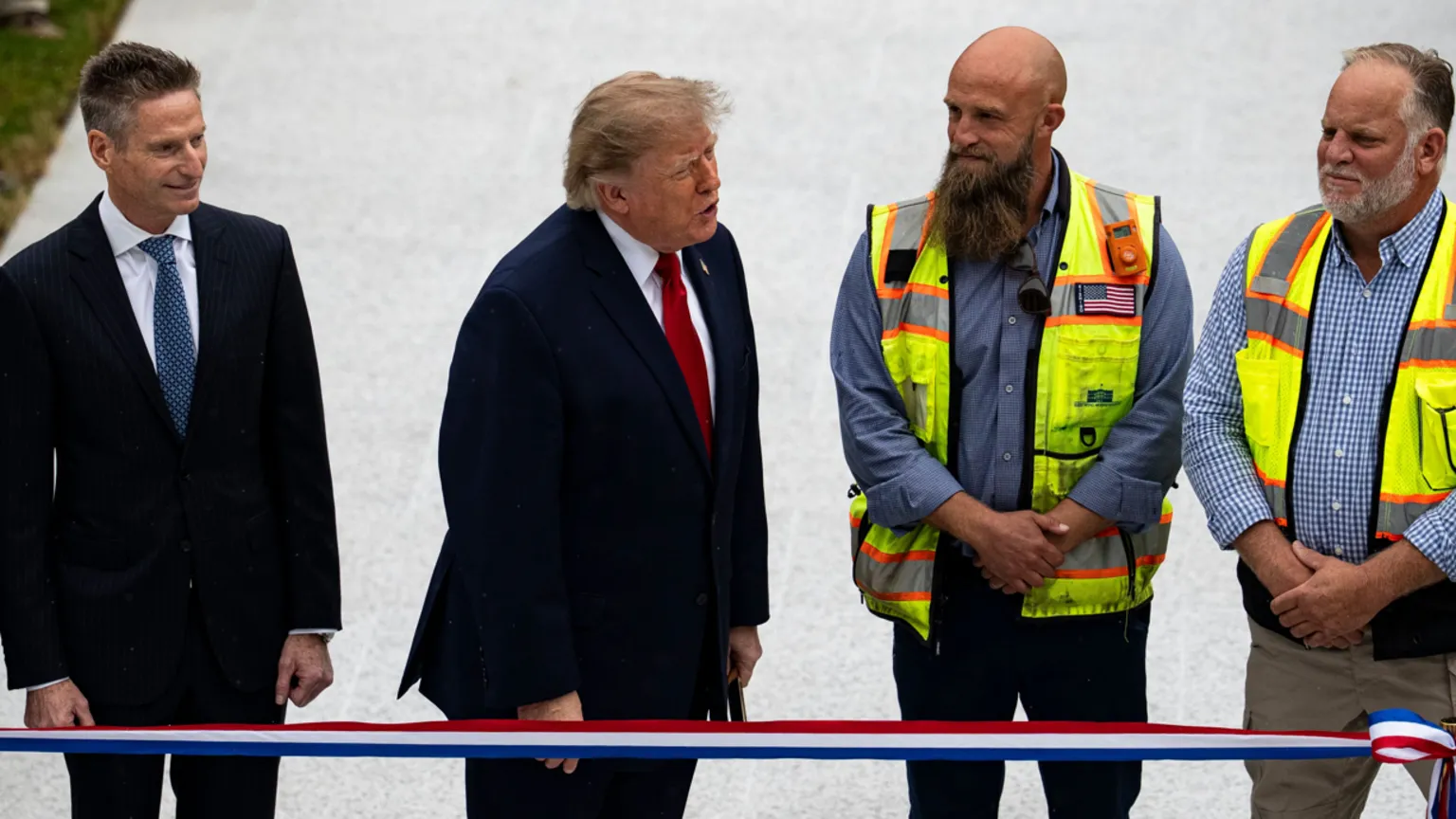
This Was Not a Complete Media Blackout
This distinction matters.
ABC, CBS, Fox News and NBC did not stop reporting about Trump.
CNN, MS NOW and Politico did not stop operating.
Other journalists continued covering the president.
The United Nations also issued its own media credentials, allowing reporters from the banned organizations to cover Trump’s appearance at the UN General Assembly.
In other words, Trump was not invisible.
What disappeared was the normal independent pooled television feed for certain presidential events.
That is considerably more precise than saying that “American television stopped covering Trump.”
Why CNN’s Exclusion Created a Technical Problem
The dispute produced an extraordinary practical consequence.
CNN was not merely another journalist travelling with the president.
It was one of the five organizations responsible for the shared television pool.
Once the White House blocked CNN, the pool faced a choice.
Replace CNN.
Or refuse to normalize the exclusion.
The networks chose the second option.
This created a situation in which a president of the United States travelled to the United Nations without the normal television pool camera accompanying him. That is highly unusual because the presidency is one of the most heavily documented political institutions in the world.
Then Came “Trump TV”
The White House responded by promoting its own video operation online under the name “Trump TV.”
The administration describes administrative ice as a continuous stream of administration material, including major remarks, videos and presidential events.
The technology itself is not revolutionaryvideosernments have always produced official video.
The significance lies in the changing relationship between government-produced material and independent journalism.
A government camera can show the president.
But independent journalists can ask questions.
They can challenge statements.
They can compare claims with documents.
They can investigate what is missing from the official presentation.
They can provide context that the government itself might not provide.
That is the difference between government communication and independent journalism.
Both can show the same event.
They do not perform the same democratic function.
The Historical Question: Has This Happened Before?
The United States has experienced fierce battles between presidents and journalists before.
The present confrontation therefore did not appear from nowhere.
But several historical episodes help explain why today’s dispute is attracting so much attention.
The Nixon Era: When the Press Became an Adversary
President Richard Nixon’s relationship with the press deteriorated dramatically during his presidency.
The Watergate investigation became one of the most famous examples of investigative journalism challenging presidential power.
The Washington Post’s reporting by Bob Woodward and Carl Bernstein, combined with congressional investigations, court proceedings and other reporting, helped expose a political scandal that eventually contributed to Nixon’s resignation in 1974.
The lesson was not that journalists were always correct.
The lesson was that a democratic system needs institutions capable of investigating those who possess enormous political power. The Watergate experience remains one reason American journalists treat presidential hostility toward the press with particular seriousness.
The 1970s and the White House Press Credential Problem
There is also a direct legal history concerning access.
In the 1977 case involving journalist Robert Sherrill, the U.S. Court of Appeals for the District of Columbia Circuit considered the government’s denial of a White House press pass.
The court recognized that the White House could impose security requirements, but it also examined the constitutional and procedural implications of arbitrarily excluding journalists from press facilities that the government had made available to the press. The case became an important part of the legal history surrounding government control of press credentials.
The principle emerging from cases like this is not that every journalist possesses an unlimited right to enter every government facility. Rather, the government cannot simply create press-access systems and then administer them arbitrarily for impermissible reasons. That distinction is now central to the Trump litigation.
2009: Obama and Fox News
The political roles were reversed during Barack Obama’s presidency.
In 2009, the Obama administration attempted to exclude Fox News from an interview with Treasury official Kenneth Feinberg. The other members of the television network pool objected.
They effectively said that if Fox News, a pool member, was excluded, they would not participate either. The administration ultimately included Fox. The episode is important because it demonstrates that disputes over presidential media access are not exclusively a Trump-era phenomenon.
It also shows why the concept of the press pool matters. A press pool is partly a system of cooperation among competitors. The organizations compete fiercely in normal circumstances. But they also depend on common rules that prevent the government from choosing which news organization gets access based on editorial preference.
Trump’s First Presidency: Jim Acosta
Trump’s conflict with the press has already produced a significant legal precedent.
In 2018, the White House attempted to revoke CNN correspondent Jim Acosta’s press access following a contentious presidential news conference.
CNN challenged the decision.
U.S. District Judge Timothy Kelly ordered the White House to restore Acosta’s press pass, finding that his due-process rights had been violated. There is an unusual historical connection to today’s case.
The judge now assigned to the lawsuit brought by CNN, MS NOW and Politico is the same Judge Timothy Kelly. That does not determine today’s outcome. But it makes the legal history especially notable.
The Associated Press Fight
The current confrontation also follows another major dispute.
In 2025, the Trump administration restricted Associated Press access after the news organization declined to adopt the administration’s preferred name “Gulf of America” for the body of water historically known as the Gulf of Mexico.
The AP challenged the restrictions in court.
A federal judge ruled that the government had to restore access, although an appeals court later allowed some restrictions involving more limited spaces such as the Oval Office and Air Force One while the litigation continued.
The legal distinction is important. The government has greater control over highly restricted spaces where physical limitations and security considerations are significant. It faces a different constitutional problem when it attempts to exclude journalists from spaces that are generally open to the press because of their editorial viewpoint.
That distinction may again become important in the current case.
The Pentagon Conflict
The dispute also forms part of a broader struggle between the Trump administration and American journalists over access to national-security institutions. The Defense Department introduced rules governing journalists’ access to the Pentagon, including restrictions related to the solicitation of sensitive information.
Several major news organizations declined to accept the new conditions and withdrew from the Pentagon. Courts subsequently became involved in the dispute.
This matters because the White House and the Pentagon are not ordinary government buildings.
They deal with national security, military operations, intelligence and classified information.
Governments therefore have legitimate security responsibilities.
But the existence of national-security responsibilities does not automatically settle the constitutional question. The difficult issue is determining where legitimate security control ends and viewpoint-based control of journalism begins.
The White House’s National-Security Argument
The Trump administration says the current dispute is not simply about unfavorable reporting. The Justice Department has argued that the affected organizations published sensitive or classified information and that the president has legitimate reasons to control access to the White House. That argument deserves to be taken seriously because protecting genuinely classified information is a legitimate function of government.
Journalists do not receive a constitutional exemption from every security rule. But another question remains:
Can the government punish or exclude a journalist because it dislikes the reporting itself?
That is the constitutional problem now before the court. The answer cannot be determined simply by calling a story “fake news” or “national security.” The factual basis for each alleged violation matters. The procedures used to revoke credentials matter. The spaces from which journalists are excluded matter. And the government’s stated reason for the exclusion matters.
What Trump Says
Trump has repeatedly argued that news organizations that publish what he considers false reporting should not automatically receive White House access. His administration has emphasized professionalism, security and the protection of sensitive information.
Trump has also described the media outlets involved as “fake news” and argued that the White House is not required to give access to organizations that he believes repeatedly publish false stories. Those are the administration’s stated positions. The news organizations strongly dispute them.
CNN, MS NOW and Politico argue that their access was revoked because the administration objected to their journalism and that allowing such retaliation would give the government dangerous control over the press.
The courts now have to examine those competing claims.
What the Media Organizations Are Arguing
The three organizations argue that the First Amendment protects freedom of the press and that government cannot retaliate against journalism simply because officials dislike its content. They also argue that their credentials were revoked without adequate notice or opportunity to contest the government’s allegations. Their lawsuit therefore contains both a press-freedom argument and a due-process argument.
The distinction is important.
Even if the government possesses authority to regulate access to a secure facility, it does not necessarily follow that it can withdraw access without fair procedures or for unconstitutional reasons.
Why the Other Networks Joined the Stand-Off
The most remarkable part of this story may not be Trump’s decision to exclude CNN. It may be what happened afterward.
Fox News, ABC, CBS, NBC and CNN compete for viewers, advertising, influence and political relevance.
They do not normally behave as one organization.
Yet all five agreed that the public has an interest in receiving accurate and independent information about government and that an administration should not exclude a news organization simply because it objects to its reporting.
That does not mean the networks agree about Trump.
It does not mean they agree about CNN’s journalism.
It does not mean they have become politically united.
It means they have a shared institutional interest in maintaining the independence of the press-access system.
That distinction is important.
The Bigger Question: Who Owns the Presidential Image?
For most of the television era, presidents depended heavily on independent television networks to reach the public.
That relationship has changed.
A modern president can communicate directly through social media.
The White House can release video instantly.
Government agencies can livestream events.
Political campaigns can produce professionally edited footage.
Artificial intelligence can generate increasingly sophisticated media.
The traditional gatekeepers have therefore lost much of their old monopoly.
That creates an opportunity for governments.
If an administration can bypass hostile news organizations and distribute its own footage directly to millions of citizens, it can communicate faster and without editorial interference.
But there is also a democratic danger.
A government-produced video can tell citizens what the government wants them to see.
Independent journalism asks what the government may not want them to see.
A healthy information environment requires both.
Why This Matters Beyond America
For audiences outside the United States, this may initially look like an American domestic quarrel.
It is not.
The United States remains one of the world’s most influential political, military, economic and diplomatic powers.
What happens to its information environment affects how the world understands American decisions. Consider a presidential announcement about:
War.
Sanctions.
Iran.
Russia.
China.
Israel and Palestine.
NATO.
Ukraine.
Trade.
Tariffs.
Nuclear weapons.
Military deployments.
Global financial policy.
A government-controlled video feed can show the president announcing a decision.
Independent journalists can ask why it was made, challenge the justification, examine contradictory evidence and investigate its consequences.
For foreign governments, investors, allies and ordinary citizens, those differences matter.
America’s Press Freedom Is Also a Global Signal
The United States frequently presents itself as a defender of freedom of expression and democratic institutions. American diplomats routinely criticize governments abroad when journalists are imprisoned, censored, or denied access because of their reporting.
That creates an unavoidable international question when an American administration becomes involved in an intense confrontation with major domestic news organizations:
Does Washington apply the same principles to itself that it asks others to respect?
The answer will not be determined by slogans.
It will be determined by courts, institutions, journalists and ultimately the durability of the rules governing government-media relations.
The Developing World Is Watching Too
For countries where independent journalism is already under pressure, the American dispute carries another significance. Governments around the world often justify restrictions on journalists using familiar arguments:
National security.
False information.
Professional standards.
Public order.
State secrets.
National unity.
Protection of government institutions.
Some of those concerns can be legitimate.
The danger emerges when legitimate concerns become a general-purpose justification for excluding uncomfortable journalism. That is why the American case has relevance far beyond Washington. The precedent created in one powerful democracy can become an argument elsewhere.
The Social Media Problem
There is another layer that did not exist during the Nixon era.
A president today does not need a television network to speak to the public.
Trump can post directly to millions of followers.
The White House can distribute video directly.
Supporters can amplify it.
Opponents can respond.
Algorithms can determine which version reaches which audience.
The result is an information environment in which citizens may see completely different versions of the same political event.
One group may watch the official White House feed.
Another may watch CNN.
Another Fox News.
Another MSNBCpostS NOW.
Another TikTokclips.
Another X posts.
Another AI-generated summary.
The traditional question was:
Who controls the television camera?
The modern question is much bigger:
Who controls the information ecosystem surrounding the camera?
The Danger Is Not Only Government Propaganda
There is a temptation to see this entirely as a battle between a government and supposedly independent media. Reality is more complicated.
News organizations have their own commercial pressures.
They make mistakes.
They can be partisan.
They can publish incomplete stories.
They can rely too heavily on anonymous sources.
They can sensationalize.
They can get important facts wrong.
Presidents have legitimate grounds to challenge journalists.
Criticism of the press is not itself an attack on press freedom.
The crucial distinction is whether government criticism remains criticism or becomes institutional retaliation.
A president can say:
“This report is false.”
A government can provide evidence.
Officials can demand corrections.
They can challenge journalists publicly.
They can sue where the law permits.
But when government controls physical access to the machinery of newsgathering, the constitutional stakes become much higher.
What Should the World Watch Next?
The immediate question is the federal court hearing scheduled for September 23.
The judge is being asked to consider whether the three organizations should regain access while the broader legal dispute proceeds. Several issues deserve close attention.
First: The Court’s Treatment of Viewpoint Discrimination
Will the court examine whether the government’s action was motivated by disagreement with the outlets’ reporting?
Second: The National-Security Evidence
What specific evidence will the administration present to support its claim that sensitive or classified reporting justified the restrictions?
Third: Due Process
Were the organizations given adequate notice and a meaningful opportunity to respond before their credentials were revoked?
Fourth: The Scope of White House Control
How much authority does a president have over press access to different parts of the White House complex?
Fifth: The Pool System
If one member of a shared press pool is excluded, can the government effectively determine which organization replaces it?
Sixth: The Independent Record
Who records presidential events when the normal independent pool is excluded? These questions could shape media-government relations for years.
A Precedent Larger Than Trump
The most important point may be uncomfortable for supporters and critics of Trump alike.
Presidents come and go.
The rules they establish can remain.
A president who enjoys favorable coverage today may face hostile coverage tomorrow.
A media organization welcomed by one administration may become an adversary under the next.
That is why institutional rules matter more than personalities.
If the government can decide which journalists deserve access based on political approval, future presidents of either party could inherit that power.
If courts establish strong protections against viewpoint-based exclusion, those protections would also apply to future administrations.
The issue, therefore, should not be reduced to whether someone likes or dislikes Donald Trump.
The deeper question is whether the rules governing the relationship between government and the press should depend on who occupies the Oval Office.
Editorial Perspective
The present confrontation deserves to be watched without turning it into another partisan shouting match.
Trump has a legitimate interest in protecting classified information and maintaining security inside the White House.
Journalists have a legitimate interest in reporting information they believe is in the public interest.
News organizations can make mistakes.
Governments can also make mistakes.
The constitutional system exists precisely because neither side is supposed to be the final judge of its own power.
That is why courts matter.
That is why independent journalism matters.
And that is why the public matters most.
The ultimate issue is not whether CNN is always right.
It is not whether Trump is always right.
It is whether citizens can still obtain enough independent information to decide for themselves when powerful people are wrong.
The Camera Is Only the Beginning
The disappearance of the White House television pool may look like a strange media story. It is actually a warning about the future of political information.
Presidents now possess direct communication systems more powerful than anything available to previous generations.
News organizations have lost some of their traditional gatekeeping power.
Governments can produce their own video.
Social media can bypass editors.
Artificial intelligence can create convincing synthetic material.
In such an environment, the independent camera becomes more important, not less.
Because the question is no longer simply whether citizens can see their president.
They can.
The question is whether they can see beyond the president’s own version of events.
That is why the current confrontation in Washington matters not only to Americans but to anyone who depends on reliable information about the world’s most powerful government.
When the White House becomes the camera crew, the world should pay attention to who holds the microphone, who controls the footage and, ultimately, who gets to tell the story.
Purpose of This Article
This article examines the 2026 dispute between the Trump administration and major U.S. news organizations, the suspension of the presidential television pool, the constitutional issues surrounding press access, historical precedents and the wider implications for democratic institutions and international audiences.
Frequently Asked Questions
1. Did American television networks stop covering Donald Trump?
No. The networks suspended the shared presidential television pool for designated presidential events. They did not stop reporting on Trump generally.
2. Why was CNN important to the dispute?
CNN is one of the five television organizations participating in the rotating presidential pool. It was scheduled to provide pool coverage during Trump’s September 2026 trip to New York.
3. Which organizations were barred from the White House?
The Trump administration barred CNN, MS NOW and Politico from the White House grounds and revoked their access credentials.
4. What is Trump TV?
Trump TV is a White House-promoted online video stream providing administration material, including presidential remarks, major events and selected videos.
5. Is White House press access an absolute constitutional right?
No. Journalists do not have an unlimited right to enter every government facility. Security and physical-access restrictions can be legitimate. The legal dispute concerns whether access can be restricted for unconstitutional reasons, including retaliation for protected reporting, and whether proper procedures were followed.
6. Why does this matter internationally?
The United States has enormous global influence. Independent reporting on American military, economic, diplomatic and foreign-policy decisions affects how governments, markets and populations around the world understand those decisions. The rules governing government access to journalists can therefore have consequences beyond America’s borders.
Final Thought
A democracy does not become stronger because everyone praises the government.
Nor does it become stronger because everyone attacks the government.
It becomes stronger when citizens can hear the government, hear its critics, examine the evidence and make their own judgment.
The real test of press freedom is therefore not whether the press is friendly to power.
It is whether the press remains free to question power when questioning becomes uncomfortable.
And that is why the empty camera position beside the American president may prove more significant than it first appears.
Author
Maj Hamid Mahmood (Retired) holds an MA in Political Science, an LLB, and a PGD (HRM). His military background, academic training in political science, and legal education provide a multidisciplinary perspective for examining international conflicts, security affairs, political developments, and the human consequences of war.
Editorial verification and source notes
The core current-event chronology is supported by CBS News and Reuters: Trump barred CNN, MS NOW and Politico; the three organizations filed suit; CNN had been scheduled for the presidential TV pool; and the other four network members declined to provide a replacement crew. (CBS News)
The “Trump TV” development and the distinction between government-produced footage and independent pool coverage are documented by contemporary reporting. (The Guardian)
The historical comparison to 2009, when the Obama administration attempted to exclude Fox News from an interview and the other television pool members objected, is documented in contemporary reporting. (Fox News)
The 1977 Sherrill case is particularly useful for the article because the appellate court dealt directly with White House press credentials, security-based exclusion and procedural protections. (Justia Law)
The 2018 Jim Acosta precedent, the 2025 Associated Press dispute, and the Pentagon access conflict are documented in current reporting on the present lawsuit. (CBS News)
One important current-status point: as of September 23, 2026, the emergency hearing before Judge Timothy Kelly is the next major development. The Justice Department’s latest position is that White House access is a privilege and that national-security and professionalism concerns justify the restrictions. (Seeking Alpha)