Brexit Explained: Why Britain Left the EU and What It Gained and Lost
Brexit Explained: Why Britain Left the EU and What It Gained and Lost. In June 2016, Britain made a decision that changed its relationship with Europe, reshaped its domestic politics and created economic consequences that continue to influence the country today. The decision was Brexit: Britain’s departure from the European Union.
Brexit (/ˈbrɛksɪt, ˈbrɛɡzɪt/; [1] a portmanteau of “Britain” and “exit”) was the withdrawal of the United Kingdom (UK) from the European Union (EU).
https://mrpo.pk/?p=18568&preview=true
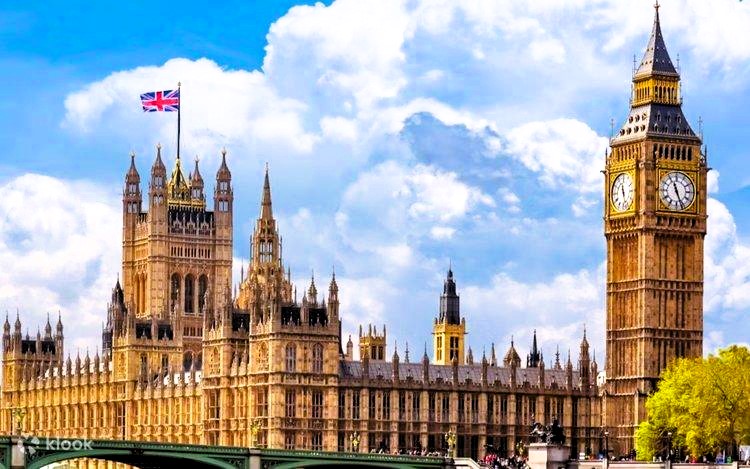
The campaign to leave promised greater sovereignty, control over immigration, freedom to negotiate trade deals and the ability to make national decisions without Brussels. Supporters believed Britain could recover control over its borders, laws, money and future.
Opponents warned that leaving the EU would create trade barriers, weaken economic cooperation and reduce Britain’s influence in Europe.
Both sides raised issues that mattered to millions of people. But the real test was not which campaign delivered the most powerful slogans. It was whether Brexit could deliver its promises without creating larger problems.
Ten years after the referendum, that question remains central to British politics.
This investigation examines why Britain left the EU, what motivated voters, which promises were fulfilled, where the country encountered losses, and what the experience means for Britain and Europe.
Purpose of This Article
The purpose is to explain Brexit beyond political slogans. It compares the arguments for leaving with the consequences of departure, examines the advantages and disadvantages for Britain and the EU, and separates measurable evidence from disputed claims.
Executive Perspective
Brexit restored the UK’s formal freedom to make many decisions independently of EU institutions. It also ended automatic participation in the EU single market and customs union, introduced new trade friction, and reduced Britain’s direct influence over decisions affecting its largest nearby trading partner.
The central question is whether the additional political freedom has produced enough economic, social and strategic benefits to compensate for those costs.
The answer depends partly on what Britain values most: national autonomy, economic integration, immigration control, international influence, or a balance among them.
1. What Was the European Union, and Why Did Britain Join?
The European project developed after the Second World War. European leaders wanted to reduce the risk of another devastating conflict by linking national economies and encouraging cooperation.
Britain joined the European Economic Community, the organisation that preceded today’s European Union, on 1 January 1973.
Membership provided access to a large regional market. British companies could sell goods and services across Europe under common rules, while consumers and businesses benefited from closer economic connections.
But Britain’s relationship with European integration was never entirely comfortable.
Unlike some supporters of a more politically integrated Europe, many British politicians viewed membership primarily as an economic arrangement. They wanted the benefits of trade and cooperation without surrendering too much national authority.
That tension never disappeared.
In 1975, Britain held a referendum on whether to remain in the European Economic Community. Around 67% voted to remain.
Over the following decades, European integration deepened. Cooperation expanded beyond trade into areas such as movement across borders, competition policy, agriculture, environmental standards, justice and aspects of foreign policy.
For some Britons, this created opportunities. For others, it raised a fundamental question: how much decision-making power should Britain share with its European neighbours?
2. The Main Reasons Britain Voted to Leave the EU
There was no single reason for Brexit. Different voters supported leaving for different reasons, and some voters combined economic concerns with questions of identity, immigration and political trust.
2.1 National Sovereignty and Control Over Laws
The slogan “Take Back Control” became the emotional centre of the Leave campaign.
Supporters argued that important decisions should be made by the British Parliament and government rather than shared with European institutions.
EU membership required Britain to follow common rules in areas covered by EU law. EU institutions and courts had roles in interpreting and enforcing those rules, while the UK participated in shaping them through the European system.
Leave supporters argued that this arrangement limited democratic accountability.
Their case was straightforward: British voters should be able to remove a government and expect it to change national policy without being constrained by EU membership obligations.
The counterargument was equally important. Britain had a voice in EU decisions while it was a member. Sharing authority was not the same as having no influence, and common rules helped make cross-border trade and cooperation possible.
The real trade-off: Brexit increased Britain’s freedom to set many policies independently, but the country also lost its formal vote in shaping EU rules that continue to affect British businesses trading with Europe.
2.2 Immigration and Freedom of Movement
Immigration was one of the most influential and emotionally charged issues in the referendum.
EU membership included freedom of movement for EU citizens, subject to the relevant rules. Citizens of member states could live and work in other member states without the immigration restrictions normally applied to many non-EU nationals.
After the EU expanded eastward in 2004, workers from countries including Poland and other new members moved to Britain. Many filled vacancies, paid taxes, established businesses and contributed to public services. Their arrival also increased competition for some jobs and added pressure to housing and local services in certain communities.
The effects varied considerably by region, industry and period. National debates often failed to distinguish between local pressures, wider labour-market changes and the overall contribution of migration.
For Leave supporters, freedom of movement symbolised the loss of border control. They wanted the UK to decide who could enter and under what conditions.
The Remain argument was that migration also supported the economy, helped employers fill vacancies and gave British citizens the right to live and work across the EU.
Brexit ended automatic EU free movement for new migration under the previous system. Britain subsequently operated a new immigration framework, including routes for workers from outside the EU.
However, leaving the EU did not automatically produce low immigration. Net migration is influenced by government visa rules, employer demand, international students, humanitarian routes and wider economic conditions.
The lesson: Brexit changed the legal framework for immigration, but it did not eliminate the economic and political choices involved in managing migration.

2.3 Money Paid to the EU
Another major Leave argument concerned Britain’s financial contribution to the EU budget.
Campaign material prominently displayed a claim that Britain sent £350 million a week to the EU. Critics challenged the figure because it referred to a gross amount rather than the net contribution after the UK rebate and money returning to Britain through EU programmes.
The distinction matters.
A gross contribution is the amount paid before adjustments and receipts are accounted for. A net contribution considers money received back through relevant EU spending and programmes.
Leaving ended the UK’s regular membership contributions under the previous arrangement, but it did not mean every former EU-related cost disappeared. Britain remained responsible for agreed financial commitments arising from withdrawal and later arrangements could involve payments for participation in specific programmes.
Supporters of Brexit argued that money no longer paid as a member could be spent on domestic priorities, including the National Health Service.
The difficulty was that the financial benefit depended on the net savings, the costs of new arrangements and the wider economic effects of leaving. A large headline figure was not the same as an equivalent amount of freely available money for public services.
The key question: Did the financial savings from leaving outweigh the economic and administrative costs associated with a more distant trading relationship?
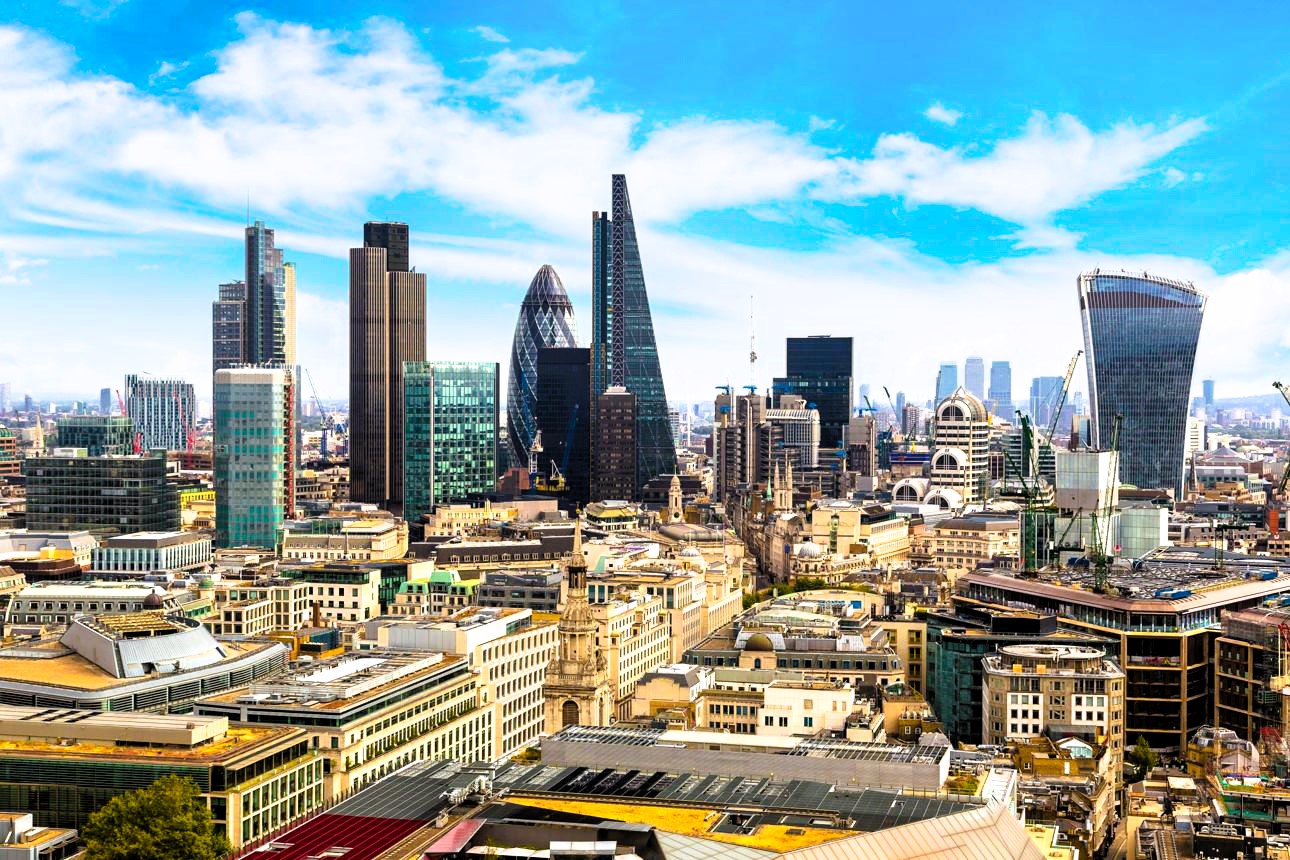
2.4 Economic Discontent and Regional Inequality
Brexit was also a protest against a political and economic system that many voters believed had failed them.
Some industrial towns had experienced long-term declines in manufacturing employment. Other areas faced low wage growth, insecure work, limited investment and pressure on public services.
Many Leave voters felt that the benefits of globalisation and economic growth were concentrated in London and other prosperous areas.
The EU became a target for wider frustration, even when the underlying causes were not exclusively European.
This distinction is essential. Economic inequality, housing shortages, weak productivity and regional decline existed before the referendum. Britain’s own tax policies, investment decisions, education system and industrial strategy also influenced these problems.
Leaving the EU could change the country’s policy options, but it could not automatically reverse decades of regional economic change.
The political reality: Brexit gave frustrated voters a way to reject the status quo. Whether it could solve the problems behind that frustration was a separate question.
2.5 Political Divisions and the Conservative Party
Brexit was not simply a public revolt against Brussels. It was also the product of long-running political conflict inside Britain.
The Conservative Party had been divided over Europe for decades. Some Conservatives supported economic integration while opposing deeper political union. Others believed Britain should leave altogether.
The UK Independence Party, led by prominent Eurosceptic politicians, helped make withdrawal a central national issue.
Prime Minister David Cameron promised a referendum in an effort to settle the question and manage divisions within his party.
The referendum was held on 23 June 2016. The Leave side won with 51.9% of the vote, against 48.1% for Remain. Turnout was approximately 72%.
The result was democratic, but the narrow margin revealed a deeply divided country.
The referendum answered whether Britain should leave. It did not provide a detailed public mandate on the precise future relationship Britain should negotiate, including the trade-offs involving the single market, customs arrangements, immigration and regulation.
That unresolved question shaped the years that followed.
3. How Britain Left the European Union
The UK formally left the EU on 31 January 2020.
However, the transition period continued until 31 December 2020. During that period, many practical arrangements remained in place while Britain and the EU negotiated their future relationship.
The Trade and Cooperation Agreement came into effect on 1 January 2021.
It provided a framework for trade, security cooperation and other aspects of the relationship. It allowed tariff-free and quota-free trade in qualifying goods, provided the relevant rules were met.
But Britain was no longer part of the EU single market or customs union.
That distinction is crucial. Tariff-free trade does not mean frictionless trade. Businesses can still face customs declarations, regulatory requirements, checks and paperwork, depending on the product and the arrangement.
Brexit therefore delivered a major constitutional change while also changing the practical conditions under which British and European businesses trade.
4. Before and After Brexit: Comparison Across Major Fields
The table below compares the position before Brexit with the post-Brexit arrangement. It distinguishes formal changes from outcomes that are influenced by several other factors.
| Major field | Before Brexit | After Brexit | Main trade-off |
|---|---|---|---|
| Sovereignty | UK shared authority with EU institutions in areas covered by EU rules | Greater freedom to set many domestic rules independently | More autonomy, less direct influence over EU rules |
| Trade in goods | Single-market and customs-union participation reduced many internal trade barriers | Qualifying goods can remain tariff-free, but customs and regulatory requirements create additional friction | More policy freedom, higher administrative costs |
| Services | UK firms had access to relevant EU single-market frameworks | Access depends more on specific agreements and national rules | Greater independence, less automatic market access |
| Immigration | EU freedom of movement applies under membership rules | New immigration framework governs EU citizens arriving under post-Brexit rules | Greater national control changed recruitment conditions |
| Public finances | UK paid a membership contribution and received EU spending | Regular membership contributions ended, but withdrawal commitments and programme-specific costs remained | Savings must be weighed against wider economic effects |
| Productivity | UK participated in the single market | Additional trade barriers may reduce efficiency and investment | Greater autonomy can carry economic costs |
| Foreign investment | Investors could use the UK as a base within the EU framework | UK remains an important market, but no longer offers the same automatic EU membership access | Investment decisions depend on market access, skills, costs and policy |
| Manufacturing | Supply chains could cross EU borders under single-market and customs-union arrangements | More paperwork and rules-of-origin requirements may complicate some supply chains | Domestic policy flexibility, more cross-border friction |
| Agriculture and food | Trade operated within common EU frameworks | Exporters may face additional checks and certification requirements | Independent rules, additional costs for some businesses |
| Fishing | UK operated within the EU’s Common Fisheries Policy | Greater national control over fisheries management, subject to negotiated access and other agreements | More formal control, continuing negotiations over access |
| Research and education | UK participated in EU programmes as a member | Participation depends on specific arrangements; association with programmes can restore some access | Cooperation can continue, but not automatically on former terms |
| Security | UK participated in EU security and justice cooperation as a member | Cooperation continues through separate arrangements and bilateral partnerships | Independence, but a greater need for negotiated coordination |
| Trade agreements | UK trade policy was part of the EU’s common commercial policy | UK can negotiate its own trade agreements | More freedom, but bargaining power and market size matter |
| Northern Ireland | UK and Ireland were both within the EU framework | Special arrangements were needed to avoid a hard land border on the island of Ireland | Protecting peace and trade requires complex rules |
| Global influence | UK helped shape EU decisions from the inside | UK acts independently and through other alliances | More freedom to choose positions, less influence inside EU institutions |
The table illustrates why Brexit cannot be judged by one measure alone. The same change can be a political gain and an economic cost, depending on the field and the objective.
5. What Brexit Has Cost the UK Economically
The economic debate is not simply about whether British trade continued after Brexit. It did. The more important question is how trade, investment and productivity compare with what might have happened if Britain had remained in the EU.
5.1 Higher Trade Barriers
The EU remains a major trading partner for Britain.
According to the UK House of Commons Library, UK exports of goods and services to the EU reached approximately £384 billion in 2025, representing 41% of all UK exports. UK imports from the EU were approximately £472 billion, or 50% of the total. These figures show that the relationship remains economically significant even after departure. 【turn778175search5】
Britain did not suddenly lose access to European customers. Instead, businesses faced a different set of conditions.
A large company may be able to absorb the costs of customs specialists, compliance teams and extra documentation. A small exporter may find the same requirements too expensive.
Some businesses have adapted. Others have changed suppliers, adjusted their business models, reduced certain exports or concentrated on the domestic market.
These outcomes vary by sector, company size and product. It would be inaccurate to claim that every business suffered equally or that every decline in trade was caused by Brexit.
5.2 The Productivity Question
Productivity measures how much economic output is produced from a given amount of labour and other inputs. It affects wages, business competitiveness and the government’s ability to fund public services.
The UK Office for Budget Responsibility estimates that the post-Brexit trading relationship will reduce long-run productivity by 4% relative to remaining in the EU. Its reasoning includes the effect of increased non-tariff barriers on trade. This is an estimate of a long-term difference against a counterfactual, not a direct measurement of a 4% fall in actual output.
Why does this matter?
If businesses face more barriers to selling into a nearby market, they may lose economies of scale, invest less or operate less efficiently. Lower productivity can mean weaker wage growth and less tax revenue than would otherwise have been available.
However, Britain’s productivity performance is also affected by domestic investment, infrastructure, planning rules, skills, business formation and other factors. Brexit is an important part of the debate, not a complete explanation for every weakness in the economy.
5.3 Investment and Business Decisions
Some companies reconsidered where to place particular operations after the UK left the single market.
For firms that need easy access to EU customers, locating certain activities inside the EU can simplify compliance and preserve market access. Other businesses continue to prefer Britain because of its skilled workforce, financial services, universities, language, legal system or domestic market.
The effect is not uniform across industries. The important question is whether Britain can attract enough new investment to offset any lost opportunities and whether domestic policies make the UK more productive and competitive.
6. What Brexit Delivered for Britain
A balanced analysis must acknowledge the gains as well as the costs.
6.1 Greater Control Over Immigration Rules
The UK now sets its own immigration framework for EU citizens rather than applying the previous freedom-of-movement system.
That gives British governments more control over visa categories and eligibility criteria. But governments must still balance immigration levels with employers’ needs, public services, universities, family migration and humanitarian responsibilities.
6.2 Independent Trade Policy
Britain can negotiate its own trade agreements rather than participating in the EU’s common commercial policy.
This creates opportunities to pursue arrangements tailored to UK priorities. But a trade agreement is valuable only to the extent that it produces practical gains. Negotiating independently does not guarantee better terms than those available through a larger trading bloc.
The UK must weigh market access against concessions, and its bargaining position varies according to the partner and subject.
6.3 More Freedom to Design Domestic Rules
Britain can make changes in areas where it is no longer bound by EU rules, subject to domestic law and other international obligations.
This can be useful when national conditions justify a different approach. But divergence can also create new barriers for businesses that sell into the EU. If firms must comply with two sets of requirements, regulatory independence can bring extra costs.
The question is not whether independent rule-making is inherently good or bad. It is whether a particular change produces benefits that exceed its costs.
6.4 Greater National Control Over Fisheries Policy
Leaving the EU’s Common Fisheries Policy changed the legal framework for fisheries management and access to waters.
This was an important symbolic and political objective for many Leave voters. However, fishing is also an economic activity dependent on quotas, market access, processing, exports and negotiated arrangements with neighbouring countries.
More national authority does not automatically guarantee higher incomes for every fishing community.
7. What Brexit Changed for the European Union
The EU also experienced gains and losses.
Potential Gains for the EU
- Greater Institutional Unity: The UK was often sceptical of deeper political integration. Its departure removed a member who frequently argued for limits on EU authority.
- Clearer Internal Rules: The EU maintained its single-market framework without having to accommodate a member that wanted selected benefits while rejecting other obligations.
- Business Opportunities: Some firms reassessed whether particular activities should be located within the EU to preserve market access. The scale of any resulting benefit varies by industry.
Potential Losses for the EU
- Loss of a Major Economy: The EU lost a large market, a major financial centre and an important industrial and scientific partner.
- Reduced Strategic Weight: Britain is a nuclear-armed state and a permanent member of the UN Security Council. Its departure changed the EU’s wider geopolitical composition, although Britain continues to cooperate with European countries through NATO and other forums.
- More Complicated Trade: Businesses on both sides face additional procedures in areas where the previous single-market and customs-union arrangements no longer apply.
- Changed Research and Business Links: Collaboration can continue through agreements, but participation is no longer automatically identical to membership.
The EU did not collapse after Britain left, and Britain did not cease to be an important European country. Both sides remain connected through geography, commerce, security and shared interests.
8. Did Brexit Fulfil Its Main Promises?
The fairest assessment separates promises that concern formal control from promises that concern economic outcomes.
| Brexit promise | Assessment |
|---|---|
| Take back control of laws | Britain regained greater formal autonomy in many policy areas, but businesses still face EU rules when they want access to the EU market. |
| Control immigration | The UK changed its immigration system, but this did not automatically mean lower overall migration. |
| Save money | Regular membership contributions ended, but the net fiscal effect must be assessed alongside withdrawal commitments and wider economic changes. |
| Create better trade deals | Britain gained independent negotiating authority, but the value of each agreement depends on its terms and economic effects. |
| Boost the economy | The hoped-for benefits must be weighed against additional trade barriers and the OBR’s estimate of lower long-run productivity relative to EU membership. |
| Revitalise left-behind regions | Brexit itself could not solve structural problems such as weak investment, skills gaps, housing shortages and long-term industrial decline. |
This is not a claim that every promise failed. It is a reminder that a change in legal authority is not the same as an improvement in living standards.
9. Why the Brexit Debate Has Returned
The debate has returned because Britain is still weighing the costs and benefits of its relationship with Europe.
Trade friction, weak productivity growth, labour-market pressures and the practical difficulties of managing two different regulatory systems have encouraged some politicians and voters to consider closer cooperation.
Public opinion has also shifted. A YouGov tracker updated on 30 September 2026 reported 73% support for a closer relationship with the EU that would not involve rejoining the EU, the single market or the customs union. This is evidence of support for closer ties, not proof that the same proportion supports full membership. 【turn778175search1】
That distinction is important. Voters may want easier trade and stronger cooperation without wanting to restore every obligation of EU membership.
The current debate, therefore, concerns several possible destinations, not just a binary choice between the status quo and full re-entry.
10. The Lessons Britain and Europe Should Learn
Brexit offers lessons for governments, voters and political movements well beyond Europe.
First, political slogans cannot replace detailed policy. Promises about sovereignty, money and borders need clear explanations of the costs, benefits and trade-offs.
Second, economic integration has practical value. Shared rules can limit national flexibility, but they can also reduce barriers for businesses and workers.
Third, democratic choice does not remove the need for accountability. Governments must assess whether major policy changes are delivering the outcomes promised.
Fourth, national sovereignty and international influence are not identical. A country can gain freedom to make its own decisions while losing a seat at the table where neighbouring countries make decisions that affect it.
Finally, public opinion can change. A referendum settles a question at a particular moment. It does not prevent later generations from reassessing the result in light of experience.
Conclusion: Was Brexit Worth It?
Britain left the EU to regain control over its laws, borders, money and trade policy. It achieved important changes in formal national authority. It also accepted a more distant economic relationship with a nearby market that remains central to British trade.
The EU, meanwhile, preserved the integrity of its single market but lost a major economic and strategic partner.
The ultimate verdict depends on how the benefits of autonomy are measured against the costs of reduced integration. The OBR’s productivity estimate and the continuing importance of EU trade make it difficult to argue that Brexit came without a significant economic trade-off. At the same time, those figures alone cannot settle the wider political question of sovereignty.
Britain now faces a more practical question than the one asked in 2016: how can it protect democratic control while improving trade, investment, security and living standards?
That question leads directly to the next debate: should Britain seek closer cooperation with the EU, return to some of its former arrangements, or eventually apply to rejoin?
Frequently Asked Questions
1. Why did Britain leave the EU?
The main reasons included national sovereignty, immigration and freedom of movement, financial contributions, economic discontent and long-standing political divisions over European integration.
2. When did Britain leave the European Union?
The UK formally left on 31 January 2020. The transition period ended on 31 December 2020, after which the new trade and cooperation arrangements applied.
3. Did Brexit give Britain control over immigration?
It ended the previous freedom-of-movement framework for new arrivals and allowed Britain to establish its own immigration rules. However, overall migration continued to depend on government policy, labour demand, international students and other factors.
4. Did Brexit make Britain poorer?
The answer depends on the measure and the comparison being used. The OBR estimates that the post-Brexit trading relationship will reduce long-run productivity by around 4% relative to remaining in the EU. This is a forecast of the difference from a counterfactual, not proof that Brexit alone caused every economic problem since 2016.
5. Did Britain save money by leaving the EU?
The UK ended its regular membership contributions, but the complete fiscal picture includes withdrawal commitments, payments for specific cooperation programmes and the wider economic consequences of leaving. The gross contribution figures used during the campaign did not equal the net savings available to spend domestically.
6. Could Britain rejoin the EU?
Yes, in principle. But rejoining would require a formal application, negotiations and unanimous approval by EU member states, followed by the relevant ratification process. The terms of membership would need to be negotiated; Britain could not simply restore its former status automatically.
References and Further Reading
- UK Office for Budget Responsibility, Brexit analysis.
- UK House of Commons Library, Statistics on UK-EU trade.
- European Commission, Consequences of Brexit.
- Eurostat, EU trade in goods with the United Kingdom, 2015–2025.
- YouGov, How strong is UK support for rejoining the European Union?.
Author: Maj Hamid Mahmood (Retired), MA Political Science, LLB, PGD (HRM).
The author’s military, political science and legal background informs this analysis of political decisions, international relations and their economic and human consequences.