The 2026 U.S. Voter Guide: Can I Actually Vote?
The 2026 U.S. Voter Guide: Can I actually vote? For millions of Americans, that question is more complicated than it sounds. Maybe you moved to another state. Maybe your name changed. Maybe you never received your voter card. Maybe you are away at college. Perhaps you are serving in the military, living overseas, voting by mail, or simply unsure whether your registration is still active.
https://mrpo.pk/us-2026-house-battlegrounds/
Then there is the question that makes everything more confusing:
What happens if something goes wrong on Election Day?
The good news is that many voting problems have solutions.
The bad news is that American elections are not governed by one simple national rulebook. States and territories establish many of their own registration deadlines, identification requirements, absentee rules, and voting procedures. That means the answer to “Can I vote?” often begins with another question:
Where are you registered to vote?
This guide explains the basics every American voter should know before the 2026 elections.
It is not a substitute for your state election office. Rules can change, and the official election authority in your state should always be your final source of information.
Who Can Vote in the United States?
Generally, you must meet several basic requirements to vote in U.S. elections.
You must be a U.S. citizen and meet your state’s eligibility requirements. You generally must be at least 18 years old to vote in a general election, although some states allow younger voters to participate in certain primaries or registration processes.
You also need to meet your state’s residency and registration requirements.
But there is an important distinction:
Being eligible to vote is not the same as being registered to vote.
You can be eligible but not registered.
You can also be registered but have outdated information.
That is why checking your registration before an election is one of the simplest things you can do to avoid trouble later.

How Do I Register to Vote?
The easiest starting point is the official U.S. government voting portal, Vote.gov.
Select your state or territory and follow the instructions for registration.
Depending on where you live, you may be able to register:
- Online
- By mail
- In person
- Through a state motor vehicle agency
- Through certain government agencies
The exact options vary by state.
And so do the deadlines.
There is no single national voter-registration deadline.
Some states require registration weeks before Election Day. Others allow registration much closer to Election Day, and some permit eligible voters to register on Election Day itself.
Do not assume that the deadline in one state applies to another.
It doesn’t.
What Is the Registration Deadline for 2026?
The 2026 general election is scheduled for November 3, 2026.
But there is no single national registration deadline for that election.
For example, states such as Georgia and Indiana generally have registration deadlines 29 days before Election Day, while New York and New Jersey use different deadlines. Washington and Colorado also have different timelines.
The lesson is simple:
Never calculate your registration deadline from another state’s calendar.
Check your own state.
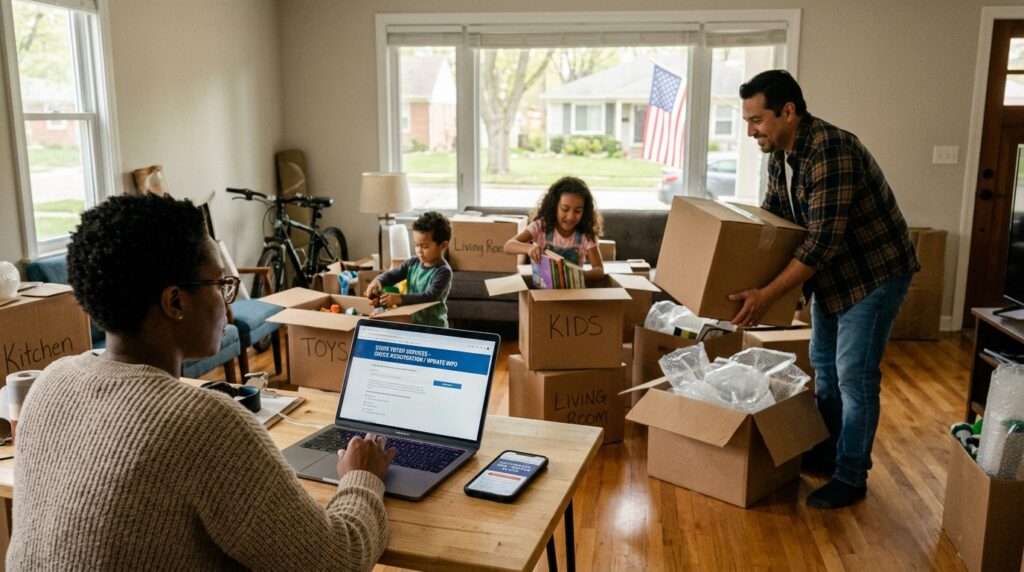
What If I Moved?
This is one of the most common reasons voters run into problems.
Moving to a new home does not automatically mean your voter registration information is correct.
If you moved within your state, you generally need to update your registration.
If you move to another state, you generally need to register in your new state.
This matters because your ballot depends on where you are legally registered.
Imagine Sarah moves from Pennsylvania to Virginia.
She assumes her old registration will somehow follow her.
It won’t.
If she waits until Election Day to discover the problem, she may have far fewer options than if she had updated her registration weeks earlier.
Moving is not just a postal problem. It can be a voting problem.
Update your registration as soon as possible after moving.
What If I Changed My Name?
Marriage is one common reason voters change their legal name.
Divorce, court orders, or other legal changes can also require an update.
If your legal name has changed, update your voter registration according to your state’s procedures.
Do not assume that changing your name with another government agency automatically resolves every election-registration issue.
Your state election system needs accurate information.
What If I Lost My Voter Registration Card?
Don’t panic.
A voter registration card is useful, but you generally do not need the card itself to vote.
Your state may require identification at the polls, but that is a separate issue.
Think of the registration card as confirmation.
It is not the same thing as your right to vote.
If you lose it, check your registration through your state election authority and find out what identification, if any, you must bring.
What If I Never Received a Voter Card?
Again, don’t assume you are automatically unable to vote.
Your registration status matters more than whether a physical card arrived in your mailbox.
Check your registration through your state’s official election website.
If the system shows that you are registered, follow your state’s voting instructions.
If the information is incorrect or your registration cannot be found, contact your local election office before Election Day.
A five-minute check today can prevent a long argument at a polling place later.
Do I Need an ID to Vote?
This is where many voters get confused.
There is no single nationwide voter-ID rule.
Each state and territory establishes its own identification requirements.
Some states require particular forms of identification.
Some allow alternative documents or procedures.
Some provide ways for voters without acceptable identification to cast a ballot that can later be verified.
The rules can also differ between voting in person and voting by mail.
So don’t rely on something your cousin told you about voting in another state.
Your cousin may be perfectly sincere.
Your cousin may also be wrong.
Check your state’s official rules.
Can I Vote Without a Voter ID?
The answer depends on your state.
Some states require identification for in-person voting. Others have different procedures.
If you do not have the required identification, don’t automatically assume you are disqualified.
Your state may provide another procedure.
Contact your local election office or check your state’s official election website before Election Day.
The important point is this:
Never confuse “I don’t have the usual ID” with “I have no possible way to vote.”
The actual procedure depends on state law.
Can I Vote by Mail?
In many states, yes.
But the rules differ substantially.
Some states conduct elections primarily or entirely by mail.
Other states allow absentee or mail voting under specific circumstances.
Some require a voter to provide a reason.
Others allow no-excuse absentee voting.
Some states require applications by particular deadlines.
Others have different procedures for requesting and returning ballots.
The words “mail voting” and “absentee voting” are sometimes used interchangeably in everyday conversation, but state laws can treat them differently.
That is why the safest approach is to start with your state election office.
What Happens After I Request a Mail Ballot?
Your election office sends the ballot according to your state’s procedures.
Read the instructions carefully.
This is not the moment to improvise.
A mail ballot may require:
- A Signature
- A Secrecy Envelope
- Identification Information
- A Witness Signature
- Notarization in certain circumstances
- Specific Return Packaging
Requirements vary by state.
Follow the instructions that come with your ballot.
A voter can make a perfectly sincere mistake and still create a problem for the ballot.
The solution is boring but powerful:
Read the instructions. Then read them again.
Can I Put My Mail Ballot in a Drop Box?
Some states and local jurisdictions provide official ballot drop boxes.
They can be particularly useful when mailing a ballot is inconvenient or when time is running short.
But availability, locations, security procedures, and deadlines vary.
Use only officially designated ballot drop boxes.
Do not assume that every unattended box, mailbox, or collection container is an authorized election drop box.
What If My Mail Ballot Arrives Late?
Do not wait until the final hours to deal with a missing ballot.
Contact your election office.
If you are a military or overseas voter, special federal protections and procedures apply, including mechanisms for receiving ballots electronically and using emergency voting procedures when necessary.
For ordinary domestic voters, the available solution depends on state law.
The important lesson is universal:
A ballot problem discovered three weeks before Election Day is a problem. The same problem discovered three minutes before the deadline may become a crisis.
Can I Track My Ballot?
Many states provide ways to track mail or absentee ballots.
The exact system varies.
Depending on the state, you may be able to see when your ballot was:
- Sent
- Received
- Accepted
- Rejected
- Processed
If your state offers ballot tracking, use it.
Don’t spend Election Night wondering whether your ballot disappeared into the political Bermuda Triangle.
Check the official system.
What If My Ballot Is Rejected?
A rejected ballot does not necessarily mean you are permanently out of options.
Some states provide procedures that allow voters to correct certain problems, such as signature issues.
But the process and deadlines vary.
If you are notified that your ballot has a problem, contact your election authority immediately.
Do not wait.
Election rules are often deadline-driven.
A correction that is possible today may not be possible next week.
What If I Make a Mistake on My Ballot?
Again, the answer depends on the type of ballot and the state’s rules.
If you are voting in person, ask a poll worker for help before submitting the ballot.
If you are voting by mail, follow the instructions provided by your election authority.
Do not attempt to “fix” a ballot using a method that is not authorized.
And never allow embarrassment to become the reason you make the problem worse.
Election workers deal with voter mistakes all the time.
Ask.
What If Someone Challenges My Registration?
A challenge to your registration can be frightening.
But a challenge does not automatically mean you have lost your right to vote.
The procedure depends on state law and the reason for the challenge.
If your registration is questioned, ask the election officials what documentation or procedure is required.
Keep your information current before Election Day so that obvious problems are less likely to appear at the last minute.
This is another reason checking your registration early matters.
What If My Name Is Not on the Voter List?
This is one of the most stressful situations a voter can face.
But don’t immediately leave.
Ask the poll workers to check your information.
Confirm that you are at the correct polling location.
If your name still cannot be found, ask what options are available under your state’s law.
In some circumstances, voters may be able to cast a provisional ballot.
What Is a Provisional Ballot?
A provisional ballot is used when there is a question about a voter’s eligibility or registration that cannot be resolved immediately at the polling place.
It is not simply a “fake ballot.”
It is a real voting mechanism established by law.
Election officials later review the circumstances and determine whether the ballot, or portions of it, can be counted under applicable rules.
The exact reasons for using provisional ballots and the process for determining whether they count vary by state.
If you believe you are eligible to vote but there is a problem with your registration, ask the poll workers about the available procedure.
What If Someone Tells Me I Cannot Vote?
Stay calm.
Ask why.
Ask to speak with the appropriate election official or poll supervisor.
Do not turn a disagreement into a confrontation.
If you believe your voting rights are being improperly denied, document what happened and seek assistance through the appropriate official or voter-protection channel.
Most importantly, don’t walk away simply because someone casually says, “You can’t vote.”
Find out why.
What If the Voting Machine Stops Working?
Machines can fail.
People can fail.
Printers can fail.
Computers can fail.
Democracy, inconveniently, still runs on equipment made by humans.
If a voting machine stops working, notify a poll worker.
Do not attempt to repair the equipment yourself.
Election officials have procedures for equipment problems and should tell voters how to proceed.
A technical failure does not automatically mean the election has stopped.
Can College Students Vote?
Yes, eligible college students can vote.
But students face a special problem:
Where should they register?
A student may live temporarily in one state while maintaining a connection to another.
The answer depends on the student’s circumstances and applicable state law.
Students should determine where they are eligible to register and understand the consequences of registering at that address.
The worst strategy is to register casually in one place while assuming everything will somehow work itself out.
It may not.
Can I Vote If I Am Homeless?
Lack of a traditional home address does not automatically eliminate a person’s right to register and vote.
Special procedures may exist for people experiencing homelessness.
The exact registration requirements depend on the state.
If you are unhoused, contact the appropriate local election office and ask about registration, voting residence, identification, and polling-place procedures.
Don’t assume that homelessness means political invisibility.
It doesn’t.
Can People With Disabilities Vote?
Yes.
Federal law protects voting rights and accessibility for Americans with disabilities.
State and local election authorities must provide applicable accessibility accommodations.
Depending on the circumstances, voters may have access to accessible voting equipment, assistance, alternative voting methods, or other accommodations.
If you need an accommodation, contact your election office before Election Day whenever possible.
Don’t wait until you are standing outside the polling place wondering what to do.
Can I Get Voting Help If English Isn’t My First Language?
Language assistance may be available depending on where you live.
Federal and state laws provide different protections and services in certain jurisdictions.
If you need voting assistance in another language, contact your state or local election office in advance.
The goal is not merely to provide a ballot.
The goal is to make sure eligible voters can understand and use the voting process.
How Do Military Members Vote?
Military voters have special procedures because service can place them far from their normal voting residence.
The Federal Post Card Application, commonly known as the FPCA, allows eligible military and overseas voters to register and request an absentee ballot.
The Federal Voting Assistance Program provides state-specific guidance.
Federal law also provides important protections concerning the transmission of ballots to military and overseas voters.
Military voters should not wait until deployment or Election Day to figure this out.
Voting preparation is part of preparation.
Can Americans Living Abroad Vote?
Yes.
Eligible U.S. citizens living outside the United States can vote in U.S. elections.
That includes many Americans living overseas for work, education, family reasons, or other circumstances.
The process generally begins with the Federal Postcard Application.
Overseas voters should submit the form according to the applicable timetable and state requirements.
Vote.gov recommends submitting the FPCA every January and whenever you move, and no later than 90 days before Election Day.
For federal elections, overseas voters are entitled to important protections regarding ballot transmission.
And if a regular overseas ballot does not arrive in time, an emergency Federal Write-In Absentee Ballot may be available.
For an American abroad, distance does not automatically mean political silence.
What About Americans Who Were Born Abroad?
Some U.S. citizens born outside the United States may still be eligible to vote.
The determining factors can include citizenship, voting residence, and applicable state law.
This is another situation where guessing is a bad strategy.
Contact the appropriate state election authority or Federal Voting Assistance Program for specific guidance.
Can I Vote Early?
Many states offer early voting.
But early voting rules are established at the state and local level.
The number of days, hours, locations, and eligibility requirements can differ.
If early voting is available where you live, it can provide an important alternative to waiting until Election Day.
It can also reduce the risk of a last-minute problem.
A doctor’s appointment.
A work shift.
A family emergency.
Bad weather.
A broken-down car.
Life has a habit of scheduling itself on Election Day.
Early voting can give voters more flexibility.
What Should I Do Before Election Day?
Don’t make Election Day your first day of election preparation.
A simple checklist can eliminate many avoidable problems.
One Month or More Before Election Day
Check your voter registration.
Confirm your legal name.
Confirm your address.
Confirm your political party information if relevant to your state’s primary rules.
Check your voter ID requirements.
Find your polling location.
If voting by mail, request your ballot early.
If you are a military or overseas voter, confirm your FPCA and ballot arrangements.
One Week Before Election Day
Confirm your polling place or early-voting location.
Check voting hours.
Make sure you have the required identification.
If voting by mail, verify the ballot instructions.
If you already returned a ballot, check whether your state offers ballot tracking.
Election Day
Bring the identification required by your state.
Go to the correct polling location.
Follow the instructions of election officials.
If there is a problem, stay calm and ask questions.
If your name is missing, ask officials to investigate.
If you are told you cannot vote, ask why and what options are available.
If appropriate, ask whether you can cast a provisional ballot.
The Most Important Voting Rule
Here is the rule worth remembering:
Don’t rely on rumors when the government provides an official answer.
Your neighbor may tell you that you cannot vote without a voter card.
Your friend may tell you that everyone must have a driver’s license.
Someone on social media may insist that mail ballots are never counted after Election Day.
Another person may confidently claim that you can register anywhere.
Some of these statements may be true somewhere.
None of them should automatically be treated as the law where you live.
American elections are decentralized.
State rules matter.
Local procedures matter.
Deadlines matter.
And details matter.
Where Should I Check My Voting Information?
Start with Vote.gov, the official U.S. government voting information portal.
Select your state or territory.
From there, you can find information about registration, deadlines, voter identification, mail voting, changing your address, and other voting questions.
For military and overseas voters, use the Federal Voting Assistance Program and your state election authority.
When election information conflicts online, give priority to official election sources.
A viral post is not an election authority.
A political influencer is not an election authority.
A forwarded message from your uncle is definitely not an election authority.
The Bottom Line
So, can you actually vote?
For many Americans, the answer is yes.
But having the right to vote and successfully navigating the voting process are not always the same thing.
Your responsibility is not to become an election lawyer.
It is simple to know the basics:
Check your registration.
Update it when your circumstances change.
Know your state’s deadlines.
Understand your ID requirements.
Request mail ballots early if you need one.
Track your ballot when possible.
Know where you are supposed to vote.
And if something goes wrong, ask for the official procedure rather than walking away.
The 2026 election will be decided by millions of individual choices.
Before deciding whom to vote for, make sure you have answered the more basic question:
Can I actually vote?
In American democracy, knowing the answer is not a luxury.
It is preparation.
Frequently Asked Questions
1. Do I need a voter registration card to vote?
Generally, no. A voter registration card is confirmation of your registration, but you may still need to meet your state’s identification requirements.
2. Can I vote if I moved recently?
Possibly, but you should update your voter registration. If you move to another state, you generally need to register in the new state.
3. Can I vote without a driver’s license?
Possibly. Voter-ID rules vary by state, and a driver’s license is not the only possible form of identification everywhere.
4. Can I vote by mail?
In many states, yes. However, eligibility, application deadlines, ballot-return rules, and other requirements vary by state.
5. What happens if my name is not on the voter list?
Ask poll workers to check your information and confirm that you are at the correct polling location. Depending on your circumstances and state law, you may have access to a provisional ballot or another procedure.
6. Can Americans living abroad vote?
Yes. Eligible U.S. citizens living abroad can vote, subject to applicable state rules. Military and overseas voters can use special federal procedures for registration and absentee voting.
References
- Vote.gov — Register to Vote and State Voting Information
- Vote.gov — Changing Your Address
- Vote.gov — Voter Identification Requirements
- Vote.gov — Mail and Absentee Voting
- Vote.gov — Voting From Outside the United States
- Vote.gov — Voting as a Military Service Member
- Vote.gov — Voting With a Disability
- U.S. Election Assistance Commission — Federal Election Laws and Voting Information
- Federal Voting Assistance Program — Military and Overseas Voting Guidance
Author
Maj Hamid Mahmood (Retired) holds an MA in Political Science, an LLB, and a PGD (HRM). His military background, academic training in political science, and legal education provide a multidisciplinary perspective for examining international conflicts, security affairs, political developments, and the human consequences of war.
Why is the article structured this way?
The official federal voting portal confirms that registration deadlines, ID requirements, mail voting and other procedures vary by state, which makes a national “one-size-fits-all” answer misleading. (Vote.gov)
The state variation is substantial: for example, Vote.gov currently lists different registration deadlines for Georgia, New York, New Jersey, Washington, Colorado and other states. (Vote.gov)
The sections on military and overseas voters are based on current federal guidance, including the FPCA process, the 45-day federal ballot-transmission requirement, and the Federal Write-In Absentee Ballot for certain situations. (Vote.gov)