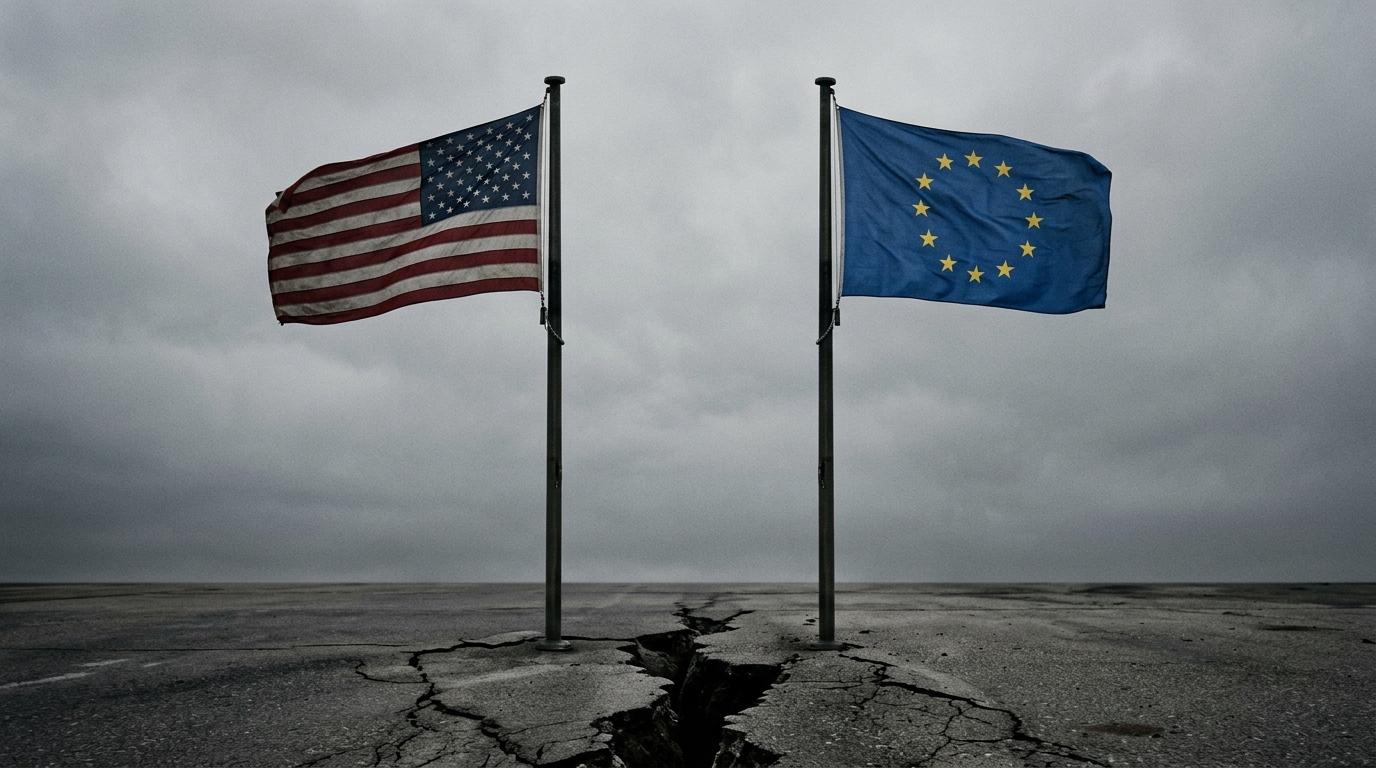

The Transatlantic Tug of War: Who Really Pays for US Bases in Europe?
The Transatlantic Tug of War. You have probably seen the headlines. Some politicians say Europe needs to pay its fair share. Another one threatens to pull troops out. But here is the thing nobody tells you. European countries do not actually write a monthly rent check to the Pentagon. There is no landlord-tenant relationship between Brussels and the US Department of Defence.
https://mrpo.pk/talking-without-talks/
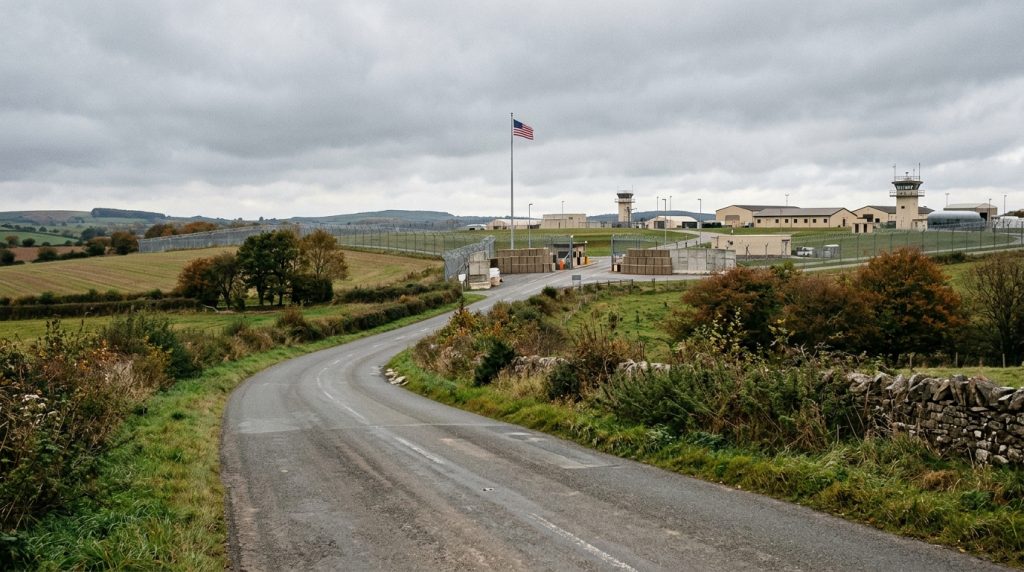
So in The Transatlantic Tug of War, what are we even arguing about? I spent the last several days digging into budgets, base agreements, and the fine print of NATO funding. What I found surprised me. The system is not what most people imagine. And right now, as Europe starts talking seriously about building its own army, the whole arrangement is starting to crack.
Let me walk you through how this actually works, what countries are paying, whether any nation has stopped paying, and whether the US bases in Europe might someday disappear. This is not a hot take. This is a detailed investigation based on official budgets, recent diplomatic events from April 2026, and the quiet policy shifts happening inside the EU.”European countries do not actually write a monthly rent check to the Pentagon. There is no landlord-tenant relationship.”
The Transatlantic Tug of War: Main US Interests Served by These Bases?
Let me be direct about this. The United States keeps 80,000 troops and dozens of bases in Europe for the same reason any country does anything. Self-interest. It is not generosity. It is not nostalgia for World War Two. The US gets a powerful return on its investment, just in a different currency than rent checks.
The short version: The bases give the US global reach, political leverage over allies, intelligence collection, and a way to keep rival powers like Russia and China at a safe distance. Europe is a launching pad, not a destination.
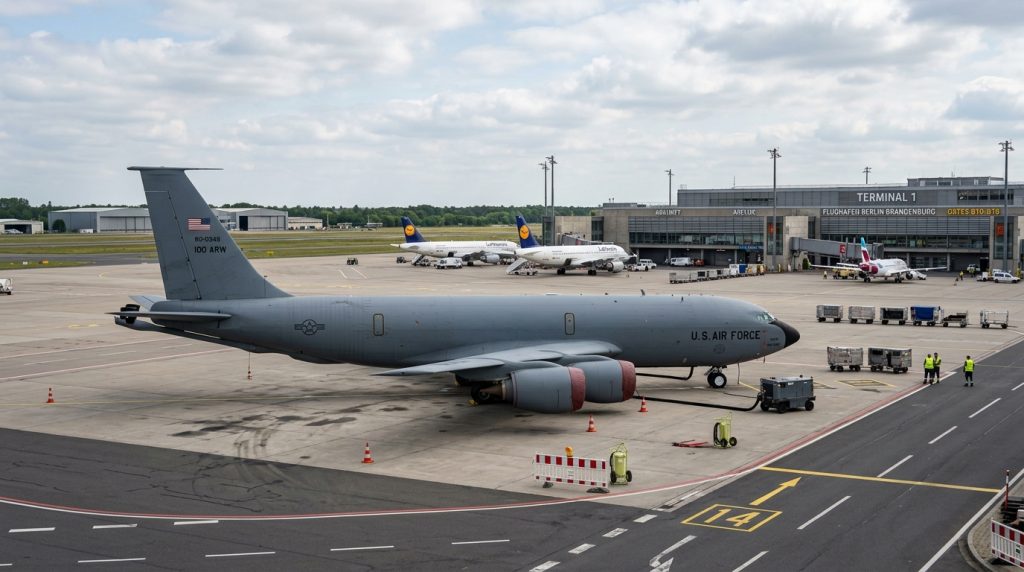
1. Power Projection and Global Strike
Europe sits between the United States and three critical regions: the Middle East, Africa, and Russia. US bases in Germany, Italy, and the UK allow bombers, tankers, and drones to reach conflict zones in hours instead of days. When the US needed to strike targets in the Middle East or monitor activity in North Africa, those missions almost always launched from Ramstein, Rota, or RAF Lakenheath. Without European bases, the US would have to fly everything from the continental US or from costly aircraft carriers. That means longer response times and higher fuel bills. The bases are essentially forward gas stations for American power.
2. Intelligence and Surveillance
Some of the most sensitive US intelligence facilities are hidden inside European bases. There are listening posts in Germany and the UK that monitor Russian communications, track missile tests, and intercept diplomatic chatter. The US also operates radar and signals intelligence sites in Norway, Turkey, and Cyprus. These facilities give America eyes and ears on the Eurasian landmass. You cannot buy that access. You have to earn it through a permanent military presence.
3. Political Leverage Over Allies
Here is the uncomfortable truth that no one says out loud. When you have 30,000 troops stationed inside a country, that country tends to listen to you. The US presence in Germany and Italy gives Washington enormous influence over European foreign policy. Want Europe to impose sanctions on Russia? Threatened to pull troops. Want Europe to buy American weapons instead of European ones? Remind them who guarantees their security. This is not a conspiracy. This is standard geopolitics. The bases are leverage, pure and simple.
4. Nuclear Deterrence Forward Deployment
The US stores an estimated 100 tactical nuclear bombs across bases in Germany, Belgium, Italy, the Netherlands, and Turkey. These weapons are a tripwire. If Russia or any other adversary attacked Europe, those bombs would be in play immediately. Having nukes on European soil also reassures allies who do not have their own nuclear arsenals. Germany and Italy get the protection of American nukes without having to build their own. That is a huge benefit for them. But the benefit for the US is that it gets to control where those weapons sit and who has a say in their use.
5. Checking China and Russia Without Fighting Them
A major US base in Europe also serves as a warning to Beijing and Moscow. It tells them that America can fight on two fronts if needed. If Russia ever threatened the Baltics or Poland, the troops already inside Europe can respond instantly. If China made a move on Taiwan, the US could shift some European forces to the Pacific. But the bases also serve a quieter purpose. They allow the US to monitor Russian military activity along the Baltic and Black Seas without firing a shot. That is a form of containment that costs less than a full-scale war.
6. Economic and Contractual Influence
When the US builds or expands a base, American defence contractors get the contracts. Lockheed Martin, Boeing, Raytheon, and General Dynamics all have offices near US bases in Europe. The presence of troops also means the US dollar flows through local economies, giving Washington additional soft power. And when European countries need new fighter jets or missile systems, they are more likely to buy American when American generals are already sitting across the table.
So no, the US is not losing money on this deal. The 2.9 billion dollars the Pentagon spends annually on European bases buys Washington something far more valuable than rent. It buys global dominance. The bases are the infrastructure of American power. And that is why, despite all the political noise, the US is not eager to leave either.
The Future of US Bases in Europe: General (Ret.) Stephen Twitty
“All of them are pretty doggone essential with what we have to do as a nation,” said Lt. Gen. (Ret.) Stephen Twitty, a distinguished fellow at CEPA and former Deputy Commander of US European Command, was asked about the most critical US bases in Europe. “Our military bases in Europe provide a strategic depth,” he added, in terms of influence, deterrence, logistics, and because the US doesn’t fight wars on its homeland, but away from it.
“Pulling away from that now is saying, we’re going to walk away from peace and stability in Europe and our transatlantic partnership,” Twitty later argued. “We’re going to walk away from everything we stand for in terms of what we put in place in the Marshall Plan.”
In a Q&A with the Centre for European Policy Analysis, Twitty outlines the strategic case for U.S. military bases in Europe.
https://cepa.org/article/the-future-of-us-bases-in-europe-general-ret-stephen-twitty/
The Map of American Power Across Europe
If you look at a map of US military installations across Europe, the first thing you will notice is that Germany is the centre of gravity. Roughly 30,000 American troops are stationed there. That is more than a third of the total. Ramstein Air Base handles more cargo and air traffic than almost any other US facility outside America. Stuttgart hosts the headquarters for all US military operations in Europe and Africa.
Then you have Italy with about 12,000 troops. The UK has around 9,000. Smaller numbers are spread across Spain, Greece, Belgium, the Netherlands, and Portugal. In recent years, the US has been building up its presence in Poland and the Baltic states, partly as a response to the war in Ukraine.
In total, you are looking at roughly 80,000 American service members living and working across Europe. That is a small city’s worth of people. And keeping that city running costs real money. But where does that money come from? Let me clear up the confusion.
Where the Money Actually Comes From: The Transatlantic Tug of War
Here is where most reporters get it wrong. European allies do not pay the US government for the privilege of hosting bases. There is no invoice. No wire transfer every month from Berlin to Washington. Instead, the funding comes from three different buckets.
The first bucket is the US taxpayer. The Pentagon budgets billions every year for what it calls the European Deterrence Initiative. That money pays for troop salaries, equipment maintenance, fuel, and most base operations. For fiscal year 2025, that number was around 2.9 billion dollars. American citizens pay for the American troops.
The second bucket is host nation support. This is the part that feels like payment. Countries like Germany and Italy spend their own money to maintain roads, upgrade utilities, and build new facilities on or near US bases. They also cover things like air traffic control services and fire protection. Germany alone spends roughly a billion dollars a year on these indirect costs. But it is not a check written to the US military. It is money spent inside their own country to support the shared mission.
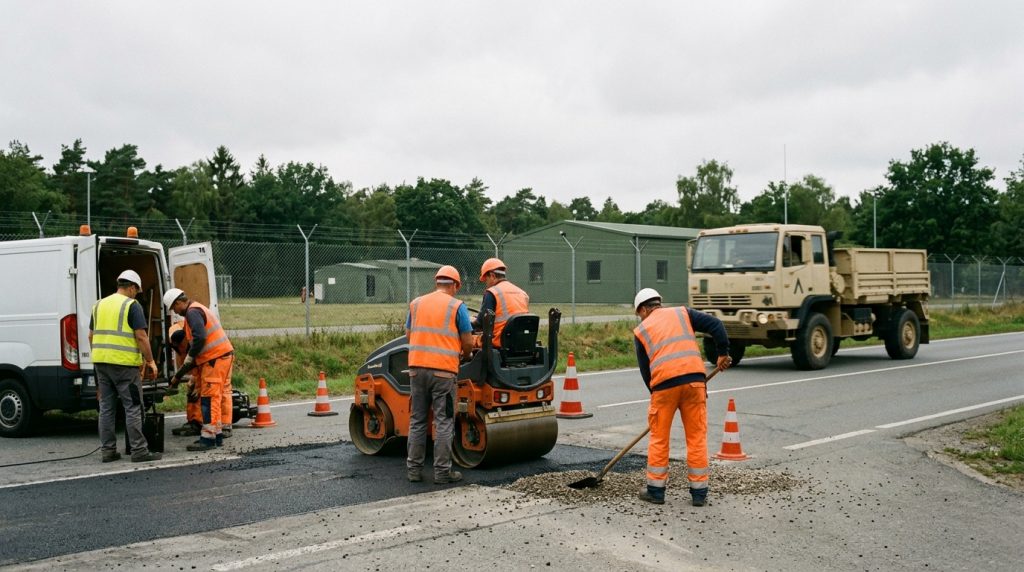
The third bucket is NATO common funding. Allies pool money for specific infrastructure projects like pipelines, communication networks, and airfields that everyone uses. This is the closest thing to a shared credit card. But even here, the amounts are small compared to what the US spends on its own.
So, when a US president says Europe is not paying enough, what do they actually mean? They mean Europe is not spending enough on its own defence, which forces the US to carry a heavier load. It is less about reimbursement and more about burden sharing.
Snapshot: Who spends what?
US (EDI funding): ~ $2.9 billion (FY2025) – covers salaries, equipment, operations.
Germany (host nation support): ~ $1 billion+ annually (indirect: roads, utilities, tax exemptions).
EU’s new SAFE initiative: €150 billion – exclusively for joint European procurement, US firms largely excluded.
Bottom line: No rent. But Europe pays in land, infrastructure, and political access.
What Happened in Spain (April 2026)
Let me give you a concrete example that shows how messy this can get. In April 2026, the Spanish government told the United States it could not use the Rota naval base for strikes against Iran. The base remained open. American ships could still dock there. But the specific mission was denied.
This was a big deal. Rota is a critical staging point for operations in the Middle East. When Spain said no, the US had to reroute bombers and refuelling planes through Germany and Crete. It added hours to flight times and complicated logistics significantly.
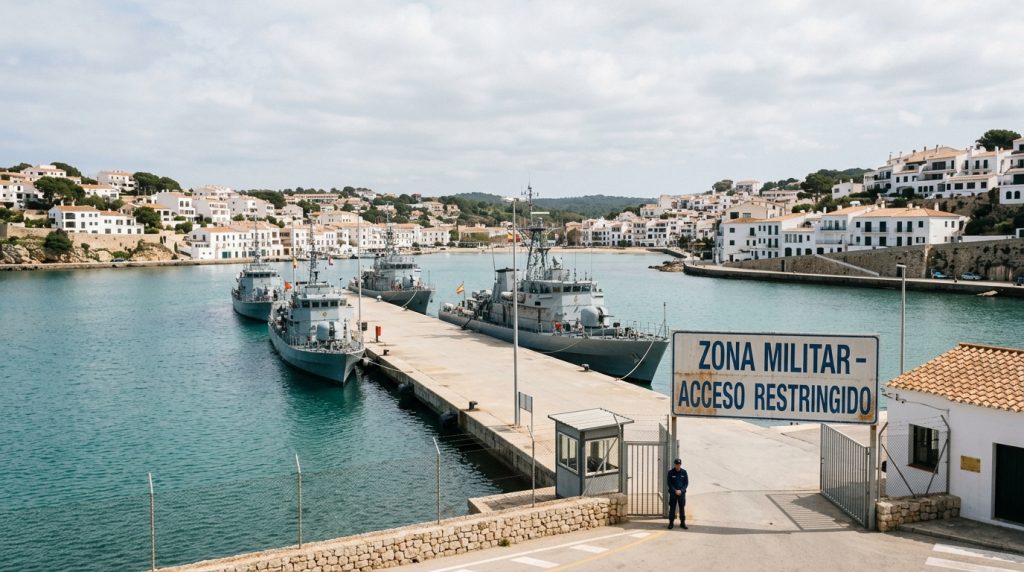
Spain did not stop paying anything. The base funding agreements remained in place. But they denied access. And that turned out to be a much more powerful tool than money. This is the part of the story that does not get enough attention. European countries cannot easily evict US bases. The legal agreements are complex and deeply layered. But they can make life difficult. They can say no to specific missions. They can delay permits. And in the current political climate, several countries are starting to test those limits.
The European Army That Might Actually Happen
For decades, people have joked about a European army. It always sounded like a fantasy. But something shifted in 2025 and 2026. The war in Ukraine showed Europe how dependent it still is on American logistics. The political uncertainty in Washington made European leaders nervous. And the simple fact is that the US is slowly pulling its focus toward the Pacific and the growing challenge from China.
So Europe started making concrete plans. The most serious proposal right now comes from the EU Defence Commissioner. He has proposed a new defence alliance with a standing force of up to 100,000 troops. That is roughly the same size as the current US presence in Europe. The idea is not to replace NATO overnight. But it is to give Europe the ability to respond to a crisis without waiting for American approval.
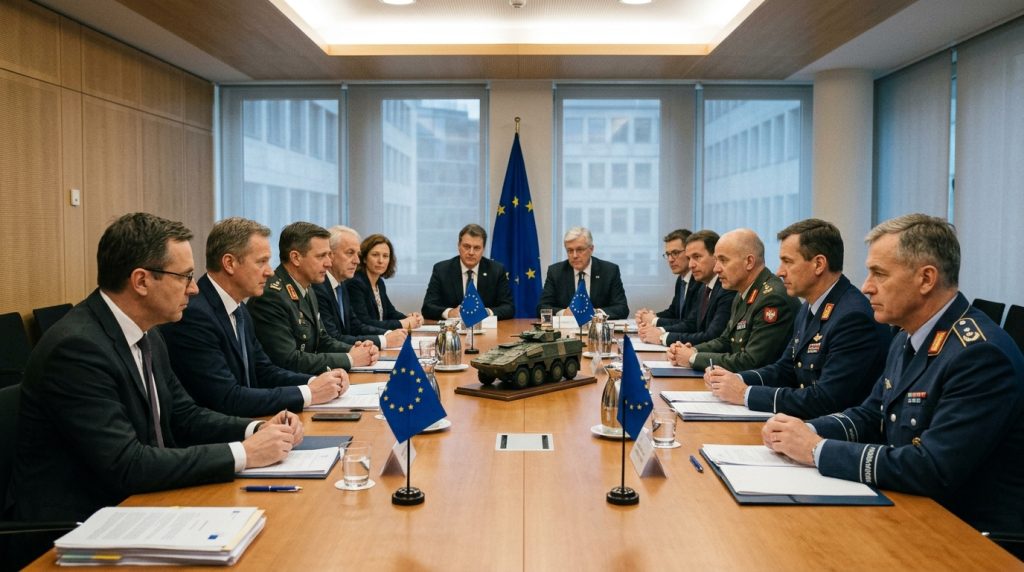
There is also a genuinely clever financial component. The EU recently approved a 90 billion euro loan for Ukraine. But here is the catch. Sixty-five per cent of the weapons purchased with that money must be manufactured in Europe. That means American defence contractors like Lockheed Martin and Raytheon are mostly locked out. The EU is using its financial power to force its own defence industry to grow.
And then there is Article 42.7. That is the EU equivalent of NATO’s mutual defence clause. European leaders have now asked the European Commission to draw up an operational response plan for this clause. In plain English, they want to know exactly how they would defend each other if the US decided not to help. None of this means the US bases are closing tomorrow. But the foundation is shifting.
Has Any Country Stopped Paying to the US Already?
Although this is the Transatlantic Tug of War, the question many readers ask directly. And the answer is no, not in the way you might think. No European country has terminated its host-nation support agreements. No one has withdrawn from NATO common funding. Those are treaty-level commitments. You cannot just stop paying because you are upset about a trade dispute or a political speech.
But you can quietly redirect resources. You can prioritise national defence spending over base maintenance. You can let infrastructure projects slide while claiming budget constraints. And several countries are doing exactly that.
The Baltic states are a good example. For years, the US funded a Baltic Security Initiative to help those countries upgrade their own defence. But the current US administration cut that funding in early 2026 as part of a broader push to make Europe pay more. The irony is that the US cut its own funding to force Europe to spend more. That is the kind of bureaucratic contradiction that makes this issue so hard to track.
The Nordic countries are doing something similar but in reverse. They are increasing their defence budgets rapidly. But that money is staying in Nordic defence companies. It is not flowing to the US. So while their overall spending is up, the share going to support the US presence is flat or declining. So has anyone stopped paying? Technically no. Practically? The support is being slowly rerouted toward European solutions.
Why the Bases Probably Are Not Going Anywhere (Yet)
I do not want to give you the impression that US bases in Europe are on death’s door. They are not. There are three big reasons why.
First is air power. The US maintains an incredible network of refuelling tankers, cargo planes, and airfields across Europe. European countries collectively do not have the ability to project power the way the US can. If the US left, Europe would lose its ability to move troops and supplies anywhere quickly. Building that capability from scratch would take more than a decade.
Second is nuclear weapons. The US stores tactical nuclear bombs in Germany, Belgium, Italy, the Netherlands, and Turkey as part of NATO’s nuclear sharing agreement. Europe has no replacement for this. France and the UK have their own nuclear arsenals, but they are not integrated into a European-wide defence structure. That gap is massive.
Third is simply inertia. The bases have been there for 80 years. Generations of troops have been stationed overseas. Supply chains, housing, schools, and medical facilities are all built around this system. Tearing it down would be incredibly expensive and logistically painful for everyone involved.
What Actually Changes in the Next Five Years
Here is my best assessment after looking at all the numbers and tracking recent diplomatic moves. The bases stay. No country kicks the US out. No dramatic withdrawal happens. But the relationship changes. European countries stop treating the US presence as a permanent guarantee and start treating it as a service they are purchasing. That means more negotiation. More conditions. More pushback on missions they do not support.
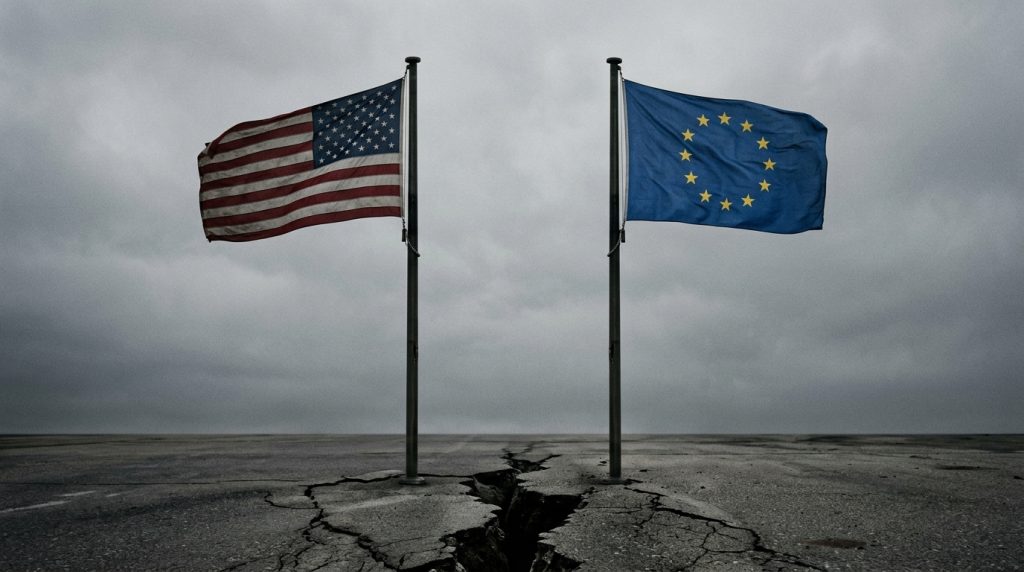
You will also see Europe spending more on its own defence, but that money will go to European companies. The US defence industry will slowly lose market share in Europe. That is already happening with the Ukraine loan restrictions. And you will see smaller countries like Spain and Greece using base access as a bargaining chip in unrelated disputes. That is not a theory. That is already happening.
So the real story is not about payments stopping. It is about the slow unravelling of a deal that worked well for 80 years but no longer fits the world we live in. The US wants Europe to take more responsibility. Europe wants more independence. And neither side is quite sure how to get from here to there without breaking something important. For now, the troops stay. The bases stay. But the conversation has changed. And once that happens, it rarely goes back to the way it was.
Frequently Asked Questions (FAQ)
1. Do European countries pay rent to the United States for hosting military bases?
No. There is no monthly rent check or standard lease agreement. Host nations contribute indirectly through infrastructure improvements, tax exemptions, and shared NATO funding. The US taxpayer covers most base operating costs, including troop salaries and equipment maintenance.
2. Which European country hosts the most US troops?
Germany hosts the most, with roughly 30,000 American service members. Italy is second with about 12,000, followed by the United Kingdom with around 9,000.
3. Has any European country ever kicked out US bases?
No country has fully evicted US bases since the NATO alliance took its current form. However, France withdrew from NATO’s integrated military command in 1966 and required US forces to leave French territory. That lasted until 2009. More recently, Spain denied the US access to a base for a specific mission in April 2026, which is a form of restriction short of eviction.
4. What is the European Union doing to replace US military protection?
The EU has proposed a new defence alliance with a standing force of up to 100,000 troops. It has also approved a 90 billion euro loan for Ukraine that requires 65 per cent of weapons to be European-made, effectively boosting the European defence industry. EU leaders are also drafting an operational plan for Article 42.7, the EU’s mutual defence clause.
5. Could the US bases close in the next ten years?
A full closure is unlikely, but a managed decline is possible. The US is slowly shifting strategic focus toward the Pacific. European countries are slowly building alternative defence structures. The bases will probably stay, but their role may shrink, and European restrictions on their use may increase.
6. Who pays more, the US or Europe?
The US pays significantly more in direct military spending. The Pentagon budgets roughly 2.9 billion dollars annually for the European Deterrence Initiative alone. European host nations collectively spend around 1 to 2 billion dollars on indirect support each year. But the US also receives strategic benefits from the bases, including forward staging, intelligence gathering, and political influence. So the comparison is not apples to apples.
About the Author & Authority Statement
The article The Transatlantic Tug of War, was written by Maj Hamid Mahmood (Retired), MA Political Science, LLB, PGD (HRM). With over two decades of experience in defence analysis and strategic affairs, Maj Mahmood has served in multilateral security environments and continues to research transatlantic military cooperation, logistics, and burden-sharing mechanisms. His academic background in political science and law provides a unique lens to interpret base agreements, host nation support, and EU defence initiatives. The analysis, findings, and opinions expressed here are solely the author’s and are based on publicly available sources, official budget documents, and recent diplomatic records from April 2026. No part of this content was influenced by any government, military contractor, or political party. Corrections and expert commentary are welcome via established editorial channels.

References & Source Notes
1. NATO Public Diplomacy Division. (2025). Funding NATO: Common budgets and host nation support. Brussels.
2. United States European Command. (2026). Fact Sheet: European Deterrence Initiative (EDI) FY2025-26. Stuttgart.
3. European Union External Action Service. (2026). Strategic Compass for Security and Defence – Implementation Update. Brussels.
4. Congressional Research Service. (2025). US Military Presence in Europe: Background and Issues for Congress. CRS Report R46735.
5. International Institute for Strategic Studies. (2026). The Military Balance 2026 (Chapter 5: Europe). London: Routledge.
6. Reuters. (2026, April 23). Spain denies US use of Rota base for Iran strikes, forces US to reroute. Reuters World News.
7. Politico Europe. (2026, April 15). EU moves forward with 100,000-strong army plan; defense bond debate heats up. Politico.
8. Defense News. (2026, March 10). US cuts Baltic security funding to pressure European allies; impact on regional deterrence. Defense News.
9. European Commission. (2026). Proposal for a European Defence Union – SAFE initiative (Security of Armaments and Forging European resilience).
Purpose of this article: To investigate and untangle the complex financial and political web behind US bases in Europe. This is not opinion journalism. It is a fact-driven resource for anyone who wants to understand who pays what, whether any country has stopped paying, and which European alternatives are actually realistic. The goal is clarity, not controversy.