The Hypocrisy at Its Worst, Is it? Trump’s Russian Diesel Deal, Ukraine Policy and Nobel Peace Prize Controversy
The Hypocrisy at Its Worst, Is it? An Investigative Analysis of Double Standards, Sanctions, Energy Politics, International Law and the Price of Peace.
https://mrpo.pk/russia-europe-tensions/
Introduction: When Principles Collide With Political Convenience
What happens when a government that has imposed sanctions on Russia over its invasion of Ukraine begins facilitating the import of Russian diesel? What happens when the same president who has supported Ukraine’s war effort subsequently pressures Kyiv to stop attacking Russian oil refineries while negotiating energy supplies with Vladimir Putin? And what does it mean when that president publicly complains about being denied the Nobel Peace Prize while the war he has promised to help resolve continues?
These questions lie at the heart of the controversy surrounding US President Donald Trump’s Russian diesel arrangement announced on October 9, 2026.
The episode has exposed tensions between America’s stated objectives in Ukraine, its energy-security requirements, its sanctions policy and the president’s personal claims about his diplomatic achievements.
The central issue is not whether governments may change their policies. They can, and sometimes must. Nor does negotiating with an adversary automatically constitute hypocrisy. Diplomacy often requires engagement with governments whose actions a country condemns.
The more important questions are whether the policy change is justified, whether its benefits outweigh its costs, whether allies are being treated fairly and whether the government is applying its stated principles consistently.
When economic pressures encourage a government to relax restrictions on an adversary while demanding sacrifices from an ally, public scrutiny becomes essential.
The real test of political leadership is not the consistency of its rhetoric, but the consistency of its decisions and the results they produce.
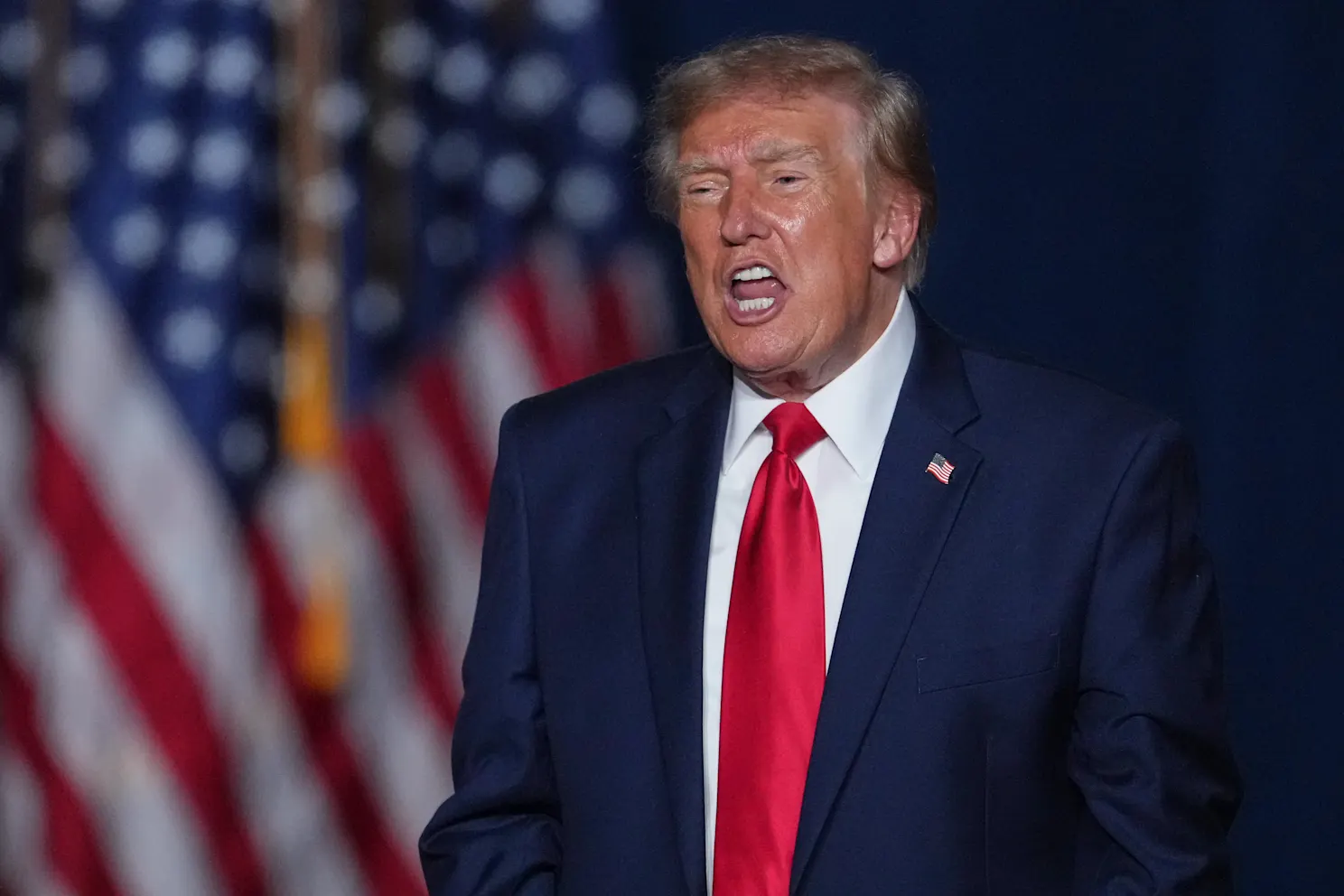
‘I should have won 8 Nobel Peace Prizes’: Trump seethes at award snub
President Donald Trump’s deep indignation at not receiving the Nobel Peace Prize boiled over late at night on Oct. 9, as he lashed out at the prize committee and disparaged the international jurist selected as this year’s laureate.
The U.S. president has long coveted the prize, which he says he deserves for his efforts to settle or prevent conflicts around the world. In a social media post expressing outrage at getting passed over yet again, Trump said his diplomatic accomplishments should make him more than worthy of the award.
“In actuality, I should have won 8 Nobel Peace Prizes, not just 1,” Trump wrote on his social media platform.
1. The Russian Diesel Deal: What Actually Happened?
On October 9, 2026, Trump announced an arrangement with Russian President Vladimir Putin to release substantial quantities of Russian diesel into American and international markets.
The US Treasury Department’s Office of Foreign Assets Control subsequently issued Russia-related General License 135, authorising specified transactions involving the sale, delivery, unloading and importation of Russian-origin diesel.
This official document is particularly important because it establishes that the administration took a concrete regulatory step rather than merely discussing a possible arrangement.
The announcement included phased supply commitments, beginning with an initial shipment of more than 300,000 tonnes, followed by additional quantities. However, announced commitments should not be confused with completed deliveries, and the precise commercial arrangements require independent verification.
The authorisation was also time-limited. Reporting indicated that the temporary relaxation of restrictions was intended to run until April 7, 2027.
The distinction is crucial: a specific licence permitting certain transactions does not automatically repeal every US sanction against Russia, nor does it establish that the US government directly purchased every announced shipment.
Nevertheless, the political significance is unmistakable. Washington, which had previously prohibited Russian petroleum imports as part of its response to the invasion of Ukraine, was now facilitating a route for Russian diesel to enter markets despite the continuing conflict.
The announcement immediately triggered criticism from American lawmakers, Ukrainian officials and observers concerned about the consequences for sanctions policy.
A bipartisan group of six US senators called on Trump to reverse course, arguing that the arrangement contradicted the purpose of measures intended to restrict Russia’s ability to finance its war.
The administration’s defenders, meanwhile, have presented the decision as a response to extraordinary energy-market pressures.
Both the economic justification and the strategic objections deserve examination.
Sources: US Treasury Department; Associated Press, October 2026.
2. From Sanctions to Supplies: Why Is Washington Changing Course?
Following Russia’s full-scale invasion of Ukraine in February 2022, the United States prohibited imports of Russian oil and certain petroleum products. The broader Western strategy sought to reduce Moscow’s energy revenues and increase the economic cost of its military campaign.
The rationale was straightforward: Russia should not be able to finance its war without facing significant economic consequences.
But sanctions have always involved a difficult balance between imposing costs on Russia and avoiding excessive disruption to international energy markets.
The Group of Seven’s oil price-cap mechanism, for example, was designed to restrict Russian revenue while allowing oil to continue flowing to global markets under specified conditions. Western policymakers recognised that abruptly removing large quantities of oil from international supply could raise prices and harm consumers worldwide.
The October 2026 diesel arrangement takes this tension into a new phase.
The administration’s stated justification is that additional supplies could help ease a severe global fuel shortage and reduce prices for American consumers. Diesel is essential to trucking, agriculture, construction, manufacturing and the transportation of goods. When diesel prices rise, the effects spread through food prices, freight costs and industrial production.
The current crisis has been aggravated by disruptions associated with the war involving Iran, shipping insecurity around the Strait of Hormuz and damage to energy infrastructure. The administration, therefore, has an understandable economic concern to address.
However, the timing raises a legitimate question: when sanctions against Russia conflict with domestic economic and political priorities, which objective takes precedence?
The United States is approaching congressional midterm elections in November 2026. Higher fuel prices are a politically sensitive issue, making the economic consequences of the war especially important to the administration.
That timing does not prove that the arrangement was motivated primarily by electoral considerations. Such a conclusion would require further evidence. But it makes transparency about the decision’s economic benefits and strategic costs all the more important.
If the exemption is temporary, narrowly defined and demonstrably beneficial, it may be defended as an emergency measure. If it substantially weakens sanctions without securing meaningful concessions from Moscow, the justification becomes much harder to sustain.
3. Will Russian Diesel Actually Lower Fuel Prices?
The political announcement must be separated from the economic reality.
A few hundred thousand tonnes of additional diesel cannot, by themselves, resolve a prolonged global fuel shortage. Even larger quantities would have to be assessed against the scale of international demand and the extent of supply disruptions.
Additional supplies can influence markets, and expectations about future deliveries may affect prices before the fuel arrives. But the ultimate impact depends on several variables:
- The amount of diesel actually delivered.
- The timing and reliability of shipments.
- The prices charged by suppliers.
- Transportation, insurance and distribution costs.
- The availability of competing supplies.
- The duration of disruptions affecting international energy markets.
Reporting by The Guardian on October 11, 2026, cited analysts who questioned whether the arrangement would significantly reduce American or global diesel prices.
The quantities announced may be insufficient to transform the market, particularly if shortages persist or transportation remains disrupted.
This creates an important test for the administration.
If the policy offers only modest consumer relief while producing substantial diplomatic and strategic costs, the public deserves a clear explanation of why it was considered worthwhile.
The reverse also deserves recognition: if additional supplies materially reduce prices and prevent economic harm, that benefit should not be dismissed simply because the fuel originates in Russia.
An evidence-based assessment must consider both sides.
The relevant question is not whether Russian diesel can ever be useful. It is whether this particular arrangement delivers enough economic benefit to justify its wider consequences.
4. The Ukraine Contradiction: Protecting Russian Refineries While Restricting Kyiv
The controversy becomes more serious when the diesel arrangement is examined alongside Trump’s demands that Ukraine stop attacking Russian oil refineries.
Ukrainian forces have conducted long-range attacks against Russian energy infrastructure during the war. Kyiv regards these operations as a means of reducing Russia’s capacity to finance and sustain its military campaign.
Russian petroleum exports generate revenue for the Russian state, while refined fuel also supports transport and logistics. Damage to refineries can therefore impose economic and operational costs on Moscow.
Trump has argued that Ukrainian attacks on Russian energy facilities worsen the global fuel shortage and contribute to higher prices.
There is an economic basis for the argument: damage to refining capacity can reduce the availability of petroleum products. But the military implications cannot be ignored.
Washington is simultaneously seeking additional Russian diesel supplies and pressing Ukraine to stop attacks that could diminish Russia’s ability to produce and export fuel.
This places two objectives in tension:
- Reducing Russia’s capacity to sustain its war against Ukraine.
- Increasing the availability of Russian diesel to ease pressure on energy markets.
These objectives are not necessarily impossible to reconcile. A negotiated agreement protecting essential energy infrastructure on both sides could reduce civilian suffering and help stabilise markets.
But the terms matter enormously.
If Ukraine is expected to stop attacking Russian refineries while Russia continues striking Ukrainian energy facilities, the arrangement could protect one side’s infrastructure without providing equivalent protection to the other.
On October 11, Trump announced an immediate energy ceasefire initiative. However, Ukrainian President Volodymyr Zelenskyy reported continuing Russian attacks on Ukrainian energy infrastructure and said Ukraine would halt attacks on Russian energy facilities if Russia reciprocated.
That position identifies the central test of the proposed ceasefire: reciprocity backed by verification.
A credible agreement should establish which facilities are protected, define prohibited attacks, create an independent monitoring mechanism and specify the consequences of violations.
Without these safeguards, an energy ceasefire could allow one side to repair its infrastructure and strengthen its position while leaving the other exposed.
Sources: Associated Press, October 11, 2026; Financial Times reporting on Ukrainian refinery strikes.
5. Intelligence Sharing and the Limits of What Can Be Proven
Another aspect of the controversy concerns American intelligence support for Ukraine.
The United States has provided Ukraine with intelligence and military assistance during the war. American intelligence cooperation has been an important element of Kyiv’s ability to defend itself against Russian attacks. However, three separate claims must be distinguished:
- The United States has provided intelligence assistance to Ukraine.
- Ukraine has attacked Russian oil refineries and related infrastructure.
- American intelligence was specifically used to select or execute particular refinery attacks.
The first two are established features of the broader conflict. The third requires evidence linking particular intelligence support to particular operations. Without reliable documentation, it would be premature to claim that Washington directly supplied targeting intelligence for every, or any specific, refinery strike simply because it supports Ukraine’s military effort.
Nevertheless, the policy contradiction remains relevant.
If Washington has supported Ukraine’s military campaign while subsequently demanding that Kyiv preserve Russian fuel-producing infrastructure, it must explain how these objectives fit together.
The United States has the right to reassess the conditions attached to its assistance. It may also conclude that certain operations risk unacceptable economic or diplomatic consequences.
But changes in policy should be explained clearly. Ukraine needs to understand whether American assistance is intended to support its defence, strengthen its negotiating position or constrain its military options to accommodate Washington’s wider energy and diplomatic priorities.
Uncertainty about the limits of intelligence cooperation can affect military planning, undermine trust and complicate negotiations.
6. Trump’s Pressure on Zelenskyy and Ukraine’s Political Sovereignty
The controversy extends beyond energy policy. Trump has criticised Zelenskyy’s leadership and suggested that Ukraine should choose a new president capable of reaching an agreement with Russia.
The administration’s reported willingness to threaten reductions in intelligence-sharing if Kyiv refused to heed American demands concerning refinery attacks adds another dimension to the dispute.
Washington has considerable leverage because American military assistance, intelligence cooperation and diplomatic backing remain important to Ukraine.
But leverage can be used in different ways.
It can encourage both parties to accept a monitored ceasefire and negotiate a durable settlement. Alternatively, it can pressure one party into concessions without securing comparable commitments from the other.
Zelenskyy’s political future is ultimately a matter for Ukraine’s constitutional institutions and electorate. Martial law complicates the scheduling of elections, but it does not transfer the authority to choose Ukraine’s leadership to Washington or Moscow.
Trump can criticise Zelenskyy, challenge his strategy and seek a different negotiating approach. Those are legitimate features of international politics. The more consequential question is whether Washington is applying comparable pressure to Moscow.
If Ukraine is repeatedly threatened with reduced assistance while Russia receives renewed commercial opportunities, the negotiating relationship risks becoming increasingly unbalanced.
A settlement reached under such conditions might temporarily halt hostilities without addressing the underlying security concerns that produced the war. The objective should not merely be to secure an agreement. It should be to create conditions in which both sides have credible reasons to honour it.
7. The Nobel Peace Prize Controversy: Achievement or Self-Assessment?
On October 9, 2026, the Norwegian Nobel Committee awarded the Nobel Peace Prize to South African jurist Navi Pillay for her work promoting peace and international law.
Trump publicly complained that he had not received the award and criticised the committee’s decision.
Pillay’s career has included service as a judge on international courts and as the United Nations High Commissioner for Human Rights. The Nobel Committee cited her contribution to international justice and the prosecution of war crimes, crimes against humanity and genocide.
The decision was announced amid continuing controversy over international legal institutions and the US administration’s opposition to the International Criminal Court.
Trump’s frustration raises a broader question about the relationship between political recognition and demonstrated diplomatic success.
A president may legitimately believe that his diplomatic initiatives deserve international recognition. Mediation can save lives, prevent escalation and open negotiations that would otherwise be impossible. But claiming credit for peace is not the same as establishing that a durable peace has been achieved. A serious assessment of diplomatic success should ask:
- Did the agreement end active hostilities?
- Were the parties’ obligations clear and enforceable?
- Were the commitments implemented?
- Did the arrangement protect civilians?
- Did it reduce the likelihood of renewed conflict?
- Did it address the causes of the dispute sufficiently to sustain peace?
These standards apply to every leader, irrespective of political ideology or nationality. The absence of a Nobel Prize does not prove that a president has accomplished nothing. Equally, a leader’s own list of claimed achievements cannot substitute for independent verification.
The Nobel Peace Prize is decided by the Norwegian Nobel Committee under its own criteria. It is not an entitlement that a government can establish through its own assessment of diplomatic performance.
Peace is not demonstrated by the number of agreements announced or the recognition a leader demands. It is demonstrated by whether the fighting stops, commitments are honoured and people can live without the continuing threat of war.
Sources: Norwegian Nobel Committee, 2026 announcement; Reuters, October 9, 2026.
8. Are There Historical Examples of Similar Contradictions?
The current controversy has historical parallels. Governments have repeatedly modified policies when economic realities, strategic interests, or domestic political pressures conflicted with their declared principles.
However, not every policy reversal constitutes hypocrisy. Some changes represent legitimate strategic reassessments. The important questions concern their purpose, transparency and consequences.
The United States and Russian Oil After 2022
The American response to Russia’s invasion of Ukraine provides the closest comparison. Washington prohibited Russian oil and certain petroleum-product imports in 2022. Yet the broader Western approach also recognised that abruptly removing Russian oil from global markets could produce damaging price increases.
The G7’s price-cap mechanism attempted to balance these competing objectives by restricting Russian revenue while allowing qualifying oil transactions to continue under specified conditions.
This demonstrates that Western sanctions have never been entirely separate from concerns about energy prices and market stability. The October 2026 diesel arrangement differs in its specific legal provisions and circumstances, but it raises the same underlying question: when does economic pragmatism begin to undermine the strategic objective of sanctions?
India’s Purchases of Russian Oil
India increased its purchases of discounted Russian crude after the invasion of Ukraine in 2022.
New Delhi defended its policy on the grounds of national interest, affordable energy and the need to protect its population from international price shocks. India also maintained longstanding commercial, diplomatic and defence relationships with Russia.
India’s situation is not identical to America’s. India had not adopted the same Russian-oil import ban as Washington, and its purchases were not equivalent to violating an identical domestic prohibition.
Nevertheless, the comparison illustrates a fundamental reality of international politics: countries do not necessarily accept the same economic costs or strategic priorities when responding to another state’s aggression.
India’s approach also demonstrates why Western pressure on third countries has sometimes encountered resistance.
The lesson is not that every country should follow India’s policy. It is that sanctions depend on international cooperation, and cooperation becomes difficult when participating countries believe the economic burden is distributed unfairly.
Europe’s Difficult Transition Away From Russian Energy
European countries faced significant challenges after 2022 because of their historical dependence on Russian energy. Reducing that dependence required alternative suppliers, new infrastructure, changes in industrial consumption and substantial commercial adjustments.
European governments had to balance solidarity with Ukraine against the risks of shortages, inflation and industrial disruption. This transition demonstrated that sanctions are not simple instruments of punishment. Their effectiveness depends on enforcement, international cooperation, alternative supplies and the willingness of governments to bear the costs.
It also showed why transparent explanations for exemptions matter. A clearly defined temporary measure may be defensible; an unexplained departure from declared policy can undermine public confidence.
Nixon’s Opening to China
In 1972, US President Richard Nixon visited the People’s Republic of China, opening a new phase in relations between two countries that had long been adversaries.
The shift was not inherently hypocritical. It reflected a strategic reassessment of the Cold War environment and the potential benefits of diplomatic engagement.
This example is important because it illustrates why a change in policy should not automatically be condemned.
Negotiating with an adversary, purchasing a commodity, or entering a limited agreement can sometimes advance peace and national security.
The relevant questions are whether the change serves a coherent long-term objective, whether it produces reciprocal concessions and whether it protects the country’s wider interests.
These are the standards by which Trump’s dealings with Putin should be assessed.
9. Can Other Countries Import Russian Oil and Petroleum Products?
Yes. Other countries can import Russian oil or petroleum products, but the applicable rules differ substantially.
The American diesel authorisation does not automatically grant every country an exemption from its own sanctions. Nor does the existence of US sanctions mean that every country is universally prohibited from purchasing Russian petroleum.
The legal position depends on the importing country’s laws, the product’s origin, the identities of the parties involved and the financial, shipping and insurance arrangements.
China and India
China and India have been major purchasers of Russian energy.
Their trade illustrates that Russian petroleum continues to reach international markets despite Western sanctions. However, individual transactions can still be affected by sanctions on particular companies, vessels, financial institutions or intermediaries.
Countries also face possible secondary measures or trade penalties under applicable laws and policies. The details matter.
Turkey
Turkey has maintained energy and commercial relationships with Russia. Particular transactions remain subject to applicable restrictions, and the legal treatment of a shipment can depend on its origin, counterparties and other circumstances.
The European Union and the United Kingdom
The EU and UK have imposed substantial restrictions on Russian-origin oil and petroleum products. The EU also prohibits certain petroleum products refined in third countries from Russian crude, subject to defined provisions and exceptions. The UK introduced similar restrictions on specified third-country processed oil products in May 2026. These measures are designed to prevent Russian crude from reaching restricted markets through indirect processing arrangements.
Sources: EU sanctions regulation; UK government guidance.
What About Pakistan?
Pakistan could explore Russian petroleum supplies, but commercial feasibility and legal compliance would need to be assessed separately.
The principal considerations include:
- Sanctions compliance: Whether the supplier, intermediaries, vessels and financial institutions are subject to applicable restrictions.
- Payment arrangements: Whether banks can legally and practically process the transactions.
- Shipping and insurance: Whether suitable shipping companies and insurers are willing and legally permitted to participate.
- Commercial viability: Whether the price remains competitive after freight, insurance, handling and other costs.
- Supply reliability: Whether Russia can deliver the required quantities consistently and on acceptable terms.
- Diplomatic and trade risks: Whether the arrangement could expose Pakistan to additional restrictions or affect other important economic relationships.
For a country that must manage foreign-exchange pressures and a substantial energy import bill, exploring alternative suppliers can be sensible. But a lower quoted price does not necessarily translate into lower total costs.
Pakistan should compare actual landed prices, payment terms, product specifications and supply reliability against competing offers before making a decision.
The central issue is not whether Pakistan should purchase Russian fuel simply because Washington has authorised specified transactions. It is whether the purchase serves Pakistan’s economic interests without creating disproportionate financial, legal or diplomatic risks.
10. The Double-Standard Question: Why Should America’s Economic Interests Be Different?
This is where the political controversy becomes particularly significant. Washington has previously pressed countries to reduce their dependence on Russian energy and has used diplomatic and economic leverage to influence their dealings with Moscow.
Yet the United States has now authorised specified Russian diesel transactions in response to energy-market pressures.
The exemption does not automatically make every other country’s purchase legal or illegal. Different countries operate under different sanctions regimes, and some restrictions concern particular entities, services, or financial transactions rather than a universal ban on all Russian petroleum trade.
Nevertheless, a legitimate question arises.
If Russian fuel becomes acceptable when American consumers face high prices, why should other countries’ energy-security concerns automatically be treated as less important?
The answer may involve differences in law, national security, trade agreements, or foreign-policy objectives. Those distinctions should be explained transparently.
There is also a distinction between applying different legal rules and applying inconsistent political standards.
A country may lawfully adopt a temporary exemption under its own legislation. But if it simultaneously pressures other countries to bear economic costs that it is no longer willing to bear itself, the credibility of its diplomatic argument can suffer.
The strongest criticism is therefore not that all countries must have identical energy policies. It is that governments should explain why their own exceptions are justified while respecting the legitimate interests of others.
For Pakistan, India and other energy-importing countries, this is a matter of practical importance. Energy security should be evaluated through reliable supplies, competitive prices, legal compliance and national economic benefit—not solely through pressure from powerful states.
11. Could the Deal Benefit Putin More Than American Consumers?
Russian petroleum exports generate income for producers and the Russian state. Expanding lawful export opportunities can therefore benefit Russia financially. But the scale of the benefit must be established rather than assumed.
The actual consequences will depend on how much diesel is delivered, the prices charged, taxation, production costs and the identities of the commercial beneficiaries.
Analysts cited by The Guardian on October 11 questioned whether the arrangement would significantly reduce fuel prices, while other reporting highlighted uncertainty over Russia’s ability to fulfil the announced supply commitments. The agreement may nevertheless have consequences beyond its immediate financial value.
By announcing a new arrangement with Putin, Trump has signalled that Russian energy trade can be facilitated when American economic priorities warrant it.
Other governments may interpret this as evidence that sanctions can be relaxed when their costs become politically difficult to sustain.
That interpretation could complicate efforts to maintain a unified international position on Russia’s invasion of Ukraine.
The risk is not necessarily that one diesel agreement will finance Russia’s entire war effort. It is that the inconsistent implementation may weaken the credibility of future sanctions threats.
The administration should therefore explain what conditions apply, how long the exemption will remain in force, how compliance will be monitored and what happens if Russia violates any associated commitments.
Economic benefits should be measured against strategic costs, not considered in isolation.
12. American Consumers, Ukrainian Security and the International Order
The Trump administration faces a genuine policy dilemma. Should an American president prioritise affordable fuel for domestic consumers if the measures used to achieve that objective also provide economic benefits to a country at war with a US partner?
There is no serious argument that governments should ignore their populations’ economic needs.
High diesel prices affect farmers, truck drivers, manufacturers, construction companies and consumers. Their consequences can spread through food prices, freight charges and industrial production.
But the choice is not necessarily between buying Russian diesel and allowing prices to rise without intervention.
Other options may include releasing strategic reserves, diversifying imports, improving supply-chain efficiency, negotiating with alternative suppliers and coordinating international measures to stabilise energy markets.
Each option has costs and limitations. Some may not deliver relief quickly enough to address an immediate shortage.
The appropriate comparison is therefore between realistic alternatives, not between an imperfect Russian supply arrangement and a hypothetical cost-free solution.
The administration should answer several questions:
- How much will the arrangement reduce prices?
- When will the additional fuel reach consumers?
- Is the exemption temporary or likely to be extended?
- What safeguards will prevent it from undermining wider sanctions?
- What reciprocal commitments, if any, will Russia make concerning Ukraine?
- How will the administration measure whether the policy has succeeded?
Without answers, claims that the agreement is either an economic masterstroke or a complete strategic disaster go beyond what the available evidence establishes.
13. What Would a Credible Peace Strategy Look Like?
A coherent strategy for ending the Russia-Ukraine war must connect military restraint, economic policy and diplomatic guarantees.
First, an energy ceasefire should be reciprocal. Both parties should understand which facilities are protected, what conduct is prohibited and how violations will be investigated.
Second, the agreement should include independent monitoring. Claims of attacks and violations should be assessed against verifiable evidence rather than political announcements alone.
Third, sanctions relief should be tied to clearly defined conditions where appropriate. If a government receives an economic concession in exchange for a security commitment, the agreement should specify what happens if that commitment is breached.
Fourth, Ukraine’s sovereignty and security must remain central to negotiations. A settlement imposed through pressure on Kyiv without adequate protection against renewed aggression risks postponing rather than resolving the conflict.
Fifth, economic policy should be transparent. If American consumers are expected to benefit from Russian diesel imports, the administration should publish enough information to assess the arrangement’s actual costs, quantities and results.
Finally, peace claims should be measured against implementation.
A ceasefire announcement is a beginning, not proof of a durable settlement. A diplomatic meeting is a process, not an outcome. A commercial agreement is an economic instrument, not evidence that a conflict has been resolved.
The credibility of any peace initiative depends on whether the parties honour their commitments after the announcement has passed from the headlines.
14. Conclusion: Policy Flexibility or Political Hypocrisy?
The October 2026 developments expose a clear tension between the Trump administration’s earlier emphasis on economic pressure against Russia and its new decision to facilitate specified Russian diesel transactions.
They also reveal a conflict between the administration’s immediate energy objectives and its demands that Ukraine halt attacks on Russian fuel infrastructure.
The Nobel Peace Prize controversy adds another question of accountability: whether personal claims about diplomatic success are being treated as a substitute for independently verifiable results.
Yet a responsible investigation must distinguish between contradiction, hypocrisy and illegality.
A policy change is not automatically hypocrisy. A temporary sanctions exemption may be defensible if it addresses a genuine emergency, is properly authorised and produces benefits that justify its costs.
Nor does negotiating with Putin necessarily mean abandoning Ukraine. Diplomacy often requires engagement with adversaries.
The stronger criticism concerns the conditions under which these policy changes are being made.
If Washington expects Ukraine to limit its military operations while providing Russia with renewed commercial opportunities, it must explain how those measures contribute to a durable and equitable peace.
If the arrangement is justified by lower fuel prices, the administration should demonstrate that the economic benefits are substantial enough to warrant the strategic costs.
If an energy ceasefire is the objective, both Russia and Ukraine should be held to clear, reciprocal and verifiable obligations.
And if a president claims exceptional success in making peace, that claim should be tested against actual outcomes rather than personal declarations.
History shows that governments frequently sacrifice consistency when economic or strategic interests change. The American approach to Russian oil, India’s energy purchases, Europe’s difficult energy transition and Nixon’s diplomatic opening to China all illustrate different versions of this tension.
But historical precedents do not eliminate the need for accountability.
The fundamental question is not whether a president has the right to change course. It is whether that change serves a clearly defined public interest, applies defensible and transparent standards, respects allies’ security, and produces results that withstand independent scrutiny.
That is the standard by which Trump’s Russian diesel arrangement, his pressure on Ukraine and his claims about peace should be judged.
For Pakistan and other energy-importing countries, the lesson is equally important: national energy policy should be based on economic realities, legal compliance and strategic independence, not merely on the preferences of more powerful governments.
Frequently Asked Questions (FAQs)
1. Has Donald Trump authorised Russian diesel imports into the United States?
Yes. On October 9, 2026, the US Treasury Department issued General License 135, authorising specified transactions involving Russian-origin diesel. The licence establishes a regulatory authorisation, but announced supply commitments should not be confused with completed deliveries or proof that the federal government directly purchased all the fuel.
2. Why is Trump asking Ukraine to stop attacking Russian oil refineries?
Trump has argued that Ukrainian attacks on Russian energy infrastructure worsen the global fuel shortage and contribute to higher prices. Ukraine considers Russian energy infrastructure relevant to Moscow’s war effort. A reciprocal, monitored agreement that protects essential energy infrastructure on both sides would differ from a one-sided restriction on Ukrainian operations.
3. Can other countries import Russian oil and petroleum products?
Yes, depending on their domestic laws, applicable sanctions and the details of each transaction. China and India have been major buyers of Russian energy, while the EU and UK maintain extensive restrictions on Russian-origin oil and petroleum products. The American diesel licence does not automatically grant other countries an exemption from their own restrictions.
4. Can Pakistan buy Russian diesel?
Pakistan can explore the possibility, but it must assess sanctions compliance, payment channels, shipping, insurance, product specifications, supply reliability and total landed costs. A lower quoted price does not necessarily mean a cheaper or safer transaction. Pakistan should compare actual offers and obtain appropriate legal and commercial advice before committing.
5. Could the Russian diesel arrangement help finance Russia’s war against Ukraine?
Potentially. Russian petroleum exports generate income for producers and the state, but the actual financial impact depends on the quantities delivered, prices, taxation and commercial arrangements. The strategic concern also extends beyond immediate revenue: inconsistent sanctions enforcement could weaken the credibility of future economic pressure on Moscow.
6. Does Trump’s failure to receive the Nobel Peace Prize prove that his diplomatic efforts have failed?
No. Not receiving the award does not establish that every diplomatic initiative was unsuccessful, just as receiving it does not guarantee that every conflict has been permanently resolved. Diplomatic achievements should be assessed by whether agreements were implemented, hostilities ended, civilians were protected and the resulting peace proved durable.
References and Further Reading
- US Department of the Treasury — Russia-Related General License 135, October 9, 2026. Official documentation authorising specified transactions involving Russian-origin diesel.
https://ofac.treasury.gov/recent-actions/20261009_33 - Associated Press — Six Senators Call for Trump Administration to Reverse Course on Russian Diesel Plan, October 2026. Reports on bipartisan criticism, the sanctions controversy and questions about the agreement’s legality.
https://apnews.com/article/93fa63c8a88e538f1456e7d448fc550d - Associated Press — Trump Says Russia and Ukraine Agree to an Energy Ceasefire but Kyiv Says Attacks Continue, October 11, 2026. Covers the ceasefire announcement and Ukraine’s demand for reciprocal action.
https://apnews.com/article/f621fa788196f204448e7f75fcc78c68 - The Guardian — Trump’s Diesel Deal with Putin Will Have Little Impact on US Prices, Experts Say, October 11, 2026. Examines doubts about the arrangement’s potential economic effects.
https://www.theguardian.com/us-news/2026/oct/11/trump-russia-diesel-deal-putin-little-impact-prices - Reuters — US Russia Sanctions Bill Eases Threat of Tariffs on China and India, July 14, 2026. Provides context on proposed penalties and the complications surrounding third-country purchases of Russian energy.
https://www.reuters.com/world/us-russia-sanctions-bill-eases-threat-tariffs-china-india-2026-07-14/ - Council of the European Union — EU Sanctions Regulation, consolidated text, April 2026. Official legal text concerning restrictions on Russian oil and specified petroleum products processed in third countries.
https://eur-lex.europa.eu/eli/reg/2014/833/2026-04-24 - UK Government — Guidance on Third-Country Processed Oil Product Measures, updated June 12, 2026. Explains restrictions on specified products processed from Russian crude in third countries.
https://www.gov.uk/government/publications/notice-to-importers-2953-russia-import-sanctions/guidance-on-third-country-processed-oil-product-measures - Norwegian Nobel Committee — Nobel Peace Prize for 2026, October 9, 2026. Official announcement and explanation of Navi Pillay’s award.
https://www.nobelpeaceprize.org/press/press-releases/nobel-peace-prize-for-2026 - Reuters — Former ICC Judge Navi Pillay Wins 2026 Nobel Peace Prize, October 9, 2026. Reports on the award, Pillay’s legal career and reactions from political leaders.
https://www.reuters.com/world/navanethem-navi-pillay-wins-2026-nobel-peace-prize-2026-10-09/ - Associated Press — Trump’s Russian Diesel Deal and the Political Controversy, October 2026. Additional reporting on the administration’s decision and criticism from lawmakers and Ukraine.
https://apnews.com/article/93fa63c8a88e538f1456e7d448fc550d
Author: Maj Hamid Mahmood (Retired), MA Political Science, LLB, PGD (HRM). His military background, political science and legal education inform analysis of international conflicts, security affairs, political developments and the human consequences of war.
Editorial note: This article distinguishes official legal authorisations, announced commitments, reported statements, expert assessments and analytical conclusions. The exact quantities delivered under the diesel arrangement, its full commercial terms and any links between specific intelligence assistance and individual Ukrainian attacks require independent verification. Sanctions rules also differ between jurisdictions and can change; the applicable law should be checked before any commercial transaction.