The Future Is Faster Than You Think: Who Gets to Benefit?
The Future Is Faster Than You Think: Who Gets to Benefit?
Technology is advancing rapidly, but the future will not arrive equally. Explore AI, robotics, healthcare, jobs, developing countries, inequality and the human choices that will shape tomorrow.
The Future Is Faster Than You Think: Who Gets to Benefit?
The Future Is Faster Than You Think: Technology is moving faster than most people realise. Artificial intelligence can write, translate, analyse images and assist with complex work. Robots are moving beyond factories. Autonomous vehicles are entering real cities. Biotechnology is becoming increasingly precise. Renewable energy is expanding at remarkable speed.
The Future Is Faster Than You Think: Who Gets to Benefit?
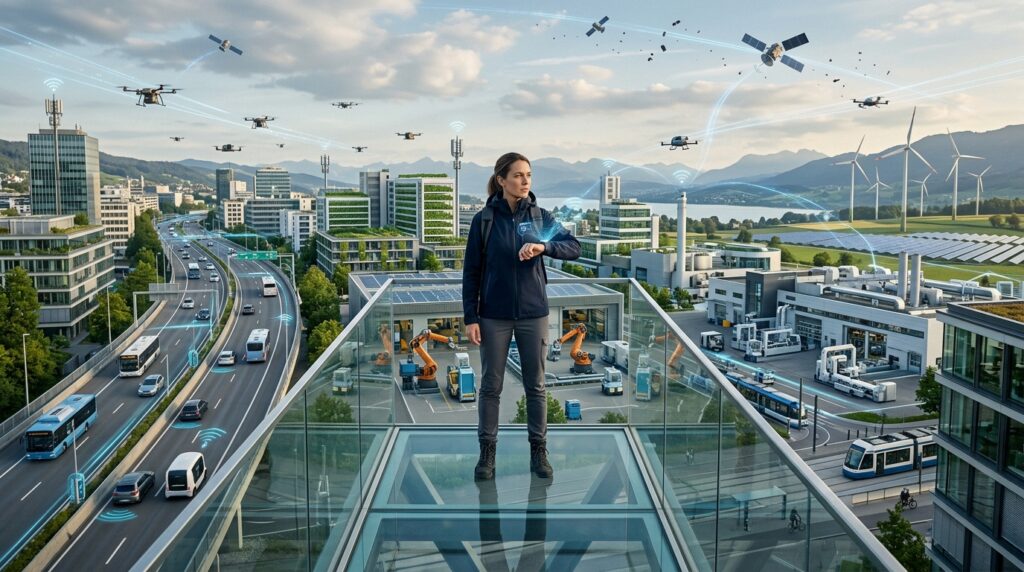
Put these technologies together, and something bigger happens. They begin to converge. That convergence could transform how we work, travel, learn, eat, communicate and treat disease. But there is a question that futuristic predictions often overlook:
What happens to people and countries that cannot afford the future?
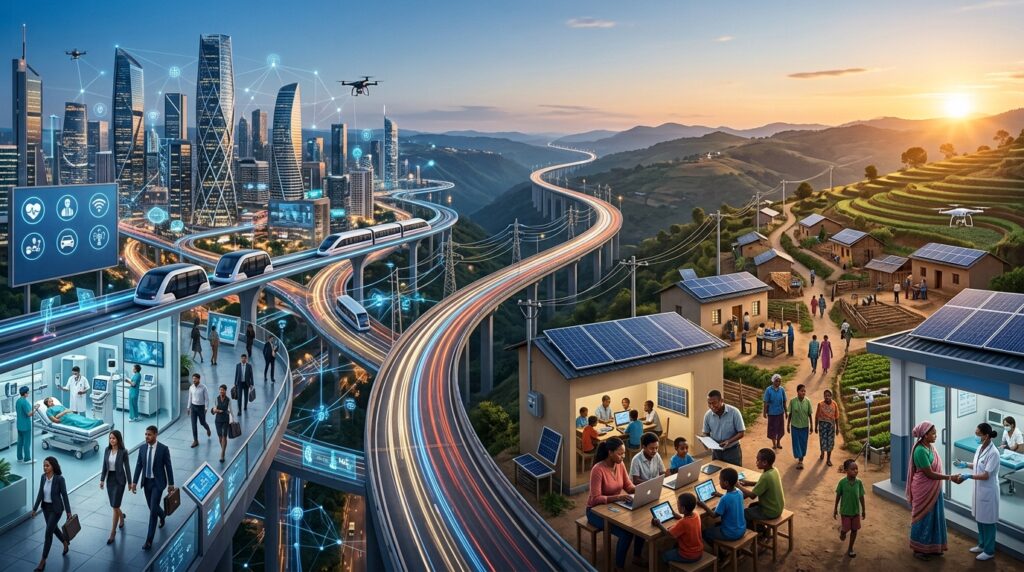
That question matters. Because technological progress is not automatically social progress. For someone living in a highly connected city, the future may mean an AI assistant, a robotaxi and personalised healthcare.
For someone living in a poor rural community, the biggest technological breakthrough may simply be reliable electricity, affordable internet or access to a doctor. The future may be arriving faster than we think. But it is not arriving at the same speed for everyone.
The Future is Faster Than You Think by Peter Diamandis and Steven Kotler is the third installment of their Exponential Technology trilogy. Abundance and Bold are the first two books in the trilogy. The underlying theme for the three books is the world is substantially better than you think.
The Future is Faster Than You Think is about the rapid pace of technological advancement. And its implications for the future of society, economy, and daily life. Convergence of technologies, such as artificial intelligence, robotics, virtual reality, digital biology, and sensors is speeding up progress exponentially. This leads to changes that are happening at a faster rate than most people realize.
What Does “The Future Is Faster Than You Think” Mean?
The phrase comes from the idea that technological change often accelerates when different technologies begin working together. Consider your smartphone. It combines a computer, camera, GPS, internet connection, sensors, payment system and software platform in one small device. None of those inventions alone created the smartphone revolution.
Their combination did.
The same pattern is now happening with artificial intelligence, robotics, biotechnology, advanced manufacturing, energy and digital networks. A technology that once seemed limited can become much more powerful when connected to another technology. That is the real story behind technological convergence.
Technology Does Not Move in a Straight Line
Humans tend to think linearly. If something improves 10 per cent today, we expect another 10 per cent tomorrow. Technology can behave differently. A technology improves.
Its price falls.
More people adopt it.
More users create more data.
More data improves the technology.
The improved technology attracts even more users.
Suddenly, progress begins to accelerate.
This does not mean every futuristic prediction will become reality. It means we should be careful about assuming that tomorrow will look like today.
The Future Is Faster Than You Think: Who Gets to Benefit?
Artificial Intelligence Is Becoming the Intelligence Layer
Artificial intelligence may be the most important part of this technological convergence. AI is no longer simply a chatbot that answers questions.
It can analyse enormous amounts of information, recognise patterns, generate content, assist programmers, interpret images and support decision-making.
More importantly, AI can connect with other technologies. A robot needs software to understand its surroundings.
An autonomous vehicle needs AI to interpret cameras and sensors.
A medical system can use AI to examine complex images.
An agricultural platform can use AI to analyse weather, soil and crop information.
This makes AI less like one individual invention and more like an intelligence layer that can sit on top of many other systems.
Stanford’s 2026 AI Index reports continued rapid progress in AI capabilities and highlights the growing importance of AI’s economic, social and governance effects.
What happens when AI is connected to the physical world?
AI connected to a robot can act.
AI connected to a vehicle can navigate.
AI connected to medical systems can assist diagnosis.
AI connected to agricultural equipment can influence how crops are grown.
AI connected to education can personalise learning.
That is where technological change becomes much more consequential.
Robots Are Moving Beyond the Factory
Robots have existed for decades.
But traditional industrial robots usually operated in controlled environments.
They performed repetitive tasks.
Modern robotics is different.
Better sensors, computer vision, machine learning and AI are helping robots operate in increasingly complicated environments. The International Federation of Robotics reported more than 540,000 industrial robot installations globally in 2024.
The bigger story is not that robots are becoming more human-like. It is that machines are becoming better at perceiving and responding to the physical world.
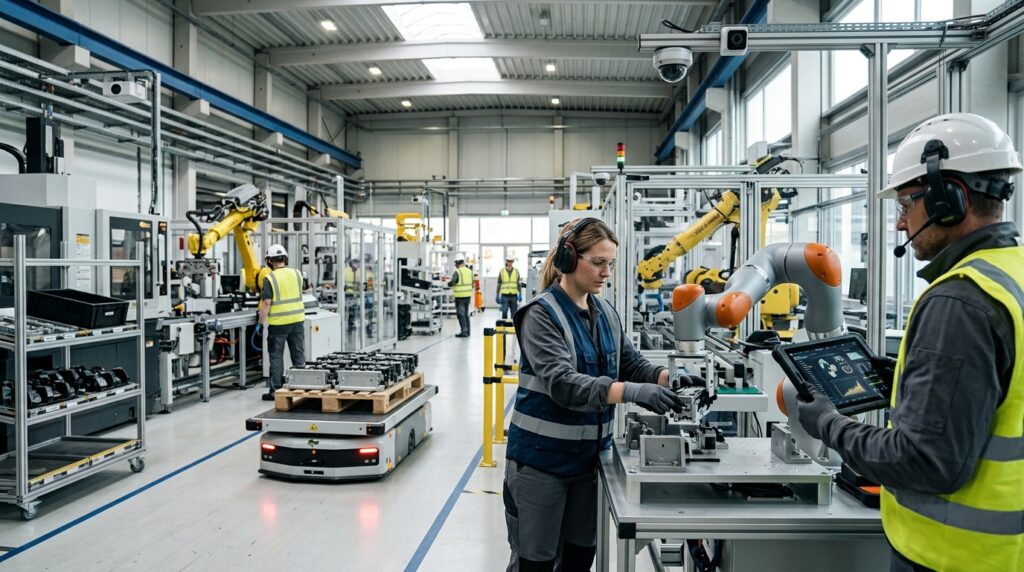
A Factory May Look Very Different
Imagine entering a factory ten years from now.
A worker may supervise several robotic systems.
AI may monitor production.
Sensors may detect a machine that is about to fail.
Software may automatically adjust production.
Instead of humans spending their time performing repetitive tasks, they may spend more time managing, troubleshooting and making decisions. That does not necessarily mean fewer humans. It means different human roles.
Humans Working With Robots
Will Artificial Intelligence Replace Human Jobs?
This is one of the biggest questions surrounding the future of technology.
The simple answer is:
Some jobs will disappear, some will change, and new jobs will emerge.
But the more useful way to think about AI and employment is through tasks.
A profession may survive while many tasks inside it become automated.
Consider an accountant.
An accountant may once have spent hours entering data and preparing routine reports.
AI can now automate parts of that process.
The accountant may then spend more time reviewing unusual transactions, advising clients and making decisions.
The job has not necessarily disappeared.
The job has changed.
The same pattern could affect teachers, lawyers, programmers, designers, doctors, marketers and many other professionals.
The Skills That May Become More Valuable
As machines become better at routine information processing, some human abilities may become more important.
These include:
judgment
creativity
communication
leadership
empathy
critical thinking
problem-solving
relationship building
The irony is fascinating.
The smarter machines become, the more valuable good human judgment may become.
Autonomous Vehicles Are Becoming Real
For years, driverless cars seemed permanently stuck in the future.
That is changing.
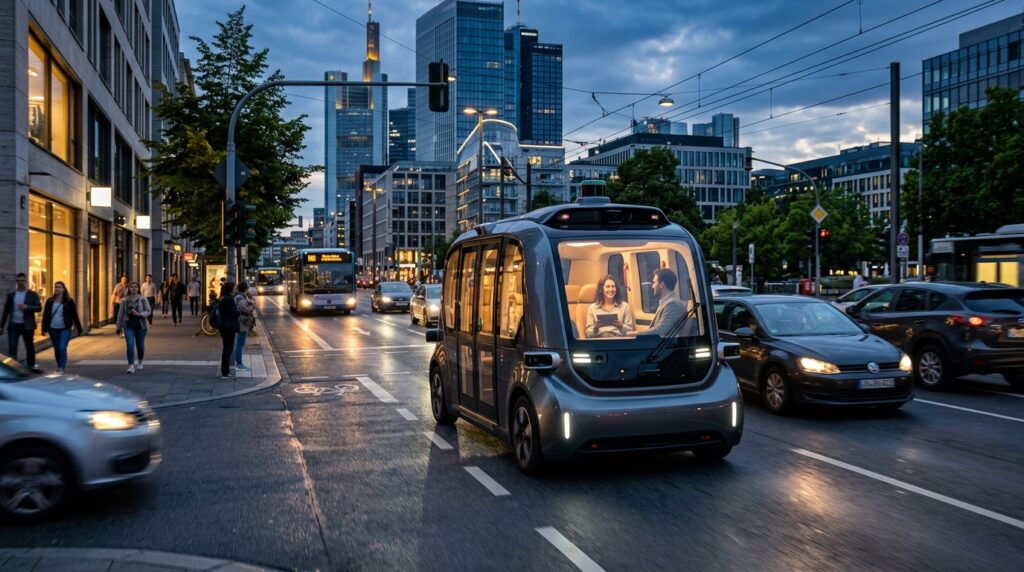
Autonomous ride-hailing services are now operating commercially in multiple locations.
Waymo announced further expansion of its autonomous ride-hailing operations in 2026.
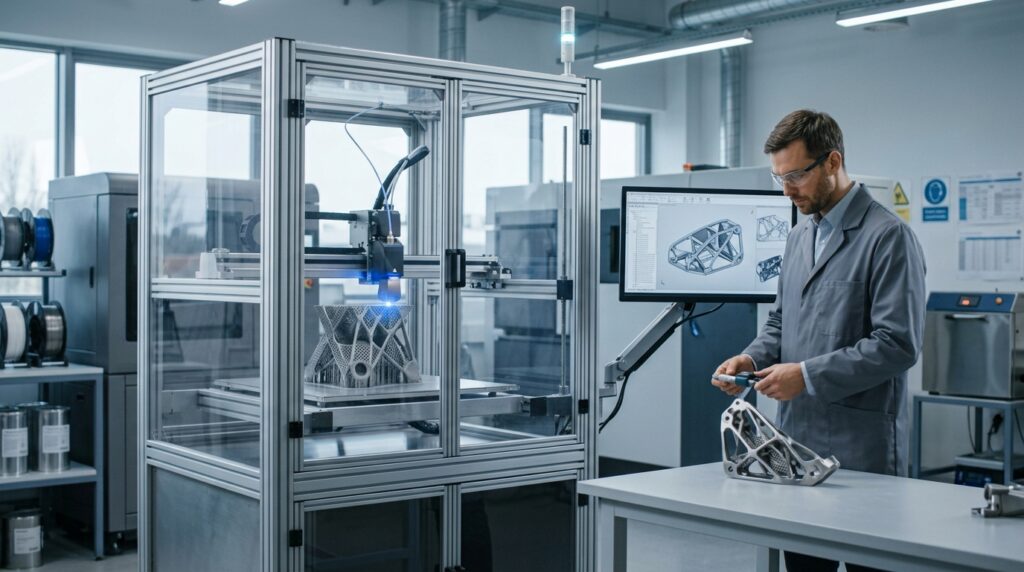
Imagine a replacement component needed in a remote location.
Instead of shipping the part from another country, an approved digital design could potentially be manufactured closer to where it is needed.
That could reduce certain forms of inventory and transportation.
The factory of the future may therefore become increasingly digital.
3D Printing Could Change Manufacturing
Agriculture Could Become More Intelligent
Technology could also transform something much older than the internet:
farming.
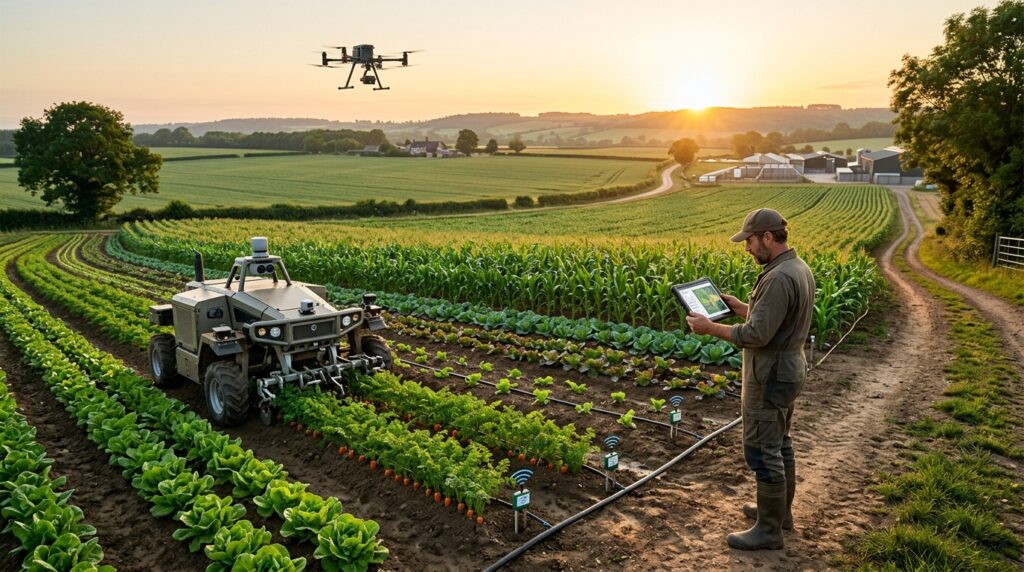
Imagine a farm where:
Satellites monitor crops.
Drones identify stressed plants.
Sensors measure soil moisture.
AI studies weather patterns.
Automated systems deliver water precisely.
Farmers receive market information through smartphones.
The goal is not to replace farmers.
It is to help them make better decisions.
That could become especially important as water scarcity, climate change and population growth put pressure on food systems.
Farmer_using_tablet_on_farm_
Renewable Energy Could Power the Next Technology Wave
Every technological revolution needs energy.
AI data centres need electricity.
Electric vehicles need electricity.
Factories need electricity.
Homes need electricity.
The growth of renewable energy therefore matters far beyond environmental policy.
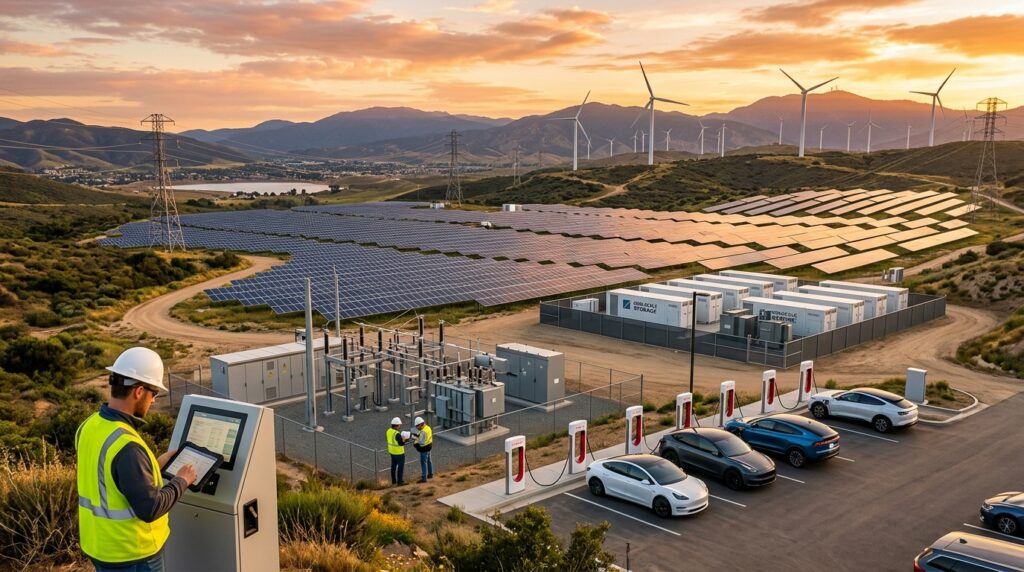
The International Energy Agency expects renewable power capacity to expand substantially through 2030, with solar accounting for the majority of projected additions.
Advanced healthcare requires expensive equipment and trained specialists.
So what happens to countries that cannot afford these things?
The answer cannot simply be:
“They will catch up eventually.”
That assumption is dangerous.
The Future Does Not Arrive at the Same Speed Everywhere
Consider two people.
One lives in a wealthy technology hub.
They have fast internet, a modern smartphone, access to AI tools and a healthcare system filled with advanced equipment.
Another person lives in a remote rural community.
Their biggest problem may be unreliable electricity.
The first person may be asking:
“Which AI model should I use?”
The second may be asking:
“Will I have electricity tonight?”
That difference is impossible to ignore.
The International Telecommunication Union estimated that around 6 billion people were online in 2025, while about 2.2 billion remained offline.
The gap becomes even more striking by income level. Internet use reached about 94 percent in high-income countries but only 23 per cent in low-income countries.
The biggest danger is not that poor countries fail to invent the next AI system.
The bigger danger is that wealthy countries become dramatically more productive while poorer countries remain dependent on low-cost labour and commodity exports.
Imagine two factories.
Factory A uses AI, robotics and advanced automation.
Factory B relies heavily on manual labour.
If Factory A can produce far more goods at lower cost, Factory B faces a serious competitive problem.
This matters because manufacturing has historically provided an important pathway for economic development.
Advanced automation could make that pathway harder.
That is why AI is not only a technology issue.
It is also a development issue.
But Technology Could Create a New Opportunity
There is another possibility.
A young person in Pakistan, Kenya, Nigeria, Bangladesh or another developing country may not need to physically move to a wealthy country to participate in the digital economy.
With:
reliable internet
a laptop
digital skills
language ability
AI tools
they may be able to serve customers around the world.
A designer can work internationally.
A programmer can work remotely.
A teacher can reach students abroad.
A small business can sell to foreign customers.
AI can reduce language and technical barriers even further.
This creates a fascinating possibility:
The location of talent may become less important than the ability to connect talent with opportunity.
What Developing Countries Should Do
Developing countries do not need to compete with every advanced economy in every field.
They need to focus on technologies that solve their most urgent problems.
Agriculture
Use AI, satellites, sensors and digital markets to improve productivity and water management.
Healthcare
Use telemedicine and AI-assisted tools to extend medical expertise into underserved areas.
Education
Use affordable digital learning and AI tutoring where qualified teachers are scarce.
Energy
Expand decentralised solar and battery systems where traditional grid expansion is difficult.
Finance
Use mobile banking and digital payments to reach people without traditional bank branches.
Government
Digitise public services to reduce paperwork, delays and unnecessary travel.
The objective should not be:
“Build the most futuristic country.”
The objective should be:
“Use the best available technology to solve the biggest problems.”
That is a much more meaningful definition of innovation.
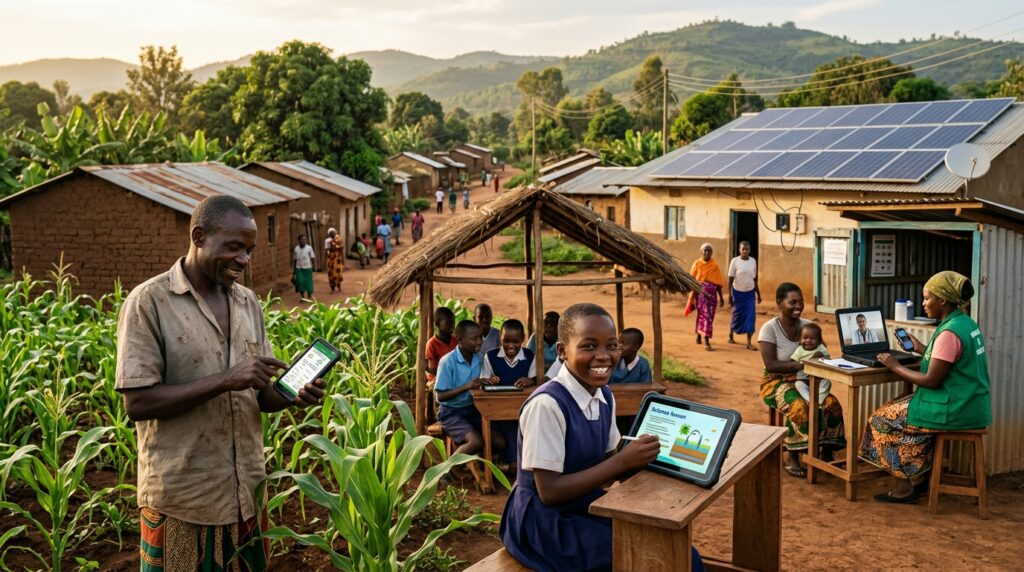
Technology Solving Real Problems
Technology Does Not Automatically Create Equality
This is perhaps the most important warning in the entire discussion.
A technology can become more powerful while remaining inaccessible to billions of people.
AI does not help a school without electricity.
An advanced medical device does not help a patient who cannot reach a hospital.
A robot does not help a factory that cannot afford it.
A digital service does not help someone who has no reliable internet.
Technological progress can reduce one form of scarcity while creating another.
UNDP has warned that AI could widen development gaps if countries begin the AI transition from dramatically different positions in infrastructure, skills, computing capacity and institutions.
Developing countries face an even larger challenge.
They need to build the foundations that allow their people to participate in the digital economy.
That means:
electricity
broadband
affordable devices
digital skills
education
research
local innovation
effective institutions
Technology cannot replace these foundations.
It depends on them.
The Real Test of Technological Progress
We often measure technological progress by asking:
How powerful is the new technology?
Perhaps we should ask another question:
How many people can benefit from it?
A highly expensive medical system serving a few wealthy patients is impressive.
An inexpensive diagnostic tool serving thousands of underserved patients may have greater social value.
A sophisticated humanoid robot is fascinating.
A low-cost agricultural sensor that helps thousands of farmers conserve water may be more transformative.
The most advanced technology is not always the most important technology.
Sometimes the greatest innovation is the one that solves the largest problem at the lowest cost.
The Future Could Be a Story of Leapfrogging
A country does not have to repeat another country’s entire technological history.
A community without traditional banking can adopt mobile payments.
A village without a large electricity grid can use solar power and batteries.
A student without a specialist teacher can access digital education.
A patient without a nearby specialist can potentially access telemedicine.
A farmer without a research centre can receive digital agricultural advice.
This does not eliminate poverty.
But it can change the cost and geography of opportunity.
That could become one of the most important effects of technological convergence.
The Future Is Not Only About Rich Countries
Technological inequality also exists within wealthy countries.
One family may have:
fast internet
multiple computers
AI subscriptions
excellent healthcare
high-quality education
Another family in the same country may struggle with:
internet costs
housing
healthcare
education
access to technology
The divide is therefore not simply between developed and developing countries.
It can exist between neighbourhoods.
Between schools.
Between families.
Between workers.
The future may increasingly divide people by access, skills and opportunity.
The Biggest Lesson
The biggest lesson is not that every prediction about the future will come true.
It is that technologies become dramatically more powerful when they converge.
AI becomes more useful when connected to robotics.
Robotics becomes more capable when connected to AI.
Healthcare becomes more precise when biology meets computing.
Manufacturing becomes more flexible when digital design meets 3D printing.
Agriculture becomes more efficient when sensors, satellites and AI work together.
Energy becomes more important as computing expands.
Everything begins to connect.
But there is one more lesson we should add.
Technological convergence must eventually become human convergence.
The benefits cannot remain concentrated in a handful of companies, cities or wealthy countries.
The Future Will Not Arrive Equally
A person living in a highly connected technology hub may experience the future very differently from someone living in a remote village.
One may have an AI assistant.
The other may lack reliable electricity.
One may use autonomous transportation.
The other may struggle to reach a hospital.
One may have personalised medical care.
The other may lack a doctor.
One may have an AI tutor.
The other may lack a qualified teacher.
That is why the most important question is not simply:
“Is the future arriving faster?”
It is:
“Faster for whom?”
The Future Must Be Inclusive
The technological revolution should not be judged only by the sophistication of its machines.
It should also be judged by ordinary human outcomes.
Can a farmer produce more food with less water?
Can a child in a remote village access better education?
Can a patient in an underserved community reach medical expertise?
Can a small business sell to international customers?
Can a young person earn a decent living without leaving home?
Can a family access reliable electricity?
Can people use technology without sacrificing their privacy?
These are the questions that turn technological progress into human progress.
Final Verdict: Is the Future Really Faster Than We Think?
Yes, but not in the simple way futuristic headlines suggest.
AI, robotics, autonomous vehicles, biotechnology, advanced manufacturing and renewable energy are already changing the world.
Some developments are arriving remarkably quickly.
Others will take longer.
Some predictions will fail.
That is normal.
The important lesson is not to believe every futuristic prediction.
It is to recognise that several powerful technologies are developing at the same time and increasingly reinforcing one another.
That can accelerate change.
But technology alone does not determine the future.
Infrastructure matters.
Education matters.
Economics matters.
Government matters.
Culture matters.
Human choices matter.
And above all, access matters.
The future may be faster than we think.
But it will not automatically be fairer.
It could reduce inequality.
Or it could deepen it.
It could give a rural student access to knowledge that was once available only in elite universities.
It could give a small farmer tools once available only to large agricultural companies.
It could give a remote patient access to medical expertise.
Or it could concentrate wealth, computing power and opportunity in a small number of countries and corporations.
The outcome is not predetermined.
That is why the most important question is not:
“What will technology do to us?”
It is:
“What will we choose to do with technology?”
And perhaps the most important question of all is even simpler:
The future may arrive faster than we think—but will everyone get to enter it?
Frequently Asked Questions
What is technological convergence?
Technological convergence occurs when different technologies begin working together and create capabilities that would be difficult for any one technology to provide alone. AI, robotics, sensors, biotechnology and advanced manufacturing are good examples.
Will AI replace most human jobs?
AI will probably automate many tasks, but that does not mean every profession will disappear. Some jobs will shrink, others will change, and new roles will emerge. Human judgment, creativity, empathy and leadership may become increasingly valuable.
How will AI affect developing countries?
AI could create major opportunities in education, agriculture, healthcare, finance and small business. However, countries without reliable electricity, broadband, computing resources and digital skills risk falling further behind.
Can poor countries leapfrog older technologies?
Yes. Mobile banking and digital payments show how developing countries can sometimes bypass expensive traditional infrastructure. Similar leapfrogging may occur through telemedicine, digital education, distributed renewable energy and AI-powered services.
Will technology increase global inequality?
It could. If advanced technologies remain concentrated among wealthy countries, companies and individuals, productivity and wealth gaps may increase. However, affordable technology, education, digital infrastructure and good policy could help spread its benefits more widely.
What is the biggest challenge created by rapid technological change?
The biggest challenge may be keeping human institutions ahead of technological disruption. Education, regulation, privacy protection, worker retraining, cybersecurity and global access all need to evolve alongside technology.