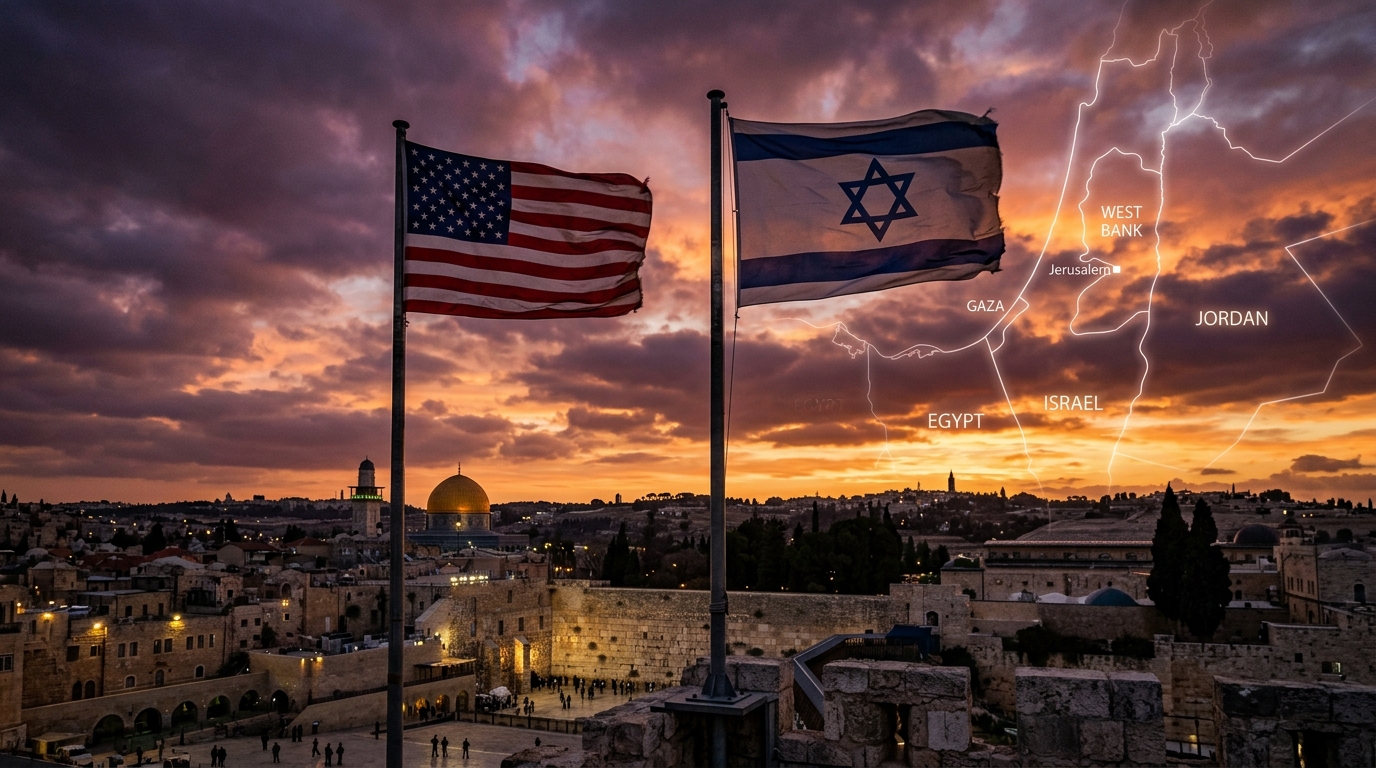

Why America Supports Israel: History, Politics, and a Changing Public Opinion
Every Great Alliance Has a Story
Why America Supports Israel: It is a question that has become louder than ever. Every new conflict in the Middle East brings fresh debates. Some Americans believe Israel is America’s most trusted ally. Others ask whether Washington should continue offering military and diplomatic support without conditions.
https://mrpo.pk/who-really-built-israel/
The discussion is no longer limited to politicians and foreign policy experts. College students, veterans, business leaders, journalists, and ordinary families are all asking difficult questions.
The relationship between the United States and Israel is one of the strongest and longest-lasting alliances in modern history. It has survived changes in presidents, political parties, wars, and peace negotiations. Yet today, that alliance faces new challenges as public opinion begins to shift.
To understand today’s debate, we must first understand how this partnership began.
Why is the US unequivocal in its support for Israel?
With Israel attacking Gaza for a second week, United States President Joe Biden and his administration are sticking to a long-established script in Washington, expressing unequivocal support for Israel and its “legitimate right to defend itself” from Hamas rocket attacks.
That narrative fails to acknowledge the profound advantages the state of Israel enjoys over the Palestinians when it comes to military prowess, wealth and resources. It also turns a deaf ear to growing cries from progressive Democrats in Congress to take a harder line with Israel over its military assault on Gaza.
Purpose of This Article
This article explains the history of U.S.–Israel relations in simple language. It explores why America became Israel’s closest ally, what both countries gain from the partnership, why public opinion is changing, and what the future may hold. Rather than taking sides, the goal is to present historical facts, different viewpoints, and recent developments so readers can better understand one of the world’s most important geopolitical relationships.
The Birth of a Historic Alliance
America’s Recognition of Israel
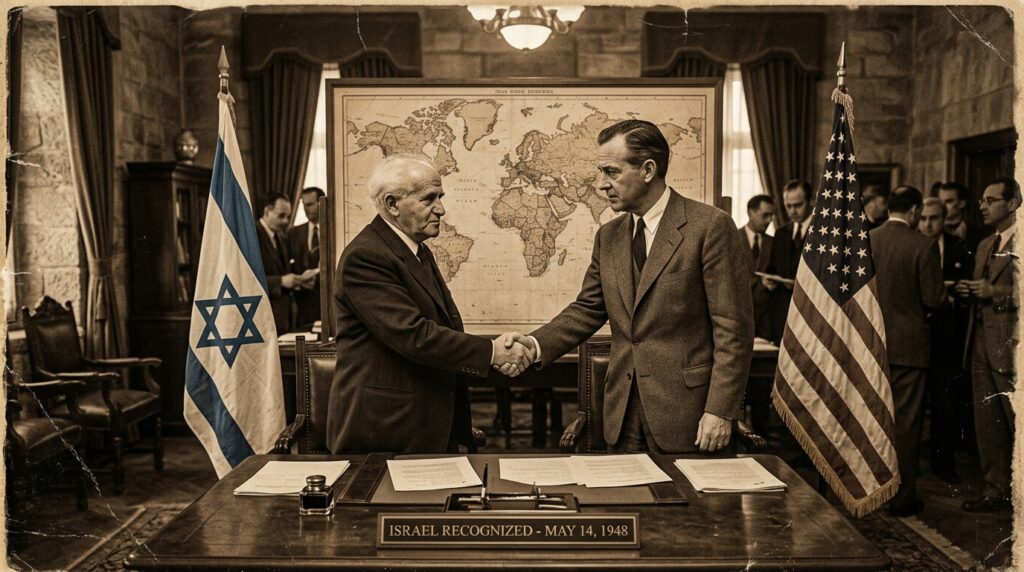
The modern State of Israel was established on May 14, 1948. Within minutes of Israel declaring independence, the United States became the first country to officially recognise the new nation. President Harry S. Truman believed that recognisin Israel was both a humanitarian and strategic decision.
The world had just witnessed the horrors of the Holocaust during World War II. Millions of Jewish people had been murdered by Nazi Germany. Many Americans believed Jewish survivors deserved a safe homeland where they could rebuild their lives. That early recognition laid the foundation for a partnership that would grow stronger over the next seven decades.
The Cold War Changed Everything
During the 1950s and 1960s, the Middle East became an important battleground in the Cold War between the United States and the Soviet Union. Washington wanted reliable partners in the region to counter Soviet influence.
Israel increasingly proved to be one of America’s most dependable allies. Unlike many governments in the region that experienced coups or political instability, Israel maintained democratic institutions and developed a capable military. As regional conflicts increased, American leaders began viewing Israel not only as a humanitarian partner but also as an important strategic asset. This shift transformed the relationship from diplomatic friendship into a long-term security alliance.
A Relationship That Continues to Evolve
For decades, support for Israel enjoyed broad bipartisan agreement in Washington. Republican and Democratic presidents alike viewed Israel as one of America’s closest allies. Yet no alliance remains unchanged forever. Regional conflicts, changing generations, economic pressures, and evolving public opinion are now reshaping how many Americans think about U.S.–Israel relations.
The questions being asked today are not simply whether America should support Israel, but how that support should look in the future, what conditions, if any, should accompany it, and how the United States can balance security interests with humanitarian concerns.
Those questions have become some of the most important foreign policy debates of the twenty-first century.
Why America Supports Israel: Military Cooperation: The Backbone of the Alliance
While history and shared values helped build the relationship, military cooperation turned the United States and Israel into strategic partners. Over the years, the two countries have developed one of the closest defence partnerships in the world. The United States provides Israel with military assistance approved by Congress, while Israel shares intelligence, develops advanced defence technologies, and serves as a close security partner in a region that has experienced repeated conflicts.
Supporters argue that this partnership helps deter common threats, improves military readiness, and protects American interests in the Middle East.
Critics, however, question whether continued military aid should be tied to stronger human rights conditions and greater diplomatic efforts to reduce conflict.
The debate is no longer about whether the alliance exists—it is about how it should evolve.
Intelligence Sharing Saves Lives
One of the least visible but most important parts of the relationship is intelligence cooperation. American and Israeli intelligence agencies work together on issues such as:
- Counterterrorism
- Cybersecurity
- Nuclear proliferation
- Missile development
- Regional militant groups
- Emerging security threats
Both governments argue that sharing intelligence has helped prevent attacks and improved the security of both countries. Because intelligence operations are highly classified, much of this cooperation remains unknown to the public.
Economic and Trade Relations
The U.S.–Israel partnership extends far beyond military affairs. The two countries enjoy strong economic ties through trade, investment, and technological cooperation. American companies have invested billions of dollars in Israeli technology, while Israeli startups have become important partners in fields such as:
Artificial Intelligence
Israeli engineers and American technology companies often collaborate on AI research and software development.
Cybersecurity
Many cybersecurity innovations used by businesses around the world originated in Israel.
Several major American technology firms have established research centers there.
Medical Innovation
Researchers from both countries cooperate on medical devices, pharmaceuticals, cancer research, and biotechnology.
Agriculture and Water Technology
Israel’s expertise in water conservation and desert agriculture has attracted interest from American researchers working on sustainable farming solutions.
These partnerships generate jobs, encourage innovation, and strengthen economic cooperation between both countries.
The Role of American Politics
One of the biggest reasons the U.S. Israel relationship has remained strong is domestic politics. Support for Israel is influenced by several groups within the United States.
These include:
- Congress
- Presidents
- Political parties
- Religious communities
- Advocacy organizations
- Public opinion
Each plays a different role in shaping American foreign policy.
Why Congress Strongly Supports Israel
Members of Congress from both major political parties have traditionally supported Israel. Several reasons explain this support. Many lawmakers believe Israel is America’s closest democratic ally in the Middle East. Others view the alliance as important for national security and regional stability. Some members also represent districts where support for Israel is an important issue for voters. Because Congress approves military assistance and foreign aid, it has played a central role in maintaining the alliance.
Although bipartisan support continues, debates have become more visible in recent years.
The Influence of Evangelical Christians
Religion also plays a role in American politics. Many Evangelical Christians believe the existence and security of Israel hold religious significance based on their interpretation of the Bible. As a result, millions of Evangelical voters strongly support close U.S.–Israel relations. Politicians from both political parties, especially Republicans, often consider these views when shaping foreign policy. For many Evangelicals, support for Israel is based on faith as well as politics.
The Role of Advocacy Organizations
Advocacy groups also participate in America’s democratic process. Organisations that support strong U.S., Israel relations educate lawmakers, organize public events, conduct policy research, and encourage civic participation.
Among the best-known is the American Israel Public Affairs Committee (AIPAC), which advocates for close cooperation between the two countries. Like many advocacy organisations in Washington, AIPAC seeks to influence policy through lobbying, public engagement, and political participation.
Supporters argue that these organisations strengthen an important strategic alliance.
Critics believe lobbying can sometimes give certain foreign policy issues greater influence than others.
Both perspectives remain part of an ongoing democratic debate.
Why Many People Call It “Unconditional Support”
For decades, the United States has consistently supported Israel during wars and diplomatic disputes. This support has often included:
- Military assistance
- Intelligence cooperation
- Diplomatic backing
- Emergency security funding
- Support in international organizations
Because this backing has remained strong across both Republican and Democratic administrations, many observers describe it as “unconditional.”
However, supporters reject that description.
They argue that the partnership is based on shared strategic interests and that disagreements between the two governments have occurred many times behind closed doors.
Critics respond that meaningful conditions on military aid have rarely been imposed, even during periods of intense international criticism.
This disagreement remains one of the central issues in American foreign policy.
A Growing Political Divide
For much of modern history, Republicans and Democrats generally agreed on supporting Israel. Today, that consensus is becoming more complicated. Many Republicans continue to view Israel as an essential strategic ally.
Within the Democratic Party, however, opinions have become more diverse. Some Democrats continue supporting traditional policies, while others argue that military assistance should include stronger human rights conditions and greater accountability.
Younger lawmakers from both parties have also begun asking whether America’s Middle East policy should better reflect changing public opinion.
Although support for Israel remains strong in Congress, the political conversation is clearly evolving.
Why This Debate Matters
The decisions made in Washington affect more than just two countries. American foreign policy influences regional stability, global diplomacy, international trade, energy markets, humanitarian aid, and relations with many Middle Eastern nations.
As public opinion changes, future presidents and members of Congress may face increasing pressure to balance America’s security interests with growing calls for diplomacy, accountability, and civilian protection.
The alliance remains strong, but the national conversation about its future has become more active than at any time in recent decades.
Why America Supports Israel: Why Americans Are Now Questioning “Unconditional Support”
For many years, U.S. support for Israel was rarely questioned in mainstream American politics. But in recent years, especially after the Gaza war, a noticeable shift has begun.
More Americans are asking a difficult question:
Should U.S. support remain unconditional, or should it depend on humanitarian and legal standards?
This change did not happen overnight. It developed through a combination of global events, social media exposure, economic concerns, and generational change.
Humanitarian Concerns and Public Awareness
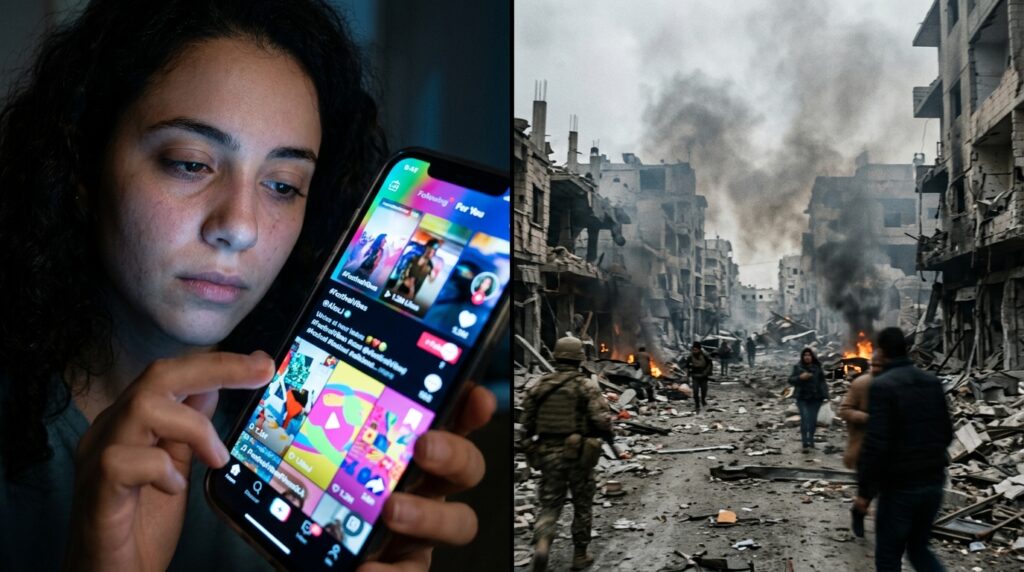
One of the biggest reasons for shifting public opinion is the visibility of civilian suffering during conflicts. In past decades, most Americans relied on television news for information. Today, people see real-time videos and images on social media platforms like X (Twitter), TikTok, and Instagram. This has changed how people understand war. Many Americans, especially younger viewers, are now more aware of:
- Civilian casualties
- Displacement of families
- Destruction of infrastructure
- Humanitarian crises in conflict zones
This increased visibility has led to stronger public debate about whether military aid should be conditioned on international humanitarian law.
Economic Pressure and Domestic Priorities
Another reason for criticism is economic pressure inside the United States. Many Americans ask why billions of dollars in foreign military aid are spent abroad while domestic issues remain urgent, such as:
- Healthcare costs
- Housing affordability
- Student debt
- Inflation
- Public infrastructure
This does not mean Americans oppose foreign aid in general. Instead, it reflects a growing demand for balancing international commitments with domestic needs.
Campus Protests and Political Expression
University campuses have become major centres of debate about U.S. foreign policy.
Students across the United States have organised protests, debates, and awareness campaigns focused on:
- Human rights in conflict zones
- U.S. military aid policies
- Freedom of speech
- Accountability in foreign policy
These movements have sparked national discussions and sometimes controversy, especially when protests lead to clashes over political expression and safety concerns.
Supporters of the protests argue they represent peaceful democratic participation.
Critics argue some protests cross into misinformation or extremism.
Both perspectives reflect how emotionally charged the issue has become.
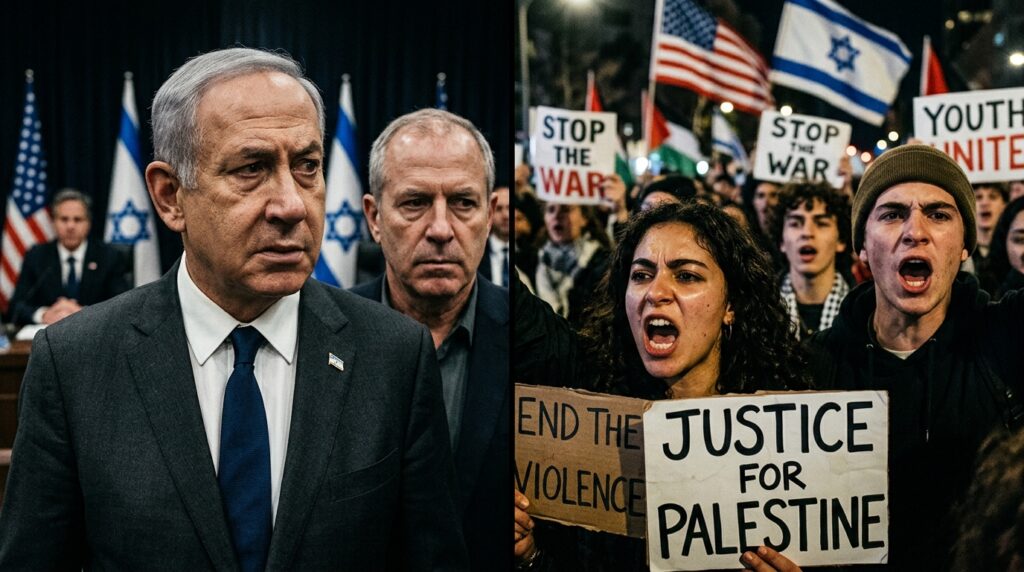
The Role of Gen Z in Changing the Debate
Generation Z (generally those born between 1997 and 2012) has become one of the most influential voices in this conversation.
Why Gen Z is Different
Gen Z grew up in a digital world where:
- Information spreads instantly
- Global events are visible in real time
- Social media shapes political awareness
- Traditional institutions are questioned more openly
Because of this, Gen Z tends to:
- Be more critical of government policies
- Focus heavily on human rights
- Support transparency and accountability
- Question long-standing foreign policy traditions
The Role of Gen Z in Changing the Debate
Gen Z and Social Media Influence
Unlike older generations, Gen Z does not depend heavily on television or newspapers for political information. Instead, platforms like TikTok, Instagram, and YouTube play a major role.
This has led to:
- Rapid spread of global conflict footage
- Viral political discussions
- Influencer-driven activism
- Peer-to-peer political education
As a result, Gen Z has become more vocal in demanding policy discussions around U.S. foreign aid and military involvement abroad. However, it is important to note that Gen Z is not a single unified group. Views vary widely across political, religious, and cultural backgrounds.
Survey Trends: What the Data Shows
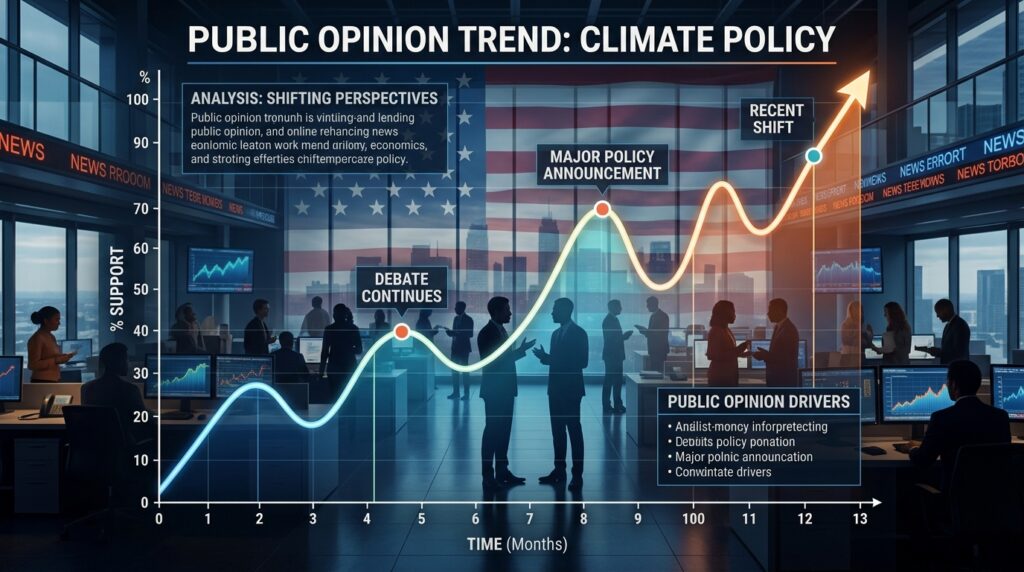
Recent polling in the United States shows a clear generational divide. Studies such as Pew Research surveys indicate:
- Younger Americans are more likely to view Israel critically compared to older adults
- Support for unconditional military aid is declining among younger voters
- Political polarisation on the issue has increased within both parties
- Views on the Israeli government are more critical among Democrats, especially younger Democrats
In general, the trend shows:
Older Americans → more supportive of traditional alliances
Younger Americans → more likely to question foreign policy and military aid
This shift does not mean overall support has disappeared. Instead, it shows that support is becoming more debated and conditional.
Is Criticism of Israel the Same as Antisemitism?
This is one of the most sensitive and important questions in the debate. The answer is:
No, they are not the same.
Criticism of government policies, whether Israel, the United States, or any other country—is considered part of normal political discussion. However, antisemitism refers specifically to hatred, discrimination, or prejudice against Jewish people as a group. Most policy debates in the United States focus on government actions, not religious identity. Still, the line can sometimes become blurred in heated political environments, which makes careful communication very important.
The Big Shift in American Public Opinion
Over time, public opinion has changed gradually but noticeably.
Key factors include:
- Increased media visibility of conflict zones
- Generational differences in political values
- Rising focus on human rights
- Growing scepticism of long-term military involvement abroad
Recent polling shows a rising share of Americans expressing unfavourable views toward Israeli government policies, especially among younger adults. This does not mean the alliance is ending. Instead, it suggests that how Americans think about the alliance is changing.
A Turning Point, Not an Ending
The U.S. Israel relationship is still one of the strongest alliances in the world.
It is built on:
- Military cooperation
- Intelligence sharing
- Economic partnerships
- Historical ties
- Political support
But the conversation around it is evolving.
More Americans are asking:
- Should military aid have conditions?
- How should humanitarian concerns influence foreign policy?
- What is the balance between security and ethics?
These questions will shape the next era of U.S. foreign policy.
Why America Supports Israel: Trump, Iran, and the Question of Escalation
One of the most debated topics in recent U.S. foreign policy is the relationship between the United States, Iran, and regional conflicts involving Israel. President Donald Trump played a major role in reshaping U.S.–Iran relations during and after his presidency. But the key question people often ask is:
Did Trump start a war with Iran?
The accurate answer is more complex. The conflict between the United States and Iran did not begin with one single leader or one single event. Instead, it is the result of decades of tension involving nuclear concerns, regional rivalries, sanctions, and proxy conflicts across the Middle East. However, Trump’s decisions did significantly change the direction of this relationship.
The Nuclear Deal Withdrawal
In 2018, the Trump administration withdrew the United States from the Iran nuclear agreement (commonly known as the JCPOA).
Supporters of this decision argued that the deal was not strong enough and failed to fully limit Iran’s long-term nuclear capability.
Critics argued that leaving the agreement increased tensions and removed an important diplomatic channel that had helped reduce the risk of conflict. This decision marked a turning point in U.S.–Iran relations.
Increased Pressure and Military Tensions
After the withdrawal, the U.S. adopted a “maximum pressure” strategy that included:
- Stronger economic sanctions
- Increased diplomatic isolation of Iran
- Heightened military readiness in the region
These policies increased tensions between Washington and Tehran. The situation became more volatile after a series of regional incidents involving U.S. forces, Iranian-linked groups, and Israeli security concerns.
Did Trump “Start” a War?
It is not accurate to say that any single U.S. president “started” a war with Iran. Instead, what happened is a gradual escalation of conflict conditions, where:
- Long-standing tensions already existed
- Regional conflicts were already ongoing
- Military and political pressures increased over time
In some cases, the Trump administration authorised military actions or supported operations that intensified confrontation.
However, Iran and other regional actors were also involved in actions that contributed to escalation. This is why experts describe the situation as a multi-sided geopolitical escalation, not a single initiated war.
Was Trump a “Spoiler” in Diplomacy?
Some analysts argue that Trump acted as a “spoiler” in diplomatic progress with Iran by:
- Leaving the nuclear agreement
- Replacing negotiation channels with a pressure-based strategy
- Increasing uncertainty in regional diplomacy
Others argue the opposite that he restored deterrence and corrected a weak agreement that did not fully address security concerns. Both interpretations exist, and there is no universal agreement among scholars or policymakers.
How Iran Fits Into the Israel U.S. Equation
Iran is a central factor in U.S.Israel relations. Israel views Iran as one of its primary regional security threats, especially due to:
- Iran’s missile program
- Support for regional armed groups
- Nuclear development concerns
The United States shares some of these concerns, which is one reason the U.S.–Israel security partnership remains strong. This shared strategic focus on Iran often strengthens coordination between Washington and Tel Aviv during regional crises.
The Bigger Picture: A Region in Constant Tension
To understand U.S. Israel relations, it is important to see the wider Middle East context.
The region is shaped by:
- Long-standing political rivalries
- Religious and ethnic tensions
- Energy resources and trade routes
- Security alliances and proxy conflicts
Because of this, the U.S. often finds itself involved, directly or indirectly, in regional disputes. Israel remains one of the closest American partners in this complex environment.
The Future of U.S. Israel Relations
Despite growing debate and criticism, most experts agree on one point:
The US Israel alliance is not disappearing.
However, it is evolving. Future changes may include:
- More conditions on military aid
- Greater emphasis on diplomatic solutions
- Increased attention to civilian protection
- Stronger involvement of public opinion in policy decisions
Younger generations, especially Gen Z, are expected to play a major role in shaping this future. Their focus on transparency, accountability, and human rights is already influencing political discussion in Washington.
Final Conclusion: A Relationship Under Review, Not Ending
The United States and Israel share one of the deepest alliances in modern history.
It is built on decades of:
- Strategic cooperation
- Military support
- Intelligence sharing
- Economic partnerships
- Shared geopolitical interests
But like all long-term relationships, it is now being questioned, debated, and redefined. The key shift is not rejection, but reassessment. Americans today are asking harder questions about foreign policy, military aid, and humanitarian responsibility. And those questions are shaping the next chapter of U.S. global leadership.
FAQs
1. Why does the U.S. support Israel so strongly?
Because of shared strategic interests, military cooperation, historical ties, and political relationships.
2. Is U.S. support for Israel unconditional?
Many critics say yes, but supporters argue there are political debates and internal disagreements behind the scenes.
3. Why are younger Americans more critical of Israel?
Gen Z and younger adults are more influenced by social media and tend to focus more on human rights and transparency.
4. Did Donald Trump start a war with Iran?
No single president “started” a war. The situation is a long-term escalation involving multiple countries and events.
5. What role does Gen Z play in this debate?
Gen Z is increasingly vocal on social media, organising protests, and pushing for more accountability in foreign policy.
6. Is criticism of Israel the same as antisemitism?
No. Criticism of government policy is political speech, while antisemitism is discrimination or hatred against Jewish people.
References
- Pew Research Center – U.S. public opinion on Israel (2025 report)
- Reuters / Ipsos polling on U.S. foreign policy attitudes
- Congressional Research Service reports on U.S.–Israel security cooperation
- Historical records of U.S. recognition of Israel (1948)
- Public policy analysis on U.S.–Iran relations and JCPOA withdrawal