Navigating the Children’s Digital Playground: Protecting Children
This investigative analysis examines the rapidly evolving global landscape of child protection policies related to mobile phones and social media. It explores both the opportunities and dangers of digital technology, evaluates evidence-based strategies for safer online experiences, and highlights healthy ways technology can enhance learning, creativity, and cognitive development.
Navigating the Children’s Digital Playground: Protecting Children in the Age of Mobile Phones and Social Media
Navigating the Children’s Digital Playground. The battle for your child’s future is no longer taking place only in schools or homes; it is happening on smartphones.
Imagine a world where a child’s first “best friend” is an algorithm designed to keep them scrolling endlessly. In 2026, this is not science fiction. It is the daily reality for millions of children worldwide.
Navigating the Children’s Digital Playground: Protecting Children in the Age of Mobile Phones and Social Media
Purpose of This Analysis
This investigative analysis examines the rapidly evolving global landscape of child protection policies related to mobile phones and social media. It explores both the opportunities and dangers of digital technology, evaluates evidence-based strategies for safer online experiences, and highlights healthy ways technology can enhance learning, creativity, and cognitive development.
Rather than promoting fear or blanket bans, the goal is to help parents, educators, policymakers, and communities foster responsible digital citizenship and healthier relationships with technology.
A 12-year-old picks up a phone to watch a homework tutorial. Two hours later, an algorithm has led them through endless videos, targeted advertisements, influencer content, and material no parent ever intended them to see. The greatest threat to childhood in the digital age may not be technology itself. It may be the invisible systems competing for a child’s attention every second of every day.
As governments race to implement age restrictions and device controls, the question is no longer whether action is needed. The challenge is finding the right balance between the undeniable benefits of technology and its profound risks to developing minds.
“Technology is a useful servant but a dangerous master.” Christian Lous Lange
Navigating the digital playground
In the age of screens, kids today are undoubtedly the reigning champs of tech engagement, turning digital landscapes into their modern playground.
The rise of Generation Alpha marks the dawn of a genuinely digital-native era, where screens play a pivotal role in shaping the social prowess of our youngest generation. It’s a fascinating paradox—the digital world both connects and challenges the art of face-to-face communication, influencing the delicate dance of friendship formation.
Yet there’s a silver lining in this digital dance. Technology, the very culprit of our screen-centric era, has opened a new chapter in human interaction — wherein borders and distances crumble into insignificance. For kids navigating this landscape, whether through text messages, online gaming banter or photo-sharing, technology becomes a conduit for forging authentic connections that transcend the virtual realm.
And here’s the twist: for some, online interaction isn’t just a pastime; it’s a lifeline. In a world where shyness or a lack of confidence might pose challenges in traditional social settings, technology steps in as a facilitator. Kids grappling with social anxiety disorders find solace in the online sphere, where the burden of “having to talk to someone” is lifted. Social media platforms become their comfort zones, providing a space to communicate with ease.
In essence, the digital playground isn’t just reshaping how kids play, it’s redefining how they connect, communicate and ultimately grow.
The Growing Global Concern Over Children’s Digital Lives
For decades, parents worried about who their children spent time with after school. Today, many children spend more time interacting with algorithms than with neighbours, teachers, or even extended family members. Would you allow a stranger to spend six hours a day shaping your child’s beliefs, emotions, self-esteem, and worldview?
Yet that is effectively what happens when social media feeds become children’s primary source of entertainment, validation, and information.
The concern is no longer limited to excessive screen time. Researchers, governments, psychologists, and educators increasingly point to issues such as cyberbullying, addictive design features, online predators, misinformation, sleep disruption, anxiety, depression, and reduced face-to-face interaction.
The Growing Global Concern Over Children’s Digital Lives
Getting Involved in Kids’ Online Activities
While governments can regulate platforms, the most important protective role still belongs to parents and caregivers. More important than simply blocking objectionable material is teaching children safe and responsible online behaviour while actively participating in their digital lives.
Experts consistently find that communication and guidance are more effective than surveillance alone.
Getting Involved in Kids’ Online Activities
Online Safety Rules Every Child Should Learn
Follow family internet rules and platform guidelines.
Never post or exchange personal photos or videos with strangers.
Never reveal addresses, phone numbers, school names, or personal identifying information.
Never agree to meet someone in person without parental approval and supervision.
Never respond to threatening or abusive messages.
Report uncomfortable or frightening interactions immediately to a trusted adult.
Understand how recommendation algorithms influence the content they see.
Practical Steps Parents Can Take
Spend time online together and discuss what children encounter.
Keep internet-enabled devices in common family areas whenever possible.
Create family media plans and agreed-upon screen time limits.
Monitor privacy settings regularly.
Review account activity and unusual charges.
Learn about digital protections available through schools and community organisations.
Take concerns about cyberbullying, harassment, or online threats seriously.
Model healthy digital habits through your own behaviour.
Global Patterns in Child Protection Policies
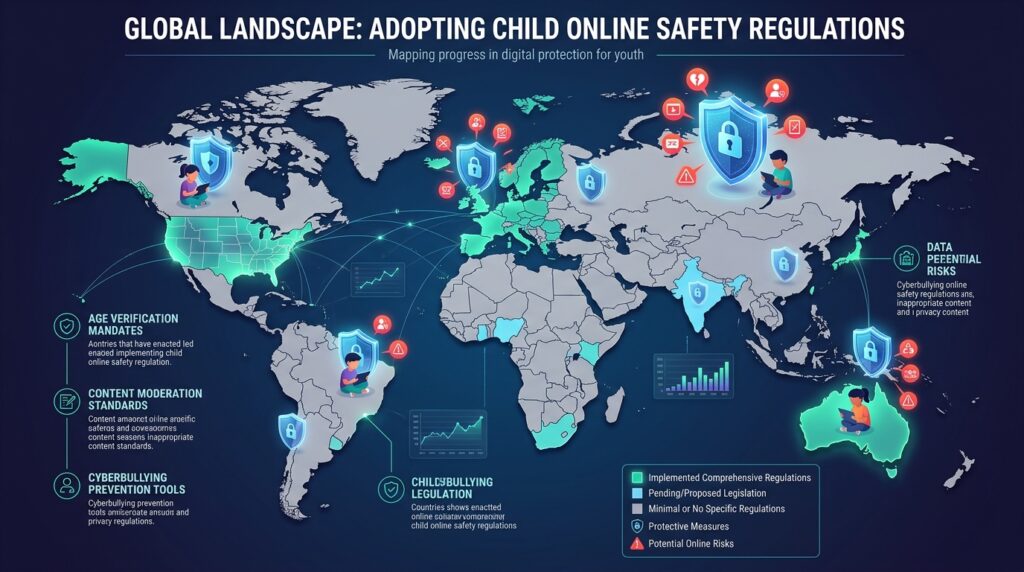
A powerful wave of regulation is sweeping across the globe as governments respond to growing concerns about children’s mental health, online addiction, and digital exploitation. Different countries have adopted different strategies, reflecting cultural values, legal systems, and attitudes toward technology.
Global Patterns in Child Protection Policies
Australia: The World’s Strictest Social Media Restrictions
Australia pioneered one of the strictest approaches with its under-16 social media ban, which took effect in late 2025. Major platforms are required to prevent account creation and maintenance by underage users, with substantial penalties for non-compliance.
While the policy has led to the removal of millions of accounts, critics note that many young users continue to circumvent restrictions through VPN services and alternative accounts.
Denmark: Prioritising Well-Being
Denmark’s approach focuses on users under 15 years old and emerged from growing concerns highlighted by the country’s Well-Being Commission. Policymakers argue that excessive digital engagement is contributing to declining childhood satisfaction and emotional well-being.
Europe: Strengthening Digital Accountability
Several European countries, including France, have introduced age-related restrictions while strengthening enforcement mechanisms under the Digital Services Act. These measures place greater responsibility on platforms to verify age and reduce harmful content exposure.
China: Comprehensive Device-Level Controls
China has adopted one of the world’s most comprehensive systems, combining screen-time limits, curfews, content filtering, real-name registration, and parental oversight tools. Children under certain age groups face strict daily limits, while nighttime access is heavily restricted.
United States: A More Decentralised Approach
The United States has not introduced a nationwide social media ban. Instead, policymakers focus on platform accountability, parental controls, research initiatives, and state-level legislation while balancing free speech considerations. Together, these policies reveal a growing international consensus: children require greater protection online, even if governments disagree on how best to achieve it.
“There can be no keener revelation of a society’s soul than the way in which it treats its children.”
Nelson Mandela
Benefits vs Dangerous Effects of Social Media and Smartphones
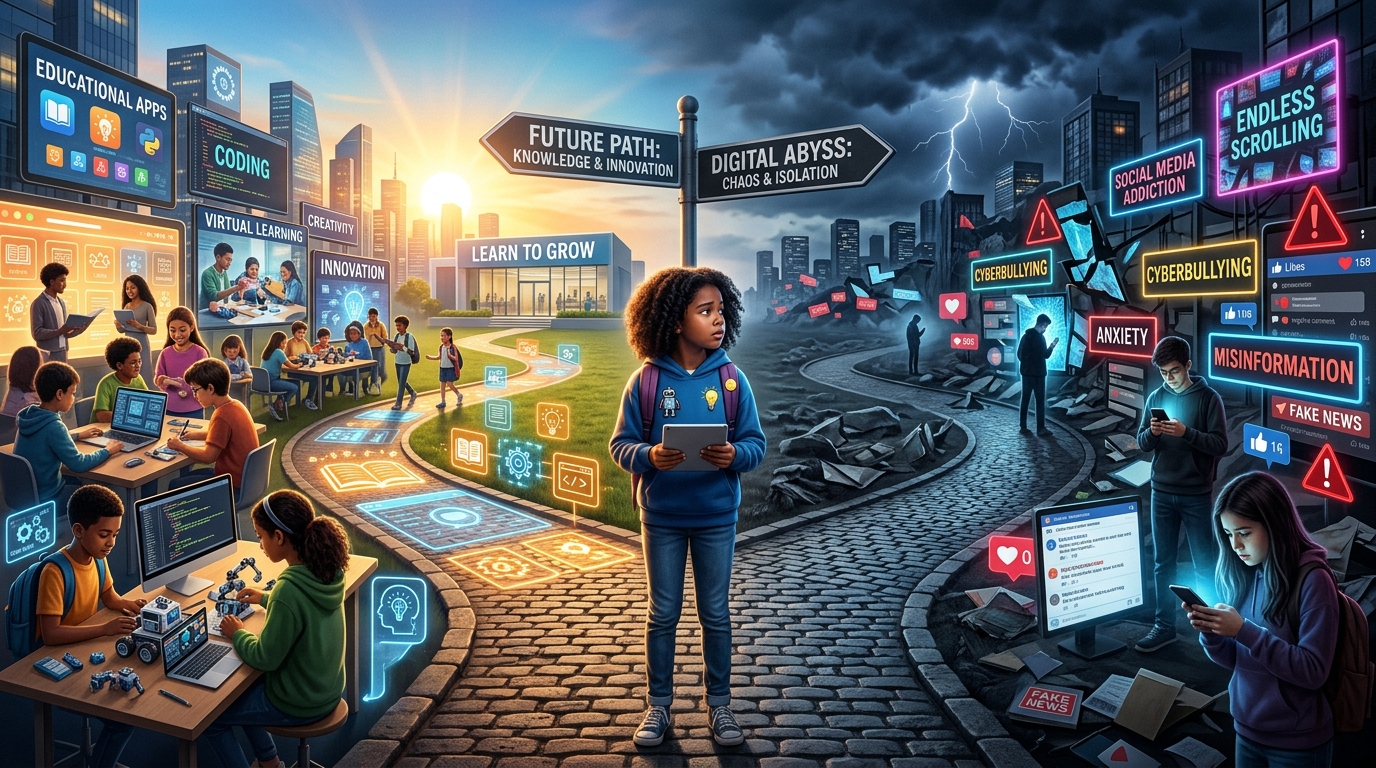
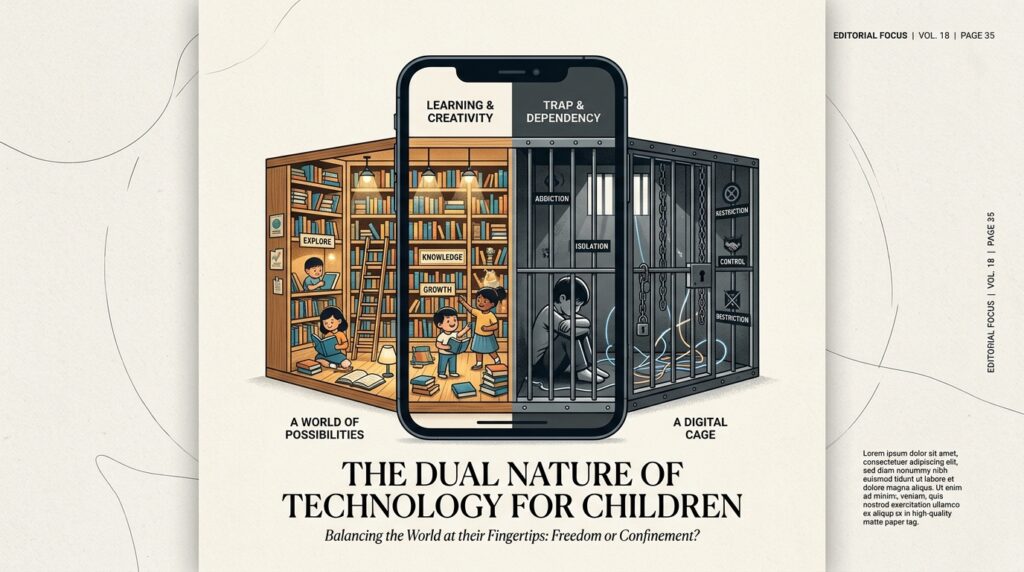
The debate surrounding children and technology is often presented as a choice between unrestricted access and total restriction. In reality, the evidence suggests a more nuanced picture. Technology itself is neither inherently harmful nor universally beneficial. The outcomes largely depend on how, why, and how much children use it.
When used intentionally, under appropriate guidance, smartphones and social media can enrich learning, strengthen social connections, and expose young people to opportunities that previous generations could scarcely imagine. However, when use becomes excessive, addictive, or unsupervised, the risks can outweigh the benefits.
The Benefits of Digital Technology for Children
Social Connection and Community
For many young people, digital platforms provide valuable opportunities to maintain friendships, participate in communities, and find support networks. This can be especially important for children living in remote areas, those with disabilities, or those who feel socially isolated.
Online communities often allow children to connect with peers who share similar interests, hobbies, or educational goals.
Education and Independent Learning
Modern technology places an unprecedented amount of knowledge within reach. Educational videos, language-learning platforms, coding courses, virtual science laboratories, and digital libraries have transformed learning opportunities.
A teenager living in a rural community can now learn programming, graphic design, mathematics, or foreign languages from world-class instructors without leaving home.
One inspiring example involves students who have used free online coding courses to develop software applications and secure scholarships that would otherwise have been unattainable. Technology can become a powerful equaliser when used with purpose.
Creativity and Self-Expression
Digital tools enable children to create art, music, videos, animations, podcasts, and stories. Rather than merely consuming content, children can become creators, developing valuable skills in communication, collaboration, and problem-solving.
Expanding Mental Horizons
Virtual museum tours, interactive science simulations, educational games, and global communication platforms can broaden children’s understanding of cultures, ideas, and perspectives beyond their immediate environment. When thoughtfully used, technology can foster curiosity, empathy, creativity, and digital literacy.
The Dangerous Effects of Excessive or Unsupervised Use
Mental Health Concerns
Growing evidence links excessive social media use with increased risks of anxiety, depression, loneliness, poor self-esteem, and suicidal ideation among young people. Researchers have found that children who spend more than three hours daily on social media often face significantly higher risks of mental health challenges compared to moderate users.
Sleep disruption appears to be one of the strongest contributing factors. Notifications, late-night scrolling, and emotionally stimulating content interfere with healthy sleep patterns that are critical for cognitive and emotional development.
Real-Life Example: The Cyberbullying Victim
Consider a 13-year-old girl who joins social media simply to stay connected with classmates. Within months, anonymous messages begin targeting her appearance. Her confidence declines, anxiety increases, sleep becomes irregular, and academic performance suffers.
Sadly, such stories are no longer rare. Cyberbullying can follow children home, making escape difficult and intensifying emotional harm.
Addiction and Brain Development
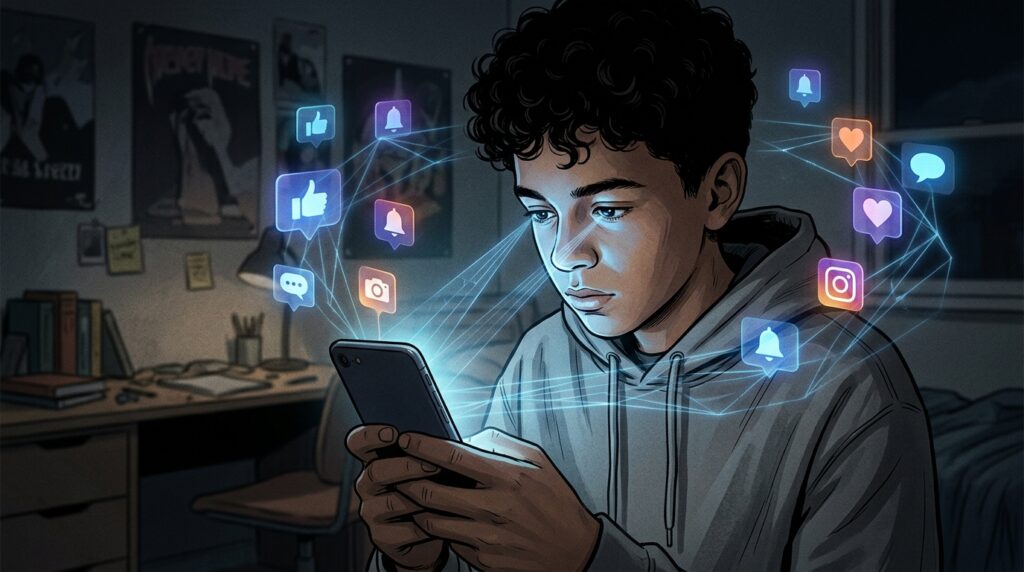
Many social media platforms and mobile applications are deliberately designed to maximise user engagement. Features such as endless scrolling, variable rewards, likes, streaks, and personalised recommendations activate neurological reward systems. The result can resemble behavioural addiction, particularly among developing minds that are still learning impulse control and emotional regulation.
“The real problem is not whether machines think but whether men do.” B. F. Skinner
Real-Life Example: The Gaming Addiction Trap
A 14-year-old begins playing online games for one hour each evening. Over time, social pressures, achievement systems, and reward mechanisms gradually increase usage to six hours daily. Physical activity decreases. Academic performance suffers. Family relationships become strained.
Experts increasingly recognise such patterns as signs of problematic digital dependency.
Online Safety Risks
Children face numerous online dangers, including:
Cyberbullying
Online grooming by predators
Exposure to harmful challenges
Misinformation and disinformation
Privacy violations
Sexting and exploitation
Fraud and scams
Young users often lack the experience required to recognise manipulation tactics used by malicious actors.
Reduced Real-World Experiences
Excessive screen time can replace activities essential for healthy childhood development, including outdoor play, physical exercise, face-to-face friendships, reading, hobbies, and family interactions.
Many experts warn that childhood itself risks becoming increasingly digitised, reducing opportunities for experiential learning and emotional growth.
Teaching Digital Citizenship Instead of Digital Fear
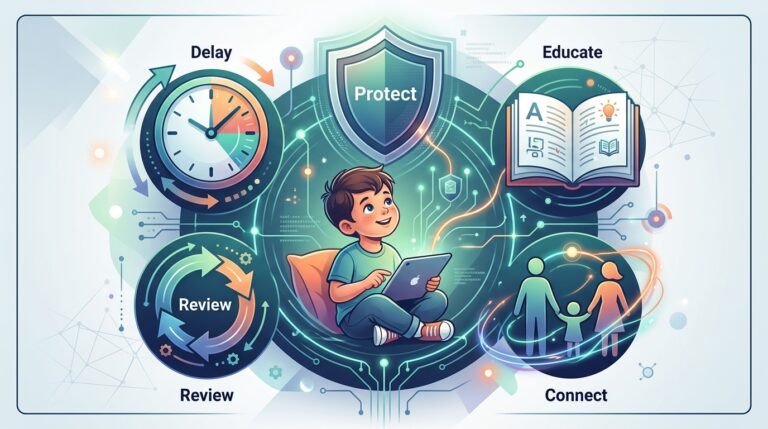
One of the most important lessons emerging from current research is that education often proves more effective than prohibition. Rather than treating technology as an enemy, families and schools can help children become informed, responsible digital citizens.
Teaching Digital Citizenship Instead of Digital Fear
Age-Appropriate Introduction to Technology
Experts generally recommend delaying unrestricted social media access until children demonstrate sufficient maturity to understand privacy, manipulation, online relationships, and digital permanence.
Co-viewing content and discussing online experiences help children develop healthy habits from an early age.
Teaching Media Literacy
Digital literacy should become as fundamental as reading and writing.
Children should learn:
How algorithms influence what they see
How misinformation spreads online
How advertising targets users
How to verify information sources
How to protect personal data
How to engage respectfully online
Real-Life Example: The Digital Citizen Success Story
A secondary school introduces media literacy classes that teach students how algorithms work, how misinformation spreads, and how to protect personal information. Within a year, educators report improved critical-thinking skills and greater awareness of online manipulation techniques among students.
This demonstrates that education can significantly reduce digital risks without eliminating digital opportunities.
Communication Over Prohibition
Children are more likely to seek parental guidance when they trust that conversations will be supportive rather than punitive.
Families should discuss:
Online friendships
Privacy concerns
Cyberbullying experiences
Mental health impacts
Content recommendations
Time management strategies
Jointly developed rules often prove more effective than unilateral restrictions.
Healthy Gadget Use That Broadens Mental Horizons
Technology should not merely entertain children. It should help them learn, create, and grow.
The most successful approaches focus on transforming devices from passive consumption tools into active learning tools.
Educational Technology
STEM learning applications
Language-learning platforms
Coding courses
Virtual science laboratories
Interactive history experiences
Mathematics and problem-solving programs
Creative Technologies
Digital art tools
Music production software
Animation platforms
Video editing applications
Storytelling and writing programs
Collaborative Learning
Supervised online collaboration can help children work on projects, exchange ideas, and build communication skills that are increasingly valuable in modern education and employment.
Maintaining Balance
Healthy technology use includes:
Screen-free family meals
Phone-free bedrooms
Regular physical activity
Outdoor recreation
Reading and hobbies
Face-to-face friendships
The goal is not eliminating technology but ensuring that it remains one component of a balanced childhood.
“Children are not things to be molded, but people to be unfolded.” Jess Lair
Five Questions Every Parent Should Ask Before Giving a Child a Smartphone
Is my child mature enough to handle online pressure and social comparison?
Can my child recognise misinformation, scams, and manipulation?
Do they understand privacy and digital footprints?
Can they balance screen use with school, family, and physical activity?
Am I prepared to actively guide and monitor their digital development?
If several answers are “no,” delaying smartphone ownership may be wiser than introducing it prematurely.
Many age restrictions can be bypassed through VPN services, alternative accounts, or inaccurate age declarations.
Privacy Concerns
Age verification systems often require additional personal data collection, creating privacy concerns for families and civil rights advocates.
Digital Inequality
Strict restrictions may unintentionally disadvantage children who rely on digital tools for education and social connection.
Cultural Differences
Solutions effective in one country may not work equally well elsewhere. Family structures, educational systems, cultural norms, and technology adoption rates vary significantly across societies.
Balancing Freedom and Protection
Policymakers continue to wrestle with difficult questions regarding children’s rights, parental authority, platform accountability, and freedom of expression. The challenge is finding policies that protect vulnerable users without unnecessarily limiting beneficial opportunities.
Conclusion
The debate is not about choosing between technology and childhood.
It is about ensuring that technology serves childhood rather than replacing it.
History may ultimately judge this generation not by how quickly it embraced digital innovation, but by how wisely it protected children while doing so. The smartphone is one of humanity’s most powerful inventions. In the hands of a curious child, it can become a library, a classroom, a creative studio, and a gateway to opportunity.
Without guidance, however, it can also become a source of addiction, anxiety, misinformation, exploitation, and isolation. The future of childhood will not be determined solely by governments, technology companies, or algorithms.
It will be shaped by parents who remain engaged, educators who teach digital literacy, communities that value balanced development, and children who learn to use technology wisely.
The global push for stronger child protections reflects an important truth: safeguarding childhood in the digital age requires shared responsibility. Smarter policies, ethical technology design, empowered parents, informed educators, and digitally literate children must work together.
By prioritising healthy habits over fear and education over panic, societies can harness the extraordinary benefits of technology while preserving what matters most: childhood itself.
“Education is the most powerful weapon which you can use to change the world.” Nelson Mandela
Balancing Freedom and Protection
Frequently Asked Questions
1. At what age is social media safe for children?
Most experts recommend delaying unrestricted social media use until at least ages 13 to 16, depending on maturity, emotional resilience, and parental involvement.
2. Does social media directly cause mental health problems?
The relationship is complex. Research shows strong associations between excessive or addictive use and mental health challenges, although multiple factors contribute to outcomes.
3. How can parents effectively enforce screen-time limits?
Use family media agreements, device controls, consistent routines, and open communication. Combining technical tools with trust-based discussions is generally most effective.
4. Are there genuine benefits to social media and smartphones?
Yes. When used intentionally and in moderation, they can support learning, creativity, social connection, collaboration, and access to valuable information.
5. How can children be protected from cyberbullying and grooming?
Education is essential. Children should understand privacy settings, reporting mechanisms, warning signs, and the importance of discussing concerns with trusted adults.
6. Will social media bans solve the problem?
Bans may reduce exposure and delay access, but they are unlikely to be fully effective on their own. Long-term success depends on combining regulation, education, parental involvement, and responsible platform design.
References
U.S. Surgeon General Advisory on Social Media and Youth Mental Health;
Australian Online Safety Amendment Act;
Danish Well-Being Commission Report;
European Union Digital Services Act;
academic studies on adolescent mental health and social media;
World Health Organisation-related research;
Common Sense Media resources; and various policy analyses and peer-reviewed studies available as of 2026.
This article is intended for informational and educational purposes. Parents seeking personalised guidance should consult qualified educators, paediatricians, child psychologists, or mental health professionals.