
Iran Living Under Sanctions: How Four Decades of Economic Pressure Reshaped Iran
Introduction: When a Nation Learns to Live with Restrictions
Iran Living Under Sanctions. Imagine running a business without reliable access to international banks. An airline is unable to purchase original spare parts for its aircraft. A factory is struggling to import specialised machinery. A hospital is waiting months for essential medical equipment because payment channels have been disrupted. An entrepreneur is watching exchange rates fluctuate wildly while trying to plan for the future.
https://mrpo.pk/civilisation-that-refuses-to-disappear/
For many countries, such circumstances would represent a temporary crisis. For Iran, they have become part of everyday economic life.
Few modern nations have experienced sustained economic sanctions for as long or as comprehensively as Iran. Since the 1979 Islamic Revolution, successive rounds of sanctions imposed by the United States, the United Nations, the European Union, and other governments have targeted different sectors of the Iranian economy. Over time, these measures expanded from freezing financial assets and restricting trade to limiting access to global banking systems, energy investment, advanced technology, aviation components, and international finance.
The effects have extended far beyond government institutions. Sanctions have influenced nearly every aspect of Iranian society, from industrial production and scientific research to household purchasing power, employment, healthcare, transportation, and foreign policy. Businesses have had to redesign supply chains, manufacturers have learned to build products once imported from abroad, and policymakers have searched for new trading partners and financial mechanisms to reduce dependence on traditional markets.
Yet the story of sanctions is not simply one of economic hardship. It is also a story of adaptation, innovation, resilience, and unintended consequences. While sanctions imposed undeniable costs, they also accelerated domestic manufacturing, encouraged technological self-reliance in strategic industries, and reshaped Iran’s diplomatic and economic priorities.
Iran’s Economy under Sanctions: Two Levels of Impact
Iran’s economy has lived under sanctions for the last forty years. Yet their pressure has been uneven: the most sensitive measures were applied against Iran by the U.S. and its partners in 2010–2015 and in 2018–2022. However, despite gloomy expectations of grave consequences for Iran’s economy, it has managed to survive: it has been damaged but not shattered. The Iranian government has succeeded in securing control over the domestic political situation.
Even though Tehran has been unsuccessful in completely offsetting the negative impact of the sanctions, it has mitigated their effect in the short term and won time necessary for devising a long-term program of anti-sanctions measures.
https://eng.globalaffairs.ru/articles/iran-under-sanctions/
This article examines how decades of sanctions transformed Iran, not only economically, but also industrially, politically, and strategically. Rather than viewing sanctions as isolated policy decisions, it explores how they collectively altered the trajectory of an entire nation over more than four decades.
Why This Article Matters
Sanctions are often discussed in terms of diplomacy or international politics, but their real-world impact extends much further. Understanding Iran’s experience helps answer broader questions that remain relevant today:
- How do prolonged sanctions affect ordinary citizens?
- Can industries survive when cut off from global markets?
- Does economic isolation weaken or strengthen domestic production?
- How do governments adapt when traditional trade and financial systems become inaccessible?
- What lessons does Iran’s experience offer to other sanctioned nations?
By examining these questions through Iran’s experience, readers gain insight into one of the most significant economic experiments of the modern era.
Timeline: Four Decades of Sanctions
Before exploring individual industries and policies, it is helpful to understand how sanctions evolved.
| Year | Major Development | Economic Significance |
|---|---|---|
| 1979 | Islamic Revolution and U.S. Embassy hostage crisis | Initial U.S. asset freezes and trade restrictions |
| 1980s | Iran-Iraq War | Additional restrictions amid regional conflict |
| 1995–1996 | Expanded U.S. sanctions | Limits on energy investment and commercial trade |
| 2006–2010 | UN and EU sanctions over the nuclear program | Restrictions on banking, shipping, finance, and technology |
| 2012 | SWIFT banking restrictions | Severe disruption to international financial transactions |
| 2015 | Joint Comprehensive Plan of Action (JCPOA) | Partial sanctions relief and renewed international business interest |
| 2018 | U.S. withdrawal from the JCPOA | Reimposition of extensive sanctions on oil exports, banking, and shipping |
| 2020s | Greater economic cooperation with Asian and regional partners | Expansion of alternative trade routes, local-currency settlements, and diversified diplomacy |
The cumulative effect of these measures was not a single economic shock but a series of disruptions that required continuous adaptation.
Did You Know?
Iran is one of the longest-sanctioned major economies in the world. Over more than four decades, businesses, universities, manufacturers, and public institutions have repeatedly adjusted to changing restrictions, creating an economic environment unlike that of most other industrialised nations.
How Sanctions Work: More Than Just Trade Restrictions
When people hear the word sanctions, they often imagine governments simply refusing to trade with one another. In reality, modern sanctions are far more complex.
Instead of acting as a single barrier, sanctions operate through multiple interconnected restrictions that can affect finance, technology, transportation, insurance, investment, and access to international markets.
Some measures prohibit companies from exporting specific technologies. Others restrict foreign investment, limit access to international banking systems, or discourage multinational corporations from doing business with sanctioned countries.
The cumulative effect is often greater than any single restriction. Even when a particular product is not officially prohibited, companies may avoid transactions altogether because of legal uncertainty, compliance costs, or fear of secondary sanctions.
This phenomenon, sometimes called overcompliance, can magnify the economic impact beyond the formal scope of the sanctions themselves.
Myth vs. Reality
Myth
Sanctions only affect governments and political leaders.
Reality
While governments are the primary targets, sanctions also influence private businesses, universities, hospitals, banks, manufacturers, exporters, importers, and ordinary households. Rising costs, disrupted supply chains, restricted banking access, and currency instability often ripple throughout the broader economy.
The First Shock: Iran’s Economy Before and After 1979
Before the Islamic Revolution, Iran maintained extensive commercial relationships with Western economies. Oil revenues financed ambitious infrastructure projects, industrial expansion, and imports of advanced technology. International companies invested in the country’s energy sector, while Iranian businesses relied on global financial networks to facilitate trade.
The 1979 Revolution fundamentally changed this trajectory. Political tensions with the United States escalated rapidly following the seizure of the U.S. Embassy in Tehran and the hostage crisis. In response, Washington froze Iranian government assets and introduced the first wave of economic sanctions. Although these early measures primarily affected bilateral relations, they marked the beginning of a much longer period of economic isolation.
The outbreak of the Iran-Iraq War in 1980 further complicated the situation. Resources that might otherwise have supported economic modernisation were redirected toward national defence and reconstruction. At the same time, uncertainty discouraged foreign investment and made international commerce increasingly difficult. Iran now faced two simultaneous challenges: rebuilding a wartime economy while adapting to growing international restrictions.
Data Snapshot: The Early Transformation
| Before the Revolution | After the Initial Sanctions |
|---|---|
| Strong integration with Western markets | Gradual economic isolation |
| Extensive foreign investment | Reduced international investment |
| Easy access to international finance | Increasing financial restrictions |
| Heavy reliance on imported technology | Growing need for domestic alternatives |
| Stable commercial partnerships | Greater uncertainty in trade relationships |
Rather than representing a complete economic collapse, these changes marked the beginning of a long-term structural transformation.
From Temporary Crisis to Permanent Reality
Many governments initially viewed sanctions as temporary measures intended to influence political decisions. Inside Iran, however, businesses gradually realised that restrictions were becoming a recurring feature of the economic landscape rather than a short-lived disruption. This shift in perception altered investment decisions across the country.
Instead of waiting for restrictions to disappear, companies began asking different questions:
- Can this component be manufactured locally?
- Can we find suppliers in other regions?
- Can production continue using alternative technologies?
- Can exports reach new markets?
- Can financing be arranged without traditional international banks?
These questions gradually reshaped the country’s industrial strategy. Over time, adaptation became as important as expansion.
Case Study: An Entrepreneur’s Dilemma
Consider a hypothetical Iranian manufacturer producing industrial equipment in the early 1990s. For years, specialised machinery had been imported from Europe, replacement parts arrived on schedule, and international payments moved through established banking channels.
As sanctions expanded, each of those assumptions changed. Replacement components became more expensive or unavailable. International suppliers hesitated to sign new contracts. Shipping insurance became more difficult to obtain. Payments took weeks instead of days.
The company now faced a choice:
- Reduce production and accept declining competitiveness.
- Or redesign products, cultivate new suppliers, and manufacture more components domestically.
Thousands of Iranian businesses encountered similar decisions. Their responses varied, but collectively they contributed to a gradual shift toward greater industrial self-reliance.
Oil: The Engine of the Economy Under Pressure
For decades, oil exports have been the backbone of Iran’s economy, generating government revenue, financing public services, and providing foreign currency for imports. This dependence also created a vulnerability.
Because oil represented such a significant share of export earnings, restrictions on petroleum sales became one of the most powerful economic tools available to sanctioning countries. Successive sanctions targeted different parts of the energy sector:
- Investment in oil and gas development.
- Access to advanced drilling technologies.
- Energy-sector financing.
- Maritime transport and shipping insurance.
- Purchases of Iranian crude oil.
Whenever exports declined, government revenue came under pressure, affecting public spending, infrastructure projects, and the availability of foreign exchange. The consequences extended beyond the energy industry. Reduced oil income influenced manufacturing, imports, employment, and household purchasing power across the wider economy.
Did You Know?
Oil was never the only target. While restrictions on crude exports received the most international attention, sanctions also affected banking, shipping, insurance, industrial technology, aviation, and investment. Their combined impact was often greater than the effect of oil restrictions alone.
A New Economic Question Emerges
As each new round of sanctions tightened access to international markets, Iranian policymakers faced an increasingly important question:
Could the country reduce its dependence on imports and build a more self-reliant economy?
The answer to that question would shape Iran’s economic strategy for decades to come. Rather than focusing solely on surviving sanctions, policymakers began exploring how domestic industries could replace imported goods, strengthen supply chains, and preserve economic stability even under continued external pressure. This idea would eventually evolve into one of the defining concepts of modern Iranian economic policy: the Resistance Economy.
That transformation, and the industries that emerged from it, form the next chapter of Iran’s remarkable adaptation to life under sanctions.
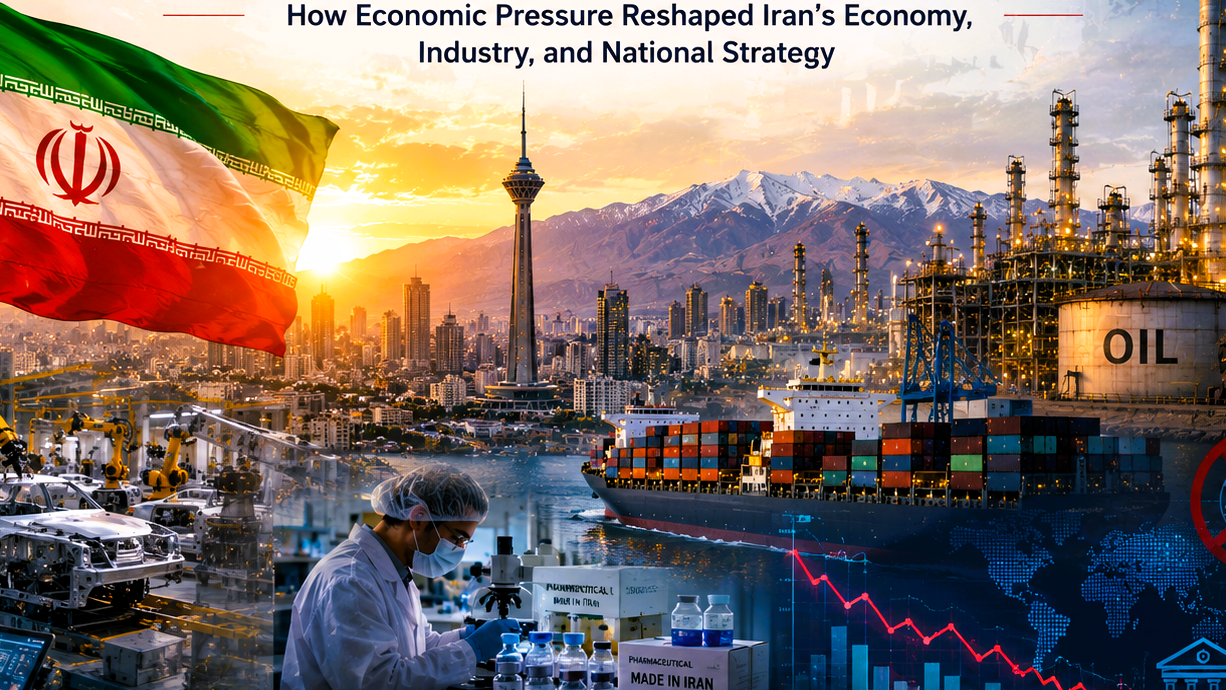
Living Under Sanctions: How Economic Pressure Reshaped Iran’s Economy, Industry, and National Strategy
“Sanctions were designed to isolate Iran from the global economy. Instead, they compelled the country to redesign much of its economic system from within. The outcome has been neither complete failure nor complete success, but a unique model of adaptation that continues to shape Iran’s future.”
The Rise of the Resistance Economy
As sanctions tightened during the 2000s and intensified after 2010, Iranian policymakers increasingly accepted that economic normalisation with the West could not be the foundation of national planning. Rather than treating sanctions as temporary disruptions, Tehran gradually incorporated them into long-term strategic thinking.
This shift culminated in the formal articulation of the Resistance Economy (Eqtesad-e Moqavemati), a doctrine promoted by Iran’s leadership as a blueprint for economic resilience. Although its principles evolved over time, the concept rested on a straightforward premise: an economy should be capable of functioning even under severe external pressure.
Unlike conventional economic development strategies that emphasise globalisation and foreign investment, the Resistance Economy prioritised:
- Expanding domestic production.
- Reducing dependence on imports.
- Diversifying exports beyond crude oil.
- Strengthening local industries.
- Encouraging scientific research and technological innovation.
- Supporting knowledge-based companies.
- Improving food and energy security.
Supporters viewed the strategy as a path toward national self-reliance, while critics argued that it often protected inefficient industries and reduced competition. In practice, the policy combined elements of necessity, ideology, and pragmatic economic management.
Rather than replacing market forces entirely, the Resistance Economy sought to ensure that essential sectors, such as food, medicine, transportation, defence, and energy, could continue operating even if international trade remained severely restricted.
Case Study: When Necessity Became Industrial Policy
Few governments intentionally redesign an economy under ideal circumstances. Iran did so because it had little alternative. Repeated sanctions interrupted supply chains, limited access to machinery, restricted financing, and discouraged multinational corporations from investing in the country. As foreign suppliers withdrew, Iranian companies increasingly attempted to manufacture products previously imported from Europe or East Asia.
Some projects struggled due to technological limitations, while others matured into competitive domestic industries. Over time, sanctions transformed from an external economic obstacle into a powerful driver of import substitution. The results were uneven but significant.
In sectors requiring advanced semiconductor technology or specialised industrial equipment, progress remained constrained by restricted access to foreign components. Conversely, industries relying on engineering expertise, local raw materials, or adaptable manufacturing processes demonstrated remarkable resilience. This uneven development became a defining characteristic of Iran’s sanctioned economy.
Manufacturing Under Pressure
Manufacturing provides one of the clearest examples of how sanctions reshaped Iran’s economy. Before comprehensive sanctions, many Iranian factories relied heavily on imported machinery, foreign technical expertise, and international supply chains. Components often arrived from Europe, Japan, or South Korea before being assembled domestically. As sanctions disrupted these channels, manufacturers faced difficult choices.
Some factories closed. Others reduced production. A growing number chose a different path: redesigning products around components that could be sourced locally or from alternative suppliers. Engineers modified production lines, substituted imported materials with domestic alternatives, reverse-engineered unavailable equipment, and established relationships with suppliers in countries less constrained by Western sanctions.
Although these adjustments rarely produced perfect substitutes, they allowed industrial production to continue.
Data Snapshot: Manufacturing Before and After Comprehensive Sanctions
| Indicator | Before Major Sanctions | During Peak Sanctions |
|---|---|---|
| Foreign investment | Relatively accessible | Severely restricted |
| Imported industrial equipment | Widely available | Highly limited |
| Access to international finance | Normal banking channels | Restricted |
| Domestic component manufacturing | Moderate | Expanded significantly |
| Supply chain complexity | Global | Regional and domestic |
What this tells us: Sanctions did not eliminate manufacturing. Instead, they fundamentally changed how manufacturing operated.
The Automotive Industry: Survival Through Reinvention
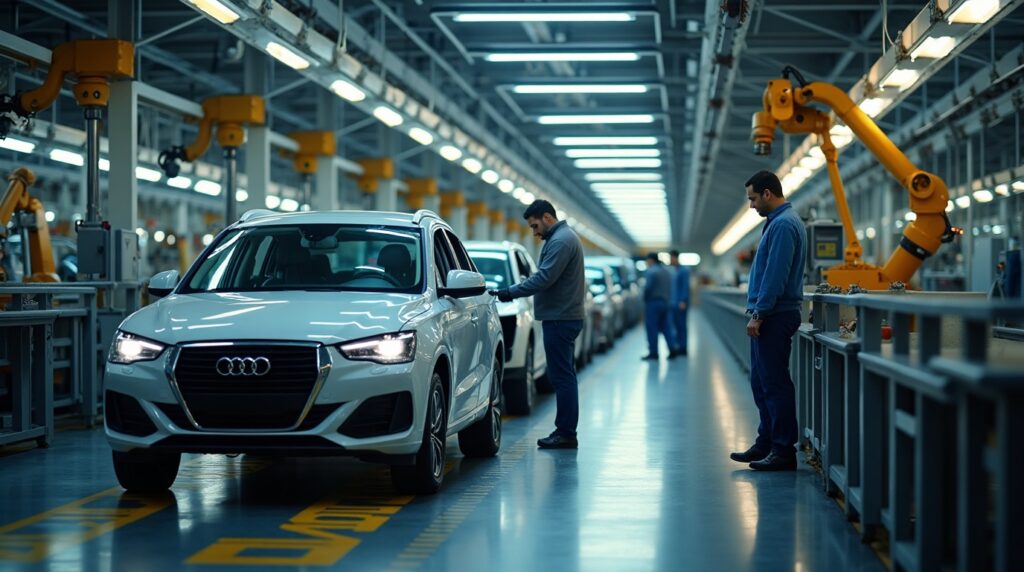
Among all civilian industries, Iran’s automotive sector illustrates both the costs and the adaptive capacity created by sanctions. For decades, Iranian manufacturers collaborated with international companies, assembling vehicles under licensing agreements while importing many key components. When sanctions intensified, several major foreign partners suspended operations or withdrew entirely.
Factories suddenly lost access to:
- Electronic control systems.
- Advanced engines.
- Safety components.
- Specialised manufacturing equipment.
- Technical support.
Production initially declined sharply. Yet instead of disappearing, domestic manufacturers gradually increased local sourcing, redesigned production systems, and expanded cooperation with suppliers from countries willing to continue commercial relationships.
This transition was neither smooth nor without compromises. Vehicle quality, technological sophistication, and consumer satisfaction often became subjects of domestic criticism. Nevertheless, the industry survived, an outcome many analysts had once considered unlikely under prolonged sanctions.
The automotive sector became a symbol of Iran’s broader economic experience: resilience achieved through adaptation, but frequently accompanied by higher costs and reduced efficiency.
Pharmaceuticals: Protecting an Essential Sector
One of the most misunderstood aspects of sanctions concerns medicine. Many sanctions regimes included formal humanitarian exemptions allowing medical supplies and pharmaceuticals to be traded. On paper, medicine was generally exempt. Reality proved considerably more complicated.
Because sanctions restricted banking transactions, insurance services, shipping, and financial settlements, companies frequently encountered significant obstacles even when humanitarian trade was technically permitted.
Banks hesitated to process payments.
Shipping companies avoided sanctioned destinations.
Foreign firms feared legal risks.
As a result, importing medicines often became slower, more expensive, and less predictable.
Recognising this vulnerability, Iran accelerated domestic pharmaceutical production. Today, a substantial share of medicines used within the country are manufactured by Iranian companies, particularly generic pharmaceuticals. Domestic production reduced dependence on imports for many common medications while helping preserve national healthcare capacity during periods of heightened sanctions.
However, challenges persisted in obtaining certain specialised medicines, advanced medical equipment, and treatments requiring highly sophisticated manufacturing technologies. Thus, sanctions did not create a complete pharmaceutical crisis, nor did domestic production eliminate every shortage. The reality lay somewhere between these extremes.
Myth vs. Reality
Myth: Sanctions completely blocked all medicine from entering Iran.
Reality: Most sanctions formally exempt humanitarian goods, including medicines. However, banking restrictions, shipping limitations, financial compliance concerns, and commercial risk often made acquiring medical supplies significantly more difficult in practice.
Agriculture and Food Security
Food security became another strategic priority. Although Iran possesses diverse agricultural regions, the country has long depended on imports for certain staple foods, livestock feed, edible oils, and agricultural inputs. Sanctions highlighted the risks associated with this dependence.
Government policies are increasingly encouraging:
- Higher domestic wheat production.
- Improved irrigation systems.
- Expansion of greenhouse agriculture.
- Greater investment in seed development.
- Local fertiliser production.
- Water conservation technologies.
These efforts achieved mixed results. Iran periodically approached self-sufficiency in wheat production, although weather conditions, drought, and water scarcity continued to influence annual harvests. Meanwhile, broader structural challenges- including declining groundwater reserves, climate variability, and inefficient water management- remained significant obstacles independent of sanctions.
In other words, sanctions accelerated agricultural reform, but environmental realities imposed their own limits.
Did You Know?
Iran is one of the world’s most water-stressed countries. Long-term agricultural planning must therefore balance food security with sustainable water management, an increasingly complex challenge under sanctions, where importing certain agricultural technologies can also become more difficult.
Knowledge-Based Companies: An Unexpected Growth Story
Perhaps the most surprising consequence of sanctions has been the rapid expansion of Iran’s knowledge-based economy.
Unable to rely indefinitely on imported technologies, Iranian policymakers invested heavily in scientific education, engineering research, university partnerships, and domestic innovation. Thousands of technology-oriented firms emerged in fields including:
- Biotechnology.
- Nanotechnology.
- Medical devices.
- Artificial intelligence.
- Robotics.
- Industrial automation.
- Renewable energy technologies.
- Advanced materials.
Many remain focused primarily on the domestic market. Others export products to neighbouring countries and emerging markets. Sanctions undoubtedly constrained access to cutting-edge international technologies and venture capital. Yet they also created powerful incentives for local entrepreneurs to solve problems internally rather than waiting for imported solutions.
This dynamic illustrates one of the central paradoxes of sanctions: restrictions intended to weaken technological capacity sometimes encouraged domestic innovation in unexpected ways.
Innovation Born from Constraint
Economic history repeatedly demonstrates that innovation often flourishes under constraint.
Japan rebuilt after the war.
South Korea industrialised with limited resources.
China pursued technological self-reliance during periods of international isolation.
Iran’s experience differs in important ways, yet the underlying principle remains similar.
When access to foreign products narrows, societies frequently begin asking different questions.
Instead of asking, “Where can we buy this?”
They ask,
“How can we build it ourselves?”
Not every attempt succeeds. Not every domestic substitute matches international standards. But over the years and decades, repeated problem-solving gradually accumulates into industrial capability. For Iran, sanctions became not only an economic challenge but also an enduring catalyst for engineering adaptation and institutional learning.
Looking Ahead
While domestic industries learned to survive under extraordinary pressure, one obstacle remained more difficult than producing goods: moving money across borders.
Iran Living Under Sanctions: How Economic Pressure Reshaped Iran’s Economy, Industry, and National Strategy
Financial Isolation: When Money Could No Longer Move Freely
Manufacturing goods is only one part of economic activity. Every modern economy also depends on something far less visible but equally essential: the ability to transfer money across borders. For Iran, this became one of the most disruptive consequences of sanctions.
Even when buyers wanted Iranian products and sellers were willing to ship goods, completing the financial transaction often became the greatest challenge. International banks grew increasingly reluctant to process payments involving Iranian institutions. Companies feared secondary sanctions, insurance providers reconsidered commercial risks, and global financial networks became progressively inaccessible.
The result was a form of financial isolation that reached far beyond government institutions. Private businesses, exporters, importers, universities, and even humanitarian organisations often faced delays, additional costs, or outright obstacles when attempting routine international transactions. This financial pressure affected virtually every sector of the economy, from industrial machinery to academic research.
The SWIFT Disconnection: A Turning Point
One of the most significant moments in Iran’s economic isolation came when many Iranian banks were disconnected from the Society for Worldwide Interbank Financial Telecommunication (SWIFT), the global messaging network that enables secure communication between financial institutions.
Although SWIFT itself does not transfer money, it provides the standardised communication system upon which international banking depends. Losing access dramatically complicated cross-border trade. Businesses suddenly faced questions that had once seemed routine:
- How should payments be sent?
- Which intermediary banks were willing to participate?
- How could exporters receive foreign currency?
- How could importers pay overseas suppliers?
These challenges increased transaction costs and slowed commerce, even in areas not directly prohibited by sanctions. The disruption also encouraged Iran to explore alternative financial arrangements with partner countries, including local currency settlements, barter mechanisms, and bilateral payment agreements.
Case Study: Trading Without Dollars
The U.S. dollar dominates international trade because of its stability, liquidity, and global acceptance. However, sanctions significantly limited Iran’s ability to conduct transactions in dollars. In response, Iran increasingly experimented with alternative arrangements. Some trade agreements relied on national currencies rather than dollars.
Others involved barter exchanges, for example, exchanging energy exports for industrial goods, infrastructure projects, or consumer products. While such mechanisms reduced dependence on Western financial systems, they also introduced new complexities. Exchange-rate volatility, pricing disputes, and logistical coordination often made these arrangements less efficient than conventional international banking.
Nevertheless, they enabled trade relationships that might otherwise have collapsed entirely.
Oil: From Economic Lifeline to Strategic Challenge
No discussion of sanctions is complete without examining Iran’s oil industry. For decades, crude oil exports generated a substantial share of government revenue and foreign exchange earnings. This dependence made the energy sector particularly vulnerable to sanctions targeting exports, shipping, insurance, and financial transactions.
When restrictions tightened, oil exports fluctuated significantly.
Government revenues came under pressure.
Budget deficits widened.
Foreign currency inflows became less predictable.
These developments forced policymakers to reconsider a long-standing structural weakness: excessive reliance on oil income. Rather than abandoning the energy sector, Iran gradually pursued two parallel objectives:
- Preserving as much oil export capacity as possible.
- Reducing dependence on oil as the sole engine of economic growth.
This shift accelerated discussions about economic diversification that had existed for decades but gained new urgency under sanctions.
Data Snapshot: The Changing Role of Oil
| Traditional Model | Emerging Strategy |
|---|---|
| Heavy reliance on crude oil exports | Greater emphasis on diversified production |
| Foreign exchange from energy sales | Expanded non-oil exports |
| Government budgets are linked closely to oil prices | Increased focus on taxation and domestic industries |
| Imported manufactured goods | Greater domestic manufacturing |
Key takeaway: Sanctions exposed the risks of overreliance on natural resources, prompting efforts to broaden the economic base.
Expanding Non-Oil Exports
As oil revenues became less reliable, Iran paid greater attention to sectors capable of earning foreign exchange through non-oil exports.
These included:
- Petrochemical products.
- Steel and metal industries.
- Cement.
- Agricultural goods.
- Processed food.
- Carpets and handicrafts.
- Mining products.
- Engineering services.
Neighbouring countries became especially important markets. Regional trade offered several advantages:
- Lower transportation costs.
- Existing cultural and commercial ties.
- Reduced dependence on long-distance shipping.
- Greater flexibility in payment arrangements.
Although non-oil exports could not fully replace oil revenues, they became an increasingly important pillar of economic resilience.
Energy Beyond Crude Oil
Iran’s energy strategy also evolved beyond simply exporting crude petroleum. Significant investment was directed toward expanding downstream industries, particularly petrochemicals. Instead of exporting raw hydrocarbons alone, policymakers sought to increase the production of higher-value products such as plastics, fertilisers, industrial chemicals, and refined petroleum products.
This approach reflected a broader economic principle: countries generally earn greater value by exporting processed goods rather than raw materials. Sanctions complicated access to advanced technologies and foreign investment, but they also reinforced incentives to develop domestic processing capacity.
Science Under Restrictions
Scientific cooperation presented another area profoundly affected by sanctions. Iranian researchers often encountered difficulties obtaining laboratory equipment, specialised software, scientific instruments, and research materials.
Participation in international collaborations sometimes became more complicated due to financial restrictions rather than academic barriers. Yet these constraints also stimulated investment in domestic scientific infrastructure.
Universities expanded engineering programs.
Research institutions strengthened ties with local industries.
Government support increasingly favoured applied research capable of solving practical industrial challenges. Over time, this closer relationship between academia and manufacturing contributed to the growth of knowledge-based enterprises discussed earlier.
Did You Know?
Iran graduates tens of thousands of engineers and scientists each year. Despite sanctions, its universities continue to produce a large pool of technically trained professionals who contribute to domestic industries, research institutions, healthcare, and emerging technology companies.
Digital Technology: Progress with Constraints
The digital economy presents one of the most nuanced examples of sanctions’ impact. On one hand, Iranian software developers, startups, and technology companies have demonstrated remarkable creativity. Domestic ride-hailing applications, online marketplaces, fintech services, educational platforms, and digital payment systems have expanded significantly over the past decade.
On the other hand, sanctions have limited access to numerous international digital services. Developers have periodically faced restrictions involving:
- Cloud computing platforms.
- International payment gateways.
- Commercial software licenses.
- App store monetisation.
- Online advertising systems.
- Venture capital investment.
As a result, Iranian entrepreneurs often developed localised alternatives tailored specifically to domestic users. This created a vibrant internal digital ecosystem while simultaneously limiting integration with global technology markets.
The Drone Industry: Innovation Driven by Isolation
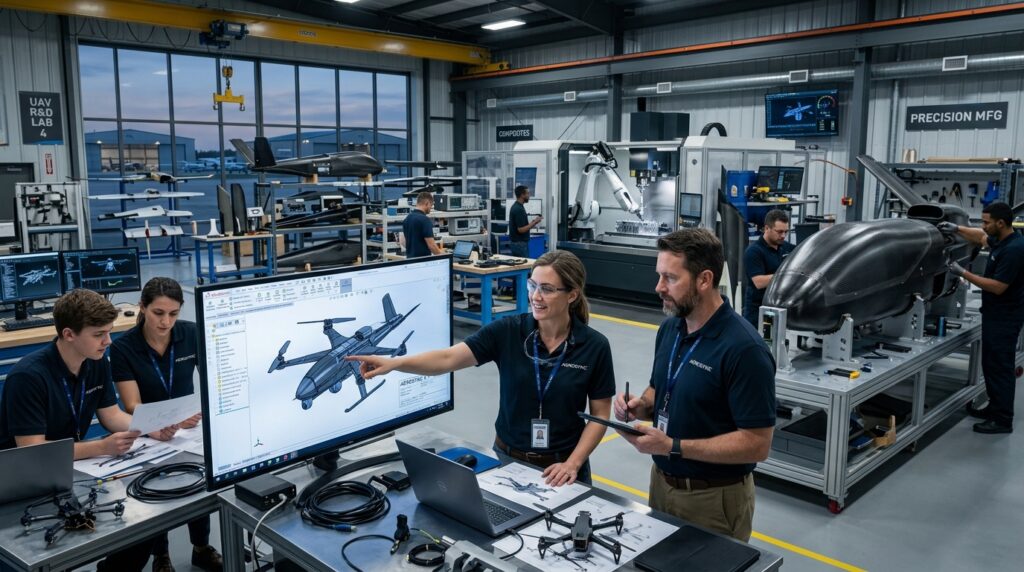
Perhaps no sector illustrates sanctions-driven innovation more dramatically than Iran’s unmanned aerial vehicle (UAV) program. Unable to acquire many advanced military technologies through conventional international markets, Iran invested heavily in indigenous aerospace research and domestic manufacturing.
Over several decades, this effort produced a diverse family of reconnaissance drones, surveillance platforms, and long-range unmanned systems. Supporters view this as evidence that sanctions encouraged technological independence. Critics argue that the same capabilities have intensified regional security concerns and contributed to geopolitical tensions.
Regardless of perspective, the broader lesson remains clear: sustained technological restrictions can alter a country’s innovation priorities in unexpected ways. The drone program became one example of how strategic necessity influenced long-term investment decisions.
Myth vs. Reality
Myth: Sanctions stopped Iran from developing advanced technology.
Reality: Sanctions significantly restricted access to foreign technology, investment, and components. However, they also encouraged substantial domestic investment in selected sectors such as aerospace, defence technologies, biotechnology, nanotechnology, and engineering. Progress has been uneven, with notable strengths in some fields and continuing dependence on foreign technology in others.
Looking East: New Economic Partnerships
As relations with many Western economies deteriorated, Iran increasingly strengthened ties with countries across Asia, Eurasia, and the Global South. Trade, investment, and diplomatic engagement expanded with partners including:
- China.
- Russia.
- India.
- Türkiye.
- Central Asian republics.
- Gulf neighbors.
- Members of emerging multilateral organisations.
These relationships were driven not only by sanctions but also by broader changes in the international system, where economic power has become more widely distributed. Iran’s “Look East” strategy reflected both necessity and opportunity. Rather than relying primarily on Europe and North America, policymakers sought to diversify international partnerships and reduce vulnerability to any single economic bloc.
This strategic reorientation would become increasingly important in the years ahead, influencing Iran’s participation in organisations such as BRICS and the Shanghai Cooperation Organisation, as well as shaping new transport corridors linking Asia, the Middle East, and Europe.
Transition to the Final Part
By the early 2020s, sanctions had transformed far more than Iran’s economy. They had reshaped its diplomacy, altered its strategic partnerships, influenced its defence doctrine, and accelerated its search for alternative financial and geopolitical alliances.
Iran Living Under Sanctions: How Economic Pressure Reshaped Iran’s Economy, Industry, and National Strategy
A New Foreign Policy Shaped by Economic Pressure
By the 2020s, it had become increasingly evident that sanctions had influenced far more than Iran’s economy. They had also transformed the country’s diplomatic priorities.
For decades before the most comprehensive sanctions, Europe represented an important commercial partner, while access to Western technology and financial markets remained central to Iran’s economic aspirations. As sanctions expanded and diplomatic relations deteriorated, Tehran gradually shifted its strategic focus toward Asia, Eurasia, and the emerging economies of the Global South.
This realignment was not solely a reaction to sanctions. It also reflected broader changes in the international system, where economic and political influence was becoming more dispersed. Nevertheless, sanctions accelerated this transition, encouraging Iran to diversify its partnerships and reduce dependence on countries that had become economically inaccessible. The result was a foreign policy increasingly oriented toward long-term strategic partnerships rather than short-term commercial opportunities.
The “Look East” Strategy
One of the defining features of Iran’s contemporary foreign policy is its “Look East” strategy. Instead of relying primarily on Western markets, Iran has expanded cooperation with countries such as:
- China
- Russia
- India
- Türkiye
- Central Asian republics
- Several Gulf and Asian economies
These relationships span multiple sectors:
- Energy exports
- Infrastructure development
- Transportation corridors
- Industrial cooperation
- Defense collaboration
- Banking alternatives
- Scientific research
- Regional security
This diversification has reduced dependence on any single economic partner, although it has also created new challenges related to balancing competing geopolitical interests.
Case Study: The 25-Year Iran–China Cooperation Agreement
One of the most discussed developments in Iran’s post-sanctions diplomacy was the long-term cooperation agreement signed with China in 2021. Although public debate often exaggerated both its scale and its immediate impact, the agreement established a broad framework for cooperation in areas including:
- Energy
- Infrastructure
- Transportation
- Telecommunications
- Investment
- Industrial development
Rather than representing a dramatic overnight transformation, the agreement symbolised Iran’s broader strategy of strengthening long-term partnerships outside the traditional Western economic sphere. Its practical implementation continues to evolve and remains influenced by commercial realities, regional politics, and international sanctions.
Joining a Changing Global Order
Iran has also sought greater participation in emerging multilateral organisations. Membership or expanded engagement with institutions such as:
- BRICS
- Shanghai Cooperation Organisation (SCO)
- Eurasian regional initiatives
reflects Tehran’s effort to integrate more deeply into a multipolar international system. These organisations do not replace access to Western financial markets, but they offer alternative avenues for:
- Trade
- Investment
- Diplomatic engagement
- Regional infrastructure
- Financial cooperation
As the global economy becomes increasingly interconnected through multiple centres of influence, such partnerships may play an increasingly significant role in Iran’s long-term economic strategy.
Did Sanctions Achieve Their Objectives?
This remains one of the most debated questions in international relations. The answer depends largely on which objective is being measured. If the goal was to increase economic pressure, sanctions were undeniably effective.
Iran experienced:
- Reduced oil revenues.
- Higher inflation.
- Currency depreciation.
- Lower foreign investment.
- Banking isolation.
- Greater economic uncertainty.
These effects imposed substantial costs on both the government and ordinary citizens. However, if the objective was to fundamentally alter Iran’s political system or eliminate its strategic capabilities, the picture becomes considerably more complex. Over four decades, Iran adapted in ways that many policymakers had not anticipated.
Instead of complete economic collapse, the country developed alternative trade networks, expanded domestic manufacturing, strengthened selected technological sectors, diversified diplomatic relationships, and invested heavily in self-reliance. This does not mean sanctions “failed” or “succeeded” in absolute terms. Rather, they produced a combination of intended and unintended consequences.
Myth vs. Reality
Myth: Sanctions completely isolated Iran from the world.
Reality: Sanctions significantly reduced Iran’s integration with many Western economies and financial institutions. However, Iran maintained and, in some cases, expanded economic and diplomatic relationships with numerous countries across Asia, the Middle East, Africa, Latin America, and Eurasia. The country became less globally integrated in some areas while becoming more regionally connected in others.
The Human Dimension
Economic statistics tell only part of the story. Behind every inflation figure, exchange-rate fluctuation, or trade restriction are millions of individuals adapting to changing circumstances.
Businesses searched for new suppliers.
Manufacturers redesigned production lines.
Doctors navigated shortages of specialised medical equipment.
Students pursued research despite technological restrictions.
Entrepreneurs created domestic alternatives to unavailable foreign services.
Families adjusted household budgets in response to inflation and currency volatility.
These experiences varied widely across different regions, professions, and income groups, but together they illustrate an important reality: sanctions are not merely instruments of international diplomacy. They also shape the everyday lives of ordinary people. Understanding this human dimension is essential to any balanced assessment of sanctions as a policy tool.
Lessons from Four Decades of Sanctions
Iran’s experience offers several broader lessons that extend beyond one country or one geopolitical dispute.
1. Modern economies are deeply interconnected.
Restrictions on banking, shipping, insurance, and technology often produce cascading effects across multiple sectors.
2. Economic resilience requires diversification.
Heavy dependence on a single export commodity, trading partner, or financial system increases vulnerability to external shocks.
3. Innovation often emerges under constraint.
Although sanctions limited access to global markets and technologies, they also encouraged investment in domestic engineering, scientific research, and industrial capabilities.
4. Adaptation does not eliminate economic costs.
Domestic production can reduce dependence on imports, but it may also involve higher costs, reduced efficiency, and slower technological advancement.
5. Sanctions evolve.
Their long-term consequences often differ from their immediate effects, as governments, businesses, and societies gradually adapt to new realities.
Data Snapshot: Iran Before and After Decades of Sanctions
| Area | Before Comprehensive Sanctions | After Decades of Adaptation |
|---|---|---|
| Banking | Broad global financial access | Alternative payment systems and regional banking partnerships |
| Industry | Greater dependence on imported technology | Expanded domestic manufacturing and import substitution |
| Energy | Heavy reliance on crude oil exports | Greater emphasis on petrochemicals and diversified exports |
| Diplomacy | Stronger focus on Europe | Expanded engagement with Asia and Eurasia |
| Technology | Higher dependence on foreign suppliers | Growth of domestic research and knowledge-based companies |
| Trade | Global commercial integration | Regional trade networks and diversified partnerships |
Conclusion: A Nation Transformed by Pressure
Few countries in modern history have experienced economic sanctions on the scale and duration imposed on Iran. These measures reshaped industries, altered financial systems, redirected diplomacy, influenced scientific priorities, and transformed national economic planning. Yet Iran’s story cannot be reduced to either resilience or hardship alone.
It is a story of adaptation under extraordinary pressure.
Some industries declined while others emerged.
Certain opportunities disappeared while new capabilities developed.
Economic hardship coexisted with technological innovation.
International isolation in some sectors coincided with expanding regional partnerships in others.
Whether viewed through the lens of economics, geopolitics, or history, Iran’s experience demonstrates that sanctions are rarely static instruments. They reshape the behaviour of governments, businesses, and societies in ways that continue long after the original political objectives have changed.
For policymakers around the world, Iran offers one of the most important contemporary case studies of how prolonged external pressure can transform an entire nation’s economic structure and strategic outlook.
Rather than producing a simple narrative of success or failure, decades of sanctions have left Iran with a uniquely complex legacy, one that continues to evolve as the global balance of economic and political power shifts in the twenty-first century.
Final Thoughts
The history of sanctions against Iran is not merely a story of restrictions and resilience. It is also a window into larger questions about globalisation, economic sovereignty, technological innovation, and the limits of economic coercion.
As new geopolitical rivalries emerge and sanctions become an increasingly common instrument of international policy, the Iranian experience will remain one of the most closely studied examples of how nations adapt when access to the global economy becomes constrained.
For readers seeking to understand modern Iran, sanctions are not simply one chapter of its history; they are a defining force that has shaped its economy, institutions, diplomacy, and national identity for more than four decades.