
The Civilisation That Refuses to Disappear
Ancient Persia: How One of the World’s Oldest Civilisations Still Shapes Modern Iran
The Civilisation That Refuses to Disappear. For millions around the world, Iran appears in news headlines only during nuclear negotiations, sanctions, regional conflicts, or diplomatic crises. Yet these headlines reveal only a fraction of a story that stretches back more than twenty-five centuries.
“Empires rise. Empires fall. Civilisations endure.”
https://mrpo.pk/iran-explained-from-ancient-persia-to-modern-geopolitics/

Four Reasons Civilisation Won’t Decline: It Will Collapse
As modern civilisation’s shelf life expires, more scholars have turned their attention to the decline and fall of civilisations past. Their studies have generated rival explanations of why societies collapse and civilisations die. Meanwhile, a lucrative market has emerged for post-apocalyptic novels, movies, TV shows, and video games for those who enjoy the vicarious thrill of dark, futuristic disaster and mayhem from the comfort of their cozy couch. Of course, surviving the real thing will become a much different story.
The latent fear that civilisation is living on borrowed time has also spawned a counter-market of “happily ever after” optimists who desperately cling to their belief in endless progress. Popular Pollyannas, like cognitive psychologist Steven Pinker, provide this anxious crowd with soothing assurances that the titanic ship of progress is unsinkable. Pinker’s publications have made him the high priest of progress.[1] While civilisation circles the drain, his ardent audiences find comfort in lectures and books brimming with cherry-picked evidence to prove that life is better than ever, and will surely keep improving. Yet, when questioned, Pinker himself admits, “It’s incorrect to extrapolate that the fact that we’ve made progress is a prediction that we’re guaranteed to make progress.”[2]
Modern Iran did not emerge from a historical vacuum. It inherited the political memory, cultural confidence, literary traditions, and civilizational consciousness of Ancient Persia, one of humanity’s oldest continuous civilisations. While governments have changed, religions have evolved, and foreign invasions have reshaped the region, a distinctive Iranian identity has persisted through remarkable historical upheavals.
Understanding contemporary Iran requires looking far beyond current events. It requires examining the long arc of Persian history, where kings, poets, scholars, merchants, architects, and philosophers built a civilisation that survived conquest, adapted to change, and repeatedly reinvented itself.
This article begins a comprehensive series that seeks to explain Iran through the lens of history rather than headlines. The objective is not to defend or criticise any government. Instead, it is to provide readers with the historical context necessary to understand why Iran often perceives itself, and is perceived by others, as more than just another nation-state.
Why This Series Matters: The Civilisation That Refuses to Disappear
The recent conflict involving Iran has renewed global interest in the country’s military capabilities, diplomatic strategy, technological resilience, and regional influence. Around the world, analysts continue to debate how Iran managed to sustain prolonged resistance under decades of sanctions while simultaneously maintaining sophisticated missile, drone, scientific, and industrial programs.
Many discussions begin with recent events. Few begin where the story truly starts. To understand why Iran behaves differently from many modern states, one must first understand how Iranians often view themselves, not merely as citizens of a modern republic but as heirs to a civilisation that predates most existing nations.
History does not determine the future, but it often shapes national memory, strategic culture, and political decision-making. That is where this journey begins.
Persia Before Iran: A Civilisation Older Than Most Nations
The terms “Persia” and “Iran” are often used interchangeably, but they are not identical.
“Persia” originated from Parsa (modern Fars Province), the homeland of the Persian people who established the Achaemenid Empire. Ancient Greek writers extended the name “Persia” to the wider empire, and it became the common Western designation for centuries.
“Iran,” however, derives from the ancient expression meaning “Land of the Aryans” and has long been the country’s indigenous name. In 1935, the Iranian government formally requested that foreign governments adopt “Iran” in official usage, though both names remain historically relevant. (Encyclopedia Britannica)
This distinction reflects not two separate countries but different ways of referring to the same enduring civilisation across different historical periods.
The Birth of an Empire That Changed World History
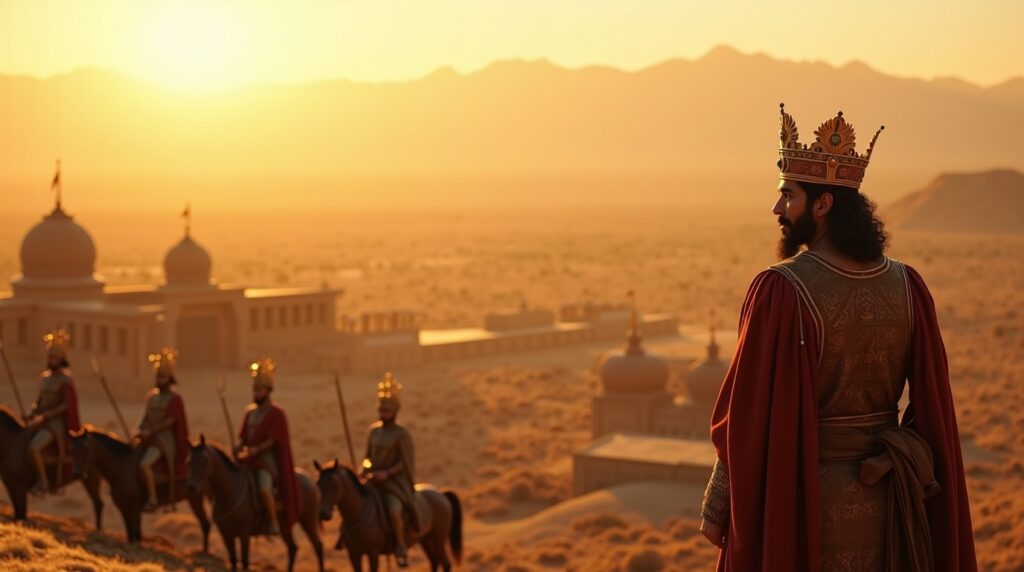
More than 2,500 years ago, a ruler named Cyrus II—better known as Cyrus the Great- united various Persian tribes and established what historians recognise as the Achaemenid Empire.
Within decades, this empire stretched from the Mediterranean to Central Asia, becoming the largest empire the world had yet seen. Its significance, however, extended beyond territorial expansion. The Achaemenid Empire pioneered administrative innovations that influenced later imperial systems across Eurasia.
Among its most enduring achievements were:
Administrative Governance
The empire was divided into provinces called satrapies, each administered by appointed governors while remaining accountable to the central authority. This model demonstrated that enormous territories could be governed without constant military occupation.
Infrastructure
The famous Royal Road connected distant regions across thousands of kilometres, dramatically improving trade, communication, and state administration. An organised courier system enabled messages to travel at unprecedented speed for its era.
Cultural Accommodation
Rather than imposing uniformity everywhere, Persian rulers often allowed conquered peoples to retain local languages, traditions, and religious practices while integrating them into a larger imperial framework.
Many historians regard this administrative flexibility as one of the empire’s greatest strengths. (Encyclopedia Britannica)
More Than Conquerors: Builders of Civilisation
Modern discussions frequently measure civilisations by military victories.
Ancient Persia excelled in another domain: state-building.
Persian engineers developed sophisticated irrigation systems.
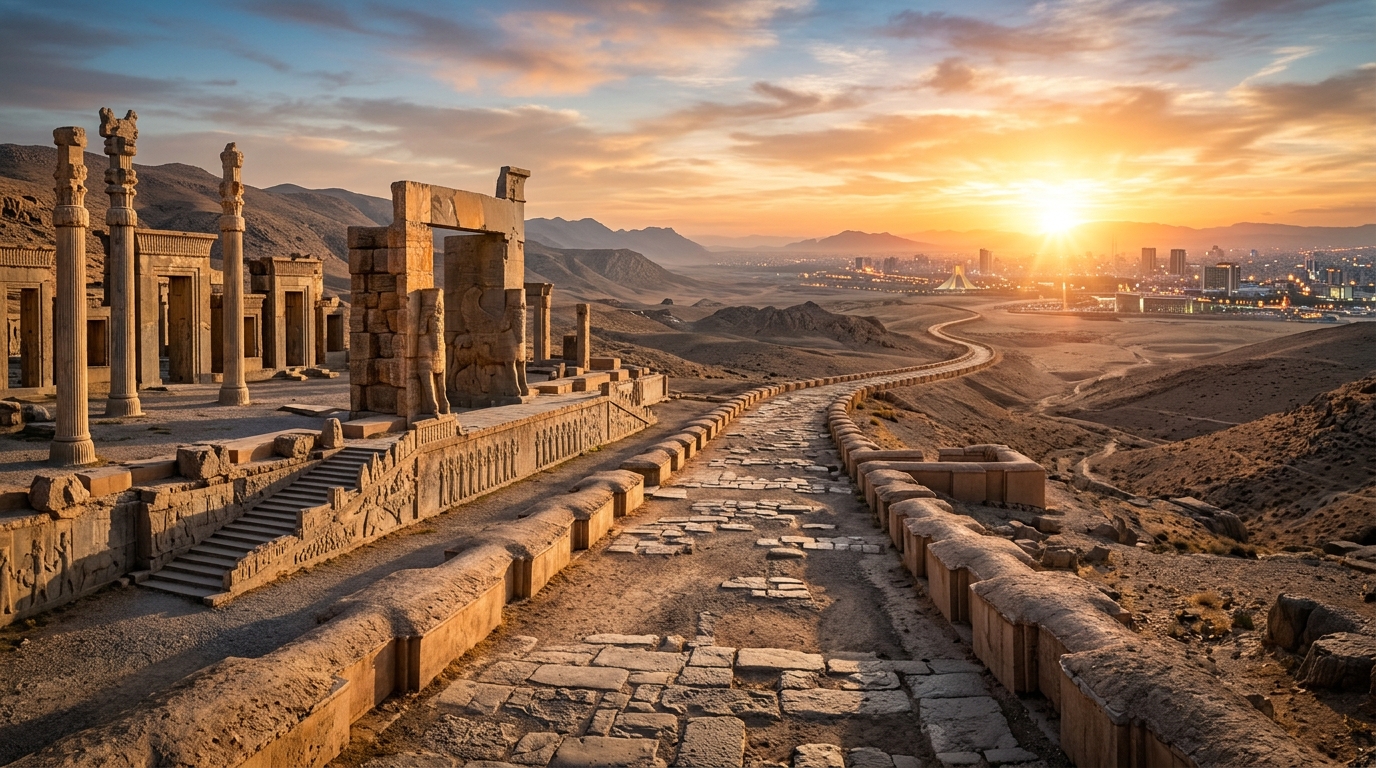
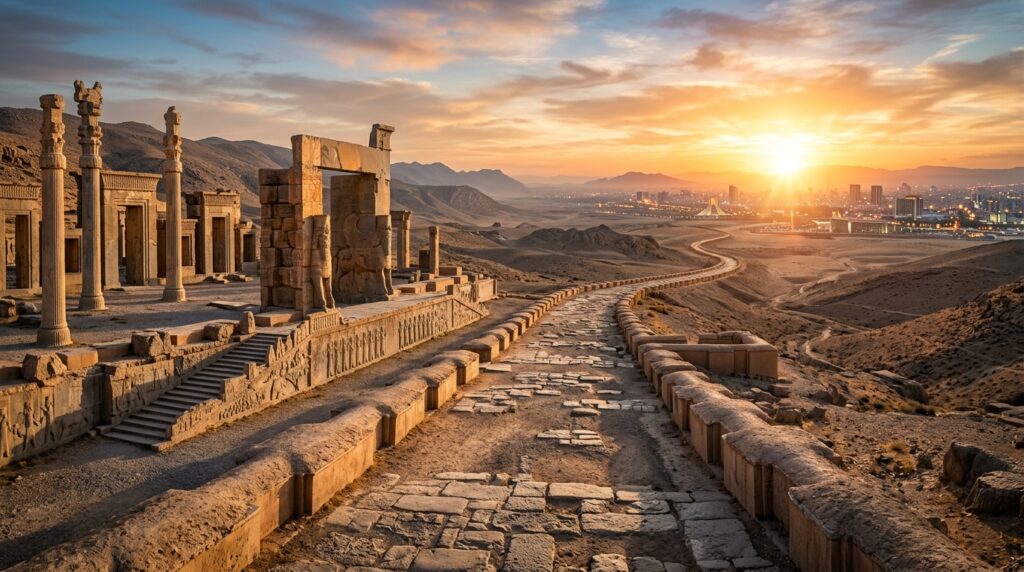
Architects created monumental ceremonial capitals such as Persepolis.
Administrators standardised taxation across immense territories.
Merchants connected Asia, Africa, and Europe through expanding trade networks.
The empire’s prosperity depended not only on military power but also on governance, agriculture, commerce, and infrastructure.
Its achievements influenced neighbouring civilisations for centuries.
Persepolis: A Monument to Political Vision
Among the greatest symbols of Persian civilisation stands Persepolis.
Rather than functioning solely as a royal palace, Persepolis served as a ceremonial centre where representatives from across the empire gathered to bring tribute that reflected the diversity of imperial society.
Its extraordinary stone reliefs portray delegates from numerous peoples wearing distinctive clothing and carrying gifts from their own regions.
To many historians, these carvings symbolise an imperial vision based on diversity under centralised authority rather than cultural uniformity.
Although Persepolis was burned after Alexander’s conquest, its ruins continue to symbolise Persian civilizational memory.
The Persian Mindset: Continuity Instead of Collapse
Many ancient empires disappeared after military defeat.
Persia did not.
Alexander conquered the Achaemenid Empire.
Later came the Parthians.
Then the Sasanian Empire.
The Arab-Islamic conquest transformed religion and political structures during the seventh century.
Mongol invasions devastated cities.
Foreign dynasties ruled different periods.
Yet throughout these upheavals, the Persian language, literature, artistic traditions, administrative culture, and historical memory continued to evolve rather than disappear.
This continuity distinguishes Iran from many civilisations whose political collapse also ended their cultural influence.
The Civilisation That Refuses to Disappear: A Civilisation That Absorbs Change
One of Persia’s defining characteristics has been its capacity to absorb external influences without losing its own cultural core.
Greek artistic elements entered Persian traditions.
Islam transformed religious life after the seventh century.
Turkic dynasties introduced new military institutions.
Mongol rulers eventually adopted Persian administrative culture.
Rather than replacing Persian civilisation, many incoming powers became integrated into it.
This adaptive capacity helps explain why Iranian identity remained resilient across centuries of political transformation.
Why Ancient Persia Still Matters in Modern Iran
Walk through modern Iran today, and traces of ancient civilisation remain visible.
The Persian language preserves centuries of literary continuity.
Poets such as Ferdowsi, Hafez, Saadi, and Rumi continue to shape cultural life.
Nowruz, the Persian New Year, remains one of the country’s most important celebrations despite originating long before Islam.
Historical monuments attract millions of visitors every year.
Ancient symbols frequently appear in literature, architecture, museums, and public discourse.
Many Iranians view these traditions not as distant history but as part of their living national identity. Discussions among Iranians frequently reflect a strong sense of connection to ancient Persian heritage, though perspectives naturally vary across individuals and communities. (Reddit)
Understanding Modern Iran Through Ancient Persia
Political systems change.
Governments change.
Religions evolve.
Borders shift.
Yet civilisations often preserve deeper patterns of collective memory.
The Civilisation That Refuses to Disappear. Whether examining Iran’s emphasis on sovereignty, education, scientific achievement, cultural independence, or national resilience, observers frequently encounter ideas rooted in centuries of historical experience.
This does not mean modern policies are direct continuations of ancient Persia. Rather, it suggests that historical memory forms part of the cultural framework through which many Iranians understand their place in the world.
Ignoring that long history risks misunderstanding contemporary Iran.
Looking Ahead
Ancient Persia explains where Iran’s civilizational confidence began.
The next article explores another transformative chapter:
How Islam arrived in Persia, why Persian civilisation endured after the Arab conquests, and how the interaction between Islam and Persian culture reshaped both Iran and the broader Islamic world.
Understanding that encounter is essential to understanding modern Iran.
Key Takeaways
- Ancient Persia established one of history’s earliest large-scale empires.
- Persian governance influenced later imperial administrations.
- Iran represents one of the world’s oldest continuously evolving civilisations.
- Conquest transformed Persia but did not erase its cultural identity.
- Persian language, literature, and traditions remain central to modern Iran.
- Historical continuity helps explain aspects of Iran’s contemporary national outlook.
Frequently Asked Questions
Was Persia the same as modern Iran?
Historically, Persia referred to the region of Parsa (Fars) and later became the Western name for the broader country. Iran has long been the indigenous name and became the official international designation in 1935. (Encyclopedia Britannica)
Why is Ancient Persia considered historically significant?
Ancient Persia built one of the world’s first large multinational empires, pioneering administrative systems, infrastructure, and governance models that influenced later civilisations.
Did Persian civilisation disappear after the Arab conquest?
No. While Islam transformed religion and politics, the Persian language, literature, culture, and administrative traditions continued to evolve and remained highly influential.
Why do many Iranians emphasise their ancient history?
Ancient Persia forms an important part of Iran’s cultural identity and historical memory. Many people see it as a source of national pride alongside later Islamic and modern historical experiences.
Is modern Iran directly governed according to ancient Persian traditions?
No. Modern Iran operates under a contemporary constitutional and political system. However, historical memory and cultural traditions continue to influence national identity.
Why is studying Ancient Persia important today?
Ancient Persia provides essential context for understanding Iran’s culture, historical consciousness, and its enduring sense of civilizational continuity.
References
- The Persian Empire: A Corpus of Sources from the Achaemenid Period
- From Cyrus to Alexander: A History of the Persian Empire
- Ancient Persia: A Concise History of the Achaemenid Empire
- Encyclopaedia Britannica – Ancient Iran