Can I Vote Provisionally? What Is a Provisional Ballot? The 2026 U.S. Guide
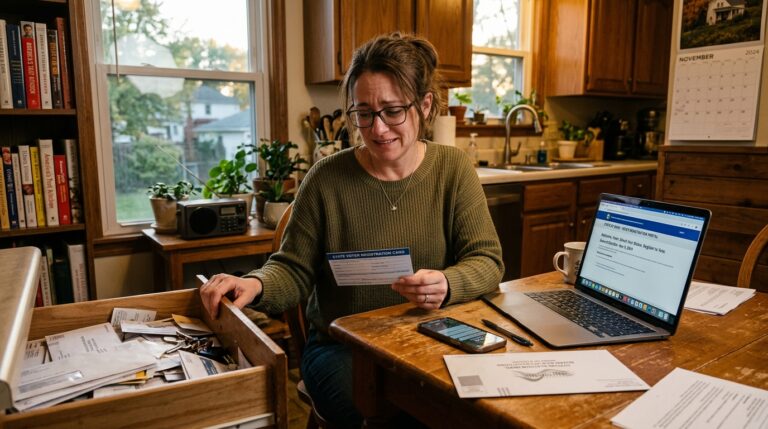
Can I Vote Provisionally? You arrive at the polling place ready to vote.
Then something goes wrong.
Your name is missing from the voter list.
Your address does not match.
The poll worker cannot confirm your registration.
You have an identification problem.
Or someone tells you there is a question about your eligibility.
For many voters, this is the moment panic begins.
But there may be another option:
A provisional ballot.
A provisional ballot is designed for situations where a voter’s eligibility cannot immediately be confirmed at the polling place. It allows election officials to review the situation after Election Day and determine whether the ballot can legally be counted.
But there is an important catch.
A provisional ballot is not an automatic guarantee that your vote will count.
The ballot must be reviewed under the laws and procedures of your state.
So what exactly is a provisional ballot?
When can you use one?
What happens after you cast it?
And what should you do to protect your vote?
Let’s take it step by step.
Can I Vote Provisionally? What Is a Provisional Ballot?
A provisional ballot is a ballot used when there is a question about whether a voter is eligible to vote in a particular election or whether the voter has satisfied a requirement for receiving a regular ballot.
Instead of simply telling the voter to leave, election officials use a separate process to document the voter’s claim to eligibility and later determine whether the ballot should be counted.
Under the federal Help America Vote Act, voters covered by the federal provisional-voting requirements must be offered a provisional ballot in certain circumstances, including when a voter says they are registered but their name does not appear on the list of eligible voters or a poll worker determines there is a question about eligibility. (U.S. Election Assistance Commission)
There are exceptions to the federal requirement for certain states with same-day registration systems and for North Dakota, which does not require voter registration. (U.S. Election Assistance Commission)
That is why you should never assume that one state’s provisional-ballot rules automatically apply in another.
Is a Provisional Ballot a Real Vote?
Yes.
But it is a vote that requires additional eligibility review.
Election officials keep provisional ballots separate from regular ballots while they investigate whether the voter was eligible under applicable law.
If the voter is determined to be eligible, the ballot must be counted according to the applicable rules. (U.S. Election Assistance Commission)
This distinction matters.
A provisional ballot is not simply:
“Your vote doesn’t count.”
It is closer to:
“There is a question that must be resolved before we can count this ballot.”
That review is the reason provisional ballots exist.
Why Would Someone Need a Provisional Ballot?
There are several situations in which a voter may be directed to provisional voting.
The exact reasons differ by state, but common situations include:
- Your name is not on the voter list.
- There is a question about your registration.
- Your identification does not satisfy the state’s requirements.
- Your name or address information does not match the registration record.
- You believe you are registered, but election officials cannot immediately verify it.
- You received a mail ballot but are attempting to vote in person and state rules require a provisional ballot.
- A court has extended voting hours, and special provisional procedures apply.
The EAC notes that provisional ballots may be used when a voter’s eligibility cannot be verified at the polling place. (U.S. Election Assistance Commission)
The important point is that the specific reason and procedure depend on state law.
What If My Name Isn’t on the Voter List?
This is one of the most serious situations in this entire article series.
Imagine you arrive at your assigned polling place.
The poll worker searches for your name.
Nothing appears.
You say:
“But I am registered.”
The worker checks again.
Still nothing.
Do not immediately leave.
First, make sure you are at the correct polling place. Your polling location is generally tied to your residential address, and voting somewhere else can create additional problems. USA.gov advises voters to confirm their assigned polling location before Election Day. (USAGov)
If you are at the correct location and your name still cannot be found, ask what procedure applies.
Under federal law, in jurisdictions subject to HAVA’s provisional-ballot requirement, an eligible voter who says they are registered but does not appear on the list must be offered a provisional ballot. (U.S. Election Assistance Commission)
But remember the important distinction:
Being offered a provisional ballot does not mean the ballot will automatically be counted.
Your eligibility still has to be reviewed.
What If My Address Is Wrong?
Address problems are common after moving.
Perhaps you moved to another apartment.
Maybe you moved across town.
Maybe you moved to another county.
Or perhaps you moved between states.
Your identification might show one address while your voter registration record shows another.
USA.gov notes that an address mismatch can lead to provisional voting in some states. (USAGov)
Do not assume the mismatch means you are disqualified.
Tell the poll worker what happened.
Then ask:
“What does my state require me to do in this situation?”
The answer may be different depending on where you live.
What If My Name Changed?
Marriage and divorce can create a similar problem.
For example:
Your voter registration says:
Sarah Johnson
Your identification says:
Sarah Williams
Because you recently married.
That does not necessarily mean you are unable to vote.
It means your election officials may need to determine how the mismatch should be handled.
USA.gov specifically identifies name and address mismatches as circumstances in which some states may use provisional ballots. (USAGov)
The safest approach is to update your registration before Election Day whenever possible.
If you are already at the polling place, explain the situation and follow the official procedure.
What If I Don’t Have the Required ID?
Voter ID laws differ from state to state.
Some states require specific forms of identification.
Others use different procedures when a voter does not have the required identification.
USA.gov notes that some states allow voters without the required ID to cast provisional ballots, sometimes with additional steps such as presenting acceptable identification within a specified period. (USAGov)
That last part is extremely important.
Casting the provisional ballot may not be the final step.
Your state may give you a deadline to provide additional information or identification.
Miss that deadline, and your ballot may not be counted.
So if you receive instructions after casting the ballot, treat them seriously.
What Happens When You Cast a Provisional Ballot?
The process generally involves several stages.
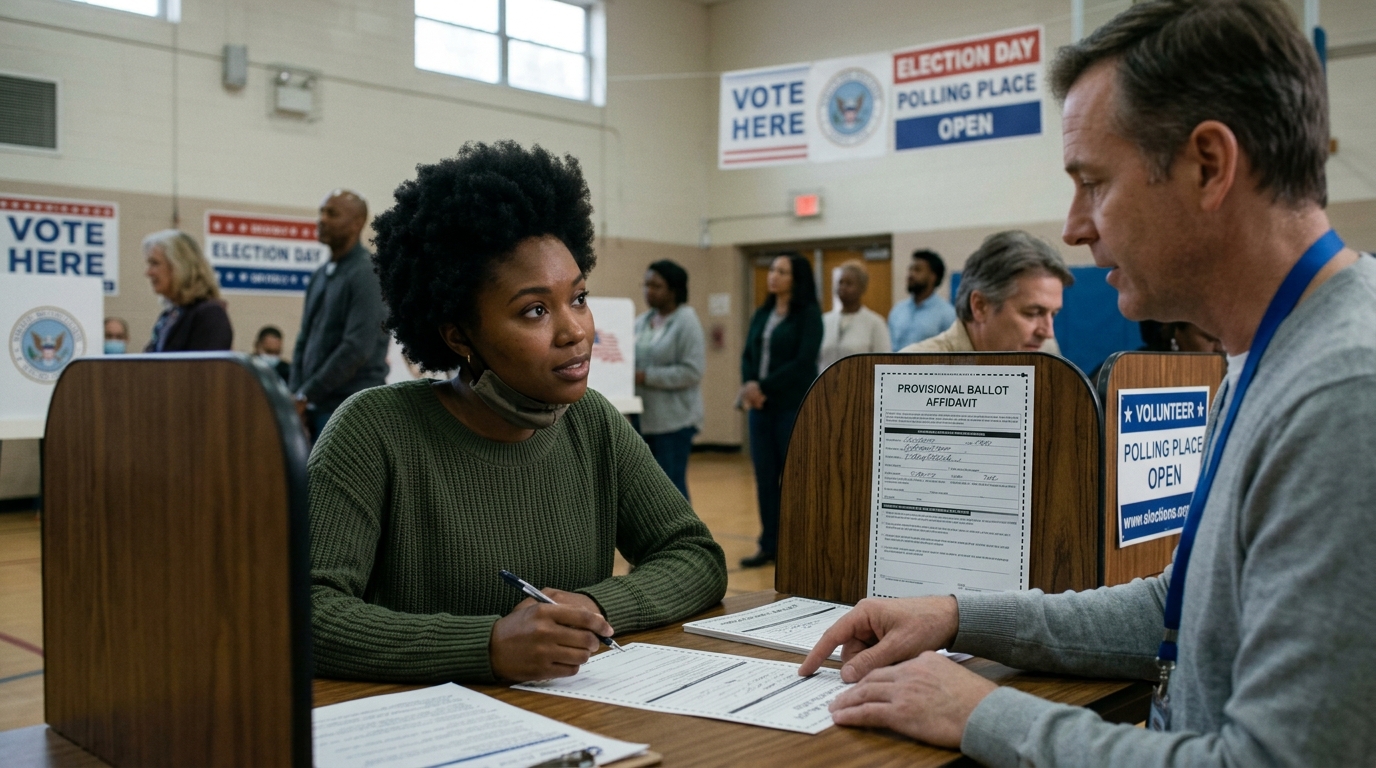
You Complete the Required Information
You may need to sign an affirmation or provide information establishing that you are registered and eligible to vote.
Federal law requires voters using the HAVA provisional process to affirm that they are registered and eligible in the jurisdiction. (U.S. Election Assistance Commission)
Follow the instructions carefully.
A small administrative mistake can create unnecessary complications.
Your Ballot Is Kept Separate
Provisional ballots are generally handled separately from regular ballots while eligibility is reviewed.
The EAC’s guidance emphasises protecting the secrecy of provisional ballots and keeping them separate from regular voted ballots. (U.S. Election Assistance Commission)
This separation allows election officials to determine eligibility without mixing unresolved ballots into the regular count.
Election Officials Review Your Eligibility
After the election, officials review the information associated with the provisional ballot.
They may examine voter-registration records and other information permitted by state law.
The goal is to determine whether the voter was eligible and whether the ballot meets the applicable requirements.
If the voter is eligible, the ballot is counted according to state law. (U.S. Election Assistance Commission)
Can a Provisional Ballot Be Rejected?
Yes.
A provisional ballot is not automatically counted.
It may not be counted if election officials determine that the voter was not eligible or did not satisfy applicable legal requirements.
The exact reasons vary by jurisdiction.
Possible issues can include:
- The person was not registered where required.
- The person was not eligible to vote in that election.
- The voter was in the wrong jurisdiction or polling location under applicable rules.
- Required information or affirmation was missing.
- Required identification was not provided within the applicable deadline.
- The voter had already voted, and state law prohibits another ballot from being counted.
- Other state-specific requirements were not satisfied.
This is why the paperwork that comes with a provisional ballot matters.
Do not throw it away.
Can I Find Out Whether My Provisional Ballot Was Counted?
Yes.
Federal law requires states and local jurisdictions subject to the provisional-ballot requirements to provide a free way for voters to find out whether their provisional ballot was counted and, if it was not counted, why. (U.S. Election Assistance Commission)
This may be a website, telephone system, or another official tracking method.
Ask for the information before you leave the polling place.
You may receive written instructions explaining how to check the status of your ballot.
Keep them.
Your provisional ballot is not something you should forget about after walking out of the polling place.
What If the Poll Worker Doesn’t Explain What Happens Next?
Ask.
This is not the time to feel embarrassed.
You can say:
“Could you please explain what I need to do after today to make sure my provisional ballot is properly processed?”
Then ask:
“How can I check whether it was counted?”
The EAC says voters casting provisional ballots must receive information about the free system they can use to determine whether the ballot was counted. (U.S. Election Assistance Commission)
If you do not understand the instructions, ask for clarification.
Election terminology can sound like another language when you are standing at a crowded polling place with people waiting behind you.
There is no prize for pretending you understood something you did not.
What if I Am Told I Cannot Vote at This Location?
First, determine why.
Ask:
“Is this because I am at the wrong polling place?”
If the answer is yes, ask where your assigned polling place is.
USA.gov states that voters generally need to vote at their assigned polling location, and voting elsewhere can result in a provisional ballot or a ballot that does not count. (USAGov)
If the answer is that your eligibility cannot be confirmed, ask whether provisional voting is available under your state’s rules.
Do not assume that the person speaking to you is necessarily giving you the complete legal answer.
Politely ask for the official procedure.
What If Someone Says, “A Provisional Ballot Won’t Count Anyway”?
That statement is too broad.
Some provisional ballots are counted.
Others are not.
The determining factor is whether the voter and ballot satisfy the applicable legal requirements.
The EAC states that eligible provisional ballots must be counted under the federal framework, while election officials review each ballot to determine eligibility under state law. (U.S. Election Assistance Commission)
So don’t let a casual statement from another voter, or even an incomplete explanation, decide for you.
Ask election officials what the law requires in your situation.
What If I Already Received a Mail Ballot?
This is another situation where state rules matter.
Suppose you requested a mail ballot but decide to vote in person.
Can you simply walk into the polling place and vote normally?
Not necessarily.
USA.gov explains that states have different procedures. Depending on the state, you may be able to exchange an unused ballot, surrender it, complete it and return it at the polling place, or cast a provisional ballot. (USAGov)
So don’t guess.
Tell the poll worker:
“I received a mail ballot, but I want to vote in person. What is the procedure in this state?”
What If I Make a Mistake on the Provisional Ballot?
Stop and ask for help.
Do not deliberately submit incorrect information because you are worried that asking questions will cause trouble.
Election workers have procedures for assisting voters while protecting ballot secrecy.
The EAC notes that voters generally have federal protections allowing them to correct a ballot before it is cast. (U.S. Election Assistance Commission)
The exact procedure for correcting a provisional ballot depends on the voting system and state rules.
If something goes wrong, ask before you submit it.
Should I Take a Picture of My Provisional Ballot?
Be careful.
The rules concerning photography, cell phones, and ballot privacy vary by jurisdiction.
Your priority should be keeping the ballot secret and following polling-place rules.
You should, however, keep any official receipt, tracking information, or written instructions you are given for checking your provisional ballot status.
Those documents may be important later.
What If I Am a First-Time Voter?
Can I Vote Provisionally? First-time voters can face additional identification requirements in certain circumstances.
USA.gov explains that federal law requires certain first-time voters who registered by mail and did not provide acceptable identification when registering to show identification when voting. (USAGov)
The exact documents accepted and what happens if you do not have them depend on the applicable rules.
If you are voting for the first time, checking your state’s requirements before Election Day can prevent an unpleasant surprise.
What If I Am a College Student?
College students can encounter registration and address problems because they may have both a permanent home address and a school address.
The key question is where the student is registered and what state law allows.
If there is uncertainty, check the registration record before Election Day.
If a problem occurs at the polling place, explain the situation and ask election officials what procedure applies.
Don’t assume that being a student automatically means you must vote at home—or automatically means you must vote at college.
What If I Am Homeless?
Lack of a traditional home address does not automatically mean a person has no voting rights.
However, registration and residence requirements vary by state.
Vote.gov provides specific information for people experiencing homelessness and voters without a permanent address.
If this applies to you, check your state’s rules before Election Day rather than waiting until you are standing at the polling place.
What If I Am a Military or Overseas Voter?
Military and overseas voters have special voting procedures.
If you are outside the United States, you generally should not wait until Election Day to discover a registration or ballot problem.
Vote.gov explains that eligible U.S. citizens living abroad can register and vote from outside the country under the rules of their voting state. (Vote.gov)
For military and overseas voters, the Federal Voting Assistance Program and the appropriate state election office are important sources of official information.
The Most Important Thing: Follow Up
This is where provisional voting differs from ordinary voting.
With a regular ballot, you usually vote and go home.
With a provisional ballot, there may be a second step.
You may need to:
- Provide identification.
- Provide additional information.
- Confirm registration information.
- Meet a deadline.
- Check the ballot-status system.
- Contact your election office.
The exact requirements depend on the state.
Do not assume that someone will contact you automatically.
Ask what you need to do.
Then do it.
What Should You Keep After Casting a Provisional Ballot?
Keep every official document you receive.
That may include:
- Provisional ballot receipt
- Tracking information
- Written instructions
- Election office contact information
- Identification instructions
- Deadlines for submitting additional information
Take the paperwork home.
Put it somewhere safe.
Then check the status when the official system becomes available.
What If My Provisional Ballot Was Not Counted?
Don’t stop at the words:
“Not counted.”
Find out why.
Federal law requires an official system for voters to learn whether a provisional ballot was counted and, if not, the reason. (U.S. Election Assistance Commission)
The explanation may help you understand what happened and what, if anything, can be done under state law.
The purpose of checking is not to create an argument.
It is to understand the official record.
A Real-Life Example
Imagine James arrives at his polling place.
He has voted there before.
But his name isn’t on the list.
He tells the poll worker that he recently moved within the same county.
The poll worker checks the information and determines that James is not listed at that location.
Instead of leaving, James asks:
“Can you tell me where my assigned polling place is?”
He is given another location.
Now imagine a different situation.
James is at the correct location, but the registration problem cannot be resolved.
The poll worker explains that he may cast a provisional ballot.
James completes the required paperwork, receives information about checking the ballot’s status, and keeps the receipt.
He has not been promised that the ballot will count.
But he has also not simply walked away.
That’s the practical purpose of provisional voting.
It gives the election system a structured way to resolve an eligibility question.
Election-Day Provisional Ballot Checklist
If you are offered a provisional ballot, slow down.
Before leaving, make sure you understand:
- Why: Ask why you are being asked to vote provisionally.
- How: Follow every instruction on the provisional-ballot paperwork.
- Signature: Make sure required affirmations or signatures are completed.
- Documents: Ask whether you need to provide identification or other information later.
- Deadline: Ask for the exact deadline if additional information is required.
- Tracking: Ask how you can check whether your ballot was counted.
- Receipt: Keep any receipt or tracking information.
- Contact: Save the official election office contact information.
A few minutes of attention can matter enormously.
Don’t Walk Away Simply Because the Word “Provisional” Sounds Scary
The word itself sounds uncertain.
And, technically, it is.
But that uncertainty is precisely why the provisional-ballot process exists.
There is a question.
The election officials investigate it.
Then they determine whether the voter and ballot satisfy the law.
The important thing is to understand the process rather than assuming the outcome.
If your eligibility is confirmed, an eligible provisional ballot is counted according to applicable law. (U.S. Election Assistance Commission)
So if you hear:
“You need to vote provisionally,”
Don’t panic.
Ask:
“Why?”
Then ask:
“What do I need to do next?”
And finally:
“How do I check whether my ballot was counted?”
Those three questions can turn a confusing Election Day problem into a process you can actually follow.
The Bottom Line
A provisional ballot is a safeguard for situations in which a voter’s eligibility cannot immediately be confirmed.
It is not automatically a rejected ballot.
It is also not an automatic guarantee that your vote will count.
Election officials review the voter and ballot under applicable state and federal rules. Eligible provisional ballots are counted according to those rules, and voters are entitled to information about whether their provisional ballot was counted. (U.S. Election Assistance Commission)
Because election laws differ across the United States, the smartest thing you can do is avoid guessing.
If you are offered a provisional ballot:
Understand why. Complete it carefully. Keep your receipt. Follow any additional instructions. Check the official status afterwards.
And remember one simple rule:
Don’t walk away just because the regular voting process didn’t work. Ask what the law allows next.
https://mrpo.pk/2026-us-midterm-elections/
Frequently Asked Questions
1. What is a provisional ballot?
A provisional ballot is a ballot used when there is a question about a voter’s eligibility or ability to cast a regular ballot. Election officials later review the voter and ballot under applicable law to determine whether it can be counted.
2. Will my provisional ballot automatically count?
No. A provisional ballot is reviewed before it is counted. If election officials determine that you were eligible and the ballot satisfies the applicable requirements, it is counted according to state law. (U.S. Election Assistance Commission)
3. Why might I be asked to vote provisionally?
Reasons can include your name not appearing on the voter list, an eligibility question, an identification problem, or certain registration or address issues. The exact circumstances vary by state.
4. How do I know whether my provisional ballot was counted?
Ask the poll worker for the official method used in your jurisdiction. Federal law requires jurisdictions subject to the federal provisional-ballot requirements to provide voters with a free way to determine whether their ballot was counted and, if not, why. (U.S. Election Assistance Commission)
5. What happens if I forget to provide required identification after voting provisionally?
It depends on your state and the reason for the provisional ballot. Some states provide a period during which voters can submit acceptable identification or other information. Follow the written instructions you receive and contact your election office if you are unsure.
6. Can I vote provisionally at any polling place?
Not necessarily. Polling places are generally assigned according to your residence, and voting at the wrong location can affect whether your ballot can be counted. Always confirm your assigned polling place and ask election officials what procedure applies if you are at the wrong location. (USAGov)
References
- U.S. Election Assistance Commission — Overview of Federal Election Laws
- U.S. Election Assistance Commission — Provisional Voting
- U.S. Election Assistance Commission — Voter FAQs
- U.S. Election Assistance Commission — Quick Start Guide: Provisional Ballots
- USA.gov — Voter ID Requirements
- USA.gov — Confirm Your Voter Registration
- USA.gov — Find Your Polling Place
- USA.gov — Absentee Voting and Voting by Mail
- Vote.gov — Voting Outside the United States
Author
Maj Hamid Mahmood (Retired) holds an MA in Political Science, an LLB, and a PGD (HRM). His military background, academic training in political science, and legal education provide a multidisciplinary perspective for examining international conflicts, security affairs, political developments, and the human consequences of war.