BISP: Rs3.5 Trillion Later: Has BISP Reduced Poverty or Merely Managed It?
BISP: Rs3.5 Trillion: Has Pakistan reduced poverty, or merely managed it? From cash transfers and corruption to Akhuwat, jobs, self-reliance, and the Qur’anic and Prophetic vision of social justice.
What if Pakistan’s biggest poverty problem is not that it gives too little to the poor, but that after nearly two decades of giving, it still has no equally ambitious system for helping economically capable families stop needing to receive?
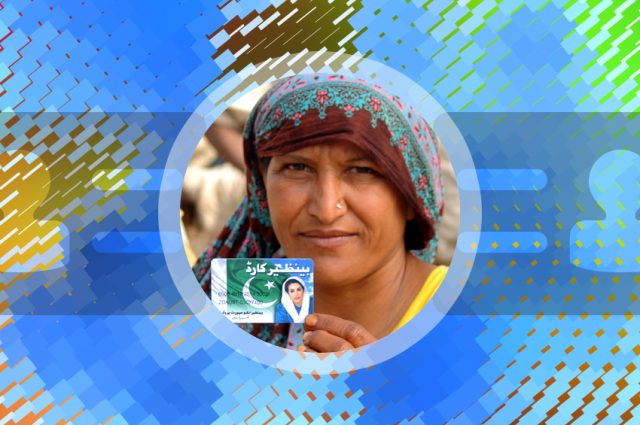
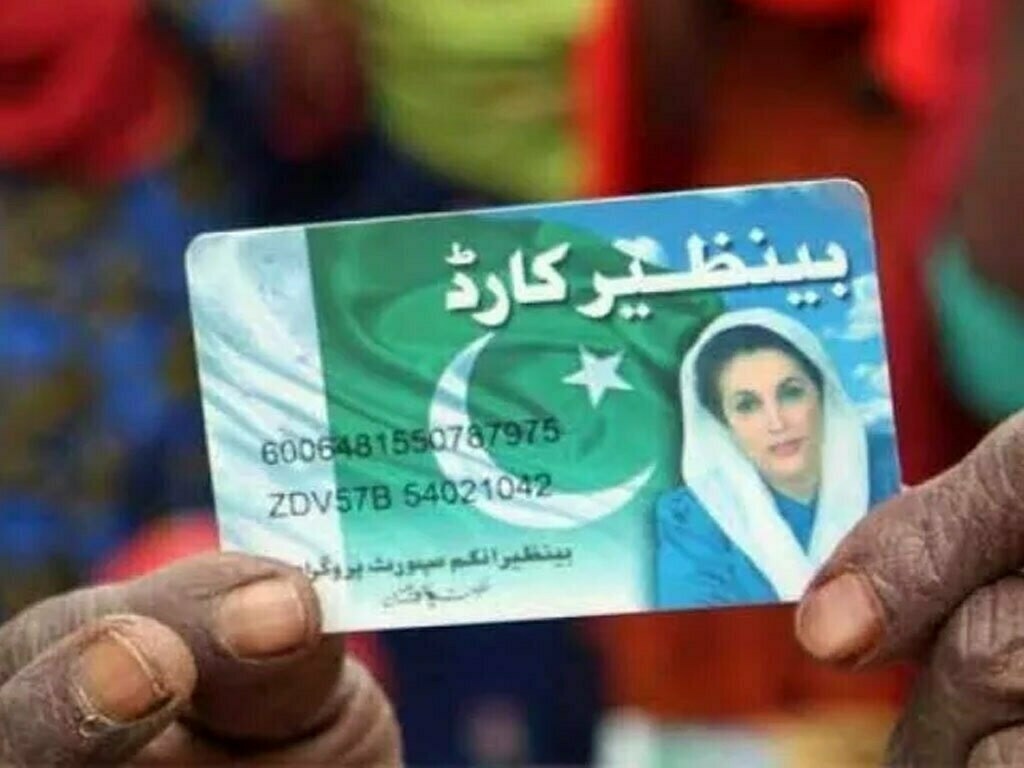
Since its launch in 2008, the Benazir Income Support Programme has become Pakistan’s flagship social-safety-net programme. It has protected millions of vulnerable households from hunger, inflation, floods and economic shocks.
That achievement should not be dismissed.
But after 18 years, a much harder question deserves an honest answer:
Has BISP created a pathway out of poverty, or has it mainly created a permanent mechanism for managing poverty?
The distinction matters. Pakistan’s federal budget now allocates Rs844.78 billion to BISP for FY2026-27. (Finance Division)
At the same time, Pakistan continues to face widespread poverty, low-productivity employment, informality and weak labour-force participation. The World Bank has warned that poverty reduction cannot be sustained without stronger labour income, better jobs, human-capital development and greater economic opportunity. (IMF eLibrary)
So the question is no longer whether Pakistan should help its poor.
Of course it should.
The question is whether a heavily indebted country can indefinitely rely primarily on non-recoverable transfers while failing to build an equally powerful mechanism that converts economically capable beneficiaries into workers, entrepreneurs, producers and eventually contributors.
And there is another question, one that goes deeper than economics. Pakistan is not simply a country with a welfare programme.
It is the Islamic Republic of Pakistan.
So what should an Islamic philosophy of poverty alleviation actually look like? That question deserves to be asked civilly, without accusing BISP or its beneficiaries of being “un-Islamic.” It is a question of principle.
The Government of Pakistan launched the Benazir Income Support Programme (BISP) in July 2008 to serve as the premier national safety net institution with the primary objective of consumption smoothing and alleviating adverse effects of slow economic growth. The country at that time was experiencing rapid food price inflation, with prices of necessities reaching a 30-year high, and economic fallout from the global financial crisis.
The Programme targets cash transfers to vulnerable and deserving women and their families from the poorest households across the country, irrespective of political affiliations, racial identity, geographic location, and religious beliefs. The long-term objectives include meeting the targets of the United Nations Sustainable Development Goals (SDGs) on eradicating extreme and chronic poverty and empowering women.
https://bisp.gov.pk/Detail/ZjE4YTk4MzAtM2MzMC00NzYyLThhNDktMzFkNDBhOGNlNGQ2
The Programme was established through an Act of Parliament, and works under the executive patronage of the Prime Minister of Pakistan and the chief patronage of the President of Pakistan. The goals of the Programme are as follows:
Enhance financial capacity of poor people and their dependent family members;
Formulate and implement comprehensive policies and targeted programmes for the uplift of underprivileged and vulnerable people; and
Reduce poverty and promote equitable distribution of wealth especially for the low-income groups.
BISP has the largest database of the poorest households in Pakistan, which is the output of the first national door-to-door poverty survey. This data is used for planning poverty alleviation and social protection development policies and programmes, and has been shared under protocols with various international and national organisations for research purposes.
BISP operates nationwide through a network of 385 tehsil offices, 33 divisional offices, six regional offices, and its headquarters in Islamabad.
BISP Was Created as a Safety Net
BISP was never originally designed to be a complete poverty-eradication programme. Its principal purpose has been social protection: helping extremely poor and vulnerable households maintain a minimum level of consumption. That function is legitimate.
A widow with children, an elderly person without income, a household devastated by floods or a family facing severe economic distress cannot simply be told to start a business. A welfare state has a moral responsibility to prevent people from falling into destitution.
BISP has therefore filled an important gap.
The programme now supports more than 10.2 million families, compared with around 2.2 million beneficiaries in 2008. The quarterly Kafaalat payment was raised to Rs14,500 in January 2026. (National Archives of Pakistan)
The question is not whether this support is necessary. It is whether
support should be the final destination for everyone who enters the programme.
Protection Is Not the Same as Transformation
There are two very different objectives in poverty policy.
Protection says:
“We will stop you from falling further.”
Transformation says:
“We will help you build a ladder out.”
Pakistan has built the first. It has not built the second at anything close to the same scale. The difference becomes obvious when we examine what has historically driven poverty reduction.
The World Bank’s analysis of Pakistan’s earlier poverty decline found that falling poverty was strongly associated with rising labour incomes and movement away from low-productivity agriculture toward non-agricultural employment. More recently, poverty has risen again amid economic shocks, inflation, weak job creation and low productivity. (IMF eLibrary)
That tells us something fundamental.
People ultimately escape poverty when their incomes rise.
Rs3.5 Trillion Later, What Has Been Created?
This is where the debate becomes uncomfortable. It would be unfair to say that BISP has produced nothing.
It has supported millions of families.
It has created an enormous social registry.
It has developed mechanisms for delivering cash to women.
It has expanded conditional support for education and nutrition.
It has provided emergency assistance during crises.
But a different performance test is needed after nearly two decades.
Not simply:
How much money was distributed?
But:
How much productive capacity was created?
How many beneficiaries obtained permanent jobs?
How many established sustainable businesses?
How many increased household income?
How many created additional employment?
How many acquired marketable skills?
How many eventually graduated from recurring assistance?
And how many remained dependent after years of support?
These questions are much harder. They are also much more important.
The Missing Engine Is Employment
Pakistan’s employment structure makes the problem even more urgent.
The World Bank has highlighted the country’s very high level of informal employment, weak job creation and low participation of women and young people in productive economic activity. (IMF eLibrary)
A poor household does not become economically secure merely because one member receives a quarterly payment. It becomes secure when the household develops a sustainable source of income.
That may be:
A job.
A small business.
A livestock enterprise.
A productive farm.
A skilled trade.
A home-based business.
Digital work.
A family enterprise.
Or employment generated by another family’s enterprise.
This is why the ultimate measure of social protection should gradually move from beneficiary numbers to household graduation.
The Most Interesting Alternative Is Already Pakistani
Pakistan did not have to look to China or Bangladesh to discover the idea of helping poor people become producers. It developed its own remarkable experiment.
Founded in 2001 by Dr Muhammad Amjad Saqib, Akhuwat has evolved from a humble concept of providing a single interest-free loan to a widow into the world’s largest interest-free microfinance institution. With over PKR 233 billion disbursed in loans to more than 6 million families across 800+ branches in 400+ Pakistani cities, Akhuwat is rewriting the rules of poverty alleviation with dignity, trust, and brotherhood at its core.
Akhuwat.
Akhuwat Islamic Microfinance provides interest-free loans for family enterprises, agriculture and other productive purposes. It reports more than Rs422 billion disbursed in interest-free financing, benefiting more than 3.78 million families, with a reported recovery rate of 99.92 per cent as of May, 31,2026.
https://mrpo.pk/akhuwat-interest-free-microfinance/
.
These figures do not prove that 3.78 million families escaped poverty. Nor should anyone claim that 50, 60 or 70 per cent of Akhuwat borrowers permanently graduated from poverty without robust longitudinal evidence. But Akhuwat demonstrates a fundamentally different mechanism. The money is not necessarily consumed and finished. It can circulate.
Capital → enterprise → income → repayment → another enterprise.
That is the difference between a transfer and revolving productive capital.
BISP and Akhuwat Are Not Opponents
The choice should not be:
BISP or Akhuwat.
It should be:
BISP plus a productive pathway.
BISP protects.
Akhuwat-style finance can capitalise.
Skills programmes can prepare.
Industry can employ.
Markets can sustain.
NSER can identify.
Government can measure.
That combination could be far more powerful than treating cash assistance as the end of the process.
The Household Is More Important Than the Recipient
Another major weakness in the conventional approach is treating the BISP beneficiary as though the beneficiary and the entire household are economically identical. They are not.
A BISP payment is generally directed to a woman, but the household may contain:
An elderly person.
A widow.
A young unemployed man.
A young woman.
Children.
A farmer.
A skilled worker.
A person with a disability.
An existing shopkeeper.
Each may require a different intervention.
Category One: Those Who Cannot Work
Elderly people.
Severely disabled people.
People without realistic earning capacity.
They should continue receiving social protection.
There should be no artificial pressure to “graduate” people who genuinely cannot work.
Category Two: Those Who Can Work but Need Skills
Young men and women who lack marketable skills should receive:
Skills assessment → training → apprenticeship → employment placement.
Category Three: Those With Enterprise Potential
People who can establish or expand a viable business could receive:
Business assessment → training → interest-free productive capital → mentoring → market access.
Category Four: Farmers and Livestock Households
They could receive:
Productive assets → technical support → finance → market linkage.
Category Five: Existing Microbusinesses
A shopkeeper, tailor, mechanic or food producer may not need welfare at all. They may simply need enough working capital to become viable. This is why a single welfare category is inefficient.
One Household Can Contain Five Different Economic Stories
Imagine a hypothetical BISP household:
A 72-year-old grandmother.
A 45-year-old widow.
A 24-year-old son.
A 20-year-old daughter.
Three school-age children.
The grandmother may require permanent support.
The widow may have home-enterprise potential.
The son may need vocational training.
The daughter may need education and digital skills.
The children need schooling and nutrition.
One household. Five different interventions.
That is why the future BISP should assess the economic potential of the household, not merely its eligibility for cash.
NSER Could Become More Than a Poverty Register
Pakistan already possesses one of the most valuable foundations for such a transformation. The National Socio-Economic Registry.
The World Bank describes NSER as covering roughly 40 million families, representing about 84 per cent of the population. (IMF eLibrary)
For years, the fundamental question has been:
Who is poor enough to receive assistance?
The next question should be:
What can this household realistically do to become economically secure?
That requires information about:
Age.
Education.
Skills.
Previous occupation.
Physical capacity.
Digital literacy.
Land.
Livestock.
Existing business.
Training requirements.
Local market opportunities.
Distance from markets.
Potential for home-based work.
In other words, Pakistan needs not only a poverty score.
It needs a productive-potential map.
Start With 500,000 Households
Pakistan does not need to transform ten million households overnight. Start with perhaps 500,000 economically capable households in selected districts.
Divide them according to economic potential.
Some receive employment placement.
Some receive vocational training.
Some receive enterprise finance.
Some enter agriculture and livestock programmes.
Others remain under enhanced social protection while their circumstances are assessed.
Then measure the results for three years.
How many found jobs?
How many businesses survived?
How many increased income?
How many created employment?
How much capital was repaid?
How many graduated?
How many returned to poverty?
How much did each successful graduation cost?
That would give Pakistan something it currently lacks:
a measurable national poverty-graduation model.
But There Is an Even Deeper Question: What Does Islam Say?
This is where the BISP debate takes on a dimension that cannot simply be reduced to economics. Pakistan’s Constitution declares Islam the State religion. Article 2A incorporates the Objectives Resolution as a substantive part of the Constitution, including the commitment to democracy, equality, tolerance and social justice as enunciated by Islam, and to enabling Muslims to order their collective lives according to the Qur’an and Sunnah. (SJA)
Article 37 is particularly relevant.
It directs the State to promote the educational and economic interests of backward classes and areas and specifically refers to education, training, agricultural and industrial development and employment as means of enabling people to participate fully in national life. (WIPO)
This is striking. The constitutional vision does not speak only of relief. It speaks of:
Education.
Training.
Agriculture.
Industry.
Employment.
Participation.
That is remarkably close to the productive pathway we have been discussing.
The Qur’an Does Not Tell Society to Abandon the Poor
This must be stated clearly. Islam does not teach:
“If you are poor, simply work harder.”
The Qur’an repeatedly commands assistance to the poor and needy. Zakat itself establishes recognised categories of recipients. Helping vulnerable people is not a weakness of Islamic social policy. It is one of its obligations.
But the Qur’an also gives us a remarkably powerful picture of dignified poverty.
Surah Al-Baqarah 2:273 describes needy people whose restraint is so strong that someone unfamiliar with their circumstances may mistake them for wealthy because they do not persistently ask others for assistance. (Quran.com)
The concept is ta’affuf: dignity and restraint in the face of need. The lesson is not that receiving legitimate assistance is shameful. It is that dependence and persistent asking are not ideals to be cultivated. Islam protects the poor. But it also protects their dignity.
The Sunnah Takes the Principle Further
One of the most revealing Prophetic examples concerns a man who came asking for assistance.
Instead of simply giving him a recurring allowance, the Prophet Muhammad ﷺ asked what possessions he had.
The man’s belongings were sold.
Part of the proceeds was used for his family, while the remainder was used to obtain an axe.
He was then instructed to gather firewood and sell it.
The narration appears in Sunan Abi Dawud 1641.
The significance is profound.
The Prophet Muhammad ﷺ did not ignore the man’s poverty.
He converted assistance into productive capacity.
Need became:
Assessment → asset → work → income.
That is not an argument against charity. It is an argument for productive charity where productive capacity is possible.
“The Upper Hand Is Better Than the Lower Hand”
The Prophet Muhammad ﷺ said:
“The upper hand is better than the lower hand.”
The narration explains that the upper hand is the giving hand and the lower hand is the asking hand. (Sunnah)
This should not be interpreted as humiliating people who need help. That would contradict the Qur’anic emphasis on supporting the vulnerable. The deeper principle is about direction.
From receiving toward giving.
From asking toward earning.
From dependence toward self-sufficiency.
From beneficiary toward contributor.
This is exactly where the Islamic perspective becomes relevant to BISP.
So Is BISP Un-Islamic?
That would be an unjustified conclusion.
No.
Assisting genuinely poor and vulnerable people is entirely compatible with Islamic principles.
The question is different:
Does BISP, by itself, fully embody the broader Qur’anic and Prophetic philosophy of poverty alleviation?
That is a legitimate question.
And the answer appears more nuanced.
BISP strongly reflects one Islamic principle:
Protect the vulnerable.
But the programme could more fully incorporate another:
Help economically capable people regain self-sufficiency.
The issue is therefore not BISP versus Islam.
It is whether the design of social protection can better reflect both compassion and empowerment.
The Islamic Welfare State Has Two Hands
Perhaps the entire philosophy can be reduced to two hands.
One hand protects.
It feeds the hungry.
Supports the elderly.
Helps widows.
Assists people with disabilities.
Responds to disasters.
Prevents destitution.
The other hand empowers.
It provides skills.
Creates employment.
Provides productive capital.
Builds businesses.
Connects people to markets.
Creates opportunities to earn.
And, eventually, helps the recipient become the giver.
That is not an attack on welfare.
It is a more ambitious definition of welfare.
Charity Should Be a Bridge, Not a Permanent Identity
The distinction is crucial.
A person should never be ashamed of receiving legitimate assistance.
But neither should society define a capable person permanently as a recipient.
The Qur’an’s description of dignified poor people who do not persistently ask and the Prophetic example of converting assistance into productive work both point toward a social ethic in which human dignity and economic capability matter alongside relief. (Quran.com)
This is where the word khairat needs careful handling.
BISP is not simply private charity.
It is a state social-protection programme funded through public resources.
Its beneficiaries should not be stigmatised as beggars.
The real question is whether a state welfare programme should merely transfer purchasing power or also provide a pathway toward economic independence for those capable of achieving it.
Corruption Makes the Problem Worse
There is another issue that cannot be ignored.
BISP has experienced serious beneficiary-verification problems.
During the reforms associated with Dr Sania Nishtar, more than 820,000 people were removed from the beneficiary list after being classified as ineligible, including a large number of government employees. Subsequent data-cleaning exercises identified additional ineligible cases.
The lesson is not simply that “BISP is corrupt.”
That claim would be too broad.
The more defensible conclusion is:
BISP has historically suffered serious inclusion errors, verification weaknesses and cases of institutional abuse that undermine public confidence and divert resources from genuinely vulnerable households.
The distinction matters.
The “5,598 Wives” Story Shows Why Facts Matter
A recent viral claim suggested that one man had thousands of wives registered in BISP records.
That interpretation was rejected by BISP.
The reported 5,598 cases concerned mismatched or unusual marital data, not evidence that one man actually had 5,598 wives receiving thousands of payments.
This is an important distinction.
We should expose genuine administrative weaknesses without turning an audit discrepancy into an unsupported sensational claim.
Good criticism becomes stronger when it is precise.
Every Ineligible Payment Has a Double Cost
The first loss is obvious:
Public money goes to the wrong person.
The second is less obvious:
That money is simultaneously unavailable to a genuinely poor household or to a productive poverty-reduction intervention.
Leakage therefore harms both welfare and development.
Pakistan should continuously cross-check beneficiary eligibility against:
NADRA.
Government payrolls.
Pension databases.
Tax records.
Property information.
Vehicle registration.
Other social-protection programmes.
Relevant banking and financial information.
Pakistan already possesses much of the necessary digital infrastructure.
The missing ingredient is stronger integration, continuous verification and institutional accountability.
The Real BISP Reform Should Be “Graduation”
Imagine an annual BISP report that did not merely tell Parliament:
How much was distributed.
Imagine it also reported:
How many people obtained skills.
How many found jobs.
How many businesses were established.
How many businesses survived three years.
How many additional jobs were created.
How much productive finance was repaid.
How many households graduated from recurring assistance.
How many returned to poverty.
How much each successful graduation cost.
Now the programme could be evaluated not simply by coverage, but by transformation. That would change the entire national conversation.
We Should Not Claim That 50–70 Per cent Escape Poverty
There is an important methodological caution here. It may be tempting to argue that if even 50–70 per cent of economically capable beneficiaries could eventually become self-sufficient, Pakistan could transform its poverty landscape. As a policy scenario, that is perfectly reasonable. As a fact about Akhuwat or BISP, it is not.
We do not have sufficient longitudinal evidence to claim that a particular percentage of Akhuwat borrowers permanently escape poverty. But the hypothetical illustrates the potential.
If 10 million economically capable households were eventually placed on a productive pathway and 50 per cent succeeded, that would mean approximately:
5 million households graduating.
At 60 per cent:
6 million.
At 70 per cent:
7 million.
The point is not that these results have already been achieved. The point is that even partial graduation could fundamentally change the economics of social protection.
Why Has Pakistan Not Done This at Scale?
There is probably no single answer.
Cash transfers are easier to administer than economic transformation.
A cheque or digital payment can be measured immediately.
A business needs:
Electricity.
Skills.
Finance.
Markets.
Transport.
Security.
Regulatory support.
Mentoring.
Customers.
Training without employment is not enough.
A loan without a viable market can fail.
A machine without electricity is useless.
A certificate without an employer does not create a job.
That is why poverty graduation requires coordination across multiple institutions.
And Pakistan’s institutions are often organised in silos.
BISP handles social protection.
Skills agencies handle training.
SMEDA focuses on SMEs.
Agriculture departments handle farmers.
Banks handle finance.
Industry departments handle industrial policy.
But who owns the complete journey?
Poor household → skills → capital → enterprise → market → income → graduation?
That is the missing institutional bridge.
Local Industry Could Complete the Circle
This is where lessons from China and Bangladesh become relevant. The answer is not to copy either country. Their political, demographic and economic circumstances are different.
The lesson is simply that productive poverty reduction requires local economic ecosystems. Pakistan’s regions possess very different productive opportunities.
Punjab has enormous agricultural and agro-processing potential.
Sindh has opportunities in agriculture, livestock, fisheries and food processing.
Khyber Pakhtunkhwa has opportunities in horticulture, honey, livestock, furniture, tourism and selected value-added industries.
Balochistan has opportunities in fisheries, livestock, dates and mineral value addition.
Gilgit-Baltistan has opportunities in high-value horticulture, dried fruit, tourism and handicrafts.
The principle should be:
Do not give a poor person money and simply tell them to start a business. First identify what the market needs.
Then:
Market → enterprise → skills → capital → production → buyer → income.
That is how welfare can become local economic development.
Pakistan Already Has Most of the Pieces
This is perhaps the most frustrating part.
Pakistan has:
BISP for social protection.
NSER for household identification.
Akhuwat for interest-free productive finance.
NAVTTC and provincial TEVTAs for skills.
SMEDA for enterprise development.
Private industry for jobs.
Banks and fintechs for financial infrastructure.
Universities and training institutions for human capital.
The missing element is a coordinated architecture connecting them. Pakistan does not necessarily need another giant welfare programme.
It needs to connect the programmes it already has.
A New BISP Could Have Three Doors
Door One: Protect
For people who cannot realistically work.
Cash assistance continues.
Door Two: Prepare
For people who can work but lack skills.
Training, apprenticeships and employment placement follow.
Door Three: Produce
For people with enterprise potential.
Interest-free productive finance, mentoring and market access follow.
The household would not be trapped permanently in one category.
Circumstances could change.
People could move from:
Protection → Preparation → Production → Graduation.
That would turn BISP from a static beneficiary system into a dynamic poverty-transition system.
The Islamic Republic Should Aim Higher
This is ultimately where the title leads us. Pakistan’s Constitution does not merely describe the country as Islamic.
It incorporates principles of social justice rooted in Islam and specifically directs the State toward education, training, agricultural and industrial development and employment. (SJA)
The Qur’an commands society to support the poor. The Sunnah demonstrates compassion toward people in need. But the Prophetic example also contains a powerful emphasis on productive self-sufficiency.
The constitutional philosophy and Islamic moral tradition therefore do not require Pakistan to choose between compassion and productivity.
They can be combined.
Protect those who cannot work.
Empower those who can.
That is the balance.
The Ultimate Question Is Not How Much We Give
After nearly two decades, Pakistan has become remarkably good at identifying poor households and transferring money to them. But poverty is not ultimately defeated by identifying poor people. It is defeated by changing the economic conditions that keep them poor.
The question Pakistan should now ask is not merely:
“How much more should we give?”
It should be:
“What can we give them so that one day they no longer need to ask?”
That is a profoundly different question.
It leads:
From cash to capital.
From consumption to production.
From dependence to dignity.
From beneficiary to entrepreneur.
From recipient to contributor.
From the lower hand toward the upper hand.
And perhaps that is the most important lesson BISP can learn from the Qur’an, the Sunnah and Pakistan’s own experience with Akhuwat.
An Islamic welfare state should never be ashamed of helping its poor. But it should be ambitious enough to help every economically capable poor person discover a path toward self-reliance.
A safety net catches people when they fall.
A great society also builds the ladder that helps them climb.
Frequently Asked Questions
1. Has BISP failed to reduce poverty in Pakistan?
No. BISP has provided important social protection and helped vulnerable households maintain consumption during economic shocks. However, cash transfers alone cannot guarantee sustainable poverty reduction. Pakistan’s poverty challenge remains closely connected to low-productivity work, weak job creation, informality and inadequate human-capital development. (IMF eLibrary)
2. Does Islam support government assistance to poor people?
Yes. The Qur’an explicitly recognises the poor and needy as legitimate recipients of charitable resources, including zakat. Surah Al-Baqarah 2:273 also highlights the dignity of needy people who do not persistently ask others. (Quran.com)
3. Does Islam require poor people to become self-sufficient?
Islam does not require a person who is genuinely unable to work to become self-sufficient before receiving assistance. However, the Qur’an and Sunnah strongly value dignity, self-restraint and independence from unnecessary asking. The Prophetic example of helping a needy man acquire an axe and earn through work illustrates the principle of turning assistance into productive capacity where possible. (Sunnah)
4. Is BISP therefore un-Islamic?
That conclusion would be unjustified. Supporting genuinely vulnerable people is consistent with Islamic social responsibility. The more appropriate question is whether BISP could better incorporate the Islamic emphasis on dignity, productive work and self-sufficiency by creating stronger pathways from cash assistance to skills, employment and enterprise.
5. Could BISP and Akhuwat work together?
Yes. BISP could identify economically capable households through NSER, while an Akhuwat-style interest-free financing model could provide productive capital. Skills agencies, employers and local industries could complete the pathway through training, employment and market access. Akhuwat’s reported experience demonstrates that interest-free finance can operate at significant scale. Akhuwat Islamic Microfinance
6. What should be the ultimate measure of BISP’s success?
BISP should continue measuring coverage and timely payments, but it should also measure poverty graduation: increased household income, employment, business survival, jobs created, productive assets acquired, repayment of productive finance and the number of households that can sustainably leave recurring assistance without falling back into poverty.
References
- Pakistan Federal Budget 2026-27
- National Assembly of Pakistan: BISP updates and beneficiary data
- IMF: Pakistan Poverty Reduction and Social Protection
- World Bank: Pakistan Poverty, Equity and Resilience Assessment
- Akhuwat Islamic Microfinance
- Qur’an, Surah Al-Baqarah 2:273
- Sunnah: “The upper hand is better than the lower hand”
- Constitution of Pakistan: Objectives Resolution and Article 37
- Supreme Court of Pakistan: Social justice and Objectives Resolution
- Constitution of Pakistan: Article 227 and Qur’an and Sunnah