
Pakistan Water Security.Water, Power and Survival: Why Pakistan’s Future Depends on Every Drop. A Global Water Security Series
Pakistan Water Security. Discover why water is becoming the world’s most strategic resource. An investigative introduction to Pakistan’s water future, climate change, international law and the Indus Basin.Water, Power and Survival: Why Pakistan’s Future Depends on Every Drop , A Global Water Security Series.
https://mrpo.pk/unusual-heavy-rains-in-pakistan/
A Special Investigative Series on Water Security, Climate Change, International Law and the Future of South Asia
“The next great wars may not begin over territory or oil, but over the rivers that sustain civilisations.”
Whether this prediction becomes reality or not, one fact is increasingly difficult to ignore: freshwater is rapidly emerging as one of the world’s most valuable strategic resources.
Across every continent, governments are investing billions of dollars in dams, reservoirs, desalination plants, glacier monitoring, groundwater management, and transboundary water diplomacy. Water has quietly become central to national security planning, not only because people need it to survive, but because modern economies cannot function without reliable access to it.
The twenty-first century is therefore witnessing a profound shift. Nations that once measured their strength primarily by military power, industrial capacity, or energy resources are increasingly recognising that water security underpins all of these.
For Pakistan, this reality carries exceptional significance.
PAKISTAN’S WATER CRISIS AND ITS NATIONAL SECURITY IMPLICATIONS
This research examines Pakistan’s water crisis and its impact on national security, highlighting key factors such as population growth, climate change, and inadequate water resource management. The article emphasises the urgent need for thorough qualitative changes and improved infrastructure to guarantee sustainable access to clean water. This research employs a qualitative approach to examine the complex relationship between regional relations and water security, with a focus on Pakistan’s transboundary water challenges.
Through securitisation theory, the study aims to analyse how water scarcity is framed as a water security issue, exploring the securitisation process and its implications for national security. Utilizing an explanatory research design and document analysis, this study comprehensively assesses both internal and external water security threats to Pakistan’s national security.
Additionally, it highlights the importance of regional cooperation and diplomacy in managing shared water resources. Addressing the water crisis is an environmental concern and a vital national security imperative. A comprehensive strategy encompassing legislative changes, technical advancements, and international collaboration is required to mitigate the threat and protect Pakistan’s stability.
https://margallapapers.ndu.edu.pk/index.php/site/article/view/317
A Silent Crisis Few Truly Understand
Most Pakistanis encounter water as a daily necessity, turning on a tap, irrigating a field, or watching rivers swell during the monsoon. Yet beneath these familiar experiences lies a far more complex reality.
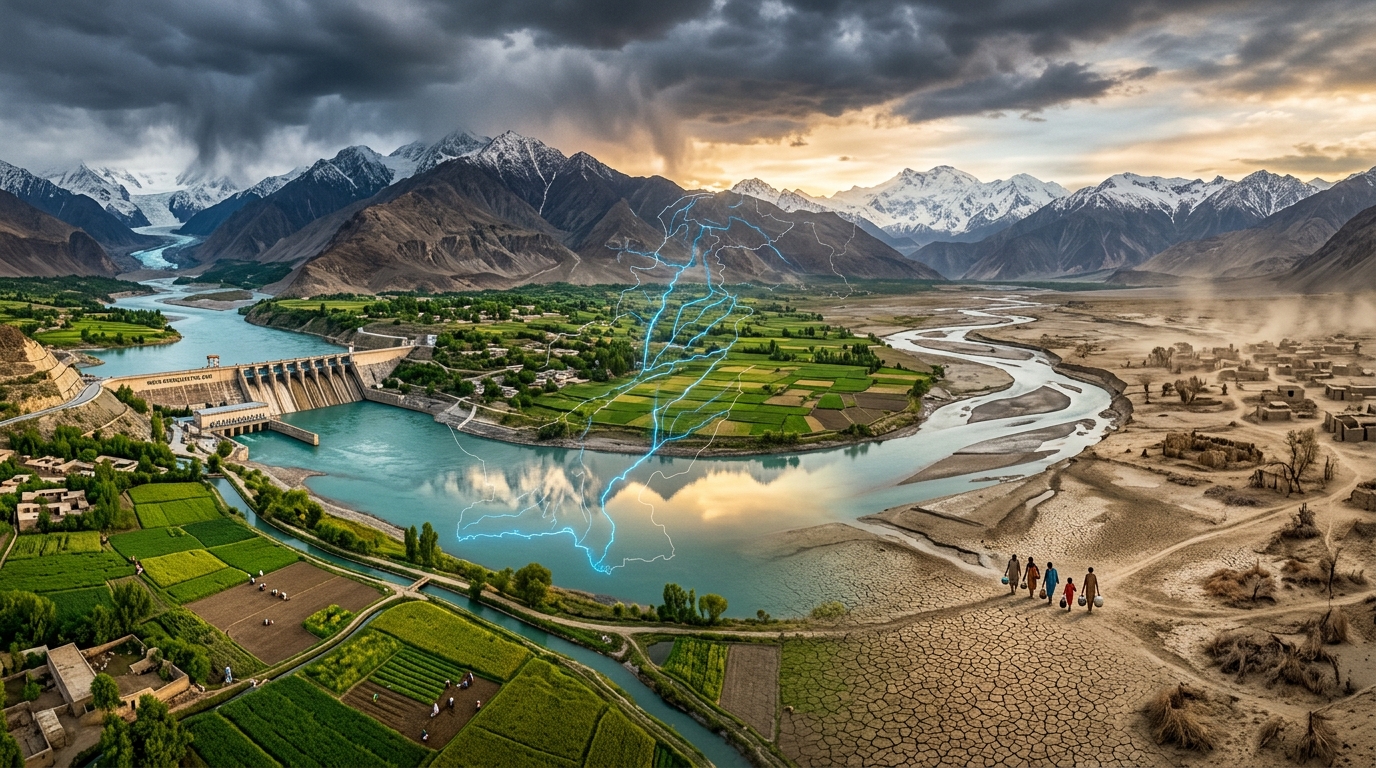
Pakistan depends on one of the largest integrated irrigation systems on Earth. Millions of farmers, industries, power stations, and cities rely on the waters of the Indus Basin. At the same time, the country faces growing pressure from climate variability, population growth, groundwater depletion, ageing infrastructure, sedimentation in reservoirs, and the challenges of managing rivers shared with neighbouring states.
These issues cannot be understood in isolation. They sit at the intersection of engineering, environmental science, economics, agriculture, diplomacy, international law, and national security.
Reducing Pakistan’s water future to a single explanation, whether climate change alone, governance failures alone, or external pressures alone, does not capture the full complexity of the challenge. A comprehensive understanding requires examining all of these factors together.
Why This Series Is Being Written
Every major civilisation in history has risen beside water. The civilisations of the Nile, the Tigris and Euphrates, the Indus, and the Yellow River flourished because they learned to harness rivers for agriculture, trade, and human settlement. Yet history also shows that environmental stress, poor resource management, and political instability have contributed to the decline of once-powerful societies.
Today, the world faces a new era of uncertainty. Climate change is altering rainfall patterns, accelerating glacier melt in many mountain regions, increasing the frequency of extreme floods and droughts, and placing unprecedented pressure on freshwater resources. Population growth, urbanisation, industrial expansion, and rising food demand are further intensifying competition for water.
For Pakistan, these global trends intersect with unique national circumstances:
- Dependence on the Indus River System;
- One of the world’s largest irrigation networks;
- Rapidly growing population;
- Increasing urban water demand;
- Declining per capita water availability;
- Significant reliance on agriculture;
- Transboundary river governance under the Indus Waters Treaty.
This series has therefore been developed to answer a simple but vital question:
Can Pakistan secure its water future in an increasingly uncertain world?
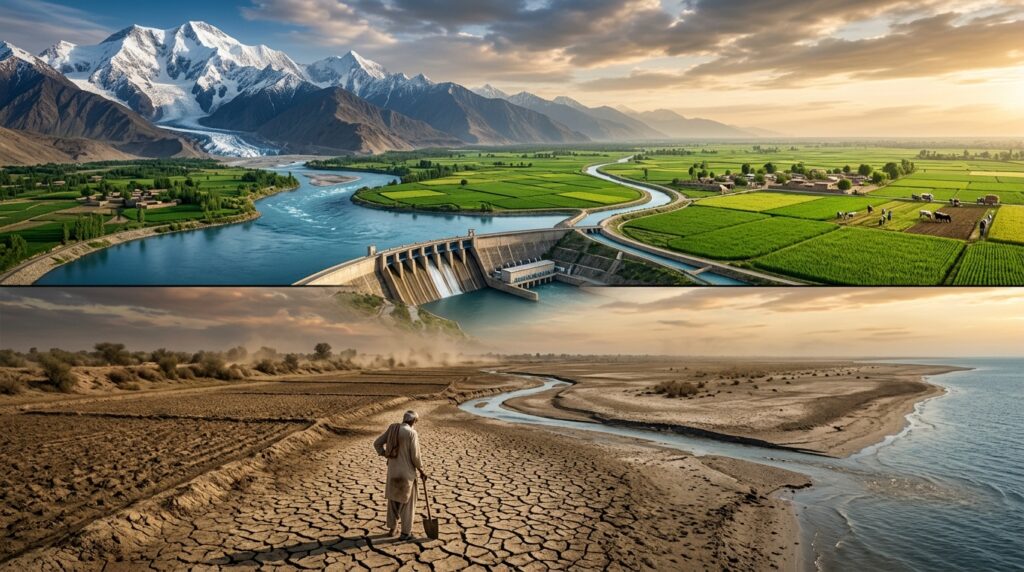
Beyond Headlines: Why Evidence Matters
Public debate surrounding water often becomes highly emotional. Rivers are linked not only to livelihoods but also to identity, sovereignty, and regional politics. In such an environment, speculation can easily overshadow evidence.
Some observers emphasise climate change as the dominant driver of future water stress. Others point to decades of underinvestment in storage, inefficient irrigation, groundwater depletion, and governance challenges. Still others focus on the management of shared rivers and the implications of upstream infrastructure. Each of these perspectives raises important questions.
The purpose of this series is not to endorse one narrative while dismissing others. Instead, it seeks to examine the available evidence, identify areas of agreement, explain where legitimate disagreements exist, and distinguish facts from contested claims. Where controversies arise, whether concerning dam projects, treaty interpretation, or policy decisions, they will be discussed in their historical, legal, technical, and geopolitical context.
This approach reflects a fundamental principle of serious research: complex problems rarely have simple explanations.
Water Is No Longer an Environmental Issue Alone
Water has become a defining strategic issue because it influences nearly every sector of national life. Without adequate water:
- Food production declines;
- Hydropower generation becomes less reliable;
- Industrial output suffers;
- Ecosystems deteriorate;
- Public health risks increase;
- Economic growth slows;
- Social tensions may intensify.
For this reason, water security is increasingly viewed alongside energy security, food security, environmental resilience, and economic stability. Governments across the world now incorporate water into long-term strategic planning, not merely as a natural resource but as a cornerstone of sustainable development and national resilience.
A World Entering the Age of Water Competition
The twentieth century was often described as the age of oil. The twenty-first century may well become the age of water.
Today:
- Hundreds of millions of people already experience water stress;
- Major river basins cross national borders;
- Glaciers that feed Asia’s great rivers are changing under a warming climate;
- Groundwater is being depleted in many regions faster than it can naturally recharge;
- Floods and droughts are becoming more frequent and more costly.
International organisations increasingly describe water security as one of the defining development challenges of this century. For countries such as Pakistan, whose economy and food system are closely tied to a single river basin, understanding these developments is no longer optional.
It is essential.
This Is More Than a Series About Pakistan
Although Pakistan remains the central focus, this investigation begins with a broader premise: Water is a global issue before it becomes a national one.
To understand Pakistan’s future, readers must first understand:
- How rivers shape civilisations;
- Why climate change is transforming freshwater systems;
- How international law governs shared rivers;
- Why upstream and downstream countries often disagree;
- How engineering, diplomacy, economics, and science intersect.
Only then can Pakistan’s own challenges be placed within their proper international context.
Water: The Strategic Resource That Built Civilisations
“Thousands have lived without love, not one without water.” W. H. Auden
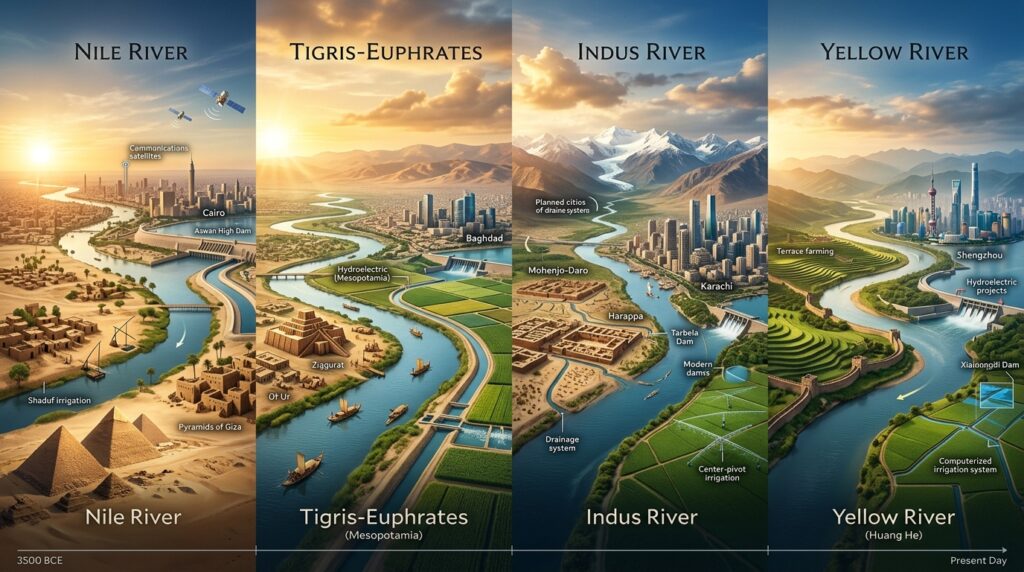
Throughout history, the rise and fall of civilisations have often been determined by their relationship with water. Long before oil fields, natural gas pipelines, international trade routes, or digital economies, rivers sustained human civilisation. They nourished agriculture, enabled commerce, generated prosperity, and provided natural transportation corridors. It is no coincidence that many of history’s greatest civilisations flourished along major river systems.
The ancient Egyptian civilisation developed around the Nile. Mesopotamia emerged between the Tigris and Euphrates. The Indus Valley Civilisation prospered along the Indus River, while ancient Chinese civilisation grew beside the Yellow River. These rivers were not merely geographical features. They shaped economies, cultures, governance, and national identities. Even today, despite extraordinary advances in technology, the same principle holds.
Without reliable freshwater, no nation can sustain agriculture, industry, energy production, public health, or long-term economic growth. The twenty-first century has not changed humanity’s dependence on water. It has simply made that dependence more visible.
The Twenty-First Century’s New Strategic Reality
For much of the twentieth century, global politics revolved around oil. Energy security influenced alliances, conflicts, economic policies, and military strategies. Access to petroleum reserves often shaped international relations. Today, a similar transformation is occurring with freshwater.
Unlike oil, however, water has no practical substitute.
Every crop depends on it.
Every city depends on it.
Every factory depends on it.
Every ecosystem depends on it.
Every nation depends on it.
As populations continue to grow while climate systems become increasingly unpredictable, freshwater is becoming one of the defining strategic resources of the modern era. Many governments now place water security alongside energy security, food security, cyber security, and economic resilience in their national planning.
This shift is reflected in growing investment in reservoirs, desalination plants, wastewater recycling, groundwater management, flood protection, glacier monitoring, and transboundary water diplomacy.
Climate Change Is Rewriting the Global Water Map
Climate change is not creating water from nothing or making it disappear altogether. Rather, it is changing when, where, and how water becomes available.
In many parts of the world:
- Rainfall patterns are becoming less predictable;
- Extreme rainfall events are becoming more frequent;
- Prolonged droughts are affecting larger areas;
- Glaciers are changing, altering seasonal river flows;
- Evaporation rates are increasing because of higher temperatures;
- Sea-level rise is increasing saltwater intrusion into freshwater systems.
These changes create profound challenges for countries whose economies rely heavily on rivers originating in mountain regions. South Asia is one of the world’s most significant examples.
The Himalaya, Karakoram, and Hindu Kush mountain ranges, sometimes called Asia’s Water Towers, feed some of the largest river systems on Earth, supporting hundreds of millions of people across several countries. Any long-term changes affecting these mountain watersheds have implications far beyond national borders.
Water Has Become a Geopolitical Asset
Water is no longer viewed solely as an environmental or engineering issue. It has become a geopolitical issue. Many of the world’s major rivers cross international borders, including:
- the Nile;
- the Mekong;
- the Danube;
- the Jordan;
- the Euphrates;
- the Tigris;
- the Indus;
- the Brahmaputra.
Because upstream actions can affect downstream communities, river management increasingly requires diplomacy as much as engineering. Hydropower projects, reservoirs, irrigation systems, flood-control structures, and climate adaptation measures all have the potential to influence neighbouring states.
Consequently, governments around the world devote increasing attention to transboundary water cooperation and dispute resolution.
Why International Water Law Exists
Unlike political boundaries, rivers do not recognise national borders. A river that begins in one country may pass through several others before reaching the sea. This raises important questions.
Can an upstream country build dams without consulting downstream neighbours?
Can river flows be altered without notification?
What obligations exist to prevent significant harm?
How should shared rivers be managed during droughts, floods, or periods of increasing demand?
These questions have challenged governments for decades.
To reduce conflict and encourage cooperation, the international community gradually developed a body of legal principles governing the use of shared watercourses. Although implementation varies, these principles have become increasingly influential in international relations.
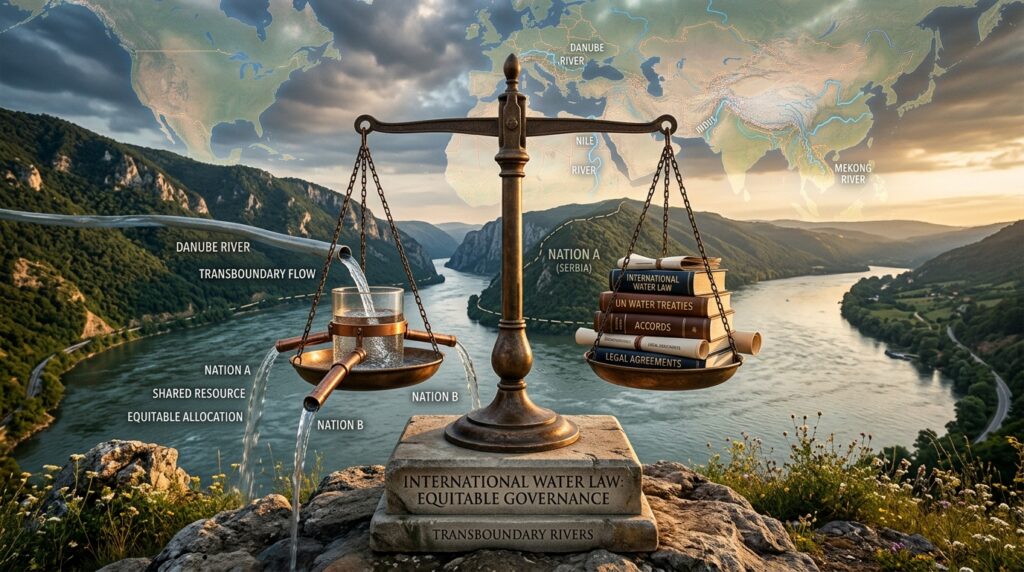
The Helsinki Rules (1966): A Foundation for Modern Water Law
One of the earliest comprehensive attempts to codify international water law came with the Helsinki Rules, adopted by the International Law Association in 1966. The Helsinki Rules introduced a principle that continues to influence water governance today:
Equitable and Reasonable Utilisation
This principle recognises that every country sharing an international river possesses legitimate rights to use its waters. At the same time, those rights must be exercised in a manner that considers the interests of other riparian states.
Rather than granting absolute control to either upstream or downstream countries, the Helsinki Rules encourage balancing factors such as geography, hydrology, population needs, existing utilisation, environmental protection, and the availability of alternative resources.
Although not a binding treaty, the Helsinki Rules profoundly shaped subsequent developments in international water law.
The United Nations Watercourses Convention (1997)
Building upon earlier legal developments, the United Nations adopted the Convention on the Law of the Non-Navigational Uses of International Watercourses in 1997.
The Convention represents one of the most significant international efforts to establish common principles for the management of shared rivers. Among its core principles are:
Equitable and Reasonable Use
Shared rivers should be utilised fairly while recognising the legitimate needs of all riparian states.
Obligation Not to Cause Significant Harm
States should exercise due diligence to avoid causing significant transboundary harm through activities affecting international watercourses.
Cooperation
Neighbouring countries should cooperate through consultation, information exchange, and institutional dialogue.
Prior Notification
When a planned project may significantly affect another riparian state, advance notification and consultation are encouraged.
Peaceful Settlement of Disputes
Differences should be addressed through negotiation, mediation, arbitration, judicial mechanisms, or other peaceful means. Although not every country has become a party to this Convention, its principles are frequently cited in academic literature, international practice, and discussions concerning transboundary water governance.
The Berlin Rules (2004): Expanding the Vision
Recognising the growing importance of environmental sustainability, the International Law Association adopted the Berlin Rules on Water Resources in 2004.
These Rules broadened earlier legal concepts by incorporating:
- Environmental protection;
- Sustainable development;
- Ecosystem conservation;
- Public participation;
- Human rights considerations;
- Integrated water resources management.
The Berlin Rules reflect an understanding that water governance must balance development with long-term ecological sustainability.
The Principle of Cooperation
One lesson emerges consistently from international experience. Countries sharing rivers benefit more from cooperation than confrontation. Successful river governance depends upon:
- Scientific data sharing;
- Transparency;
- Hydrological monitoring;
- Engineering cooperation;
- Early flood-warning systems;
- Climate adaptation planning;
- Diplomatic engagement.
Where cooperation weakens, uncertainty increases. Where transparency declines, mistrust often grows.
A Lesson for South Asia
South Asia contains one of the world’s most complex networks of shared rivers. The region’s future will be shaped not only by engineering projects and climate change but also by diplomacy, scientific collaboration, treaty implementation, and the willingness of neighbouring states to manage shared water resources responsibly.
For Pakistan, understanding these international legal principles is not an academic exercise. It is essential for evaluating future debates concerning the Indus Basin, upstream infrastructure, climate adaptation, and regional water governance. Only by first understanding the rules that govern shared rivers can readers fairly assess the policies, disputes, and challenges that will be explored throughout this series.
Pakistan: A Nation Built Around One River System
“A nation’s future is written not only in its constitutions and institutions, but also in the rivers that sustain its people.”
Few countries in the world are as dependent on a single river system as Pakistan. From the snow-covered peaks of the Himalaya, Karakoram, and Hindu Kush to the fertile plains of Punjab and Sindh before reaching the Arabian Sea, the Indus River and its tributaries have shaped Pakistan’s geography, economy, culture, and civilisation for thousands of years.
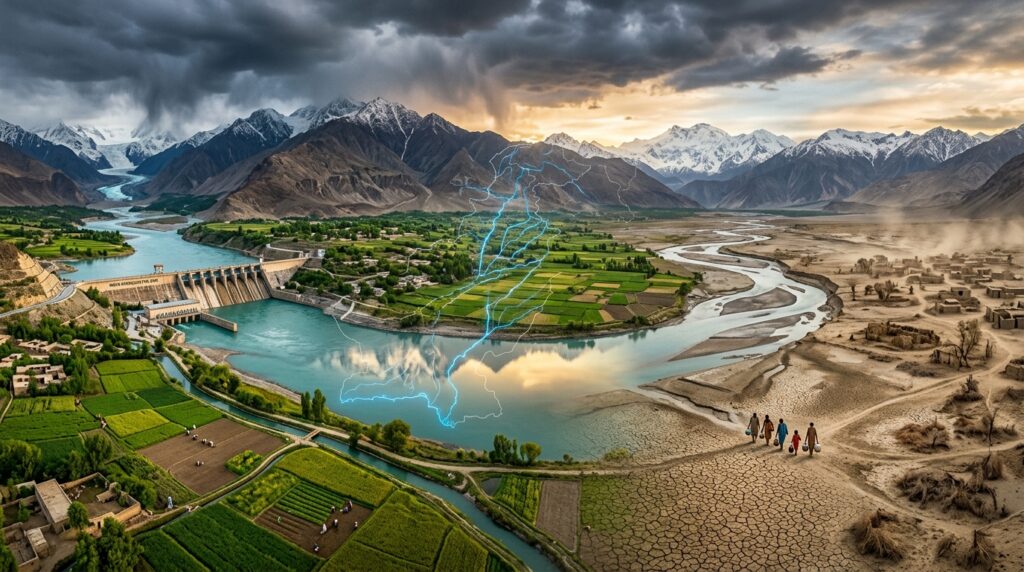
The Indus Basin is far more than a network of rivers. It is the country’s principal source of freshwater for drinking, irrigation, hydropower, industry, and ecosystems. It supports one of the world’s largest contiguous irrigation systems and underpins much of Pakistan’s food production, textile industry, and rural economy.
This dependence also creates vulnerability. When the health of a single river system is affected, the consequences ripple across nearly every sector of national life.
Pakistan’s Water Challenge Is Complex, Not Singular
Public debate often seeks a single explanation for Pakistan’s water problems. Reality is more complicated. A careful examination suggests that Pakistan’s water challenges stem from the interaction of several major factors:
1. Climate Change
Changing precipitation patterns, glacier dynamics, extreme weather events, prolonged droughts, and increasingly intense floods are altering the timing and distribution of water resources.
2. Population Growth
Pakistan’s population has expanded dramatically since independence, increasing demand for drinking water, food production, sanitation, industry, and electricity.
3. Agricultural Demand
Agriculture remains one of the largest consumers of freshwater. Improving irrigation efficiency, crop choices, and water management will be critical for long-term sustainability.
4. Storage Constraints
Experts have long debated whether Pakistan’s reservoir capacity has kept pace with changing climatic and demographic realities. Sedimentation has also reduced the storage capacity of existing reservoirs over time.
5. Groundwater Depletion
Groundwater has become an increasingly important source of irrigation and drinking water. In many regions, extraction now exceeds natural recharge, raising concerns about long-term sustainability.
6. Governance and Infrastructure
Water losses through ageing infrastructure, distribution inefficiencies, institutional challenges, and delayed modernisation have compounded existing pressures.
7. Transboundary Water Management
Pakistan’s rivers are also shaped by developments beyond its borders. As the lower riparian state in the Indus Basin, it has consistently expressed concerns regarding upstream infrastructure, treaty implementation, and regional water governance. These issues are significant, but they are one part of a broader and interconnected water security picture.
Why the India Dimension Deserves Independent Examination
No discussion of Pakistan’s water future would be complete without examining developments upstream. Since the signing of the Indus Waters Treaty in 1960, India and Pakistan have managed one of the world’s most studied transboundary river agreements. While the treaty has survived wars and political crises, disagreements have continued over the design and operation of certain hydropower projects on the western rivers.
Pakistan has raised concerns about projects such as Baglihar Dam, Kishanganga Hydroelectric Project, and Ratle Hydroelectric Project, arguing that aspects of their design or operation warrant scrutiny under the treaty. India has consistently maintained that these projects comply with its treaty rights and are run-of-river hydropower facilities.
Similarly, concerns have periodically been raised in Pakistan about sudden downstream flood surges following heavy rainfall and spillway releases from upstream reservoirs. Such events are influenced by multiple factors, including reservoir operations, meteorological conditions, catchment characteristics, and the intensity of monsoon systems, and have been the subject of technical discussions between the two countries.
Rather than treating these issues through rhetoric, this series will examine them through engineering evidence, treaty provisions, hydrological data, historical records, and international legal principles.
Why Every Pakistani Should Understand Water
Water is no longer a subject reserved for engineers, hydrologists, or policymakers.
It affects:
- The price of wheat and vegetables;
- Electricity generation;
- Industrial productivity;
- Public health;
- Employment;
- Environmental sustainability;
- Disaster preparedness; and
- National resilience.
An informed public can contribute meaningfully to discussions about conservation, infrastructure, governance, and regional cooperation. Water literacy is therefore an essential component of responsible citizenship.
What This Investigative Series Will Explore
Over the coming articles, readers will examine:
- The geopolitics of water in the twenty-first century.
- International water law and global conventions.
- Pakistan’s water history from 1947 to the present.
- The complete history of the Indus Waters Treaty.
- India’s water strategy and its implications for Pakistan.
- China’s Himalayan water strategy.
- Major dams across South Asia and their strategic significance.
- Climate change and the future of the Indus Basin.
- Pakistan’s water governance, successes, and shortcomings.
- Practical policy options for strengthening long-term water security.
Each article will build upon the previous one to provide readers with a coherent, evidence-based understanding of one of South Asia’s most important strategic challenges.
Purpose of This Series
The purpose of this investigative series is to promote informed public understanding of water as a strategic, environmental, economic, and legal issue. It seeks to examine the historical evolution of water governance, the science of river systems, the legal principles governing shared rivers, and the policy choices facing Pakistan in an era of climate change and regional geopolitical complexity.
The series does not begin with predetermined conclusions. Instead, it seeks to present evidence, historical context, competing perspectives, and internationally recognised legal frameworks so that readers can form well-informed opinions.
Editorial Policy (EP) Statement
This series is prepared for educational and research purposes. It draws upon peer-reviewed academic literature, official government documents, international treaties, reports from multilateral organisations, and recognised scholarly works.
Where disputes exist, whether concerning treaty interpretation, infrastructure projects, climate impacts, or geopolitical developments, they will be identified as such, and differing positions will be presented fairly. The objective is to encourage evidence-based discussion while distinguishing facts from analytical interpretation and unresolved claims.
Frequently Asked Questions (FAQs)
1. Why is water increasingly viewed as a national security issue?
Because it directly affects food production, energy generation, public health, economic stability, environmental sustainability, and disaster resilience.
2. Does climate change automatically mean less water?
Not necessarily. Climate change often alters the timing, intensity, and distribution of water through changing rainfall patterns, glacier dynamics, and more frequent extremes such as floods and droughts.
3. Why is the Indus Basin so important to Pakistan?
It supplies much of the country’s freshwater for agriculture, hydropower, drinking water, and industry, making it central to Pakistan’s economy and food security.
4. What is the purpose of international water law?
International water law seeks to promote equitable use, prevent significant harm, encourage cooperation, facilitate information sharing, and provide peaceful mechanisms for resolving disputes over shared rivers.
5. Will this series examine disputes involving India and the Indus Waters Treaty?
Yes. Dedicated articles will explore the treaty, hydropower projects, engineering issues, legal arguments, historical developments, and the perspectives of both Pakistan and India using credible sources.
6. Who should read this series?
Students, researchers, journalists, policymakers, engineers, legal professionals, environmental specialists, and anyone interested in understanding the future of water security in South Asia.
Selected References
- United Nations Educational, Scientific and Cultural Organization, United Nations World Water Development Report.
- World Bank, publications on water security and the Indus Basin.
- Food and Agriculture Organization, AQUASTAT database.
- International Water Management Institute, research on South Asian water resources.
- Pakistan Council of Research in Water Resources, national water assessments.
- Convention on the Law of the Non-Navigational Uses of International Watercourses.
- Indus Waters Treaty.
- International Law Association, Helsinki Rules (1966) and Berlin Rules (2004).
Closing Reflection
Water has shaped civilisations for millennia, and it will continue to shape their futures. For Pakistan, understanding water security is not merely an academic exercise; it is an investment in informed citizenship and sound policymaking. As this series unfolds, it will explore the science, history, law, engineering, diplomacy, and geopolitics of one of the world’s most consequential river systems, inviting readers to examine one of the defining challenges of our century through evidence, context, and critical inquiry.