US Middle East Security Strategy: Is Washington Building a New Middle East Security Order?
US Middle East Security Strategy: A private meeting in Germany brought the military chiefs of the United States, Israel, Saudi Arabia, the UAE, Qatar, Bahrain, Kuwait, Jordan and Egypt around the same table. At almost the same moment, Saudi Arabia was asking Washington for direct military help against Yemen’s Houthis, while the United States was reportedly saying no to direct intervention but offering intelligence and targeting support.
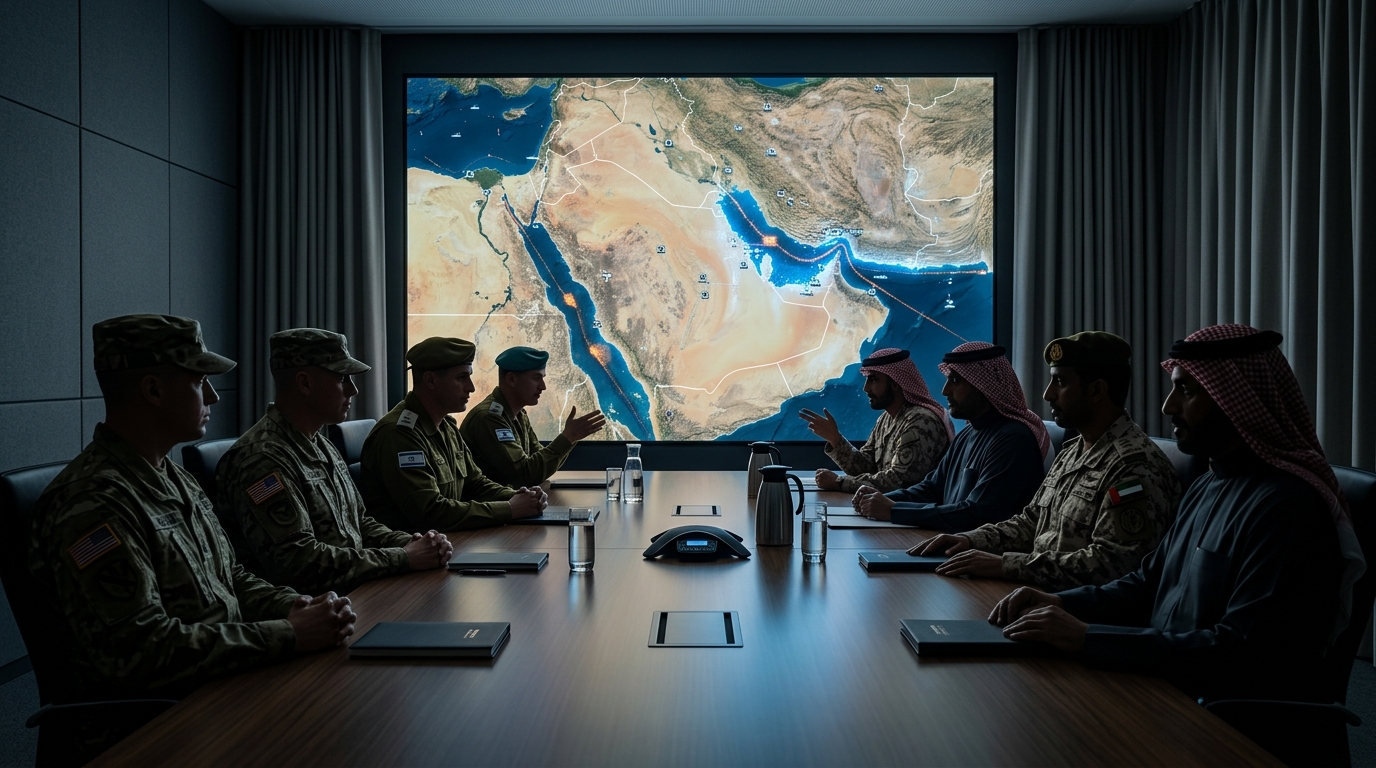
That coincidence raises a much larger question:
Is Washington quietly constructing a new Middle East security system in which Israel becomes an increasingly integrated military partner of Arab states, Saudi Arabia carries more of the regional burden, and the United States remains the architect rather than the sole defender?
The answer is not yet fully visible. But the pieces are beginning to fit together.
https://mrpo.pk/how-to-understand-any-war/
Israeli officials leak details of secret US-Israel-Arab military meeting, says report
Israeli officials have leaked details of a secret meeting between military commanders from the US, Israel and several Arab states in Germany last week to discuss the war launched by Israel and the US against Iran.
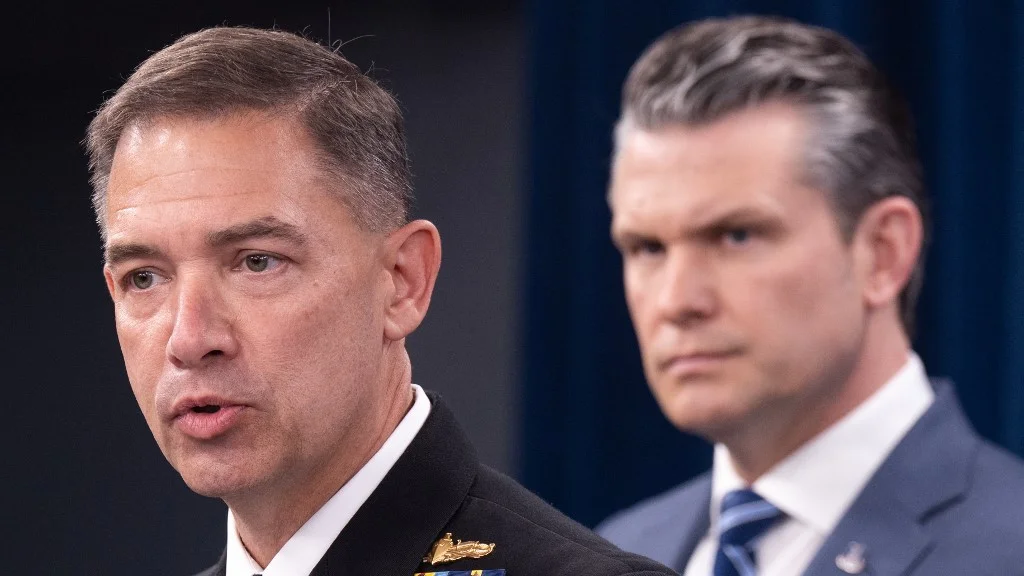
The report by former Israeli intelligence officer turned journalist Barak Ravid for Axios said the “private retreat” was organised by the commander of US Central Command (Centcom), Admiral Brad Cooper.
Citing two unnamed Israeli officials, Ravid reported that the meeting was attended by the military chiefs of staff of Israel, Saudi Arabia, the UAE, Bahrain, Kuwait, Qatar, Jordan and Egypt.
It was the first such gathering since the US and Israel went to war with Iran more than six months ago.
None of the regional countries publicly confirmed the meeting, although Centcom acknowledged it, saying in a statement that it “hosted senior military leaders from eight nations during a scheduled conference in Germany.
What This Investigation Examines
This investigation examines the September 2026 German military meeting, reported Saudi-Israeli intelligence cooperation against the Houthis, Washington’s refusal to provide direct military strikes at Saudi Arabia’s request, the continuing expansion of the Abraham Accords security architecture, and the August 2026 Makkah Joint Defence Agreement between Saudi Arabia, Pakistan and Türkiye. It also examines a crucial question that is easily lost in the headlines:
Is the Middle East moving toward a centralized American-led security architecture, or toward several overlapping security networks at the same time?
The evidence does not justify claiming that a secret Israel-Gulf military alliance has already been created. It does, however, show that military coordination is becoming deeper, more practical and less dependent on formal diplomatic relationships.
The German Meeting That Was Not Publicly Announced
The story begins in Germany.
According to reporting first published by Axios, senior military commanders from the United States, Israel, Saudi Arabia, the United Arab Emirates, Bahrain, Kuwait, Qatar, Jordan and Egypt met privately in Germany in September 2026.
The meeting was organized by U.S. Central Command commander Admiral Brad Cooper. CENTCOM subsequently confirmed that it had hosted senior military leaders from eight countries at a scheduled conference in Germany to discuss opportunities for enhanced security cooperation in the Middle East.
The meeting was significant because several participating Arab states do not have formal diplomatic relations with Israel. It was also significant because of what was reportedly discussed.
According to Israeli officials cited by Axios, Cooper reassured the participants that the United States did not intend to withdraw its military forces from the region despite Iranian attacks on American bases. He also briefed them about American plans concerning maritime traffic through the Strait of Hormuz.
Israeli Chief of Staff Lieutenant General Eyal Zamir reportedly briefed the assembled commanders about Israeli military operations on different fronts. In other words, this was not simply a diplomatic conference about regional peace. It was a meeting of military leadership.
Why Was Israel Sitting at the Same Table?
This is perhaps the most politically sensitive question.
Saudi Arabia, Qatar and several other participating states have not established formal diplomatic relations with Israel. Yet their military chiefs sat in the same room with Israel’s military chief under the umbrella of the American Central Command. There is an important distinction here.
Sitting at the same military table does not establish a formal military alliance.
Military commanders can communicate with countries with which their governments have serious political disagreements. Crisis management, air defence, maritime security, intelligence and deconfliction can require direct military contact. But something larger is nevertheless happening.
Israel was transferred from the U.S. European Command area of responsibility to CENTCOM in 2021, following the 2020 Abraham Accords involving Israel, the UAE and Bahrain. That institutional change made it easier for Israel and Arab states to cooperate militarily under the same American command structure. The result is a striking transformation. Diplomatic normalization is one thing.
Operational military integration is another.
And the latter can sometimes develop faster than the former.
From the Abraham Accords to a Security Architecture
The Abraham Accords are usually discussed as agreements establishing diplomatic and economic relations between Israel and Arab states. But their strategic significance extends beyond embassies, tourism, trade and investment. They created political space for military cooperation.
Once Israel became part of CENTCOM’s regional structure, cooperation in areas such as air defence, missile defence, intelligence and maritime security became easier to organize.
According to recent reporting, Israel has provided the UAE with intelligence, surveillance and reconnaissance support during the current conflict and has deployed Iron Dome personnel and systems to the UAE.
Intelligence sharing between Israel and other Arab states has also reportedly increased. This does not mean that the Arab states have abandoned their differences with Israel. Nor does it mean that Saudi Arabia has formally joined the Abraham Accords. Instead, it demonstrates something more subtle:
Security cooperation can advance even when political normalization remains incomplete.
That distinction may be central to Washington’s strategy.
The Saudi-Israeli Intelligence Question
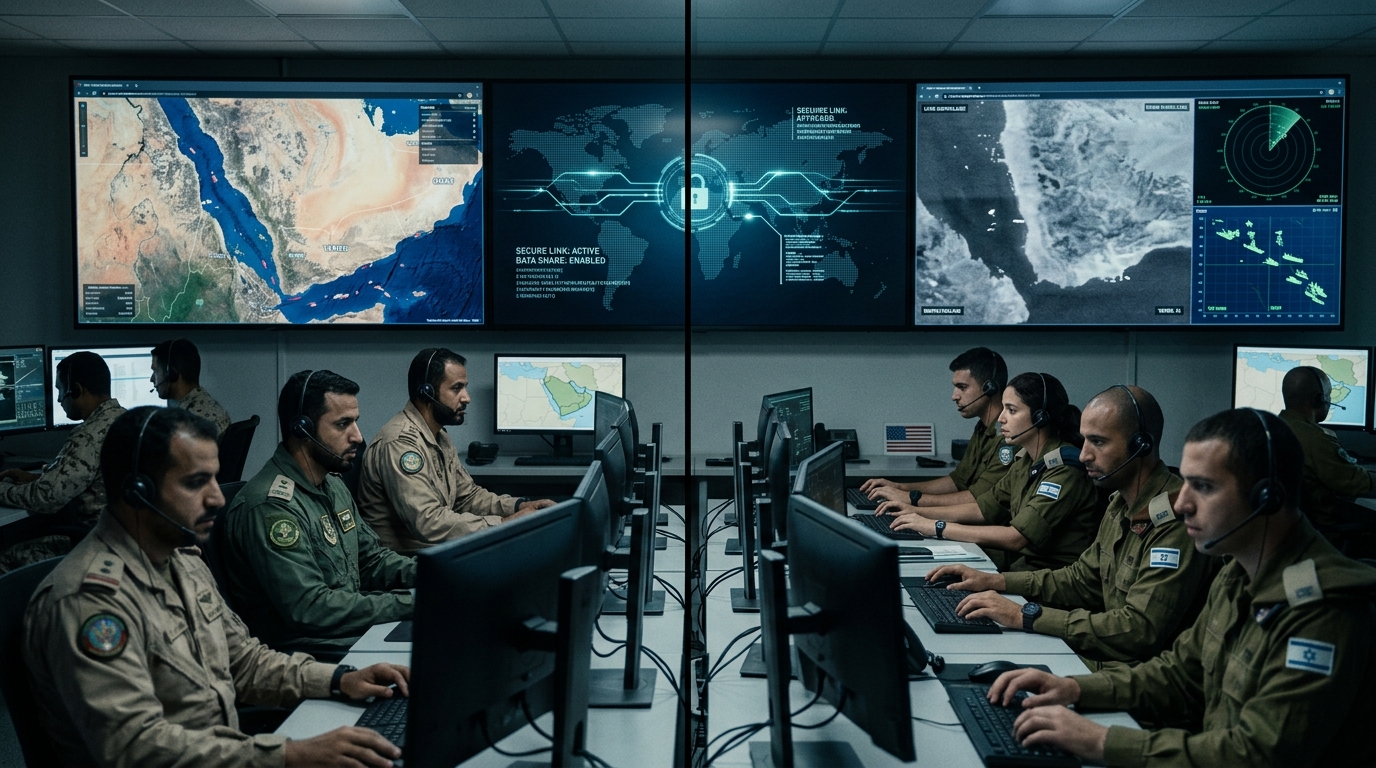
The most consequential reported development concerns Saudi Arabia. As Houthi forces intensified their offensive in Yemen and expanded their presence along the Red Sea coast, reports emerged that Saudi Arabia and Israel, with CENTCOM assistance, were discussing possible Israeli support for Saudi military operations.
The reported assistance is primarily intelligence, surveillance and reconnaissance rather than Israeli ground or air combat operations. That distinction matters. There is currently no credible evidence that Saudi Arabia and Israel have established a formal joint military command against the Houthis. What has been reported is more limited but strategically significant:
Israel could provide Saudi Arabia with intelligence and surveillance capabilities through an American-mediated channel.
If confirmed and expanded, this would represent a remarkable development. Saudi Arabia could receive practical military assistance from Israel without formally recognizing Israel. That is precisely how regional security structures can change before political agreements do.
Why Would Saudi Arabia Need Israeli Intelligence?
The answer lies partly in the nature of the Houthi threat. Modern missile and drone warfare depends heavily on information. Finding launch sites, tracking mobile missile units, identifying command centres, monitoring troop movements and detecting preparations for attacks can be as important as the weapons used to destroy the targets.
Israel has developed extensive intelligence, surveillance and air-defence capabilities through years of conflict.
Saudi Arabia possesses substantial military resources, including advanced American weapons systems.
But having sophisticated weapons is not the same as possessing an equally sophisticated intelligence network capable of locating mobile targets quickly. That is where cooperation becomes attractive. And that is also why intelligence sharing can be politically easier than an Israeli combat role.
Then Washington Said No
This brings us to the most revealing part of the story. Saudi Arabia reportedly asked President Donald Trump for direct American military assistance against the escalating Houthi threat. Trump declined to authorize direct U.S. strikes. Washington did, however, agree to provide intelligence and targeting assistance.
Reuters reported that the Saudi Crown Prince Mohammed bin Salman subsequently met CENTCOM commander Admiral Brad Cooper in Jeddah to discuss the deteriorating situation. The distinction between the two approaches is crucial. Washington did not simply say:
“Saudi Arabia is on its own.”
Nor did it say:
“America will fight the Houthis for Saudi Arabia.”
Instead, the emerging formula appears closer to:
“We will help you see the battlefield and improve your ability to fight, but you must carry more of the fighting burden yourself.”
That is a very different model of regional security.
Why Would Washington Refuse Direct Intervention?
There is no single confirmed explanation. Several factors may be operating simultaneously.
First, the United States is already heavily engaged in the wider conflict with Iran.
Second, American forces and bases in the region have themselves come under attack.
Third, the U.S. military has finite missile-defence and other high-demand resources.
Fourth, direct American intervention against the Houthis could open another major front at a time when Washington is already trying to manage the Strait of Hormuz, Iran and the wider regional conflict. There is another important development.
Reuters reported that American officials separately held confidential discussions with Houthi representatives in Muscat, Oman.
According to the reporting, the Houthis assured the Americans that they would not target American or Israeli shipping and that the existing 2025 ceasefire framework remained relevant. If Washington were simultaneously talking to the Houthis while Saudi Arabia was asking Washington for direct military intervention against them, the policy would begin to look less contradictory.
It looks like containment and burden-sharing.
The Oman Factor
Oman occupies a very different position from the emerging military architecture. Muscat has repeatedly served as a channel between parties that cannot or will not communicate directly. The latest reported U.S.-Houthi discussions again highlighted this role. This creates an interesting contrast.
In one part of the region, military commanders are building greater coordination around CENTCOM.
In another, Oman is preserving a diplomatic channel with the Houthis.
The United States itself appears to be using both approaches.
Military pressure on one side. Diplomacy on the other.
That is important because it suggests Washington’s objective may not simply be to defeat every Iran-aligned force militarily. It may instead be attempting to separate different theatres, protect American interests, secure maritime routes and prevent the conflict from becoming an uncontrollable regional war.
The Abraham Accords and Saudi Arabia’s Missing Piece
This brings us to Saudi Arabia. The Kingdom remains the most important missing piece in the original Abraham Accords architecture.
The UAE and Bahrain normalized relations with Israel in 2020.
Saudi Arabia has not. Riyadh has repeatedly linked formal normalization with Israel to progress on Palestinian statehood and the broader Palestinian question. This creates a strategic problem for Washington.
The United States wants deeper Saudi-Israeli cooperation.
Saudi Arabia wants the American strategic relationship but does not want normalization with Israel to become the price of that relationship. That tension is now visible. Saudi Arabia is demonstrating its value to Washington through energy security, regional diplomacy and military cooperation. At the same time, Riyadh is building additional defence relationships with Pakistan and Türkiye. The question, therefore, is not simply:
Will Saudi Arabia join the Abraham Accords?
A more interesting question is:
Can Washington integrate Saudi Arabia into a regional security architecture without first obtaining formal Saudi-Israeli normalization?
The German meeting suggests that the answer may be yes, at least operationally.

Washington’s Possible Strategy: Normalization Without Waiting for Normalization
This is where the larger strategic interpretation emerges. The United States may not need Saudi Arabia to formally recognize Israel before encouraging military coordination. Instead, the process could develop in stages.
First comes American security cooperation.
Then intelligence sharing.
Then missile and air-defence coordination.
Then maritime cooperation.
Then, joint exercises or operational communication.
Political normalization can follow later if circumstances permit.
This would make the Abraham Accords more than a collection of diplomatic agreements.
It would make them part of a gradual regional security architecture.
But this remains an interpretation, not an officially declared American master plan.
There is another possibility.
Washington may simply be responding pragmatically to a rapidly deteriorating security environment. The evidence presently supports both interpretations.
Saudi Arabia Has Its Own Strategy
It would be a mistake to portray Riyadh simply as an American client following Washington’s instructions. Saudi Arabia has been pursuing a more independent regional strategy.
The Kingdom has sought to reduce tensions with Iran while simultaneously strengthening its defence capabilities.
It has also sought greater strategic autonomy.
That became particularly visible in August 2026.
Saudi Arabia signed the Makkah Joint Defence Agreement with Pakistan and Türkiye.
The agreement states that an armed attack against any one of the three countries will be regarded as an attack against all three. The three countries subsequently moved to institutionalize the arrangement through a Strategic Political and Defence Committee and a permanent secretariat. They also agreed to strengthen defence-industry cooperation, joint technology development and production. This is not a minor diplomatic announcement.
It represents the creation of a new trilateral defence framework.
Is the Makkah Pact Against Iran?
This is where caution is essential.
It would be tempting to interpret the agreement as an anti-Iran alliance because Saudi Arabia is currently facing Iranian-aligned Houthi forces.
But the official record does not support that wording.
Türkiye’s Foreign Minister Hakan Fidan explicitly stated that the agreement does not identify Iran, or any other country, as a common threat.
Pakistan has also officially described the agreement as defensive and not directed against any country.
The agreement itself is therefore broader than an Iran-containment pact.
Yet strategic consequences do not always depend on what a treaty formally names.
If Saudi Arabia faces aggression from an Iran-aligned force, Pakistan and Türkiye could potentially become relevant to the Kingdom’s defence under the collective-security framework. That is a strategic possibility. It is not proof that Iran is the treaty’s intended enemy.
Did Washington Approve the Makkah Agreement?
Another claim circulating in political commentary is that the Saudi-Pakistan-Türkiye agreement was concluded with American approval and is ultimately part of a U.S. strategy against Iran.
There is currently insufficient public evidence to establish that. No reliable public document demonstrates that Washington formally authorized the agreement. Nor does the treaty identify Iran as its target. What can be established is something more interesting.
Washington has simultaneously been encouraging greater Saudi burden-sharing. The U.S.-Saudi Strategic Defense Agreement signed in November 2025 explicitly emphasized strengthening deterrence while having partners such as Saudi Arabia shoulder more responsibility for countering shared threats.
Therefore, a Saudi defence relationship with Pakistan and Türkiye is not necessarily incompatible with American interests. It could even fit a broader American preference for capable regional partners.
But compatibility with American strategy is not the same thing as proof of American authorship or approval.
That distinction should not be lost.
Three Security Networks Are Emerging
Taken together, the developments point toward three overlapping security structures.
The American-CENTCOM Network
This includes:
- The United States
- Israel
- Saudi Arabia
- UAE
- Bahrain
- Qatar
- Kuwait
- Jordan
- Egypt
Its principal areas of interest include missile defence, intelligence, maritime security, Iran and regional military coordination.
The Makkah Defence Network
This includes:
- Saudi Arabia
- Pakistan
- Türkiye
Its declared purpose is collective defence, deterrence, defence-industry cooperation, technology development and regional stability.
The Diplomatic De-escalation Network
This involves countries such as:
- Oman
- Qatar
- Egypt
- Pakistan
Its role includes communication, mediation and efforts to prevent regional conflicts from becoming uncontrollable. These networks are not necessarily mutually exclusive.
A country can cooperate with Washington, maintain relations with Iran, participate in a Saudi defence arrangement and support diplomatic mediation at the same time. That is precisely what makes today’s Middle East so difficult to understand through the old “pro-America versus anti-America” framework.
The Real Competition May Be About Architecture
The deeper competition may not simply be about territory.
It may be about who designs the regional security architecture.
For decades, the basic formula was straightforward:
America provides security. Gulf states provide bases, energy and strategic access.
That formula is changing.
The emerging model appears more complicated:
America provides the strategic umbrella, intelligence, technology, weapons and command infrastructure.
Israel provides advanced intelligence, missile-defence and military capabilities.
Gulf states provide money, bases, geography and increasingly their own military capacity.
Pakistan and Türkiye provide additional defence capabilities outside the traditional American-Israeli framework.
Oman and other mediators maintain diplomatic channels with actors that cannot be integrated into the security architecture.
This is a much more distributed system.
Why the Houthis Matter So Much
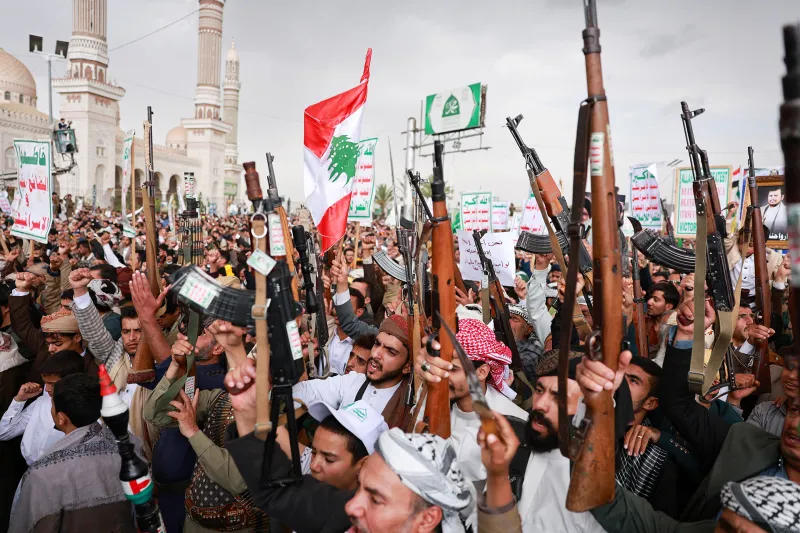
The Houthi conflict demonstrates why this new architecture is being tested so quickly. The Houthis are not simply a Yemeni insurgent force anymore. Their ability to threaten the Red Sea and Bab el-Mandeb gives them leverage over international shipping. At the same time, attacks on Saudi infrastructure create direct pressure on one of the world’s most important energy producers. The situation has become even more serious because the regional conflict is simultaneously affecting the Strait of Hormuz.
Two maritime chokepoints are therefore exposed:
Bab el-Mandeb is in the west.
Hormuz is in the east.
Together, they form a strategic nightmare for energy markets.
As of 21 September 2026, Reuters reported that normal vessel traffic through the Strait of Hormuz had fallen dramatically, while Saudi Arabia was increasing crude exports through the strait despite the wider disruption. That makes maritime security not simply a military concern but a global economic one.
The Saudi Dilemma
Saudi Arabia now faces a difficult strategic equation.
It needs American technology and military support.
It wants to avoid becoming completely dependent on Washington.
It does not want to normalize relations with Israel without obtaining meaningful movement on the Palestinian issue.
It needs protection from Houthi attacks.
It wants to avoid a direct and potentially catastrophic confrontation with Iran.
And it is simultaneously building defence relationships with Pakistan and Türkiye.
These objectives can pull in different directions.
Riyadh, therefore, appears to be pursuing strategic diversification rather than choosing a single camp.
That may explain why Saudi Arabia can sit with Israel in a CENTCOM meeting while simultaneously building a collective-defence arrangement with Pakistan and Türkiye. There is no contradiction if the objective is strategic autonomy.
The American Dilemma
Washington faces its own dilemma.
If it directly fights every threat to its regional partners, it risks becoming permanently responsible for regional security.
If it refuses to intervene, partners may question the reliability of American guarantees.
The solution may be to develop stronger regional partners capable of carrying more of the burden.
That would explain the emphasis on:
- intelligence sharing
- targeting support
- missile defence
- maritime security
- partner military capacity
- defence-industry cooperation
- regional command integration
It would also explain why Washington can refuse direct strikes against the Houthis while simultaneously facilitating intelligence cooperation involving Saudi Arabia and Israel. The objective may not be withdrawal.
It may be burden redistribution.
What About Iran?
Iran remains at the centre of almost every part of this emerging architecture.
The American-Israeli conflict with Iran has pushed Gulf states toward greater military coordination.
Iran’s regional partnerships, particularly with the Houthis, have expanded the geography of the conflict.
The Strait of Hormuz remains vulnerable.
The Red Sea and Bab el-Mandeb remain vulnerable.
Yet Gulf states also have strong economic reasons to avoid a permanent confrontation with Tehran.
This creates an important contradiction. They may need stronger military deterrence against Iran while simultaneously needing diplomatic channels with Iran. That is why the Gulf states’ behaviour cannot be reduced to a simple alliance map.
Deterrence and diplomacy are operating simultaneously.
What We Know, What We Suspect and What We Cannot Yet Prove
At this stage, several facts are reasonably well established.
The United States hosted a private meeting of senior military leaders from Israel and seven Arab states in Germany.
CENTCOM confirmed the meeting.
Iran and regional security were discussed.
The United States indicated that it intends to maintain its military presence in the region.
Israel and Arab states have increased practical military and intelligence cooperation.
Reports indicate that Israel and Saudi Arabia, with CENTCOM assistance, have discussed intelligence and ISR support against the Houthis.
Saudi Arabia sought direct U.S. military intervention against the Houthis.
Washington declined direct strikes but offered intelligence and targeting support.
The United States has also maintained a diplomatic channel with Houthi representatives through Oman.
Saudi Arabia, Pakistan and Türkiye have established a collective-defence agreement.
But several things remain unproven.
There is no public evidence establishing a new formal Israel-Gulf military alliance.
There is no public evidence that Saudi Arabia has secretly joined the Abraham Accords.
There is no reliable public evidence proving that Washington formally authorized the Makkah Defence Agreement.
And there is no documentary evidence establishing that the Makkah Agreement was created specifically to confront Iran.
Those distinctions matter.
Good investigative journalism should not turn a strategic possibility into a fact merely because the possibility is attractive.
The Bigger Picture
Something important is undoubtedly changing in the Middle East. The region is no longer organized around one simple question:
Who is America’s ally?
The more important question may now be:
Who can provide security, intelligence, technology, money, geography and diplomatic access—and under whose command?
The German meeting offered a rare glimpse behind that emerging system.
Saudi Arabia could be talking to Israel about intelligence without recognizing Israel.
The UAE can cooperate with Israel on missile defence while maintaining its own regional interests.
Qatar can host American military infrastructure while maintaining diplomatic channels with actors Washington opposes.
Oman can preserve communication with Iran and the Houthis while remaining a close partner of the West.
Pakistan and Türkiye can build a collective-defence relationship with Saudi Arabia without formally identifying Iran as an enemy.
And the United States can remain the central military power while refusing to fight every battle on behalf of its partners. That is not an old-fashioned alliance system. It is something more fluid.
The Question Behind the Closed Door
The most important question is therefore not whether Arab military commanders “betrayed” their public positions by sitting with an Israeli general. That conclusion goes beyond the evidence. The real question is much more consequential:
Is Washington constructing a Middle East in which Israel becomes an integrated security partner of Arab states, Saudi Arabia carries a greater share of the military burden, Pakistan and Türkiye provide additional regional defence capacity, and the United States remains the strategic architect rather than the sole defender?
If that is where the region is heading, the Abraham Accords may eventually be remembered as more than diplomatic normalization agreements. They may have been the first political doorway into a much larger security architecture. But that architecture is not complete.
Saudi Arabia has not formally normalized relations with Israel.
Pakistan and Türkiye have created their own collective-defence framework with Saudi Arabia.
Oman continues to maintain channels with Iran and the Houthis.
And Washington is discovering the limits of how much military responsibility it can—or wants to—carry itself.
The Middle East may therefore be entering an era of overlapping alliances, selective cooperation and strategic ambiguity.
The closed-door meeting in Germany did not reveal the whole plan. But it may have revealed something more useful:
The region’s security map is being redrawn and this time, the lines do not necessarily follow the old diplomatic borders.
Editorial Perspective
The emerging evidence suggests that the Middle East is moving toward a more interconnected security environment in which formal diplomatic alliances, military cooperation and intelligence relationships no longer perfectly overlap. That does not prove the existence of a secret master plan.
It does, however, justify asking whether Washington’s long-term objective is shifting from direct American protection toward a system of regional burden-sharing in which Israel, Gulf states, Pakistan and Türkiye each contribute different capabilities. The most important developments may therefore occur not in public declarations, but in the quiet institutional links being created between militaries.
The question is no longer simply who is allied with whom.
The question is who is building the system in which everyone will eventually have to operate.
Frequently Asked Questions
1. Did Israel, Saudi Arabia and other Arab states form a military alliance in Germany?
No formal alliance has been publicly announced. The meeting involved senior military commanders discussing regional security cooperation. Reports indicate that intelligence and operational coordination were discussed, but this should not be described as a new Israel-Gulf military alliance without further evidence.
2. Did Saudi Arabia and Israel agree to share intelligence against the Houthis?
Reports indicate that Saudi Arabia and Israel, with assistance from CENTCOM, discussed possible Israeli intelligence, surveillance and reconnaissance support for Saudi operations against the Houthis. The reported arrangement is not the same as a formal Saudi-Israeli military alliance.
3. Why did Trump refuse Saudi Arabia’s request for direct military intervention against the Houthis?
Public reporting does not establish one definitive reason. Possible factors include the existing U.S.-Iran conflict, attacks on American forces, limited military resources and the risk of opening another major front. Washington instead offered intelligence and targeting support.
4. Is Saudi Arabia joining the Abraham Accords?
Saudi Arabia has not formally joined the Abraham Accords. Riyadh has continued to link normalization with Israel to meaningful progress on Palestinian statehood. However, practical security cooperation involving Israel and Saudi Arabia may be developing independently of formal normalization.
5. Is the Makkah defence agreement between Saudi Arabia, Pakistan and Türkiye aimed at Iran?
The agreement does not identify Iran as an adversary. Türkiye’s foreign minister and Pakistan’s Foreign Ministry have described the framework as defensive. Its collective-defence provisions could nevertheless become strategically relevant if Saudi Arabia faces aggression from an Iran-aligned actor.
6. Is the United States building a new Middle East security architecture?
There is evidence of increasing U.S.-led military coordination involving Israel and Arab states, including intelligence, missile defence and maritime security. Whether this amounts to a deliberate long-term American strategy to create a new regional security architecture remains an analytical question rather than an officially confirmed policy.
Conclusion
The most revealing feature of the current Middle East may not be who is publicly calling whom an ally. It may be who is quietly sharing intelligence, coordinating air defence, protecting shipping, building collective-defence mechanisms and maintaining back-channel diplomacy.
The German meeting brought several of these relationships into the same room.
The Saudi-Israeli intelligence discussions reveal another layer.
The Makkah Agreement reveals a parallel layer.
Oman’s diplomatic role reveals a fourth.
And America’s refusal to fight every battle itself may reveal the direction in which Washington wants the system to evolve.
The Middle East is therefore not simply divided into two camps.
It may be developing a far more complicated architecture in which countries cooperate with one another on one threat, compete on another, maintain diplomatic channels with an adversary, and still depend on the United States for critical military capabilities.
That complexity is precisely why the closed-door meeting matters.
The real story may not be what was decided behind the door.
It may be the security architecture that is slowly being built around it.
Author:
Maj Hamid Mahmood (Retired) holds an MA in Political Science, an LLB, and a PGD (HRM). His military background, academic training in political science, and legal education provide a multidisciplinary perspective for examining international conflicts, security affairs, political developments, and the human consequences of war.
Sources and further reading
This analysis draws on current reporting and official documents from Axios, Reuters, CENTCOM reporting, the White House, Pakistan’s Ministry of Foreign Affairs, the Saudi government, The Times of Israel and other reporting cited in the research behind this article.
Editorial/source verification
The article’s core claims are supported by current reporting that the Germany meeting included Israel and seven Arab states under CENTCOM, that CENTCOM confirmed the gathering, and that reported discussions included Iran, U.S. forces, Hormuz and possible Saudi-Israeli ISR cooperation. (Axios)
Reuters separately reports that Saudi Arabia sought direct U.S. military assistance against the Houthis, that Washington declined direct strikes while providing intelligence and targeting assistance, and that CENTCOM chief Brad Cooper subsequently met Crown Prince Mohammed bin Salman. (Reuters)
The U.S. diplomatic channel with the Houthis through Oman is also independently reported by Reuters, while the Guardian reported that the talks preceded Washington’s decision not to intervene directly in support of Saudi Arabia. (Reuters)
For the Pakistan–Saudi Arabia–Türkiye section, the official Pakistani and Saudi records confirm that the Makkah Joint Defence Agreement provides for collective defence, while Pakistan’s subsequent committee statement confirms plans for institutionalization, defence-industry cooperation and joint technology development. Türkiye and Pakistan have explicitly described it as defensive rather than directed against Iran. (Ministry of Foreign Affairs Pakistan)
The broader U.S.–Saudi burden-sharing argument is supported by the White House’s description of its Strategic Defense Agreement with Saudi Arabia, which explicitly refers to partners shouldering more responsibility for countering shared threats. (The White House)