University of Oxford
Brief Overview of the University of Oxford
The University of Oxford is one of the world’s most famous and oldest universities. It is located in Oxford, England, and has been a learning centre for over 900 years. The university is known for its high academic standards, world-class research, and beautiful historic buildings.
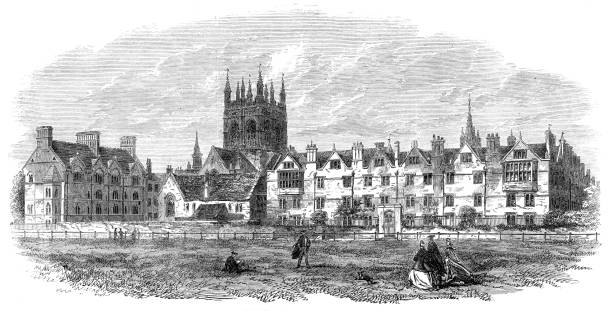
The University of Oxford is made up of many different colleges, each with its unique history and traditions. Students at Oxford receive personalized teaching through small group sessions called tutorials, a distinctive feature of the university.
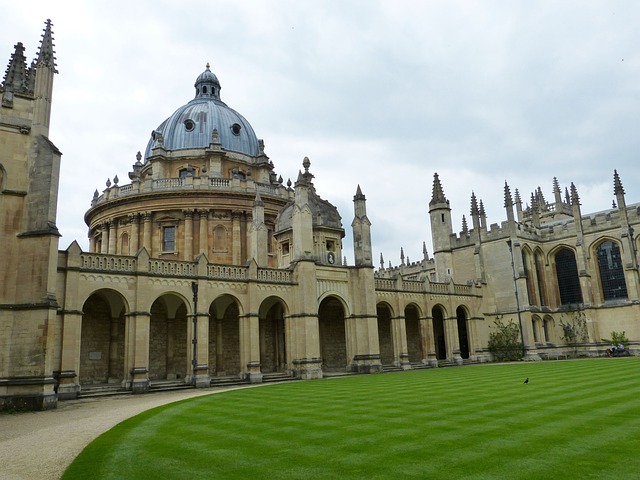
The university offers a wide range of courses in various fields, including humanities, sciences, and social sciences. It also has numerous libraries, museums, and other resources that support learning and research.
Oxford has produced many notable alumni, including prime ministers, Nobel laureates, and influential leaders in various fields. The university continues to be a leading institution for education and research, attracting students and scholars from all over the world.
The purpose of this article is to provide readers with a comprehensive understanding of the University of Oxford. It aims to highlight the university’s rich history, academic excellence, and global influence. By exploring various aspects of Oxford, such as its structure, student life, and future directions, the article seeks to inform and engage readers, showcasing why Oxford remains a leading institution in higher education and research.
Oxford University has no official founding date, but teaching existed there as early as 10961. The university grew rapidly in 1167 when King Henry II banned English students from attending the University of Paris2. By the 13th century, Oxford had established its first colleges, such as University College, Balliol College, and Merton College2. These early years set the foundation for Oxford’s long-standing tradition of academic excellence and innovation.
Key Historical Milestones
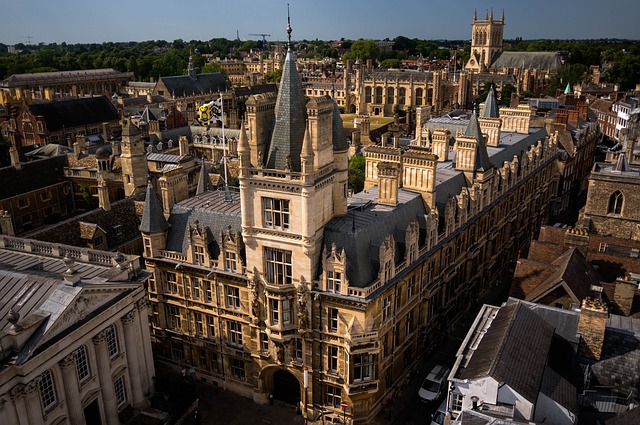
- Early Teaching (1096): Teaching at Oxford began as early as 1096, making it the oldest university in the English-speaking world1.
- Rapid Growth (1167): The university grew rapidly after King Henry II banned English students from attending the University of Paris1.
- First Colleges (1249-1264): The first colleges, including University College, Balliol College, and Merton College, were established1.
- Royal Charter (1248): Oxford received a Royal Charter from King Henry III, solidifying its status as a university2.
- Religious and Political Influence (16th Century): The university played a significant role in religious and political debates, including the Reformation1.
- Women Admitted (1920): Women were first admitted to Oxford as full members, marking a significant step towards gender equality2.
Evolution over the Centuries
The University of Oxford has evolved significantly over the centuries. In its early years, it was primarily a centre for religious and classical studies. During the Middle Ages, it became a hub for theological and philosophical debates. The Renaissance brought a focus on the sciences and humanities, leading to the establishment of new faculties and departments.
In the 19th and 20th centuries, Oxford expanded its research capabilities, particularly in the natural and applied sciences. The university also became more inclusive, admitting women and international students. Today, Oxford is a global leader in education and research, continually adapting to new challenges and opportunities while maintaining its rich traditions123.
Collegiate System: Explanation of Colleges and Halls
The University of Oxford operates on a unique collegiate system, which means it is made up of various colleges and halls. Each college is an independent institution with its buildings, staff, and students. Colleges provide accommodation, meals, and social activities, and they are responsible for the personal and academic welfare of their students. Halls are similar but often smaller and may have a religious affiliation. This system allows students to benefit from a close-knit community while also being part of the larger university.
Administrative Structure
The administrative structure of the University of Oxford is complex and hierarchical. At the top is the Chancellor, a ceremonial figurehead, and the Vice-Chancellor, who is the chief executive officer responsible for the day-to-day management. The university is governed by the Congregation, which includes academic and administrative staff, and the Council, which is the main executive body. Various committees oversee specific areas such as finance, education, and research.
Key Faculties and Departments
The University of Oxford is divided into four main academic divisions:
- Humanities: Includes departments like History, Philosophy, and Languages.
- Mathematical, Physical, and Life Sciences: Covers subjects such as Physics, Chemistry, and Engineering.
- Medical Sciences: Encompasses Medicine, Biochemistry, and Public Health.
- Social Sciences: Includes Economics, Law, and Politics.
Each division is made up of various departments and faculties that specialize in specific academic disciplines, offering a wide range of courses and research opportunities.
Overview of Student Demographics
The University of Oxford has a diverse student body, with students coming from all over the world. Approximately 45% of the student population is international, representing over 160 countries. The university offers a wide range of undergraduate, graduate, and doctoral programs, attracting students with varied academic interests and backgrounds. This diversity enriches the learning environment and fosters a global perspective among students.
Extracurricular Activities and Societies

Oxford offers a vibrant extracurricular scene with over 400 clubs and societies catering to a wide range of interests. Students can join academic societies, sports teams, cultural groups, and hobby clubs. Popular activities include rowing, debating, drama, and music. The Oxford Union, one of the most famous debating societies in the world, regularly hosts high-profile speakers and debates. These activities provide students with opportunities to develop new skills, make friends, and enjoy a balanced university experience.
Support Services and Student Welfare
Oxford University provides extensive support services to ensure the well-being of its students. Each college has a welfare team that includes tutors, counsellors, and peer supporters. The university also offers mental health services, career advice, and academic support. Additionally, there are resources for international students, including orientation programs and visa assistance. These services aim to create a supportive and inclusive environment where students can thrive both academically and personally.
International Partnerships and Collaborations
Oxford University is part of several prestigious international alliances, such as the International Alliance of Research Universities (IARU) and the League of European Research Universities (LERU). These partnerships enable joint educational and research initiatives, student exchanges, and collaborative projects. For example, the Oxford-Berlin Research Partnership supports high-quality joint research across various disciplines1.
Contributions to Global Research and Education
Oxford University is a global leader in research and education, consistently producing world-leading research. The university’s contributions span various fields, including global health, economic prosperity, and cultural life. Oxford’s research has led to significant advancements, such as the development of the COVID-19 vaccine and numerous Nobel Prize-winning discoveries23.
Notable Global Initiatives and Projects
Oxford is involved in several impactful global initiatives. One notable project is the What Works Hub for Global Education, which aims to improve learning outcomes for millions of children in low- and middle-income countries. Supported by major organizations like the World Bank and UNICEF, this initiative focuses on implementing evidence-based educational practices at scale4. Additionally, Oxford’s Impact Acceleration Account (IAA) funding supports the commercialization of research, transforming innovative ideas into real-world applications5.
Summary of Key Points
Oxford University is one of the world’s oldest and most prestigious universities, known for its rich history, academic excellence, and global influence. It operates on a unique collegiate system, offers a diverse range of courses, and has a vibrant student life. The university is also a leader in global research and education, with numerous international partnerships and impactful initiatives.
Reflection on the University’s Legacy and Future
Oxford’s legacy is built on centuries of academic achievement and innovation. It has produced many influential leaders and groundbreaking research. Looking to the future, Oxford continues to adapt to new challenges, focusing on sustainability, inclusivity, and technological advancements. The university aims to maintain its position as a global leader in education and research while addressing contemporary issues.
Final Thoughts and Closing Remarks
Oxford University remains a beacon of knowledge and learning, inspiring students and scholars worldwide. Its commitment to excellence and innovation ensures that it will continue to make significant contributions to society. As Oxford evolves, it stays true to its core values, fostering a community dedicated to intellectual growth and positive global impact.
Oxford University is known for its unique and fascinating traditions. Here are a few that stand out:
- Sub Fusc and Carnations
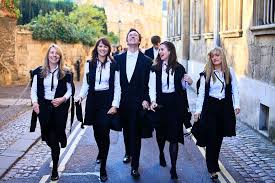
sub fusc
Students wear a traditional academic dress called “sub fusc” for exams, which includes a black suit, white shirt, and a black gown. They also wear carnations pinned to their lapels: white for the first exam, pink for the middle ones, and red for the final exam1.
- May Morning
On May 1st, students gather at Magdalen Bridge at dawn to listen to the choir sing from the top of Magdalen College Tower. This is followed by various celebrations, including dancing and punting on the river2.
- Formal Hall
Many colleges hold formal dinners called Formal Hall, where students dress in their academic gowns and enjoy a three-course meal. These dinners often include traditional toasts and Latin graces3.
- Trashing

Trashing
After finishing their final exams, students celebrate by being “trashed” with confetti, foam, and other colourful substances by their friends. It’s a messy but joyous tradition marking the end of their exams1.
- Oxford Time
Lectures and events at Oxford traditionally start five minutes past the scheduled time, known as “Oxford time.” This custom dates back to when Oxford had its own local time, slightly behind Greenwich Mean Time3.
These traditions add to the rich cultural tapestry of Oxford, making it a unique and memorable place to study.
The Chancellor of Oxford University is the ceremonial head of the university. While the role does not involve day-to-day management, the Chancellor has several important responsibilities:
- Ceremonial Duties: The Chancellor presides over key university ceremonies, such as degree conferrals and special events1.
- Advocacy and Fundraising: The Chancellor acts as an ambassador for the university, promoting its interests and helping to raise funds.
- Advisory Role: The Chancellor provides guidance and support to the university’s leadership, particularly the Vice-Chancellor2.
- Committee Leadership: The Chancellor chairs important committees, including the Committee to Elect the Vice-Chancellor3.
Overall, the Chancellor plays a vital role in representing and supporting Oxford University on a national and international level.
The Chancellor of Oxford University is elected by the Convocation, which includes all former students who have been admitted to a degree, members of the Congregation, and retired staff who were members of the Congregation at retirement1. The election process is designed to be inclusive, allowing a wide range of eligible voters to participate.
Selection Criteria
Candidates for the role of Chancellor must demonstrate:
- Outstanding Achievements: They should have significant accomplishments in their field and the ability to command respect beyond it2.
- Appreciation for the University: A deep understanding and appreciation of Oxford’s research and academic mission, its global community, and its ambition to remain a world-class institution2.
- Ability to Enhance Reputation: The capability and willingness to enhance the university’s reputation locally, nationally, and internationally2.
The Chancellor’s role is largely ceremonial but also involves providing advice and guidance to the university, particularly to the Vice-Chancellor, and acting as an ambassador at various events3.
The Chancellor of Oxford University is elected for a term of 10 years1.
Upcoming Election
Chris Patten, the current Chancellor, announced his retirement at the end of the 2023-24 academic year1. The election for the new Chancellor will take place in the Michaelmas term of 20241. This election will be conducted online for the first time, making it accessible to the global community of over 250,000 eligible voters2.
Contenders for the Position
Several notable individuals have been reported as potential candidates for the role of Chancellor:
- Lady Elish Angiolini: Principal of St Hugh’s College, Oxford2.
- William Hague: Former UK Foreign Secretary2.
- Imran Khan: Former Prime Minister of Pakistan2.
- Peter Mandelson: Former UK Cabinet Minister2.
Other rumoured candidates include former British Prime Ministers Theresa May, Tony Blair, and Boris Johnson3.
Lady Elish Angiolini
Lady Elish Angiolini is a distinguished Scottish lawyer and academic. Born on June 24, 1960, in Govan, Glasgow, she studied law at the University of Strathclyde, graduating in 19821. She has had a remarkable career in law and public service, holding several significant positions.
Career Highlights
- Solicitor General for Scotland (2001-2006): She was the first woman, the first procurator fiscal, and the first solicitor to hold this post.
- Lord Advocate (2006-2011): As the first woman to serve as Lord Advocate, she led significant reforms in the Scottish legal system, particularly in supporting vulnerable victims and witnesses2.
- Principal of St Hugh’s College, Oxford (2012-Present): Since 2012, she has been the Principal of St Hugh’s College, Oxford, and has also served as a Pro Vice-Chancellor of the University of Oxford1.
- Lord Clerk Register (2023-Present): She was appointed to this historic role by King Charles III, becoming the first woman to hold the position since its creation in the 13th century1.
Contributions and Recognitions
Lady Angiolini has been involved in numerous inquiries and reviews, including a review of deaths in police custody and the Angiolini Inquiry into the murder of Sarah Everard1. She has received several awards and honours for her contributions to law and public service, including being appointed a Dame Commander of the Order of the British Empire (DBE) and a Lady of the Order of the Thistle1.
Personal Life
Lady Angiolini is married to Domenico Angiolini, and they have two children. She has a strong commitment to improving the legal system and supporting vulnerable individuals.
William Hague
William Hague has an impressive academic and professional background:
Academic Qualifications
- Bachelor’s Degree: He studied Philosophy, Politics, and Economics (PPE) at Magdalen College, Oxford, graduating with first-class honors1.
- Master’s Degree: He earned an MBA from INSEAD, a prestigious business school in France, graduating with distinction2.
Professional Experience
- Political Career: Hague has held several significant political positions, including Leader of the Conservative Party (1997-2001), Foreign Secretary (2010-2014), and Leader of the House of Commons (2014-2015)1.
- Business Experience: Before his full-time political career, he worked for Shell UK and McKinsey & Co, gaining valuable experience in the business sector2.
Honours and Titles
- Life Peerage: He was made a life peer as Baron Hague of Richmond in 20151.
- Fellow of the Royal Society of Literature (FRSL): Recognized for his contributions to literature1.
Hague’s blend of academic excellence and extensive political and business experience makes him a highly qualified and respected figure.
Imran Khan
Imran Khan is a prominent Pakistani figure known for his achievements in cricket, philanthropy, and politics. Born on October 5, 1952, in Lahore, Pakistan, he gained international fame as a cricketer, leading Pakistan to victory in the 1992 Cricket World Cup1. After retiring from cricket, he founded the political party Pakistan Tehreek-e-Insaf (PTI) and served as the Prime Minister of Pakistan from 2018 to 20221. Image Courtesy: Shutterstock
Key Achievements
- Cricket: Captained Pakistan’s national team to win the 1992 Cricket World Cup1.
- Philanthropy: Established the Shaukat Khanum Memorial Cancer Hospital & Research Centre and Namal University1.
- Politics: Founded PTI and served as Prime Minister, focusing on anti-corruption and social welfare programs1.
Connection to Oxford
Imran Khan studied Philosophy, Politics, and Economics (PPE) at Keble College, Oxford, graduating in 19751. His connection to Oxford and his global recognition make him a notable contender for the role of Chancellor. His leadership experience and international stature could bring valuable perspectives to the university.
Peter Mendelsohn
Peter Mandelson, a prominent Labour Party politician and life peer in the House of Lords, has announced his candidacy for the position of Chancellor at the University of Oxford12. Mandelson has held several significant roles, including Secretary of State for Trade and Secretary of State for Northern Ireland, where he played a key role in establishing the devolved Northern Ireland Assembly1. He is also known for his tenure as Director of Communications for the Labour Party, earning the nickname “the Prince of Darkness” for his media strategies.
Mandelson studied Politics, Philosophy, and Economics at St Catherine’s College, Oxford, and has expressed a deep attachment to the university1. If elected, he would be the first Labour Party member to hold the position, traditionally occupied by Conservative politicians12. Mandelson aims to leverage his political connections to advocate for Oxford and the broader university sector
The final list of candidates for the Chancellor of Oxford University is expected to be announced in early October 202412. The election will take place online during the third week of the Michaelmas term, starting on October 28, 20242.
Sources
1: University of Oxford – Official Website 2: University of Oxford – Wikipedia 3: University of Oxford – Britannica
Wikipedia 3: Oxford’s Chancellor elections to be held online for the first time
1: Elish Angiolini – Wikipedia 2: Lady Elish Angiolini | Faculty of Law
1: William Hague – Wikipedia 2: BIOGRAPHY | William Hague
If you enjoyed this article, please like and share it with your friends. Don’t forget to Share your personal experience/observations thoughts and valuable suggestions for the education /benefit of others. Do subscribe to remain onboard and get more great content!