The Iran–Iraq War (1980–1988): Eight Years That Changed the Middle East Forever
Introduction
The Iran–Iraq War (1980–1988). Eight Years That Changed the Middle East Forever. History often remembers revolutions for the governments they overthrow, but it also remembers the wars they unleash. For Iran, the victory of the 1979 Islamic Revolution was not the end of a national struggle. It was the beginning of an even greater test.
https://mrpo.pk/iran-explained-from-ancient-persia-to-modern-geopolitics/
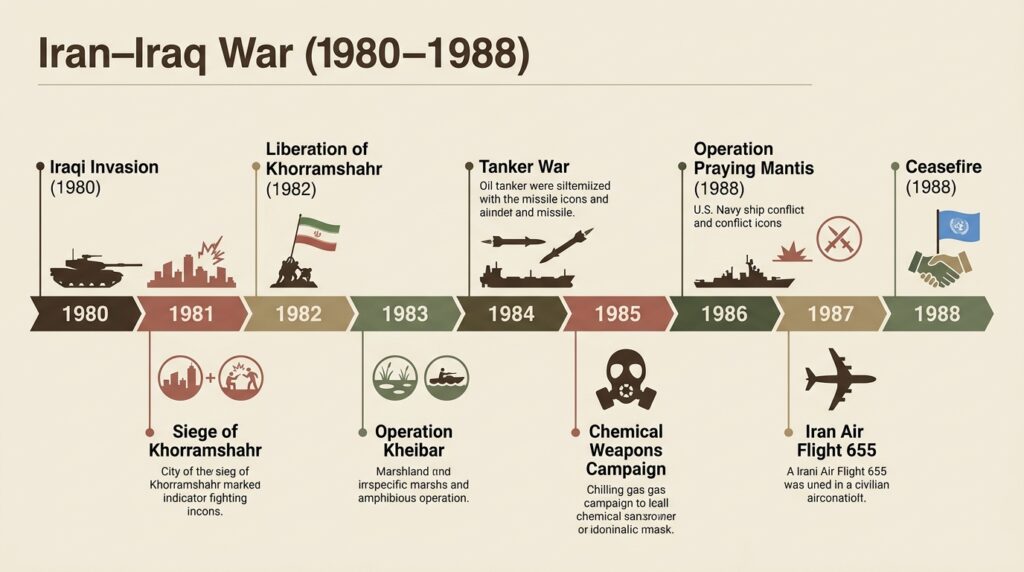
Only nineteen months after Ayatollah Ruhollah Khomeini returned from exile and the centuries-old Persian monarchy collapsed, Iran found itself facing a full-scale military invasion. Across the western border, Iraqi President Saddam Hussein believed the newly established Islamic Republic was politically divided, militarily weakened, and internationally isolated. He expected a quick victory that would establish Iraq as the dominant power in the Persian Gulf.
Instead, his invasion ignited one of the longest conventional wars of the twentieth century.
For eight years, Iran and Iraq fought across deserts, marshlands, mountains, and cities. Millions of soldiers and civilians were drawn into a conflict marked by trench warfare, missile attacks on population centres, naval battles in the Persian Gulf, and the widespread use of chemical weapons. Entire generations grew up knowing little except rationing, air-raid sirens, and the constant uncertainty of war.
The Iran–Iraq War did not produce a clear military victor. Yet it transformed both countries in profound ways. For Iran, it reshaped national identity, strengthened revolutionary institutions, accelerated military self-reliance, and created strategic doctrines that continue to influence its policies more than four decades later. Understanding modern Iran is impossible without understanding this war.
Iran-Iraq War
The Iran-Iraq War, lasting from 1980 to 1988, was a significant military conflict between the neighboring nations of Iraq and Iran. The war stemmed from a complex mix of historical grievances, ethnic tensions, and political upheavals, particularly following the Iranian Revolution of 1979, which established a theocratic government under Ayatollah Khomeini. Iraqi President Saddam Hussein perceived a threat from Iran’s revolutionary influence and sought to capitalize on Iran’s internal instability to assert Iraq’s dominance in the region. The conflict evolved through three main phases, starting with initial Iraqi advances into Iranian territory, followed by a shift to Iranian counteroffensives, and culminating in a protracted war of attrition characterized by brutal tactics, including the use of chemical weapons by Iraq.
https://www.ebsco.com/research-starters/history/iran-iraq-war
Purpose of This Article
This article explores the Iran–Iraq War in depth, explaining:
- Why Saddam Hussein chose to invade Iran.
- The political, territorial, and ideological causes of the conflict.
- How Iran resisted despite enormous disadvantages.
- The major battles that shaped the course of the war.
- The devastating impact of chemical weapons.
- The role of the United States, the Soviet Union, the Gulf Arab states, Israel, Europe, China, and North Korea.
- The immense human and economic cost of eight years of fighting.
- How the war permanently transformed Iran’s defence strategy, economy, politics, and national identity.
Rather than viewing the conflict simply as a border war, this article explains why it became a defining event in modern Middle Eastern history.
A Revolution That Alarmed the Region
The 1979 Islamic Revolution changed far more than Iran’s political system. It altered the strategic balance of the Middle East.
For decades, Iran under Shah Mohammad Reza Pahlavi had been one of the United States’ closest allies in the region. It maintained strong relations with Western governments, purchased billions of dollars’ worth of advanced military equipment, and worked quietly with Israel on intelligence and security matters. The revolution overturned this entire foreign policy orientation almost overnight.
Ayatollah Khomeini declared that the new Islamic Republic would reject both American and Soviet influence. His famous slogan, “Neither East nor West, but the Islamic Republic,” reflected a determination to pursue an independent revolutionary path.
The revolution also carried an ideological message beyond Iran’s borders. Khomeini argued that Muslims living under authoritarian governments should resist oppression and establish governments based on Islamic principles. This concept became known as the “export of the revolution.”
Although Iran insisted that it did not seek territorial expansion, many neighbouring governments feared that revolutionary ideas could inspire opposition movements within their own countries. These concerns were particularly acute among the conservative Arab monarchies of the Persian Gulf.
Saudi Arabia, Kuwait, Bahrain, Qatar, the United Arab Emirates, and Oman all watched developments in Tehran with growing unease. Several of these states had significant Shi’a populations, and their rulers worried that revolutionary rhetoric from Iran might encourage domestic unrest. Among all Iran’s neighbours, however, none felt more threatened than Iraq.
Why Saddam Hussein Decided to Invade Iran
Wars rarely begin because of a single event. They emerge from a combination of political ambitions, historical grievances, military calculations, and perceived opportunities.
Saddam Hussein’s decision to invade Iran in September 1980 reflected all of these factors.
Historical Border Disputes
Although Persia and Mesopotamia had existed as neighbouring civilisations for thousands of years, their modern borders remained contested well into the twentieth century. The most important dispute centred on the Shatt al-Arab waterway, formed by the confluence of the Tigris and Euphrates rivers before they flow into the Persian Gulf.
The river served as the principal maritime outlet for both countries. Whoever controlled it enjoyed significant economic and strategic advantages, particularly regarding oil exports. For decades, Iraq insisted that it possessed sovereignty over most of the waterway. Iran rejected this claim, arguing that international law required the border to follow the deepest navigable channel, known as the thalweg principle.
Tensions periodically escalated into armed confrontations. In 1975, both countries signed the Algiers Agreement, brokered by Algerian President Houari Boumédiène. Under the agreement, Iraq accepted the thalweg boundary in exchange for Iran ending support for Kurdish insurgents operating inside Iraq.
Although Saddam publicly accepted the treaty at the time, he never regarded it as permanent. He viewed it as a humiliating concession forced upon Iraq while it was politically vulnerable. The turmoil created by Iran’s revolution appeared to offer an opportunity to reverse those concessions.
Fear of Revolutionary Islam
Territorial disputes alone do not explain why Iraq launched such a large-scale invasion. Equally important was the ideological challenge posed by Iran’s revolution.
Saddam Hussein ruled Iraq through the Ba’ath Party, which promoted Arab nationalism, secular governance, and strong centralised authority. Religious leaders were carefully controlled, political dissent was ruthlessly suppressed, and loyalty to the state took precedence over sectarian identity. Khomeini’s revolution challenged this model directly.
His message appealed to many Shi’a Muslims across the Middle East, including Iraq’s own Shi’a majority. Although Iraq was governed by a Sunni-led political elite, approximately sixty per cent of its population was Shi’a. Saddam feared that Iran’s revolutionary message could encourage opposition to his rule.
This concern was intensified by historical and religious ties between Shi’a communities in both countries. The Iraqi city of Najaf, where Khomeini had spent many years in exile, remained one of Shi’a Islam’s holiest centres. From Saddam’s perspective, Iran represented not merely a neighbouring state but an ideological threat capable of undermining Iraq’s internal stability.
Iran Appeared Vulnerable
Military leaders often choose to attack when they believe an opponent is at its weakest. In 1980, Iran seemed dangerously fragile. The revolution had fundamentally disrupted the country’s armed forces.
Thousands of experienced officers associated with the Shah had been dismissed, imprisoned, or executed. Command structures were being reorganised, equipment maintenance had deteriorated, and many military units suffered from shortages of trained personnel. The Islamic Republic was simultaneously dealing with internal unrest.
Ethnic separatist movements had emerged in Kurdistan and Khuzestan. Political rivalries between revolutionary factions remained unresolved. The United States embassy hostage crisis had isolated Iran diplomatically, while Western governments imposed sanctions and suspended military cooperation. To outside observers, Iran looked divided and exhausted.
Saddam Hussein concluded that the revolutionary government lacked both the military capability and political cohesion necessary to defend itself. He expected resistance to collapse within weeks. That assumption would prove to be one of the greatest strategic miscalculations in modern military history.
Saddam Hussein’s Regional Ambitions
Saddam’s objectives extended beyond disputed borders. He envisioned Iraq becoming the leading Arab power in the Middle East. Egypt had been weakened politically following its peace treaty with Israel in 1979. Syria remained aligned with the Soviet Union and was itself divided by internal challenges. Saddam believed Iraq possessed the strongest military and the economic resources needed to assume regional leadership.
A swift victory over revolutionary Iran would dramatically enhance Iraq’s prestige. It would also reassure Gulf Arab monarchies that Iraq could contain the spread of revolutionary Islam. Many Arab governments quietly shared Saddam’s concerns regarding Iran, even if they stopped short of openly encouraging war before it began.
The Road to War
Throughout 1980, relations between Iran and Iraq deteriorated rapidly. Border skirmishes became increasingly frequent.
Both governments accused each other of supporting insurgent groups. Propaganda broadcasts intensified. Diplomatic relations deteriorated. On 17 September 1980, Saddam Hussein formally announced that Iraq no longer recognised the 1975 Algiers Agreement. He declared that the Shatt al-Arab belonged entirely to Iraq and asserted that previous concessions had been forced upon his country.
The speech left little doubt that military confrontation was imminent. Just five days later, Iraq launched one of the largest invasions the modern Middle East had witnessed.
Operation Invasion: September 1980
On 22 September 1980, Iraqi aircraft struck multiple Iranian airbases in an attempt to destroy the Iranian Air Force on the ground. The operation resembled Israel’s successful pre-emptive air strikes during the Six-Day War of 1967. However, the results were very different.
Although Iraqi aircraft inflicted damage, they failed to eliminate Iran’s air capabilities. Many Iranian aircraft survived, allowing the Islamic Republic to launch immediate retaliatory strikes against Iraqi military targets. Within hours, six Iraqi army divisions crossed the border. Their objectives were ambitious.
They sought to seize Khuzestan Province, capture the strategically important cities of Khorramshahr and Abadan, secure control over the Shatt al-Arab, and force Iran into accepting Iraqi territorial demands. Initially, Iraqi forces advanced rapidly.
Several border towns fell within days. Iranian units, still reorganising after the revolution, struggled to coordinate an effective defence. Many international observers predicted that Baghdad would achieve victory within weeks. Yet beneath the apparent disorder, something unexpected was beginning to emerge.
Across Iran, the invasion transformed political divisions into national unity. People who had disagreed passionately over the future of the revolution now shared a common objective: defending their country against foreign aggression. This mobilisation would fundamentally alter the course of the war.
Iran’s Unexpected Resistance
When Saddam Hussein ordered the invasion of Iran, he expected a short campaign that would end in a decisive Iraqi victory. His generals believed Iran’s armed forces had been crippled by the Islamic Revolution, its officer corps dismantled through purges, and its political leadership distracted by internal power struggles. Baghdad anticipated that the people of Khuzestan, home to a significant Arab population, might even welcome Iraqi troops.
Instead, Iraq encountered fierce resistance. Within days of the invasion, Iranians from every social background began volunteering to defend their country. Former supporters of the Shah fought alongside committed revolutionaries. Regular soldiers stood shoulder to shoulder with newly formed Revolutionary Guards. University students, factory workers, farmers, merchants, and religious seminarians all answered the call to defend Iran’s sovereignty.
The invasion transformed the Islamic Republic’s greatest weakness into one of its greatest strengths. Political divisions that had threatened to fracture the country gave way to a powerful sense of national unity. While debates about the future of the revolution continued, there was little disagreement over one fundamental principle: foreign occupation would not be tolerated.
This spontaneous mobilisation surprised not only Iraq but also governments around the world. A country widely perceived as unstable demonstrated extraordinary resilience, laying the foundations for a prolonged war that neither side had anticipated.
The Rise of the Islamic Revolutionary Guard Corps (IRGC)
One of the most significant consequences of the war was the rapid evolution of the Islamic Revolutionary Guard Corps (IRGC), known in Persian as the Sepah-e Pasdaran-e Enqelab-e Eslami.
Created shortly after the 1979 Revolution, the IRGC was initially intended to protect the new Islamic Republic from internal threats and counter-revolutionary movements. It was not designed to function as a conventional military force. At the outbreak of war, the organisation possessed limited heavy weaponry, little battlefield experience, and an evolving command structure. The Iraqi invasion changed everything.
Ayatollah Khomeini viewed the defence of Iran as both a national and religious obligation. The IRGC was rapidly expanded, receiving increasing responsibility for organising volunteers, conducting military operations, and defending key sectors of the front. Unlike the regular Iranian Army, which retained many officers trained under the Shah, the Revolutionary Guards were built around ideological commitment. Loyalty to the Islamic Republic and willingness to sacrifice were considered as important as military expertise.
This approach had advantages and disadvantages. The Guards displayed exceptional determination and often undertook missions that conventional armies might have considered impossible. However, their limited military experience sometimes resulted in costly operations with high casualty rates.
As the war progressed, the IRGC matured into a professional fighting force. It established specialised engineering units, artillery formations, intelligence branches, naval forces, and later its own aerospace capabilities. By the end of the conflict, it had become one of Iran’s most influential institutions, a position it continues to hold today. The Iran-Iraq War was therefore not only a struggle between two states; it was also the crucible in which the modern IRGC was forged.
The Basij: Ordinary Citizens in Extraordinary Circumstances
Alongside the Revolutionary Guards emerged another organisation that became synonymous with Iran’s wartime experience: the Basij. Officially known as the Basij Mostazafan, or “Mobilisation of the Oppressed,” the organisation was established by Ayatollah Khomeini in late 1979. Its purpose was to mobilise ordinary citizens in defence of the Islamic Republic.
The Iraqi invasion transformed this idea into a nationwide movement. Hundreds of thousands of volunteers joined the Basij during the war. They came from every province, every social class, and every age group. Many were teenagers or young adults with little or no military training. Others were older men who had never previously served in the armed forces.
Their motivation was deeply personal. Some volunteered out of religious conviction, believing they were defending Islam itself. Others were driven by patriotism and the desire to protect their homes and families. Many simply believed that, regardless of politics, Iran’s independence was worth defending.
Basij volunteers often performed dangerous tasks, including reconnaissance, logistics, casualty evacuation, and frontline assaults. Their courage became a central theme in Iranian wartime narratives, where sacrifice and martyrdom were portrayed as noble acts of devotion.
At the same time, historians continue to debate the military effectiveness of some Basij operations. Human-wave assaults, in particular, remain among the most controversial aspects of the conflict. While Iranian sources emphasise the volunteers’ bravery and determination, critics argue that inadequate training and poor planning resulted in unnecessarily high casualties.
Whatever one’s perspective, there is little doubt that the Basij represented an unprecedented mobilisation of civilian society. Their participation demonstrated the depth of Iran’s commitment to resisting the invasion and contributed significantly to Iraq’s failure to achieve a quick victory.
The Battle of Khorramshahr: The City That Refused to Fall
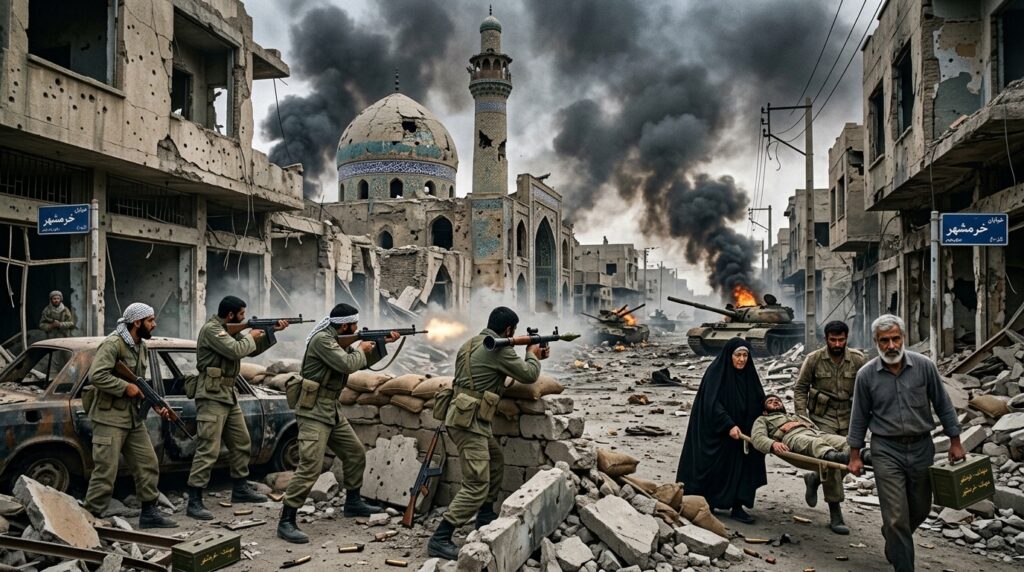
No early battle better symbolised Iran’s determination than the struggle for Khorramshahr. Located near the Iraqi border in Khuzestan Province, Khorramshahr was one of Iran’s most strategically important ports. Its capture would provide Iraq with greater control over access to the Shatt al-Arab waterway and strengthen its hold over southern Iran.
Iraqi commanders expected the city to fall within days. Instead, they encountered fierce resistance. Iranian Army units, Revolutionary Guards, local police officers, and civilian volunteers fought together in brutal street-by-street combat. Buildings became defensive positions. Bridges were contested repeatedly. Every neighbourhood became a battlefield.
The defenders were heavily outnumbered and often lacked sufficient ammunition, armour, or artillery support. Yet they continued fighting with remarkable determination. For thirty-four days, Khorramshahr resisted. The city eventually fell to Iraqi forces on 24 October 1980, but the victory came at an unexpectedly high cost. Iraqi casualties were far greater than anticipated, and the prolonged battle delayed Baghdad’s broader offensive.
The destruction was immense. Entire districts lay in ruins. Thousands of civilians fled, while many others were killed or wounded during the fighting. The once-thriving port became a shattered landscape of collapsed buildings, burnt vehicles, and abandoned streets. Among Iranians, Khorramshahr became known as the “City of Blood,” a name reflecting both the scale of destruction and the extraordinary sacrifice of its defenders.
Although Iraq occupied the city, its capture marked the beginning, not the end, of Iran’s determination to reclaim every inch of occupied territory.
From Defence to Counter-Offensive
By late 1980, Iraq had succeeded in occupying significant areas of Iranian territory. However, Saddam Hussein’s original objective, a rapid collapse of the Islamic Republic, had clearly failed. Iran’s military adapted quickly.
Despite shortages of spare parts caused by international sanctions, the Iranian Air Force remained operational through innovative maintenance and engineering efforts. The regular Army improved coordination with the Revolutionary Guards, while volunteer recruitment continued on an unprecedented scale. Equally important, Iraq’s initial momentum slowed. Its supply lines lengthened, defensive positions became more vulnerable, and morale began to decline as hopes for a swift victory faded.
Throughout 1981, Iran gradually regained the strategic initiative. Rather than launching reckless large-scale attacks immediately, Iranian commanders sought to strengthen logistics, reorganise units, and identify weaknesses in Iraqi positions. These preparations would pave the way for a series of major counter-offensives that dramatically altered the course of the war.
Operation Tariq al-Qods: Iran’s First Major Success
In November 1981, Iran launched Operation Tariq al-Qods (“Road to Jerusalem”), one of its first successful large-scale offensives. The operation targeted the strategically important town of Bostan in western Khuzestan. Through coordinated attacks involving the regular Army and the Revolutionary Guards, Iranian forces succeeded in liberating the town and forcing Iraqi units to withdraw.
Although modest in territorial terms, the victory had enormous psychological significance. It demonstrated that Iran was no longer fighting simply to survive. It possessed the capability to reclaim occupied territory. For Iraqi commanders, the operation raised serious concerns about the sustainability of their defensive positions.
Operation Fath-ol-Mobin: Turning the Tide
In March 1982, Iran launched Operation Fath-ol-Mobin (“Undeniable Victory”), one of the largest offensives of the war. Thousands of Iranian troops attacked Iraqi positions across a broad front in western Khuzestan. After intense fighting lasting several days, Iraqi forces suffered substantial losses in personnel and equipment. Large quantities of tanks, artillery pieces, and military supplies were captured.
Perhaps more importantly, Iraq was forced into a general withdrawal from several occupied areas. The operation marked a decisive strategic turning point. For the first time since the invasion, it became increasingly clear that Iraq was fighting to hold territory rather than expand its gains. Confidence among Iranian forces soared. The next objective was even more ambitious. They intended to retake Khorramshahr.
Operation Beit ol-Moqaddas and the Liberation of Khorramshahr
On 24 April 1982, Iran launched Operation Beit ol-Moqaddas (“Jerusalem”). The offensive involved tens of thousands of soldiers from both the regular Army and the Revolutionary Guards. Weeks of intense combat followed. Iranian forces crossed rivers under heavy fire, breached fortified Iraqi defensive lines, and gradually surrounded Khorramshahr.
On 24 May 1982, after nearly nineteen months of occupation, Iranian troops entered the city. The liberation of Khorramshahr became one of the defining moments of modern Iranian history. Approximately 19,000 Iraqi soldiers were taken prisoner, while many others retreated across the border. Across Iran, spontaneous celebrations erupted.
For many citizens, the victory symbolised not merely military success but national survival. A city that had become synonymous with sacrifice had finally returned to Iranian control. The liberation also fundamentally altered the strategic balance of the war. Saddam Hussein’s hopes for a decisive victory had evaporated. From this point onward, Iraq increasingly found itself fighting a defensive war.
Chemical Weapons: A Defining Atrocity
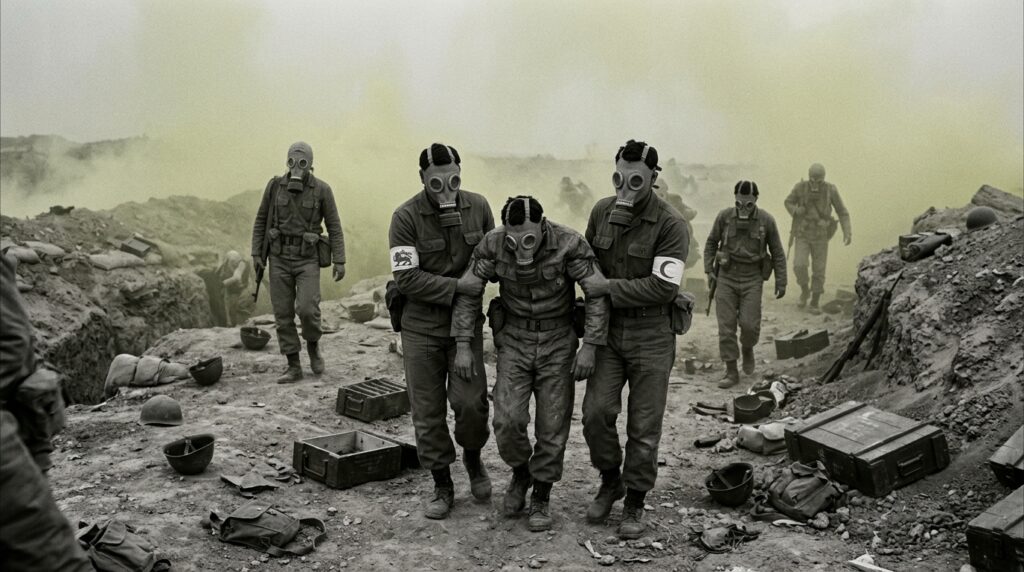
One of the darkest chapters of the Iran-Iraq War was Iraq’s extensive use of chemical weapons. Beginning in 1983 and escalating dramatically over the following years, Iraqi forces employed mustard gas, tabun, sarin, and other nerve agents against Iranian soldiers and, later, against civilian populations. These attacks represented one of the largest uses of chemical warfare since World War I.
Iranian forces were often poorly equipped to deal with such attacks. Thousands of soldiers entered contaminated battlefields with little more than cloth masks or improvised protection. Many had no protective equipment at all. Entire units were incapacitated within minutes. Survivors described horrific scenes of soldiers blinded, suffocating, and suffering agonising burns to their skin and lungs.
The human cost was staggering. Estimates suggest that more than 100,000 Iranians were exposed to chemical agents during the war, with tens of thousands suffering permanent injuries. Many survivors continue to experience chronic respiratory disease, blindness, neurological disorders, and cancers decades later. For many veterans, the war never truly ended; its effects remain part of their daily lives.
Chemical attacks were not limited to military targets. Iraqi forces also struck civilian areas near the front lines, creating widespread fear among populations already exhausted by years of conventional warfare. Perhaps the most infamous chemical attack occurred in March 1988 against the Kurdish town of Halabja, where thousands of civilians were killed. Although Halabja took place inside Iraq, it demonstrated Saddam Hussein’s willingness to use prohibited weapons against both his enemies and his own citizens.
International Response and Double Standards
Despite overwhelming evidence that Iraq was employing chemical weapons, the international response was hesitant and often ineffective. United Nations investigation teams repeatedly confirmed the use of chemical agents, yet political divisions among major powers prevented meaningful action against Baghdad.
Many Western governments viewed revolutionary Iran as the greater geopolitical threat. As a result, condemnation of Iraq remained limited, and few meaningful sanctions followed. Some countries continued providing Iraq with intelligence, financial support, dual-use technology, and materials that indirectly contributed to its military capabilities.
The Soviet Union remained one of Iraq’s principal arms suppliers throughout much of the conflict, while France sold advanced aircraft and missiles. Several Gulf Arab monarchies, particularly Saudi Arabia and Kuwait, provided billions of dollars in loans and financial assistance to sustain Iraq’s war effort, fearing that an Iranian victory might encourage revolutionary movements throughout the region.
The United States officially maintained neutrality but gradually tilted toward Iraq during the latter half of the war. American intelligence sharing helped Iraqi commanders monitor Iranian troop movements, while diplomatic efforts increasingly sought to prevent an outright Iranian victory. This cooperation became especially controversial in light of Iraq’s documented use of chemical weapons.
For many Iranians, the perceived indifference of the international community became one of the war’s enduring lessons. They concluded that international law could be selectively applied and that national survival ultimately depended on self-reliance rather than outside guarantees. This perception would profoundly shape Iran’s strategic thinking long after the guns fell silent.
The “War of the Cities”
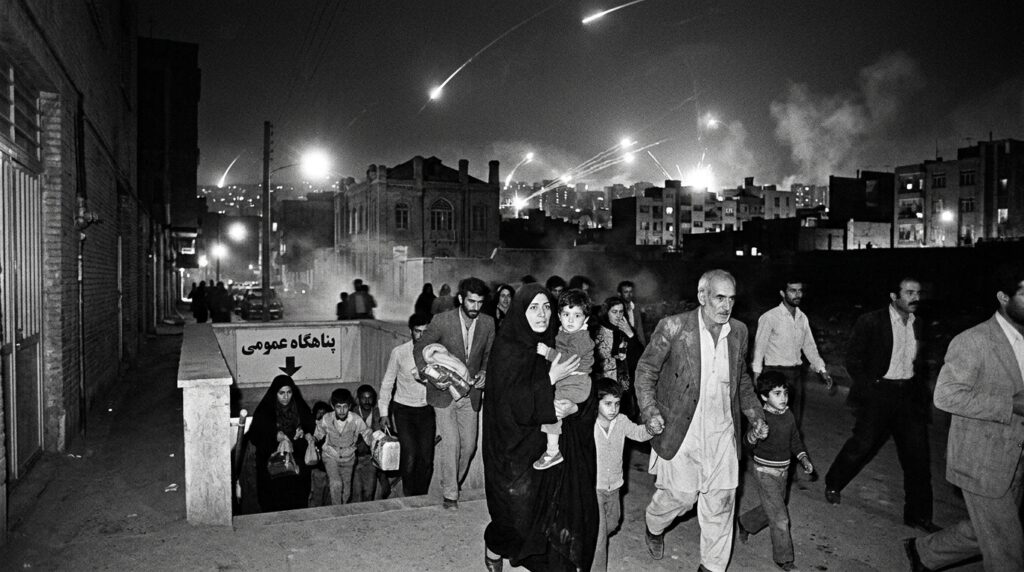
Unable to secure decisive breakthroughs on the battlefield, both sides increasingly targeted civilian population centers. Beginning in 1984 and intensifying toward the war’s end, Iraq and Iran exchanged missile and air attacks against major cities in what became known as the “War of the Cities.”
Baghdad, Tehran, Isfahan, Tabriz, Basra, and numerous smaller cities endured repeated bombardments. Civilians spent nights in shelters, schools closed frequently, and millions lived under the constant threat of missile strikes.
Iraq initially held a significant technological advantage, possessing more advanced aircraft and longer-range missiles. As the war progressed, however, Iran gradually acquired ballistic missiles from Libya, Syria, North Korea, and other sources, enabling retaliatory strikes against Iraqi cities.
These attacks produced limited military value but enormous psychological impact. Their primary purpose was to undermine civilian morale, disrupt economic life, and pressure governments into concessions. Instead, they often strengthened public resolve while deepening hatred between the two nations.
The missile exchanges also highlighted the growing importance of ballistic missiles as instruments of regional warfare. Iranian military planners took careful note of their strategic value, laying the intellectual foundations for the missile program that would later become one of the country’s primary deterrent capabilities.
The Tanker War and the Persian Gulf
By the mid-1980s, the conflict had expanded beyond the land battlefield into the waters of the Persian Gulf. Both Iran and Iraq recognised that oil exports financed the war and that disrupting maritime commerce could weaken the opponent economically.
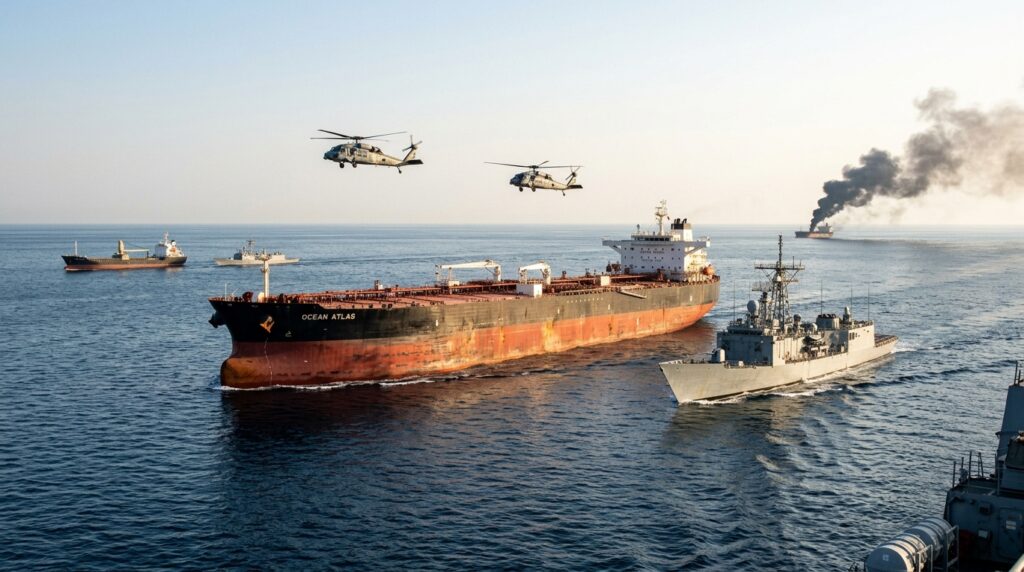
Iraq launched frequent air attacks against Iranian oil terminals and commercial shipping. Iran responded by targeting vessels associated with Iraq’s Gulf Arab supporters, particularly Kuwait and Saudi Arabia. This phase of the conflict became known as the “Tanker War.”
Hundreds of merchant ships were attacked using missiles, naval mines, helicopters, and small attack boats. Insurance costs for commercial shipping soared, while concerns grew that the conflict could threaten global energy supplies.
The escalating danger prompted increased foreign military involvement. The United States initiated Operation Earnest Will in 1987, reflagging Kuwaiti tankers under the American flag and escorting them through the Gulf with U.S. naval forces. Other Western navies also increased their presence to protect maritime commerce.
The confrontation brought American and Iranian forces into increasingly direct conflict. Several naval skirmishes occurred, culminating in Operation Praying Mantis in April 1988, during which the U.S. Navy destroyed much of Iran’s operational naval capability following the mining of the USS Samuel B. Roberts.
These events reinforced Iranian concerns that the conflict was no longer simply a war with Iraq but had become intertwined with broader international power politics. The experience strengthened Tehran’s determination to develop asymmetric naval capabilities capable of challenging technologically superior adversaries in the confined waters of the Persian Gulf.
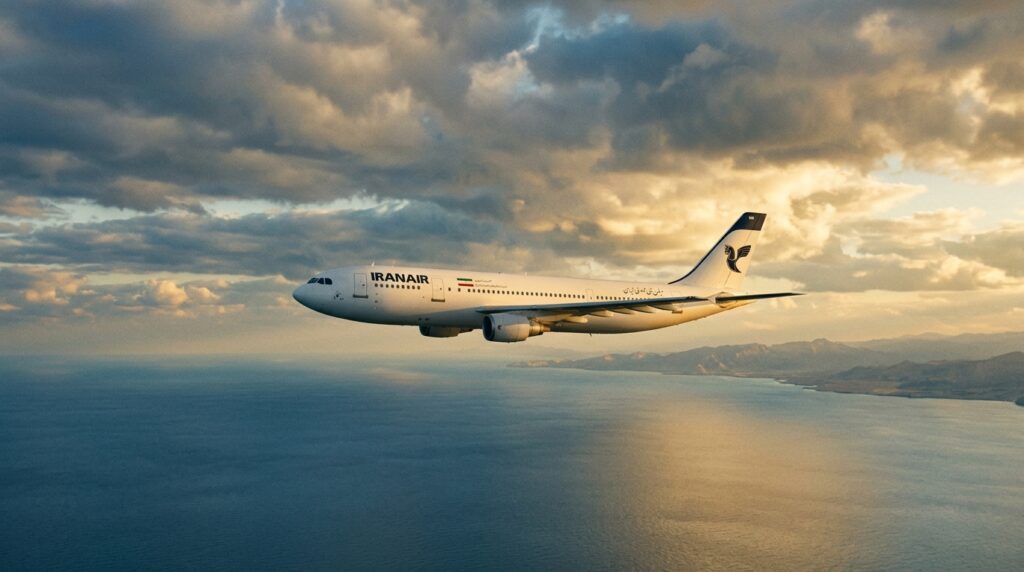
The Downing of Iran Air Flight 655
One of the war’s most tragic and controversial incidents occurred on July 3, 1988. The American guided missile cruiser USS Vincennes shot down Iran Air Flight 655, a civilian Airbus A300 travelling on a scheduled commercial route from Bandar Abbas to Dubai. All 290 passengers and crew aboard were killed, including dozens of children.
The United States stated that the aircraft had been mistakenly identified as an attacking Iranian F-14 fighter during a period of heightened naval tensions. Iran rejected this explanation, arguing that the airliner was following a normal commercial flight path and transmitting civilian identification signals.
The tragedy shocked the international community and further inflamed anti-American sentiment inside Iran. Although the United States later expressed regret for the loss of civilian life and paid financial compensation to victims’ families as part of a legal settlement, it never formally accepted legal responsibility or issued an official apology.
Within Iran, Flight 655 became another powerful symbol of perceived international injustice and reinforced the belief that foreign powers could inflict severe costs on Iran without meaningful accountability. Alongside memories of chemical attacks and international support for Iraq, the incident became deeply embedded in the Islamic Republic’s national narrative of resistance and strategic self-reliance.
Continuing with the final sections of the article:
Accepting the Ceasefire: “Drinking the Poisoned Chalice”
By 1988, both Iran and Iraq had reached the limits of what they could sustain. Eight years of relentless warfare had devastated their economies, exhausted their populations, and claimed hundreds of thousands of lives. Yet despite the immense suffering, neither side had achieved a decisive victory.
Iran’s position had become increasingly precarious. International sanctions restricted access to military equipment and spare parts. Oil revenues had declined sharply due to attacks on export facilities and lower production. Inflation, shortages, and war fatigue placed growing pressure on the government.
Militarily, Iraq had regained the initiative. Better equipped and benefiting from extensive foreign financial and military support, Iraqi forces launched a series of successful offensives in 1988, recapturing the strategic Faw Peninsula and driving Iranian troops back across much of the front.
The extensive use of chemical weapons further eroded Iran’s ability to continue the war. Thousands of soldiers were incapacitated, while fears grew that Iraqi chemical attacks could increasingly target major Iranian cities.
At the same time, the conflict had expanded dangerously beyond the Iran-Iraq border. Direct naval confrontations with the United States in the Persian Gulf, including Operation Praying Mantis and the destruction of Iran Air Flight 655, underscored the growing risk of a wider international war.
Faced with mounting military setbacks and worsening economic conditions, Iran’s leadership concluded that continuing the conflict threatened the survival of the Islamic Republic itself.
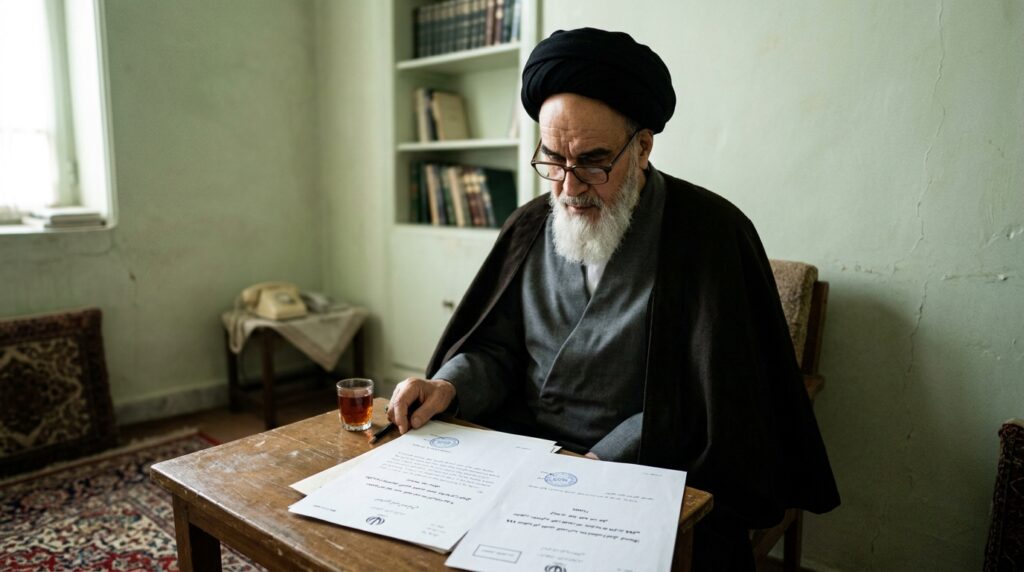
On July 18, 1988, Iran accepted United Nations Security Council Resolution 598, agreeing to a ceasefire.
Ayatollah Ruhollah Khomeini described the decision as “drinking a chalice of poison,” acknowledging both the immense sacrifice made by the Iranian people and the painful reality that victory was no longer attainable.
Hostilities formally ended on August 20, 1988, after nearly eight years of continuous warfare.
The Human and Economic Cost
The Iran-Iraq War ranks among the most destructive interstate conflicts of the twentieth century.
Reliable casualty figures remain disputed, but most historians estimate that between 500,000 and one million people from both countries were killed or seriously wounded. Hundreds of thousands more suffered lifelong disabilities, while millions were displaced from their homes.
Entire towns along the border were destroyed. Cities such as Khorramshahr became symbols of devastation, requiring years of reconstruction after the war ended.
Iran’s economy emerged severely weakened. Oil infrastructure had sustained repeated attacks, industrial production declined sharply, and billions of dollars were diverted from development toward military expenditures.
Infrastructure across western Iran—including roads, bridges, hospitals, schools, factories, and power facilities—required extensive rebuilding. Reconstruction consumed enormous national resources throughout the 1990s.
The social consequences proved equally profound.
Nearly every Iranian family knew someone who had been killed, wounded, or permanently disabled. Veterans returned carrying both physical injuries and psychological trauma. Families mourned missing relatives whose remains were never recovered from the battlefields.
The war also strengthened institutions that had grown during the conflict. The Islamic Revolutionary Guard Corps (IRGC) expanded dramatically in size, influence, and political importance. Originally established to protect the revolution, it emerged from the war as one of Iran’s most powerful military, economic, and political institutions.
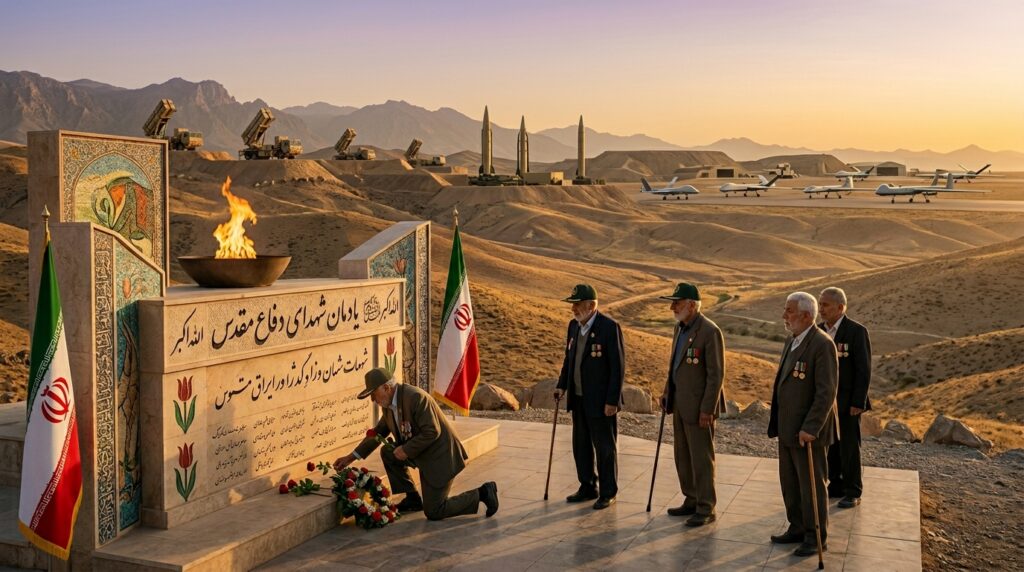
The culture of sacrifice became deeply embedded within Iranian society. Memorials, museums, documentaries, school curricula, and annual commemorations continue to honour what Iran officially calls the “Sacred Defence,” portraying the conflict as a just struggle against foreign aggression.
The War’s Lasting Strategic Lessons
The Iran-Iraq War fundamentally reshaped Iran’s national security doctrine. Nearly every major defence policy adopted by the Islamic Republic since 1988 can be traced, at least in part, to lessons learned during those eight years.
Self-Reliance in Defense
International arms embargoes convinced Iranian leaders that dependence on foreign suppliers represented an unacceptable strategic vulnerability.
In response, Iran invested heavily in domestic defence industries, eventually producing indigenous tanks, drones, missiles, naval systems, radar technologies, and air defence equipment. Although many systems remain less advanced than their Western counterparts, Iran has developed one of the Middle East’s largest domestic military-industrial complexes.
Ballistic Missile Development
Repeated Iraqi missile attacks demonstrated the importance of long-range strike capabilities.
Unable to build a modern air force because of sanctions and limited access to advanced aircraft, Iran instead prioritized ballistic missile development as its principal strategic deterrent.
Today, Iran possesses one of the largest missile arsenals in the Middle East—a direct consequence of lessons learned during the “War of the Cities.”
Asymmetric Warfare
The war revealed the dangers of confronting technologically superior opponents through conventional means.
Iran, therefore, emphasised asymmetric strategies designed to offset conventional disadvantages. These include fast attack boats in the Persian Gulf, extensive use of drones, cyber capabilities, proxy forces, and precision missiles.
Rather than seeking conventional military parity with larger powers, Iran developed methods intended to raise the costs of any potential attack.
Strategic Depth
Perhaps the most enduring lesson was that threats should be addressed as far from Iranian territory as possible.
This concept of “forward defence” became central to Iranian regional strategy after the war. By supporting allied governments and non-state actors across the Middle East—including in Lebanon, Iraq, Syria, and later Yemen—Iran sought to create strategic depth that would make direct attacks on Iranian territory more difficult and costly.
Supporters argue that this strategy has successfully deterred external aggression for decades. Critics contend that it has fueled regional instability, prolonged conflicts, and imposed heavy economic burdens on Iran itself.
Regardless of perspective, there is broad agreement that these policies were shaped significantly by the trauma of the Iran-Iraq War.
Conclusion
The Iran-Iraq War ended without a clear military victor. Borders remained largely unchanged, neither government collapsed, and many of the political disputes that had sparked the conflict remained unresolved.
Yet the war transformed both nations.
For Iraq, it left crushing debt, a militarised economy, and unresolved ambitions that contributed directly to Saddam Hussein’s invasion of Kuwait in 1990 and the Gulf War that followed.
For Iran, the conflict became a defining national experience. It reinforced revolutionary identity, elevated the Revolutionary Guards into a central pillar of the state, and established strategic principles that continue to shape Iranian foreign and defence policy.
The war also reshaped the broader Middle East. It accelerated regional arms races, increased foreign military involvement in the Persian Gulf, and demonstrated how local conflicts could rapidly draw in global powers.
More than three decades later, the legacy of the Iran-Iraq War remains visible. Iran’s missile program, emphasis on military self-sufficiency, network of regional allies, and deep distrust of foreign intervention all bear the imprint of lessons learned during those eight devastating years.
Understanding modern Iran requires understanding this war—not only as a military conflict, but as the crucible that forged the strategic mindset of the Islamic Republic. Its influence extends far beyond the battlefield, continuing to shape Iranian politics, national identity, and regional policy to the present day.
Frequently Asked Questions (FAQs)
1. Why did Iraq invade Iran in 1980?
Iraq invaded Iran for a combination of strategic, political, and ideological reasons. Saddam Hussein believed Iran was weakened by the 1979 Islamic Revolution and military purges, presenting an opportunity to seize disputed border territories, particularly around the Shatt al-Arab waterway. He also feared that Iran’s revolutionary ideology could inspire Iraq’s large Shi’a population to challenge his secular Ba’athist regime. Expecting a quick victory, Saddam launched the invasion in September 1980, but instead triggered a prolonged eight-year war.
2. How many people died in the Iran-Iraq War?
Exact casualty figures remain disputed, but most historians estimate that between 500,000 and one million people from both countries were killed or seriously wounded. Iran alone suffered hundreds of thousands of military and civilian casualties, while millions were displaced. The war also left lasting physical and psychological scars on survivors and devastated infrastructure across both nations.
3. Why did the international community support Iraq?
Many countries viewed revolutionary Iran as a greater geopolitical threat than Saddam Hussein’s Iraq. During the Cold War, Western governments feared the spread of Iran’s Islamic Revolution, while Gulf Arab states worried about revolutionary movements within their own borders. As a result, Iraq received financial aid, military equipment, intelligence, and diplomatic support from various countries despite its documented use of chemical weapons.
4. Why is the Iran-Iraq War called the “Sacred Defence” in Iran?
In Iran, the conflict is officially known as the Sacred Defence (Defa’-e Moqaddas) because it is portrayed as a defensive war against foreign aggression. The government emphasises the sacrifices of soldiers and civilians who defended the country’s independence and sovereignty. The war occupies a central place in Iran’s national identity, with museums, memorials, films, literature, and annual commemorations preserving its legacy.
5. How did the war shape Iran’s military strategy?
The war fundamentally transformed Iran’s defence doctrine. Experiencing international isolation and arms embargoes convinced Iranian leaders to pursue military self-sufficiency. Iran invested heavily in domestic weapons production, ballistic missiles, drones, asymmetric naval warfare, and regional partnerships. Many of Iran’s current defense policies—including its emphasis on deterrence and strategic depth—are direct outcomes of lessons learned during the war.
6. Did the Iran-Iraq War have a clear winner?
No. Militarily, the war ended in a stalemate. The internationally recognized border remained essentially unchanged, and neither country achieved its original objectives. However, both nations paid an enormous price in lives, economic destruction, and social trauma. While Iraq initially appeared stronger after the ceasefire, its financial exhaustion contributed to Saddam Hussein’s invasion of Kuwait in 1990. For Iran, the war reinforced national resilience and permanently influenced its political and strategic outlook.
References
Abrahamian, Ervand. A History of Modern Iran. Cambridge University Press, 2008.
Axworthy, Michael. Revolutionary Iran: A History of the Islamic Republic. Oxford University Press, 2013.
Cordesman, Anthony H., and Abraham R. Wagner. The Lessons of Modern War, Volume II: The Iran-Iraq War. Westview Press, 1990.
Hiro, Dilip. The Longest War: The Iran-Iraq Military Conflict. Routledge, 1991.
Karsh, Efraim. The Iran-Iraq War: 1980–1988. Osprey Publishing, 2002.
Razoux, Pierre. The Iran-Iraq War. Harvard University Press, 2015.
United Nations Security Council. Resolution 598 (1987).
United Nations Secretary-General. Report on the Use of Chemical Weapons in the Conflict Between Iran and Iraq.
United Nations Office for Disarmament Affairs (UNODA). Chemical Weapons Convention: Historical Background.
U.S. Naval History and Heritage Command. Operation Praying Mantis.
Wright, Robin. The Last Great Revolution: Turmoil and Transformation in Iran. Alfred A. Knopf, 2000.
Suggested Reading Order of the Series
- Ancient Persia: Birth of an Empire
- From Islam to the Safavids
- The Qajar Dynasty and Foreign Intervention
- Reza Shah and the Birth of Modern Iran
- Mohammad Reza Shah, the White Revolution, and Growing Opposition
- The 1979 Islamic Revolution
- The U.S. Embassy Hostage Crisis
- The Iran-Iraq War (1980–1988) (Current Article)
- Reconstruction and Pragmatism: Rafsanjani and the Post-War Republic
- Reform and Resistance: The Khatami Years
- Ahmadinejad, Nuclear Ambitions, and International Sanctions
- Rouhani, the JCPOA, and Renewed Confrontation
- Iran in the 2020s: Regional Power, Internal Challenges, and an Uncertain Future