Why Study in Germany: Opportunities, Education System, and Benefits in 2026
Study in Germany 2026: The Ultimate Guide for US & EU Students
By [Editorial Team] | Updated: February 21, 2026
Germany remains the premier destination for international students in 2026, offering a unique blend of tuition-free, high-quality education and a robust economy. For students from the United States and the European Union, the value proposition has never been stronger: a debt-free degree in the heart of Europe.
1. Why Study in Germany in 2026?
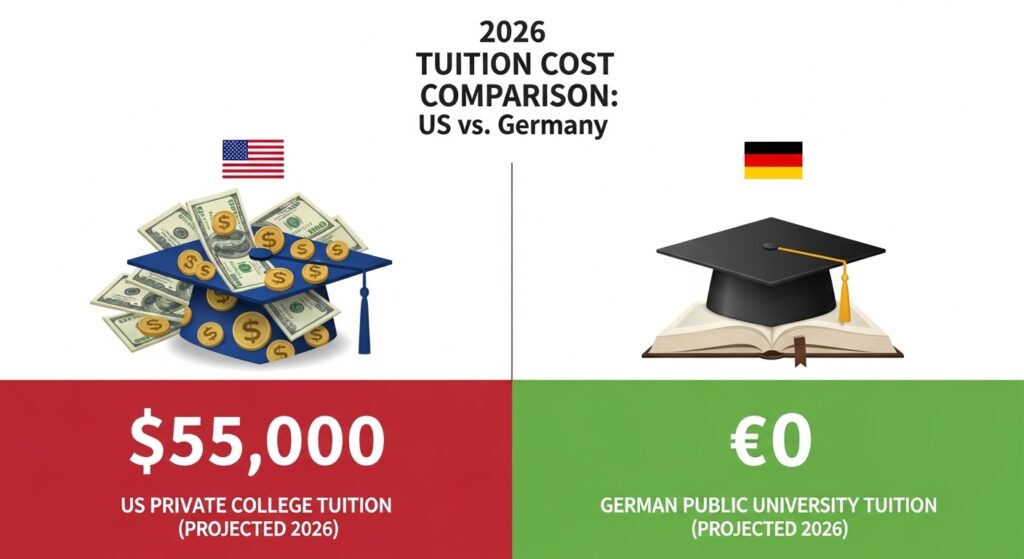
The German higher education landscape has undergone significant digital and structural upgrades for the 2026 academic year.
-
Tuition-Free Public Universities: Most public universities continue to charge zero tuition, even for international students (with small exceptions in Baden-Württemberg and select Master’s in Bavaria).
-
The “Debt-Free” Advantage for US Students: With US tuition fees soaring, Germany offers a path to an Ivy-League-quality education without the $200k student loan burden.
-
Ease of Mobility for EU Citizens: EU/EEA students enjoy domestic status, meaning no visas, no blocked accounts, and immediate access to the German labour market.
-
2,000+ English-Taught Programs: The DAAD database now lists over 2,000 Bachelor’s and Master’s programs taught entirely in English, particularly in Tech, Sustainability, and Business.
2. Top-Ranked Universities & Courses for 2026
According to the latest Times Higher Education (THE) 2026 rankings, German technical universities (TUs) are leading in Industry 4.0 and AI research.
Featured 2026 Academic Paths
| University | 2026 Global Rank | Key English-Taught Programs |
| TU Munich (TUM) | #27 | B.Sc. Aerospace, M.Sc. Data Engineering |
| LMU Munich | #34 | M.Sc. Quantum Science, Journalism |
| Heidelberg University | #49 | Molecular Biosciences, International Health |
| RWTH Aachen | #92 | Sustainable Management, Robotics |
3. Financial Requirements & Living Costs (2026 Updates)
Understanding the “Proof of Funds” is the most critical step for non-EU (US) students.
The Blocked Account (Sperrkonto)
For 2026, the German Federal Government has set the mandatory proof of funds at:
-
Monthly Requirement: €992
-
Annual Total: €11,904 (approx. $12,900 USD)
-
Recommended Providers: Expatrio, Fintiba, and Coracle remain the top digital choices for US residents.
The Deutschland-Semesterticket
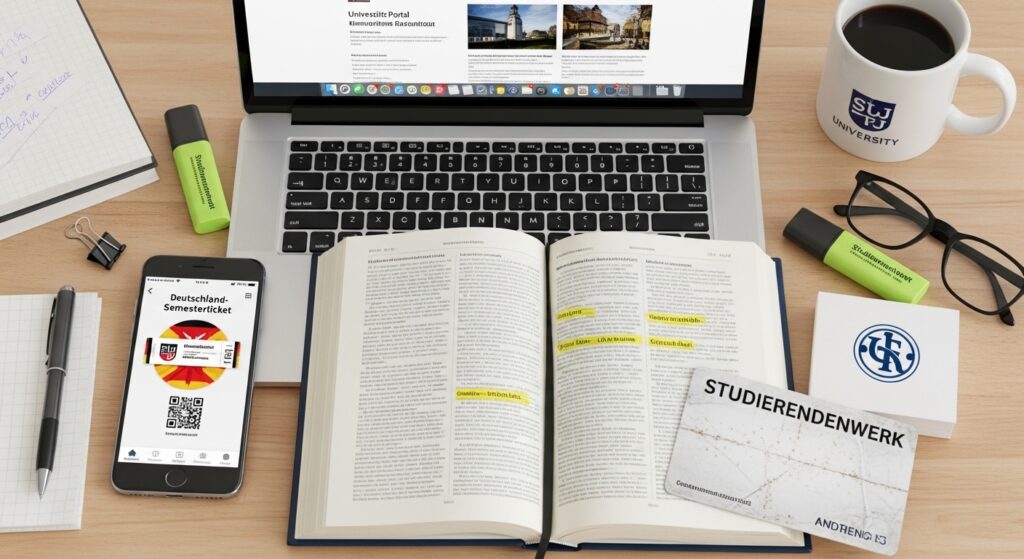
Starting in 2026, the nationwide Deutschland-Semesterticket is standard. For approximately €34.80/month, students get unlimited regional trains, trams, and buses across all of Germany, eliminating the need for a car.
4. Entry & Visa Regulations (Targeted Advice)
For US Citizens: The “90-Day Entry” Benefit
US citizens do not need a visa to enter Germany for study. You can enter as a tourist and apply for your Residence Permit (Aufenthaltstitel) at the local Ausländerbehörde (Foreigners’ Office) within your first 90 days.
-
2026 Insight: Use the new “Consular Services Portal” to upload your documents digitally before you fly to speed up the process.
For EU/EEA Citizens: Domestic Access
You do not need a visa or a residence permit. Simply register your address (Anmeldung) at the city hall within 14 days of arrival. You are also eligible for BAföG (state funding) if you meet certain residency criteria.
The 2026 Opportunity Card (Chancenkarte)
US graduates who don’t have a study place yet can apply for the Opportunity Card. This allows you to stay in Germany for 1 year to search for a job or university, provided you have a recognised degree and €1,091/month in funding.
5. Career & Post-Study Work
Germany’s labour market is facing a shortage of skilled professionals in 2026, making it an ideal time for graduates to stay.
-
Post-Study Work Visa: International graduates (including US students) can stay for 18 months after graduation to find a job.
-
Minimum Wage (2026): Now at €13.90/hour, making part-time student work (20 hours/week) a viable way to cover living costs.
FAQ: Study in Germany 2026
Q: Can I study in Germany without knowing German? A: Yes, there are over 2,026 English-taught programs. However, A1-level German is highly recommended for daily life.
Q: How do I apply? A: Most applications go through Uni-Assist or directly via the university portal. Deadlines are typically July 15th for the Winter Semester and January 15th for the Summer Semester.
Disclaimer: This guide is for informational purposes. Always check the official DAAD and Make it in Germany websites for the most current legal requirements.
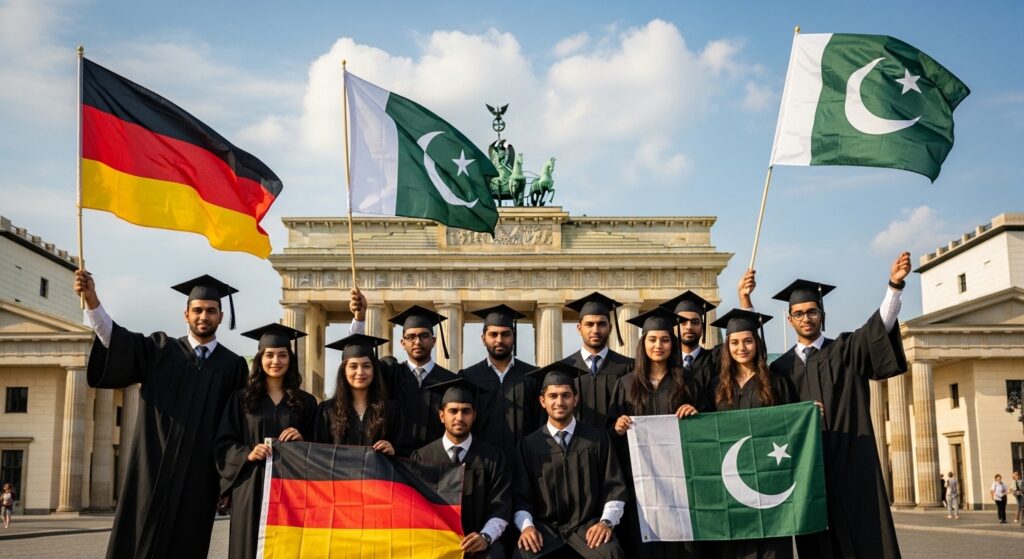
6. Special Focus: The Pakistani Aspirant’s Roadmap (2026)
For Pakistani students, Germany is more than an education hub; it is a gateway to global career opportunities. In 2026, the collaboration between the Higher Education Commission (HEC) and German bodies has reached new heights.
7. Top Scholarship Opportunities for 2026
| Scholarship Program | Level | 2026 Monthly Stipend | Key Requirements |
| DAAD EPOS | Master’s/PhD | €992 (M) / €1,300 (D) | 2 years of professional work experience; development-focused field. |
| Erasmus Mundus | Joint Master’s | €1,400 | No prior stay in EU for >12 months; high CGPA (usually 3.5+). |
| HEC Overseas | PhD | Varies | 60% HAT Score; 1st Division in last degree; Pakistani/AJK national. |
| FES Scholarship | BS/MS/PhD | €992 | Commitment to social democracy; B1 German (even for English courses). |
8. Development-Related Courses (EPOS) for Pakistan
The DAAD EPOS program is specifically designed for professionals from developing nations. For 2026, the following courses are highly recommended for Pakistani applicants due to their high acceptance rates:
-
M.Sc. International Health: (Charité Berlin & Heidelberg University) – Ideal for MBBS graduates.
-
Global Urban Health: (University of Freiburg) – Focus on sustainable city planning.
-
Vocational Education (M.Sc.): (TU Dresden) – Aimed at improving technical training frameworks in Pakistan.
-
Agricultural Sciences (M.Sc.): (University of Hohenheim) – Vital for Pakistan’s climate-resilient farming initiatives.
9. The “HAT” Factor & HEC Requirements
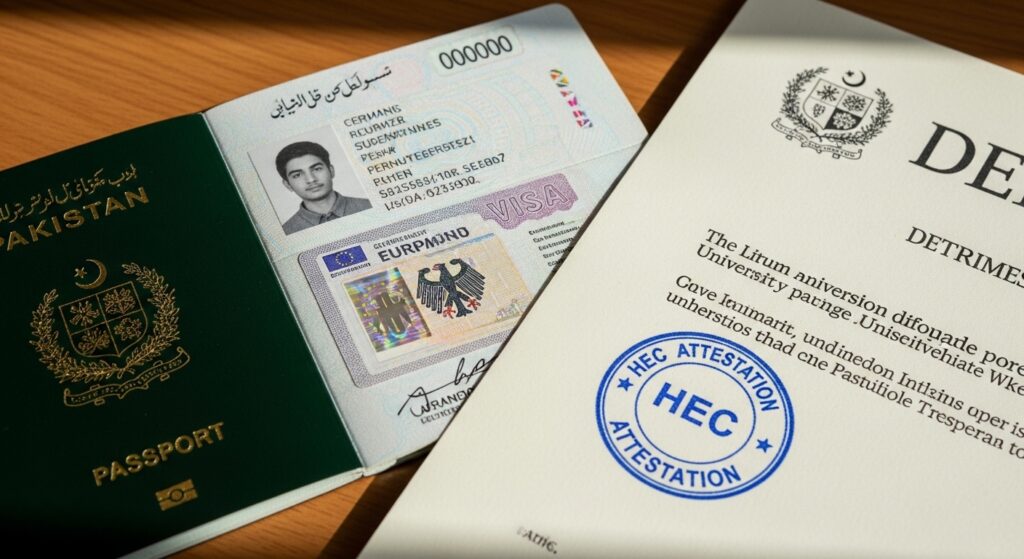
To apply for HEC-funded German scholarships in 2026, you must pass the Higher Education Aptitude Test (HAT).
-
Minimum Score: 60/100 is typically the baseline for nomination.
-
Merit Calculation: Usually weighted 50-70% on HAT score and 30-50% on academic history.
10. Pakistani Student Checklist
-
Document Attestation: Ensure your transcripts are attested by HEC and the Foreign Office (MOFA) before your visa appointment.
-
IELTS/TOEFL: While some EU countries accept “English Proficiency Certificates,” German consulates in Islamabad/Karachi strictly require a valid IELTS (usually 6.5) for student visas.
-
Bank Account: If you don’t secure a full scholarship, the Blocked Account for 2026 is €11,904.
Expanding the article to include a strategic roadmap for Pakistani aspirants is essential. Pakistan is a priority country for many German funding bodies, and for 2026, the application windows are strictly defined.
Below is the Master Application & Scholarship Timeline specifically tailored for Pakistani students targeting the Winter Intake (October) 2026.
11. Pakistani Aspirants’ 12-Month Roadmap: Winter 2026
For students in Pakistan, the process is a marathon that begins nearly a year in advance due to HEC attestation and visa appointment lead times.
Phase 1: Preparation (October 2025 – February 2026)
-
Language Proficiency: Take the IELTS Academic. Aim for a 6.5 band (minimum) as most DAAD scholarships and top TUs require it.
-
HEC Attestation: Start the attestation of your Matric, Inter, and Bachelor’s degrees. This is a prerequisite for both the German Embassy and most scholarship portals.
-
Research DAAD EPOS: If you have 2 years of work experience, identify “Development-Related” courses. The deadlines for these often fall between October and February.
Phase 2: The Scholarship Window (December 2025 – March 2026)
-
Erasmus Mundus: Applications for Joint Master’s programs usually close in January/February 2026.
-
HEC Overseas Scholarship: Keep an eye on the HEC portal for the “Phase-III” or “Faculty Development” announcements. You will likely need to appear for the HAT (HEC Aptitude Test) during this window.
Phase 3: University Applications (April 2026 – July 15, 2026)
-
Uni-Assist Submission: Most public universities open their portals in April. Submit your documents at least 6 weeks before the July 15 deadline to account for evaluation time.
-
VPD (Vorprüfungsdokumentation): If your university requires a VPD via Uni-Assist, apply for it in May to avoid the June rush.
Phase 4: Financials & Visa (July 2026 – September 2026)
-
The Blocked Account: Once you receive an admission letter (Zulassung), transfer €11,904 to your blocked account.
-
Visa Appointment: This is the biggest hurdle in Pakistan.
-
Islamabad/Karachi: Register for an appointment on the German Mission’s website immediately after getting your admission.
-
Tip: If you have a DAAD or HEC scholarship letter, you are often eligible for priority/fast-track appointments.
-
12. 2026 “Must-Know” for Pakistan
-
IELTS vs. English Proficiency: While some universities may accept a certificate from your Pakistani university, the German Consulate in Pakistan increasingly insists on a formal IELTS/TOEFL for visa issuance. Don’t skip the test.
-
Increased Minimum Wage: Remember, if you are not on a full scholarship, you can work 20 hours/week. At the 2026 rate of €13.90/hour, you can earn roughly €1,100/month, which covers your living expenses entirely.
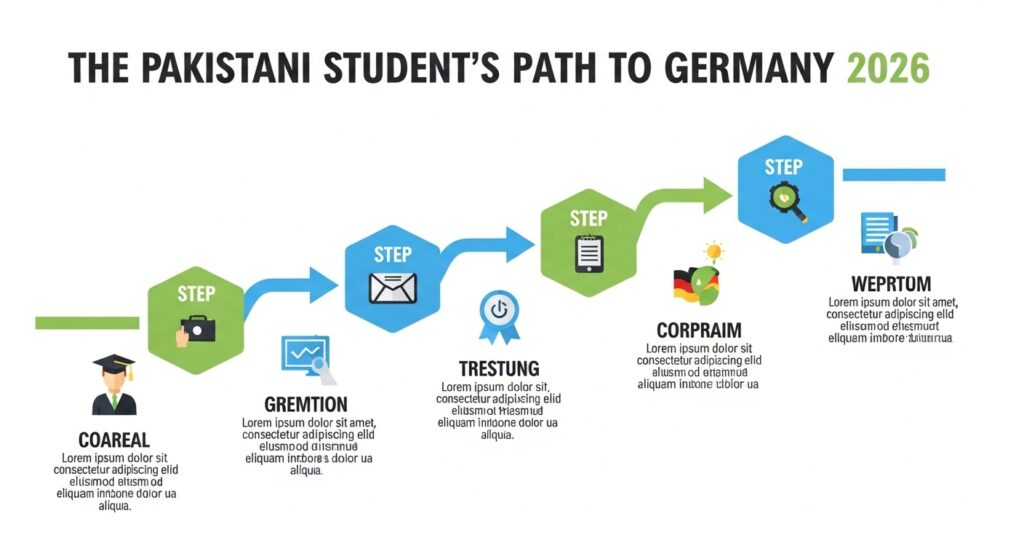
The Pakistani Student’s Path to Germany 2026
13. Work Part-time in Spare Time/Holidays
In many countries, international students are allowed to work part-time while studying, as long as they have the appropriate visa and work permit. This allows students to earn some extra money to cover their living expenses and gain valuable work experience. However, the rules and regulations regarding part-time work for international students vary from country to country and even from institution to institution. Therefore, students need to research the specific regulations for their chosen country and institution before applying for a job.
In most cases, international students are allowed to work up to a certain number of hours per week during the academic year, such as 20 hours per week. During holidays or breaks, international students may be allowed to work more hours. However, students need to prioritise their studies and make sure that working part-time does not negatively impact their academic performance.
Additionally, some countries and institutions may restrict the types of jobs that international students are allowed to do. For example, they may not be allowed to work in certain industries, such as healthcare or law enforcement.
Overall, while part-time work is an option for many international students, it’s important to thoroughly research the regulations and restrictions in the chosen country and institution and to prioritise academic performance while working part-time.
14. Jobs that Do not Hinder Students’ Educational Pursuit
When it comes to part-time jobs for students, it’s vital to find jobs that are flexible and can be balanced with academic commitments. Some examples of part-time jobs that are considered suitable for students include:
- Retail or customer service positions: Retail and customer service positions are often flexible and can be scheduled around classes. They also provide valuable customer service skills that can be useful in future careers.
- Food service jobs: Jobs in the food service industry, such as waiting tables, can also be flexible and provide a good experience in customer service and multitasking.
- Tutoring or teaching assistant positions: If a student excels in a particular subject, tutoring or teaching assistant positions can provide valuable education experience and can be scheduled around classes.
- Administrative or office jobs: Administrative or office jobs, such as receptionist or data entry positions, can be flexible and provide a good experience in organisation and communication.
- Freelance or online work: Freelance or online work, such as writing, graphic design, or coding, can be done remotely and on a flexible schedule.
It’s important to note that some jobs may have specific requirements or restrictions for international students, so students should research the job requirements and eligibility before applying. Additionally, students should prioritise their academic commitments and ensure that their work schedule does not negatively impact their studies.
15. Teaching Languages
Many universities in Germany offer programs and courses taught in English, especially at the postgraduate level. A large number of master’s programs in Germany are taught entirely in English, making them accessible to international students who may not be proficient in German. However, not all programs and courses may be offered in English, and some universities may require students to have a certain level of proficiency in German to be eligible for admission. Therefore, students need to research the language requirements for their chosen program and institution before applying.
Additionally, while it may be possible to study in Germany without knowing German, learning the language can be a great asset for international students. It can help them to better integrate into German society and culture, communicate with locals, and enhance their overall experience of living and studying in Germany. Many universities in Germany also offer German language courses for international students, which can help them to improve their language skills while studying.
16. Countries in Competition with Germany Attracting Foreign Students
Several countries are competing with Germany to attract foreign students, as international education has become an increasingly important industry worldwide. Some of the countries that are currently popular among international students include:
- United States: The United States has long been a top destination for international students, with many world-renowned universities and a wide range of programs and courses to choose from.
- United Kingdom: The UK is another popular destination for international students, with top universities such as the University of Oxford and the University of Cambridge.
- Canada: Canada is known for its high-quality education system, welcoming attitude towards international students, and opportunities for post-graduation work and immigration.
- Australia: Australia is a popular destination for international students, with its beautiful landscapes, high standard of living, and world-class universities.
- France: France is known for its excellent universities, rich culture, and the opportunity to learn or improve French language skills.
Conclusion
Studying in Germany is a great option for students looking for quality education, research opportunities, and a multicultural experience. With a state-funded education system, students can save on tuition fees and gain practical experience while studying. The country’s innovative education system, combined with its strong industry ties, makes it an attractive option for students from around the world.
Canva : Your Captivating Digital Design Toolkit in 24/25