SDG 17: Partnerships for the Goals — Strengthening Global Cooperation
Introduction
The final Sustainable Development Goal (SDG 17) emphasizes the critical need for global partnerships to achieve the ambitious 2030 Agenda. No single country, institution, or community can tackle today’s interconnected challenges—climate change, poverty, inequality, and health crises—alone. This goal calls for collaboration at multiple levels: governments, civil society, the private sector, academia, and international organizations.
Partnerships are the glue that binds the SDGs together. They ensure that resources, technologies, and expertise are shared, and that countries work not in isolation but as part of a collective global mission.
Global Perspective
-
Finance
- Adequate financial resources are the lifeline of sustainable development.
- Developed countries are urged to meet the 0.7% of GNI target for Official Development Assistance (ODA) to support developing nations.
- Innovative financing—such as blended finance, impact investment, and green bonds—are emerging tools to fill funding gaps.
-
Technology
- Bridging the digital divide is central to global equity.
- Technology transfer, capacity building, and access to digital infrastructure can accelerate progress.
- Open-source platforms, AI-driven solutions, and renewable energy technologies can be shared globally.
-
Capacity Building
- Strengthening local institutions is key to sustaining progress.
- Training, research partnerships, and knowledge-sharing help developing nations stand on their own.
-
Trade
- An open, fair, and rules-based trading system under the WTO is vital for developing nations.
- Eliminating tariffs and barriers for least-developed countries can boost exports, employment, and growth.
-
Systemic Issues
- Policy and institutional coherence are essential.
- Data availability, transparency, and accountability ensure that progress is measured fairly.
- Multi-stakeholder partnerships foster trust and shared responsibility.
Pakistan’s Perspective
Current Situation
Pakistan faces structural challenges—debt dependency, trade imbalances, technology gaps, and governance inefficiencies—that weaken its ability to achieve the SDGs independently. However, partnerships at bilateral, regional, and global levels can provide the necessary boost.
Key Dimensions
- Finance and Investment
- Pakistan relies heavily on international financial institutions (IMF, World Bank, ADB) for loans.
- There is a need to shift from debt-based financing to investment-based partnerships (e.g., CPEC).
- Expanding public-private partnerships in infrastructure, health, and education can increase efficiency.
- Technology and Innovation
- Collaborations with advanced economies can support digital transformation and renewable energy expansion.
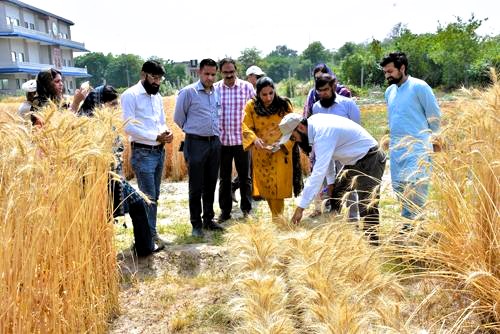
- Partnerships in agricultural technology can help ensure food security.
- IT exports can rise significantly with stronger digital infrastructure and training.
- Regional Cooperation
- Strengthening SAARC and ECO (Economic Cooperation Organization) could unlock trade potential.
- Cross-border infrastructure (energy grids, pipelines, transport corridors) can benefit the whole region.
- Capacity Building
- Pakistan needs technical training programs, academic exchange, and institutional reforms to enhance governance.
- International partnerships with universities and think tanks can strengthen research and policymaking.
- Trade Partnerships
- Expanding trade relations with Central Asia, Middle East, and Africa can diversify Pakistan’s export base.
- Negotiating fair trade deals with developed countries (beyond textiles) is vital.
Qur’anic Callouts
📖 “And cooperate in righteousness and piety, but do not cooperate in sin and aggression.”
(Surah Al-Ma’idah, 5:2)
📖 “Indeed, Allah commands you to render trusts to whom they are due and when you judge between people to judge with justice.”
(Surah An-Nisa, 4:58)
📖 “And hold firmly to the rope of Allah all together and do not become divided.”
(Surah Aal-e-Imran, 3:103)
These verses emphasize unity, justice, and cooperation, the very foundations of effective global and national partnerships.
Strategic Recommendations
The recommendations here are strategic options. They must be piloted locally, tested, and adapted before full-scale implementation. Citizen participation and political will are non-negotiable.
- Pakistan must strengthen domestic governance to be a credible partner in global cooperation.
- Partnerships must move from aid dependence to mutual growth and shared knowledge.
- Faith-based ethics of cooperation, justice, and collective responsibility should inspire policy frameworks.
- Active participation in UN forums, regional bodies, and civil society networks will amplify Pakistan’s voice.
Conclusion
SDG 17 is not merely about technical cooperation—it is about building a spirit of trust, unity, and shared destiny across nations. For Pakistan, partnerships hold the key to transforming challenges into opportunities. By aligning global collaboration with Islamic principles of justice, cooperation, and brotherhood, Pakistan can both contribute to and benefit from a world committed to sustainable development.