SDG 10: Reduced Inequalities
Introduction
Inequality weakens nations from within. It erodes trust, fuels instability, and blocks social mobility. SDG 10: Reduced Inequalities seeks to ensure that growth translates into fair opportunities and outcomes—so people are not locked out of progress due to where they are born, whom they are, or what they earn.
In Pakistan, uneven development, weak social protection, and barriers to quality education and employment have left millions behind. Reducing inequalities is therefore not just a moral imperative—it is a strategic necessity for national cohesion and prosperity.https://mrpo.pk/sdg-1-no-poverty-pakistan-evaluation/
Why Do We Need to Reduce Inequalities?
Inequalities based on income, sex, age, disability, sexual orientation, race, class, ethnicity, religion and opportunity continue to persist across the world. Inequality threatens long-term social and economic development, harms poverty reduction and destroys people’s sense of fulfilment and self-worth. This, in turn, can breed crime, disease and environmental degradation.
We cannot achieve sustainable development and make the planet better for all if people are excluded from the chance for a better life.https://www.un.org/sustainabledevelopment/inequality/
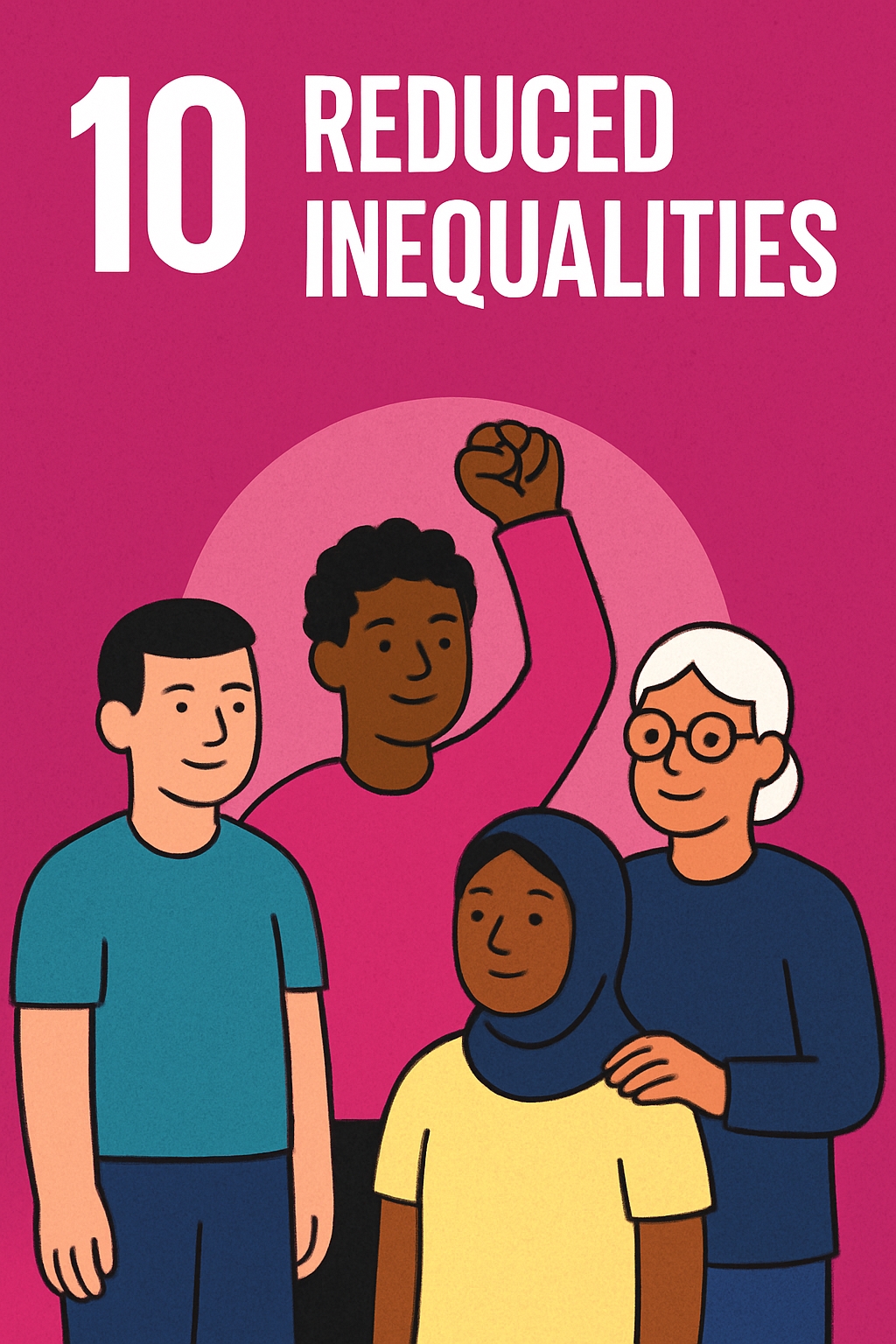
Global Significance of Reduced Inequalities
Across the world, inequality manifests in many forms and demands multidimensional solutions:
- Income & Wealth Gaps: Concentration of wealth undermines social mobility and economic resilience.
- Regional & Urban–Rural Divides: Access to services and jobs often clusters in major cities.
- Identity-Based Exclusion: Gender, ethnicity, religion, disability, and migration status can limit opportunities.
- Digital & Skills Divide: The future of work rewards skills and connectivity, widening gaps where access is poor.
- Social Protection: Robust, targeted safety nets and inclusive public services help cushion shocks and enable mobility.
Reducing inequalities strengthens social stability, expands markets, and aligns growth with human dignity.
Pakistan’s Inequality Landscape
Pakistan’s inequalities are layered and mutually reinforcing:
- Income & Employment: Large informal economy and low-wage jobs restrict upward mobility.
- Geographic Disparities: Peripheral districts and rural areas lag in health, education, infrastructure, and connectivity.
- Gender Gaps: Barriers to education, mobility, financial inclusion, and formal employment persist.
- Education & Health Inequities: Quality and access vary widely between private and public systems, urban and rural areas.
- Disability Exclusion: Limited accessibility, assistive technologies, and inclusive schooling/workplace policies.
- Digital Divide: Unequal access to affordable internet and devices limits participation in the modern economy.
- Justice & Voice: Weak enforcement, bureaucratic hurdles, and limited local empowerment reduce citizen agency.
Structural Drivers of Inequality
Beyond symptoms lie systemic causes:
- Policy Volatility & Short-Termism: Inconsistent planning and fragmented programs reduce impact.
- Regressive Incentives: Subsidies and exemptions often benefit the well-connected, not the vulnerable.
- Weak Local Governance: Centralised decisions overlook local needs; fiscal devolution is incomplete.
- Underinvestment in Human Capital: Insufficient spending on quality in education, skills, public health, and care systems.
- Financial Exclusion: Low access to formal finance, especially for women, smallholders, and microenterprises.
- Data Gaps: Limited disaggregated data (gender, disability, district-level) impedes targeted interventions.
Key Challenges to Achieving SDG 10 in Pakistan
- Persistent informality and low productivity constrain wages.
- Uneven access to quality education, skills, and healthcare.
- Gender norms and safety concerns are limiting women’s participation.
- Limited disability-friendly infrastructure and services.
- Regional neglect and weak rural connectivity.
- Digital access and affordability barriers.
- Insufficient, weakly targeted social protection.
Islamic Perspective on Equality and Justice
Islamic teachings emphasise ʿadl (justice), iḥsān (excellence), shūrā (consultation), and karāmah (human dignity):
- Justice & Fair Measures: The Qur’an commands justice and fairness in dealings and governance.
- Protection of the Vulnerable: Zakat, ṣadaqah, and waqf are institutional mechanisms to uplift the poor and excluded.
- No Superiority by Lineage or Wealth: Moral worth is not defined by status; dignity is universal.
- Trusteeship (Amanah): Authority is a trust; policies must serve the common good, not elite capture.
Reducing inequality, therefore, aligns with Islamic ethics: building a society where opportunity, dignity, and mercy reach all.
Economic Lens
An inclusive economy is a stronger economy:
- Human Capital First: Investments in early childhood, foundational learning, nutrition, and preventive health yield high returns.
- Productive Inclusion: Skills, credit, market links, and infrastructure enable small firms, smallholders, women, and youth to participate.
- Smart Social Protection: Adaptive, data-driven safety nets protect against shocks and enable risk-taking and entrepreneurship.
- Regional Balancing: Targeted infrastructure, logistics, and digital connectivity unlock peripheral regions.
- Fiscal Realignment: Curb regressive leakages; prioritise spending that expands opportunity and productivity.
Strategic Recommendations for Pakistan
The recommendations here are strategic options. They must be piloted locally, tested, and adapted before full-scale implementation. Citizen participation and political will are non-negotiable.
- Targeted Social Protection
- Build an integrated registry with disaggregated data; index benefits to inflation and life-cycle needs.
- Link cash support with skills, health, and school attendance to break intergenerational poverty.
- Education, Skills, and Care Infrastructure
- Guarantee foundational literacy/numeracy; expand TVET aligned to local markets.
- Invest in care systems (ECD, school meals, community childcare) to boost learning and women’s employment.
- Women’s Economic Inclusion
- Safe transport, anti-harassment enforcement, maternity protection, and pay equity.
- Expand women’s access to IDs, bank accounts, digital payments, and asset ownership.
- Disability Inclusion by Design
- Enforce accessibility standards in schools, clinics, public buildings, and transport.
- Subsidise assistive technologies; incentivise inclusive hiring and flexible work.
- Regional & Rural Connectivity
- Upgrade secondary roads, warehousing, and cold chains; expand broadband to underserved districts.
- Create district opportunity zones linking local skills to value chains (agri-processing, crafts, services, tourism).
- Formalisation & Fair Work
- Simplify registration and taxation for micro/SMEs; exchange compliance for benefits (credit, insurance, marketplaces).
- Enforce minimum wage and safety standards; digitise inspections to curb corruption.
- Financial Inclusion & Asset Building
- Branchless banking expansion; Shariah-compliant microfinance and micro-takaful.
- Matched savings for women and youth; credit guarantees for first-time entrepreneurs.
- Data & Governance for Inclusion
- Annual inequality dashboards (by gender, disability, region, income); open data for accountability.
- Performance-based intergovernmental transfers reward districts that reduce learning, health, and access gaps.
Conclusion
Reducing inequalities is about opening doors—to education, dignified work, finance, justice, and digital opportunity. For Pakistan, SDG 10 is the bridge between growth and shared prosperity.
Islamic ethics demand justice and compassion; smart economics demands productive inclusion and fair rules. With targeted social protection, inclusive human capital investments, women’s and disability inclusion, and balanced regional development, Pakistan can turn its diversity into strength and its inequalities into pathways of opportunity—for all.