Canada vs America: Can Canada Break Its Economic Dependence on the U.S.?
Canada vs America: Can Canada Break Its Economic Dependence on the U.S.? Canada is discovering an uncomfortable truth. Being America’s closest neighbour and one of its most important trading partners has brought enormous economic benefits. But that same relationship can become a vulnerability when trade is used as political leverage.
That is the tension behind Canada’s increasingly difficult relationship with the United States.
https://mrpo.pk/u-s-elections-spark-new-conflicts/

For decades, Canadian businesses built their success around the American market. Cars and components cross the border, oil and electricity flow south, and food, minerals, machinery and manufactured goods move through highly integrated supply chains.
Now the political environment has changed.
Tariffs have triggered retaliation. Canadian consumers are turning away from some American products. Provincial leaders are threatening countermeasures. Ottawa is looking toward Europe, India and the wider Indo-Pacific while also trying to make Canada’s own internal market stronger.
Prime Minister Mark Carney and Ontario Premier Doug Ford represent different responses to the same problem.
Carney is pursuing a longer-term strategy built around domestic economic strength and international diversification. Ford has been more willing to use Canada’s immediate economic leverage, particularly energy, against Washington.
The central question is therefore much bigger than another tariff dispute.
Can Canada reduce its dependence on the United States without destroying the economic relationship that has made both countries more prosperous?
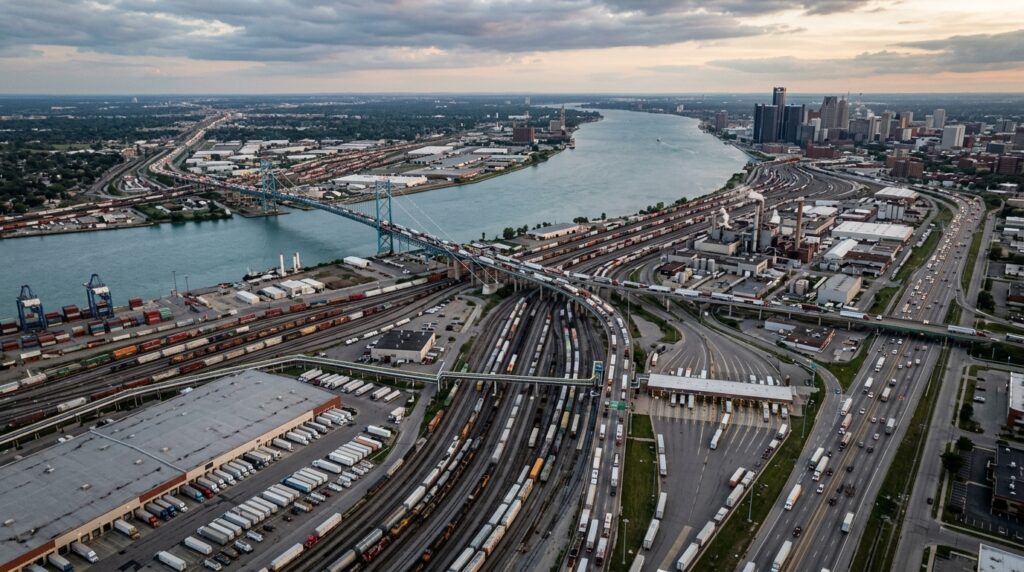
How Canada could hit back to hurt the US economy – and Trump
About 70% of Canada’s exported goods go to the US. So what leverage does it have in this spiralling trade dispute with its southern neighbour, which also happens to be the world’s largest economy?
Canada is the top customer for 26 US states, including Maine, Michigan, and Wisconsin. And it is in the top three for 45 of the 50 American states, suggesting Prime Minister Mark Carney has room to manoeuvre in a trade fight.
For now, Carney’s planned Canadian retaliatory duties are strategic “dollar-for-dollar” countermeasures focused on steel, dairy, appliances, agricultural equipment, electronics, pulp and paper – though the list is still being finalised.
Polls suggest a majority of Canadians would be unhappy if his government went in the other direction and made significant concessions to the US. That sentiment is shared by Ontario Premier Doug Ford, one of Trump’s most vocal critics north of the border, who responded to the tariff threats by telling the US president to “kiss my ass”.
Canada’s Finance Department said additional measures to protect workers and businesses would be announced on Tuesday.
https://www.bbc.com/news/articles/c05rj80ve56o
Purpose of This Article
This article examines the economic forces behind Canada’s response to American trade pressure.
It looks at Canada’s dependence on the U.S. market, consumer boycotts, Ontario’s energy leverage, Mark Carney’s diversification strategy, internal Canadian trade barriers, new international markets and the practical difficulties of rebuilding supply chains. The objective is not to argue that Canada should abandon America.
It is to examine whether Canada can create enough economic alternatives to make itself less vulnerable to American pressure.
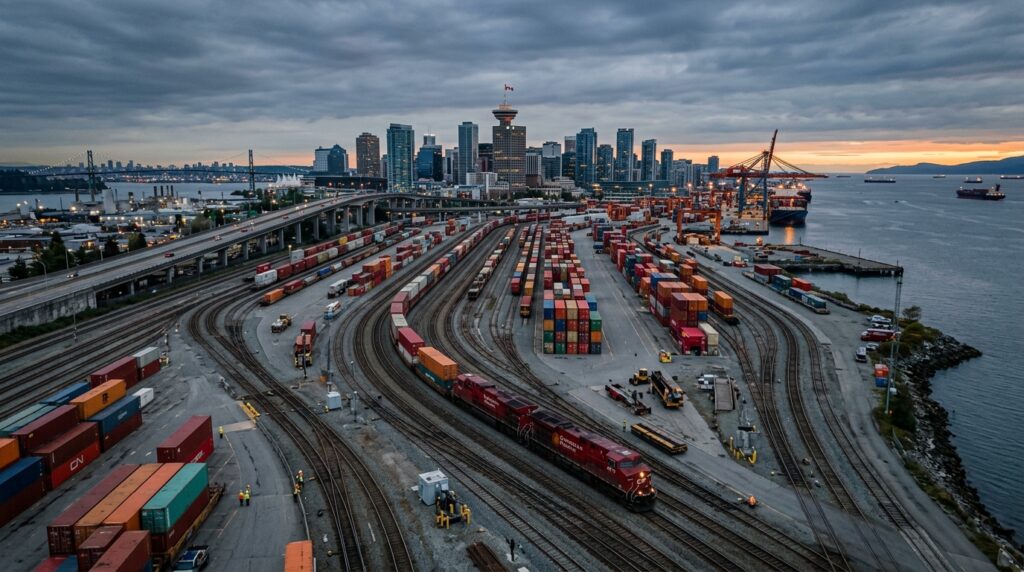
How Dependent Is Canada on the United States?
The most important starting point is the trade data.
In 2025, the United States accounted for 71.7 per cent of Canada’s merchandise exports, down from 75.9 per cent in 2024. At the same time, Canadian exports to non-U.S. markets increased significantly. Statistics Canada reported that exports to non-U.S. destinations rose by 17.2 per cent in 2025.
The decline in America’s share is significant, but it should not be exaggerated. More than seven out of every ten dollars generated from Canadian merchandise exports still came from the American market. That is an extraordinary level of concentration. The problem is also deeper than the headline number suggests because Canada and the United States do not simply trade finished products with one another.
They share supply chains. A Canadian automobile manufacturer, for example, may rely on American components, machinery, technology and suppliers. Similar connections exist across energy, agriculture, manufacturing, forestry and other industries. This means Canada cannot simply announce that it will find another buyer. It has to build alternative economic networks.
Why Canada’s Dependence Became a Strategic Problem
Economic integration normally creates efficiency. Businesses locate production where it makes economic sense. Goods move through established transportation networks. Consumers benefit from competition and scale. The danger appears when one trading partner becomes so important that political decisions in that country can create disproportionate damage at home.
Tariffs can increase costs for businesses and consumers. Uncertainty can delay investment. Manufacturers can reconsider supply chains. Companies may hesitate before committing capital to industries that depend heavily on cross-border access. This is why Canada’s current strategy is not simply about reducing tariff costs.
It is increasingly about reducing economic vulnerability. That distinction matters. Canada does not necessarily need to stop trading with the United States. It needs to ensure that the United States cannot easily disrupt Canada’s entire economic system.
Mark Carney’s Strategy: Strengthen Canada and Diversify Abroad
Mark Carney’s approach can be understood through two connected objectives.
First, make Canada’s domestic economy stronger.
Second, expand Canada’s economic relationships beyond the United States.
This is a more gradual approach than economic separation. The logic is straightforward. A country with a stronger internal market, better infrastructure, more international customers and more diversified supply chains has greater bargaining power. Canada therefore needs to build alternatives before it can realistically reduce its exposure.
Canada’s Internal Trade Problem
One of the more surprising parts of the Canadian strategy is that Ottawa is looking inward as well as outward. Canada is a single country, but businesses can still face regulatory and administrative barriers when operating across provincial boundaries. The federal government estimates that more than C$500 billion in goods and services moves across provincial and territorial borders each year. It has also estimated that eliminating internal trade barriers could potentially increase Canada’s GDP by as much as C$200 billion.
The Free Trade and Labour Mobility in Canada Act came into force on January 1, 2026, intending to reduce federal barriers affecting the movement of goods, services and workers across Canada. This could prove strategically important. If Canadian companies can sell more easily from one province to another, they have a larger home market in which to grow. That matters because scale matters.
A company that can successfully expand across Canada is in a better position to compete internationally. Canada’s response to American pressure is therefore partly about building a stronger Canadian market before attempting to replace foreign demand.
Doug Ford’s Energy Strategy
Ontario Premier Doug Ford has taken a more confrontational approach. Ontario has an important economic relationship with the United States and supplies electricity to neighbouring American states.
In March 2025, Ontario imposed a 25 per cent surcharge on electricity exports to Michigan, Minnesota and New York as part of its response to American tariffs. Ford had also threatened more severe restrictions on electricity exports if American tariff pressure continued. The strategy is based on a simple principle.
If the United States can use economic dependence as leverage, Canada should use its own economic strengths as leverage in return.
Energy is particularly valuable because electricity is difficult to replace instantly. But retaliation also carries risks. If American consumers and businesses become concerned about the reliability or cost of Canadian energy, they may eventually invest in alternative supplies. That means Ottawa and the provinces have to consider not only the immediate political impact of retaliation but also its long-term economic consequences.
The strongest leverage is not necessarily the measure that causes the most immediate pain. It is the measure that changes the other side’s behaviour without permanently damaging your own position.
The Canadian Boycott Movement
Governments are not the only actors changing the economic relationship. Consumers are participating too. Canadians have increasingly shown interest in buying domestic products and avoiding American goods, services and travel in response to tariffs and political tensions. There is a powerful emotional element behind this movement.
People do not always make economic decisions purely through calculations of price and efficiency.
Sometimes a purchase becomes a statement.
Buying Canadian can represent national solidarity.
Avoiding an American product can become a form of political protest.
That gives consumer boycotts cultural and political significance even when their direct economic effect is difficult to calculate.
The Supply Chain Question
However, there is an important complication. A product labelled Canadian may still depend on American components, technology, financing or raw materials. The real question is therefore not simply:
Is the product Canadian?
It is:
How much of its economic value is actually generated in Canada?
This distinction is essential for any serious investigation into economic independence. Consumer behaviour can support domestic companies, but genuine economic resilience requires stronger domestic production and diversified supply chains.

Can Europe and Asia Replace America?
Canada’s answer to U.S. dependence is increasingly diversification. Europe, India and the wider Indo-Pacific region offer opportunities that could reduce Canada’s exposure to the American market. The early trade data are encouraging. In 2025, Canadian exports to non-U.S. destinations increased substantially, while exports to the United States declined.
But diversification should not be confused with replacement. Canada does not need to find another country that can become “the new America.” It needs several strong trading relationships so that no single country dominates its economic future. That is a much more realistic definition of economic independence.
Europe: Opportunity With Higher Costs
Europe is an attractive market because of its size, purchasing power and established trade relationship with Canada. But geography remains a major factor.
The United States is Canada’s neighbour. Europe is across the Atlantic.
Canadian exporters therefore have to consider additional transportation, insurance, port, distribution and regulatory costs.
A trade agreement can open a market.
It cannot guarantee that Canadian companies will be competitive inside it. For diversification to succeed, Canadian businesses must be able to make money after the full cost of reaching those customers is considered.
India and the Indo Pacific
India and the wider Indo Pacific offer another long-term opportunity. These markets provide access to large and growing populations and could become increasingly important to Canadian exporters. But developing those relationships takes time.
Canadian businesses need local partners, market knowledge, reliable shipping routes and an understanding of different regulatory systems and consumer preferences. That leads to one of the central realities of the entire Canadian strategy:
Trade relationships can change quickly. Supply chains cannot.
A government can impose a tariff in a matter of days. Building a new factory, port connection, supplier network or international distribution system can take years.
China: A Market and a Strategic Risk
China cannot easily be ignored because of its enormous economic size. But Canada must be careful not to replace one form of dependence with another. If Canada moves away from American dependence only to become heavily dependent on Chinese demand, it has not solved the underlying strategic problem. True diversification means having multiple options. The objective should be economic resilience, not simply changing the identity of the dominant trading partner.
Canada’s Provincial Challenge
There is another problem that could determine whether the strategy succeeds. Canada is a federation. Its provinces do not have identical economic interests. Ontario has a major manufacturing sector. Alberta is heavily connected to energy. British Columbia has strong Pacific trade opportunities. Quebec has its own industrial and export priorities. The Atlantic provinces face different infrastructure and transportation challenges.
A policy that benefits one province may create problems for another. This makes federal-provincial coordination essential. Ottawa can negotiate international trade agreements, but the success of a national economic strategy also depends on provincial cooperation, infrastructure decisions and regulatory reform. The question is not simply whether Canada has a strategy. It is whether Canada can maintain political agreement long enough to implement it.
Infrastructure Is the Missing Link
New markets are useless if Canadian companies cannot reach them competitively. That makes infrastructure a central part of Canada’s diversification strategy. Canada needs efficient ports, railways, highways, energy systems, storage facilities and export corridors. Without them, diversification remains largely theoretical. This is particularly important for commodities and energy.
A country may have enormous resources and willing customers, but without affordable transportation, the resources cannot become competitive exports. Infrastructure policy is therefore also trade policy.
The Automobile Industry Shows How Difficult Separation Would Be
The automobile industry illustrates Canada’s dilemma particularly well. North American vehicle production developed around integrated supply chains. Parts move across borders.
Factories depend on suppliers in multiple countries.
Manufacturers benefit from the enormous scale of the continental market.
Trying to dismantle this system rapidly could increase costs and reduce competitiveness. But leaving the system completely unchanged would preserve the vulnerability Canada is trying to address. The answer is therefore unlikely to be complete separation. It is more likely to be gradual diversification.

Canada Does Not Need to Abandon America
This is perhaps the most important conclusion. The debate is sometimes framed as though Canada has only two choices. It can remain dependent on America, or it can break away from America. That is a false choice.
Canada can continue trading heavily with the United States while simultaneously developing stronger relationships with Europe, India and Asia.
It can maintain North American supply chains while creating alternative suppliers.
It can continue exporting energy south while developing additional export infrastructure.
It can strengthen domestic trade while expanding overseas.
The goal is not isolation.
The goal is choice.
What Would Success Look Like?
Success would not necessarily mean that American trade disappears from the Canadian economy. In fact, that would probably be unrealistic and economically damaging. A successful strategy would look different.
The U.S. share of Canadian exports could gradually decline while total Canadian exports remain strong.
Exports to Europe and Asia could grow.
Domestic trade could become easier.
Canadian companies could become larger and more productive.
New infrastructure could open alternative export routes.
Supply chains could become less concentrated.
And Canadian governments could respond to American trade pressure without fearing that the entire economy would suffer.
That would represent genuine economic resilience.
The Numbers That Matter
The success or failure of Canada’s strategy should ultimately be judged through measurable indicators rather than political speeches.
U.S. Export Share
Does the American share of Canadian exports continue to decline?
Non-U.S. Export Growth
Are exports to Europe, India and the Indo-Pacific growing consistently?
Domestic Trade
Are Canadian companies actually selling more easily across provincial boundaries?
Business Investment
Are companies investing in Canada because they see a stronger and more predictable economic future?
Infrastructure
Is Canada building the transportation and energy infrastructure necessary to reach new markets?
Supply Chain Diversification
Are Canadian businesses genuinely reducing dependence on American suppliers, or simply replacing one foreign supplier with another?
Federal Provincial Cooperation
Can Ottawa and the provinces maintain a coherent economic strategy? These indicators will tell us far more than political rhetoric.
The Paradox at the Heart of Canada’s Strategy
There is a fascinating paradox at the centre of Canada’s economic response.
Canada wants to reduce its dependence on the United States.
Yet it still needs the United States.
The reason is geography.
The reason is history.
The reason is infrastructure.
The reason is the enormous scale of the American economy.
And the reason is that Canadian and American businesses have spent decades building integrated supply chains.
That is why Canada’s strategy is better understood as risk reduction rather than economic separation. Canada wants enough alternatives to negotiate with Washington from a position of greater confidence. It wants to keep the American market without allowing that market to become an economic necessity. That may ultimately be the most practical definition of Canadian economic sovereignty.
The Great Canadian Economic Test
Canada now faces a difficult balancing act.
It must defend its interests without creating unnecessary damage at home.
It must retaliate when necessary without permanently losing valuable customers.
It must diversify without replacing American dependence with dependence on another major power.
It must strengthen domestic trade while managing provincial interests.
It must invest in infrastructure while ensuring that new projects have genuine commercial value.
And it must persuade businesses that Canada can compete successfully in a more uncertain global economy.
This is not a short-term project. It could take years.
Conclusion: Canada Is Not Trying to Escape America
Canada’s struggle with the United States is ultimately about much more than tariffs. It is about economic resilience. The United States remains Canada’s dominant export destination. Even after a significant decline in its share, it accounted for 71.7 per cent of Canadian merchandise exports in 2025.
That dependence cannot be eliminated through political declarations or consumer boycotts. It can only be reduced through sustained economic change.
Canada will need stronger domestic trade, diversified international markets, new infrastructure, resilient supply chains and cooperation between Ottawa and the provinces.
Mark Carney’s strategy focuses on building those foundations.
Doug Ford’s approach demonstrates the potential and risks of using immediate economic leverage.
Canadian consumers are adding their own pressure through purchasing decisions.
But none of these measures can quickly replace an economic relationship developed over generations.
The smarter objective is therefore not to walk away from America.
It is to ensure that Canada has alternatives.
Because the real meaning of economic independence is not being able to live without every trading partner.
It is having enough choices that no single partner can decide your economic future.
Canada’s greatest challenge is therefore also its greatest opportunity.
If it succeeds, the country may emerge from this trade confrontation with a stronger domestic market, broader international relationships and greater economic resilience.
If it fails, Canada may discover that diversification sounds much easier in a political speech than it is in the real world.
The next few years will reveal which story becomes reality.

Frequently Asked Questions
1. How dependent is Canada on the United States?
Canada remains highly dependent on the American market. The United States accounted for 71.7 per cent of Canada’s merchandise exports in 2025, although this was lower than the 75.9 per cent recorded in 2024.
2. Can Canada replace the United States as its largest trading partner?
Completely replacing the United States would be extremely difficult because of geography, infrastructure, supply chains and the enormous size of the American market. Canada’s more realistic objective is diversification, allowing it to maintain strong U.S. trade while developing additional markets.
3. Why is Canada strengthening trade between its provinces?
Canada wants to make its domestic market more efficient. Removing unnecessary provincial and federal barriers can allow businesses to expand within Canada, achieve greater scale and become more competitive internationally.
4. Why did Ontario use electricity exports as leverage?
Ontario has important electricity connections with several American states. In March 2025, the province imposed a 25 per cent surcharge on electricity exports to Michigan, Minnesota and New York as part of its response to U.S. tariffs. The measure was intended to demonstrate that Canada also possesses economic leverage.
5. Can Canadian consumers make a difference by boycotting American products?
Consumer boycotts can create political pressure and increase demand for domestic alternatives. However, their long-term economic impact depends on their scale and duration. Integrated supply chains also mean that some Canadian products continue to depend on American inputs.
6. What is Canada’s biggest challenge in reducing U.S. dependence?
The biggest challenge is replacing a deeply integrated and geographically convenient American market with several international markets without making Canadian businesses less competitive. New supply chains, infrastructure and commercial relationships require considerable time and investment.
Final Takeaway
Canada does not have to choose between America and the rest of the world. It can remain closely connected to the United States while building stronger economic relationships elsewhere. The ultimate objective is simple:
More markets. More choices. More resilience. Less vulnerability.
References
Statistics Canada, Canadian International Merchandise Trade.
Government of Canada, Advancing Internal Trade.
Government of Canada, Free Trade and Labour Mobility in Canada Act.
Global Affairs Canada, Canadian Trade Reports.
Government of Canada, Prime Minister Mark Carney’s statements and speeches on Canada-United States trade.
Reuters, Canada-United States trade and tariff coverage.
Reuters, Ontario electricity surcharge and Canada-United States trade measures.
Associated Press, Canada-United States trade dispute coverage.