Can I Vote Without ID? The 2026 U.S. Voter Guide
Can I Vote Without ID? The 2026 U.S. Voter Guide. You arrive at the polling place.
You have your name.
You have your registration.
You have every intention of voting.
But there is one problem.
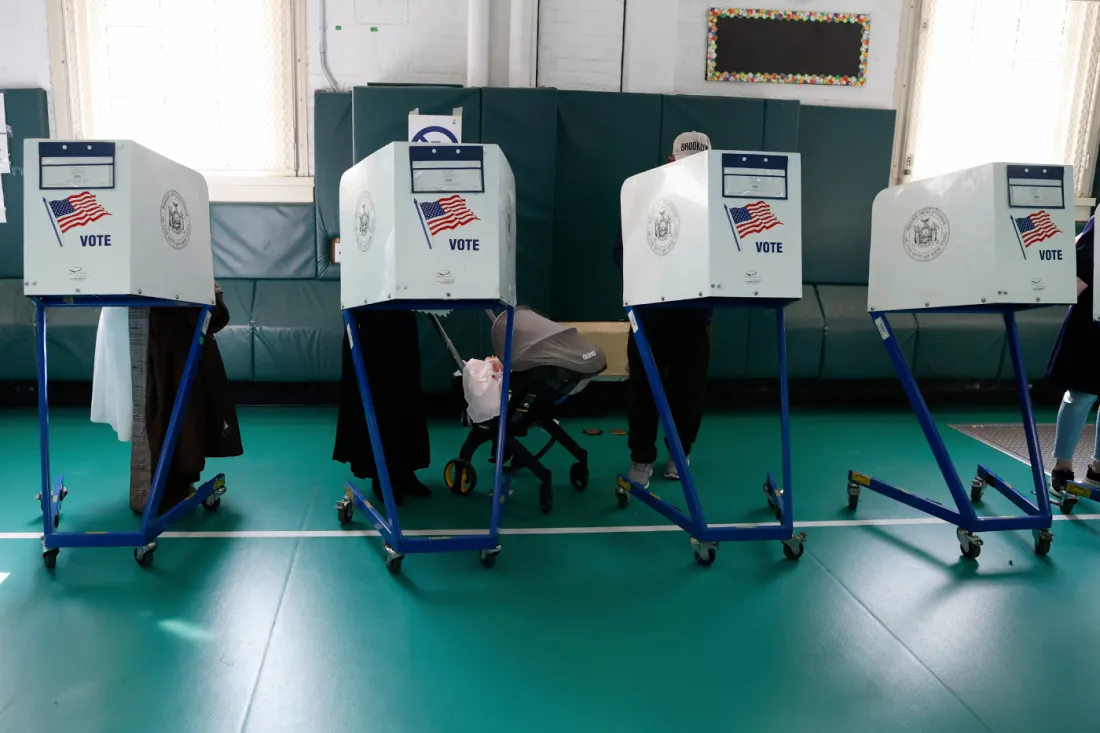
You don’t have the ID you thought you needed.
Now what?
This is one of the most confusing questions in American elections because there is no single national voter-ID rule.
Each state and territory establishes its own requirements.
Some require voters to show identification at the polls. Others use different verification procedures. Some provide alternatives for voters who cannot produce the normally requested identification.
So the answer to “Can I vote without ID?” is not simply yes or no.
It is:
It depends on where you vote and what your state’s law requires.
That distinction matters.
https://mrpo.pk/?p=18062&preview=true
Voter identification laws by state
These laws require voters to present some form of identification at the polls. In some cases, the required identification must include a photo.
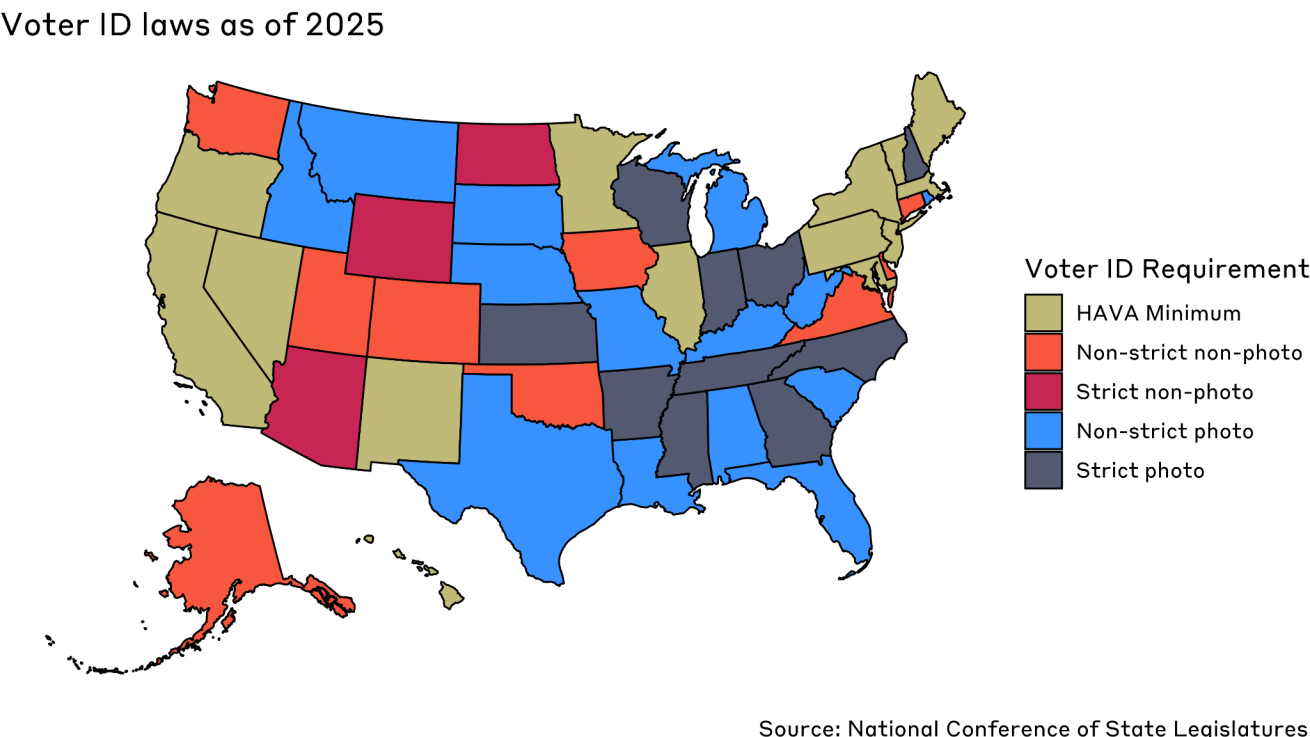
As of September 2026, 36 states required voters to present identification in order to vote at the polls on Election Day, but many states provide for exceptions to these rules. Of these states, 24 required voters to present identification containing a photograph, with certain exceptions, and 12 states did not explicitly require photo identification. The remaining 14 states did not generally require voters to present identification in order to vote at the polls on Election Day.
First: What Counts as Voter ID?
Voter identification means information or documentation used to verify that you are the person registered to vote.
The exact requirements differ from state to state.
Depending on the jurisdiction, acceptable identification may involve government-issued identification or other documents and information specified by state law.
Some states are relatively flexible.
Others are much more specific.
That is why advice from a friend in another state may be completely useless to you.
Their voting rules may be different.
Is Voter ID Required Everywhere?
No.
There is no single nationwide requirement that every voter must present the same type of identification.
Vote.gov states that each state and territory sets its own voter-ID rules. It also notes that in most states voters must provide identification when voting in person, while mail voting may involve separate ID-information requirements.
This is one of the most important facts in this entire voter series.
Your state’s rules matter more than national assumptions.
Why Does Voter ID Cause So Much Confusion?
Because two completely different questions often get mixed together.
Question one:
Are you registered to vote?
Question two:
What identification must you provide when voting?
They are not the same.
A voter can be properly registered but arrive without the identification required by that state.
Another voter may have plenty of identification but not be registered.
And someone else may have a voter registration card but still need another form of identification.
The paperwork can look similar.
The legal functions are not.
Is My Voter Registration Card an ID?
Usually, you should not assume it is.
Your voter registration card primarily confirms your registration.
It does not automatically satisfy every state’s voter-ID requirement.
Vote.gov explains that you do not need to bring your voter registration card to vote, although you may need to present identification depending on your state.
So if you lost your voter card, don’t automatically conclude that you have lost your ability to vote.
That was the subject of our previous article.
The bigger question here is what your state requires as identification.
Can I Vote Without a Driver’s License?
Possibly.
A driver’s license is not the only possible form of identification in every state.
Some voters do not drive.
Some are elderly.
Some have disabilities.
Some live in urban areas and never needed a driver’s license.
Others simply do not have one.
Vote.gov notes that people can obtain a state identification card even if they do not drive.
But whether that card is required, acceptable, or sufficient depends on your state.
What If I Don’t Have a Photo ID?
Don’t assume the answer is automatically “you cannot vote.”
The applicable procedure depends on state law.
Some states require photo identification.
Others accept different forms of documentation.
Some states provide alternative procedures for voters who cannot produce the normally requested ID.
If you do not have photo identification, check your state’s official election information before Election Day.
That gives you time to understand your options.
What If My ID Is Expired?
This is another question with a state-specific answer.
Some states may accept an expired identification document under certain conditions.
Others may impose stricter requirements.
Don’t assume an expired driver’s license automatically disqualifies you.
And don’t assume it is automatically acceptable.
Check your state’s current rules.
What If My ID Has an Old Address?
An old address does not have one universal legal effect across the country.
Your registration address and identification address may be treated differently depending on state law.
If you have moved, the safest approach is to update your voter registration and check your state’s ID rules before voting.
This is exactly why our previous article focused on moving.
One small change in your life can create several administrative questions.
What If My Name on My ID Is Different?
This can happen for perfectly ordinary reasons.
Marriage.
Divorce.
Legal name changes.
Different government records being updated at different times.
If your voter registration uses one name and your identification uses another, don’t wait until Election Day to find out whether the difference creates a problem.
Update your voter registration when your legal name changes.
Vote.gov specifically advises voters to update their voter registration after a legal name change.
If the records still don’t match, contact your election office and ask what documentation is acceptable.
What If I Don’t Have Any Government ID?
This is where state-specific rules become particularly important.
Some states may require specific identification.
Others may provide alternative methods of verification.
Some may permit a voter to cast a provisional ballot or use another legally established procedure depending on the circumstances.
The U.S. Election Assistance Commission emphasises that election administration is highly decentralised and that each state has its own laws governing voting procedures.
So there is no responsible one-sentence answer for all 50 states.
What Is a Provisional Ballot?
A provisional ballot is a safeguard used when there is a question about a voter’s eligibility or registration that cannot immediately be resolved at the polling place.
It allows the voter’s ballot to be recorded while election officials determine whether it can be counted under applicable law.
The circumstances under which provisional ballots are used vary by state.
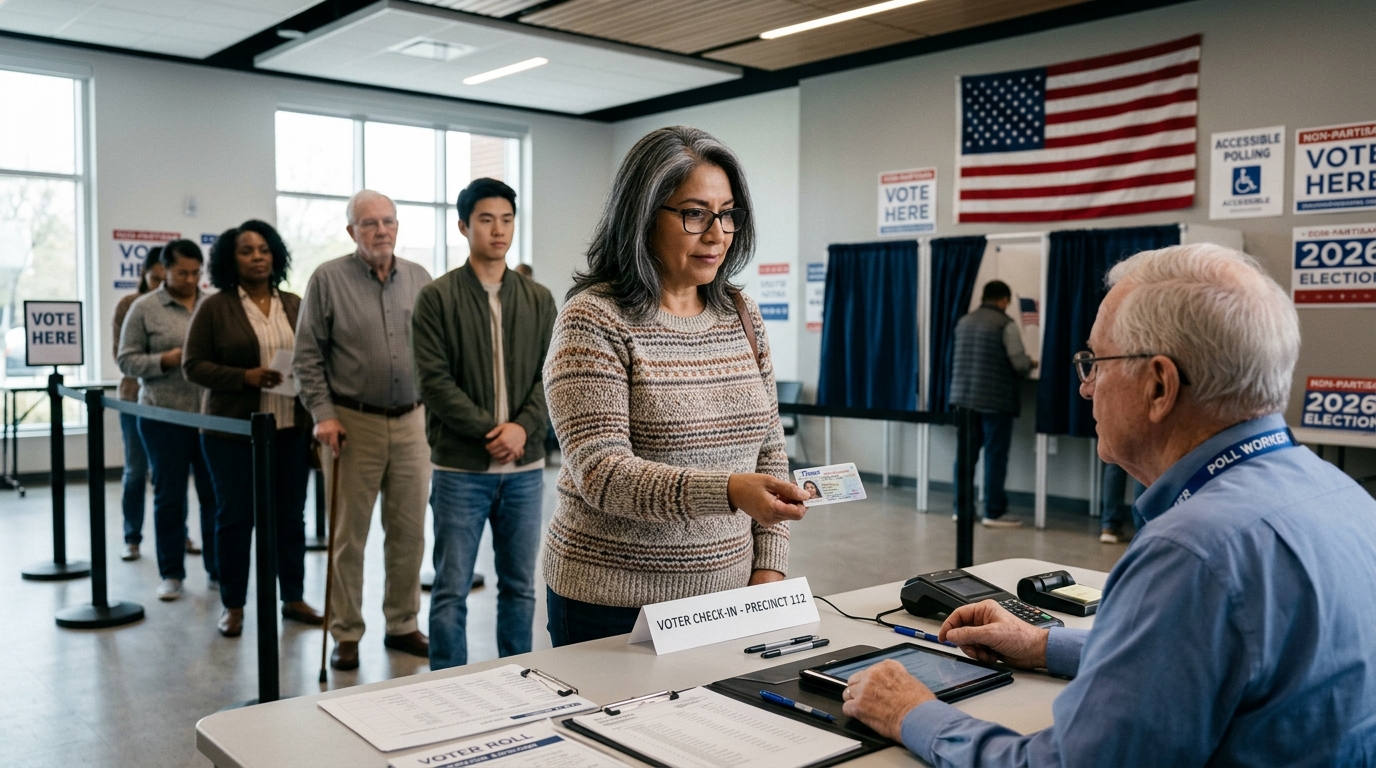
If you arrive without the identification required by your state, ask the poll worker what procedure applies.
Do not simply walk away.
Does a Provisional Ballot Automatically Count?
No.
A provisional ballot is not automatically counted simply because it was submitted.
Election officials review the circumstances and determine whether the ballot meets the legal requirements for counting.
The rules differ by state.
That is why a provisional ballot should be viewed as a legal safeguard, not a guarantee.
What If a Poll Worker Says I Need ID?
First, stay calm.
Election workers are there to administer the voting process.
Ask what identification is required.
If you do not have it, ask what alternatives or procedures are available under your state’s law.
If necessary, ask to speak with the appropriate poll supervisor or election official.
Don’t turn a procedural problem into a personal argument.
You need an answer, not a fight.
What If Someone Says My ID Is Not Good Enough?
Ask why.
Then ask what the official procedure is.
A poll worker may determine that a particular document does not satisfy the state’s requirements.
But that does not necessarily end the conversation.
Ask whether another form of identification is acceptable.
Ask whether there is an alternative verification process.
Ask whether you can cast a provisional ballot.
The goal is to understand your legal options.
Can Someone Stop Me From Voting Because I Don’t Have ID?
If your state requires identification and you cannot meet the applicable requirement, there may be restrictions on how you vote.
But do not assume that a person’s statement automatically determines your legal rights.
Ask election officials what the law requires and what procedure applies to your circumstances.
The Election Assistance Commission recommends using state and local election officials as authoritative sources for voting information.
What If My ID Was Lost or Stolen?
This is a common problem.
Your wallet disappears.
Your driver’s license disappears with it.
Election Day arrives.
What now?
Don’t panic.
Check your state’s identification rules immediately.
Your options may depend on the type of election, the state, and whether another form of identification or alternative procedure is available.
If you have time before Election Day, contact your state motor vehicle agency or appropriate identification authority about obtaining a replacement.
You may also need to contact your election office.
What If I Cannot Afford an ID?
This question deserves more attention than it usually receives.
For some people, obtaining government identification can involve fees, transportation, paperwork, or time away from work.
Vote.gov notes that state ID cards may be available to people who do not drive and that organizations may help with ID-related fees in some circumstances.
If cost is a barrier, check your state’s official election and identification resources for available assistance.
Do not assume there is no help.
What If I Am Elderly and Don’t Have a Driver’s License?
You are not unusual.
Many older Americans no longer drive.
That does not automatically mean they cannot vote.
Depending on the state, a non-driver identification card or another accepted document may be available.
If you are an older voter without a driver’s license, check your state’s current voter-ID rules well before Election Day.
If transportation is also a problem, investigate early voting or mail voting options where available.
What If I Have a Disability?
Voters with disabilities have important federal protections concerning access to registration and voting.
Vote.gov explains that federal law protects accessibility accommodations for voters with disabilities.
If you need an accommodation, contact your election office before Election Day whenever possible.
Tell officials what assistance you need.
You should not have to discover the accessibility arrangements while standing outside the polling place.
Can Homeless Voters Vote Without ID?
Being unhoused does not automatically eliminate the right to register and vote.
But identification requirements still vary by state.
Vote.gov specifically notes that people experiencing homelessness may be able to register and vote without a traditional home address, while state-specific ID requirements can still apply.
If you are unhoused, contact your local election office and ask about both registration and identification requirements.
Can College Students Vote Without ID?
College students face the same state-specific identification rules as other voters, but they can encounter additional complications if they live away from home.
For example, a student may have:
- A Driver’s License From Their Home State
- A College Address in Another State
- A Student ID
- An Out-of-State Registration
- A New State Registration
A college student should determine where they are registered and then check the identification requirements for that jurisdiction.
Do not assume a college ID automatically works as voter ID.
It may.
It may not.
The state decides.
What About Military and Overseas Voters?
Military and overseas voters have special voting procedures.
Identification requirements can also operate differently for voters using the Federal Post Card Application.
Vote.gov explains that each state establishes its own identification requirements for military and overseas registration and that, in most states, voters using the FPCA provide identifying information such as a date of birth and a state-issued ID number or the last four digits of a Social Security number.
If you are serving overseas, don’t assume the rules for someone voting at a local polling place apply to you.
Use military and overseas voting guidance specific to your state.
What If I Am Voting by Mail?
Mail voting can involve different identification requirements from in-person voting.
In some jurisdictions, voters may need to provide identifying information on the ballot or envelope.
Other states have different procedures.
Vote.gov advises voters to check their state’s specific rules for voter identification and mail voting.
Read every instruction that comes with your ballot.
A missing signature or required identification information can create a problem even when the voter is otherwise eligible.
Can I Get a Free Voter ID?
There is no single nationwide program providing one universal voter ID.
State identification systems vary.
Some states provide identification cards under particular conditions, and some organizations assist voters with ID-related costs.
If you need an ID specifically for voting, start with your state’s official election website.
Find out:
- What ID Is Accepted
- Whether a Free or Reduced-Cost ID Is Available
- What Documents You Need
- Where You Can Apply
- How Long the Process Takes
Do this before Election Day.
What Should I Do If I Don’t Have the Required ID?
Use this five-step plan.
Step 1: Check Your State’s Rules
Don’t rely on information from another state.
Step 2: Check Your Registration
Make sure your registration is active, and your address is correct.
Step 3: Find Out What Identification Is Accepted
There may be more options than you realise.
Step 4: Contact Your Election Office
Ask what happens if you arrive without the normally required identification.
Step 5: Know the Backup Procedure
Find out whether your state provides an alternative verification process or provisional ballot.
Preparation turns uncertainty into a plan.
What Should I Do on Election Day?
If you arrive without the identification you expected to need, don’t panic.
Go to the polling place.
Tell the poll worker what happened.
Ask what identification is required.
If you do not have it, ask what alternatives are available.
If there is a registration problem as well, explain that.
If necessary, ask about provisional voting.
Your first response should be:
“What is the official procedure in this situation?”
Not:
“I guess I can’t vote.”
A Real-Life Example
Consider Robert.
Robert is 72.
He stopped driving several years ago.
His driver’s license expired.
He assumes that means he cannot vote.
But Robert checks his state’s election website.
He discovers that his state accepts another form of identification.
He obtains the appropriate document before Election Day.
Problem solved.
Now consider Lisa.
Lisa has a driver’s license.
But she recently moved.
Her license still shows her previous address.
She assumes the license is all she needs.
At the polling place, she discovers that her registration information also needs attention.
Lisa’s problem was never simply “ID.”
It was registration plus ID.
And that is why voters should treat these as separate questions.
The Biggest Mistake You Can Make
The biggest mistake isn’t necessarily showing up without the right document.
It is waiting until Election Day to find out what the right document is.
You have time now.
Use it.
Check your registration.
Check your state’s voter-ID requirements.
Check whether your identification is current.
Check your polling location.
If something is missing, fix it while there is still time.
Don’t Let Social Media Be Your Election Lawyer
Voter-ID claims spread rapidly online.
One post says:
“Everyone needs a photo ID.”
Another says:
“No one needs an ID.”
Both statements can be wrong depending on where they are being applied.
Election law is not a national slogan.
It is a collection of federal, state, and local rules.
When someone makes a dramatic claim about voting requirements, ask one simple question:
“Which state?”
That question eliminates a remarkable amount of nonsense.
The Bottom Line
Can you vote without ID?
Maybe.
Can you vote without a driver’s license?
Possibly.
Can you vote without a photo ID?
It depends on your state and circumstances.
Can you vote without your voter registration card?
Yes, the card itself is generally not required.
The critical point is that these questions are not interchangeable.
Your registration establishes your eligibility within the election system.
Your state’s voter-ID rules determine what identification or verification is required when you vote.
If you are uncertain, don’t gamble on Election Day.
Check your state.
Check your registration.
Check your ID requirements.
And if you discover a problem, ask election officials what legal procedure applies.
Because voting should not be a test of how well you can remember rumours.
It should be a process you understand before you walk through the door.
Know the rules. Prepare early. Then vote.
Frequently Asked Questions
1. Can I vote without a photo ID?
Possibly. Voter-ID rules vary by state. Some states require photo identification, while others use different forms of identification or verification.
2. Can I vote without a driver’s license?
Yes, depending on your state’s rules. A driver’s license is not the only possible form of identification in every jurisdiction.
3. Is my voter registration card considered voter ID?
You should not assume so. A voter registration card confirms your registration, while voter-ID requirements are determined separately under state law.
4. What if I lost my ID before Election Day?
Check your state’s rules immediately. Depending on the state, you may have alternative identification or verification options, and some jurisdictions provide procedures for voters who cannot present the normally required ID.
5. What happens if I arrive at the polls without the required ID?
Ask the poll worker what procedure applies. Depending on your state and circumstances, alternatives or a provisional ballot may be available.
6. Where can I find the voter-ID rules for my state?
Start with Vote.gov and your state or local election office. Because voter-ID requirements vary by state, the official election authority for your jurisdiction should be your final source.
References
- Vote.gov — How to Vote in the United States
- Vote.gov — Voter Identification Requirements
- Vote.gov — Register to Vote
- Vote.gov — Voting With a Disability
- Vote.gov — Voting While Unhoused
- Vote.gov — Voting as a Military Service Member
- U.S. Election Assistance Commission — Voter FAQs
- U.S. Election Assistance Commission — State and Local Election Information
- U.S. Election Assistance Commission — Help America Vote Act
Author
Maj Hamid Mahmood (Retired) holds an MA in Political Science, LLB, and PGD (HRM). His military background, academic training in political science, and legal education provide a multidisciplinary perspective for examining political developments, elections, democratic institutions, and the practical realities of civic participation.