Why the 2026 Water War is a Strategic and Humanitarian Crime
Excerpt: Why the 2026 water war is a strategic and humanitarian crime, as Operation Epic Fury shifts its crosshairs to civilian life-support, the “Samson Instinct” has been triggered. Maj Hamid Mahmood (Retired) deconstructs the decision to target water infrastructure, the architects of this dangerous precedent, and the looming economic “Thirst Tax” on the common man.
https://mrpo.pk/us-iran-war-2026/
Author Bio: Maj Hamid Mahmood (Retired) is a former commissioned officer whose career spanned from the tactical grit of a Second Lieutenant to the operational leadership of a Major. He specialises in deconstructing modern warfare through the classical frameworks of Sun Tzu and Clausewitz.
The View From the Command Post
In my years as a commissioned officer, the primary lesson of command was simple: You can destroy an enemy’s army with fire, but you can only govern a people if you preserve their water.
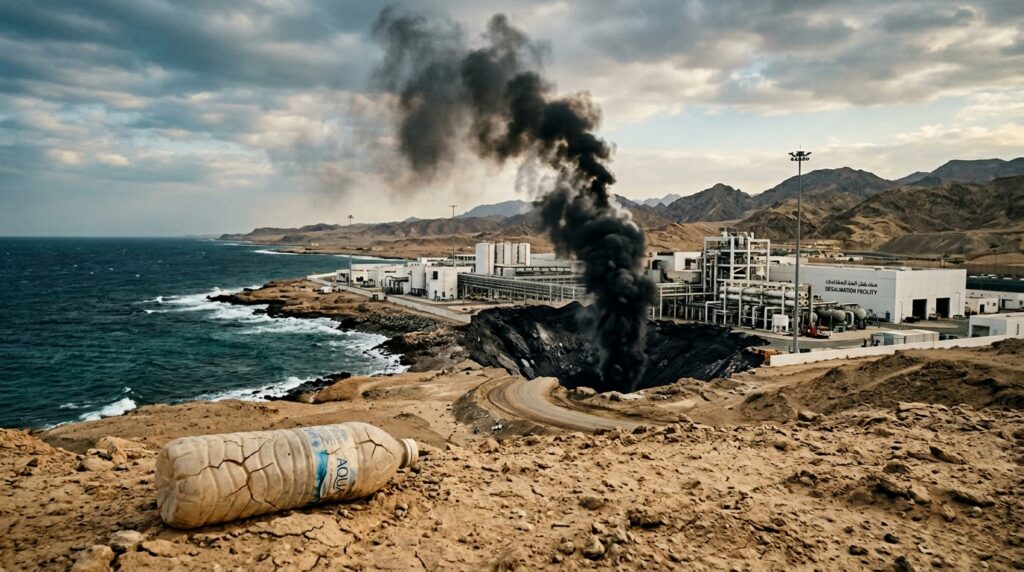
As of March 2026, the world has entered a dark new phase of warfare. The reported US-Israeli strike on the Qeshm Island desalination plant in Iran has done more than cut off water to 30 villages; it has shattered the international norms that prevent modern wars from becoming biological catastrophes.
(Commander’s Hook: Water War Strategic and Humanitarian Crime) When you bomb a water plant, you aren’t fighting a regime; you are fighting the thirsty child in the street. This is the definition of a strategic crime.)
Oil built the Persian Gulf. Desalinated water keeps it alive. War threatens both
- Persian Gulf desalination plants: supplying 70%-90% of drinking water to nations in the region — face unprecedented vulnerability as missile and drone strikes target coastal infrastructure in the ongoing war.
- On Sunday, Bahrain accused Iran of damaging one of its desalination plants, and Iran previously said a U.S. airstrike had damaged one of its plants, in a region where water, not oil, may be the most vulnerable resource.
- If major facilities go offline, cities could lose most drinking water within days, potentially triggering humanitarian crises comparable to the 1991 Gulf War aftermath.
As missiles and drones curtail energy production across the Persian Gulf, analysts warn that water, not oil, may be the resource most at risk in the energy-rich but arid region.
Hundreds of desalination plants sit along the Persian Gulf coast, putting individual systems that supply water to millions within range of Iranian missile or drone strikes. Without them, major cities could not sustain their current populations; some could be forced to evacuate within days.
Waters Under Siege
Published on: March 8, 2026, 7:11 AM
While Washington has yet to acknowledge these claims, their very plausibility should chill every capital that still pretends this is a limited campaign. Reports already make note of tanker traffic halting at the Strait of Hormuz, the narrow channel through which about a fifth of the world’s oil moves. In the Gulf, that chokepoint is also a lifeline for food: Gulf states are over 80 per cent dependent on imports, and their reliance on the Hormuz artery is fundamental to both their survival and their economies.
Water Crimes and International Law
The Need for Accountability
Deprivation of fresh water may constitute a crime against humanity. Depriving people of water implies the commission of inhumane acts, which is part of the definition of a crime against humanity. The commission of inhumane acts involves those responsible for the acts intentionally causing great suffering and injury to the physical or mental health of people. Crimes against humanity can take place in both armed conflicts and peacetime.
A report of the Geneva Water Hub has underlined the multiple and far-reaching consequences of the deprivation of clean water on public health. The increase of waterborne diseases, including cholera, in conflict settings is a common trend. In the conflict in Gaza, poor hygiene conditions in overcrowded shelters create fertile ground for rapid disease transmission.
United Nations experts have denounced the use of “thirst as a weapon” in Gaza and noted the repeated targeting of water facilities, wells, pipelines, desalinisation units and sewage systems.
Such acts may provide evidence for arguing for the existence of war crimes, crimes against humanity and even genocide. Moreover, the International Court of Justice (ICJ) has already noted in its Order of March 2024 that Palestinians in Gaza are no longer facing only a risk of famine, “but that famine is setting in”.
Interestingly, the ICJ discusses together starvation and dehydration of Palestinians in Gaza as possible grounds for the violation of the Convention on the Prevention and Punishment of the Crime of Genocide.
In parallel, at the ICC — although the warrants of arrest for Israeli Prime Minister Benjamin Netanyahu and his former Defence Minister Yoav Gallant are classified as confidential to safeguard the conduct of the investigations, the Pre-Trial Chamber has indicated that there are reasonable grounds to believe that both individuals have intentionally and knowingly deprived the civilian population in Gaza of objects indispensable to their survival, including water.
1. The Architects of the Crime: Identifying the Culprits
Water War: Strategic and Humanitarian Crime. We must name the actors responsible for this escalation. This was not a “tactical error,” but a calculated strategic choice by the following leadership:
The US Administration: By authorising “Operation Epic Fury” with a mandate for maximum disruption, the White House has signalled that, for the sake of selfish gains in regime change, the basic survival of millions is now a secondary concern.
The Israeli Security Cabinet: By participating in the targeting of civilian infrastructure, Israel has set a precedent that it is least equipped to survive. As a nation built on desalination, they have effectively legalised the destruction of their own life-support systems.
2. The Samson Instinct: A Region on Death Ground
When you push an enemy onto “Death Ground”, where survival is at stake, they trigger the Samson Instinct: “If I go down, the region goes with me.”
Iran’s response was immediate. Within hours of the Qeshm strike, an Iranian drone damaged a desalination plant in Bahrain. The message from Tehran is clear: if Iranian water is fair game, then the 400 desalination plants that sustain the Saudi, Emirati, and Kuwaiti populations are now legitimate targets.
(Strategic Hook: Sun Tzu warned that the greatest victory is to win without fighting. Today, we see leaders who fight without even knowing how to win.)
3. The Kitchen Table Crisis: Economic Ramifications for the Common Man
While the architects in Washington and Tel Aviv calculate strategic levers, the common citizen is facing a different kind of math.
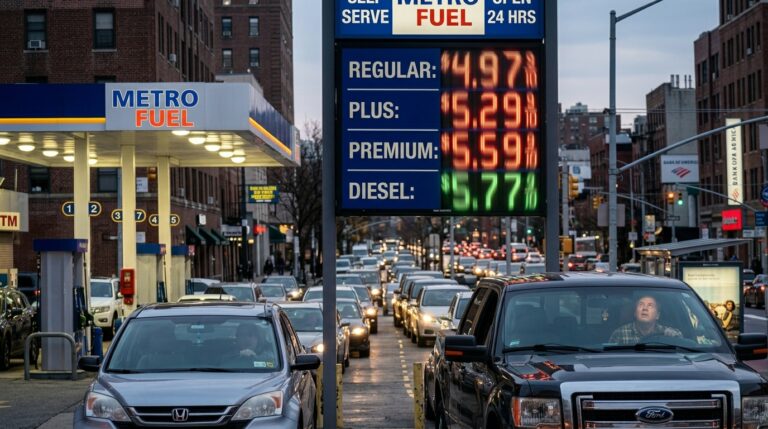
The Thirst Premium: In the Gulf, bottled water prices have surged 500 per cent in 48 hours. When the taps run dry, water ceases to be a utility and becomes a luxury commodity.
The Energy-Food Spiral: Modern agriculture is a liquid industry. The logistics tax at the Strait of Hormuz has already added 25 per cent to grocery bills in London and Chicago. Savings are being evaporated by war-driven inflation, while the culprits in the defence sector see record profits.
Reflective: A victory achieved at the cost of a region’s water is no victory at all. It is a desert with a flag on top.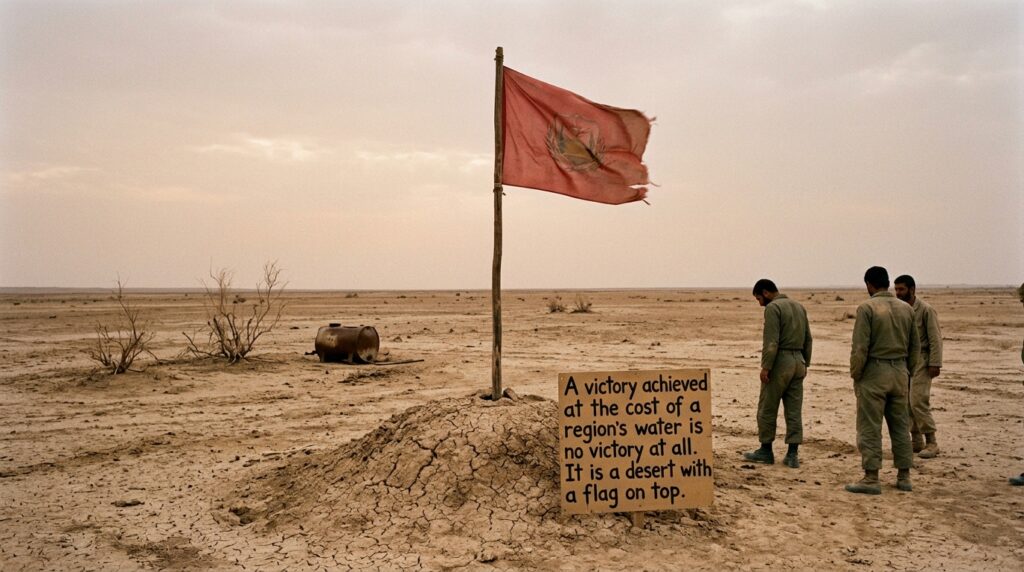
4. The Environmental Samson: The Black Tide
Iran does not need to bomb every plant to win. By releasing crude oil into the Persian Gulf, the currents would naturally carry a “Black Tide” into the intake valves of every GCC desalination plant.
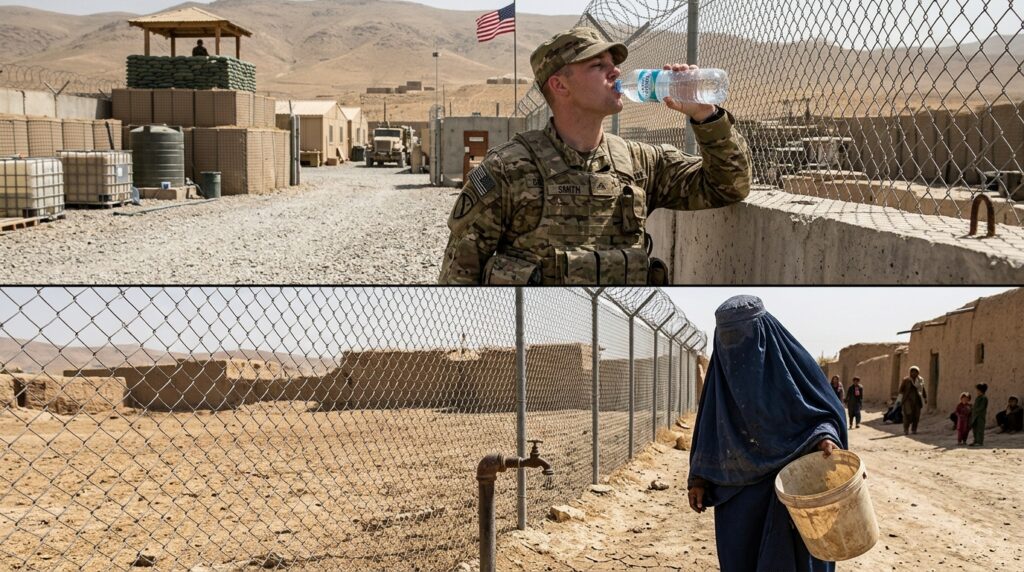
The Logistics Failure: Even the U.S. military’s portable purification units (ROWPU) cannot filter out heavy crude. If the Gulf is contaminated, U.S. bases become islands of thirst. The U.S. will fly in bottled water for its soldiers, but it will have no choice but to watch its regional allies collapse from dehydration.
5. The Personnel Crisis: America’s Moral Bankruptcy
The U.S. military will fly in water for its soldiers, but it has no plan to supply the 8 million expatriates and local citizens living in the cities surrounding their bases. We will see U.S. soldiers drinking water flown in from Europe while the local children outside the base gates suffer from dehydration. This is the ultimate human crime: creating a desert and then watering only your own garden.
6 Frequently Asked Questions (FAQs)
Q1. Is targeting water plants a war crime?
Yes. Under Geneva Convention Protocol I, Article 54, attacking infrastructure indispensable to civilian survival is strictly prohibited.
Q2. Why is the GCC so vulnerable?
Over 90 per cent of their drinking water comes from desalination. If the plants stop, a city like Riyadh or Dubai has only 3 to 7 days of water in reserve.
Q3. How will this affect the US and Europe?
Beyond the moral stain, the economic fallout includes a permanent spike in energy costs and a disrupted global supply chain for food and medicine.
Q4. Can the US military supply water to civilians?
No. Their capacity is limited to military personnel. A mass evacuation of Western expats would be the only logistical solution.
Q5. Who are the primary gainers in this war?
Non-Gulf energy exporters and the global defence industry profit while the common man suffers.
Q6.What can a conscientious citizen do?
Demand accountability from leaders who weaponise biological survival and prepare for local water volatility by securing a 14-day supply.
Legal and Humanitarian Framework
International Humanitarian Law (IHL) explicitly protects the resources necessary for civilian life. The key reference for the “Precedent of Crime” is:
-
Geneva Convention Protocol I (1977), Article 54: This article prohibits the starvation of civilians as a method of warfare. Specifically, Paragraph 2 states: “It is prohibited to attack, destroy, remove or render useless objects indispensable to the survival of the civilian population, such as… drinking water installations and supplies and irrigation works.”
-
Customary IHL Rule 54: This rule reinforces that attacking objects indispensable to the survival of the civilian population is prohibited in both international and non-international armed conflicts.
The Qeshm Island Incident (March 7, 2026)
The following timeline and statements confirm the initiation of the water conflict:
-
Iranian Foreign Ministry Statement: On March 7, 2026, Foreign Minister Abbas Araghchi officially condemned the U.S. strike on the Qeshm Island freshwater desalination plant. He stated: “The U.S. committed a blatant and desperate crime… The water supply in 30 villages has been impacted. The U.S. set this precedent, not Iran.”
-
Operational Impact: Reports indicate that the strike disabled the primary reverse osmosis (RO) units on Qeshm Island, immediately cutting off potable water to approximately 30 rural Iranian communities.
Regional Retaliation and Counter-Strikes
-
Bahrain Desalination Plant: On March 8, 2026, Bahrain’s Interior Ministry reported a drone attack by the IRGC targeting a desalination facility. While the ministry claimed no disruption to the water supply, the event confirms Iran’s “tit-for-tat” strategy against Gulf water infrastructure.
-
U.S. 5th Fleet Headquarters: Following the Qeshm strike, the IRGC claimed responsibility for a missile barrage targeting the U.S. Naval Support Activity (NSA) in Bahrain, specifically citing the desalination precedent as justification.
Technical and Strategic Vulnerability Data
-
Desalination Dependency (2026 Data): Recent studies from Global Water Intelligence and npj Clean Water highlight that the Middle East accounts for nearly 42% of global desalination capacity.
-
Kuwait: 90% dependency on desalinated water.
-
Oman: 86% dependency.
-
Saudi Arabia: 70% dependency (utilising over 30 major plants across 17 locations).
-
-
Israel’s Water Profile: Israel produces roughly 75-80% of its drinking water through five major coastal plants: Sorek, Ashkelon, Ashdod, Palmachim, and Hadera.
-
Environmental Contamination Risks: Studies from the International Journal of Environmental Science and Development warn that the Persian Gulf’s shallow, slow-moving currents make it uniquely susceptible to oil spills. A major slick can clog RO membranes for months, rendering even portable military purifiers (ROWPU) inoperable.
Economic Data for the Common Man
-
Global Market Impact (March 9, 2026): Crude oil prices topped $100/barrel following the intensification of Gulf strikes, leading to a 7% plunge in the Nikkei and KOSPI indices.
-
The “Thirst Tax”: In regional conflict zones, the cost of bottled water has risen by an average of 400-500% in neighbourhoods where municipal grids have failed.