The Qatar Attack: Rising Tensions in the Gulf – Can Pakistan and Qatar Forge a Defensive Shield Against Future Aggression?
The Qatar Attack: What’s Going On
-
On 9 September 2025, Israel carried out an airstrike in Doha, Qatar, targeting senior Hamas leadership who were reportedly meeting there as part of ceasefire negotiations. Al Jazeera+4Al Jazeera+4The Guardian+4
-
The strike killed six people, including one member of Qatar’s Internal Security Force, and wounded others. ABC News+2Wikipedia+2
-
Israel says the strike was “completely justified” because it considered these Hamas leaders responsible for organising attacks against Israel. ABC News+2Al Jazeera+2
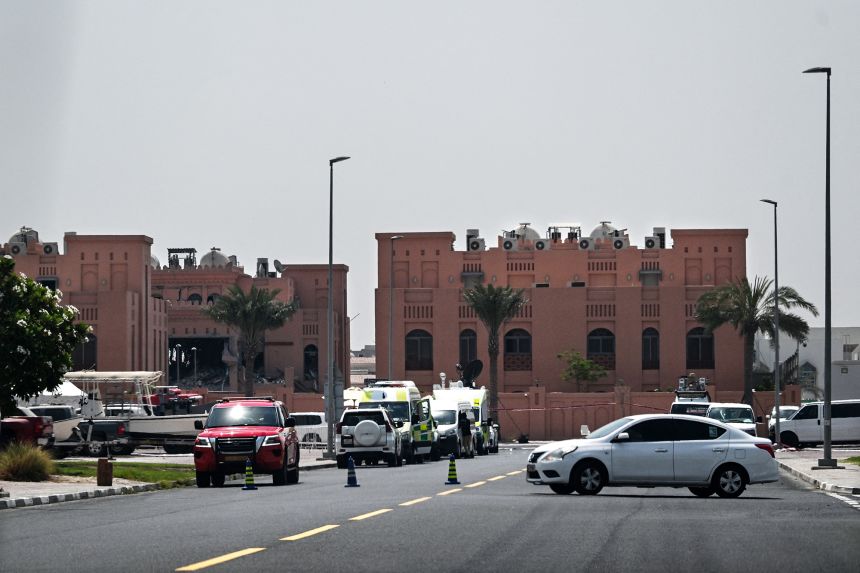
AFP/Getty Images
-
Qatar condemned the attack strongly, calling it a violation of its sovereignty and international law, and labelled it “cowardly” and “state terrorism.” AP News+3Al Jazeera+3The Guardian+3
-
The strike has strained ongoing ceasefire negotiations and raised concern about the prospects for hostage exchanges. Qatar’s Prime Minister says it has “killed any hope” for progress on those fronts. Reuters+2Al Jazeera+2
-
Israeli Prime Minister Benjamin Netanyahu has warned that if countries “harbour terrorists”, they must expel them or face consequences. This signals that Israel might consider further action if similar situations recur. CBS News+2Al Jazeera+2
Other Recent Israeli Attacks / Expansions Beyond Israel–Gaza
This Qatar strike is part of a broader pattern in recent months where Israeli military actions have extended to several other countries/territories. Some examples:
| Country / Territory | What happened | Key Details |
|---|---|---|
| Yemen | Israeli airstrikes in Sanaa and Al-Jawf targeting Houthi “military camps, etc.” | On ~10 September, ~46 people were killed, ~165 were wounded. The strikes are said to respond to missile/drone attacks by the Houthis toward Israel. Reuters+1 |
| Lebanon | Airstrikes in eastern Lebanon (Hermel, Bekaa provinces) | Several Hezbollah members were killed. These areas have seen frequent Israeli strikes. AP News+1 |
| Syria | Israeli strikes on military bases/barracks in places like Homs and Latakia | Part of Israel’s long-running campaign to degrade proxied threats and infrastructure. Al Jazeera+2The Independent+2 |
| Tunisia | An activist flotilla ship was struck (suspected Israeli drone) while docked in Tunisia. Al Jazeera | |
| Iran | Israel has launched strikes inside Iran, targeting military installations and weapon depots. The Independent+2The Washington Post+2 |
Why This Matters / What’s New
-
The strike in Qatar is significant because it is the first known direct Israeli strike in a Gulf Cooperation Council (GCC) member state. Qatar has been a key mediator in peace/ceasefire negotiations. Al Jazeera+2The Independent+2
-
It raises concerns about the erosion of diplomatic norms (i.e. that diplomatic mediators or neutral territories are off-limits). The Guardian+1
-
The international response has been strong: condemnation from UN bodies, other countries, and concern about how this will affect the broader conflict and efforts to reduce violence or reach ceasefire/hostage-release deals.
The Middle East once again stands at a dangerous crossroads. Recent Israeli strikes on Qatari territory, conducted despite Qatar’s close ties with Washington and its hosting of the U.S. Central Command (CENTCOM) headquarters, have shaken assumptions about regional security. The episode underscores two unsettling realities: Israel’s growing willingness to project force beyond its borders, and the muted international response that emboldens such actions.
For Pakistan, a nuclear-armed state with strong historic, cultural, and religious ties to the Gulf, the developments present both an opportunity and a dilemma. How far can Pakistan go in cooperating with Qatar and other Gulf partners in the defence realm, given its own fragile domestic situation and its dependence on international approval? More importantly, how effective would such cooperation be in deterring or countering future violations?
Israel’s Expanding Calculus and the Global Silence
With U.S. backing, financial, military, and diplomatic, Israel has repeatedly acted beyond the bounds of international law. From the Palestinian territories to Lebanon, Syria, and now Qatar, Tel Aviv has faced few tangible consequences for its use of force. Decades of United Nations resolutions remain unenforced, while Western capitals continue to justify or ignore Israel’s behaviour under the rhetoric of “self-defence.”
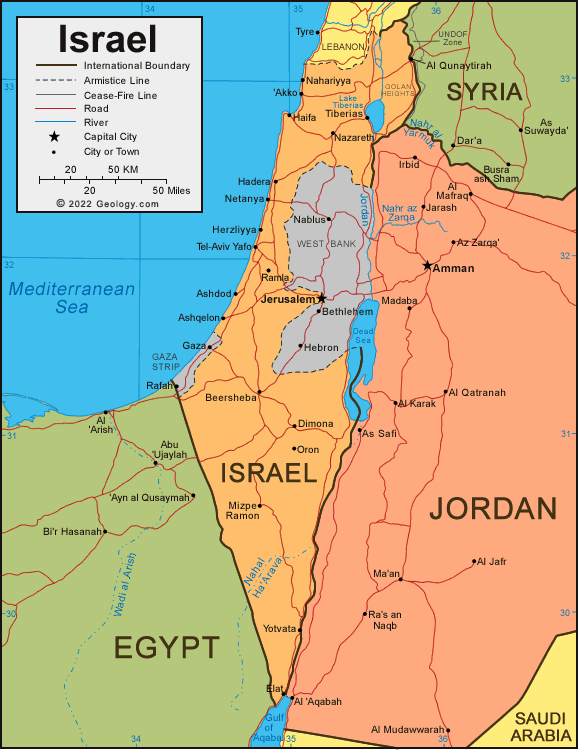
This unchecked posture raises profound questions. If even a U.S. ally like Qatar, home to one of Washington’s most critical overseas military hubs, can be struck without consequence, what message does it send to the rest of the region? It suggests that international law and diplomatic agreements are often rendered insignificant when power dynamics prevail.
The CNN Article “A Presidential Jet and a Massive US Airbase Didn’t Shield Qatar from Israel’s Attack. America’s Arab Allies are Taking Note”:
Analysis by

-
On September 9, 2025, Israel carried out a precision airstrike targeting Hamas leadership in Doha, Qatar, marking the first known Israeli military strike on a Gulf Cooperation Council (GCC) member state.
-
The attack targeted a residential government complex housing Hamas negotiators involved in U.S.-mediated ceasefire talks for the Gaza war.
-
Despite the presence of the massive U.S. Al Udeid Air Base in Qatar and a recent visit by a U.S. presidential jet, Israel struck with no resistance from U.S. defences, raising questions about U.S. deterrence credibility.
-
Qatar condemned the strike as a violation of its sovereignty and suspended participation in the ceasefire negotiations.
-
Gulf Arab states expressed strong condemnation and solidarity with Qatar, but face limited options to respond militarily or diplomatically.
-
The event has sparked serious concern among Gulf allies about the reliability of U.S. security guarantees amid allied Israeli unilateral actions.
-
Gulf states are under domestic pressure to rethink ties with Israel and reconsider their participation in the Abraham Accords normalising relations with Israel.
-
The strike exacerbates regional instability and complicates U.S. efforts to maintain its security architecture and alliances in the Middle East.
-
U.S. officials claimed limited prior knowledge of the attack, with no approval or coordination, but some Arab governments view this as an erosion of trust in Washington.
-
The incident may push Gulf states to demand greater security assurances from the U.S. or recalibrate diplomatic relations with both the U.S. and Israel.
-
The article underlines the growing complexity of Gulf security amid intersecting U.S., Israeli, and Arab interests and the fragile nature of regional alliances.
Pakistan’s Strategic Dilemma
Pakistan, grappling with domestic political instability and economic fragility, remains constrained in its foreign policy manoeuvring. Its leadership, both civilian and military, often seeks tacit approval from Washington for critical decisions. The army chief’s frequent visits to the U.S. and China highlight Islamabad’s balancing act between great powers.
These realities limit Pakistan’s ability to take bold, confrontational steps. Directly opposing U.S. interests risks jeopardising essential financial aid, international support, and security cooperation. Yet public opinion at home strongly favours solidarity with Muslim countries under pressure. For Islamabad, the challenge is to find a pragmatic path of “dignified pressure”, standing firmly for principles while avoiding costly miscalculations.
Pathways of Defence Cooperation Between Pakistan and Qatar
Despite its constraints, Pakistan has viable avenues to strengthen Qatar’s defences and deter future aggression. These measures, carefully designed and presented as defensive rather than offensive, could improve resilience while minimising political fallout.
Near-Term Options (Fast Impact)
- Early Warning & Air-Defence Integration: Linking Pakistani radars and airborne early warning systems with Qatari networks to improve detection and interception of incoming threats.
- Rotational Fighter Deployments: Stationing Pakistani fighter jets in Qatar on a training or air policing basis, signalling a visible deterrent.
- Counter-Drone and C-RAM Systems: Deploying Pakistani-trained teams and systems to shield Doha’s key facilities from drone and rocket attacks.
Medium-Term Opportunities (3–12 Months)
- Joint Maritime Patrols: Securing shipping lanes and LNG tankers through coordinated naval deployments.
- Intelligence & Surveillance Sharing: Establishing a joint fusion cell for real-time monitoring and rapid attribution of any hostile actions.
- Regular Joint Exercises: Training programs that enhance interoperability in air defence and crisis response.
Long-Term Strategic Projects (12+ Months)
- SAM and Interceptor Procurement: Exploring co-production or procurement of advanced surface-to-air missile systems for layered defence.
- Drone & UAV Cooperation: Developing indigenous unmanned systems for surveillance and rapid response.
- Cybersecurity Collaboration: Building joint cyber defence capabilities to safeguard critical infrastructure and impose costs in the digital domain.
Effectiveness Against Repeat Violations
Would such measures stop Israel outright? Not entirely. Israel retains a technological edge with advanced long-range weapons and precision strike capabilities. However, a Pakistan-Qatar defence partnership would:
- Raise the political and operational cost of strikes.
- Improve early warning and interception chances against drones and missiles.
- Ensure rapid attribution, amplifying international condemnation.
- Strengthen regional solidarity, making future attacks diplomatically riskier.
In short, while not eliminating the threat, cooperation would shift the cost-benefit calculus, making violations less attractive.
Risks and Realities
Any such cooperation must navigate several challenges:
- U.S. Reaction: Washington may view overt Pakistani deployments as interference in a CENTCOM host nation. Careful framing as “defensive cooperation” is essential.
- Escalation Risks: Israeli strikes on Pakistani assets in Qatar would transform a bilateral crisis into a regional confrontation.
- Domestic Optics: Pakistan’s government must present cooperation as both a moral duty and a pragmatic step, avoiding the impression of adventurism.
- Sustainability: Extended deployments are expensive and resource-intensive for Pakistan.
Conclusion: Toward a Defensive Shield of Solidarity
The Israeli strike on Qatar has opened a new chapter in Middle Eastern security, one where even U.S.-allied states are not immune to violations of sovereignty. For Pakistan, the path forward lies in measured, defensive cooperation: providing Qatar with layered air and maritime protection, joint intelligence, and cyber resilience, while amplifying diplomatic and legal avenues.
Such a strategy does not guarantee invulnerability, but it strengthens deterrence, raises political costs for aggression, and demonstrates that Muslim nations can stand together without reckless escalation. Whether the world continues to watch in silence or begins to reckon with these realities remains an open question.
References
- United Nations Security Council Resolutions on Middle East conflicts (1990–2023).
- “CENTCOM and U.S. Military Presence in Qatar.” Congressional Research Service.
- Statements from Pakistani and Qatari foreign ministries (2024–2025).
- Reports by Al Jazeera, Reuters, and The Guardian on Israel’s regional military actions.
- Academic analysis: P.R. Kumaraswamy, Israel’s Regional Security Calculus (2023).