The Architecture of Attrition:Economic and Military War of Escalation
The Architecture of Attrition. This is the reality of the 2026 conflict between the United States and Iran. While news headlines focus on big explosions, the real story is a "money war" and a heartbreaking human toll that is reshaping the globe.
The Architecture of Attrition: An Investigative Analysis of the Iran-U.S. Economic and Military War of Escalation
The architecture of attrition. Imagine you are playing a game where your opponent uses a $10 slingshot to break your $1,000 window. Even if you have the best security system in the world, you are losing money much faster than they are. This is the reality of the 2026 conflict.
The Price of Escalation: An Investigative Analysis of the Iran-U.S. Economic and Military War of Attrition
The Architecture of Attrition. This is the reality of the 2026 conflict between the United States and Iran. While news headlines focus on big explosions, the real story is a “money war” and a heartbreaking human toll that is reshaping the globe.
Strategic Escalation and Conflict Sustainability in the US-Iran War
Escalation in the US-Iran war hinges less on battlefield dominance than on endurance. While Washington relies on high-intensity decapitation strikes, Tehran pursues decentralised attrition and energy leverage, shifting the decisive variable toward sustainability, regional spillover and political resilience.
On the morning of Saturday, 28 February 2026, the United States, in coordination with Israel, commenced a military operation against the Islamic Republic of Iran. This offensive, launched immediately after the completion of US regional military deployment, was swiftly met with a substantial retaliatory strike by Iran’s Armed Forces against American military assets throughout the Middle East.
The confrontation remains ongoing, with no clear outcome in sight. The central strategic question now is: how will this conflict ultimately be resolved?
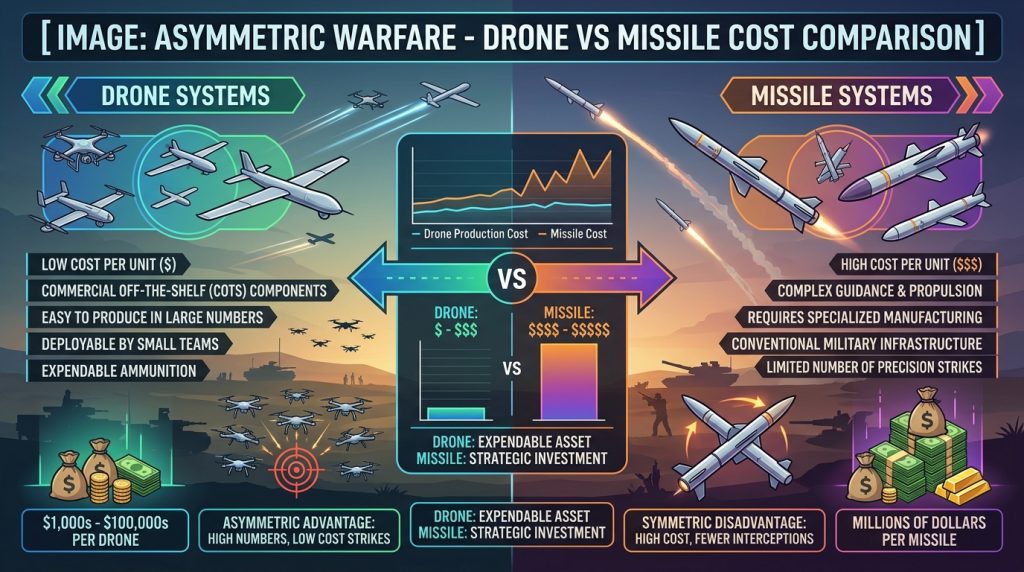
1. The Slingshot vs. The Shield: What is “Asymmetric Warfare”?
In 2026, being the “biggest kid on the playground” isn’t enough. The U.S. has the most advanced military in history, but Iran is using Asymmetric Warfare to fight back.
The Math of War
The U.S. Side: To stop a threat, the U.S. fires a missile that can cost $2 million.
The Iran Side: They send out a “suicide drone” that costs only $20,000.
“It’s like using a Ferrari to chase a bicycle. Eventually, you run out of Ferraris, but they still have plenty of bikes.” Military Analyst.
The Slingshot vs. The Shield: What is “Asymmetric Warfare”?
The U.S. has confirmed the loss of two high-tech jets and 168 personnel in a single fight. These planes cost more than a small city’s entire yearly budget. This “cost-exchange ratio” is making the war impossible to sustain.
2. The “Ironclad” Expense: Israel Aid and Compensations
A major part of the American war costs is the “Emergency Supplemental” funding provided to Israel. As the conflict widens, Israel’s defence needs have become a permanent line item in the U.S. budget.
Ammunition Resupply: The U.S. has committed over $25 billion in emergency aid to replenish Israel’s Iron Dome and David’s Sling interceptors, which are being depleted by daily rocket fire.
Economic Stabilisation: Because the war has stalled Israel’s tech sector and tourism, the U.S. has discussed “economic compensation packages” to prevent a total collapse of the Israeli Shekel.
The “Post-War” Promise: To maintain the regional balance, the U.S. has pledged a 10-year, $60 billion security framework to upgrade Israel’s F-35 fleet and laser-defence systems.
3. Global Economic Ripples: A Tale of Two Capitals
The Architecture of Attrition. This is the reality of the 2026 conflict between the United States and Iran. While news headlines focus on big explosions, the real story is a “money war” and a heartbreaking human toll that is reshaping the globe. When analysts mention a $4 trillion addition to the national debt, they are looking at the “total cost of ownership” for a long-term war. In economics, this isn’t just the price of the bullets fired; it is the sum of everything the government has to pay for because the war happened.
Breakdown of where that $4 trillion comes from:
a. Direct Combat Operations (The “Hot” War)
This is the immediate cost of fighting. It includes fuel for carrier strike groups, the replacement of $2 million missiles, and the “hazard pay” for thousands of troops.
The Math: If a high-intensity conflict costs $500 million per day, that alone adds up to over $180 billion per year. Over three years, that is more than half a trillion dollars just for the fighting itself.
b. Emergency Aid & “Ironclad” Support
As mentioned in your article, the U.S. doesn’t just fund its own military. It acts as the “banker” for regional allies.
Israel & Gulf Partners: Replenishing interceptors like the Iron Dome and providing economic stability grants to allies keeps their economies from collapsing. These “supplemental” aid packages can easily reach $50 billion to $100 billion annually during wartime.
c. The “Post-War” Policing (The Long Tail)
History shows that the most expensive part of a war is often what happens after the main fighting stops.
Regional Stability: If the U.S. destroys Iran’s military, it then becomes responsible for “policing” the region to prevent chaos or a power vacuum. This requires keeping 50,000+ troops stationed in the Middle East indefinitely.
Reconstruction: To prevent a humanitarian disaster that could lead to more war, the U.S. often ends up paying for the rebuilding of bridges, water plants, and hospitals it previously destroyed.
d. Veterans’ Care & Interest Payments (The “Hidden” Costs)
This is the part most people forget, but it’s the biggest chunk of the $4 trillion.
Medical Care: Providing lifelong healthcare and disability benefits for 168+ families and thousands of wounded veterans is a multi-decade financial commitment.
Interest on the Debt: The U.S. doesn’t have $4 trillion sitting in a vault; it borrows it.
At current interest rates, the cost of just paying the interest on that borrowed $4 trillion can eventually exceed the cost of the war itself.
e. The Architecture of Attrition: Summary Table: The $4 Trillion Breakdown
Category
Estimated Share
Why is it so high?
Direct Military Ops
~$600 Billion
Expensive jets, fuel, and $2M missiles.
Allied Aid (Israel/Gulf)
~$300 Billion
Keeping allies armed and their economies stable.
Regional Reconstruction
~$1 Trillion
Rebuilding what was broken to ensure “peace.”
Veterans & Interest
~$2.1 Trillion
Lifelong healthcare and interest on borrowed money.
In simple terms, it means the U.S. is “charging” the war to a credit card. While the fighting might last three years, the American taxpayer will be paying off the “bill” for the next 40 to 50 years.
This helps clarify why the “policing” phase is often considered more expensive than the actual combat.
4. Future Projections: The “Permanent” War
Where does this end for the United States?
The $4 Trillion Debt: Analysts estimate that a three-year conflict and subsequent regional “policing” could add $4 trillion to the U.S. national debt.
The term “Three-Year Conflict” is used by military analysts and economists not to describe the length of the shooting war, but rather the projected window of active instability that follows the initial strikes of February 2026.
According to current strategic models, this three-year timeline is broken down into three distinct phases that keep the U.S. budget and military locked in the region:
a. Phase One: The Intensive Combat Phase (Months 1–6)
This is the period of high-intensity strikes, such as Operation Epic Fury (launched February 28, 2026).During this time, the U.S. and Israel focus on the “obliteration” of Iran’s nuclear and air defence assets. While the major bombing might subside after a few months, the U.S. must remain in a state of “Maximum Readiness” to counter retaliation.
b. Phase Two: The Insurgency & Proxy War (Year 1–2)
Analysts predict that even if Iran’s conventional military is erased, its “Axis of Resistance” (proxies) will continue to harass U.S. bases and the Strait of Hormuz.
The “Long Tail”: Military experts at the IISS have noted that the war has a “long tail,” meaning the U.S. cannot simply leave after the main targets are destroyed.
Maritime Defence: It is estimated to take at least two years of constant U.S. Navy presence to ensure that shipping lanes are safe enough for global insurance companies to allow tankers back into the Gulf.
c. Phase Three: The Reconstruction & “Policing” (Year 2–3)
This is the final year of the projected conflict window, where the financial burden peaks.
Industrial Restoration: Reports from groups like QatarEnergy indicate that repairing critical energy infrastructure (like the desalination and gas plants destroyed in early 2026) will take three to five years.
Regional Policing: To prevent a total power vacuum or the rise of new militant groups in the ruins, the U.S. is projected to maintain a “Stabilisation Force” of over 50,000 troops through at least 2029.
d.Why 3 Years? The “Critical Threshold”
Economic analysts use the three-year mark as the “Critical Threshold.” This is the point where:
National Debt: The cumulative interest on the war debt begins to grow faster than the GDP.
Political Will: Historically, public support for “policing” foreign nations drops significantly after 36 months of high expenditure.
Gulf Recovery: It is the minimum time needed for the Gulf States to decide whether to re-commit their $2 trillion investments into the U.S. economy or look for new partners.
In summary, the “Three-Year Conflict” is a warning that while the missiles might stop falling soon, the political, military, and financial “war” will stay on the American books until 2029.
5. The Unforgettable Toll: Schools, Hospitals, and Water
The Architecture of Attrition. When we talk about “targets,” we aren’t just talking about military bases. The world has been shocked by the destruction of civilian life in Iran.
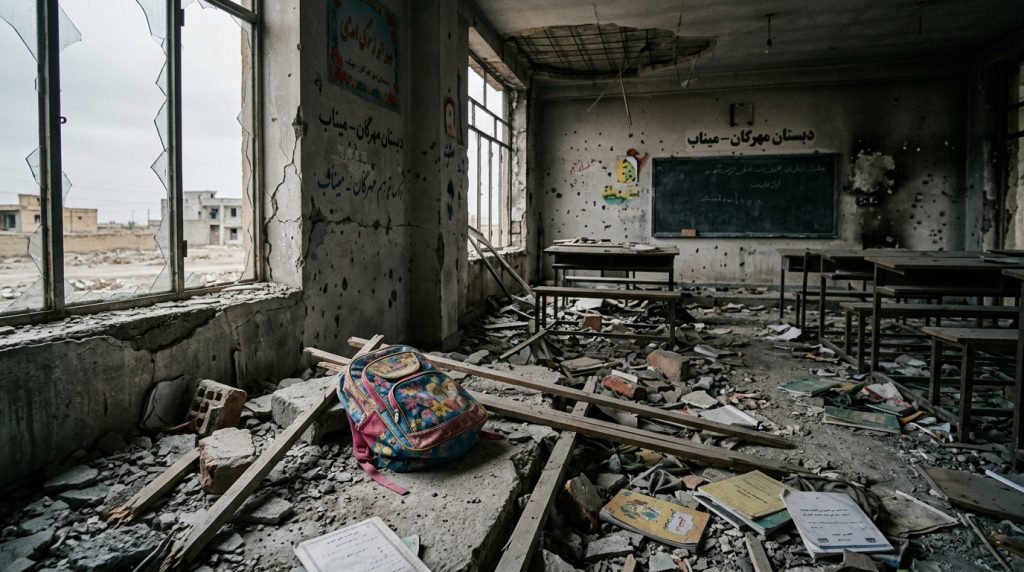
The Tragedy at Minab
In early 2026, the Shajareh Tayyebeh girls’ telemetry school in Minab was struck by missiles. Reports indicate a “triple-tap” strike, hitting the same spot three times to cause maximum damage.
The Loss: Over 150 people died, including 120 innocent young schoolgirls.
The Reality: Surveillance footage showed children running for cover, only for a second missile to hit the prayer hall where they were hiding.
Living in the “Stone Age”
The conflict has expanded to hit things people need to survive. The U.S. has targeted:
Healthcare: The Pasteur Institute in Tehran and hundreds of hospitals have been damaged.
Essentials: Bridges, power plants, and desalination plants (which turn seawater into drinking water) have been destroyed. Without these, millions of people are left without medicine, lights, or clean water.
6. The Human Story: More Than Just Numbers
The Architecture of Attrition. Behind every “confirmed loss” is a family. In April 2026, the world watched as a 13-second video titled “The Oceanic Secret” went viral. It wasn’t about soldiers, but about a young girl in a coastal town wondering if the lights would ever come back on.
In Iran, the bombing of power plants and “heavy water” facilities doesn’t just hurt the military; it leaves regular people without water to drink or electricity to stay warm. Over 1,300 lives have been lost in recent escalations, leaving thousands of empty chairs at dinner tables.
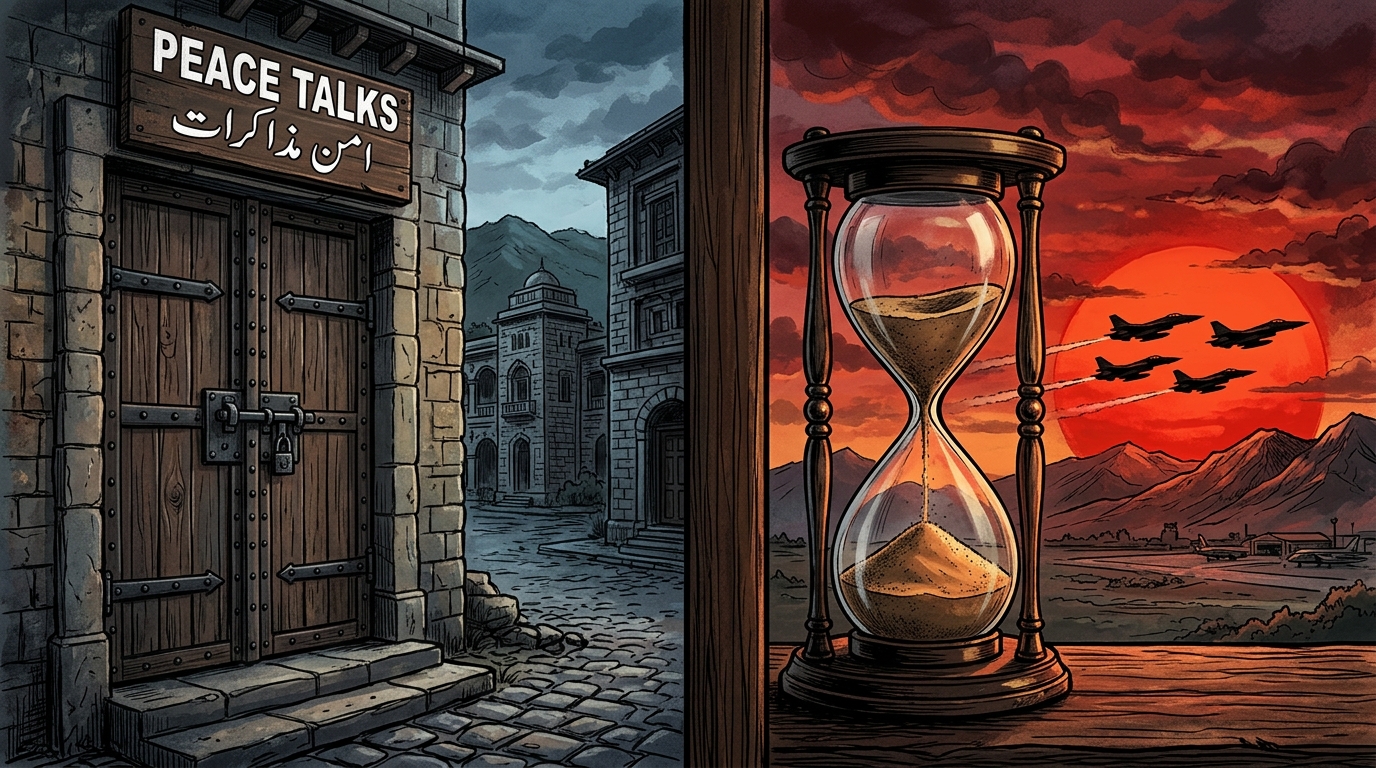
7. The Islamabad Talks: A 21-Hour “Wall”
On April 11 and 12, 2026, Pakistan hosted historic peace talks in Islamabad. This was the first time since 1979 that high-level U.S. and Iranian officials sat in the same room.
Why They Failed
Despite 21 hours of marathon negotiations, the talks ended without a deal.
The U.S. View: U.S. Vice President JD Vance stated the U.S. gave its “final and best offer,” but Iran refused to promise they would never seek nuclear weapons.
The Iran View: Iran’s leaders said the U.S. demands were “excessive and illegal.”
“The bad news is we have not reached an agreement. That is bad news for Iran more than it is for the United States.” JD Vance
The Islamabad Talks: A 21-Hour “Wall”
8. Empty Bases and Broken Promises: The Gulf Crisis
For years, the U.S. kept bases in countries like Qatar, Kuwait, and Bahrain. These were supposed to be safe zones. However, recent strikes have shown that these bases are now vulnerable “sitting ducks.”
The Architecture of Attrition: The Trillion-Dollar Secret
Countries like the UAE and Qatar had promised to invest over $2 trillion into the American economy. But because of this war:
Safety First: These countries are now worried about their own survival and are “reviewing” these massive financial promises.
Market Crash: If this $2 trillion is pulled back, the average person in the U.S. could feel it through higher prices and fewer jobs.
The Trillion-Dollar Secret
9. Pakistan’s Dual Role: Mediator and Protector
Recent reports from April 11, 2026, confirm a significant movement of Pakistani military assets to Saudi Arabia.A contingent of approximately 13,000 troops and between 10 and 18 fighter jets has arrived at King Abdulaziz Air Base in the Eastern Province.
Purpose of the Deployment
The deployment is officially framed as a reinforcement of the Strategic Mutual Defence Agreement signed between Islamabad and Riyadh in September 2025.
Deterrence Against Drone/Missile Strikes: The immediate catalyst was a series of Iranian strikes that hit Saudi energy infrastructure and resulted in the death of a Saudi national.
Operational Readiness: The Saudi Ministry of Defence stated the jets are there to “enhance joint military coordination” and “raise the level of operational readiness” between the two brotherly nations.
Missile Defence: Reports indicate that Pakistan has also dispatched missile interceptors to bolster the Kingdom’s air defence umbrella.
10. Defensive vs. Offensive Roles
Defensive Role (Primary Focus)
The deployment is strictly defined by Pakistani and Saudi officials as defensive.
Internal Security & Border Protection: Historically, Pakistani troops in Saudi Arabia are stationed to protect the “internal security” of the Kingdom and its holy sites.
Airspace Monitoring: The PAF jets are primarily tasked with intercepting incoming drones or missiles targeting Saudi infrastructure.
A “Non-Aggressive” Signal: A senior Pakistani government official explicitly stated the forces are “not there to attack anyone,” emphasising their role is to reassure Riyadh rather than provoke Tehran.
Offensive Role (Highly Unlikely)
Using these forces for an offensive strike against Iran or Israel is virtually ruled out for several reasons:
Host of Peace Talks: Ironically, while these jets landed, Islamabad was hosting critical U.S.-Iran ceasefire talks. Taking an offensive role would dismantle Pakistan’s position as a regional mediator.
Avoiding Retaliation: Pakistan shares a long border with Iran.Any offensive action from Saudi soil would risk direct Iranian retaliation on Pakistani territory, which Islamabad is desperate to avoid.
The “Israel” Context: There is no strategic or logistical evidence suggesting these forces would be used against Israel. The deployment is geographically focused on the Eastern Province (facing the Gulf/Iran), not the Red Sea or northern borders.
Summary of the Military Stance
The presence of the Pakistan Air Force and Army in Saudi Arabia serves as a “tripwire force.” Under the mutual defence pact, an attack on Saudi Arabia is treated as an attack on Pakistan.Their presence is a strategic message to Tehran: while Pakistan wants peace, the “sanctity and security of the Kingdom” is a red line that, if crossed, could draw a nuclear-armed state into the conflict.
While hosting peace talks, Pakistan also sent 13,000 Pakistani troops and fighter jets to Saudi Arabia.
The Goal: They are acting as a “security guard” to protect Saudi holy sites and energy plants from drone attacks.
The Balance: Pakistan is walking a tightrope, trying to broker peace in Islamabad while preparing for defence in Riyadh.
11. The Architecture of Attrition. Why This Matters to You
The world is connected like a giant web.
Gas Prices: When trade routes in the Middle East are blocked, gas prices everywhere rise.
Your Tech: If $2 trillion in investment disappears, the companies that make your favourite phones and games may have to raise prices.
Frequently Asked Questions (FAQs)
1. What happened at the school in Minab?
A girls’ school was hit by missiles, killing over 150 people. International experts call this a grave violation of humanitarian law.
2. Why did the Islamabad Peace Talks fail?
Both sides couldn’t agree on “red lines,” especially regarding Iran’s nuclear future after 21 hours of negotiation.
3. Is the U.S. winning the war?
The U.S. has more power, but it is losing the money battle by spending millions to stop drones that only cost thousands.
4. Why are hospitals and water plants being hit?
The price of escalation. The destruction of water and health facilities has created a massive humanitarian crisis for Iranian civilians.
5. Why did Pakistan send troops to Saudi Arabia?
To protect Saudi energy plants and holy sites. They are there for defence, not offensive action.
6. The Architecture of Attrition. Will this affect me?
Yes. Global stock markets have struggled, and the cost of energy and goods could rise significantly if the conflict continues.
7. What is the Rome Statute?
It is a set of global rules. It says that attacking civilian things like schools and hospitals is a “war crime” because it hurts innocent people who aren’t fighting.
References & Sources:
• Ratopati & Al Jazeera: “US and Iran fail to reach peace deal in Pakistan” (April 12, 2026).
• The Guardian: “JD Vance says no deal reached in Islamabad” (April 12, 2026).
• UN News & UNESCO: Reports on the Minab School Strike (2026).
• BBC Urdu: “How much is the war costing Iran and the US?” (April 11, 2026).
About the Author
This investigative report on The Architecture of Attrition was compiled by Major Hamid Mahmood (Retired). Holding an MA in Political Science, an LLB, and a PGD in Human Resource Management, Major Mahmood provides deep analysis into constitutional law, military strategy, and the societal impact of regional conflicts.