
Terrorism and Insurgency in Balochistan, Pakistan: A Comprehensive Analysis (1948–2026)
Written By: Ehsan Mughees
Abstract
This research paper critically examines the insurgency and terrorism phenomenon in Balochistan, Pakistan, spanning from 1948 to 2026. The study traces the historical evolution of Baloch resistance, identifies structural drivers of conflict, explores vested interests, and evaluates foreign interventions. It classifies insurgent actors by ideology, operational modalities, and strategic objectives, while providing a detailed military and tactical analysis of weapons, equipment, and battlefield capabilities. Pakistan’s strategic and operational responses are assessed at political, strategic, operational, and tactical levels, identifying gaps and limitations. Finally, the paper proposes multi-tiered solutions encompassing political inclusion, intelligence-dominated counter-insurgency, specialised operational reform, and counter-hybrid warfare measures designed to achieve sustainable peace and regional stability.
Introduction
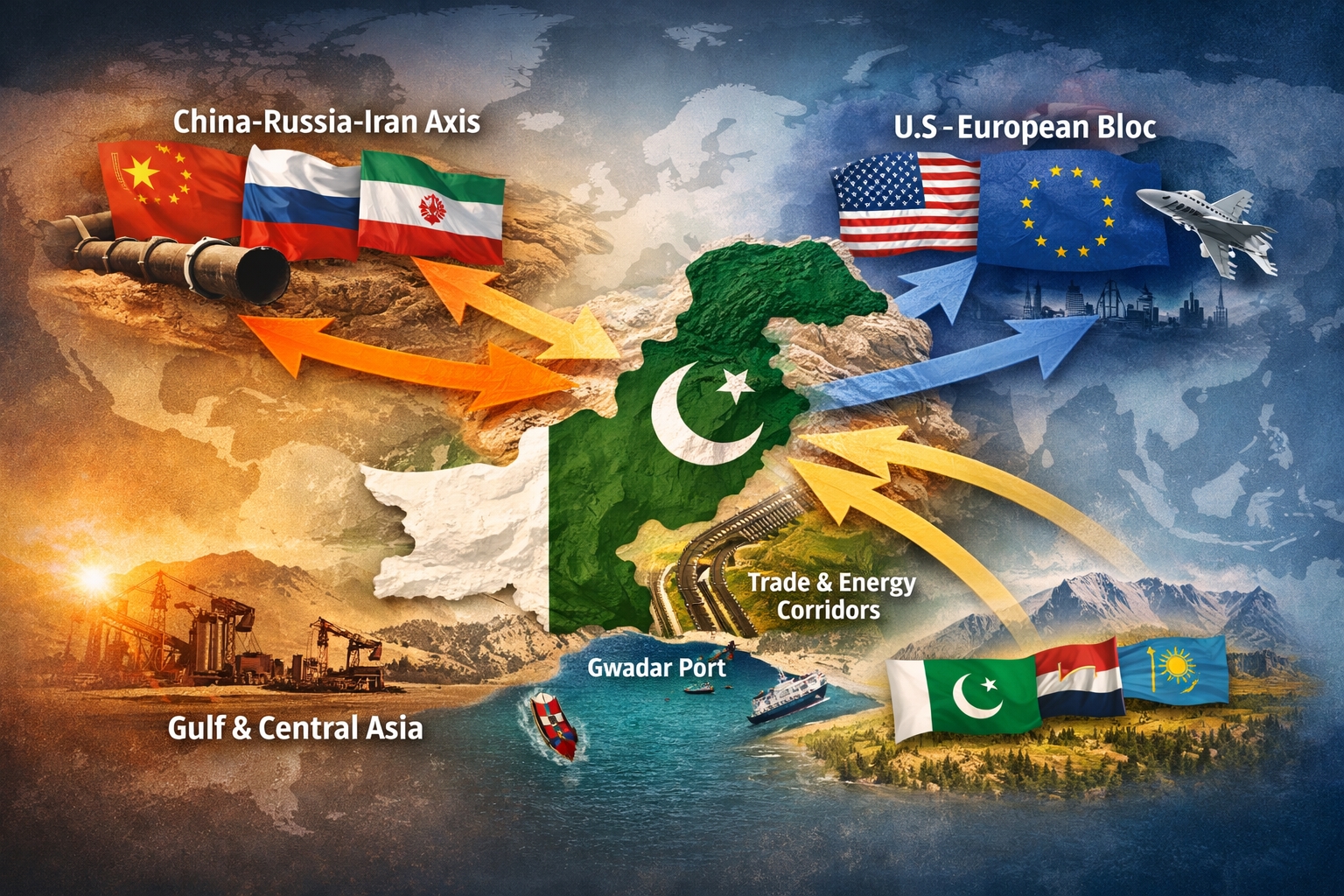
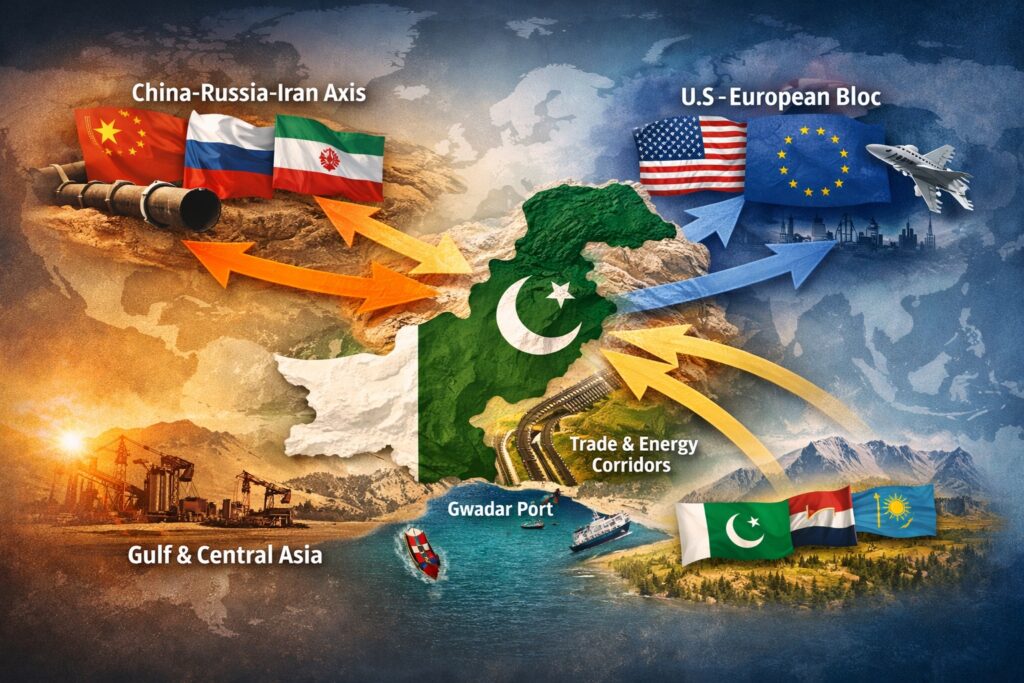
Balochistan, Pakistan’s largest yet least populous province, has experienced decades of violent insurgency and terrorism rooted in socio-economic marginalisation, contested integration, and regional geopolitical rivalries. Rich in natural resources, including minerals, gas, and a strategic coastline such as Gwadar port, Balochistan represents both a critical economic frontier and a persistent national security challenge.
Historically, insurgency in the province evolved from sporadic tribal resistance into complex, organised campaigns involving ethnonationalist separatists, jihadist affiliates, criminal networks, and foreign-backed actors. While early grievances were primarily political and economic, contemporary insurgency demonstrates highly coordinated military operations, technological sophistication, and hybrid warfare tactics, necessitating a comprehensive strategic and operational analysis.
1. Historical Background: Roots of Conflict (1948–2000)
1.1 Accession and Early Resistance
In 1948, the princely state of Kalat acceded to Pakistan under circumstances contested by segments of the Baloch elite. Initial resistance arose among political and tribal leaders who opposed integration without guarantees of autonomy, creating a persistent fault-line in centre-province relations.
1.2 Tribal Insurgencies and the State (1950s–1970s)
During the 1950s–1970s, recurrent tribal uprisings emerged in response to perceived marginalisation, lack of representation, and centralisation of power in Islamabad. The state’s occasional military suppression and the death of prominent tribal leaders deepened local suspicions, reinforcing cycles of resistance.
1.3 Armed Separatism (1970s–2000)
By the 1970s, political dissent transitioned into armed insurgency, with significant clashes between nationalist groups and the Pakistan Armed Forces. This period established the enduring pattern of tension: insurgents demanding autonomy or independence versus state efforts to maintain integration and territorial sovereignty.
2. Structural Drivers and Core Grievances
Enduring drivers perpetuating insurgency in Balochistan include:
-
Perceived economic exploitation and marginalisation, with local resources extracted while local populations receive minimal benefit.
-
Demographic anxieties associated with the settlement of non-Baloch populations.
-
Political underrepresentation and a deficit of trust in Islamabad.
-
Human rights grievances, including enforced disappearances and alleged abuses.
-
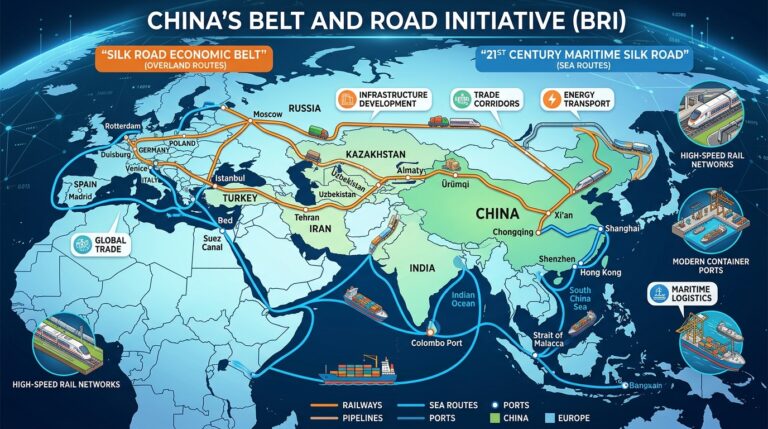
Geopolitical concerns, particularly regarding Gwadar and the China-Pakistan Economic Corridor (CPEC).
These structural factors provide fertile recruitment grounds for insurgents while sustaining popular support for resistance narratives.
3. Classification of Insurgent Actors: Structured Typology
Conflict actors in Balochistan can be classified as follows:
| Category | Group Name | Primary Objective | Ideology / Modalities |
|---|---|---|---|
| Ethnonationalist separatists | Baloch Liberation Army (BLA) | Independent Balochistan | Guerrilla warfare; asymmetric tactics; suicide attacks |
| Balochistan Liberation Front (BLF) | Autonomy/Independence | Targeted strikes on state assets; coordinated offensives | |
| Balochistan Nationalist Army (BNA) | Merged nationalist factions | Special operations group | |
| Baloch Raj Aajoi Sangar (BRAS) | Umbrella Insurgent Alliance | Coordinated large-scale insurgent campaigns | |
| Jihadist affiliates | Islamic State – Khorasan Province (ISKP) | Transnational jihad | Salafi-jihadist ideology; terror attacks |
| Tehreek-e-Taliban Pakistan (TTP) | Islamic system of governance | Suicide bombings, coordinated assaults | |
| Criminal/cross-border networks | Various smuggling and trafficking networks | Financial gain | Support insurgent logistics and arms |
This typology differentiates ethnonationalist insurgency from jihadist terrorism, though operational overlap occasionally occurs.
4. Foreign Interventions and Geopolitical Interests
Balochistan insurgency has historically attracted foreign interest:
-
India: Pakistan asserts RAW supports Baloch insurgents to destabilise Pakistan; India officially denies involvement.
-
Afghanistan: Porous borders and insurgent safe havens are alleged by Pakistan to facilitate cross-border operations.
-
Global Powers: Cold War and regional rivalries previously exploited local grievances for strategic leverage; contemporary direct foreign military involvement is contested.
Foreign involvement complicates Pakistan’s security calculus, transforming insurgency into a regional security concern.
5. Foreign Intervention and Hybrid Warfare Context
The insurgency has evolved into a hybrid warfare environment, characterised by deniable proxy actors, technological escalation, psychological operations, and economic disruption.
Rather than conventional confrontation, hostile actors leverage:
-
Insurgent sponsorship and training
-
Advanced weapons and battlefield technology transfer
-
Intelligence sharing
-
Information and psychological operations
-
Infrastructure disruption and economic destabilisation
India’s doctrine of internal destabilisation, coupled with Israel’s proxy warfare experience, aligns with observed insurgent operational sophistication, including night operations, drones, and encrypted communications.
Globally, similar hybrid conflicts appear in Ukraine, Syria, Iraq, and Yemen, showing how non-state actors gain strategic advantage through state-enabled technology and training.
6. Weapons, Equipment, and Battlefield Capabilities of Insurgents
6.1 Technological Escalation
Recent attacks in 2025–2026 confirm insurgents employ advanced night vision devices (NVDs), thermal imaging, laser target designators, encrypted communications, precision sniper rifles, and drones for reconnaissance.
6.2 Infantry Weapon Systems
Standard insurgent equipment includes:
-
Optics-equipped assault rifles with suppressors
-
Precision sniper rifles
-
Body armour and tactical load-bearing gear
-
Advanced remote-detonation IEDs
-
Multi-channel encrypted communication devices
6.3 Night Warfare Superiority
Night operations give insurgents decisive tactical initiative; security forces struggle to match their low-visibility capabilities.
6.4 Foreign Enablement
Such systems are unlikely to be procured indigenously. Evidence points to foreign support from India and Israel, consistent with the hybrid warfare doctrine. Strategic objectives appear aimed at destabilising CPEC infrastructure and eroding Pakistan’s internal security.
6.5 Technical Capability Matrix
| Capability Area | Insurgents | Security Forces | Operational Impact |
|---|---|---|---|
| Night Vision & Thermal | Advanced NVDs | Limited assets | Insurgents dominate nocturnal operations |
| ISR & Drones | Active reconnaissance | Limited coverage | Tactical advantage |
| Communications | Encrypted | Partial interception | Intelligence denial |
| Mobility | Small agile cells | Large conventional formations | Flexibility vs predictability |
| Precision Fire | Optics-equipped rifles/snipers | Standard issue | High insurgent lethality |
6.6 Logistics & Support
Insurgents sustain operations through smuggling, tribal facilitation, illicit trade, diaspora funding, and externally enabled financial conduits.
7. Pakistan’s Strategic and Operational Response
Pakistan deploys a multi-layered counter-insurgency:
-
Military operations: Regular Army, Frontier Corps (FC), paramilitary sweeps
-
Law enforcement: CTD raids, intelligence gathering, network disruption
-
Political engagement: Mainstream Baloch party outreach, infrastructure, and development initiatives
8. Assessment of Successes and Shortcomings
8.1 Political & Strategic
Limitations include incomplete political integration, human rights controversies, and challenges in framing foreign intervention narratives.
8.2 Operational & Tactical
Structural operational shortcomings include:
-
Over-reliance on conventional forces
-
Reactive, force-centric approaches instead of proactive intelligence-driven operations
-
Limited ISR and surveillance coverage
-
Insufficient specialised counter-insurgency units
-
Defensive postures allow insurgents to seize the initiative
Intelligence dominance, persistent surveillance, and precision-targeted operations are critical for countering hybrid, technology-enabled insurgency.
9. Solutions and Policy Recommendations
9.1 Political
Institutionalise autonomy guarantees, human rights accountability, and inclusive economic policies.
9.2 Strategic & Diplomatic
Enhance regional diplomacy, information campaigns, and expose foreign sponsorship of insurgency.
9.3 Intelligence & Surveillance Reform
Transition to intelligence-dominated operations with:
-
Province-wide UAV surveillance grids
-
Thermal and nocturnal reconnaissance
-
Satellite integration
-
Ground sensor networks
-
AI-assisted threat pattern recognition
9.4 Specialised Units
Deploy small mobile hunter-killer teams, night warfare specialists, counter-drone units, and embedded covert detachments.
9.5 Tactical Modernisation
Upgrade night-fighting equipment, precision strike capabilities, and rapid air mobility for special operations.
Conclusion
Balochistan’s insurgency exemplifies a complex intersection of historical grievances, foreign-enabled hybrid warfare, and advanced asymmetric tactics. While Pakistan’s security forces have maintained territorial control, persistent insurgency demonstrates the need for integrated political, operational, and intelligence reforms. Only a holistic approach — combining inclusive governance, socio-economic development, and technologically advanced counter-insurgency — can achieve lasting peace.
References (Chicago Style, Author-Date)
-
Saleem, Mahnnoor. 2025. Insurgency in Balochistan. Centre for Strategic and Contemporary Research.
-
Global Social Sciences Review. 2024. “Drivers of Ethnic Terrorism in Balochistan.”
-
South Asia Terrorism Portal (SATP). 2026. Balochistan Terrorism Assessment.
-
Reuters. 2026. “Coordinated Attacks in Balochistan.”
-
Associated Press. 2026. “Balochistan Militant Incidents Report.”
-
The Baloch Insurgency: Strengths, Weapons, and Geopolitical Implications. 2025. Strategic Studies Journal.