
Meditation for Stress & Anxiety: Why Calm Doesn’t Come From Forcing Silence
Most people quit meditation for one simple reason.
They try it once.
Their thoughts get louder.
Their anxiety spikes.
And they conclude:
“Meditation just isn’t for me.”
But that belief comes from a misunderstanding.
https://mrpo.pk/emotional-resilience-at-work/
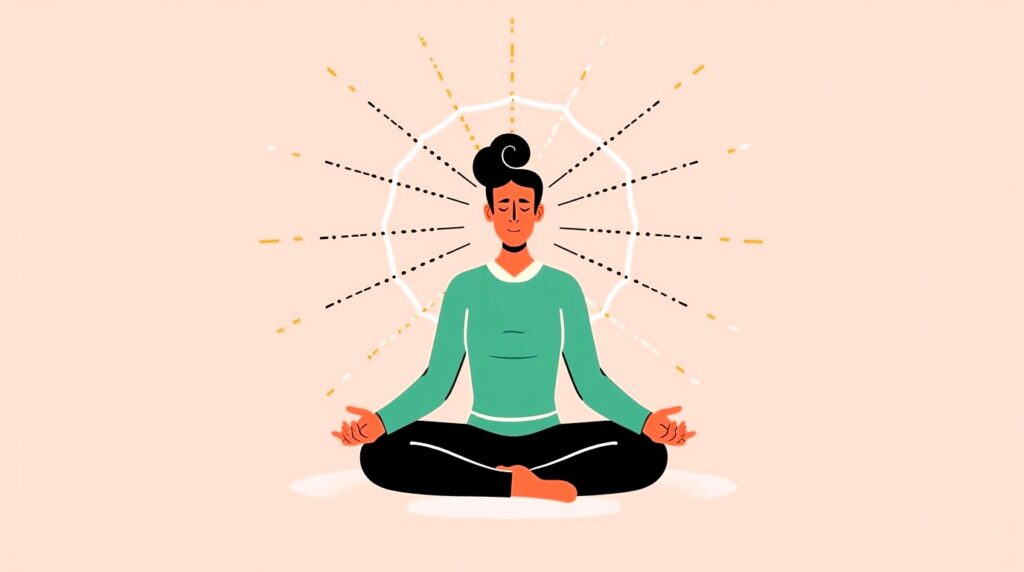
Meditation was never meant to empty your mind, especially not a stressed or anxious one.
If your thoughts feel chaotic during meditation, that doesn’t mean you failed.
It means your nervous system finally stopped pretending everything was fine.
Feeling overwhelmed by life’s daily pressures? Struggling with stress and anxiety that fills your mind and drains your energy? You’re not alone. In today’s fast world, many face stress and emotional challenges. But, there’s a simple, powerful way to find peace and control: mindful meditation.
Research shows even 10 minutes of meditation can be beneficial. It can lower breathing rate, cortisol, heart rate, and inflammation. A study at the University of Waterloo found mindfulness meditation improved focus better than listening to an audiobook. Mindfulness changes the brain over time, helping it handle negative emotions better.
Regular mindfulness practice increases awareness and acceptance of negative feelings. This leads to healthier coping and less anxiety through enhanced emotional regulation.
What Meditation Really Is (In Plain Language)
Meditation is not about becoming calm.

It’s about changing how you respond to discomfort.
Stress and anxiety don’t come from thinking too much.
They come from fighting your thoughts all day.
Meditation ends that fight not by control, but by permission.
Why Meditation Helps Stress & Anxiety (What Research Shows)
Gentle, consistent meditation has been shown to:
- Lower cortisol (the stress hormone)
- Regulate breathing and heart rate
- Activate the parasympathetic nervous system (your body’s “safe mode”)
- Improve emotional regulation and focus
But the most important benefit is this:
Meditation teaches your body that pausing is safe.
For anxious minds, that lesson is life-changing.
An Important Truth: Anxiety Needs a Different Approach
Traditional meditation advice can actually worsen anxiety.
Why?
- Long silence can feel threatening
- Closing eyes may trigger panic
- “Clear your mind” creates pressure
If you live with anxiety, meditation should be:
- Short
- Grounded
- Body-based, not thought-based
Calm grows from safety, not force.
A Real-Life Moment You’ll Recognise
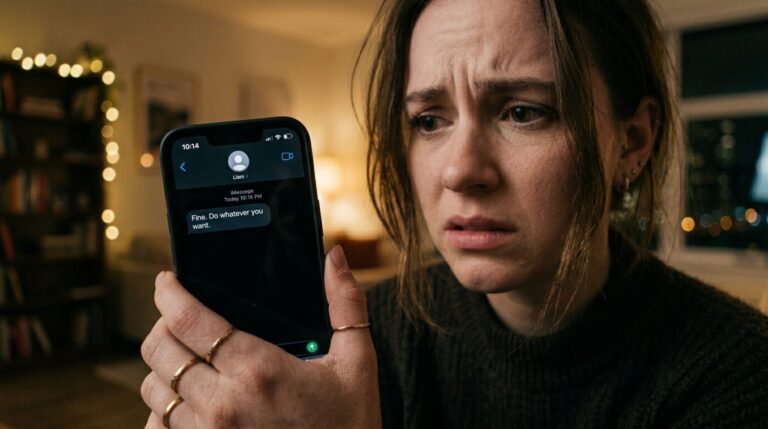
Sara sits at her desk.
Inbox overflowing.
Heart racing.
Chest tight.
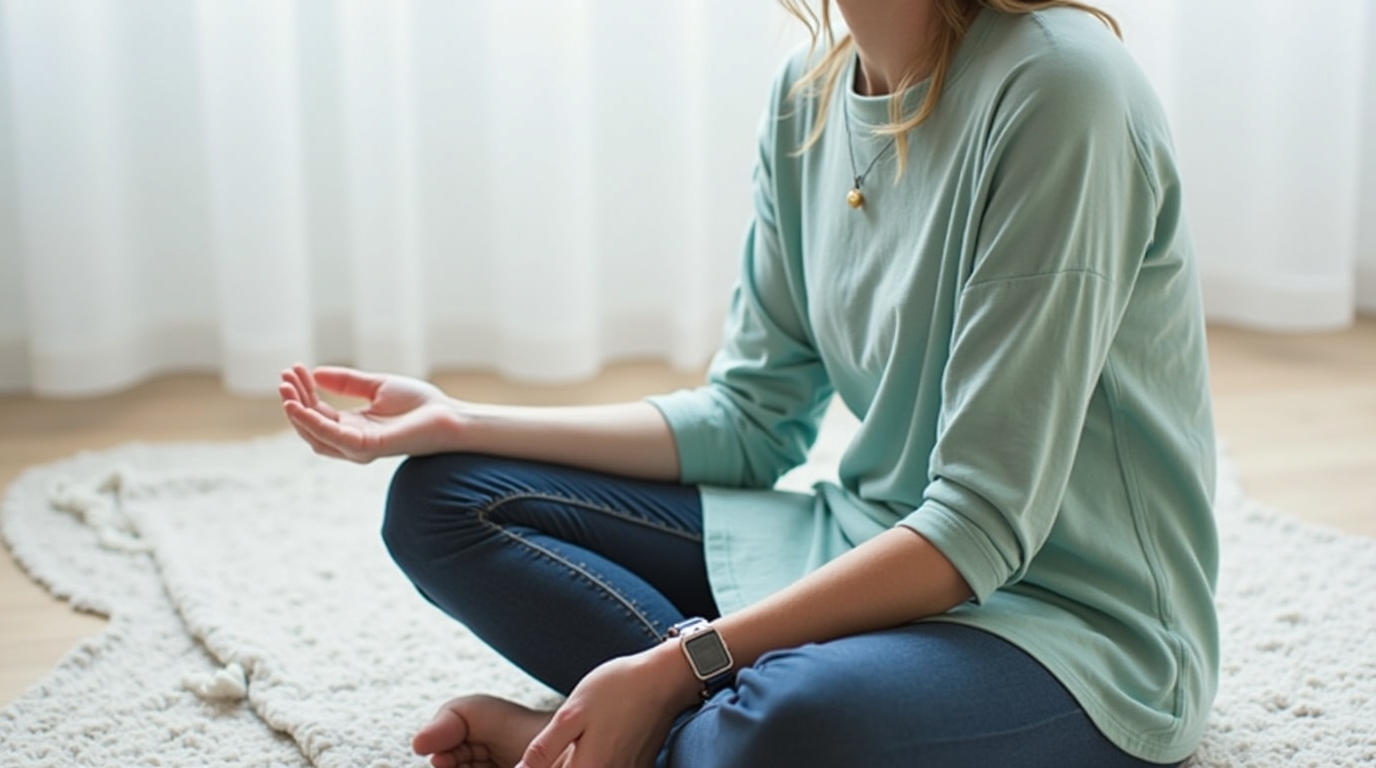
She doesn’t sit cross-legged.
She doesn’t chant.
She doesn’t chase calm.
She simply:
- Feels her feet on the floor
- Takes one slow breath
- Notices the chair supporting her body
Two minutes later, the anxiety hasn’t disappeared.
But it has softened.
That’s meditation.
Simple Meditation Practices That Actually Help
Counted Breathing (1–2 minutes)
Inhale — 1
Exhale — 2
Count up to 10.
Lose count? Start again.
That’s not failure, that’s training attention.
Body Noticing (No Fixing)
Scan your body:
- Jaw
- Shoulders
- Chest
- Hands
Notice tension.
Don’t change it.
Awareness alone lowers stress signals.
Eyes-Open Meditation (Best for Anxiety)
Look at one object:
- A mug
- A plant
- A window
Notice colour, shape, texture.
This anchors the mind without triggering fear.
Beginner’s Guide for Anxious Minds
If you’re new to meditation and anxiety is your daily companion, remember this:
- You don’t need silence
- You don’t need long sessions
- You don’t need a “calm” mind
Start with:
- 30 seconds
- Eyes open
- One sensation (breath, feet, hands)
If anxiety rises, stop.
Ground yourself.
Safety always comes first.
Meditation should feel supportive, not punishing.
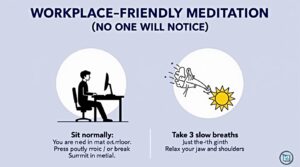
Workplace-Friendly Meditation (No One Will Notice)
You don’t need a mat, room, or break.
Try this at work:
- Sit normally
- Press your feet gently into the floor
- Take 3 slow breaths
- Relax your jaw and shoulders
You can do this:
- In meetings
- At your desk
- During calls
It resets your nervous system without drawing attention.
The 5-Minute Emergency Calming Routine
When stress or anxiety hits suddenly:
Minute 1:
Name 3 things you can see
Minute 2:
Take slow breaths (in 4, out 6)
Minute 3:
Feel your feet or hands
Minute 4:
Relax your jaw and shoulders
Minute 5:
Say silently: “I’m safe right now.”
This isn’t meditation perfection.
It’s a nervous system first aid.
What If Thoughts Get Louder?
Good.
That means you’re present.
Meditation isn’t about stopping thoughts.
It’s about not chasing them.
Each time you notice and return, you build emotional resilience.
Why Meditation Doesn’t Feel Calm Right Away
Because:
- Stress builds over the years
- Anxiety is protective, not broken
- Healing is safety over time, not instant relief
Meditation isn’t a pill.
It’s creating space for recovery.
How This Fits Into the Mental Health Series
In earlier articles, we explored:
- Anxiety without a cause
- Emotional numbness
- Mindfulness without silence
Meditation supports all of them.
Not as a cure.
But as a steady companion.
Frequently Asked Questions
1. Is meditation safe for anxiety?
Yes, when it’s gentle and flexible.
2. How long should I meditate?
Even 1–5 minutes is effective.
3. Do I need to sit still?
No. Walking or seated awareness works.
4. What if meditation increases anxiety?
Stop. Ground in the body. Safety first.
5. Can meditation replace therapy?
No, but it supports it well.
6. Is meditation religious?
No. It’s a mental health skill.
A Gentle Ending
Meditation isn’t a discipline.
It isn’t performance.
It isn’t control.
It’s an invitation.
“For a moment, stop running from yourself.”
Stress shouts.
Anxiety rushes.
Meditation doesn’t argue.
It listens.
And sometimes,
That’s where calm quietly begins
Disclaimer: The content in this article Emotional Resilience at Work, is intended for informational and educational purposes only. It provides insights, tips, and general guidance on health, beauty, and wellness, but it is not a substitute for professional medical advice, diagnosis, or treatment.
Always consult a qualified healthcare professional for personal medical concerns. For more information about our approach to health and wellness content, please read our Health & Wellness Disclaimer.