
Healthy Parenting Daily Habits: Small Actions, Lifelong Impact
Healthy parenting, daily habits, small Actions, Lifelong Impact. Parenting is rarely shaped by dramatic decisions. It is built quietly in how you speak during the morning rush, how you listen after school, and how you respond when your child makes a mistake.
These small, daily habits may seem ordinary, but over time, they shape a child’s emotional security, physical health, and lifelong resilience.
https://mrpo.pk/healthy-parenting/
Why Daily Parenting Habits Matter More Than Ever
In today’s fast-paced world, children face pressures their parents never did: screen addiction, over-scheduled days, social comparison, and emotional overload. Even small parental missteps like inconsistent rules, shouting in stress, or ignoring emotions can quietly erode trust.
Building healthy daily habits helps children navigate these challenges safely. Simple, consistent routines act as an anchor for their emotional well-being and model the self-discipline they will need as adults. The goal is not perfection, but presence and predictability, and it starts with tiny, daily actions.
Positive parenting tips for babies and children ages 0-5
Gentle discipline made easy: Tips from UNICEF Parenting Experts
Positive parenting is all about building a strong, caring relationship with your child and gently guiding their behaviour.
It means setting clear, consistent, age-appropriate limits with kindness and respect. It also includes sharing the role of parenting — working together as a team, whether you’re a mother, father, or caregiver. This helps children learn the value of equality and respect by seeing it in their everyday lives.
Positive parenting helps your child feel safe and understood. It helps them develop independence and feel deeply connected to you.
https://www.unicef.org/eap/place-for-parents/positive-parenting-tips-0-5
What Children Remember Most
📌 Author’s Reflection: Small Joys, Lifelong Imprints
As a child of six or seven, I once went to sleep on the night of Eid moon sighting feeling dejected. Eid was just a day away, yet my siblings and I had no clothes or shoes to celebrate. Our father was away, and his return seemed uncertain.
That night, something miraculous happened. My father made it back home. In the morning, I found a greenish three-piece suit with a necktie, my first ever. That single surprise turned that Eid into the happiest day of my childhood, a memory that remains vivid even after decades.
Years later, on Eid day, I handed my eight- or nine-year-old son a brand-new Rs. 1000 note as Eidi. His excitement was worth it as he ran to show it to his younger sisters. Watching his joy instantly transported me back to my own childhood happiness.
These moments remind us that children may forget the price of what they receive, but they never forget how deeply loved, secure, and joyful they felt. Small gestures, offered with presence and care, often leave the deepest and most lasting impressions.
Common Daily Habits That Quietly Harm Children
Many parents don’t realise the cumulative impact of small mistakes.
Examples include:
- Inconsistent rules: Children are confused when limits change unpredictably.
- Ignoring feelings while correcting behaviour: Discipline feels like rejection rather than guidance.
- Over-scheduling: Too many activities leave little room for rest, reflection, or play.
- Using screens as emotional pacifiers: Children learn to manage boredom or stress with technology, not skills.
The good news is these habits can be corrected one day at a time. Small adjustments create large long-term benefits.
1. Decide the Boundary Before the Moment
Unclear rules invite repeated testing. When boundaries are decided in the heat of the moment, they often come out as frustration instead of guidance.
Example:
Instead of reacting with:
“Turn it off now! How many times do I have to tell you?”
Decide earlier and state calmly:
“Screen time ends at 7 p.m. every day.”
Long-term impact:
Children who know the rules in advance feel safer and are more likely to respect boundaries. They learn to anticipate consequences and develop self-control, reducing the need for constant parental enforcement.
2. Model the Behaviour You Want to See
Children learn far more from what parents do than from what they say.
Example:
If a parent demands calm communication but raises their voice under stress, the lesson is lost.
If a parent pauses, breathes, and responds calmly, the child learns emotional regulation by observation.
Long-term impact:
Daily self-control quietly teaches children how to manage their emotions, respond to conflict, and develop patience — skills that last a lifetime.
3. Healthy Parenting Daily Habits: Offer Connection Before Correction
Discipline without connection feels like rejection. Connection first creates openness to learning.
Example:
“I can see you’re upset. Let’s talk.”
Then:
“Throwing toys isn’t okay.”
Long-term impact:
Children learn that mistakes or misbehaviour do not break relationships. Emotional trust strengthens, making them more receptive to guidance and feedback.
4. Prioritise Sleep, Meals, and Movement
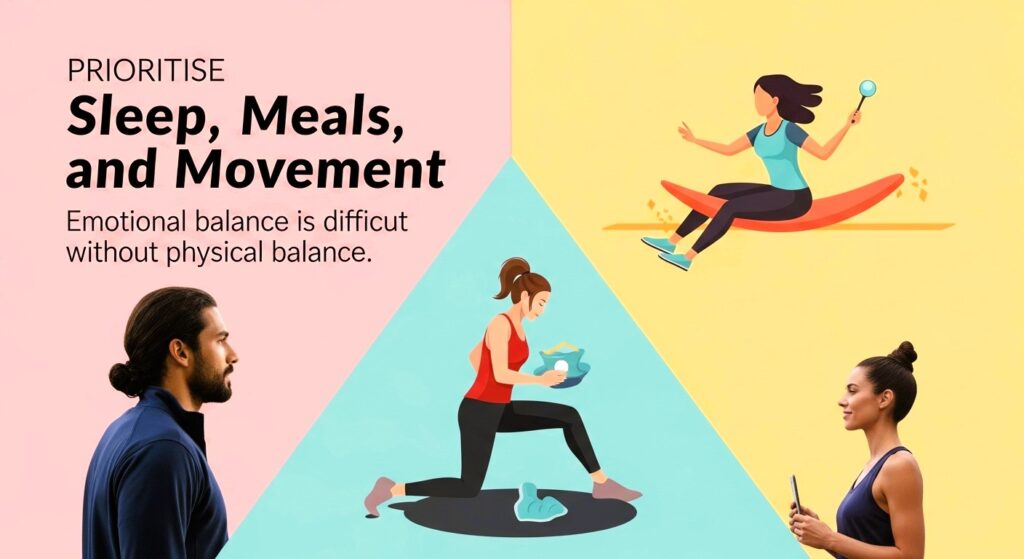
Emotional balance is difficult without physical balance.
Example:
A child who sleeps late, skips meals, or lacks physical activity is more likely to melt down than misbehave.
Long-term impact:
Healthy routines prevent mood swings, improve focus, and reduce behavioural problems. Children internalise the importance of taking care of their bodies alongside their emotions.
5. Repair After Mistakes
No parent is perfect. What matters most is what happens after a mistake.
Example:
“I shouldn’t have raised my voice earlier. I was frustrated, but I could have handled it better.”
Long-term impact:
Children see that adults take responsibility for their actions. They learn accountability, emotional honesty, and that relationships can recover after conflict, a crucial life skill.
What Our Elders Practised Without Naming It
Even before modern psychology, our forefathers intuitively practised effective parenting:
- Routine-based living: Meals, sleep, and chores were predictable, creating security.
- Respect without fear: Discipline was firm but never demeaning.
- Presence over performance: Children’s emotional needs came before tasks or achievements.
- Observation and modelling: Adults led by example, teaching values silently but powerfully.
These practices mirror modern insights: consistency, connection, and calm modelling are timeless.
A Simple Daily Parenting Habit Checklist: Healthy Parenting Daily Habits
Parents can review this list each day:
- Speak before correcting behaviour
- Set limits before conflict arises
- Prioritise sleep, meals, and movement
- Repair any tension or mistakes promptly
- Model calm and self-control
- Offer connection before discipline
Checking even a few items daily ensures a cumulative impact far greater than sporadic perfection.
FAQs About Daily Parenting Habits
1. How long before these habits show results?
Consistency matters more than speed. Emotional and behavioural changes usually appear in weeks but solidify over months.
2. Can small habits really change behaviour?
Yes. Children learn patterns, not lectures. Small repeated actions shape long-term emotional intelligence.
3. What if one parent is inconsistent?
Inconsistency slows progress, but clear agreements and shared routines reduce confusion.
4. Is discipline still necessary?
Yes, but framed as guidance after connection, not punishment.
5. How do habits differ by age?
Younger children need more routine; older children benefit from autonomy combined with predictable limits.
6. How can parents stay consistent?
Daily reflection, small checklists, and honest self-awareness are key.
Closing Thought Healthy Parenting Daily Habits
Parenting is a marathon, not a sprint. Small, consistent daily habits, setting boundaries, modeling behavior, connecting emotionally, prioritising physical needs, and repairing mistakes quietly shape children into emotionally secure, resilient, and confident adults.
You don’t need to be perfect. You only need to be present consistently.
Disclaimer: The content in this article is intended for informational and educational purposes only. It provides insights, tips, and general guidance on health, beauty, and wellness, but it is not a substitute for professional medical advice, diagnosis, or treatment.
Always consult a qualified healthcare professional for personal medical concerns. For more information about our approach to health and wellness content, please read our Health & Wellness Disclaimer.