Forest Bathing Shinrin-Yoku: How Forest Bathing May Calm a Tired Mind
Forest Bathing Shinrin-Yoku: Discover the science behind Shinrin-yoku, Japan’s forest-bathing practice, and how time among trees may reduce stress and support mental well-being.

What if your tired mind does not need another productivity hack? What if it needs fewer notifications, less concrete, and a little more green?
For decades, Japan has studied a surprisingly simple idea: spending quiet, mindful time among trees may help the human body and mind recover from modern stress.
The practice is called Shinrin-yoku, usually translated as forest bathing.
It does not mean taking a bath in a forest. It means slowing down and allowing the forest to become the environment you actually experience, rather than scenery you rush past.
And unlike many wellness trends, forest bathing has attracted serious scientific attention.
But there is an important catch.
The science is promising, not magical.
Forest bathing is not a cure for depression, hypertension, cancer, insomnia, or any other disease. Yet research suggests that spending time in natural environments may influence stress, mood, heart rate, blood pressure, attention and other aspects of physical and psychological well-being.
What Is Shinrin-Yoku?
Shinrin-yoku was introduced in Japan in 1982 as a public-health approach encouraging people to spend time in forests.
The basic idea is beautifully simple:
Go into the forest. Slow down. Leave the rush behind. Use your senses.
You do not need to climb a mountain.
You do not need to run.
You do not even need to walk very far.
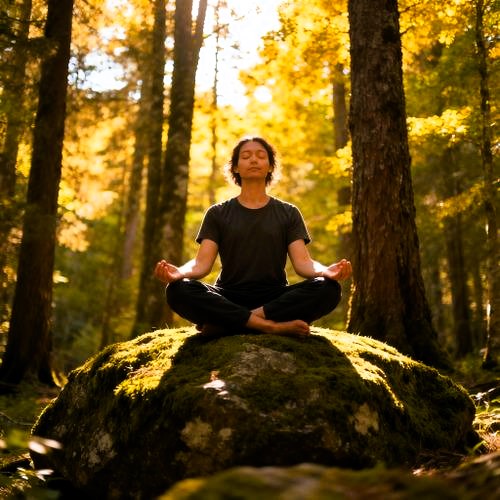
You can sit beneath a tree and listen to birds.
Notice the smell of leaves.
Feel the texture of bark.
Watch sunlight move through branches.
Listen to wind rather than traffic.
The objective is not achievement.
It is immersion.
What Does Science Say?
Some of the earliest Japanese physiological research compared people spending time in forests with people in urban environments.
One well-known study examined 280 young men across 24 forests. Forest exposure was associated with lower concentrations of the stress hormone cortisol, slower pulse rates, lower blood pressure and greater parasympathetic nervous system activity.
These findings helped establish an important scientific question:
Can the environment around us influence the way our nervous system behaves?
The answer appears to be yes, at least to some extent.
But that does not mean every forest visit produces the same physiological response.
Different studies use different forests, durations, participants and measurements. Some evidence is stronger than others.
That distinction matters.
Forest Bathing and Stress
Stress is one of the areas where forest bathing has attracted the most research. When we experience prolonged stress, the body repeatedly activates systems designed to deal with danger. Heart rate can rise, muscles remain tense and stress hormones such as cortisol can increase. A quiet natural environment may provide the opposite kind of signal.
Less traffic.
Less artificial noise.
Fewer visual demands.
More natural sounds.
More greenery.
Slower movement.
More opportunities for attention to wander without constantly being interrupted.
Several reviews have reported reductions in stress-related measures after forest exposure, including cortisol in some studies.
But the effect should not be exaggerated.
A forest is not a cortisol medication.
It may simply provide an environment in which the nervous system has fewer reasons to remain on high alert.
Your Nervous System Notices the Difference
The human nervous system does not operate independently of its surroundings.
A busy road, crowded office, constant notifications and artificial noise demand attention.
A quiet woodland asks considerably less of you.
This may help explain why natural environments are associated with relaxation and restoration.
Forest bathing can also involve slow walking, deeper breathing, daylight exposure and gentle physical activity.
So when researchers observe benefits, it is difficult to attribute every effect to one magical ingredient.
Nature works as an environment, not as a single chemical.
Can Forest Bathing Lower Blood Pressure?
Some studies have reported short-term reductions in blood pressure and heart rate after forest exposure.
Research involving people with hypertension has also suggested possible benefits.
However, systematic reviews have found limitations in the evidence, including small studies, differences in methodology and uncertainty about how large or durable the effects are.
So forest bathing should be viewed as a potential supportive lifestyle practice, not a replacement for blood-pressure medication, medical monitoring or dietary and exercise advice.
If your doctor prescribed medication, the forest does not get to cancel the prescription.
Nature is wonderful.
It is not a pharmacist.
The Forest Air Is More Than Oxygen
Here is where popular claims often get carried away.
Trees produce oxygen through photosynthesis. That is fundamental biology.
But walking into a mature forest does not mean suddenly breathing air containing dramatically more oxygen than ordinary outdoor air.
The atmosphere mixes continuously.
The more interesting question is what else changes.
Forested environments can alter temperature, humidity, shade, sound, light and exposure to traffic-related pollution. Vegetation can also interact with airborne particles and pollutants.
Trees and other plants release volatile organic compounds, including compounds known as terpenes.
These substances contribute to the distinctive smell of forests and have been studied for possible physiological effects.
So the scientific story is more interesting than the simple claim that forests give you “extra oxygen.”
The forest does not simply give your lungs more oxygen. It gives your senses a different world to process.
What Are Phytoncides?
The word phytoncide refers broadly to antimicrobial volatile substances released by plants.
Japanese researchers have investigated whether exposure to forest-derived compounds can influence human physiology.
Some experiments have reported changes in natural killer, or NK, cell activity following forest exposure.
NK cells are part of the immune system and help identify and destroy certain infected or abnormal cells.
This research is fascinating.
But it needs a reality check.
An increase in NK-cell activity in a research study does not mean that forest bathing prevents cancer, cures infections or guarantees stronger immunity.
Biological markers are not the same thing as clinical outcomes.
That distinction is often where wellness articles quietly leave science behind.
Can Forest Bathing Change Your Mood?
This is one of the more encouraging areas of research.
Systematic reviews and meta-analyses have examined forest bathing and other forms of forest therapy in relation to anxiety, depression and psychological stress.
Overall, many studies report improvements in mood-related measures.
But researchers also point out limitations.
Studies vary greatly in design.
Many involve relatively small groups.
Some are short-term.
And participants may already enjoy being outdoors.
So we should say:
Forest bathing may support psychological well-being.
We should not say:
Forest bathing cures depression or anxiety.
Someone experiencing significant or persistent mental health symptoms should seek appropriate professional care.
A walk among trees can be part of a healthy life.
It does not have to become a substitute for treatment.
Why Might Nature Help the Mind?
There may be several overlapping explanations.
Attention Restoration
Modern life constantly asks us to pay attention.
Emails.
Traffic.
Screens.
Messages.
Advertisements.
Deadlines.
Notifications.
Natural environments may provide what psychologists describe as a softer form of attention, allowing directed attention to rest.
Sensory Reset
A forest still contains sounds, movement, colours and smells.
But they are generally less demanding than the artificial sensory environment of a city.
Birdsong does not usually demand that you answer it.
Leaves do not send notifications.
A tree has never asked you to update your password.
Gentle Physical Activity
Forest bathing often involves walking.
Even slow walking provides some physical activity, which itself can influence mood, circulation and general health.
Daylight
Outdoor light also matters for circadian rhythms and sleep regulation.
So some benefits attributed to “the forest” may partly come from simply being outdoors during daylight.
This is not a weakness in the research.
It is a reminder that human health rarely has a single cause.
Shinrin-Yoku and Grounding: Similar, But Not the Same
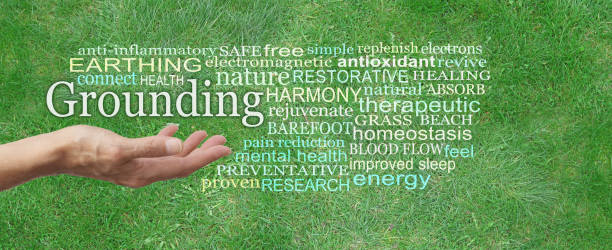
Forest bathing is sometimes confused with grounding, also called earthing.
They overlap in practice, but scientifically they are different ideas.

Shinrin-Yoku vs. Grounding
| Aspect | Shinrin-yoku (Forest Bathing) | Grounding / Earthing |
|---|---|---|
| Basic practice | Spending unhurried, mindful time in a natural environment, especially a forest | Direct physical contact with the Earth’s surface, usually by walking barefoot on grass, soil or sand |
| Main focus | Immersion in nature through sight, sound, smell, touch and awareness | Physical contact between the body and the Earth’s surface |
| Proposed mechanisms | Relaxation, reduced sensory overload, attention restoration, natural sounds, daylight, physical activity and possible exposure to plant compounds | Proposed transfer of electrons between the Earth’s surface and the body |
| Stress and mood | A growing research base suggests possible reductions in stress, anxiety and depressive symptoms | Some small studies report potential benefits, but the evidence base is considerably smaller |
| Heart and blood pressure | Some studies report short-term reductions in heart rate and blood pressure, but results are not uniform | Preliminary studies have reported physiological changes, but evidence remains limited |
| Immune effects | NK-cell activity and other biological markers have been studied, but their clinical significance remains uncertain | Claims involving inflammation and immunity remain preliminary |
| Mental well-being | Psychological benefits are among the more consistently reported findings | Any benefit may include effects of being outdoors, relaxation and mindful attention, in addition to the proposed grounding mechanism |
| Does it require a forest? | No. Woodlands, natural parks and other green environments can provide the experience | No. Grass, soil, or sand can provide direct contact with Earth’s surface |
| Does it require bare feet? | No | Usually, if the proposed direct-contact mechanism is being tested |
| Scientific evidence | Promising but still limited for many specific health outcomes | More preliminary, with important questions about mechanisms and study quality |
| Can it replace medical treatment? | No | No |
The distinction is important.
Forest bathing has a broader research base because it involves an entire environment and several plausible pathways.
Earthing makes a more specific claim: that direct contact with the Earth’s surface may allow electrical charge or electrons to influence the body.
That mechanism remains much less established.
So walking barefoot under trees can certainly combine the two practices.
But that does not mean the scientific evidence for Shinrin-yoku automatically proves the claims made about earthing.
And there is another important distinction.
Psychological grounding is not the same thing as earthing.
Psychological grounding means bringing attention back to the present moment, often through the senses.
Earthing refers to the physical-contact theory.
The two should not be casually treated as the same intervention.
Does Forest Bathing “Rewire” the Brain?
You may encounter claims that forest bathing literally “rewires” the brain.
That is too strong.
The brain is constantly changing through experience, learning and adaptation. But showing that a few forest visits permanently rewire the brain would require much stronger evidence than currently exists.
What research can reasonably support is that natural environments may influence attention, stress responses, mood and physiological arousal.
That is already interesting enough.
Science does not need a miracle attached to it.
What About Sleep?
Some studies have reported improvements in sleep quality or sleep-related measures after exposure to forests and natural environments.
Possible explanations include reduced stress, physical activity, daylight exposure and relaxation.
But there is no established universal forest-bathing “dose” that guarantees better sleep.
If insomnia is persistent, painful or seriously affecting daily life, it deserves proper medical assessment.
How Long Should You Spend in a Forest?
There is no universally established prescription such as:
“Exactly two hours.”
“Walk exactly one kilometre.”
“Repeat every seven days.”
Research protocols vary considerably.
A better approach is to make the practice realistic.
Twenty quiet minutes is better than zero minutes.
An hour may be wonderful.
Several hours may be appropriate for some people.
The goal is not to turn relaxation into another performance target.
Do not create a productivity contest out of resting.
How to Practise Shinrin-Yoku
You can make your first forest-bathing session remarkably simple.
Step 1: Leave the Hurry Behind
Put the phone away or switch it to silent.
Do not turn the walk into a photography assignment.
Step 2: Slow Down
Walk slowly.
Stop frequently.
Sit if you want.
There is no prize for reaching the end first.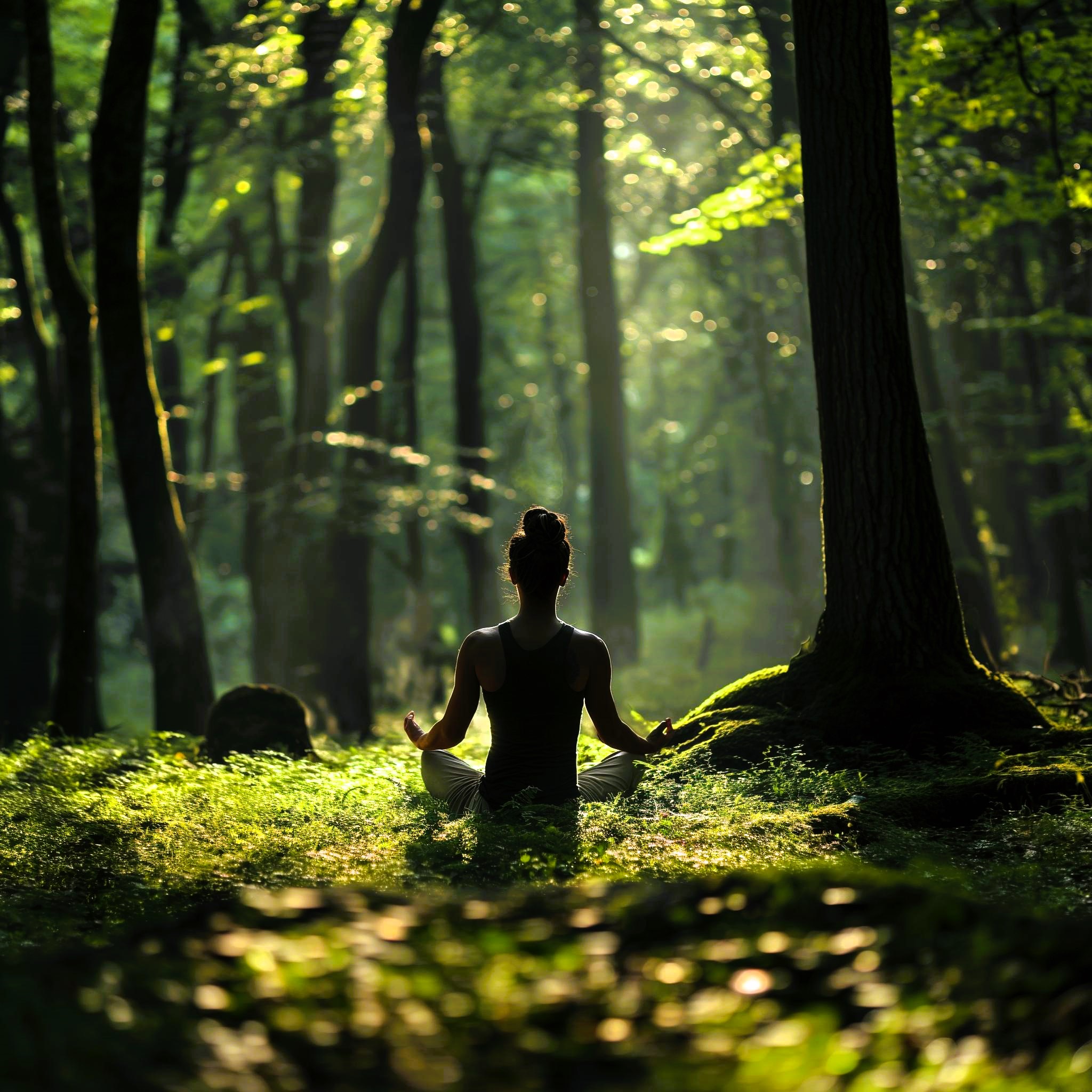
Step 3: Use Your Senses
Notice:
- What can you hear?
- What can you smell?
- What can you see?
- What can you touch safely?
- What does the air feel like?
- How does the temperature change under the trees?
Step 4: Breathe Normally
There is no need for exaggerated breathing exercises.
Simply allow your breathing to become slower and more comfortable.
Step 5: Stop Trying to Achieve Something
You do not need to “complete” nature.
Let the environment occupy your attention.
That is the point.
What About Pakistan?
Pakistan has no shortage of places where people can experiment with this idea.
The Margalla Hills around Islamabad, Ayubia and the forests around Nathia Gali offer very different natural environments.
But we should be careful with another common mistake.
We cannot automatically assume that every Pakistani forest has exactly the same chemical composition or health effects reported in Japanese cedar or cypress forests.
Tree species differ.
Climate differs.
Air pollution differs.
Altitude differs.
Human activity differs.
So the sensible claim is not:
“Pakistan’s forests have exactly the same medicinal properties as Japanese forests.”
The sensible claim is:
Pakistan has natural environments where people can practise the broader principles of forest bathing.
And frankly, that is enough.
The Japanese Idea of Yugen
There is another beautiful concept worth mentioning: Yugen.
It describes an appreciation of beauty and mystery that cannot be fully explained.
A mist-covered forest.
Sunlight disappearing between branches.
The sound of rain on leaves.
A distant bird calling from somewhere you cannot see.
Yugen reminds us that not everything valuable has to be measured immediately.
Modern life asks:
“What did you achieve?”
Nature sometimes asks a quieter question:
“Did you notice?”
Who Might Benefit?
Forest bathing may be particularly appealing to people who:
- spend much of the day indoors
- experience high levels of everyday stress
- work continuously with screens
- rarely spend time in natural environments
- enjoy walking but dislike formal exercise
- want a simple relaxation practice
- Need a break from constant digital stimulation
It may also be useful as one component of a broader healthy lifestyle.
Who Should Be Careful?
Forest bathing is generally a low-intensity activity, but “natural” does not automatically mean risk-free.
Consider:
- extreme heat
- dehydration
- ticks and insects
- poisonous plants
- uneven terrain
- falls
- poor air quality
- severe allergies
- wildlife
- getting lost
- walking alone in isolated areas
People with significant medical conditions should choose an appropriate level of physical activity and follow medical advice.
And if a forest environment is unsafe, a quiet park or garden can still provide many of the sensory and psychological elements of the practice.
You do not need a remote wilderness to benefit from being around greenery.
The Bigger Lesson
Perhaps the most interesting thing about Shinrin-yoku is not that trees supposedly contain a miracle cure.
They do not.
The deeper lesson is that human beings are biological organisms living inside environments.
Our bodies respond to light.
Sound.
Temperature.
Movement.
Air.
Social surroundings.
Stress.
Silence.
And probably far more environmental signals than we fully understand.
Modern life has become remarkably good at stimulating the human nervous system.
Forest bathing offers a deliberately different experience.
Less noise.
Less urgency.
Less artificial stimulation.
More natural sensory information.
More room to breathe.
That may be enough to explain part of its appeal.
A Simple Forest-Bathing Experiment
Next time you visit a wooded or green area, try this:
Leave your phone alone for 20 minutes.
Walk slowly.
Do not listen to music.
Do not count steps.
Do not photograph everything.
Notice five things you can see.
Four things you can hear.
Three things you can smell.
Two things you can physically feel.
Then simply sit.
No productivity.
No achievement.
No wellness competition.
Just trees.
You may discover that the mind does not always need another answer.
Sometimes it needs fewer questions.

Final Thought
Shinrin-yoku does not ask us to believe that trees are magical doctors.
It asks something much simpler:
What happens when we give the human nervous system a quieter place to exist?
Science is still working out the details.
But the evidence so far suggests that spending time in natural environments can support relaxation and may improve several aspects of psychological and physiological well-being.
So perhaps the forest is not a miracle cure.
Perhaps it is something more practical.
A place where the body can slow down, the senses can breathe, and the mind can remember that life existed before the notification arrived.
Frequently Asked Questions
1. What does Shinrin-yoku mean?
Shinrin-yoku is a Japanese practice commonly translated as “forest bathing.” It means spending quiet, mindful time in a forest or natural environment while consciously engaging the senses.
2. Is forest bathing scientifically proven?
Research suggests potential benefits for stress, mood, heart rate and some other physiological measures. However, the evidence varies in quality, and forest bathing should not be described as a proven treatment for disease.
3. Is forest bathing the same as grounding?
No. Forest bathing focuses on mindful immersion in nature. Grounding or earthing usually means direct physical contact with the Earth’s surface, often barefoot. They can overlap in practice, but their proposed mechanisms and evidence bases are different.
4. Does forest bathing increase oxygen in the body?
Trees produce oxygen, but forest air is not simply “extra oxygen.” Atmospheric mixing keeps oxygen concentration relatively stable. Other environmental factors, including vegetation, temperature, humidity, air quality, sounds and plant-derived compounds, may be more relevant to the forest-bathing experience.
5. Can forest bathing treat depression or anxiety?
Forest exposure may help reduce stress and improve mood, and research has reported reductions in anxiety and depressive symptoms in some studies. It should not, however, be considered a replacement for professional mental-health care when treatment is needed.
6. How long should I practise forest bathing?
There is no universally established duration. Even a short period of quiet, attentive time in nature may be worthwhile. The important principle is not a precise number of minutes but slowing down and engaging with the natural environment.
Medical Disclaimer
This article is for educational and general informational purposes only. Forest bathing may support relaxation and general well-being, but it is not a substitute for professional medical diagnosis, treatment or prescribed medication. Anyone with a medical or mental health
condition should consult an appropriate healthcare professional.
Author
Maj Hamid Mahmood (Retired)
MA Political Science, LLB, PGD HRM