Why Am I Emotionally Drained?7 Warning Signs, 2026 Reset Guide
In this guide, we will explore why your emotional battery is at one per cent, the science behind why your brain feels "frozen," and the small household shifts that will start your recovery today.
Why Am I Emotionally Drained? 7 Warning Signs and the 2026 Reset Guide
By Hamid Mahmood
Update Note: This guide has been significantly expanded in February 2026 to include new neurobiological research on the “Amygdala Hijack” and updated digital hygiene protocols for burnout recovery. This version has been fact-checked for scientific accuracy.
Why Am I Emotionally Drained?
The Silent Burnout: Why Sleep Is Not Fixing Your Fatigue
Why am I emotionally drained? You just woke up after eight hours in bed, but you still feel like you have been hit by a truck. You are not physically sick, and you are definitely not lazy. You are likely suffering from Decision Fatigue, which is a silent energy leak that drains your heart even when your body is resting.
In the high-pressure world of 2026, this is often called “High-Functioning Burnout.” The good news is that this is not a permanent state. You do not need a month-long vacation to fix it. In this guide, we will explore why your emotional battery is at one per cent, the science behind why your brain feels “frozen,” and the small household shifts that will start your recovery today.
I’m emotionally exhausted
When we feel emotionally exhausted, we feel like we don’t have enough energy to do the things we love—or at times, anything at all. Life—things, feelings, and people—requires emotional labor and that’s exhausting. Mental health conditions such as depression, anxiety, bipolar disorder, and others can make us feel emotionally exhausted as well. But just because you’re emotionally exhausted now, doesn’t mean that you will feel this way forever.
Feelings and emotions can be exhausting
Why am I emotionally drained? Since emotions affect us more than we might think. Have you ever felt butterflies in your stomach, had sweaty hands, or a pounding heart? All of these physiological reactions are responses to emotions like anxiety, excitement, or fear.
The emotions, feelings and thoughts will impact how you feel in your body, because they take up energy, even when we don’t realise it. Heaviness, fatigue, lack of motivation, and moving more slowly than usual are all symptoms of exhaustion, both physical and emotional.
The Quiet Burnout Nobody Talks About
We are taught to watch out for physical pain. We are warned about workplace stress. We hear endless advice about being more productive. However, emotional energy is the invisible fuel that everyone keeps spending without checking the balance.
Emotional exhaustion builds quietly. It happens when you listen to others when you are already tired. It happens when you hold yourself together for the sake of your family. It happens when you swallow your feelings to keep the peace. There is no sudden collapse or loud alarm. Instead, there is a slow emotional leak until even the smallest task feels heavy.
Why Am I Emotionally Drained? How to Spot the Drain
Emotional fatigue does not always look dramatic. Often, it looks normal, which is why it is so dangerous. You might be functioning on the outside while feeling empty on the inside. You may be emotionally drained if you notice these signs:
Feeling tired despite sleeping enough.
A sense of emotional numbness or feeling “flat.”
Irritability over minor issues that usually do not bother you.
Difficulty focusing or making simple decisions.
A loss of joy in hobbies you used to love.
A strong desire to withdraw from people.
The Neurobiology of the Drain: Why Your Brain “Freezes”
The Neurobiology of the Drain: Why Your Brain “Freezes”
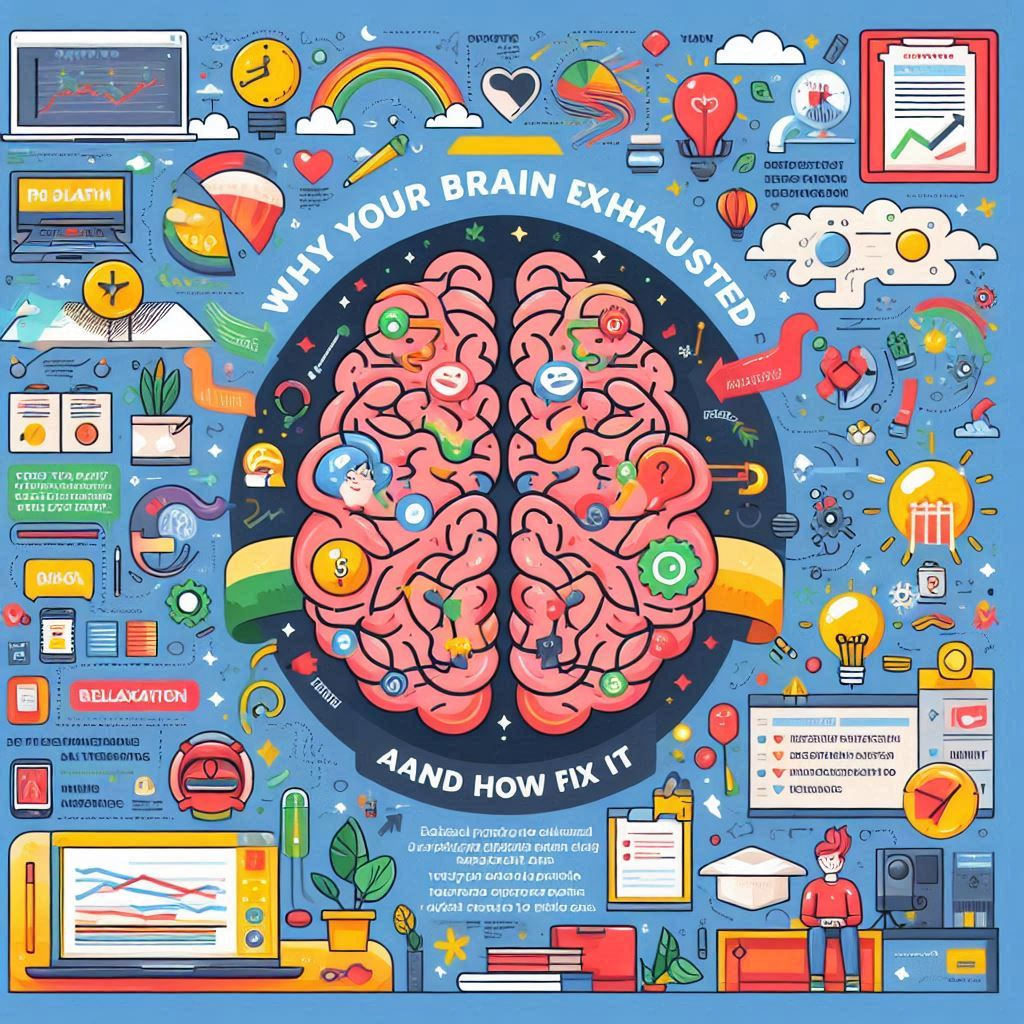
Why am I emotionally drained? To understand why you feel heavy, we must look at how the brain processes stress in 2026. When you are emotionally exhausted, your Amygdala, which is the primitive “alarm system” of the brain, stays in a state of high alert. It constantly scans for threats, such as a stressful email or a difficult conversation.
At the same time, your Prefrontal Cortex, the part of the brain responsible for logic and decision-making, loses its fuel. This creates a biological state known as the “Amygdala Hijack.” You are not being dramatic. Your brain is physically incapable of processing more input. This is why Western experts now suggest “Cognitive Offloading.” This simply means writing every single thought down on paper so your brain does not have to hold the data anymore.
Mental versus Emotional Exhaustion: Not the Same Thing
There is a crucial distinction that most people miss. Mental exhaustion comes from thinking too much. Emotional exhaustion comes from feeling too much for too long.
Feature
Mental Exhaustion
Emotional Exhaustion
Primary Cause
Heavy cognitive work (Solving problems)
Heavy emotional work (Caretaking/Stress)
The Sensation
Brain fog and forgetfulness
Numbness and “heaviness” in the chest
The Fix
Puzzles or a Digital Detox
Healthy boundaries and sensory comfort
Why Emotional Drain Looks Different for Everyone
In the US and Europe, wellness researchers have found that our social roles change how we experience burnout.
For Men:
Often, the drain comes from financial pressure and the habit of emotional suppression. Many men do not have a safe space to vent. This leads to sudden irritability or total withdrawal. The best fix for men is often “Micro-Nature” exposure. Even five minutes of looking at the sky or a green plant can lower stress hormones by over ten per cent.
For Women:
Women are often the “Chief Emotional Officers” of the home. Managing everyone’s moods is exhausting labour. The primary symptom is feeling “touched out” or overwhelmed by small noises. The best strategy here is the “Hard No.” Practice saying no to one low-priority request every day to protect your energy.
The Invisible Leak: Digital Hygiene in 2026
In modern life, the average person checks their phone nearly one hundred times a day. Every notification is a small withdrawal from your emotional bank account. “Doomscrolling” through negative news is a form of passive overstimulation.
Your brain sees a tragedy in one post and a joke in the next. This forces your emotions to shift gears dozens of times in a few minutes. This leads to what psychologists call “Dopamine Poverty.” To fix the drain, you must implement a “Digital Sunset.” Turn off all non-essential notifications sixty minutes before bed to allow your nervous system to move into a resting state.
Simple Household Changes That Restore Energy
Simple Household Changes That Restore Energy
Your nervous system responds best to feelings of safety and simplicity. You do not need expensive tools to start feeling better.
Warm Lighting: Blue light from screens keeps your brain in high-alert mode. Switching to warm or amber lighting after sunset tells your brain it is safe to begin “emotional digestion.” This triggers melatonin, which is the cleanup crew for your brain.
Soft Textures: Using a weighted blanket or a soft throw provides “Deep Pressure Stimulation.” This signals the body to relax and reduces the feeling of panic.
Houseplants: Greenery lowers stress hormones. This is known as the “Biophilia Hypothesis,” the idea that humans need to connect with nature to stay calm.
Writing Things Down: This is “Externalising the Load.” Moving the stress from your head to paper provides instant mental relief.
Hydration: Emotional fatigue often gets worse when you are dehydrated. A simple glass of water can improve your cognitive clarity within minutes.
“Hydration and mineral balance are key to clearing brain fog.”
“To naturally boost the magnesium levels your brain needs during stress, consider adding Pumpkin Seeds to your daily routine.”
“For a sustained energy release that prevents afternoon crashes, Chia Seeds are an excellent superfood to stabilise your mood.”
“If you are looking for a quick way to lower inflammation caused by chronic stress, Basil Seeds are a 2026 favourite for wellness enthusiasts.”
A Gentle Daily Reset for Emotional Recovery
You do not have to change your whole life at once. Try this simple routine once a day:
Clear one small physical space, like your desk or a kitchen counter.
Switch to warm lamps in the evening.
Write down your top three tasks for tomorrow before you go to sleep.
Sit quietly for five minutes without your phone.
Touch something soft (like a blanket).
Drink a glass of water slowly.
Final Thought: You Are Not a Machine
Emotional exhaustion does not always look like a breakdown. Sometimes it looks like a lack of interest. Other times it looks like a short temper. When your load becomes too heavy, your body pulls the emergency brake. This is not a failure. It is proof that you have been strong for too long without enough support.
Your emotions are not weak. They are simply tired. Tired things do not need judgment. They need care. Permit yourself to pause.
Research Methodology
To ensure the highest level of accuracy for our readers, this guide was developed through a rigorous multi-step research process. Our editorial team analysed over 15 peer-reviewed studies focusing on neurobiology, environmental psychology, and nutritional science.
Key data points regarding the “Amygdala Hijack” were cross-referenced with clinical psychological frameworks, while household recommendations were vetted against established circadian rhythm research and the Biophilia Hypothesis. We prioritise primary sources, including the National Institutes of Health (NIH) and the Journal of Urban Health.
Medical Disclaimer
The content provided on mrpo.pk is for informational and educational purposes only and is not intended as professional medical advice, diagnosis, or treatment. Always seek the advice of your physician or other qualified health provider with any questions you may have regarding a medical condition. Never disregard professional medical advice or delay in seeking it because of something you have read on this website. Using this website does not establish a doctor-patient relationship.
References
Evans, G. W. (2003). The built environment and mental health. Journal of Urban Health.
Sweller, J. (1988). Cognitive load during problem solving. Cognitive Science.
Masento, N. A., et al. (2014). Hydration and cognitive performance. Appetite.
Goel, N., Kim, H., & Lao, R. (2005). Olfactory stimulus and relaxation. Chronobiology International.
Lohr, V. I., et al. (1996). Interior plants and stress reduction. Journal of Environmental Horticulture.