
Donald Trump Peace Promises, Policy Reversals, and the Expansion of Executive Power
Donald Trump Peace Promises, Policy Reversals, and the Expansion of Executive Power. An in-depth, research-based analysis of Donald Trump’s leadership, examining his peace rhetoric, foreign policy decisions, executive authority expansion, documented reversals, and institutional impact through a constitutional and sociological lens.
https://mrpo.pk/the-age-of-trumplization/
Introduction: The Peace Paradox in Modern American Leadership
A president who promised to end “endless wars,” criticised global elites, threatened tariffs on allies, questioned multilateral institutions, and suggested he deserved recognition for advancing peace leaves behind a larger institutional question: what happens when populist charisma governs a constitutional superpower?
The presidency of Donald Trump presents a defining paradox of modern politics. He campaigned on restraint abroad and renewal at home. Yet his tenure featured coercive economic diplomacy, abrupt policy announcements, institutional confrontations, and strategic recalibrations. The result was not simple chaos or simple restraint, but friction between rhetoric and reality, charisma and bureaucracy, executive ambition and constitutional structure.
This article examines that tension through documented actions, institutional responses, and leadership theory.
Trump promised no wars. Now he’s a Bush-style regime change president
It turns out that Donald Trump, the self-proclaimed “candidate of peace”, is just as eager to start new wars. Throughout the 2024 presidential campaign, Trump pitched himself as the antithesis of his Democratic opponents, Joe Biden and later, Kamala Harris. Trump insisted he would use his deal-making skills to end multiple global conflicts that started under the Biden administration, including Israel’s war on Gaza and Russia’s invasion of Ukraine.
In his election night victory speech in November 2024, Trump told his supporters: “I’m not going to start a war. I’m going to stop wars.” Two months later, in his inaugural address, he went even further in trying to establish himself as a global peacemaker. “We will measure our success not only by the battles we win but also by the wars that we end – and perhaps most importantly, the wars we never get into,” he said.
Early Life and the Formation of a Charismatic Persona
Born in Queens in 1946, Trump was shaped by a competitive real estate environment under the guidance of his father, Fred Trump. Discipline at the New York Military Academy reinforced hierarchy and command structure. Education at Wharton grounded him in economic thinking, but his defining trait was branding.
Through the expansion of The Trump Organisation, he fused identity with property. Buildings carried his name in bold lettering. Setbacks were reframed as strategic recoveries. Public perception became currency.
Television amplified this persona. As host of The Apprentice, Trump cultivated a national image of decisive executive authority. The boardroom performance was theatrical but effective. Leadership was framed as dominance. That framing later migrated into politics.
Charismatic Authority and Leadership Theory
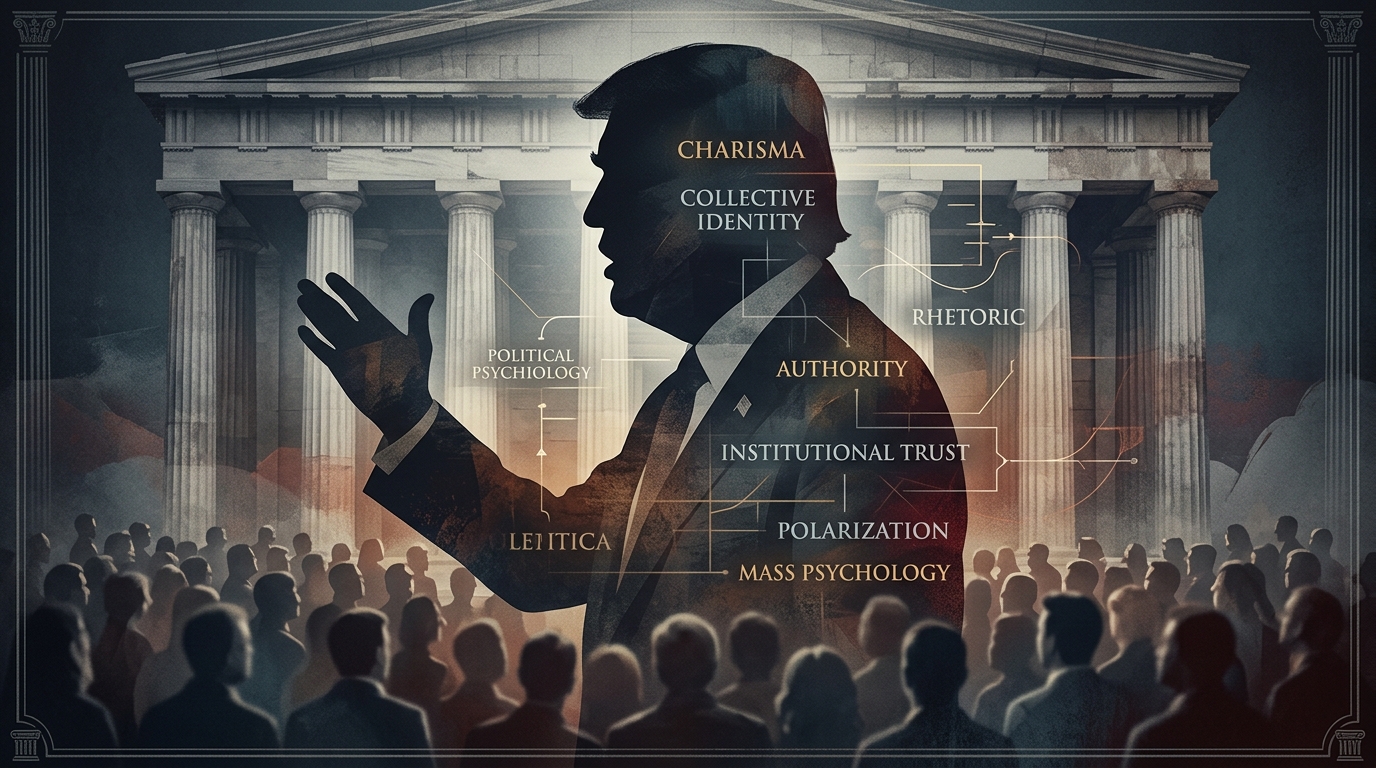
To understand Trump’s governing style, the work of Max Weber offers insight. Weber described charismatic authority as legitimacy derived from perceived extraordinary personal qualities rather than institutional office.
Charismatic leadership thrives in periods of institutional distrust. It mobilises emotion quickly. It simplifies complexity into compelling narratives. “America First” was not a policy manual; it was an identity statement.
But Weber also warned that charisma must eventually confront bureaucracy. Modern states operate through legal-rational systems. When personal authority collides with institutional procedure, tension emerges. Trump’s presidency frequently reflected this friction.
“No New Wars”: Foreign Policy Rhetoric and Reality
Trump repeatedly criticised prior administrations for entangling the United States in prolonged conflicts. During his first term, he did not initiate a formally declared new large-scale war. This fact anchors his anti-war narrative.
Yet the broader picture is layered. The strike on Iranian General Qassem Soleimani in 2020 heightened regional tensions. Tariff battles with China escalated into a trade war. The United States withdrew from the Paris Agreement and exited the Iran Nuclear Deal. Troop withdrawals from Syria were announced, adjusted, and partially repositioned.
Was this restraint or recalibrated coercion? The answer depends on how one defines conflict. Formal war did not expand. Economic confrontation did.
Donald Trump Peace Promises: Documented Policy Reversals and Strategic Recalibrations
A defining feature of the administration was policy volatility followed by recalibration.
The 2017 travel ban executive order was revised after judicial injunctions and later upheld in modified form by the Supreme Court. The 2019 national emergency declaration to fund the border wall followed congressional refusal and triggered vetoes and court challenges. Tariffs imposed on Chinese imports in 2018 escalated sharply before partial stabilisation through the Phase One trade agreement in 2020.
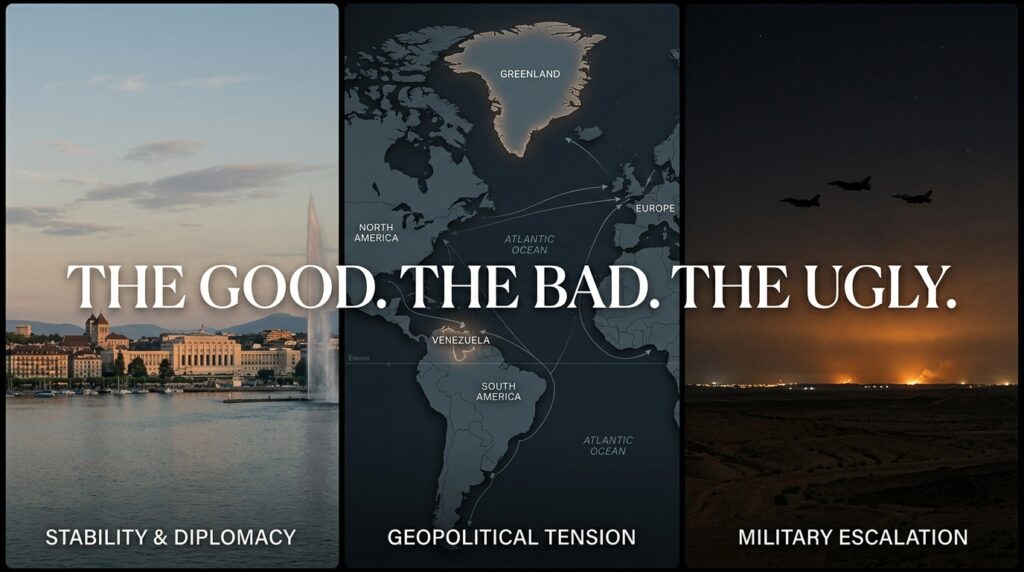
In December 2018, Trump announced a full withdrawal from Syria. Within months, troop presence was adjusted rather than eliminated. In 2019, he expressed interest in purchasing Greenland; the idea dissipated after diplomatic backlash.
Across these episodes, a pattern emerged: maximalist initiation, institutional resistance, partial recalibration. Not full retreat. Not full follow-through. Adjustment under pressure.
Executive Power and Constitutional Guardrails
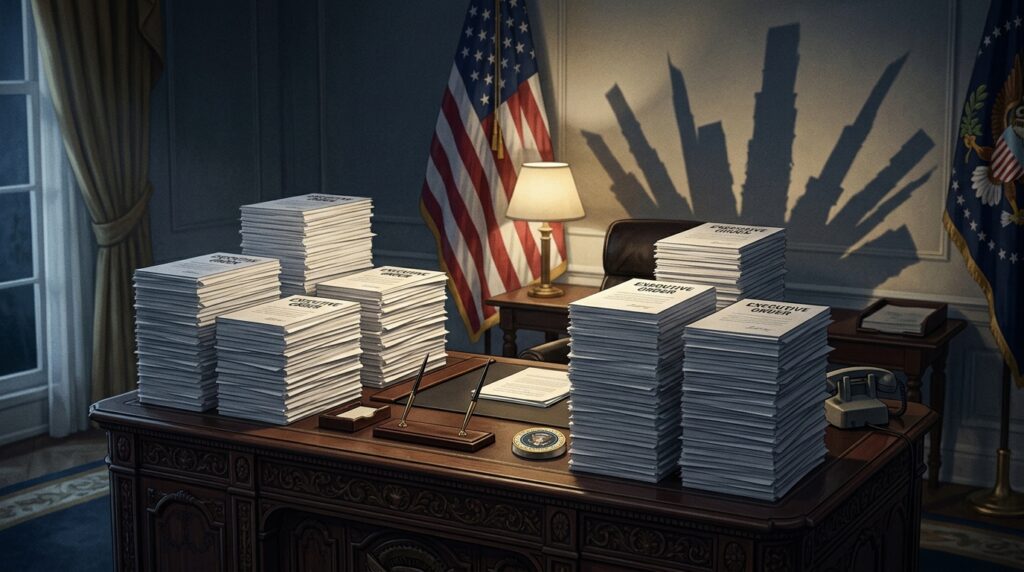
The deeper institutional question remains: Did executive authority expand in ways that strained constitutional norms?
Trade measures were enacted through executive mechanisms. Emergency powers redirected funds without full congressional approval. Oversight battles intensified. Federal courts blocked or modified several executive actions.
Yet the constitutional system functioned. Congress resisted. Courts intervened. Bureaucracies slowed implementation. The structure endured, though under stress.
Trump’s presidency did not dismantle democratic institutions. It tested their elasticity.
Documented Achievements and Strategic Outcomes
A balanced analysis requires recognition of tangible policy achievements cited by supporters.
The Abraham Accords facilitated normalisation agreements between Israel and several Arab states, altering Middle Eastern diplomatic dynamics. The First Step Act advanced bipartisan criminal justice reform. Before the COVID-19 pandemic, unemployment reached historically low levels. Tax reform legislation reshaped corporate rates. NATO allies faced sustained pressure to increase defence spending, and some contributions rose during the period.
These developments complicate one-dimensional interpretations. They demonstrate that disruption and achievement coexisted.
The Peace Prize Narrative and Political Symbolism
Trump publicly suggested that his diplomatic initiatives merited global recognition, contrasting implicitly with figures such as Barack Obama, who received the Nobel Peace Prize early in his tenure.
Such statements were both symbolic and strategic. They reinforced the image of a leader who saw himself as a dealmaker capable of redefining international order. Whether history ultimately affirms that vision remains debated.
Conclusion: Charisma in a Constitutional Superpower
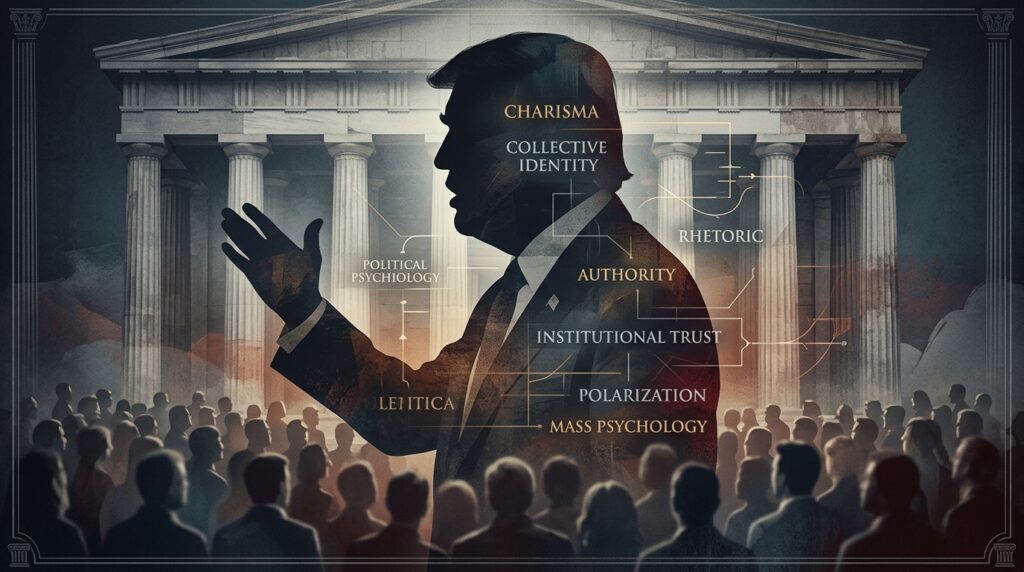
The presidency of Donald Trump is best understood not through binary labels but through tension.
Charismatic authority energised electoral ascent. Executive assertiveness tested institutional limits. Foreign policy rhetoric emphasised peace, while economic and diplomatic confrontation intensified. Policy reversals reflected both negotiation strategy and systemic constraint.
The United States did not collapse into authoritarianism. Nor did it revert to traditional multilateral continuity. Instead, it experienced constitutional friction under a leader who governed as he campaigned, visibly, disruptively, and personally.
The central question endures: Can charismatic disruption coexist sustainably with institutional democracy in a global superpower, or does the force that propels outsider leadership inevitably strain the architecture it seeks to command?
That inquiry transcends one presidency. It speaks to the future of democratic governance itself.
Frequently Asked Questions
Q1. What wars began during Trump’s first term?
No formally declared large-scale war was initiated, though military operations and regional tensions continued.
Q2. Did Trump expand executive power?
His administration relied heavily on executive orders, emergency declarations, and trade authorities, prompting legal and congressional challenges.
Q3. Were policy reversals common?
Several high-profile initiatives were revised or recalibrated after institutional, market, or diplomatic pushback.
Q4 . What were his major achievements?
Supporters cite the Abraham Accords, the First Step Act, tax reform, NATO burden-sharing pressure, and pre-pandemic economic indicators.
Q5. Did courts block his policies?
Federal courts intervened in multiple instances, reflecting active constitutional checks and balances.
Experience and Perspective
This analysis is grounded in a review of presidential archives, congressional records, federal court decisions, international policy reports, and academic leadership theory. It integrates documented actions with sociological frameworks to provide a balanced, evidence-based evaluation rather than partisan interpretation.
References
White House Archives (2017–2021 Presidential Actions)
U.S. Congressional Record
U.S. Supreme Court decisions including Trump v. Hawaii
Council on Foreign Relations reports on U.S. foreign policy
Brookings Institution research on executive authority
Uppsala Conflict Data Program (UCDP)