
Small Daily Habits That Quiet the Mind: A Gentle Way to Heal Without Pressure
Some days, you’re not broken.
You’re just… loud inside.
Your mind jumps from one worry to another.
Your body is present, but your thoughts are everywhere.
And the worst part? Everyone keeps telling you to “relax”, as if calm were a switch you forgot to turn off.
https://mrpo.pk/grief-you-never-acknowledged/

Healthy Habits to Build A Peaceful Life
Inner peace is crucial to leading a better and healthier life. Below are the top healthy habits that a person can integrate for a better mental well-being.
Here’s a quieter truth most people don’t hear:
Healing the mind doesn’t always begin with big decisions.
It often starts with small, gentle habits that tell your nervous system: “You’re safe.”
No fixing your life.
No dramatic transformations.
No pressure.
Just simple, repeatable moments that slowly quiet the noise.
Why the Mind Feels Loud All the Time
Modern life keeps the brain in constant alert mode.
Messages. News. Expectations. Responsibilities.
Even rest feels productive now.
From a neuroscience perspective, this keeps the brain stuck in a stress-response loop, where the body releases cortisol (the stress hormone) even when there’s no immediate danger.
Over time, this leads to:
- Mental fatigue
- Emotional irritability
- Poor focus
- Feeling “on edge” without knowing why
The mind isn’t weak.
It’s overstimulated.
The Mistake Most People Make When Trying to Heal
We assume mental calm requires:
- Perfect routines
- Expensive wellness tools
- Extreme discipline
- Constant positivity
That belief alone creates pressure, which adds stress instead of removing it.
But research in behavioural psychology shows that small, low-effort habits practised consistently are more effective than big changes that feel overwhelming.
Healing works best when it feels safe, not demanding.
Small Daily Habits That Actually Quiet the Mind
These habits don’t fix everything overnight.
They lower the volume and that’s where healing begins.
1. Start the Morning Without Information
What most people do:
Wake up → phone → news → messages → stress.
What helps instead: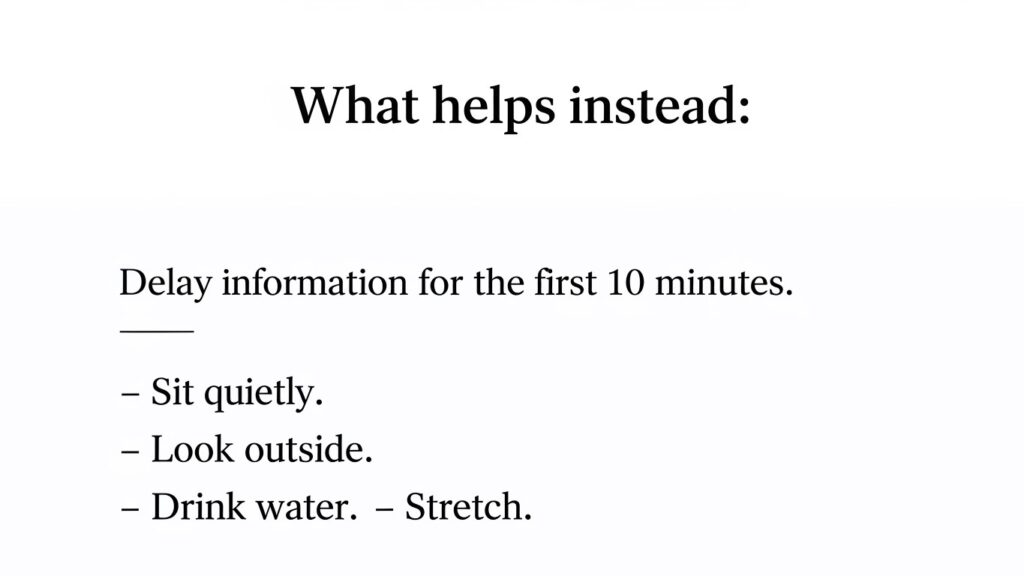
Delay information for the first 10 minutes.
Sit quietly.
Look outside.
Drink water.
Stretch.
Real-life example:
A teacher in Lahore stopped checking WhatsApp groups before work. Within a week, her mornings felt less rushed — without changing anything else.
This habit signals the brain: “I’m not in danger yet.”
2. Do One Thing Slowly on Purpose
Speed trains anxiety.
Slowness retains safety.
Choose one daily task and slow it down:
- Drinking tea
- Folding clothes
- Washing dishes
No multitasking. No phone.
Why it works:
Slowing movement activates the parasympathetic nervous system, which calms the body.
You’re not wasting time.
You’re resetting your nervous system.
3. Reduce Visual Noise (Not Your Responsibilities)

A cluttered space quietly overloads the brain.
You don’t need minimalism.
Just less visual chaos.
Try this:
- Clear one table
- Put loose items into a basket
- Reduce harsh lighting
Simple truth:
When your eyes rest, your mind follows.
4. End the Day With a “Mental Unload”
The mind stays loud because it’s holding too much.
Before sleeping, write down:
- What bothered you today
- What you’ll handle tomorrow
No solutions needed.
Think of it like this:
You’re telling your brain, “You don’t have to remember everything tonight.”
Sleep improves when the mind feels heard.
5. Touch Something Soft Every Day
This sounds simple — because it is.
Soft textures (blankets, cushions, rugs) send safety signals to the brain.
That’s why people hug pillows when stressed.
Especially helpful for:
People who feel emotionally exhausted, lonely, or numb.
6. Get Sunlight Without a Goal
Not exercise.
Not productivity.
Just sunlight on your face for 5–10 minutes.
This helps regulate:
- Mood
- Sleep cycles
- Stress hormones
Your body understands light better than motivation.
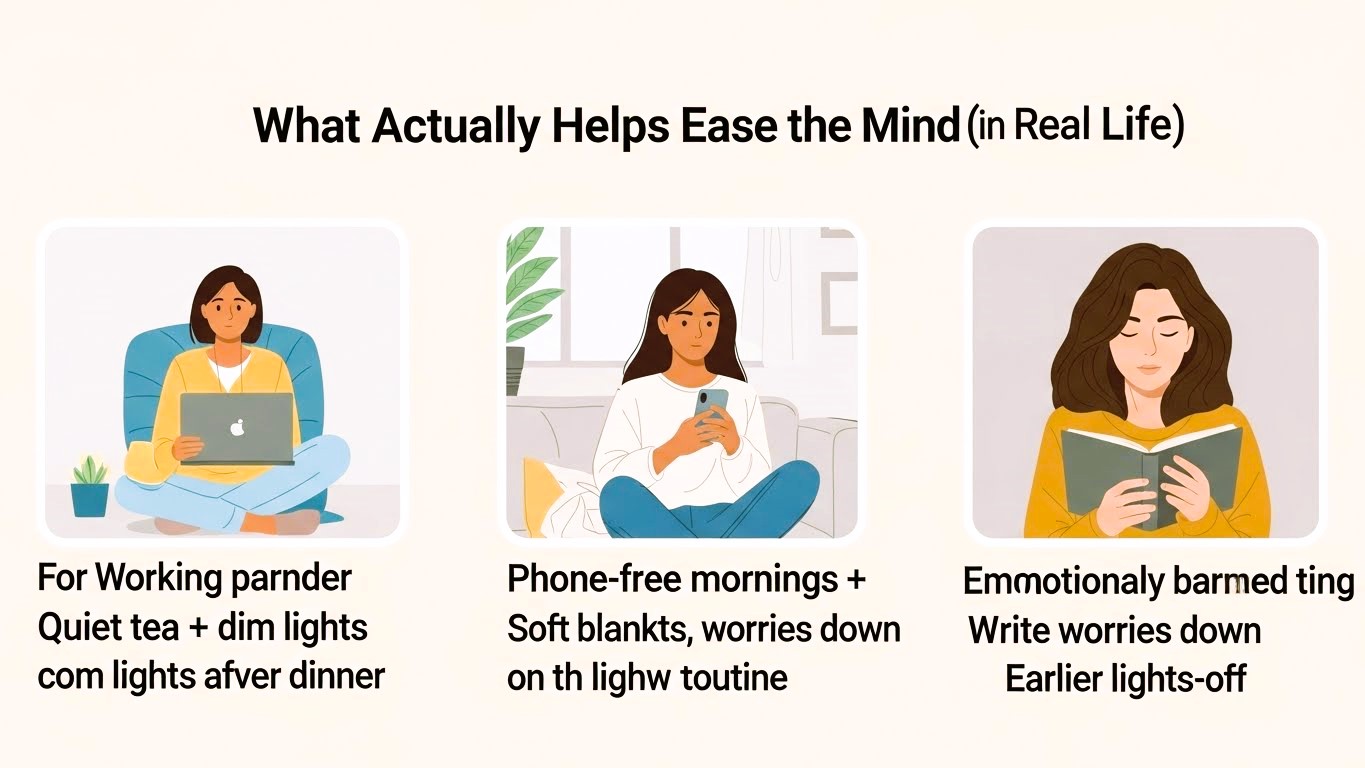
What Actually Helps Ease the Mind (In Real Life)

Let’s be honest, advice only works when it fits real life.
For a working parent:
Quiet tea + dim lights after dinner.
For a student:
Phone-free mornings + one slow routine.
For someone emotionally burned out:
Soft blankets, writing worries down, and earlier lights-off.
Healing adapts to life, not the other way around.
When These Habits Aren’t Enough
Gentle habits are a foundation, not a cure-all.
If the mind still feels heavy, numb, or overwhelmed despite consistency, it doesn’t mean you failed.
It may simply mean:
Your mind needs support not more strength.
This is where therapy, guided tools, or professional care can help, something we explore in the next article of this series.
Frequently Asked Questions
Q1: How long before these habits work?
Most people notice subtle calm within 5–10 days.
Q2: Do I need to do all of them?
No. Start with one or two.
Q3: Can this replace therapy?
No. These habits support mental health but don’t replace professional care.
Q4: What if I don’t feel anything at first?
Calm often arrives quietly. Keep going.
Q5: Are these habits suitable for anxiety and burnout?
Yes they’re especially helpful for nervous-system fatigue.
Q6: What’s the easiest habit to start today?
Delaying your phone in the morning by 10 minutes.
A Gentle Takeaway
Your mind doesn’t need discipline.
It needs permission to rest.
Healing isn’t about becoming better.
It’s about becoming softer with yourself.
If this article made you pause, breathe, or feel understood — share it.
Someone else is quietly overwhelmed, too.
Calm isn’t something you achieve.
It’s something you allow.
Disclaimer: The content in this article is intended for informational and educational purposes only. It provides insights, tips, and general guidance on health, beauty, and wellness, but it is not a substitute for professional medical advice, diagnosis, or treatment.
Always consult a qualified healthcare professional for personal medical concerns. For more information about our approach to health and wellness content, please read our Health & Wellness Disclaimer.