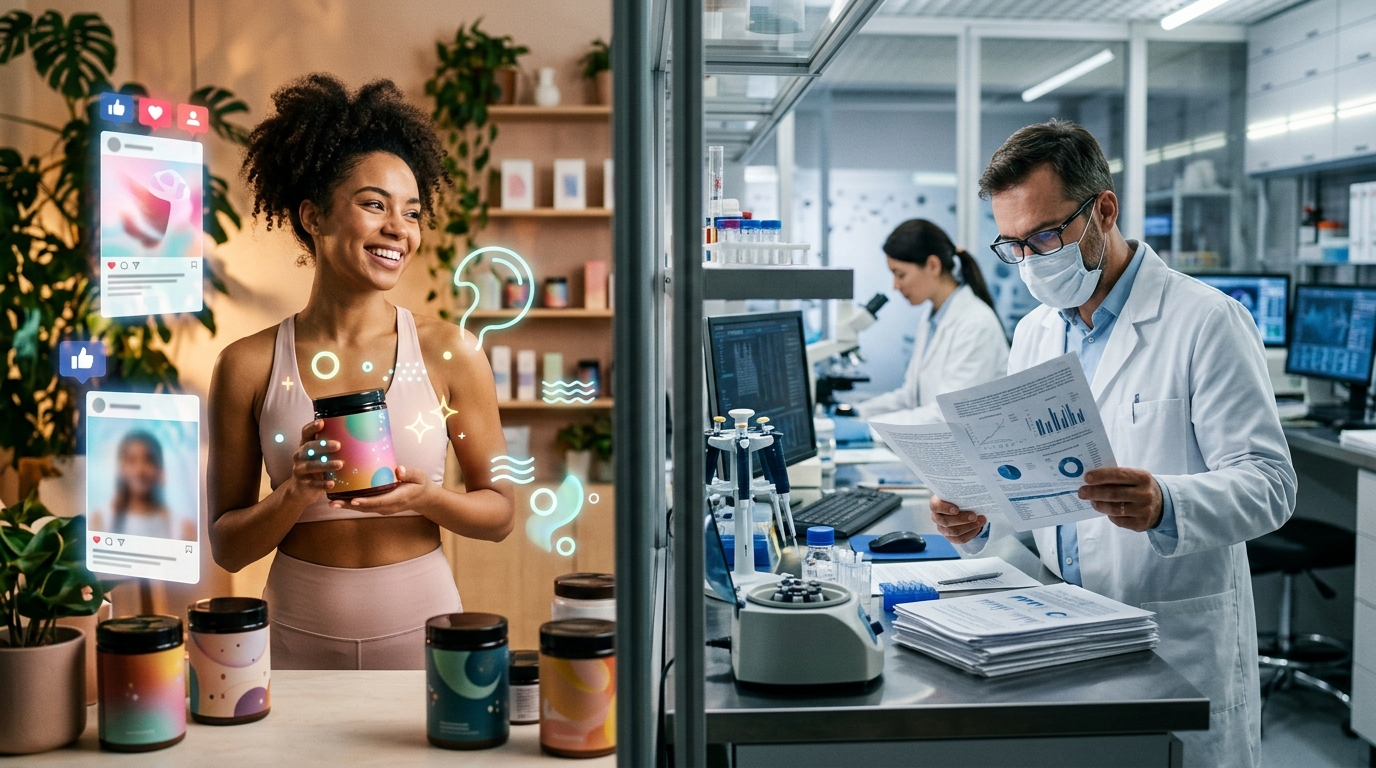

Wellness Trends That Sound Scientific But Aren’t
Wellness Trends That Sound Scientific But Aren’t: Discover which popular wellness trends sound scientific but lack strong evidence, and learn how to separate genuine health science from clever marketing.

The Basics of Viral Wellness Trends
Viral wellness trends are social-media-driven health fads, advice and claims that promise various health benefits. While sometimes they do promote science-backed health advice that truly leads to optimal outcomes, be mindful that there are wellness trends with unproven success rates, health risks and empty promises. Remember, don’t believe everything you see online, and approach these trends with healthy skepticism and a good dose of critical thinking.
Since viral wellness trends typically originate on social media platforms, they spread far and wide quite quickly. This happens for several reasons. One of the main reasons is social media’s algorithms. If a post goes viral, the platform it’s on will begin feeding it to more users to increase its visibility. This triggers a snowball effect: People interact with the post, which further pushes it out on the algorithm and sparks public interest, prompting other influencers or users to begin posting similar content.
Another reason viral wellness trends spread quickly on social media is that most people prefer quick fixes or health hacks over adopting beneficial long-term health habits. When trends promote instantaneous health benefits rather than encouraging committing to a diet or running routine, it’s only natural to be drawn toward the path of least resistance. There are also always top wellness influencers who claim these trends work and will deliver on their promises.
The Science-Sounding Wellness Trap
“Detox your body.”
“Balance your hormones.”
“Reset your metabolism.”
“Lower your cortisol.”
“Repair your gut.”
“Boost your cellular energy.”
“Remove hidden toxins.”
The language sounds impressive.
It sounds modern.
It sounds scientific.
And sometimes, there really is genuine science hiding somewhere behind the claim.
That is precisely what makes these wellness trends so persuasive.
A marketer does not always need to invent a completely fictional idea. Sometimes all it takes is a real biological process, a few scientific words, a dramatic interpretation, and a product waiting at the end.
The result?
Science-flavoured marketing.
The human body really does have hormones. Cortisol really exists. The liver really processes substances. The gut contains trillions of microorganisms. Cells really produce energy.
But using a scientific word does not automatically make a health claim scientific.
A biological mechanism is not the same thing as a proven health benefit.
That distinction is becoming increasingly important as wellness products, influencers, supplements and health advice compete for our attention.

Why Scientific Language Is So Persuasive
People trust science.
That is a good thing.
Science has given humanity vaccines, antibiotics, modern surgery, medical imaging, lifesaving treatments and countless improvements in everyday life.
The problem begins when marketing borrows the authority of science without providing the evidence.
Consider the difference.
“Drink this because it makes you feel refreshed.”
That is a modest claim.
“Activates your body’s natural cellular detoxification pathways.”
That sounds far more impressive.
But what exactly does it mean?
Which pathway?
What changes?
How was it measured?
Did people actually become healthier?
How many people were studied?
How long did the study last?
These questions matter because a laboratory effect can be genuine without producing a meaningful improvement in human health.
When Real Science Gets Stretched Too Far
Modern wellness culture often follows a predictable formula.
First, scientists discover something interesting.
Then the finding reaches the public.
Then an influencer simplifies it.
Then a company turns the simplified version into a product.
Eventually, the original scientific finding becomes almost unrecognisable.
This is sometimes called the mechanism trap.
A substance affects a biological pathway.
Therefore, the marketing suggests that taking the substance will produce a major health benefit.
But there may be several missing steps between those two statements.
The substance might not reach the relevant tissue.
The amount used in a laboratory experiment might be impossible to achieve through normal consumption.
The study might involve animals rather than humans.
The human study might be tiny.
The observed change might be statistically significant but practically insignificant.
Or later studies might fail to reproduce the original result.
That is why good health information asks a more difficult question:
Does the intervention actually improve meaningful outcomes in humans?
Trend One: The “Detox” Revolution
Few words sell wellness products better than detox.
The story is usually simple.
Modern life exposes us to toxins.
Those toxins supposedly accumulate inside the body.
A special drink, tea, powder, fast, supplement or foot bath then removes them.
You become cleaner from the inside.
It sounds logical.
But the word “toxin” is often used very loosely.

Your Body Already Has Detoxification Systems
Your liver and kidneys perform sophisticated processes that help metabolise and eliminate many substances.
Your lungs, digestive system and other biological systems also play important roles in maintaining the body’s internal environment.
This does not mean the body is immune to harmful chemicals.
It means that “detox” is not a single switch that can simply be turned on by drinking a particular beverage.
A person may feel better during a detox program.
That experience can be genuine.
But perhaps they stopped eating highly processed foods.
Perhaps they consumed fewer calories.
Perhaps they stopped drinking alcohol.
Perhaps they drank more water.
Perhaps they simply rested.
Those changes can affect how someone feels without proving that a commercial product removed mysterious toxins.
A Real-Life Example
Imagine a woman begins a three-day detox program.
She consumes very little food and drinks a special beverage throughout the day.
At the end, the scale shows that she has lost two kilograms.
She concludes:
“The toxins are finally leaving my body.”
But short-term weight loss can largely reflect reduced food intake and changes in body water.
The scale changed.
That does not prove that toxins were removed.
Feeling lighter and proving detoxification are two very different things.
Trend Two: “Alkalizing” Your Body
The alkaline diet became popular partly because it sounds scientifically reasonable.
Some foods are described as acidic.
Others are described as alkaline.
Therefore, the argument goes, eating more “alkaline” foods will make your body healthier by changing its internal acidity.
There is one major problem.
Your blood chemistry is not casually controlled by yesterday’s lunch.
The body tightly regulates blood acidity because relatively small changes can be dangerous.
The lungs and kidneys play major roles in maintaining this balance.
Food can influence the acidity of urine.
That does not mean ordinary food choices can dramatically change the acidity of your blood in the way some wellness claims suggest.
The Important Nuance
Eating more vegetables, fruits, legumes, and minimally processed foods can be part of a healthy diet.
But they do not need an “alkaline body” explanation to be healthy.
This reveals an important wellness pattern:
A sensible recommendation can be wrapped in an unsupported scientific explanation.
The recommendation may be good.
The explanation may be wrong.
Trend Three: “Cortisol Balance”
Cortisol is real.
It is an important hormone involved in stress responses, metabolism, immune activity and daily biological rhythms.
So when someone says cortisol matters, they are not inventing a hormone.
The problem comes when cortisol becomes the explanation for almost everything.
Tired?
“Your cortisol is out of balance.”
Poor sleep?
“Your cortisol is too high.”
Weight gain?
“Cortisol.”
Cravings?
“Cortisol.”
Brain fog?
“Cortisol.”
Stress?
“Definitely cortisol.”
One hormone suddenly becomes the villain behind modern life.
The Missing Question
What is your cortisol level?
More importantly:
Was it measured appropriately, and does the result actually indicate a medical problem?
Hormone levels change throughout the day.
Testing methods vary.
Results require context.
A social-media questionnaire cannot diagnose a hormonal disorder.
A Real-Life Example
A forty-eight-year-old man begins waking up tired.
He searches the internet.
Within minutes, he finds a video explaining that his “cortisol imbalance” is responsible.
He purchases an expensive supplement.
Nothing changes.
Months later, he finally seeks professional advice and discovers that the original assumption was wrong.
The lesson is not that cortisol is unimportant.
The lesson is:
A fashionable explanation should never replace proper investigation.

Trend Four: “Hormone Balancing” for Everyone
Hormones are enormously important.
But “hormone balance” has become one of the most flexible phrases in wellness marketing.
It can be used to explain almost anything.
For women, the phrase may appear in advertisements discussing:
- Acne
- Weight gain
- Fatigue
- Mood changes
- Menstrual changes
- Sleep problems
- Hair loss
For men, it may be used to explain:
- Low energy
- Reduced muscle
- Weight gain
- Poor sleep
- Mood changes
- Reduced sexual interest
Some of these symptoms can genuinely be associated with hormonal problems.
But they can also have many other causes.
Women Need Individualised Advice
Pregnancy, childbirth, breastfeeding, menopause and other stages of life can produce major physiological changes.
That does not mean every woman needs a “hormone-balancing” supplement.
A product designed for the general population cannot automatically account for pregnancy, medication use, medical history or individual hormonal conditions.
Men Need Individualised Advice Too
A middle-aged man experiencing fatigue may have low testosterone.
But he might also have inadequate sleep, obesity, medication effects, another medical condition, depression or a lifestyle problem.
The symptom does not establish the diagnosis.
A symptom is a clue. It is not a laboratory result.
Trend Five: “Heal Your Gut”
The human gut microbiome is a fascinating and legitimate area of scientific research.
The digestive tract contains an enormous community of microorganisms.
Researchers are studying their relationships with digestion, immunity, metabolism and other aspects of human physiology.
That is real science.
But wellness marketing can turn this fascinating field into an explanation for almost every modern complaint.
“Your gut is damaged.”
“Your microbiome is toxic.”
“Your gut is leaking.”
“Your bacteria are out of balance.”
“Repair your gut and everything improves.”
The leap from interesting science to guaranteed health outcomes is where the problem begins.

Probiotics Are Not Magic
Different microorganisms can have different effects.
Different strains may behave differently.
Different people may respond differently.
A supplement containing one strain cannot automatically be expected to “repair” every person’s digestive system.
And more microorganisms do not automatically mean better health.
The gut is an ecosystem.
It is not a dirty bathtub waiting to be scrubbed.
A Real-Life Example
An older woman develops occasional bloating.
She sees an advertisement claiming that her digestive system is “toxic.”
She buys several supplements.
Instead of becoming simpler, her routine becomes more complicated.
Eventually, a proper assessment reveals that her eating pattern was more relevant than the expensive “gut reset” program.
The lesson is simple:
Digestive symptoms deserve investigation, not fashionable labels.
Trend Six: “Mitochondrial Support”
Mitochondria are real.
They are essential structures inside cells and play a central role in energy production.
That makes them excellent marketing material.
Products may promise to:
- Boost Cellular Energy
- Support Mitochondrial Function
- Optimize Cellular Performance
- Improve Energy Production
- Promote Healthy Ageing
The words sound sophisticated.
But the important question is:
What happens to real people who take the product?
A substance can affect a biological pathway in a laboratory without improving fatigue, extending lifespan or reversing ageing in humans.
The Mechanism Trap Again
Imagine a laboratory study finds that a compound affects a cellular process.
That is interesting.
It may deserve further research.
But the advertisement may turn it into:
Laboratory finding → miracle supplement → healthier human
That conclusion may have several missing steps.
The proper scientific question is not:
“Does this affect cells?”
It is:
“Does taking this product improve meaningful health outcomes in humans?”
Trend Seven: “Cellular Anti-Aging”
Ageing research is real. Scientists study cellular damage, metabolism, inflammation, genetic regulation and other biological processes associated with ageing. That does not mean every product marketed as an “anti-ageing” supplement has been shown to slow human ageing.
There is a huge difference between:
Supporting healthy ageing
and
Extending human lifespan.
There is also a difference between changing a biological marker and improving a person’s actual health.
Ask What Was Really Measured
Before believing an anti-ageing claim, ask:
- Was It Tested in Humans?
- How Many People Participated?
- How Long Was the Study?
- What Was Actually Measured?
- Did Participants Function Better?
- Did They Live Longer?
- Was the Result Reproduced Independently?
- Who Funded the Research?
A scientific-sounding claim becomes much less impressive when these questions are asked.
Trend Eight: “Inflammation” as the Explanation for Everything
Inflammation is a legitimate biological process. It plays an important role in the immune system. Chronic inflammation is associated with numerous diseases. But this legitimate science has also become a popular marketing shortcut. Suddenly everything is described as inflammation.
Fatigue?
Inflammation.
Weight gain?
Inflammation.
Poor sleep?
Inflammation.
Brain fog?
Inflammation.
Healthy Food Does Not Need a Miracle Story
A diet containing vegetables, fruits, whole grains, legumes, nuts and other nutritious foods can support good health.
But saying:
“This food reduces inflammation, therefore it will prevent your disease”
is a much larger claim.
Human health is rarely controlled by one ingredient.
A food can be nutritious without being a miracle treatment.
Trend Nine: “Superfoods”
The term “superfood” sounds scientific.
It is not a precise medical category.
Blueberries can be nutritious.
Beans can be nutritious.
Leafy vegetables can be nutritious.
Nuts can be nutritious.
Fish can be nutritious.
But there is no biological switch inside the human body labelled:
SUPERFOOD MODE: ON
The bigger problem is psychological.
People begin searching for one magical ingredient rather than improving the overall pattern of their diet.
A Real-Life Example
Someone eats fast food most days but adds an expensive “superfood” powder to a morning drink.
They now feel that they have covered their nutritional bases.
They have not.
One fashionable ingredient cannot compensate for chronically poor sleep, inactivity, smoking, excessive alcohol or an overall poor diet.
Healthy living is usually less exciting.
That may be exactly why it works.

Trend Ten: “Natural Means Safe”
This may be one of the most dangerous wellness assumptions.
Poisonous mushrooms are natural.
Some plants contain powerful chemicals.
Herbs can interact with medicines.
Natural substances can produce side effects.
“Natural” describes origin.
It does not guarantee safety.
The dose matters.
The person matters.
The medical condition matters.
Other medicines matter.
Older Adults Should Be Particularly Careful
Older adults are more likely to use multiple prescription medicines.
Adding a new herbal product or supplement can therefore introduce unexpected interactions.
A product described as “natural” may still interfere with medication or produce unwanted effects.
The right question is not:
“Is it natural?”
It is:
“Is it safe and appropriate for me?”

Trend Eleven: “More Supplements Mean Better Health”
The modern wellness cabinet can become surprisingly crowded.
First comes a multivitamin.
Then magnesium.
Then vitamin D.
Then a probiotic.
Then an herbal mixture.
Then a sleep supplement.
Then an energy supplement.
Then something for “detox.”
Soon the kitchen looks like a small pharmacy.
But more is not automatically better.
Some nutrients are essential.
That does not mean enormous doses are better.
Some supplements can be useful for people with specific needs.
That does not mean everyone needs them.
The United States Food and Drug Administration notes that dietary supplements can have legitimate uses, while also emphasising that supplements should not replace a varied diet and that their regulatory framework differs from that for medicines.
Trend Twelve: “It Worked for Me”
Personal stories are powerful.
Someone takes a supplement and feels better.
Someone starts a diet and loses weight.
Someone begins meditation and sleeps better.
Their experiences are real.
But an individual experience cannot tell us exactly what caused the improvement.
Maybe the product helped.
Maybe the person also started sleeping more.
Maybe they stopped eating highly processed foods.
Maybe their symptoms naturally fluctuated.
Maybe expectation influenced how they felt.
Maybe several things changed simultaneously.
This is why scientific studies use comparison groups.
The Testimonial Problem
Imagine a video begins:
“I suffered from fatigue for years. Then I took this powder and everything changed.”
It is compelling.
But where are the details?
How many people used the product?
How many did not improve?
Was there a comparison group?
Were other treatments being used?
Was the improvement measured objectively?
Were negative results reported?
A testimonial answers:
“What happened to this person?”
It does not answer:
“Does this treatment reliably work?”
Why Men, Women and Older Adults Need Different Advice
Wellness marketing often sells one solution to everyone.
Human biology does not work that way.
Men
Men may encounter supplements marketed around testosterone, muscle, energy and performance.
But fatigue, weakness, poor sleep and mood changes can have numerous causes.
A hormone problem is only one possibility.
Women
Women experience biological transitions that can significantly affect sleep, mood, metabolism, menstruation and reproductive health.
Pregnancy and breastfeeding can also change what is considered safe.
A supplement appropriate for one woman may be inappropriate for another.
Older Adults
Age can change metabolism, medication use, nutritional needs and vulnerability to side effects.
A supplement that seems harmless may not be harmless when combined with several medicines.
The question should always be:
Is this appropriate for this particular person?
Five Scientific-Sounding Words That Deserve a Second Look
Some words are not necessarily false.
They are simply vague.
“Detox”
Ask:
Detoxify what?
“Balance”
Ask:
Balance which biological process?
“Reset”
Ask:
Reset what, exactly?
“Optimise”
Ask:
What measurable health outcome improves?
“Activate”
Ask:
Which pathway is activated, and does that activation actually improve health?
A precise question can expose a vague claim surprisingly quickly.
The Difference Between Plausible and Proven
This may be the most important lesson in the entire article.
Something can be:
Plausible without being proven.
Something can have:
Laboratory evidence without strong human evidence.
Something can produce:
A biological change without a meaningful health benefit.
And something can produce a small benefit that is not worth its cost or potential risk.
Science does not demand that we reject every new idea.
It demands that we grade our confidence according to the quality of the evidence.
That is a very different approach.
How to Recognise Better Evidence
When a wellness claim sounds exciting, slow down.
Look for Human Research
If the claim is about human health, human evidence matters.
Animal research can provide useful clues.
Laboratory research can reveal mechanisms.
But neither automatically proves that a treatment improves human health.
Look for a Comparison
If everyone receiving a treatment improves, we still need to know what would have happened without it.
A properly designed comparison can help answer that question.
Look at the Outcome
Did the treatment actually improve something meaningful?
Or did it merely change a laboratory number?
Those are not necessarily the same thing.
Look for Repetition
One exciting study can be wrong.
Science becomes stronger when independent researchers obtain similar findings.
Look for Transparency
Be cautious when an advertisement repeatedly says “clinically proven” but does not clearly explain what was studied.
Ask:
Proven in whom?
For what outcome?
For how long?
Compared with what?
The Five-Minute Wellness Claim Test
Before purchasing a new wellness product, pause for five minutes.
Ask these questions:
- What Exactly Is the Product Claiming to Do?
- What Human Studies Support the Claim?
- How Many People Were Studied?
- What Was the Actual Health Outcome?
- Has Independent Research Confirmed It?
- Who Paid for the Research?
- What Are the Possible Side Effects?
- Could It Interact With My Medicines?
- Is the Claim Based Mainly on Testimonials?
- Would I Still Want This Product If the Scientific Language Were Removed?
That final question is particularly revealing.
Remove the words “cellular,” “metabolic,” “detox,” “hormonal,” “pathway” and “optimization.”
What remains?
Sometimes it is a genuinely useful product.
Sometimes it is ordinary food packaged as a miracle.
Sometimes it is an expensive promise.
What Should You Do Instead?
You do not need to reject wellness.
You need to make it more evidence-based.
Prioritize Sleep
Good sleep is not glamorous.
There is no exotic powder required.
If sleep is consistently poor, investigate the reason rather than endlessly purchasing sleep products.
Move Regularly
Physical activity remains one of the least fashionable but most consistently useful health behaviours.
Walking does not need a futuristic label.
Strength training does not need a “cellular optimisation” story.
Movement is valuable because the evidence says so.
Eat a Varied Diet
Build meals around a variety of nutritious foods.
Do not search for one magical ingredient.
Healthy eating is a pattern, not a single superfood.
Protect Your Relationships
Well-being is not only about molecules.
Meaningful relationships, social connection and a sense of belonging can be important parts of a healthy life.
Manage Stress Sensibly
Meditation, breathing exercises, prayer, hobbies, time outdoors, relaxation and social connection can all be useful.
They do not need mysterious biological explanations to have value.
Use Medical Care When You Need It
Wellness practices can complement appropriate medical care.
They should not become a substitute for it.

When a Wellness Trend May Actually Be Worth Considering
Not every new idea should be dismissed.
Science advances because people investigate new ideas.
A promising treatment may begin with a laboratory discovery.
A new dietary approach may deserve further research.
A supplement may genuinely help people with a specific deficiency.
A behavioural intervention may produce meaningful improvements.
The responsible position is neither:
“Everything new is nonsense.”
nor:
“Everything new must be revolutionary.”
The responsible position is:
“The evidence is promising, limited, mixed or strong.”
That is how science actually works.
The Wellness Industry’s Most Powerful Product
It may not be a powder.
It may not be a tea.
It may not be a capsule.
It may be hope.
People buy wellness products because they want something very reasonable.
They want more energy.
Better sleep.
A healthier body.
Younger-looking skin.
Less pain.
A longer life.
More confidence.
A sense of control.
There is nothing foolish about those desires.
The danger begins when legitimate hopes are converted into scientific-sounding certainty.
A product is presented as the missing piece.
A supplement is described as the solution.
A scientific word becomes proof.
But health is rarely that simple.
Biology is complicated.
People are different.
Diseases have multiple causes.
And sometimes the most honest answer is:
“We don’t know yet.”
That sentence may not sell many products.
But it is one of science’s greatest strengths.
The Bottom Line
The wellness industry is not entirely fake.
That conclusion would be just as simplistic as believing every wellness advertisement.
There are useful products.
There are effective supplements.
There are valuable traditional practices.
There are promising discoveries.
There are genuine advances in nutrition, exercise, sleep research, psychology and healthy ageing.
But there is also a growing marketplace that borrows scientific language to make uncertain ideas sound certain.
The answer is not cynicism.
It is curiosity with standards.
Do not ask only:
“Does this sound scientific?”
Ask:
“What is the evidence?”
Do not ask:
“Is it natural?”
Ask:
“Is it safe for me?”
Do not ask:
“Did someone on the internet say it worked?”
Ask:
“Does good research show that it reliably works?”
And perhaps the most powerful question of all:
If this claim is true, what evidence should I be able to see?
That question turns a passive consumer into an informed one.
Wellness does not need to sound scientific to be useful.
And science does not need marketing language to be impressive.
Frequently Asked Questions
Are all wellness trends scientifically unsupported?
No. Some wellness practices have strong scientific support, while others have limited, preliminary or contradictory evidence. The important question is not whether something is called a wellness trend but whether the specific claim has credible evidence behind it.
Is “natural” always safer than medicine?
No. Natural substances can have powerful biological effects, side effects and interactions with medicines. “Natural” describes an origin; it does not guarantee safety.
Are dietary supplements useless?
No. Some supplements can be useful when they address a genuine nutritional need or have evidence for a particular purpose. However, supplements should not automatically replace a varied diet or established medical treatment. The FDA explains that dietary supplements have a different regulatory framework from medicines and that certain supplement claims are subject to specific requirements.
Does the body need a commercial detox program?
Generally, the body already has organs and biological systems responsible for processing and eliminating many substances. A commercial detox product should not automatically be assumed to remove unspecified “toxins” or improve health simply because it uses the word detox.
How can I tell whether a wellness claim is exaggerated?
Look for vague promises, dramatic testimonials, universal solutions, heavy use of scientific terminology without clear evidence and claims that one product can solve many unrelated problems. Then look for well-designed human studies and meaningful health outcomes.
What is the best way to protect yourself from wellness misinformation?
Learn to ask precise questions. Find out exactly what is being claimed, what evidence supports it, whether the evidence comes from humans, whether independent research agrees, what the risks are and whether the claimed benefit is meaningful. For persistent or serious health concerns, seek advice from a qualified healthcare professional rather than relying on internet wellness claims.
Medical Disclaimer
This article is intended for general health education and critical thinking. It is not a substitute for professional medical diagnosis, treatment or individualised advice.
Do not stop prescribed medication or begin a supplement solely because of information presented in this article.
People who are pregnant, breastfeeding, taking prescription medicines, living with chronic medical conditions or considering supplements for an older adult should discuss the choice with an appropriate healthcare professional.
Scientific evidence also changes. A claim described as promising today may be supported, modified or rejected as better research becomes available.
https://mrpo.pk/laughter-therapy-and-smile-medicine/
References
- United States Food and Drug Administration — dietary supplements and consumer information.
- United States Food and Drug Administration — labeling and claims for dietary supplements.
- National Institutes of Health — evidence and consumer information concerning dietary supplements.
- National Center for Complementary and Integrative Health — evaluating complementary health approaches and scientific evidence.