
Why You Feel Lonely Even When You’re Not Alone
You can be in a room full of people.
Your phone can be buzzing with messages.
Your calendar can be full.
And still, you feel lonely.
Not the dramatic, crying-into-a-pillow kind of lonely.
The quieter kind.
The kind that sits in your chest and says, “No one really sees me.”

The Loneliness Nobody Warned Us About
We were taught loneliness means being alone.
But modern loneliness often shows up in company.
You laugh at jokes.
You reply to messages.
You attend gatherings.
Yet something feels missing.
That’s because loneliness isn’t about the absence of people.
It’s about the absence of connection.
Why do I feel so lonely even though I’m surrounded by people?
We live in a bustling, crowded world, yet loneliness appears to be on the rise. Why are so many of us feeling isolated, and what can we do about it?
There are many kinds of loneliness – everyone feels it differently. But what is it to you?
Perhaps loneliness is a city. On its streets, among the hubbub, the crowds, the chatter and laughter, you remain a stranger – discombobulated, disconnected, in the way.
Maybe it’s a relationship turned sour. A marriage or partnership of unheard words and unmet needs. You’re there, but never seen.
Or perhaps you feel like Robert Walton, the polar explorer from Mary Shelley’s Frankenstein, who is surrounded by dependable shipmates but really just craves one true friend, “the company of a man who could sympathise with me, whose eyes would reply to mine”.
Why Loneliness Can Exist in Crowds
Loneliness appears when:

-
You can’t be fully yourself
-
You feel emotionally unheard
-
Conversations stay surface-level
-
You’re always “the strong one”
-
You give more than you receive
You’re present — but not met.
And the brain notices that gap.
Emotional Loneliness vs Physical Loneliness
Physical loneliness:
“I’m by myself.”
Emotional loneliness:
“I’m with people, but I don’t feel understood.”
Emotional loneliness hurts more —
because it makes you question your worth.
You start wondering:
“If I’m surrounded by people and still feel alone… is something wrong with me?”
No.
Something is missing — not broken.
The Role of Social Masks
Many people feel lonely because they’re never fully present as themselves.
They wear masks:
-
The responsible one
-
The funny one
-
The calm one
-
The listener
When no one knows your inner world,
connection can’t reach you — even if people are close.
Loneliness grows in silence, not solitude.
Why Loneliness Feels Worse After Burnout or Depression
After emotional exhaustion, burnout, or high-functioning depression:
-
You withdraw emotionally
-
You stop initiating depth
-
You conserve energy by staying guarded
People may still be around —
But you aren’t fully there.
Loneliness becomes a side effect of survival.
Social Media Made Loneliness Louder
Seeing everyone else connected can deepen isolation.
You compare:
-
Their highlights vs your inner quiet
-
Their group photos vs your invisibility
Being digitally surrounded doesn’t guarantee being emotionally held.
Sometimes it makes the gap more obvious.
Signs You’re Lonely Even Though You’re Not Alone
You might notice:
-
You feel drained after socialising
-
You crave deep conversations but avoid them
-
You feel unseen or misunderstood
-
You hesitate to share real thoughts
-
You feel replaceable
Loneliness isn’t weakness.
It’s a signal.
What Actually Helps Ease Loneliness (In Real Life)
Loneliness doesn’t disappear because you’re busy.
It fades when you feel seen, heard, and emotionally safe — even briefly.
Here’s what actually helps, in ways that real people can use.
1. One Safe Person Matters More Than Many People
Loneliness isn’t solved by crowds.
It’s softened by one person who feels safe.
Real-life example:
You may attend family gatherings every week, yet feel alone.
But there’s that one friend you can message at 2 a.m. and say,
“I’m not okay,” without explaining everything.
That one connection can reduce loneliness more than ten social events.
Why it works:
Your nervous system relaxes when it knows someone gets you.
2. Honest Conversations (Not Perfect Ones)
You don’t need deep speeches.
You just need real words.
Instead of:
“I’m fine.”
Try:
“I’ve been feeling a bit off lately.”
Real-life example:
Two colleagues talk daily but never go beyond work.
One day, one says, “I’ve been exhausted emotionally.”
The conversation shifts, and suddenly, there’s warmth.
Why it works:
Honesty opens emotional doors. Loneliness lives behind closed doors.
3. Being Yourself Without Performing
Many people feel lonely because they’re always acting.
- Acting strong
- Acting cheerful
- Acting unbothered
Real-life example:
At home, you joke and smile so no one worries.
But when you’re alone, the emptiness hits harder.
Loneliness eases when you can drop the act, even for a moment.
Why it works:
Connection requires authenticity. Masks block it.
4. Shared Moments, Not Constant Contact
You don’t need daily texting.
You need shared presence.
Real-life example:
Sitting quietly with someone, watching TV, or walking without talking ,
yet feeling comfortable.
That quiet connection often feels more fulfilling than endless chatting.
Why it works:
Your brain reads safety in calm, not noise.
5. Letting Someone Help You (Even in Small Ways)
Many lonely people are givers.
They help everyone, and rarely receive.
Real-life example:
You always listen, advise, and support.
But you never say, “Can you stay with me for a bit?”
Letting someone help, even with small things, balances connection.
Why it works:
Being needed is not the same as being known.
6. Creating Micro-Connections
Loneliness doesn’t always need a big fix.
Small moments matter.
Examples:
- A sincere chat with a shopkeeper
- Greeting a neighbour
- A smile was exchanged at a café
- A short voice note instead of a text
These moments remind the brain:
“I exist in the world.”
7. Connecting Over Activities, Not Just Feelings
Talking isn’t always the easiest doorway.
Real-life example:
Two people struggle to open up emotionally,
but cook together, walk, pray, or work on something side by side.
Connection often grows through doing, not talking.
8. Allowing Loneliness to Be Acknowledged (Not Fought)
Trying to “fix” loneliness immediately can backfire.
Sometimes what helps is simply saying:
“I feel lonely, and that’s okay.”
Real-life example:
Instead of distracting yourself, you sit with the feeling,
journal it, or admit it to yourself without judgment.
Loneliness softens when it’s allowed to exist.
9. Reducing Emotional Isolation, Not Social Isolation
You don’t need more invitations.
You need emotional access.
Ask yourself:
- Who do I hide from?
- Who do I feel safe being quiet with?
- Where do I feel least judged?
Those answers point toward healing.
A Simple Truth
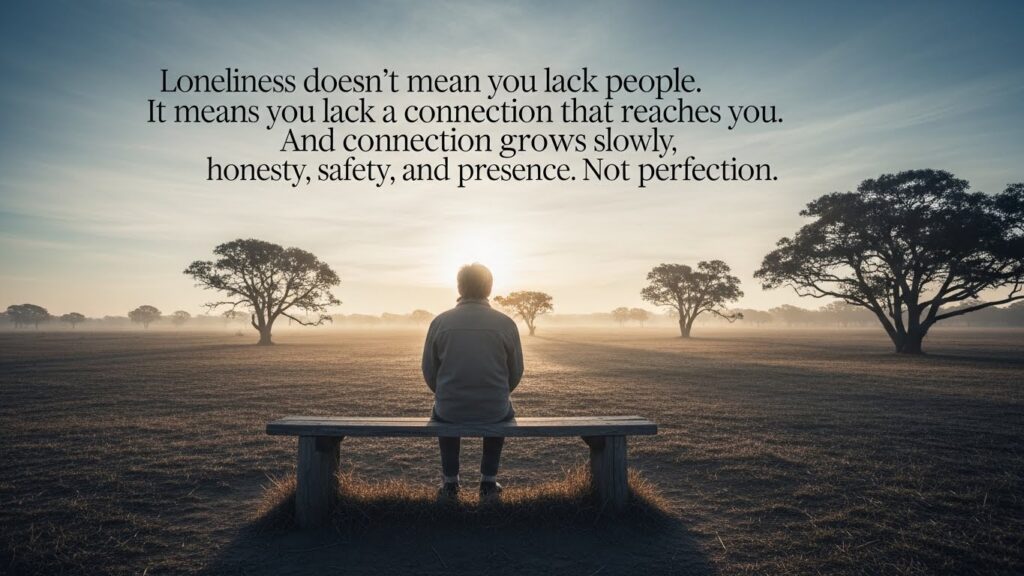
Loneliness doesn’t mean you lack people.
It means you lack a connection that reaches you.
And connection grows slowly, through honesty, safety, and presence.
Not perfection.
A Gentle Reminder for the Reader
If you’re lonely right now:
- You’re not broken
- You’re not ungrateful
- You’re not asking for too much
You’re asking for something real.
And that’s human.
- Write a practical daily connection routine
Just tell me what’s next.
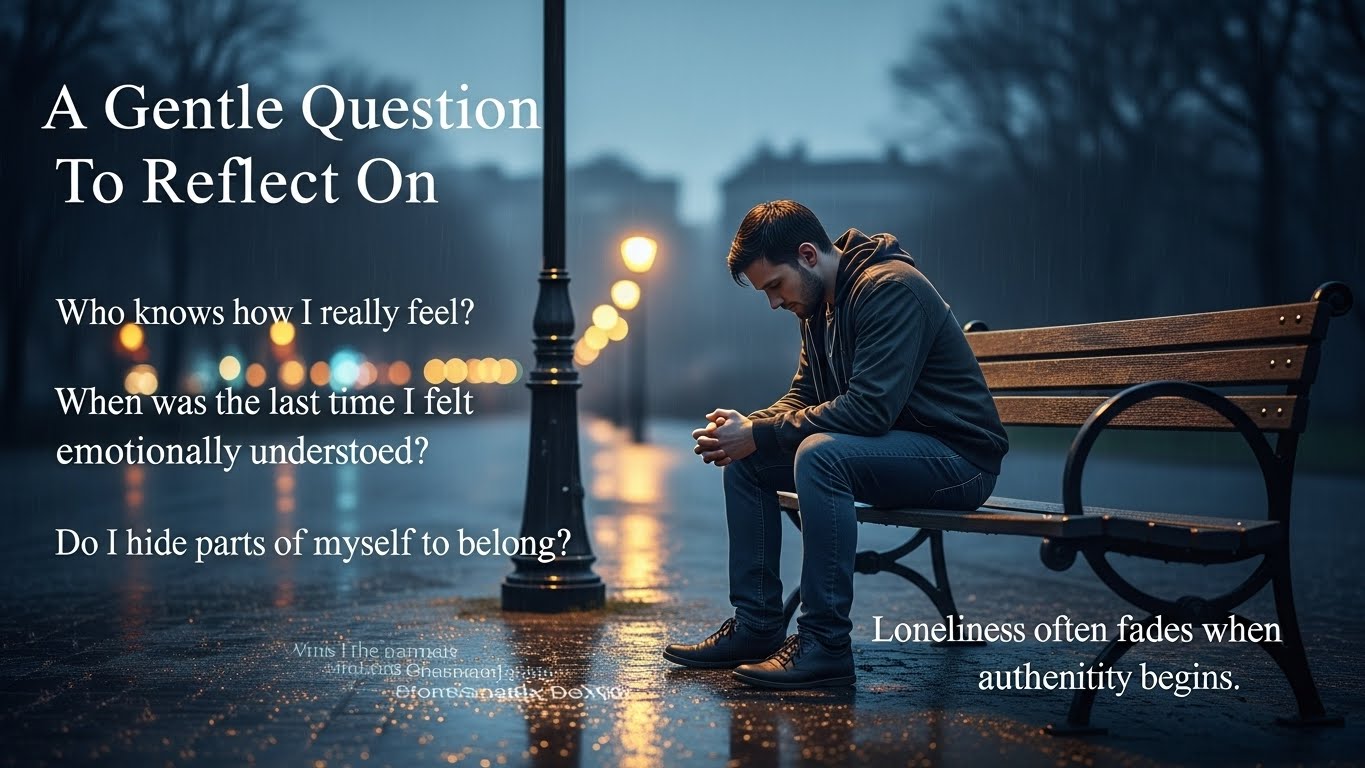
A Gentle Question to Reflect On
Ask yourself:
-
Who knows how I really feel?
-
When was the last time I felt emotionally understood?
-
Do I hide parts of myself to belong?
Loneliness often fades when authenticity begins.
How This Fits the Series
This series has explored:
-
Overload (panic attacks)
-
Depletion (emotional exhaustion)
-
Strain (burnout)
-
Silence (numbness) https://mrpo.pk/emotional-numbness/
-
Guilt (rest avoidance)
Loneliness is what remains when connection is postponed too long.
Final Thought
If you feel lonely while surrounded by people, remember:
You’re not asking for too much.
You’re asking for something real.
And that’s human.
Frequently Asked Questions (FAQs)
Q1: Why do I feel lonely in relationships?
Because emotional needs may not be met.
Q2: Is loneliness a mental health issue?
It’s an emotional experience that can affect mental health.
Q3: Can introverts feel lonely too?
Yes. Loneliness is about connection, not personality.
Q4: Does loneliness mean I need more friends?
Not necessarily. Often, you need deeper ones.
Q5: Can loneliness cause depression?
Long-term loneliness can increase risk.
Q6: How do I reduce loneliness?
By prioritising honest connection over constant interaction.
References
-
Harvard Health — Loneliness & Emotional Health
-
American Psychological Association — Social Connection
-
John Cacioppo — Loneliness: Human Nature and the Need for Connection
-
WHO — Social Wellbeing & Mental Health
Disclaimer:
The information provided in this article is for educational and informational purposes only and is not intended to replace professional medical advice, diagnosis, or treatment. Always consult with a qualified healthcare provider before starting any new supplement, health practice, or treatment, especially if you have existing medical conditions, are pregnant or breastfeeding, or are taking prescription medications. The author and publisher are not responsible for any adverse effects or consequences resulting from the use of the information contained herein.