The Untold Chronicles: Who Really Built Israel, Shattered Palestinian Rights, and Why the World Looks Away in 2025
Who really built Israel? Imagine your home was promised to someone else on paper, your voice ignored as your land was redrawn, and yet the world applauds the new owners while you remain invisible. Such is the tragic saga of Palestine, a story of broken promises, power plays, and silence stretching from history’s dusty pages into today’s headlines.
“It’s the world’s longest-running game of Monopoly, except only one player keeps getting hotels, while the other is stuck on ‘Go.’”
https://mrpo.pk/the-abraham-accords/
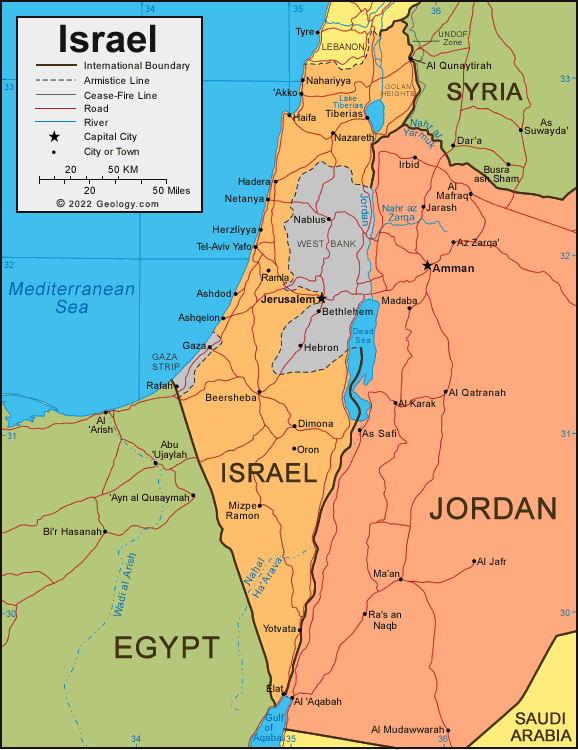
Balfour Declaration (November 2, 1917)
“His Majesty’s Government view with favour the establishment in Palestine of a national home for the Jewish people, and will use their best endeavours to facilitate the achievement of this object, it being clearly understood that nothing shall be done which may prejudice the civil and religious rights of existing non-Jewish communities in Palestine, or the rights and political status enjoyed by Jews in any other country.”
This declaration was a pivotal statement during World War I, marking Britain’s support for a Jewish homeland in Palestine, while including a conditional clause intended to protect the rights of the Arab inhabitants already living there, a clause that, in practice, was not honoured, leading to decades of conflict and dispossession.
How Israel Was Created: The Mastermind and the Forgotten
Most know Israel was created after World War II, but few grasp its deep roots. The Zionist movement, led by David Ben-Gurion, dreamed of a Jewish homeland. Under his leadership, that dream became a political reality, but at a human cost often overlooked.
Palestinian land was chosen deliberately, a land long inhabited by Palestinians. The 1917 Balfour Declaration promised a Jewish homeland in Palestine, neglecting the rights of native inhabitants. It was like rewriting a story without consulting the original authors, a land “promised on paper, lived on by others.”
Israel and the Palestinians: History of the conflict explained
The conflict between Israel and the Palestinian people is one of the longest-running and most violent disputes in the world. Its origins go back more than a century.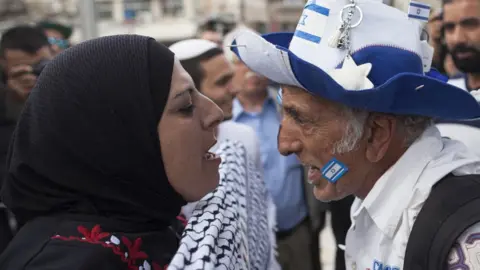
There have been a series of wars between Israel and the Arab nations. Uprisings, called intifadas – against Israeli occupation, and reprisals and crackdowns by Israel have also taken place.
The consequences of the historic dispute over issues including land, borders and rights are still being felt, and include the latest war between Israel and Hamas in Gaza.
https://www.bbc.com/news/articles/ckgr71z0jp4o
Image courtesy: Getty Image
Broken Promises: When Agreements Became Words on the Wind
The United Nations’ 1947 Partition Plan envisioned peace with separate Jewish and Palestinian states. Yet agreements like the Oslo Accords became broken promises as Israeli settlements encroached on Palestinian land. If treaties were sacred, why have they repeatedly been broken? Who profits? These questions go unanswered as homes fall and hopes fade.
-
“International law says one thing, tanks say another.”
-
“What good are guarantees if they evaporate the moment the ink dries?”
Netanyahu: The Master Manipulator Behind Middle East Turmoil
For over 30 years, Benjamin Netanyahu has shaped Western policies with rhetoric that justified wars and occupation. His manipulation of alliances enabled military interventions in Iraq, Libya, Syria, and Lebanon, leaving devastation behind.
International bodies have declared Netanyahu responsible for genocide in Gaza, the killing of civilians, children, and the destruction of schools and hospitals. With Donald Trump at his side, Netanyahu stands tall on the world stage, pulling strings that spill blood across borders.
2025 Trump Peace Agenda: Silencing Palestinian Voices
Trump’s 2025 20-point peace plan aims to “de-radicalise” Gaza under technocratic rule, excluding Palestinians from deciding their future. Which international law permits deciding a people’s fate without them? The glaring absence of Palestinian voices exposes a hollow peace built on silence and submission.
Gaza’s Humanitarian Catastrophe: Genocide Under Siege
Gaza is a cage of famine, disease, and death. Israeli blockade and bombardment have caused severe shortages of food, medicine, fuel, and water, with hospitals overwhelmed or destroyed. The UN warns Israeli actions risk “annihilation” of Gaza’s population. Over 4,000 children have been killed in recent years, with malnutrition and disease rampant.
Despite partial easing since May 2025, aid deliveries remain a fraction (less than 5%) of what is needed daily to sustain the population. As of late 2025, half a million Palestinians in Gaza face starvation, and the siege continues to devastate lives.
Rising Global Outcry: Mass Protests and Political Hypocrisy
Across the US and Europe, from Berlin to Boston and Paris, millions protest Israeli attacks, demanding justice for Palestinians. Some European countries recognised Palestine to pacify public unrest. But Israeli bombings continue daily, killing dozens. So here’s the valid question:
If people demand peace and justice, why do Trump and European leaders halt before stopping Israel’s naked aggression against unarmed civilians?
Political interests and alliances keep them silent, deepening tragedy.
Why the Silence? Politics, Law, and Media Collusion
International laws exist, but enforcement selectively shields Israeli actions. Palestinians face denial of rights while the media often omits or distorts their suffering. This silence is a choice, fueling ongoing injustice.
A Geopolitical Chessboard, Palestinians Forced to Watch
Picture a chess game where Palestinians watch from outside the board, their lands traded as their voices are silenced. A bitter tragedy played on a grand stage.
Who Will Lift the Siege and End the Suffering?
Despite overwhelming evidence of Gaza’s humanitarian catastrophe, no power has successfully forced Israel to lift the siege or guarantee unimpeded humanitarian aid. Ceasefire violations and bombings continue unabated.
International bodies, including the United Nations and human rights organisations, consistently call for lifting the blockade, but enforcement is hindered by political alliances, especially the staunch support Israel receives from the US under Trump’s administration and some European nations.
Humanitarian agencies like UNICEF, Doctors Without Borders, and the Red Cross are desperate to deliver aid, but Israeli restrictions block most supplies, leaving critical needs unmet. The question remains: who has the power and will to ensure:
-
Full lifting of the siege on Gaza?
-
Unhindered access to food, medicine, and fuel?
-
Accountability for ceasefire violations and bombings of civilians?
The answer lies in political will, urgent diplomatic pressure from global powers and unified demand by citizens worldwide.
Practical Takeaways: What You Can Do
-
Educate yourself and others about the full history and realities.
-
Support humanitarian aid organisations assisting Gaza.
-
Amplify Palestinian voices through social media and advocacy.
-
Demand accountability and fair coverage from governments and news outlets.
-
Join peaceful protests to influence political decisions.
Knowledge and action are steps toward justice.
FAQs: Simple Answers to Complex Questions
Why was Palestinian land chosen for Israel?
Historical Zionist ambitions sought a Jewish homeland in Palestine due to religious and historical claims, aided by geopolitical promises like the Balfour Declaration, ignoring the long-established Palestinian population.
Who is David Ben-Gurion, and what was his role?
Ben-Gurion was Israel’s founding father and first prime minister, who led the establishment of Israel, orchestrating political strategies that disregarded Palestinian rights in creating the Jewish state.
What agreements promised rights to Palestinians?
Key agreements include the 1947 UN Partition Plan and later Oslo Accords, both promising Palestinian statehood or autonomy, which have been systematically violated by Israeli policies.
How has Netanyahu influenced regional conflicts?
Netanyahu’s rhetoric and policies justified aggressive actions against neighbouring countries and Palestinians, and he is considered responsible by international bodies for severe violations in Gaza.
What’s included in Trump’s 2025 peace plan?
The plan proposes “de-radicalising” Gaza by replacing Hamas with a technocratic government, excluding actual Palestinians from meaningful participation, raising questions about legitimacy.
What is Gaza’s humanitarian situation today?
Gaza suffers a devastating blockade, causing famine, medical shortages, infrastructure collapse, and massive casualties. Aid is insufficient, and thousands face starvation daily.
Final Reflection: When Justice Is Silenced, Humanity Is at Risk
“Justice delayed for Palestine is justice denied to humanity. The world must listen — and act — before silence becomes complicity.”
- https://en.wikipedia.org/wiki/Gaza_humanitarian_crisis
- https://www.nextcenturyfoundation.org/under-siege-the-humanitarian-aid-crisis-in-palestine/
- https://news.un.org/en/story/2025/08/1165618
- https://www.rescue.org/crisis-in-gaza
- https://www.aljazeera.com/news/2025/10/1/israel-attacks-kill-at-least-17-in-gaza-as-ceasefire-plan-hangs-in-balance
- https://reliefweb.int/report/occupied-palestinian-territory/humanitarian-crisis-palestine-unfpa-situation-report-july-august-2025
- https://www.un.org/unispal/document/gaza-humanitarian-response-update-20-july-2-august-2025/
- https://www.ohchr.org/en/press-releases/2025/09/israel-has-committed-genocide-gaza-strip-un-commission-finds
- https://www.aljazeera.com/news/liveblog/2025/9/30/live-israel-kills-39-in-gaza-as-hamas-reviews-trumps-proposal-to-end-war