
When Washington Wavers: War, Power, and the Hidden Energy Shock Facing the West
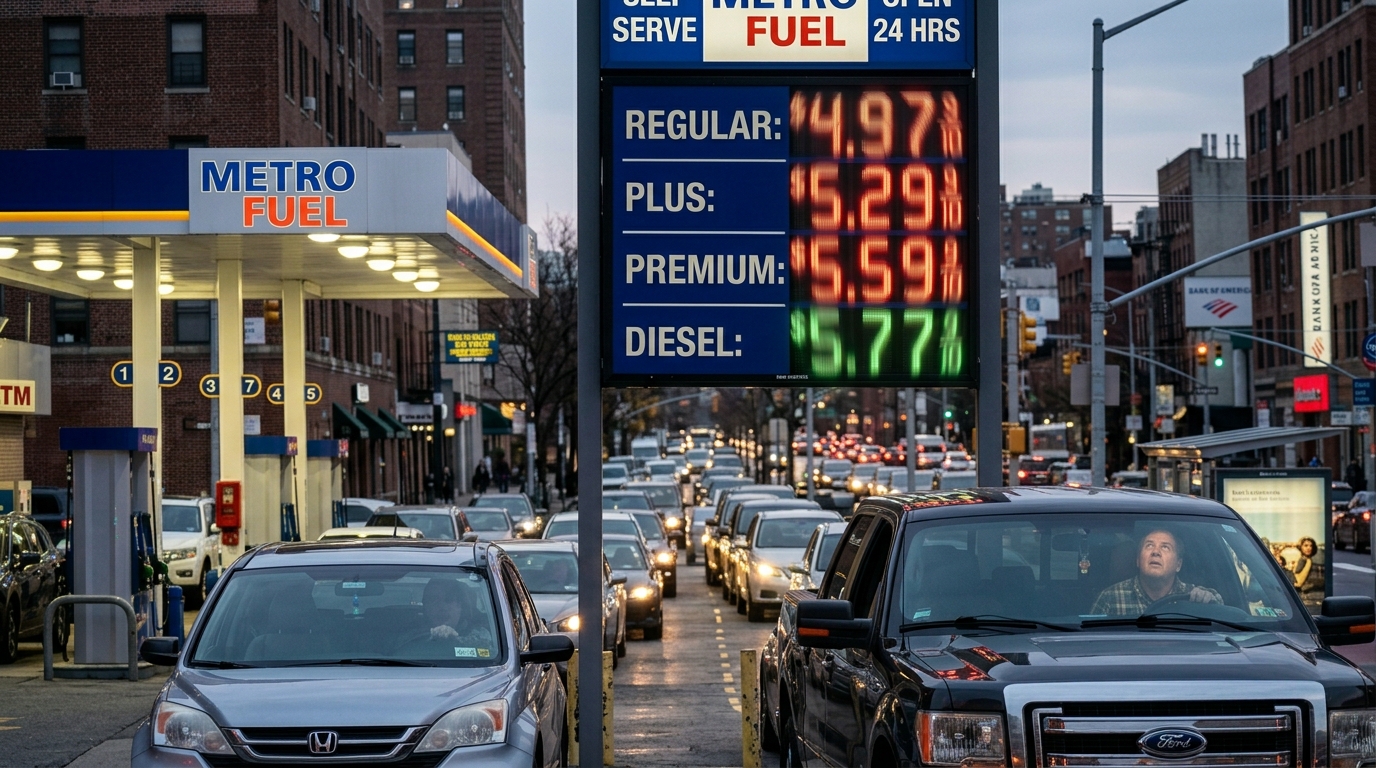
When Washington Wavers, while policymakers debate war powers in Washington, ordinary families across the United States, Europe, and Canada are already paying the price at the gas pump, in heating bills, and at the grocery store.
This is the quiet truth of the March 2026 crisis: long before any battlefield outcome is decided, the first real impact is felt not in war rooms, but in household budgets.
https://mrpo.pk/the-cost-of-exquisite-lies/
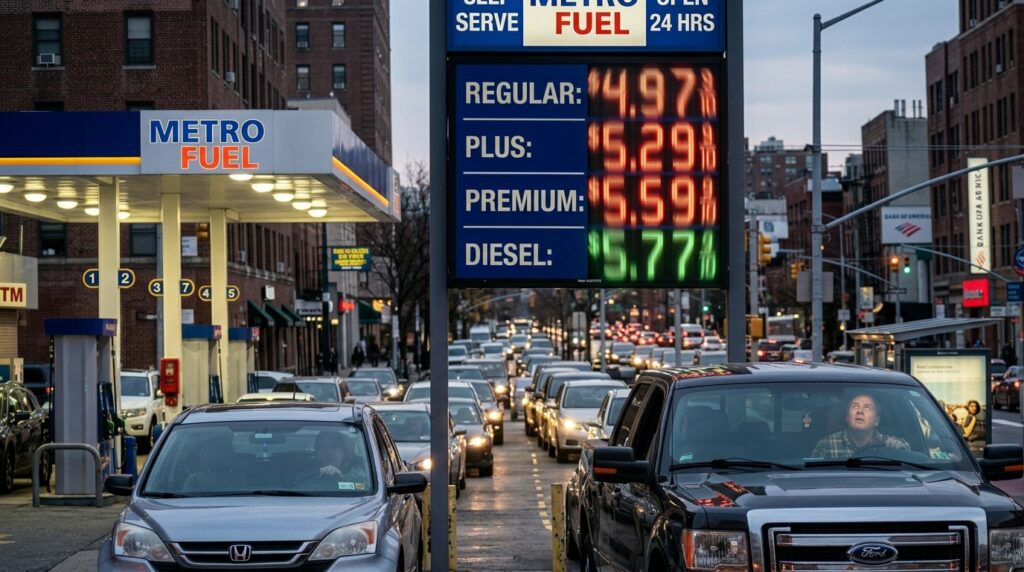
“While policymakers debate war powers in Washington, ordinary families across the U.S. and Europe are already paying the price, at the gas pump, in heating bills, and at the grocery store.”
- Bridge geopolitics → daily life:
- Gulf instability = energy shock = household pressure
-
Thesis:
The March 2026 crisis is not just a political moment,it is the beginning of a deepening energy and cost-of-living crisis across the Western world.
A Self-Inflicted Energy Shock
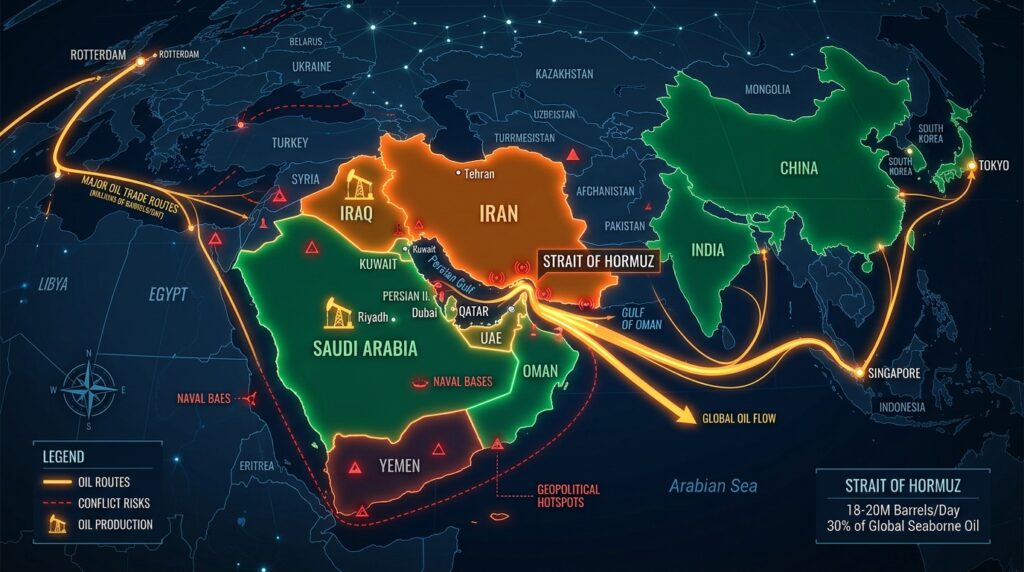
President Donald Trump’s decision to go to war with Iran has exposed a fundamental strategic contradiction: the United States has reinforced its dependence on fossil fuels while simultaneously triggering a conflict in the world’s most critical energy chokepoint, the Strait of Hormuz, the system’s central point of vulnerability, without a credible plan to manage the consequences.
Trump told the nation that America was at war with Iran, fully aware that U.S. attacks would roil global oil markets. The impact was not buried in some top-secret CIA analysis. Any oil broker with a Bloomberg terminal knew what would happen if Iran retaliated by closing the Strait of Hormuz. The precedent was clear—from the Tanker War of the 1980s when U.S. ships had to escort oil vessels to repeated Iranian threats to weaponize its geography. Any disruption would transmit immediately through global markets, sending gasoline prices at pumps across the country soaring. Washington understood the danger and proceeded anyway.
A Crisis That Began in Congress, But Didn’t Stay There
In March 2026, Washington entered a moment of visible strain. Lawmakers clashed over presidential authority to expand military action in the Gulf. A proposed War Powers resolution failed. Intelligence assessments were questioned. A government funding deadlock dragged on.
To many observers, this looked like political dysfunction. To global markets, it looked like something else entirely:
uncertainty.
And in the world of energy, uncertainty is as powerful as disruption itself.
The First Shock: Markets Move Faster Than Governments
Within hours of rising tensions, traders turned their attention to one place: the Strait of Hormuz.
Roughly a fifth of the world’s oil flows through this narrow passage. It doesn’t need to be closed to trigger panic. It only needs to be at risk.
That risk translates instantly into:
- Higher crude prices
- Increased tanker insurance costs
- Rising shipping fees
And those costs don’t stay in financial markets; they move, quietly but relentlessly, into everyday life.
The Real Story: How Geopolitics Hits the Kitchen Table
United States: The Return of the Gas Price Anxiety
For American households, the impact is immediate and visible.
Fuel prices begin to climb, not necessarily because supply has stopped, but because markets anticipate trouble. Transportation costs rise. Retailers adjust prices. Within weeks, the ripple effect reaches groceries, delivery services, and daily commuting.
The psychological impact is just as important:
- Consumers delay spending
- Inflation fears return
- Political pressure builds rapidly
For many Americans, it feels like a familiar cycle, one they thought was already behind them.

Europe: A System Still Recovering
Europe enters this moment with less margin for error.
After the shock of the Russian invasion of Ukraine, many countries reduced dependence on Russian energy, but not without cost. Infrastructure was reconfigured. Supply chains were rerouted. Prices surged.
Now, another disruption looms.
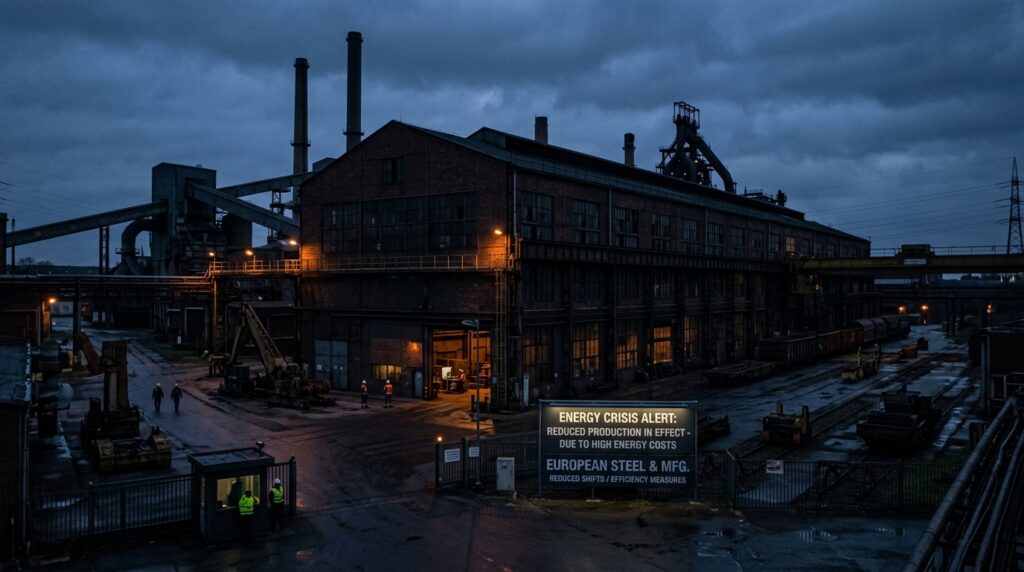
Heating and electricity costs begin to edge upward again, especially in industrial economies like Germany and Italy. Energy-intensive sectors, chemicals, manufacturing, and logistics, face renewed pressure.
The concern is not just higher bills. It is economic competitiveness.
If energy remains volatile, Europe risks:
- Slower growth
- Industrial contraction
- Renewed political discontent
Europe: A System Still Recovering
Canada: A Paradox of Plenty
Canada occupies a unique position.
As an energy exporter, it benefits from higher global prices. Revenues rise. Government finances improve.
Yet Canadian households experience a different reality:
- Higher fuel costs at home
- Rising food prices linked to transport and production
- Continued pressure on the cost of living
This dual effect,national gain, personal strain, creates a subtle but powerful political tension.
The Chain Reaction: Energy Is Never Just Energy
What begins as an oil price fluctuation rarely stays contained.
Energy sits at the foundation of the modern economy. When it shifts, everything else follows:
Food Prices Rise
Fertiliser production depends on energy. So does transportation. The result is higher grocery bills across the Western world.
Supply Chains Tighten
Shipping costs increase. Delays become more frequent. Businesses pass costs downstream.
Inflation Lingers
Central banks face a renewed dilemma:
- Cut rates and risk inflation
- Hold rates and slow growth
Either choice carries consequences.
When Washington Wavers: What Rivals See, Opportunity in Pressure
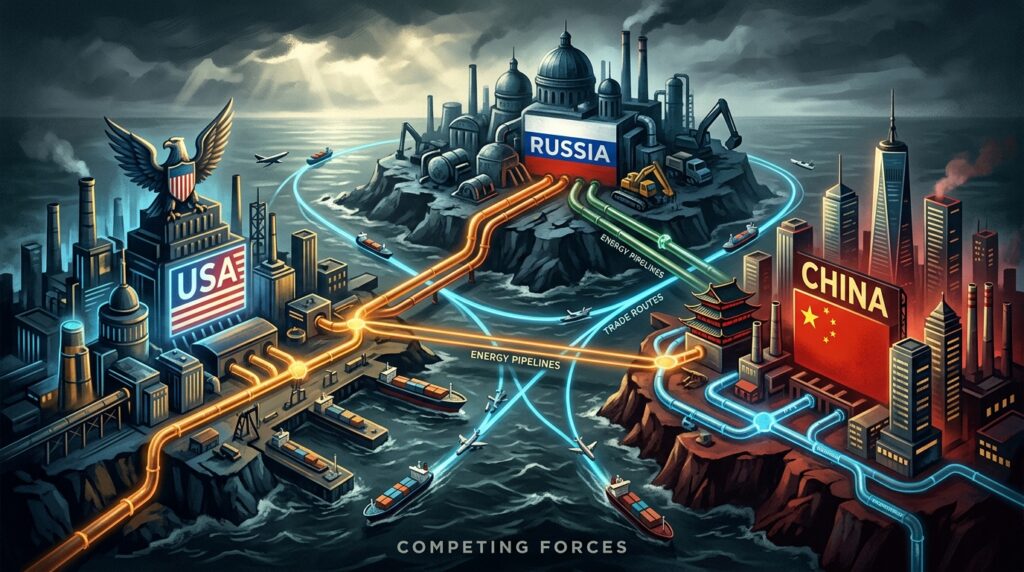
While Western households absorb these shocks, global rivals are watching carefully.
Russia: Profiting from Volatility
Russia benefits from rising oil prices, which help sustain its war economy. At the same time, it sees an opportunity: a distracted West, managing both external conflict and internal economic strain.
China: Stability as Strategy
When Washington wavers, China takes a different approach. Heavily dependent on Gulf energy, it prioritises stability. It positions itself as a mediator, advocating calm, not out of altruism, but out of economic necessity.
Iran: Geography as Leverage
Iran understands that it doesn’t need to close shipping lanes to exert pressure. The mere possibility of disruption is enough to move markets and shape global behaviour.
🇪🇺🇨🇦 Western Alliance Under Strain (Energy Dimension)
Policy Differences
- U.S.: strategic reserves, domestic production
- Europe: energy transition vs immediate needs
Public Sentiment
- War fatigue increases when:
- Bills rise
- Living standards fall
Political Risk
- Populist narratives gain strength:
- “Why are we paying for distant wars?”
Strategic Signal Revisited (Now with Energy Lens)
Adversaries see:
- Political division in Washington
- Economic pressure on Western societies
- Public tolerance for conflict is decreasing
This creates a powerful perception:
The West is strong militarily,but economically and politically constrained
The Real Risk: Domestic Pressure Driving Strategic Hesitation
Governments Under Pressure
- Leaders must balance:
- Security commitments
- Voter frustration
Reduced Strategic Freedom
- Harder to sustain long conflicts
Miscalculation Risk
- Adversaries may assume:
- The West will not escalate
For the United States, Europe, and Canada, the challenge is no longer purely strategic. It is deeply domestic.
Governments must now balance:
- Security commitments abroad
- Economic stability at home
- Public tolerance for prolonged tension
And that tolerance is not unlimited.
As energy costs rise, a familiar political question returns:
Why are we paying the price for conflicts far from home?
This question doesn’t break alliances, but it does strain them.
The Real Risk: Not War, but Miscalculation
When Washington Wavers, the greatest danger in moments like this is not deliberate escalation; it is misreading the situation.
When signals from Washington appear mixed:
- Rivals may assume hesitation
- Allies may question reliability
And in that uncertainty, small moves can trigger larger reactions.
History shows that major conflicts rarely begin with clear decisions. They begin with misjudgments.
Scenarios Ahead
Best Case
Tensions ease. Markets stabilize. Energy prices settle. The crisis fades into a warning rather than a turning point.
Most Likely
Volatility persists. Prices rise and fall with each new development. Households continue to feel pressure. Governments manage, rather than resolve, the situation.
Worst Case
Disruption in the Strait of Hormuz becomes a reality. Oil prices surge dramatically. A global economic slowdown, or worse, follows.
The Hidden Battlefield
The defining feature of this moment is not just geopolitical tension. It is where that tension is felt.
Not on distant frontlines.
Not in diplomatic chambers.
But in everyday life:
- At the gas station
- In monthly utility bills
- At the checkout counter
Final Thought
When Washington Wavers. The question facing the West is no longer simply whether it can project power abroad.
It is whether it can sustain that power at home, under economic pressure and political strain.
Because in 2026, the limits of global influence may not be decided by military strength,
But by how much pressure ordinary citizens are willing and able to sustain.
Frequently Asked Questions (FAQs)
1. Why are energy prices rising even without an actual disruption in oil supply?
Energy markets react to risk and uncertainty, not just physical shortages. Tensions around the Strait of Hormuz increase insurance costs, shipping risks, and speculative trading—all of which push prices up before any real disruption occurs.
2. How does instability in the Gulf affect everyday costs in the U.S. and Europe?
Higher oil prices increase transportation and production costs, which then raise prices for fuel, food, and consumer goods. This creates a ripple effect across the entire economy, impacting household budgets.
3. Is this energy shock similar to the one after the Ukraine war?
Yes, there are similarities. After the Russian invasion of Ukraine, Europe experienced a major energy disruption. However, the current situation is different because it threatens a global oil chokepoint, which could have even broader consequences.
4. Could this situation lead to a global recession?
If energy prices rise sharply and remain high, it can slow economic growth, increase inflation, and reduce consumer spending—conditions that can lead to a global recession, especially if combined with ongoing geopolitical instability.
5. Why are countries like China and Russia reacting differently to the crisis?
China prioritises stability because it depends heavily on energy imports, while Russia benefits financially from higher oil prices. Their strategies reflect different economic and geopolitical interests.
6. What can governments do to protect citizens from rising energy costs?
Governments can:
- Release strategic oil reserves
- Provide subsidies or tax relief
- Accelerate renewable energy investments
- Diversify energy imports
However, these measures often provide short-term relief, not a complete solution.
Conclusion: The Hidden Battlefield
“The next phase of this crisis may not be fought in the skies over the Gulf, but in the living rooms of America and Europe, where energy bills quietly shape the limits of power.”
References
- International Energy Agency – Global energy market reports
- U.S. Energy Information Administration – Oil price and supply data
- European Central Bank – Inflation and energy impact reports
- World Bank – Global economic outlook
- NATO – Security and geopolitical assessments
- Reuters / Al Jazeera – Real-time geopolitical developments