
The Same War, Two Different Wallets: Why Americans and Europeans Feel This Conflict So Differently
The Same War Two Different Wallets: Why Americans and Europeans feel the Iran conflict so differently. Gas prices, inflation, energy jitters, and a fractured trust gap are explained.
The Strait of Hormuz is 7,000 miles from Kansas and 2,000 miles from Madrid. Distance doesn’t matter anymore.
When Iranian missiles fly, American gas stations twitch. When tankers burn, European heating bills climb. Same war. Two very different anxieties.
https://mrpo.pk/trumps-iran-war-narrative/

Here’s the part politicians won’t say: the numbers are only half the story. The other half is trust—who’s lost it, who’s exploiting it, and what happens when your leaders keep telling you everything’s fine while your wallet keeps screaming otherwise.
The Same War Two Different Wallets, The American Story: Gas Pumps and 401(k)s
Walk into any U.S. gas station this week, and the numbers tell a simple story. The national average hit $3.58 on Wednesday, the eleventh straight day of increases. That sedan you drive? Cost $36 to fill before the war. Now it’s $43. California drivers are bleeding $5.34 a gallon.
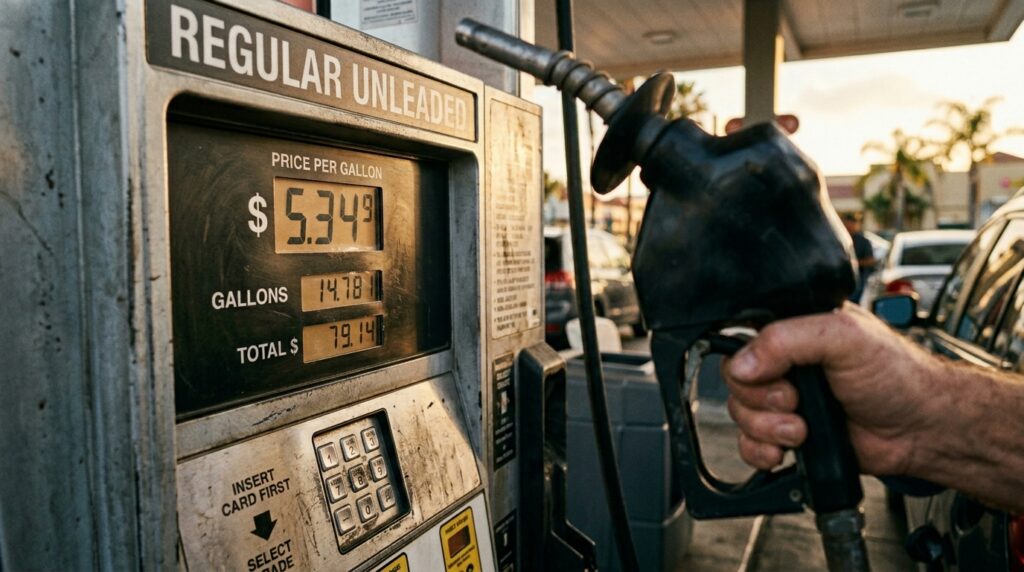
The math lands differently depending on who you are. A suburban mom running kids to school and practices? She does the calculation in her head by Thursday. A trucker hauling produce across state lines? He feels it in every load. The agriculture and logistics sectors just took a “massive jolt,” as one analyst put it.
But here’s what’s interesting: Americans aren’t just angry about the money. They’re angry about the whiplash.
The Trust Gap at the Pump
President Trump spent last weekend telling markets the war was a “little short-term excursion” nearly done. Stocks jumped. Oil eased. Then Monday evening, he tacked back—the war wasn’t ending, it was ahead of schedule. The S&P 500 quivered. Investors blinked. And every American with a 401(k) got a small lesson in how quickly the ground can shift.
The stock market used to be disconnected from how people actually felt. From 2023 to 2025, indexes hit record highs while consumer sentiment stayed dour. That gap has closed. Investors are rattled now too. The S&P 500 has spent the year flat—quivering between up a point and down a point—finally mirroring the country’s mood.
The Tariff Hangover
Then there’s the tariff fight. Importers flooded federal court with 2,000 cases seeking $130 billion after the Supreme Court ruled Trump-era duties illegal. That’s not dry trade law—it’s money that could lower prices or tank companies, depending on who wins.
The Federal Reserve is stuck between floors. Inflation is running at 2.4 per cent, and the labour market is showing “more notable signs of softening” with 92,000 jobs shed in February. Austan Goolsbee, president of the Chicago Fed, summed it up: “If the job market is getting worse and inflation is getting worse at the same time, it’s not obvious to me what the immediate response should be.”
Translation: we’re flying blind, and so is everyone else.
The Same War Two Different Wallets, The European Story: Déjà Vu and Energy Jitters
Cross the Atlantic and the anxiety changes flavour.
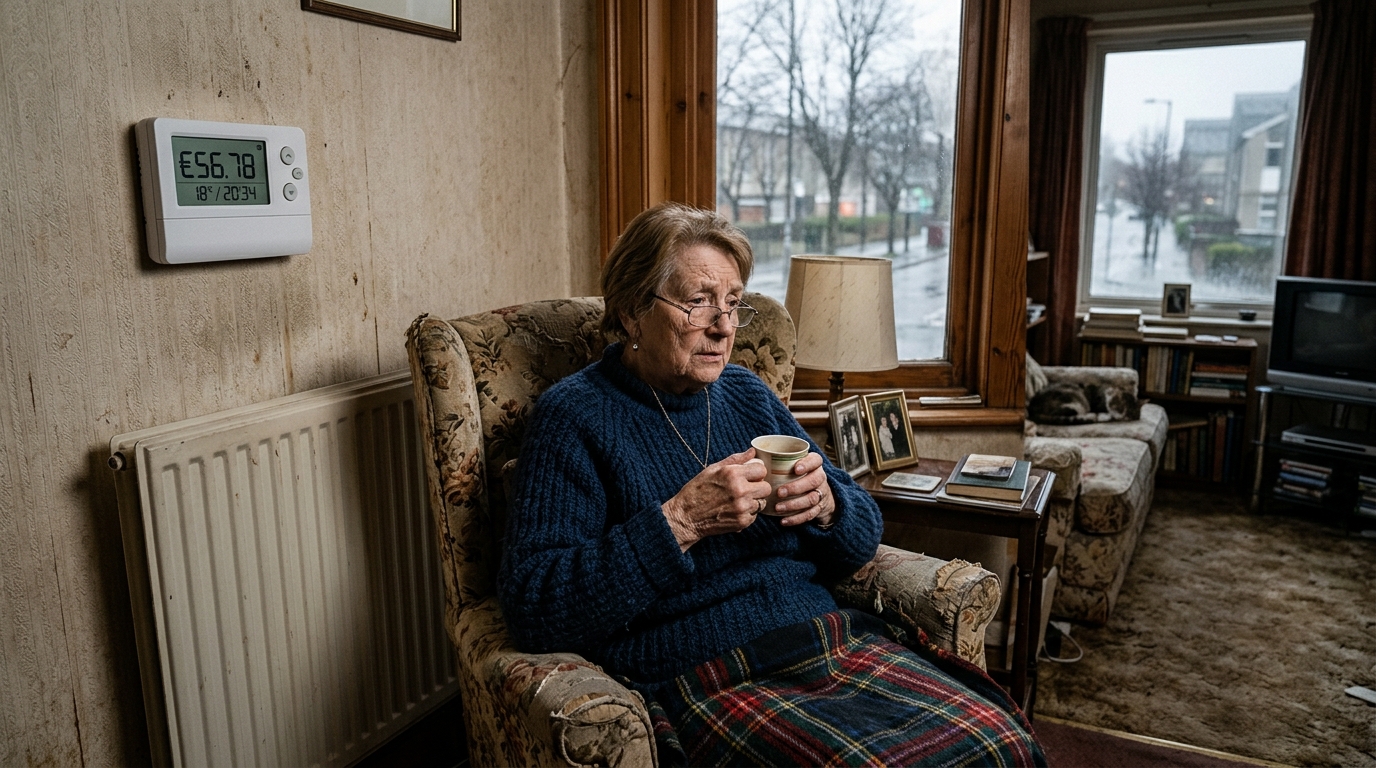
Europeans have watched their gas prices surge 75 per cent since the war began. Dutch TTF day-ahead gas hit €56 per megawatt-hour, almost double pre-war levels. But the real dread isn’t the number. It’s the memory.
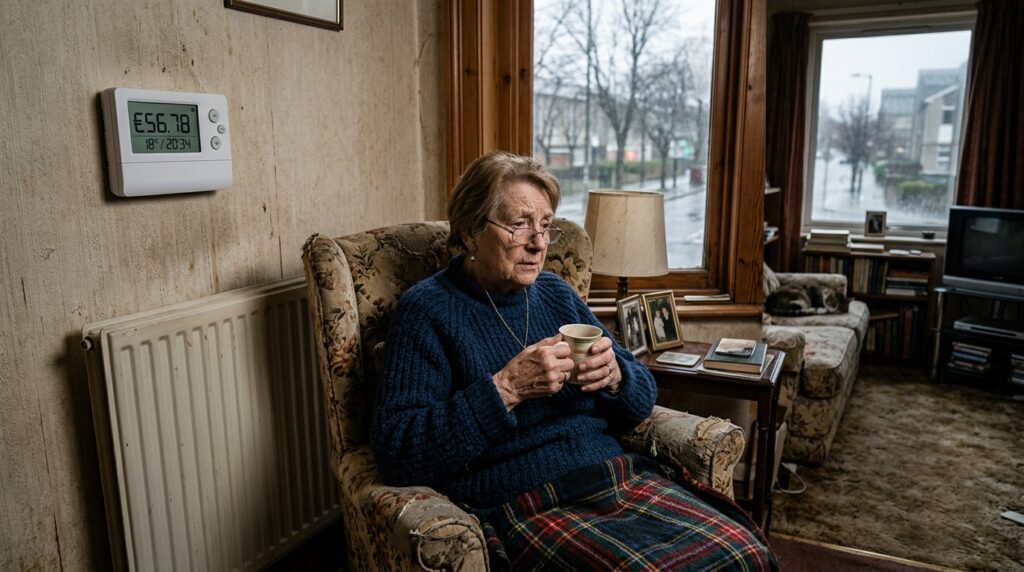
2022 is still fresh. The winter when Russian pipelines shut down. When governments begged citizens to turn down thermostats. When inflation hit double digits, nobody knew where the bottom was.
One Dependency Swapped for Another
“Iran conflict had brought Europe’s energy import dependency into sharp relief,” said Ben Hoff, head of commodity research at Societe Generale. “What’s happened is that the exposure has shifted from Russian pipeline to LNG imports largely from the US, and to a smaller extent from the Middle East.”
One dependency swapped for another. Same vulnerability, different label.
European Commission President Ursula von der Leyen tried to spin it forward: “The developments in the Middle East remind us once again of the risks of relying still too much on fossil fuels.” The UK’s Ed Miliband echoed her. But analysts are blunter. “There has to be a realisation that the problem isn’t fixed. It’s just been reformulated,” Hoff said.
Obituary for the “Western world”
The Western world as known since the end of World War II no longer exists. In 1946, Winston Churchill publicly denounced the establishment of an Iron Curtain that divided Europe in two. In 1947, Harry S. Truman declared that the United States would take the lead in the free world. In 1949, the Atlantic Alliance was created, the first alliance signed by the United States in peacetime, and the following year it was given a permanent and integrated civil and military structure: NATO. All of this was torn apart by Donald Trump in a matter of days. Among other pleasantries, he declared from the White House on February 26, 2025: “Let’s be honest, the European Union was formed to screw the United States.” Vice President Vance addressed Europeans in Munich at the Security Conference a few days earlier, on February 14: “America can do nothing for you, and there is nothing you can do for the American people.”
https://www.iris-france.org/en/the-western-world-is-dead-but-europe-doesnt-know-it/
The Numbers Europe Can’t Escape
The numbers back him up. Eurozone inflation already ticked up to 1.9 per cent in February. Analysts at Oxford Economics project the impact of rising energy prices on Eurozone inflation will be about three times greater than in the U.S. Europe simply has less cushion.
And storage is dwindling. German gas reserves sit at about 21 per cent capacity, low for this time of year. Winter’s worst is past, but restocking for next season will be brutal if prices stay high.
The Same War Two Different Wallets, The Political Tightrope
Then there’s the politics. European leaders are publicly insisting they’re not at war while quietly dispatching warships, jets, and air defence systems. France scrambled Rafale fighters over the UAE. Italy deployed forces to protect Gulf countries. Britain sent Typhoon jets.
But Trump didn’t consult them beforehand. He criticised Britain’s Keir Starmer as “no Winston Churchill.” He praised Germany’s Friedrich Merz while Merz sat next to him in the Oval Office, listening to a bullish briefing on a campaign Europe never asked for.
“We don’t know if the plan will work and whether the military strikes from abroad will enable political change from within,” Merz said afterwards. “This plan is not without risk, and we, too, would have to bear its consequences.”
That’s diplomatic language for: we’re holding the bag for a war we didn’t vote on.
The Real Story Nobody’s Naming
Here’s the through-line neither continent wants to admit.
The 2026 Edelman Trust Barometer dropped in January with a stark number: 70 per cent of respondents globally say they’re hesitant or unwilling to trust someone who differs from them in values, information sources, or worldview.
Seventy per cent.
The Retreat Into Insularity
We’ve stopped trying to understand “the other side”, not just politically but epistemically. Different facts. Different trusted sources. Different realities.
The report calls it a “retreat into insularity.” People now trust their neighbours (+11 net) and coworkers (+11 net) more, while trust in national government leaders (-16 net) and major news organisations (-11 net) keeps sliding.
Only 39 per cent say they get information from sources with a different political leaning at least weekly—down 6 points in a year. The marketplace of ideas isn’t just empty. It’s boarded up.
Forrester’s Government Trust Imperative Metric puts the U.S. at a weak 37.7 out of 100. Australia scores 47.7. Singapore, where information environments are more controlled, hits 65.2. The pattern is uncomfortable: open societies are losing trust faster.
How People Verify Now
The Reuters Institute found that 40 per cent of people now sometimes or often avoid the news altogether. Those who do engage increasingly get it from social media, where mainstream media loses to niche creators. And 58 per cent say it’s difficult to tell real from fake online, AI is making that exponentially harder.
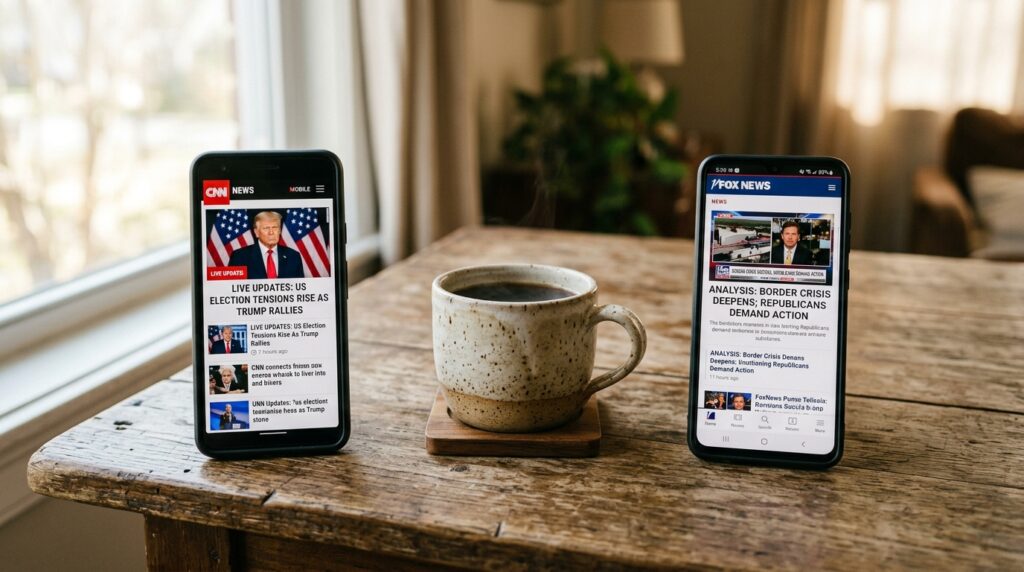
Here’s the kicker: when asked how they’d verify news they weren’t sure about, 38 per cent said they’d go to “a news source I trust.” Americans listed CNN, Fox News, and BBC as their preferred sources. One of those outlets frequently espouses a reality fundamentally incompatible with the others.
Checking a trusted source doesn’t mean checking against a shared standard anymore. It means checking with your team.
Under-35s verify via social media comments, AI chatbots, or quick searches, which increasingly return AI synthesis. Verification has become consulting the feed. And the feed is personalised to what you already believe.
The Same War Two Different Wallets, What Trust Looks Like When It’s Gone
This isn’t academic. It’s playing out in real time.
The U.S. Split
In the U.S., the administration points to rising stock valuations as proof of a healthy business environment. But Michael Kantrowitz, chief investment strategist at Piper Sandler, cuts through it: “The stock market doesn’t solve consumers’ problems. It doesn’t solve many of our problems.”
Henrietta Treyz of Veda Partners puts it more sharply: “The American public is worried about affordability, housing, high electricity prices and high grocery bills.” The gap between what leaders celebrate and what families feel keeps widening.
The European Tightrope
In Europe, the split is between what leaders say publicly and what they order their militaries to do privately. France says it’s not at war while its Rafales fly cover over the UAE. Italy insists it’s not joining offensive strikes while allowing U.S. planes to use its bases.
Peter Ricketts, a former British national security adviser, describes European leaders “walking a tightrope.” The rope gets higher every day.
And voters notice. They notice when their prime minister gets mocked by the U.S. president. They notice when their government sends ships to a war they were told wouldn’t happen. They notice when energy bills climb and explanations don’t match experience.
Mark Leonard, director of the European Council on Foreign Relations, puts it bluntly: “Pretending that you have no control over things is not something that will go over well with the European public. They’re already restive and frustrated.”
The Realignment Nobody Asked For
Here’s where the two stories merge.
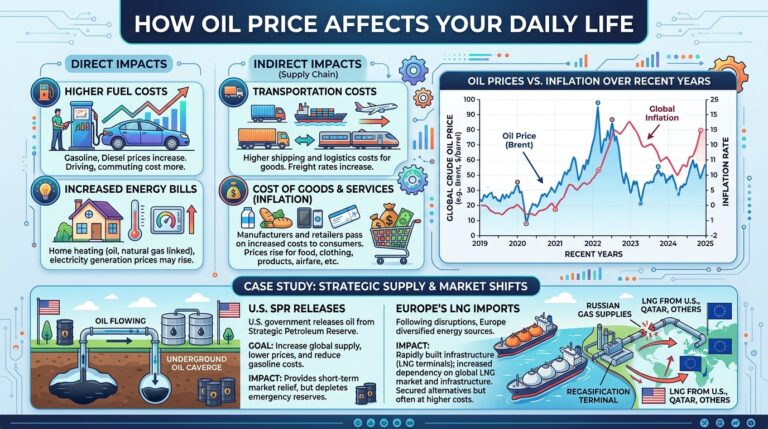
The International Energy Agency warned this week of the “largest supply disruption in the history of the global oil market.” The Strait of Hormuz carries a fifth of the world’s crude. It’s effectively closed.
Goldman Sachs projects that if oil prices stay above $100, global growth drops half a percentage point and inflation jumps nearly a full point. Europe and the Middle East take the worst hits. Russia, unexpectedly, gets a lifeline—its oil, previously sanctioned, is now in demand again.
The Gulf region’s economy could shrink up to 15 per cent if the conflict drags on. Tourism could drop 27 per cent. Saudi Arabia’s Vision 2030 reform project, built on attracting foreign investment, suddenly looks shaky.
And consumers everywhere are doing the math. U.S. households pay about $2,500 a year on gas. If that jumps $10 a week, something else gets cut. Movies. Restaurants. Theme parks.
“How do they offset that?” asks Mark Mathews, chief economist at the National Retail Federation.
They don’t. They just feel it.
The Bottom Line
American readers track the Iran war through gas prices and tariff fights. European readers track it through inflation perceptions and energy jitters. Same war. Different anxieties.
The through-line is trust, fractured, bleeding, and not healing.
Seventy per cent of us won’t trust someone who believes different facts. Forty per cent avoid news altogether. We verify within our tribes. We trust influencers more than institutions. And when leaders tell us the economy is fine while our wallets scream otherwise, that gap doesn’t inspire confidence—it confirms suspicion.
Edelman’s solution is “trust brokering”: work through intermediaries who already have credibility within specific communities. Meet people where they are. Translate between groups.
It’s good advice for navigating the jungle. But it’s not restoring the commons.
The question nobody’s answering is whether we want a commons back. Whether we’re willing to trust people who don’t already agree with us. Whether we can look at the same war, the same data, the same rising prices, and find a shared reality underneath.
Because the missiles keep flying. The tankers keep burning. The prices keep climbing.
And if we can’t even agree on what’s happening, we sure as hell won’t agree on what to do about it.
Frequently Asked Questions
Why are Americans and Europeans feeling the Iran war so differently?
The United States has become a net energy exporter over the past decade, thanks to shale oil production, giving it more resilience to oil price shocks. Europe imports about 58 per cent of its energy and remains highly dependent on global markets, making it roughly three times more vulnerable to energy-driven inflation. Different energy profiles mean different economic pain points.
How much have gas prices actually increased since the war started?
U.S. gasoline prices jumped about 20 per cent since the February 28 strikes, with the national average hitting $3.58 per gallon. California drivers face $5.34, while Louisiana averages $3.04. Diesel climbed 23 per cent to $4.65, directly affecting trucking, agriculture, and any goods that move on roads.
What’s happening with European energy prices and storage?
European natural gas prices have nearly doubled since the war began, with Dutch TTF day-ahead gas at €56 per megawatt-hour. German storage sits at about 21 per cent capacity, low for this time of year. While winter is ending, restocking for next season will be expensive and competitive if prices stay high.
How is the trust crisis affecting how people understand the war?
Seventy per cent of people globally are hesitant to trust those with different values or information sources. Trust in government leaders and news organisations continues declining, while trust in neighbours and coworkers rises. Only 39 per cent regularly encounter information from sources with different political leanings. People increasingly verify news within their own tribes rather than against shared standards.
What’s the Federal Reserve doing about inflation and the war?
The Fed faces a difficult combination: sticky inflation and a weakening labour market. Employers shed 92,000 jobs in February as the unemployment rate edged up to 4.4 per cent. Markets now expect the Fed to delay rate cuts until September rather than July. Chicago Fed President Austan Goolsbee acknowledged it’s “not obvious” what the immediate response should be when both the job market and inflation worsen simultaneously.
Could the war actually benefit some countries?
Yes, Russia unexpectedly gained a lifeline. Its crude oil, previously constrained by sanctions, is now in demand again due to Middle East supply disruptions. With oil prices significantly exceeding Russia’s fiscal breakeven point of $59 per barrel, the Kremlin’s war funding grows. Other oil producers like Canada and Brazil may also see economic boosts from higher exports.
EP Statement: This article is for informational purposes only and is based on reporting from multiple news sources and official statements as of March 2026. The situation remains fluid and subject to change.
References
- US Energy Information Administration, gasoline price tracking March 2026
- Societe Generale commodity research, Ben Hoff analysis
- Edelman Trust Barometer 2026
- Oxford Economics, energy price impact projections
- Reuters Institute Digital News Report 2026
- Federal Reserve Beige Book, March 2026
- International Energy Agency, oil market disruption warning
- Goldman Sachs, global growth projections
- National Retail Federation, consumer spending analysis
- European Council on Foreign Relations, Mark Leonard commentary