
The War Enters Week Three: Kharg Island in Flames and the Escalation Nobody Can Stop
The War Enters Week Three, Iran’s main oil terminal went up in flames on Friday. The U.S. sent another 2,500 Marines. Russia is selling oil to everyone again. And somewhere underground, Iran’s new supreme leader is reportedly wounded, hiding, and vowing revenge. https://mrpo.pk/power-double-standards-and-the-crisis/
The Strait of Hormuz is a parking lot. Two hundred ships just sitting there, crews watching, nobody moving.
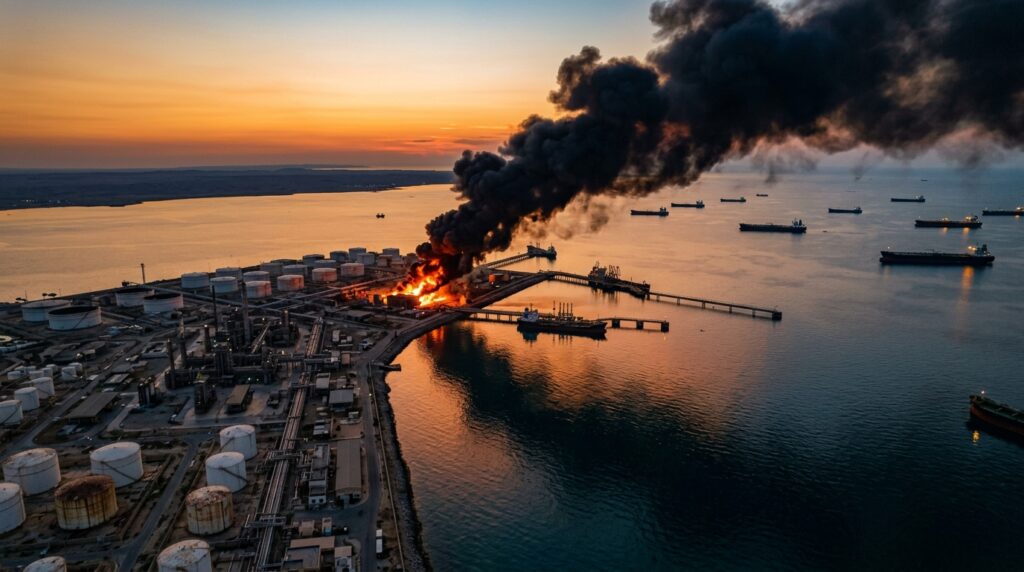
Here’s what happened in the last 48 hours. It’s not getting quieter.
The Kharg Island Strike: Trump’s Warning Shot
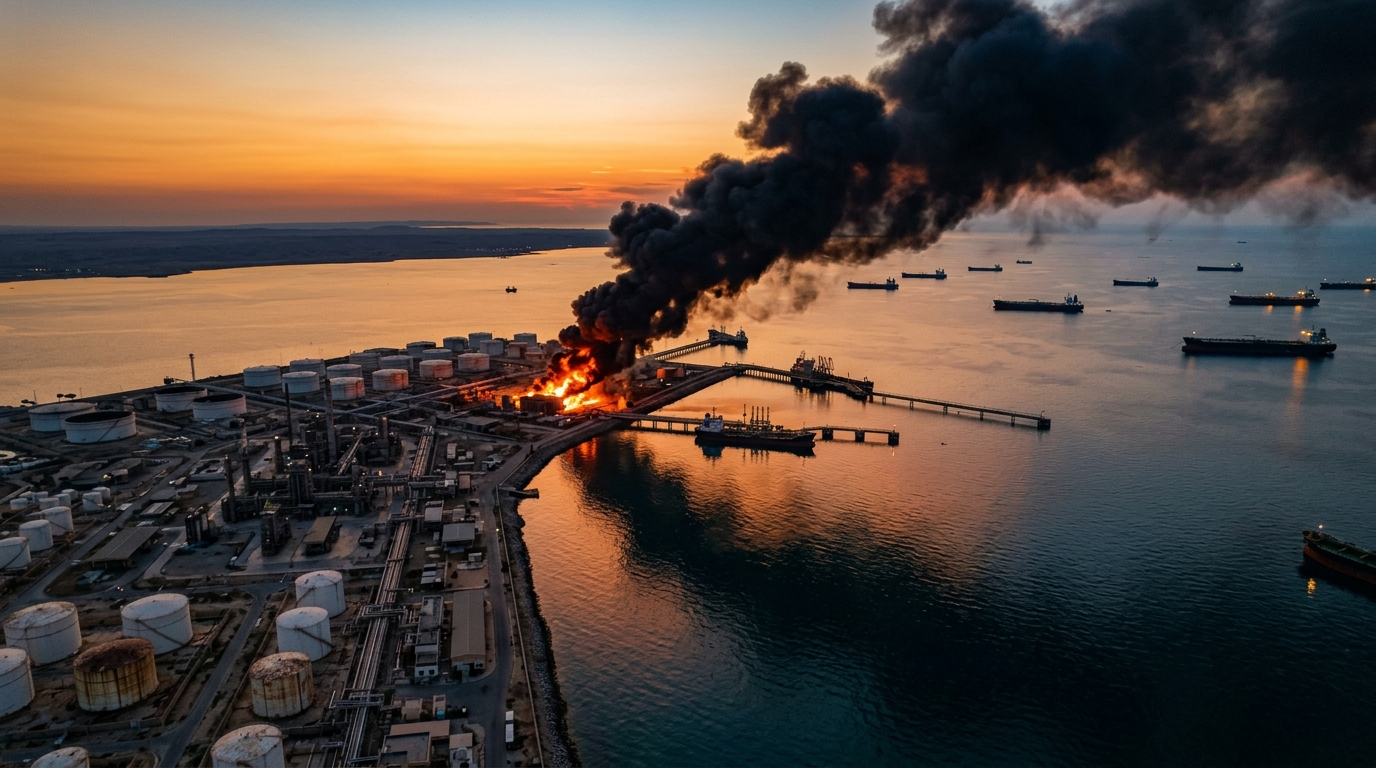
Friday morning, President Trump announced on Truth Social that U.S. forces had “totally obliterated” military targets on Kharg Island, Iran’s primary oil export terminal. The island handles roughly 90 per cent of Iran’s crude exports, about 1.4 million barrels a day when things are normal.
Trump called it “one of the most powerful bombing raids in the History of the Middle East”.
But here’s the interesting part: he said he deliberately spared the oil infrastructure itself. For now.
“However, should Iran, or anyone else, do anything to interfere with the Free and Safe Passage of Ships through the Strait of Hormuz, I will immediately reconsider this decision,” Trump wrote.
The message was clear: we can take your oil whenever we want. This was a demonstration shot.
DUBAI, United Arab Emirates (AP) — Iran urged people Saturday to evacuate the Middle East’s busiest port and two others in the United Arab Emirates, openly threatening a neighbouring country’s non-U.S. assets for the first time as its war with the U.S. and Israel entered a third week.
Tehran said the U.S. had used “ports, docks and hideouts” in the UAE to launch strikes on Kharg Island, home to the main terminal handling Iran’s oil exports, without providing evidence. It urged people to leave areas where it said U.S. forces were sheltering.
Iran’s Response: Threaten the Neighbours
Tehran didn’t blink. Within 24 hours, Iran’s military stated the Al-Anbiya Central Headquarters: if Iran’s energy facilities are attacked, oil and energy infrastructure belonging to firms that cooperate with the United States will “immediately be destroyed and turned into a pile of ashes”.
Then they got specific. For the first time in this conflict, Iran threatened to strike infrastructure in a neighbouring state, specifically, three major ports in the United Arab Emirates. Tehran labelled them “legitimate targets,” alleging they’re used by the U.S. military to launch attacks.
Foreign Minister Abbas Araghchi added another layer Saturday: any attack on Iran’s oil and energy infrastructure would trigger retaliation against regional facilities linked to U.S. companies. Not U.S. bases. Facilities tied to American business interests.
That’s a different kind of war.
The Military Picture: By the Numbers
Two weeks in, the scale is staggering.
The Pentagon says U.S. and Israeli forces have struck more than 15,000 targets in Iran. Israel’s military alone claims 7,600 strikes, most against Iran’s missile program. The U.S. has lost 13 service members, including six from a refuelling aircraft that crashed in Iraq, an incident officials say wasn’t hostile fire.
More than 50,000 U.S. service members are now involved in the conflict, according to a senior Pentagon official who claimed “operational dominance” over air and sea domains.
The USS Tripoli, an amphibious assault ship carrying the 31st Marine Expeditionary Unit, about 2,200 Marines with F-35 fighters, MV-22 Ospreys, and helicopters, has been dispatched to the region. That brings additional ground options to a conflict that’s been mostly air and sea so far.
The Lebanon Front: Expanding Fast
This isn’t just about Iran anymore.
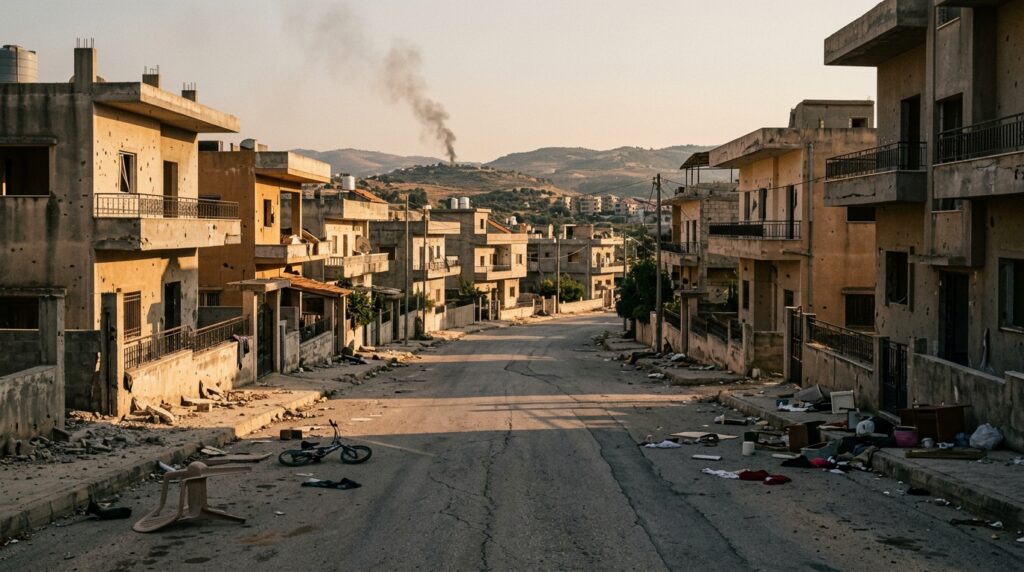
Israeli Defence Minister Israel Katz announced Saturday that “the global and regional struggle against Iran is escalating and we are entering the final decisive phase”. He and Prime Minister Netanyahu have instructed the military to “prepare to expand IDF operations in Lebanon”.
The goal: “restore peace and security to the northern communities”.
On the ground, that means more strikes, deeper into Lebanon. Friday night, an Israeli airstrike hit a primary healthcare centre in the southern town of Burj Qalaouiyeh, killing 12 medical workers. Lebanon’s Health Ministry called it a “crime against humanity” and rejected Israeli claims that ambulances were being used for military purposes.
The death toll in Lebanon has climbed to 826 since March 2, with nearly 2,000 wounded. More than 800,000 people have fled their homes.
UN peacekeepers got hit, too. Israeli strikes on Friday struck the Nepalese battalion’s compound of the UN Interim Force in Lebanon (UNIFIL). No Nepali soldiers were injured, but UN Secretary-General Antonio Guterres, standing in Beirut, warned that violence risks “devastating large parts of the country”.
The War Enters Week Three: Diplomacy, Sort Of
Here’s the weird part: even as bombs fall, someone’s talking.
French President Emmanuel Macron announced Saturday that Lebanon has signalled readiness for “direct talks” with Israel, offering Paris as a potential venue. Representatives from both countries are expected to meet in the coming days, with the U.S. involved. Cyprus is another possible location.
Israeli daily Haaretz reported the development. Whether it leads anywhere is another question, especially with Katz declaring the “final decisive phase” on the same day.
Turkey’s President Erdogan, meanwhile, claims to be engaged in “intense” diplomatic efforts to prevent a wider war. His foreign minister, Hakan Fidan, warned against anyone pursuing “regime change” in Iran and insisted Iran’s territorial integrity must not be questioned.
That’s diplomatic language for: don’t think you’re breaking this country up.
The Oil War: Numbers That Hurt
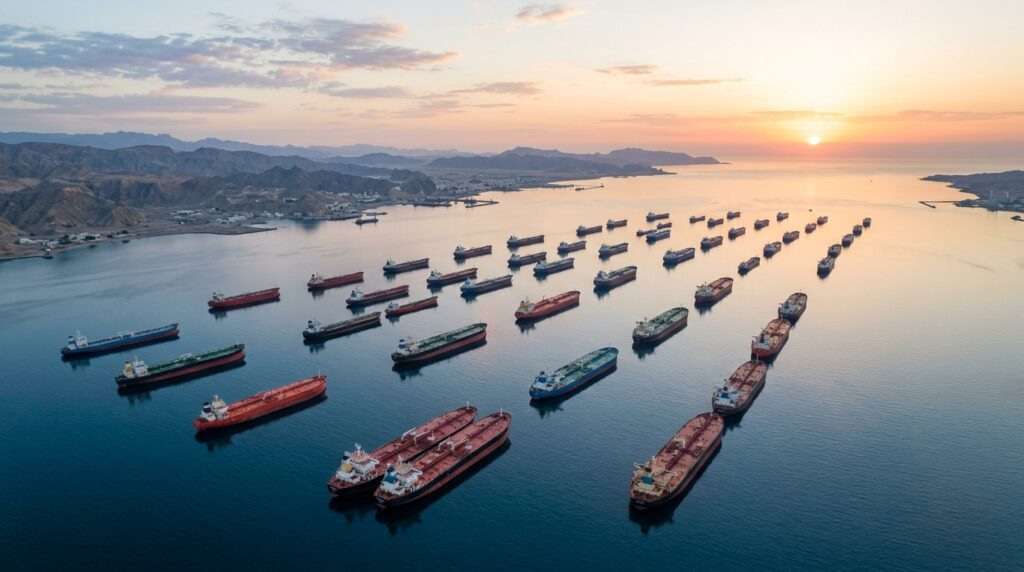
The war enters week three, and the Strait of Hormuz carries about a fifth of the world’s crude oil and LNG. It’s effectively closed.
The International Energy Agency called it the “largest supply disruption in the history of the global oil market”. Crude production is down by at least eight million barrels per day.
Brent crude hit $100.46 a barrel Thursday, up 10.1 per cent. West Texas Intermediate settled at $96.40, up 10.5 per cent. Both have pulled back slightly but remain far above pre-war levels.
U.S. gasoline prices hit a national average of $3.60 a gallon Thursday, up 21 per cent since the war began. Diesel jumped even faster: $4.86, up 29 per cent.
The economic pain is spreading fast.
The War Enters Week Three: The Russia Twist
Here’s the irony that nobody saw coming.
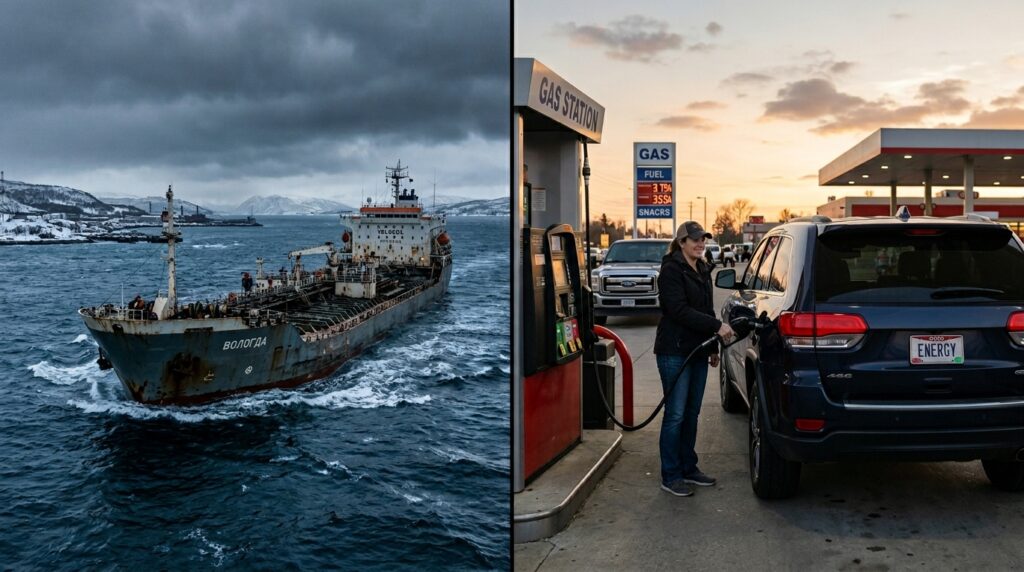
The Trump administration temporarily lifted sanctions on Russian oil currently at sea. Treasury Secretary Scott Bessent estimated that freeing up this supply, about 130 million barrels, according to Kpler data, could add hundreds of millions of barrels to global markets and curb prices.
The exemptions apply to oil already in transit and will last until April 11.
Bessent claimed Russia wouldn’t benefit significantly because most of its energy revenue comes from taxes assessed at extraction. But he acknowledged Moscow would see “some financial benefit”.
“It’s unfortunate,” he said in a podcast interview, but hoped it would last only a “micro period”.
Top Senate Democrats blasted the move. “This war has resulted in huge spikes in gas prices for Americans, who are now paying more at the pump than at any point in either of President Trump’s two terms,” they said in a joint statement.
Edward Fishman, a senior fellow at the Council on Foreign Relations, put it bluntly: “In one fell swoop, we’ve undone a huge amount of pressure on Russia”.
Iran’s foreign minister couldn’t resist commenting. “The US spent months bullying India into ending oil imports from Russia,” Araghchi posted on X Friday. “After two weeks of war with Iran, White House is now begging the world, including India, to buy Russian crude”.
He’s not wrong.
The Human Toll
The war enters week three, and behind the strategy, people are dying.
Iran’s representative to the UN told the Security Council on Wednesday that more than 1,348 civilians have been killed since the war began. The UN refugee agency estimates up to 3.2 million people are displaced inside Iran.
A woman in Kermanshah, western Iran, described a grim picture to AFP: “countless” people from Tehran seeking refuge from airstrikes, food and medicine scarce, prices “nearly doubling”.
In Lebanon, 826 dead, nearly 2,000 wounded. In Gulf countries, at least 13 civilians were killed, including an 11-year-old girl in Kuwait who called her father at work two hours before she died to tell him she loved him.
“It was as if she was trying to say goodbye,” her father told AFP.
In Iraq, a French soldier was killed, and six were wounded in a drone attack in Erbil, the first French military death in this conflict. President Macron called it “unacceptable” but insisted France’s position remains “defensive”.
The U.S. embassy compound in Baghdad was struck by a drone at dawn Saturday, injuring two security personnel and damaging the building.
Where the New Leader Is
Mojtaba Khamenei, Iran’s new supreme leader, hasn’t been seen in public since his father was killed in the opening strikes on February 28.
His first message, read by a state TV presenter, vowed revenge, promised to keep the Strait of Hormuz closed, and warned that all U.S. bases in the region would be targeted. But his whereabouts and physical condition are unknown.
Some Iranian officials say he was wounded. The U.S. government just unveiled a $10 million reward for information about his location.
Israeli Prime Minister Netanyahu has taunted him to “show his face”. So far, nothing.
The War Enters Week Three: The Bottom Line
This war is now in its third week, and nobody’s figured out how to stop.
The U.S. says Iran’s missile capabilities are down 90 per cent. Iran says it’s launching the 44th wave of attacks. The Pentagon is sending more Marines. The administration is begging the world to buy Russian oil. And a wounded supreme leader is somewhere underground, deciding what comes next.
The Arab League condemned Israel’s strikes on Lebanon as an “unacceptable and condemned expansionist policy”. Turkey accused Netanyahu of pursuing “a new genocide”. The UN secretary-general called for immediate de-escalation.
Nobody’s listening.
Trump was asked this week whether the operation is a war or an excursion. “It’s both,” he said. “It’s an excursion that will keep us out of a war, and the war is going to be, I mean, for them it’s a war”.
For them, it’s a war.
For everyone else, it’s starting to feel like one too.
Frequently Asked Questions
What happened at Kharg Island and why does it matter?
U.S. forces struck military targets on Kharg Island, Iran’s primary oil export terminal that handles about 90 per cent of the country’s crude exports. President Trump said he deliberately spared oil infrastructure but warned that any interference with shipping through the Strait of Hormuz would prompt him to reconsider. The strike was a demonstration of how vulnerable Iran’s oil economy is to U.S. military action.
How many U.S. troops are involved, and what are the casualties?
More than 50,000 U.S. service members are now involved in the conflict, according to a senior Pentagon official. Thirteen U.S. service members have been killed, including six from a refuelling aircraft that crashed in Iraq in an incident officials say was not caused by hostile fire. An additional 2,200 Marines with the 31st Marine Expeditionary Unit aboard the USS Tripoli have been dispatched to the region.
What’s happening with oil prices and gas at the pump?
Brent crude hit $100.46 a barrel on Thursday. U.S. gasoline prices reached a national average of $3.60 a gallon, up 21 per cent since the war began. Diesel jumped to $4.86, up 29 per cent. The International Energy Agency called this the “largest supply disruption in the history of the global oil market,” with production down by at least eight million barrels per day.
Why did the U.S. lift sanctions on Russian oil?
The Trump administration temporarily lifted sanctions on Russian oil currently at sea, allowing about 130 million barrels to enter global markets. Treasury Secretary Scott Bessent said the move could add hundreds of millions of barrels to supply and curb prices. Critics say it undermines years of pressure on Russia and gives Moscow a financial boost from a war it didn’t start.
Is the war expanding into Lebanon?
Yes. Israeli Defence Minister Israel Katz announced preparations to “expand IDF operations in Lebanon,” and strikes have intensified across the country. More than 826 people have been killed in Lebanon since March 2, with nearly 2,000 wounded and over 800,000 displaced. Israeli strikes have hit central Beirut, a UN peacekeeper compound, and a healthcare centre, killing 12 medical workers.
Where is Iran’s new supreme leader?
Mojtaba Khamenei, who became the supreme leader after his father was killed on February 28, has not appeared in public. His first message was read by a state TV presenter. Some Iranian officials say he was wounded in the initial strikes. The U.S. government has offered a $10 million reward for information about his whereabouts, and Israeli Prime Minister Netanyahu has challenged him to “show his face.”
EP Statement: This article is for informational purposes only and is based on reporting from multiple news sources as of March 14, 2026. The situation remains highly fluid and subject to rapid change.
References
- Xinhua. (2026, March 13). Daily brief about U.S.-Israeli strikes on Iran: Day 13. China.org.cn.
- Xinhua. (2026, March 15). Daily brief about U.S.-Israeli strikes on Iran: Day 15. China.org.cn.
- The New York Times. (2026, March 13). Iran War Live Updates: Israel Targets Hezbollah in Beirut as Strikes Hit City Center.
- Mid-day. (2026, March 15). West Asia war: Iran’s Kharg Island bombed, Trump says US to escort ships through Hormuz soon. Agence France-Presse.
- Bangladesh Sangbad Sangstha. (2026, March 14). Iran threatens US-linked oil targets after Trump says Kharg bombed. Agence France-Presse.
- Bangladesh Sangbad Sangstha. (2026, March 7). Israel announces new wave of ‘broad-scale’ strikes on Tehran. Agence France-Presse.
- Mid-day. (2026, March 15). US President Trump ‘obliterated’ targets on Iran’s primary oil island. Agencies.
- Xinhua. (2026, March 14). Daily brief about U.S.-Israeli strikes on Iran: Day 14.
- Bangladesh Sangbad Sangstha. (2026, March 13). War in the Middle East: latest developments. Agence France-Presse.
- The National. (2026, March 15). US-Iran latest: US not ready to make deal with Iran because ‘the terms aren’t good enough yet’.