
The US-Israel-Iran War: Military, Technology, and Economic Fallout
By Maj Hamid Mahmood (Retired) MA Political Science | LLB | PGD HRM
The US–Israel–Iran war: strategic analysis examining military strategy, satellite technology, Gulf state involvement, and the global economic impact of the conflict.
“The U.S.–Israel–Iran War You Haven’t Fully Seen: Strategy, Technology, and the Gulf’s Hidden Role”
https://mrpo.pk/the-commanders-burden/
Trump gives mixed messages on war timeline as oil crisis deepens
Here’s the latest
• War timeline: US President Donald Trump has made contradictory statements on when the war will end. A top Iranian official told CNN that Tehran is prepared for a long war and only economic pain will end it.
• Oil crisis: The war has caused the biggest oil disruption in history, as threats to transit through the Strait of Hormuz persist while Iran and the US trade warnings over its security.
• Lifeline for soccer players: Five members of the Iranian women’s team have been granted humanitarian visas by Australia. Supporters had been urging the Australian government to offer the players refuge over fears they’d be persecuted in Iran for failing to sing the national anthem.
The Hidden Lynchpin: Gulf States Behind the Frontline
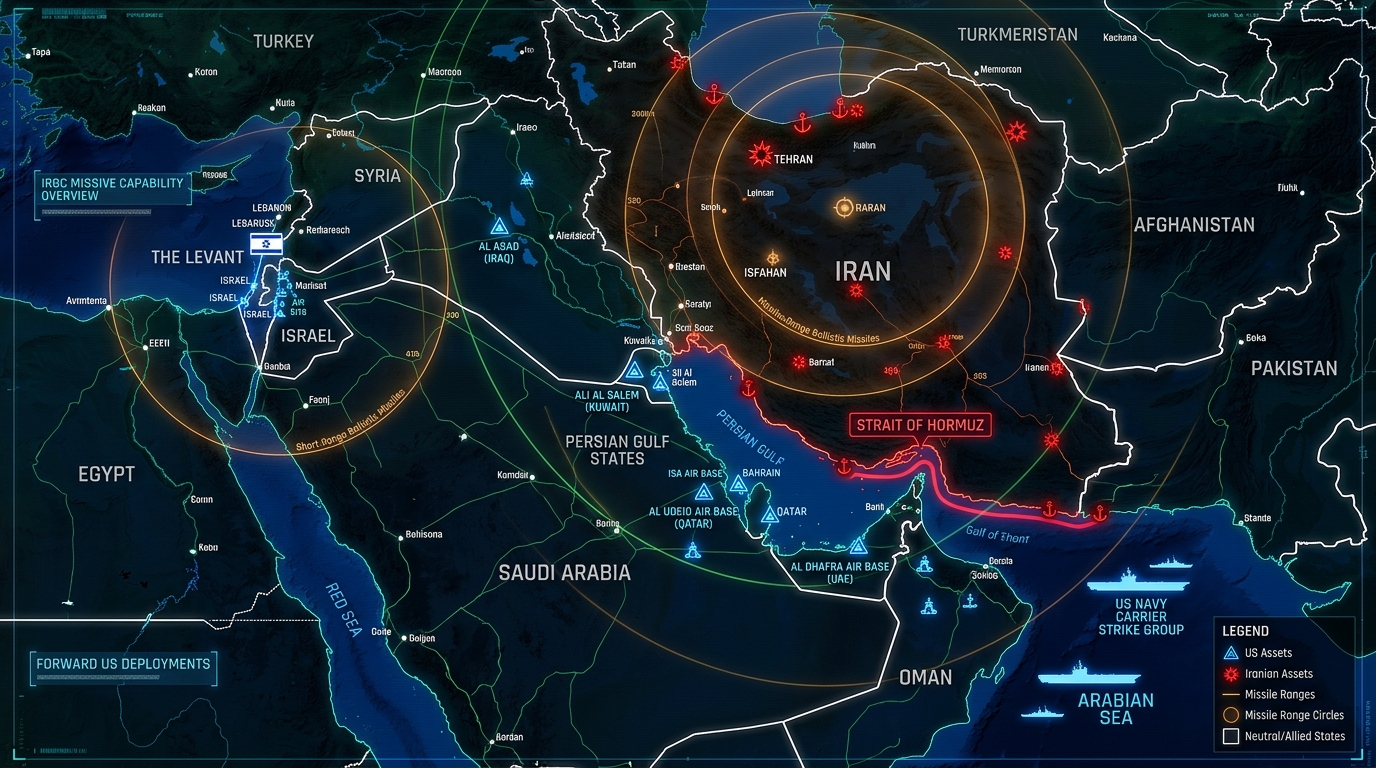
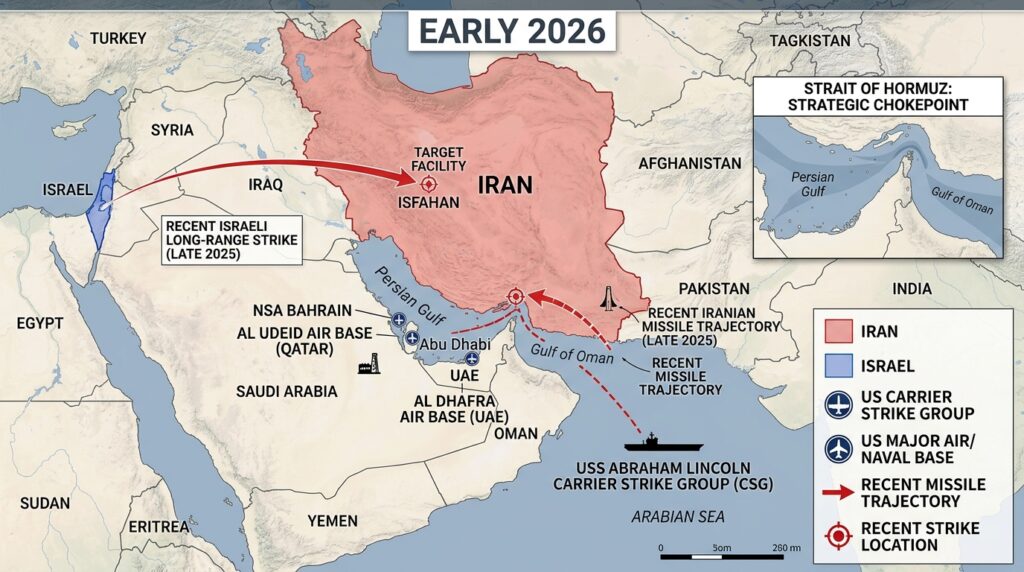
The Gulf states declare neutrality, yet host major U.S. bases:
- Al Dhafra (UAE), Al Udeid (Qatar), Naval Support Activity Bahrain
- Their air defence systems intercept Iranian missiles and drones
- Refuelling and logistical support for U.S. planes over Israel
- Any airspace violation is treated as a sovereignty threat
“The Gulf states represent a strategic paradox. Politically neutral, yet militarily indispensable.”
Beyond Conflict: Full-Scale War
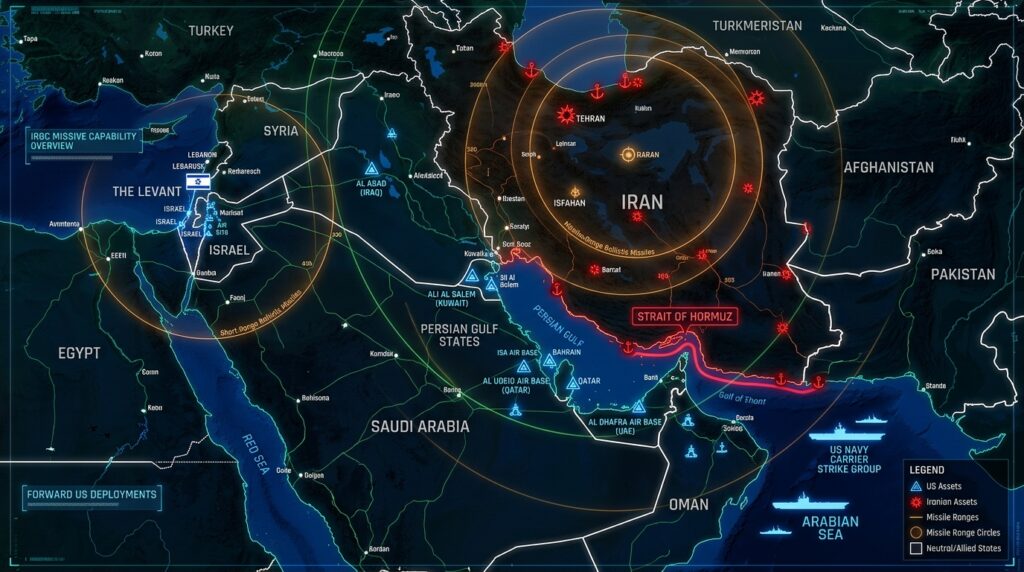
This is no longer a “conflict”; it is a full-scale war.
- Combatants: United States, Israel, Iran
- Operational support: Gulf states
- Strategic observers: China, Russia
Missiles and drones crisscross the region, hitting strategic targets. Modern war now blends air, land, sea, and space technologies.
Clausewitz: “War is politics pursued by other means.”
Sun Tzu: “The line between battlefield and rear is often an illusion.”The Technology Battlefield
Modern warfare is increasingly shaped by technology, and the current war illustrates this transformation vividly.
Missiles guided by advanced navigation systems can strike targets hundreds or even thousands of kilometres away with remarkable precision. Drones provide real-time reconnaissance, surveillance, and strike capability. Electronic warfare systems attempt to disrupt communications, radar networks, and navigation signals. Satellite navigation has become particularly critical.
Missile guidance systems depend on precise positioning data to reach their targets. Traditionally, many systems relied on the American GPS network. However, alternative systems have emerged, including China’s BeiDou satellite navigation constellation.
The use of multiple satellite navigation systems reduces vulnerability to electronic disruption and enhances operational flexibility. As a result, space-based infrastructure has effectively become an extension of the battlefield. In the twenty-first century, wars are not fought only on land, sea, and air. They are also fought in orbi
- Drones & missile guidance enable real-time strikes
- Satellite navigation systems (GPS, BeiDou) reduce vulnerability to electronic disruption
- Electronic warfare targets radar and communications
Modern warfare is as much cyber & space-based as physical.
The Hidden Partner: Covert High-Tech Game Changer
The decisive yet invisible player: advanced intelligence and satellite networks
- Real-time operational guidance for Iran
- Predicts and counters U.S.–Israel strikes
- Influences Gulf defensive measures
“The supreme art of war is to subdue the enemy without fighting.” — Sun Tzu
Covert tech networks now shape every strike, interception, and operational decision.
Economic Impact: Costs on the U.S., Israel, Iran, and the Gulf States
🇺🇸 United States
- Energy & inflation: Oil flow disruptions through the Strait of Hormuz raise gasoline & commodity prices
- Market volatility: Investors reassess risk; defence sector gains offset some drag
- Long-term risk: Prolonged war may slow GDP growth, reduce consumer spending
🇮🇱 Israel
- Early-stage losses: ~$3B per week due to halted sectors, closures, and infrastructure
- Reduced business confidence and foreign investment inflows
🇮🇷 Iran
- Lost oil revenue: ~$120M/day during early conflict
- Infrastructure & military expenditure costs escalate
- Long-term risks: Sanctions, GDP contraction, unemployment, further isolation
🌍 Gulf States
- Energy revenue decline & increased defence spending
- Rethinking overseas investments in the U.S. and Europe (sovereign wealth funds may reduce flows)
- Implications: potential short-term liquidity reduction, market demand decrease, strategic leverage over U.S. policy
| Country | Short-Term Costs | Long-Term Risks |
|---|---|---|
| US | Inflation, market volatility | Slower growth, delayed investment, GDP drag |
| Israel | Economic losses, halted sectors | Reduced productivity, cautious investment |
| Iran | Lost oil revenue, infrastructure damage | Structural weakening, isolation |
| Gulf | Reduced energy earnings, budget stress | Investment reconsideration, strategic leverage |
The Hidden Lynchpin: Gulf States Behind the Frontline
An often overlooked yet decisive element in the present war is the role of the Gulf states. Publicly, these countries maintain a neutral stance. Official statements emphasise the need for restraint and diplomatic solutions, and governments repeatedly stress that they do not wish to become parties to the conflict. Yet the strategic reality is far more complicated.
Across the Gulf region lie some of the most important American military installations outside the United States. These bases support surveillance missions, logistics networks, aerial operations, and command coordination across the Middle East. During the current war, these facilities have inevitably become part of the operational environment. Air defence systems deployed in the region have intercepted missiles and drones crossing regional airspace, while American aircraft operating in the theatre rely on regional bases for logistics and refuelling.
This creates a strategic paradox.
Politically, Gulf governments emphasise neutrality. Militarily, however, the infrastructure located on their territory plays an important role in sustaining American operations. At the same time, these governments strongly condemn any violation of their airspace or territorial security. Missile or drone trajectories that cross their borders are treated as direct threats to national sovereignty.
Thus, the Gulf states find themselves navigating an extremely delicate balance, attempting to avoid direct involvement while inevitably remaining part of the wider strategic environment of the war.
Energy Routes & Global Economy
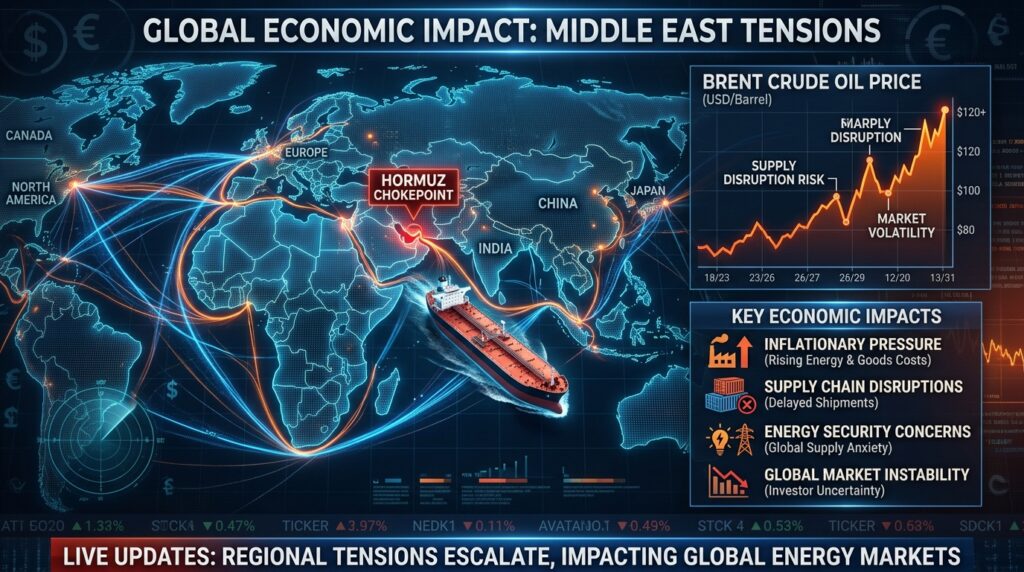
The Middle East remains one of the most strategically significant regions of the world largely because of its role in global energy markets. A substantial share of the world’s oil supply passes through the Strait of Hormuz, a narrow maritime corridor connecting the Persian Gulf with international waters. Any instability in this region quickly reverberates across global markets.
Even limited military tension in the area can trigger rapid fluctuations in oil prices. These fluctuations affect transportation costs, industrial production, and consumer prices worldwide. For economies already facing inflationary pressures, energy shocks can amplify economic uncertainty. Governments may find themselves forced to adjust fiscal policies, while central banks must confront new inflationary risks.
In this sense, the battlefield extends far beyond the Middle East. The economic consequences of the war are felt in fuel stations in Europe, manufacturing plants in Asia, and financial markets in North America.
- Strait of Hormuz: key oil corridor; disruptions raise global energy prices
- Trade & supply chains affected: Europe, China, U.S. exposed
- Inflationary ripple effects on global markets
Financial Markets & Investment Climate
More than two millennia ago, the ancient strategist Sun Tzu warned rulers that prolonged wars drain a nation’s wealth and weaken its foundations. His insight remains strikingly relevant today.
Modern warfare requires immense resources: advanced weapons systems, intelligence networks, logistical infrastructure, and constant technological upgrades. Sustaining these capabilities over long periods places enormous strain on national economies.
The Prussian military thinker Carl von Clausewitz similarly emphasised that war is inseparable from political and economic realities. A nation may achieve tactical victories on the battlefield, but if the economic burden becomes unbearable, strategic success may remain elusive.
History offers numerous examples where economic exhaustion ultimately shaped the outcome of wars more decisively than battlefield victories.
- Stock volatility, currency fluctuations, and capital reallocation
- Hedge funds and sovereign funds adjust strategies
- Gulf states’ investment reassessment could reduce liquidity and influence U.S. markets
Strategic Observers: China & Russia
While the United States, Israel, and Iran form the central triangle of the current war, other major powers observe developments with intense interest.
For China, stability in the Middle East is closely tied to energy security and the protection of vital trade routes. Any disruption in regional energy supplies has direct implications for its economic growth.
Russia, meanwhile, evaluates the conflict through the lens of global strategic competition. Shifts in Western military attention and resource allocation may influence geopolitical dynamics in other regions.
Although neither country is directly involved in the fighting, both understand that the outcome of the war could influence the evolving balance of global power.
- China: Energy security, trade route stability, tech reliance
- Russia: Exploiting U.S. distraction to gain geopolitical leverage
- Gulf states: Balancing neutrality with operational support
Human Dimension
Strategic analysis often focuses on military capabilities, alliances, and economic consequences. Yet behind every strategic calculation lies the human reality of war.
Air strikes and missile attacks do not occur in empty landscapes. They unfold in cities, near homes, and above communities where ordinary people seek safety and stability.
Families face sudden displacement. Infrastructure that supports daily life, such as electricity, water systems, hospitals, and transportation networks, becomes vulnerable.
For soldiers, war represents the ultimate test of discipline, endurance, and courage. For civilians, it often brings uncertainty and fear.
In the end, the true cost of war cannot be measured solely in military statistics or economic data. It is measured in lives disrupted, communities fractured, and generations shaped by conflict.
Strategic Lessons
Several important lessons are already becoming visible.
First, modern warfare increasingly blends traditional military power with advanced technology. Drones, precision missiles, and satellite-based navigation systems are transforming the character of combat.
Second, economic resilience has become a critical strategic factor. Nations capable of sustaining the financial and industrial demands of prolonged conflict hold a significant advantage.
Third, regional wars in strategically important regions can rapidly generate global consequences. Energy markets, trade routes, and geopolitical alliances become intertwined with battlefield developments.
These lessons echo the timeless insights of both Sun Tzu and Clausewitz. Strategy must consider not only the immediate battlefield but also the broader political, economic, and technological environment.
- Modern warfare = Technology + Traditional power
- Economic resilience = Military sustainability
- Regional conflicts have global consequences
Sun Tzu & Clausewitz insights: strategy must integrate military, political, and economic dimensions.
Conclusion
The war involving the United States, Israel, and Iran is far more than a localised military confrontation. It represents a complex strategic contest unfolding across multiple dimensions: military, technological, economic, and geopolitical.
Missiles and air strikes dominate daily headlines, yet the deeper consequences of the war may unfold more slowly in global markets, political alliances, and shifting balances of power.
History reminds us that wars rarely end exactly where they begin. Their consequences ripple outward, reshaping the international landscape in ways that are often difficult to predict.
The central question facing the world today is not merely how this war will evolve on the battlefield, but how profoundly it may influence the future structure of global power.
War is not just a military event; it is a global economic and strategic crisis.
- Gulf states: hidden yet decisive role
- Covert tech networks: shaping battlefield outcomes
- War is already affecting energy, trade, finance, and investment flows globally
- Prolonged conflict could reshape macroeconomic stability and growth patterns
“Every missile fired today echoes across global economies and political alliances tomorrow.”
FAQs
Q1: Why is this a full-scale war?
- Direct state-to-state combat with missiles, drones, and casualties.
Q2: Why are Gulf states pivotal despite neutrality?
- Host bases, intercept attacks, support logistics while maintaining political neutrality.
Q3: How does this affect the global economy?
- Oil prices, supply chain disruption, investment hesitancy, and inflation.
Q4: What is the hidden high-tech partner?
- Advanced satellites, intelligence networks, and cyber systems are guiding battlefield decisions covertly.
Q5: What happens if the war is prolonged?
- Sustained inflation, slower global growth, delayed U.S. investments, and macroeconomic ripple effects.
References
- Wikipedia – 2026 Iranian strikes on UAE
- Al Jazeera – Iranian missiles intercepted over Gulf states
- Clausewitz, On War
- Sun Tzu, The Art of War
- Financial Times – Gulf states investment rethink
- The Guardian – Oil price impacts
- AP News – Gulf energy disruption
- Chatham House – Global economic implications