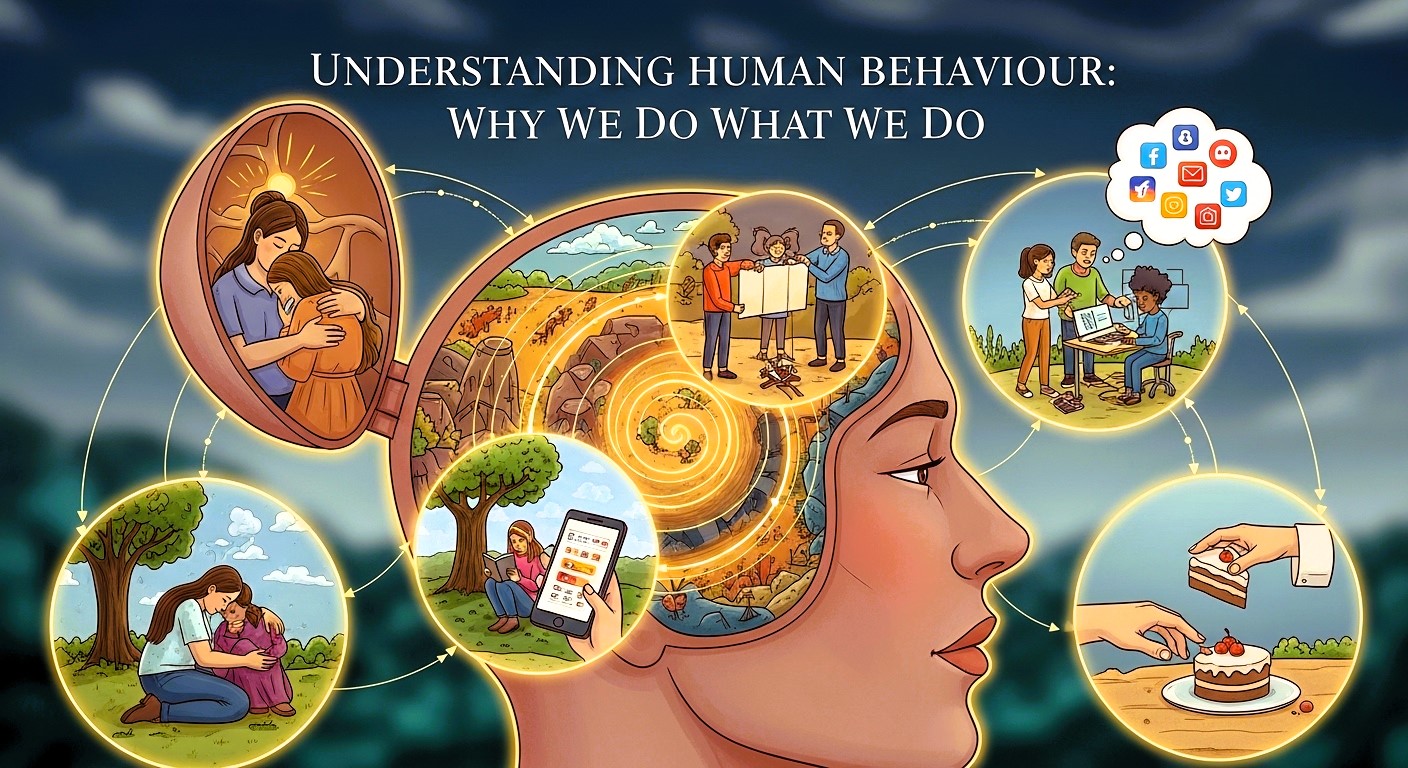

Understanding Human Behaviour: Why We Do What We Do
Understanding human behaviour, since humans are complex beings defined by both overt behaviour (actions we can see, like walking or talking) and covert behaviour (internal processes, like thinking and feeling). We are driven by a constant need to find meaning and purpose in our lives, even though everyone faces some form of suffering along the way.
https://mrpo.pk/understanding-humans/
Human behavior is the potential and expressed capacity (mentally, physically, and socially) of human individuals or groups to respond to internal and external stimuli throughout their life. Behavior is driven by environmental and genetic factors that affect an individual. Behavior is also driven, in part, by thoughts and feelings, which provide insight into individual psyche, revealing such things as attitudes and values. Human behavior is shaped by psychological traits, as personality types vary from person to person, producing different actions and behavior.
Human behavior encompasses a vast array of domains that span the entirety of human experience. Social behavior involves interactions between individuals and groups, while cultural behavior reflects the diverse patterns, values, and practices that vary across societies and historical periods. Moral behavior encompasses ethical decision-making and value-based conduct, contrasted with antisocial behavior that violates social norms and legal standards. Cognitive behavior involves mental processes of learning, memory, and decision-making, interconnected with psychological behavior that includes emotional regulation, mental health, and individual differences in personality and temperament.
The Science of Our Emotions: Understanding human behaviour
For a long time, people thought emotions were just automatic reactions. However, modern science shows that the brain actually constructs emotions in understanding human behaviour.
- The Brain’s Secret Recipe: Your brain uses your past experiences to make sense of what you are feeling right now. This means emotions are personal and depend on the situation you are in.
- The Biological Connection: Inside your brain, a network called the limbic system processes feelings like fear and anger. A part called the amygdala triggers your “fight-or-flight” response when you feel threatened.
- Hormone Power: Chemicals like dopamine (the reward hormone) and cortisol (the stress hormone) change how you feel and react physically.
Understanding human behaviour: Humans as “Intuitive Scientists”
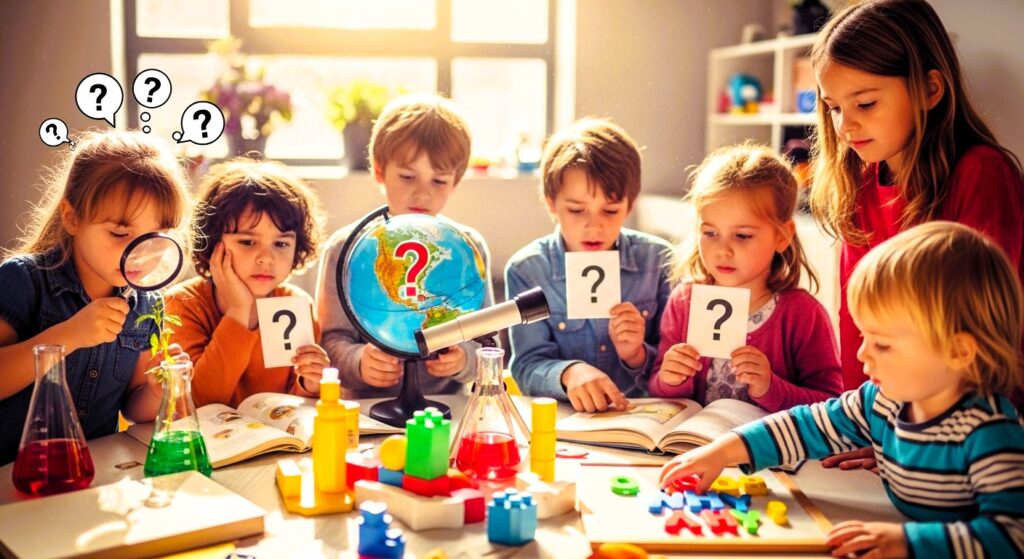
Humans are complex biological and social entities defined by their observable actions (overt behaviour), internal mental processes (covert behaviour), and an innate drive to find meaning and purpose. Understanding the human experience requires looking through multiple lenses, including psychology, biology, and the “digital truths” revealed by our search data.
The Most Searched Questions About the Human Mind
Psychologists and researchers have identified several “big questions” that humans frequently ask about their own nature:
- Why do we dream? While Freud suggested dreams are repressed wishes, modern models like activation-synthesis propose they are stories created by the brain to make sense of random neural stimulation during sleep.
- Nature vs Nurture? It is no longer a debate between one and the other; they work together through processes like epigenesis, in which environmental factors (such as stress) can change how genes are expressed.
- What is intelligence? It is more than academic knowledge; it includes practical “street smarts”, self-understanding, and the ability to understand others.
- How do we stay motivated? Effectiveness is improved by rewarding small steps toward a goal, using positive reinforcement to “inch” closer to a desired outcome.
Human Behaviour and the Construction of Emotions
Contrary to the idea that emotions are automatic, universal responses, research suggests they are constructed by the brain.
- Learned Experience: The brain uses past experiences to make sense of current sensations, making emotions highly personal and context-dependent.
- The Biological Basis: Emotions are processed in the limbic system, specifically the amygdala, which triggers reactions like fight-or-flight. Hormones such as cortisol and dopamine further influence these physical and emotional states.
- Complexity of Character: Humans are rarely “simply good or bad”; they are a complicated mix of both, though people often try to polarise these traits in others.
The Psychology of Inquiry: How Humans Seek Information
Humans are often described as “intuitive scientists” who perform mental experiments to understand the world.
- Optimal Experiment Design (OED): This theory suggests humans choose queries (questions or actions) that maximise information gain and reduce uncertainty.
- Search Strategies: Many people use a Positive Testing Strategy (PTS), which involves seeking evidence that confirms their current hypothesis rather than looking for counterexamples.
- Childhood Inquiry: Children are remarkably adept at identifying “knowledge gaps” and will spend more time exploring objects that violate their expectations or physical laws.
The “Digital Self” vs. Reality
Understanding human behaviour, because what we tell the world is often different from what we think in private. Data science shows a huge gap between our social media lives and our Google searches.
- The Honesty of Search: Because Google searches are anonymous, people feel safe asking about things they would never admit in public, such as marriage troubles, racism, or private health fears.
- Social Media Filters: On sites like Facebook, people often post that their life or partner is “the best,” while their private searches might say the opposite.

Social Media Filters
Simple Mental Health Hacks
Based on the most searched health queries, here are some expert-backed ways to handle the human mind:
| Challenge | Strategy |
|---|---|
| Handling Stress | Decide if the problem is in your control (make a plan) or out of your control (practice acceptance). |
| Panic Attacks | Use grounding and sensory input, like cold water or deep breathing, to reconnect with your body. |
| ADHD Focus | Use a reward system to give your brain the dopamine it craves for boring tasks. |
| Motivation | Break big goals into small steps and reward yourself for each one. |
6 Frequently Asked Questions (FAQs)
1. Why do we dream?
Dreams might be stories the brain creates to make sense of random signals that happen while we sleep (the activation-synthesis model). They can also reflect our hidden desires.
2. Is it “Nature” or “Nurture” that makes us who we are?
It is both! They work together through epigenesis, where things like stress can actually change how your genes work.
3. What is the best way to remember things for a test?
Use “chunking” to group info into smaller units, and use “deep processing” by giving the information meaning rather than just memorising it.
4. Can you stop a panic attack?
You can’t always stop it instantly, but you can lower the intensity by accepting that it is happening and using deep breathing.
5. Does childhood really affect your adult life?
Yes, early experiences leave lasting imprints. However, people are resilient; many who had a tough childhood still grow up to lead very healthy lives.
6. What is intelligence?
Psychologists now agree that intelligence is more than just getting good grades. It also includes “street smarts,” self-understanding, and knowing how to get along with others.
References
- Psychology Today: 15 Insights About Human Behavior.
- Noldus: 5 Must-read articles to explore human behavior.
- Psychology Today: A Top 10 List of Psychology’s Big Questions.
- Psychonomic Bulletin & Review: Nine Open Challenges of Human Inquiry.
- NPR: What Can Google Search Data Tell Us About Human Behavior?.
- WellPower: Top 5 Most Googled Mental Health Questions.
Clarifying Questions:
- Are you looking for more detail on specific psychological theories (like Object Relations or the Rational Speech Act model)?
- Would you like a more in-depth look at how childhood experiences specifically imprint on adult behaviour?