
Trump’s War for Netanyahu: Why Europe Just Said “Not Our War” to the 2026 Iran Conflict
Trump’s war for Natenyahoo, Europe just said Not Our War to the 2026 Iran war. We’ve all seen the headlines and felt that sinking feeling in our stomachs: another war in the Middle East exploding across our screens, sending gas prices through the roof and families everywhere wondering, “Whose fight is this, really?”
Excerpt
In the 2026 Iran war, Trump’s bold strikes align closely with Netanyahu’s goals, yet Europe’s firm “Not our war” response reveals deep alliance cracks. Gas prices rise, families worry: Whose fight is this? Honest look at the personal ties driving it all.
https://mrpo.pk/war-of-words-of-confusion/
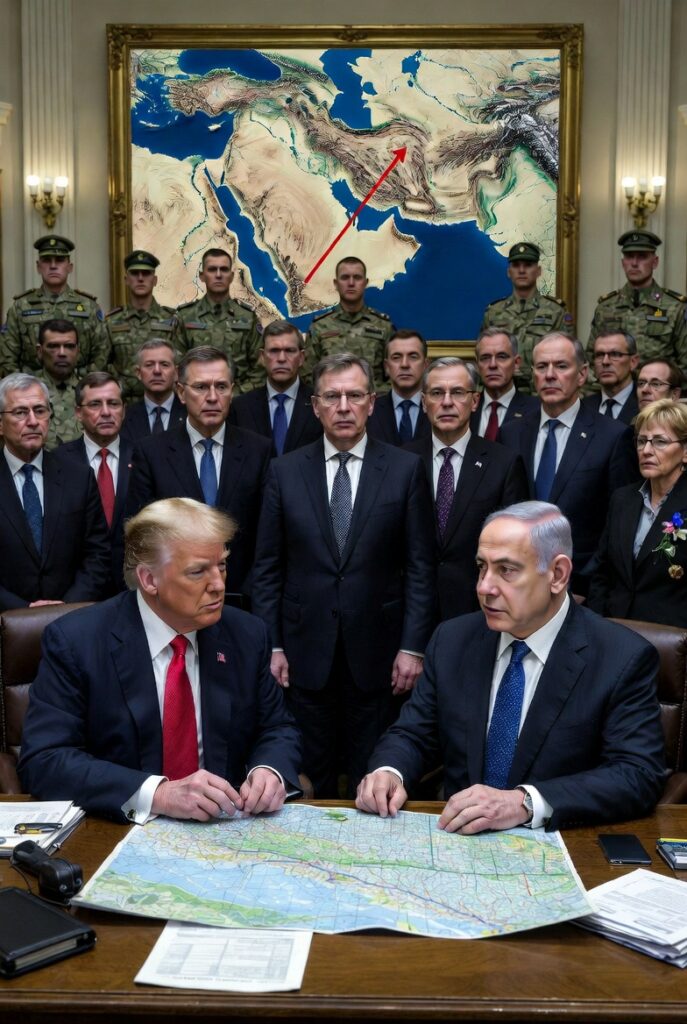
Since February 28, 2026, the United States and Israel have been pounding Iran with airstrikes. President Trump calls it a huge success that’s keeping the world safer. But right from day one, European leaders, from Germany to the UK to France, have looked the US straight in the eye and said the same heartbreaking line: “This is not our war.”
It stings because it feels personal. After years of standing shoulder-to-shoulder with America through thick and thin, our closest friends in NATO are drawing a firm line. And at the heart of it all? A longtime friendship between Donald Trump and Benjamin “Bibi” Netanyahu that keeps pulling the U.S. into bigger and bigger risks.
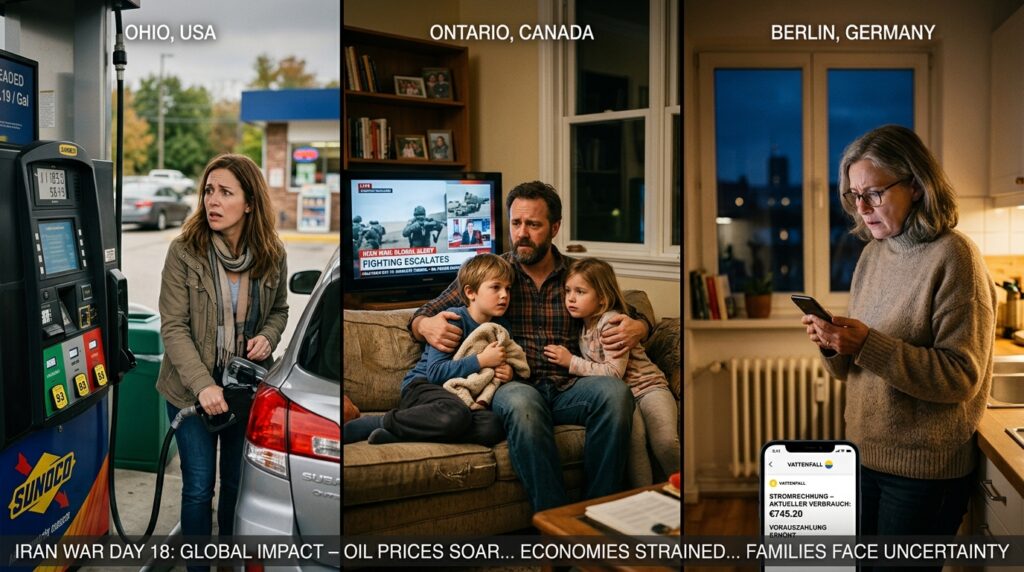
Let’s sit down and talk this through like neighbours over coffee, no spin, just the honest truth that’s worrying moms in Ohio, dads in Ontario, and teachers in Berlin alike.
Netanyahu Won Trump, But He’s Losing America
President Donald Trump’s choice to launch a joint military campaign with Israel against Iran represents the crowning achievement of Israeli Prime Minister Benjamin Netanyahu’s decades-long campaign to court the Republican Party’s most conservative elements. But like the attack on Iran itself, that may prove a short-term success with high long-term costs.
Over Netanyahu’s three decades at the centre of Israeli politics, support for Israel has plummeted among rank-and-file Democrats in America, which has liberated a new generation of party leaders to forcefully criticise Israel. Now, the Iran war threatens to widen an incipient generational divide within the GOP.
The Personal Spark That Lit the Fuse
Picture this: two old friends, Trump and Netanyahu, who’ve backed each other for years. Netanyahu has long dreamed of ending the threat from Iran’s nuclear program and its support for groups attacking Israel. Trump has always been right there with him, calling Iran the “bully of the Middle East.”
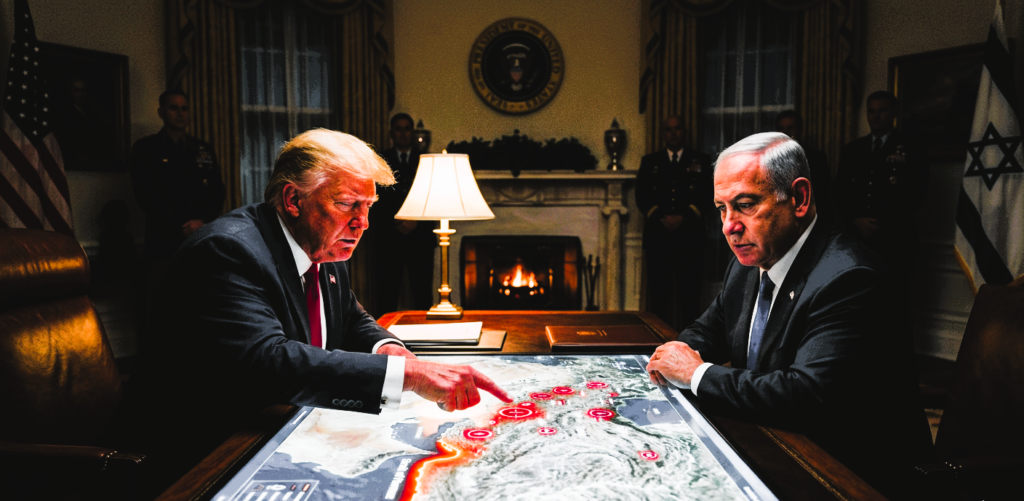
This isn’t the first time they’ve teamed up for a quick, dramatic strike. Remember the Twelve-Day War in June 2025? Israel hit Iranian targets hard, Trump sent in U.S. bombers to smash nuclear sites like Fordow, and both men stood tall declaring a “historic victory.” Netanyahu said Iran’s nuclear dreams were “sent down the drain.”
Trump bragged it was a game-changer. A ceasefire came fast on June 24, everyone cheered… and then, just eight months later, the rebuilding started, and here we are again in 2026 with round two on a much bigger scale, now including the assassination of Supreme Leader Ayatollah Ali Khamenei and widespread strikes.
This time, on February 28, surprise U.S.-Israeli strikes took out Iranian leaders and key military sites. Trump says it stopped a nuclear nightmare and maybe even World War III. Netanyahu calls it removing an “existential threat.” But many regular people watching from afar can’t help feeling: Was this America’s war… or was it mainly Bibi’s?
Trump’s Bold Play: “I Can End It Anytime”
President Trump has been crystal clear and confident in his recent talks with reporters and on Truth Social (as of March 17, day 18). “Iran’s military is obliterated,” he says. “We’re ahead of schedule… practically nothing left to target.” He promises the whole thing could wrap up “very soon” and that he could stop it with one phone call if he wanted.
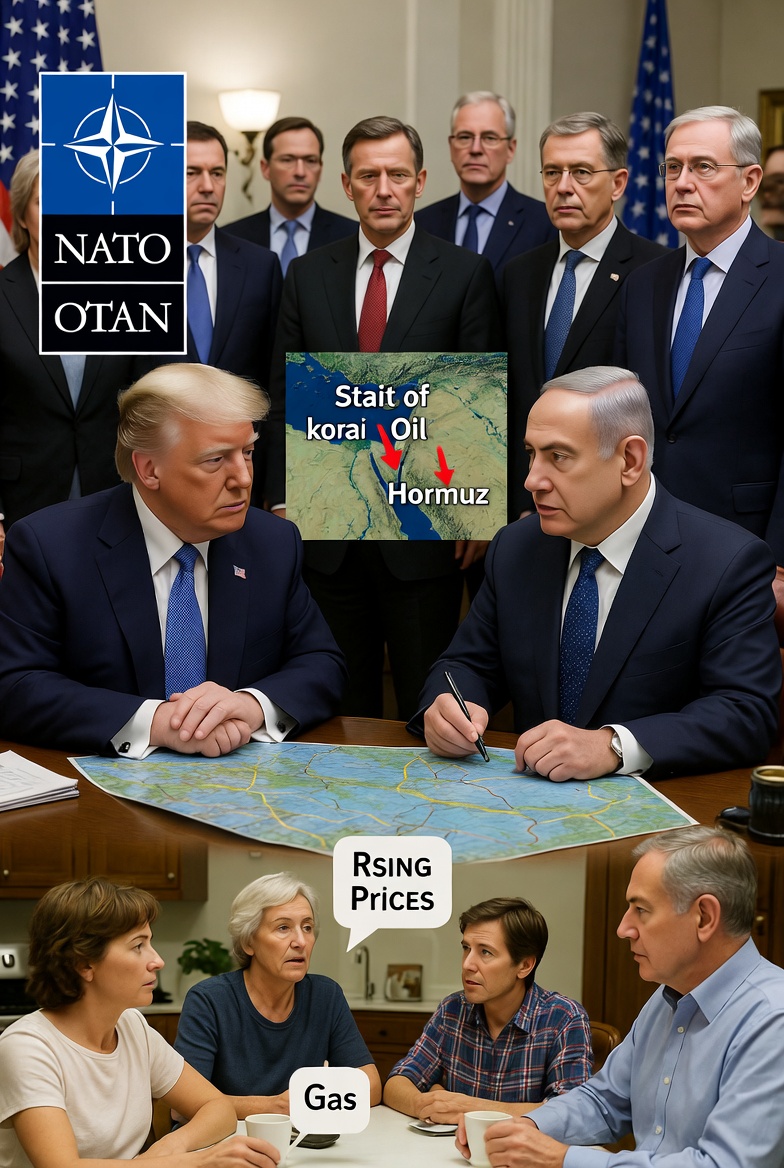
It’s the kind of tough, optimistic talk a lot of Americans love, straight-shooting leadership after years of feeling pushed around. Yet the frustration is real, too. Iran hit back by choking the Strait of Hormuz, the narrow waterway that moves one-fifth of the world’s oil. Gas prices are climbing, ships are scared, and every day, families in the U.S., Europe, and Canada are already feeling it at the pump.
Trump’s response? He’s openly angry at allies. “Get involved quickly,” he’s warned Europe, NATO, and even China. “We will remember” who helps and who doesn’t. He’s threatened to smash Iran’s big oil island (Kharg) again if the blockage continues. You can hear the impatience in his voice, like a guy who expected his friends to jump in and back him up the way America has backed them so many times.
“Bibi’s War, Trump’s Bombs: The Unilateral Iran Strike That Just Broke NATO”
Europe’s Heartfelt “No”: “This Is Not Our War”
And that’s where the real heartbreak, and the rift- hits. For the first time in a long while, NATO allies are saying no thanks, loud and clear. It feels like a quiet rebellion born from exhaustion, worry, and principle.
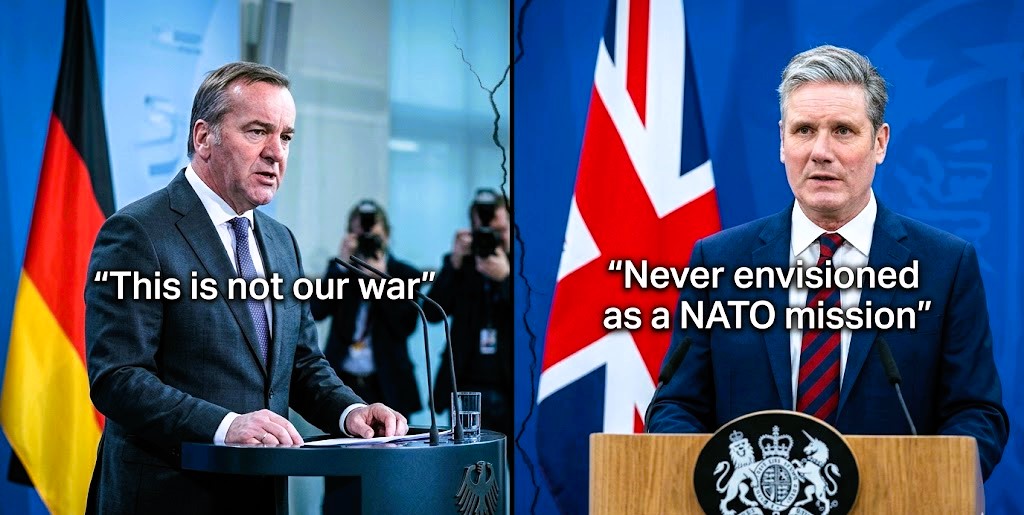
What European Leaders Are Saying (as of March 17)
- Germany
Defence Minister Boris Pistorius put it bluntly: “This is not our war. We have not started it.” They’re offering words of support but no ships, no jets for combat. After pouring so much into Ukraine, their own military is stretched thin. - United Kingdom
Prime Minister Keir Starmer was direct: “It’s never been envisioned to be a NATO mission.” Some intelligence help, maybe, but no warships heading to the Gulf. - France
They’ve sent some defensive planes to protect shipping, but munitions are running low fast. No offensive role, no big commitment. - NATO Overall
Secretary General Mark Rutte says there’s “broad support”, but the alliance isn’t joining the fight. It’s not Article 5. Europe wasn’t attacked, so why send its kids into another endless conflict?
Other friends like Italy, Spain, Japan, Australia, and even South Korea are staying back too. The message feels emotional and human: “We’ve been burned before. We’re tired. We want diplomacy, not more bombs.”
Trump’s reply? Disappointment and warnings of a “very bad future” for NATO if they don’t step up. It’s painful to watch longtime partners drift apart like this.
Why This Feels Different, and Familiar
We’ve been here before. In 2003, Iraq, France, and Germany said no. In Libya in 2011, Germany sat out. Vietnam? Europe mostly watched from the sidelines. But this one hits harder because it feels so tied to one personal friendship—Trump delivering for Netanyahu again and again, while the rest of the West pays the price in higher energy bills and deeper worries about escalation.
Iran’s retaliation has already reached Gulf states and Lebanon. Civilian deaths are climbing on all sides. And yes, Iran’s nuclear program was a real danger… but many Europeans and Canadians quietly ask: Did we need to go this big, this fast, without more of the world on board?
What This Means for All of Us Right Now
For American families: Higher gas prices, a possible longer war, and that nagging question of whether our troops will be asked to do even more.
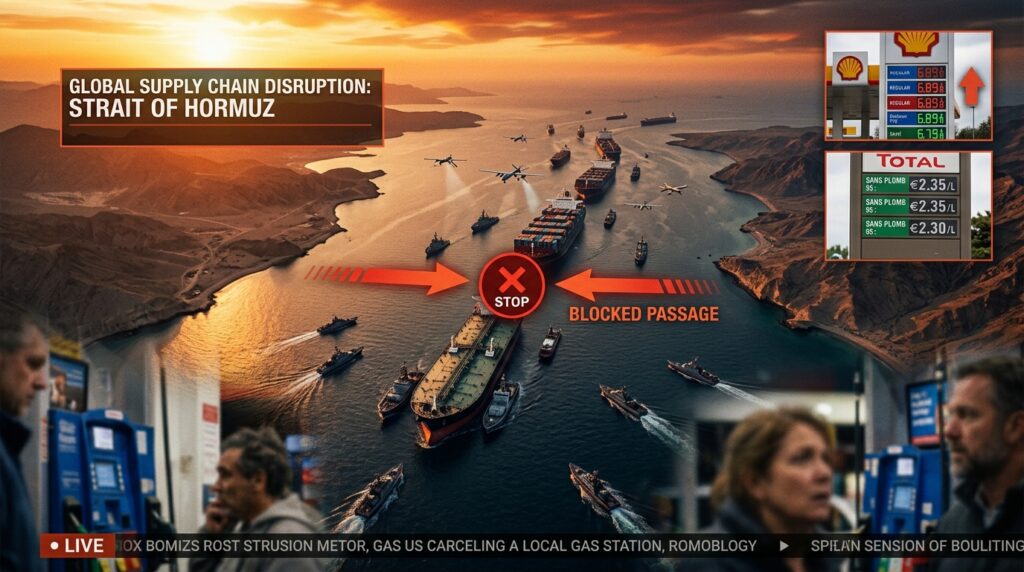
For Europeans and Canadians: Energy shocks, fears of refugees or attacks spilling over, and a growing sense that “America First” sometimes leaves old friends in the cold.
The world is watching, China and Russia quietly smiling at the NATO cracks. Oil markets are jittery. And ordinary people everywhere just want the shooting to stop before it gets worse.
Guidelines for Citizens
At this crucial juncture in the 2026 Iran war (now in its third week as of March 17, 2026), ordinary citizens worldwide face a mix of immediate economic pressures (like soaring gas and energy prices from Strait of Hormuz disruptions), broader anxiety about escalation, and, in some regions, real risks of spillover violence or supply shortages.
The conflict remains contained to military strikes and proxy actions, with no widespread global draft or direct threats to most populations outside the Middle East, but the ripple effects are felt everywhere.
As an ordinary person (not in a direct conflict zone), your power is limited, but your actions matter for personal resilience, community support, and influencing the bigger picture. Here’s practical, grounded advice based on current realities, focusing on what experts, governments, and humanitarian groups emphasise right now.
1. Protect Your Household Finances and Daily Life First
The biggest immediate hit for most people is economic: oil prices have surged past $100/barrel in spots due to shipping fears, pushing up fuel, groceries, heating, and transport costs.
- Cut non-essential spending aggressively: Review your budget now. Trim subscriptions, eating out, and unnecessary travel. Many families worldwide are doing this quietly to buffer the shock.
- Reduce energy use where you can: Governments in Europe, Asia, and elsewhere are urging (or mandating) simple steps: set thermostats lower (or higher in summer), use fans/AC less, take stairs instead of elevators, work from home more, combine errands to save fuel, and maintain vehicles for better mileage. These add up and ease personal strain while signalling demand reduction.
- Stock smart basics (not panic-buying): Have 2–4 weeks of non-perishables, water, medicines, and cash on hand. Focus on what you already use: rice, canned goods, and batteries, so nothing goes to waste. Avoid hoarding fuel or generators unless you’re in a high-risk area.
- Explore alternatives: If driving is a big expense, consider public transport, carpooling, biking, or remote work options your employer might now support more readily.
2. Stay Informed, but Protect Your Mental Health
Information overload and misinformation fuel fear.
- Follow reliable sources (e.g., Reuters, BBC, Al Jazeera, Atlantic Council, UN updates) for facts on escalation risks.
- Limit doom-scrolling: set phone/news time limits. Talk to family/friends about worries instead of endless feeds.
- If anxiety spikes (common now with family in the region or economic stress), reach out; many helplines and community groups are ramping up support.
3. Support Those Directly Affected (Humanitarian Focus)
The real human cost is in the Middle East: civilian casualties, displacement in Iran, Lebanon, Gulf states, and beyond.
- Donate to vetted aid groups: Organisations like the International Committee of the Red Cross (ICRC), UNRWA (for broader regional needs), Doctors Without Borders, or local NGOs focused on civilian protection are active. Even small amounts help with food, medical supplies, and shelter for displaced families.
- Advocate responsibly: If you’re moved, contact your elected representatives (in the US: Congress; in Europe/Canada: MPs), urging de-escalation, civilian protection, and humanitarian access. Sign petitions from Amnesty International or similar groups calling for adherence to international law.
- Avoid amplifying unverified claims online: misinformation worsens division.
4. Build Community Resilience
Wars end faster (and societies recover better) when people connect locally.
- Talk to neighbours, share tips on saving energy, and watch out for vulnerable folks (elderly, low-income families hit hardest by prices).
- Support local food banks or energy-assistance programs; demand is rising as costs bite.
- In places like Europe (where some countries prep cross-border plans) or Gulf-adjacent areas, know basic emergency contacts and evacuation routes if alerts increase (though unlikely for most).
5. Think Long-Term and Vote/Engage
This conflict highlights energy dependence, alliance strains, and war’s costs.
- Push for (or support) policies on renewables, diversified energy, and diplomacy, write letters, and vote in upcoming elections with these in mind.
- Remember: Ordinary voices matter. Public pressure helped shape responses in past crises (e.g., calls for ceasefires).
You’re not powerless. Small, consistent actions, budgeting wisely, helping neighbours, donating thoughtfully, staying calm and informed- build personal strength and collective pressure toward de-escalation. Wars like this often end not from battlefield wins alone, but from unsustainable costs (economic, human, political) that leaders can’t ignore forever.
If you’re in a specific country or situation (e.g., expat in the region, family ties to Iran), feel free to share more; advice can be tailored. Hang in there; most people worldwide are in the same boat, navigating uncertainty together.
The Question That Won’t Go Away
So whose war is this, really?
It started as a joint U.S.-Israeli mission to crush a threat. But the way it’s unfolding, Trump’s solo swagger, Netanyahu’s long wishlist, and Europe’s firm “not our war, ” make it feel like one man’s promise to his friend is carrying the biggest risks for the rest of us.
We all want a safer world. We all want Iran’s nuclear dreams gone. But when your closest allies look you in the eye and say “enough,” it’s time to listen with the heart as well as the head.
This conflict is still fluid. Trump says victory is close. Europe hopes for a quick diplomatic off-ramp. The rest of us, families on both sides of the Atlantic, are just hoping the grown-ups in the room remember: Wars end faster when friends fight them together… or decide, honestly, it’s time to choose a different path.
What do you think, does this feel like America’s fight alone, or should Europe step up? The conversation is just getting started.
Frequently Asked Questions
Q 1. Whose war is the 2026 Iran conflict really?
Q3. What happened in the June 2025 Twelve-Day War?
Israel struck Iranian nuclear and military sites; Trump authorised U.S. bombers for key hits (e.g., Fordow). Both leaders claimed “historic victory,” but damage was limited, leading to a quick ceasefire—and eventual rebuilding that sparked the larger 2026 war.
Q4. What are Trump’s latest statements on the war (as of March 17, 2026)?
Trump says Iran’s forces are “obliterated,” the U.S. is “ahead of schedule,” and he could end it anytime—but he’s frustrated allies won’t help secure Hormuz, warning of consequences and threatening more strikes if disruptions continue.
Q5. How is this affecting everyday people in the US, Europe, and Canada?
Rising gas and energy prices from Hormuz disruptions hit family budgets hard; there’s worry about prolonged conflict, potential escalation to Europe, refugee flows, and strained transatlantic ties.
Q6. Is this the first time Europe has refused to join a US-led war?
References
- Al Jazeera, Reuters, CNN, The Guardian, The New York Times (live updates and analysis on March 2026 strikes, Trump statements, European responses).
- Wikipedia entries on Twelve-Day War (June 2025) and 2026 Iran War (for timelines and key events).
- Council on Foreign Relations, Atlantic Council, Middle East Eye (on Europe’s disjointed/NATO responses).
- Public statements from Trump (Truth Social/press), Pistorius, Starmer, and Rutte (March 2026 interviews).
Editorial Policy / Note (EP)
This article draws from publicly available news sources as of March 17, 2026, aiming for balanced, human-centred reporting. It reflects diverse viewpoints without endorsing any side, focusing on impacts on ordinary families amid geopolitical tensions.
Author Bio
Major Hamid Mahmood (Retired) holds an MA in Political Science, LLB, and PGD in HRM. A former military officer with extensive experience in strategic analysis and international relations, he now writes on global security, alliances, and Middle East conflicts from a grounded, people-focused perspective.